
The choice between a July visit and a January visit to Rome is not really a weather decision. It is a decision about what kind of city you want to experience.
Rome in summer is hot, crowded, and relentless – but the long evenings are genuinely good and the energy is high. Rome in winter is quiet, atmospheric, and cheap – but the days are short and the cold is wetter than you expect. Neither version is wrong. Both require different logistics, different packing, and different daily rhythms.
This guide covers both honestly, so you can plan the right trip rather than the wrong one. For the foundational logistics that apply year-round, start with our first time in Rome guide.
Rome in Summer: What You Are Actually Signing Up For
The heat
Between late June and early September, daytime temperatures sit between 32°C and 38°C (90-100°F). The thermometer understates it. Rome sits in a valley that blocks coastal breezes, and the city is built almost entirely from heat-absorbing materials – asphalt, cobblestones, ancient marble. The scirocco winds occasionally blow in from the Sahara, bringing a dusty, heavy heat that makes the sky look hazy. The “feels like” temperature regularly exceeds the actual reading.
The crowds
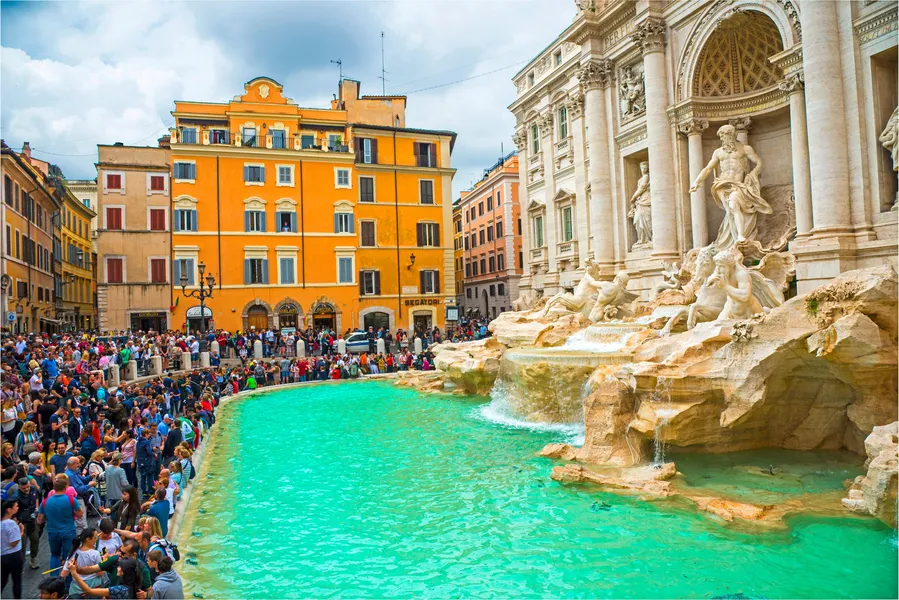
Summer is peak season by a significant margin. The areas around the Trevi Fountain, Spanish Steps, and Colosseum become dense bottlenecks of tour groups, cruise excursion passengers, and street vendors. Pickpockets are concentrated in these areas specifically because the crowds make working easy. Keep your phone out of your back pocket and use a cross-body bag around the major monuments.
How to structure your days
You cannot wake up at 9 AM, eat a slow breakfast, and sightsee until 5 PM. The sun will end your day early. The local approach is a split schedule:
- 6:00-6:30 AM: Out the door. This is when you visit the Trevi Fountain and Pantheon exteriors – the light is good, the air is briefly cool, the plazas are empty. Do your outdoor archaeological sightseeing (Forum, Palatine Hill) when the gates open.
- 1:00-3:00 PM: Sit down for a long, shaded lunch, then back to the hotel. Close the blackout shutters. Sleep under air conditioning. Do not walk around between 2 PM and 5 PM.
- 6:30 PM onwards: Re-emerge. The temperature drops, the city transforms, and dinner at 9:30 PM is perfectly normal.

The water network
Do not buy €3 plastic bottles from street vendors. Rome has over 2,500 free public water fountains called nasoni (big noses), fed directly from mountain aqueducts. The water is cold, clean, and constantly running. Carry an insulated metal bottle and refill it all day. Our Rome on a budget guide covers this and the other free utilities the city offers.
The Ferragosto problem
If you are visiting mid-August, understand Ferragosto. August 15th is a national holiday that triggers a mass local exodus – Romans flee to the coast or the mountains. The major monuments stay open. But many of the best family-run trattorias, neighborhood bakeries, and independent shops pull their metal grates down for two to three weeks with a sign reading Chiuso per Ferie (Closed for Holidays). In mid-August you will largely be eating at restaurants designed for tourists. Plan accordingly or shift your dates to early August or September.
What to eat and drink in summer
- Grattachecca: Hand-shaved ice topped with sweet syrups and fresh fruit, sold from small kiosks along the Tiber. More effective than gelato when it is 38°C. A purely Roman summer invention.
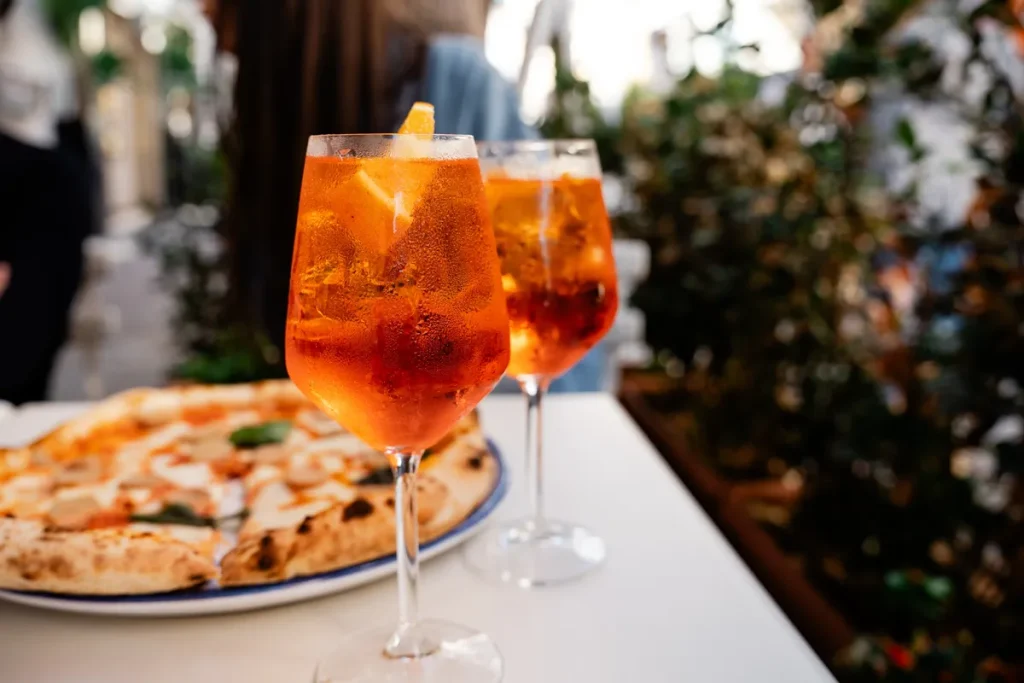
- Frascati and Aperol: Swap heavy red wine for aggressively chilled Frascati (the local white from the hills outside Rome) or an ice-filled Aperol Spritz during the evening aperitivo hour.
- Fiori di Zucca: Zucchini blossoms stuffed with mozzarella and anchovies, battered and deep-fried. A peak summer dish. Skip the heavy meat stews.



Rome in Winter: The Case for Going in January
The climate
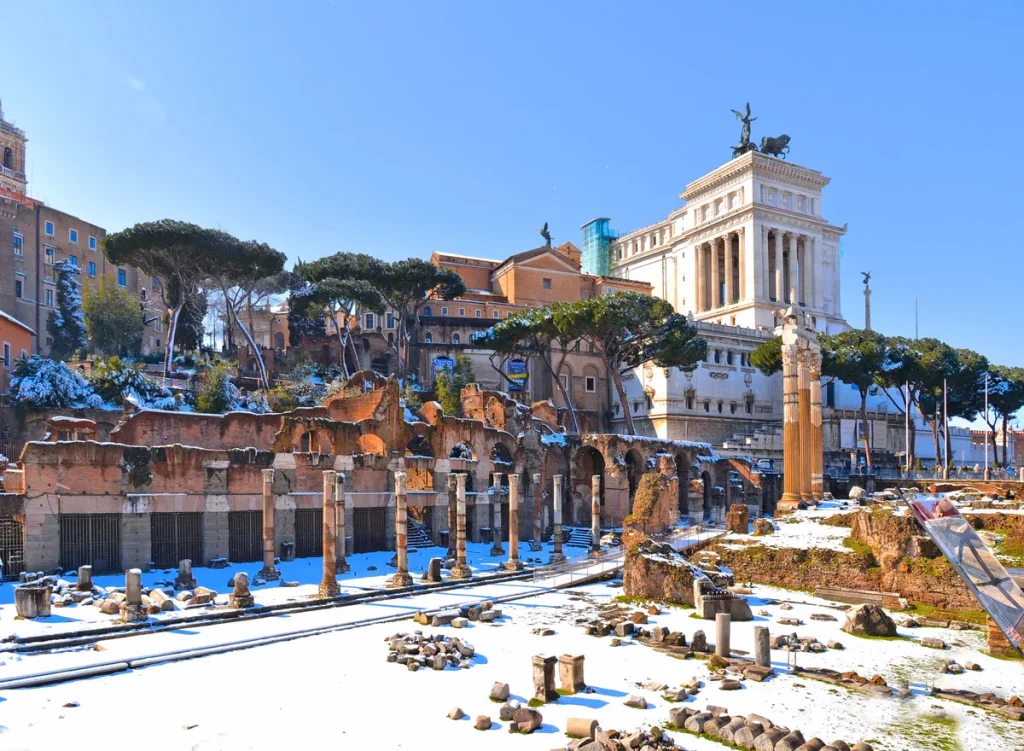
Rome in winter is not like northern European cold. It rarely snows (but sometimes does), and temperatures almost never drop below freezing. Daytime temperatures sit between 8°C and 14°C (46-57°F). The catch: Italian buildings are subject to federal heating restrictions by law – central heating is limited to certain months and specific hours to conserve energy. An old Airbnb in the historic center will likely be drafty, with cold tile floors. Pack thick wool socks to wear inside.

The crowds – or rather, the absence of them
This is the fundamental advantage of winter. The security queue at St. Peter’s drops from two hours to twenty minutes. You can walk into a popular Trastevere restaurant at 8 PM and get a table without a reservation. You can stand in front of a Raphael painting in the Vatican Museums without an elbow in your ribs. The city belongs to people who actually live there, which makes everything feel different.
How to structure your days
The main logistical challenge in winter is the clock. In December and January, sunset comes around 4:30 PM. Front-load all outdoor sightseeing: the Forum, the Appian Way, the Borghese Gardens should be done between 9 AM and 3 PM while the light holds. Once dark falls at 4:30 PM, move indoors – evening museum entries, shopping on Via del Corso, or a two-hour aperitivo at an enoteca (wine bar).
Rainy day plan
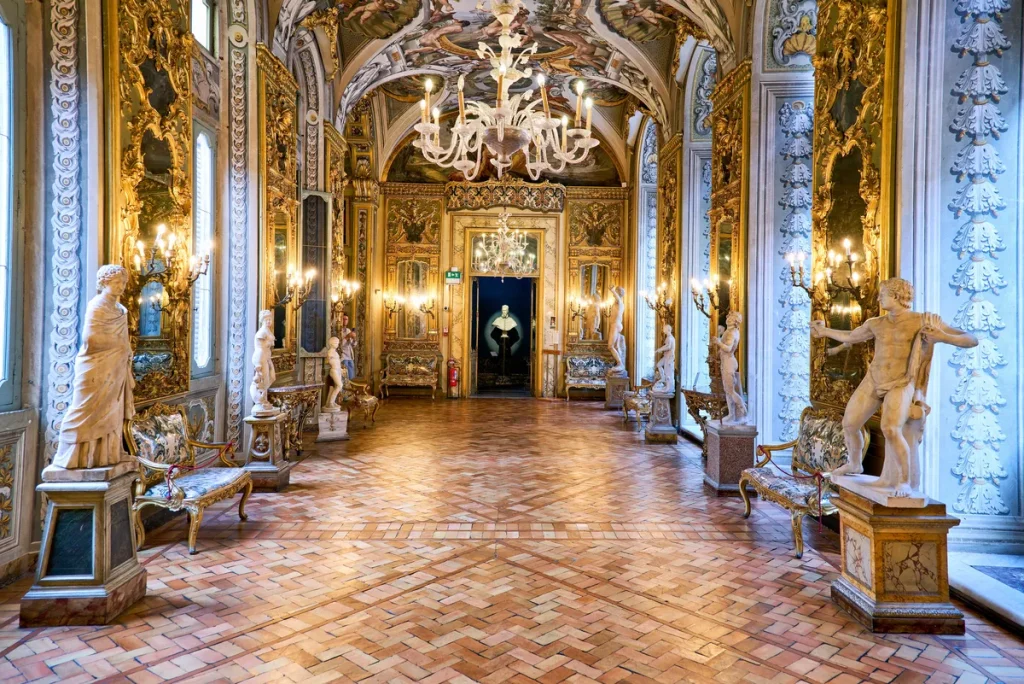
Winter rain in Rome is real. When it arrives, head for the interior spaces the city does well. The Capitoline Museums (the oldest public museums in the world) are massive, warm, and half-empty in January. The Pantheon is worth visiting specifically while it is raining – watch the water fall through the open oculus in the ceiling and drain into the 2,000-year-old marble floor. The Galleria Doria Pamphilj on Via del Corso – a private palace converted to a gallery – holds one of the great Velázquez portraits and is overlooked by most visitors year-round.



Christmas and public holidays
December in Rome is atmospheric without being aggressively commercial. Piazza Navona hosts the city’s main Christmas market – the carousel and lights work well for children, though the stalls lean toward plastic goods rather than artisan crafts.
Critical note: December 25th, December 26th (Santo Stefano), and January 1st are near-total shutdowns. The Colosseum, Vatican Museums, and all major retail close. Plan these days around free basilicas, walking empty streets, and restaurants booked weeks in advance – very few operate on these dates and those that do fill up fast.
What to eat and drink in winter
Winter is when Roman food makes complete sense. The cuisine was built for cold weather.
- Carciofi alla Romana and alla Giudia: Winter is peak artichoke season. Alla Romana is braised in olive oil, garlic, and wild mint; alla Giudia (the Jewish Ghetto preparation) is smashed flat and deep-fried until the outer leaves shatter like chips.
- Carbonara: A plate of pasta with egg yolks, guanciale, and pecorino is unpleasant at 38°C. In January it is the best thing you will eat all week.
- Puntarelle: A winter chicory green, served raw, dressed with garlic, olive oil, and crushed anchovies. Available only in the cold months and almost exclusively in Rome.
For the full guide to eating well in the city regardless of season, our foodie’s guide to Rome covers every category.


Head-to-Head: The Practical Comparison
Money
Summer flights and hotel rates in the historic center can run double or triple the base price. Guided skip-the-line tours command a premium because the lines justify it. Winter is the opposite: transatlantic flights between mid-January and late February drop substantially, boutique hotels become affordable, and Airbnbs cut their nightly minimums.
Packing
Summer: linen shirts, breathable cotton, walking sandals. Important caveat – the Vatican dress code applies regardless of temperature. Bare shoulders and knees above the knee are not permitted in St. Peter’s Basilica or the Vatican Museums. Pack a lightweight scarf to cover up at the door even if it is 40°C outside.
Winter: a heavy waterproof coat or wool overcoat is mandatory. Waterproof walking boots with traction are important – the black sanpietrini cobblestones become genuinely slippery when wet. Pack layers for the transition between cold streets and overheated museum interiors.
Spontaneity
Summer: none. The Colosseum and Vatican require advance booking. Popular Testaccio restaurants need reservations three weeks out. Every hour needs a plan. For how to sequence a tight summer itinerary, our 3 days in Rome guide is built around this constraint.
Winter: substantially more. The Colosseum and Vatican should still be booked a few days ahead to be safe, but the pressure is off. You can walk past a good-looking restaurant and actually get a table.
The Verdict
If your dates are locked to school holidays, you are going in summer. Accept the heat, wake up before 7 AM, use the split-shift schedule, and lean into the long warm evenings. It is chaotic, but it works if you are prepared.
If you have flexibility, winter is the stronger choice. Rome in January gives you the city without the performance layer – quieter streets, shorter queues, and the ability to actually hear your own footsteps in an empty piazza. The monuments are the same. The food is better suited to the temperature. The budget goes further.
The 5 days in Rome itinerary works well in both seasons with minor adjustments – the Appian Way and outdoor excursions are better in winter’s cooler air, while the evening piazza sections are better in summer.
Does it snow in Rome in winter?
Rarely. A light dusting happens once every several years and usually melts on contact. When it does snow properly, the city gridlocks – there is no snowplow infrastructure.
Are the monuments open in winter?
Yes, all major sites stay open year-round. Hours change significantly though. The Colosseum and Roman Forum close roughly one hour before sunset – in summer that means 7:15 PM, in winter as early as 4:30 PM. Check current hours before you go.
Is air conditioning guaranteed in summer?
No. Many historic buildings cannot support modern AC units due to preservation laws. Before booking any accommodation between June and September, confirm explicitly that the room has functional, independent air conditioning.
What is the dress code for dinner?
Romans dress well year-round – smart casual is the standard. In summer: tailored shorts, linen trousers, collared shirts. No gym shorts or athletic tanks at sit-down restaurants. In winter: wool coats, scarves, leather boots.
Are mosquitoes a problem in summer?
Yes. Rome has a significant tiger mosquito population that bites during the day, not just at night. Buy repellent from a farmacia (pharmacy) on arrival rather than relying on what you pack.