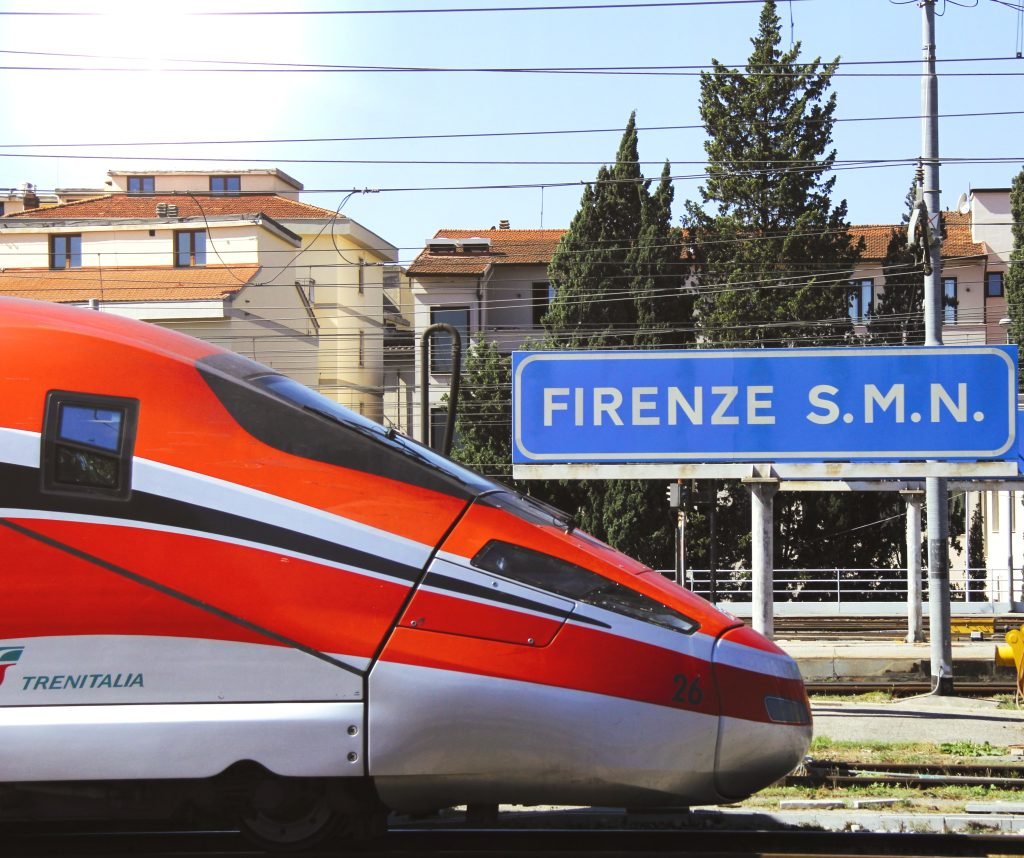
Day trips from Rome are one of the smartest moves you can make as a visitor to the Italian capital. The Italian high-speed rail network means you can be standing in a Renaissance city or walking through a 2,000-year-old port within 90 minutes of leaving your hotel. The problem is choice – dozens of towns are technically reachable, and not all of them justify a full day of your trip.
These are the five that do, with the exact logistics to execute each one without wasting half your day on the wrong train.
For how to structure your Rome days around day trips, our 5 days in Rome itinerary builds Tivoli and the Appian Way into the schedule naturally.
1. Ostia Antica – The Pompeii Nobody Knows About
If you want to walk through a perfectly preserved ancient Roman city without spending four hours in transit each way, go to Ostia Antica instead of Pompeii. This is the correct choice for most Rome visitors, and most travel guides bury it.
What it is
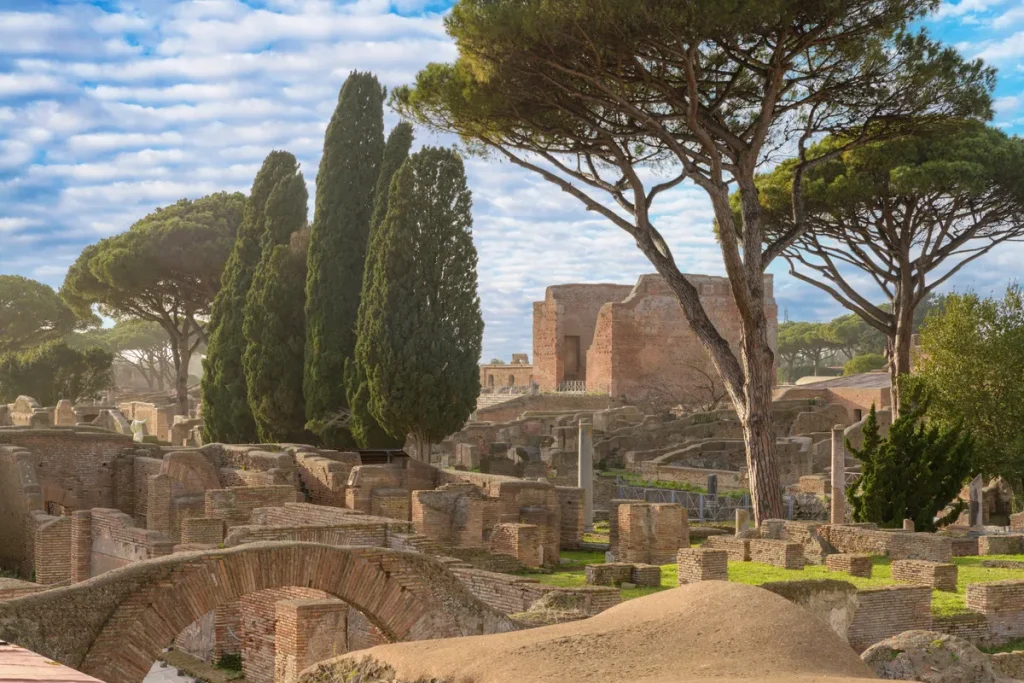
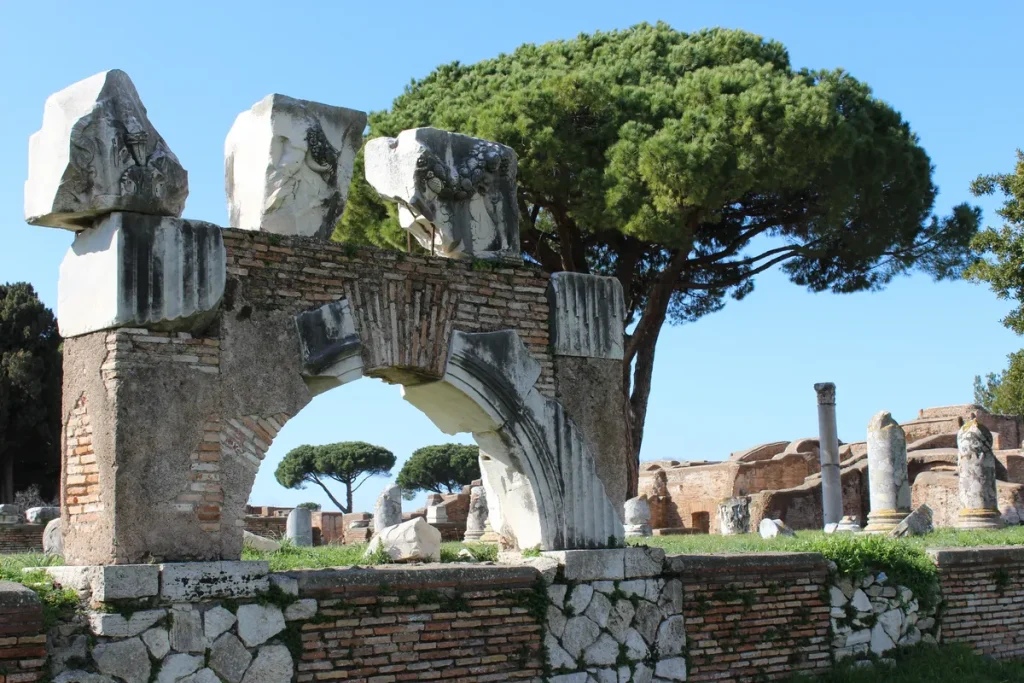
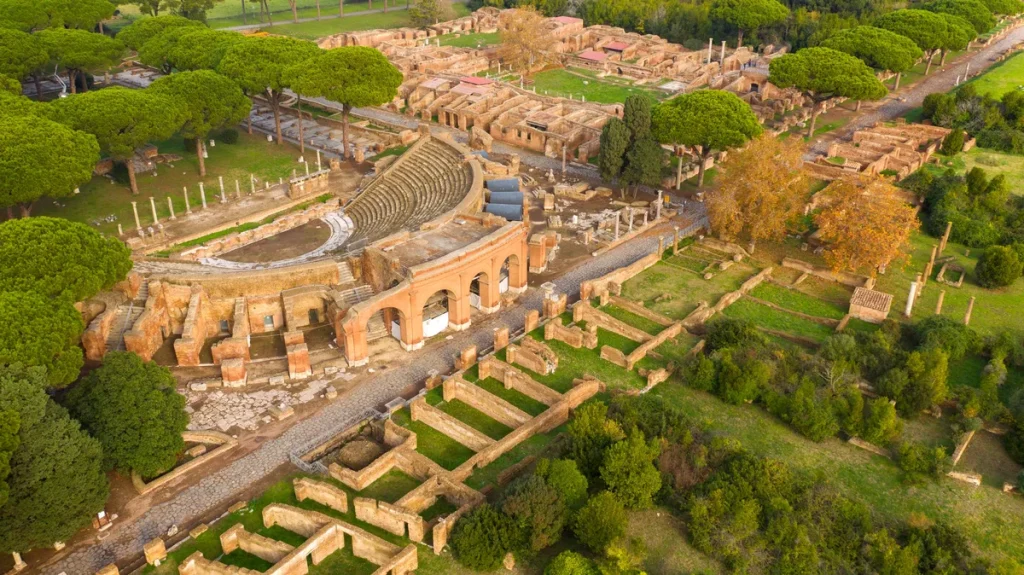
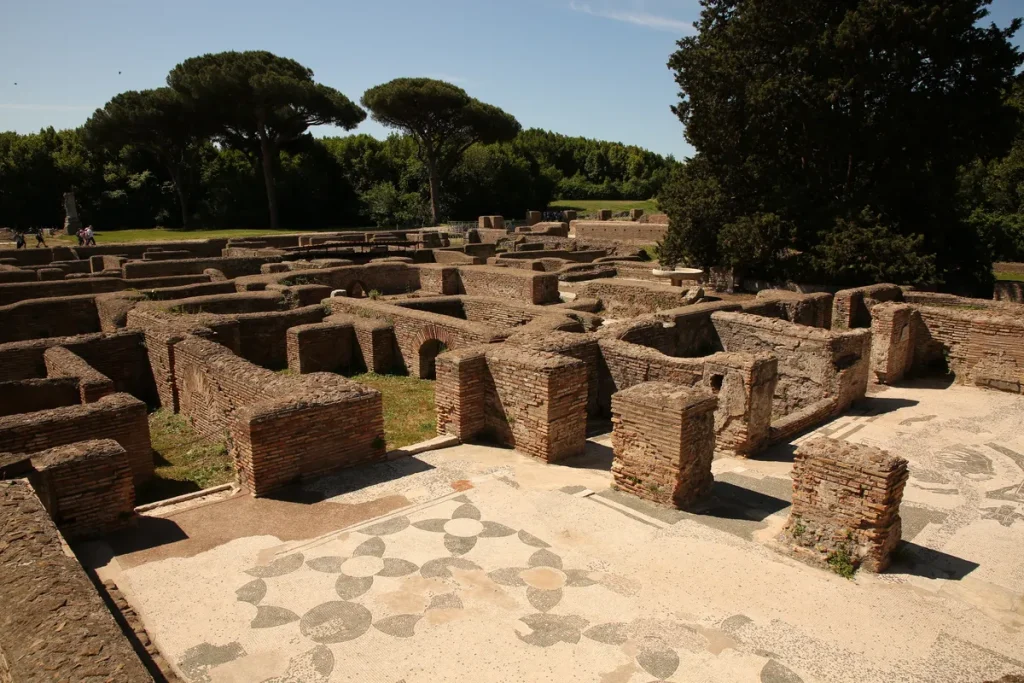
Ostia Antica was Rome’s commercial port city at the mouth of the Tiber. After the empire collapsed, it was not destroyed – it simply declined, was abandoned, and was slowly buried by river sediment over centuries. That process preserved it extraordinarily well.
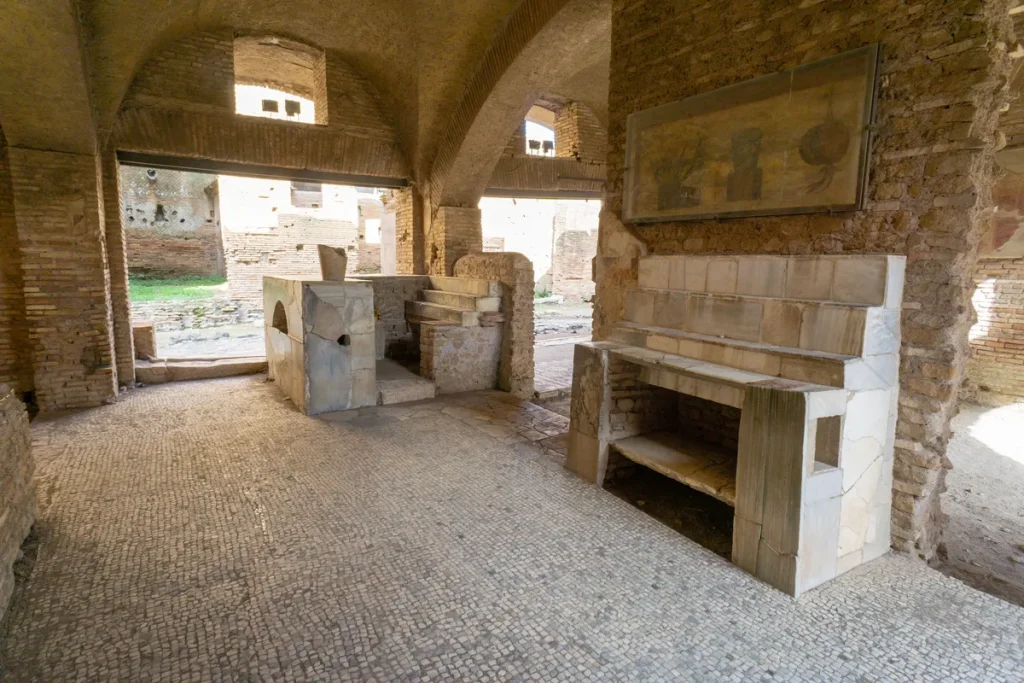
What makes Ostia different from Pompeii is the social mix. Pompeii is primarily a wealthy residential city. Ostia was a working port hub – you walk through multi-story apartment blocks, ancient public toilets, a fast-food counter (Thermopolium) with the painted menu still partially visible on the wall, and merchant guild headquarters decorated with floor mosaics identifying their trade. It reads like an entire city rather than a wealthy suburb.
What to see
- The Roman Theater: Original, largely intact, still used for summer performances. You can walk onto the stage.
- The Thermopolium: The stone counter where hot food was sold to merchants and travelers. One of the best-preserved examples in Italy.
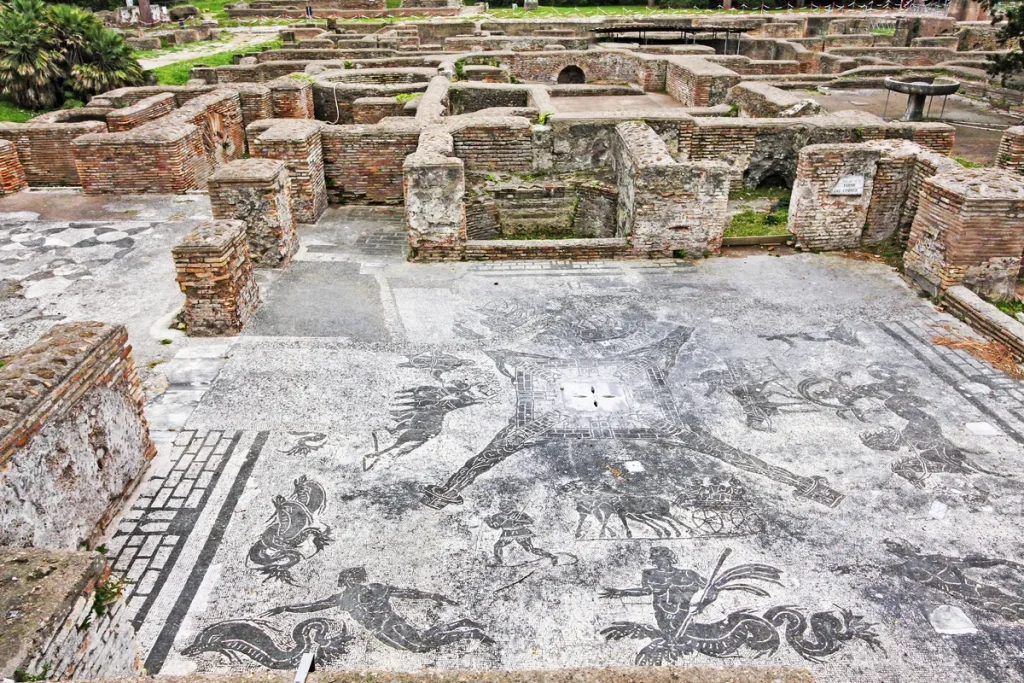
- The Baths of Neptune: Floor mosaics showing Neptune driving a chariot of seahorses, covering a room-sized surface in extraordinary detail.
What to eat
There is a cafe inside the archaeological park but it is overpriced and mediocre. Bring food from Rome or eat in the small town of Ostia Antica itself before entering the park – there are a handful of simple trattorias near the station serving decent pasta at reasonable prices.
Honest warning
The site is large and largely unshaded. In July or August, go at opening time (8:30 AM) and leave by noon. Bring a hat, sunscreen, and a full water bottle. The heat here is more punishing than in Rome because there are fewer buildings providing shade.
How to get there
This is the easiest and cheapest day trip on this list. Take Metro Line B to Piramide station, then walk two minutes to the adjacent Porta San Paolo station. Board the Metromare commuter train toward Cristoforo Colombo and get off at Ostia Antica – the journey takes around 26-30 minutes. Standard public transit ticket: €1.50. No advance booking needed, no dynamic pricing – just tap and go. The site entrance is a 10-minute walk from the station.
2. Naples – One Hour, Another Universe
Rome feels curated. Naples does not. It is loud, dense, slightly chaotic, and built around a culture of genuine intensity that does not exist anywhere else in Italy. You come here for the street life and for pizza that will change your reference point permanently.
What it is
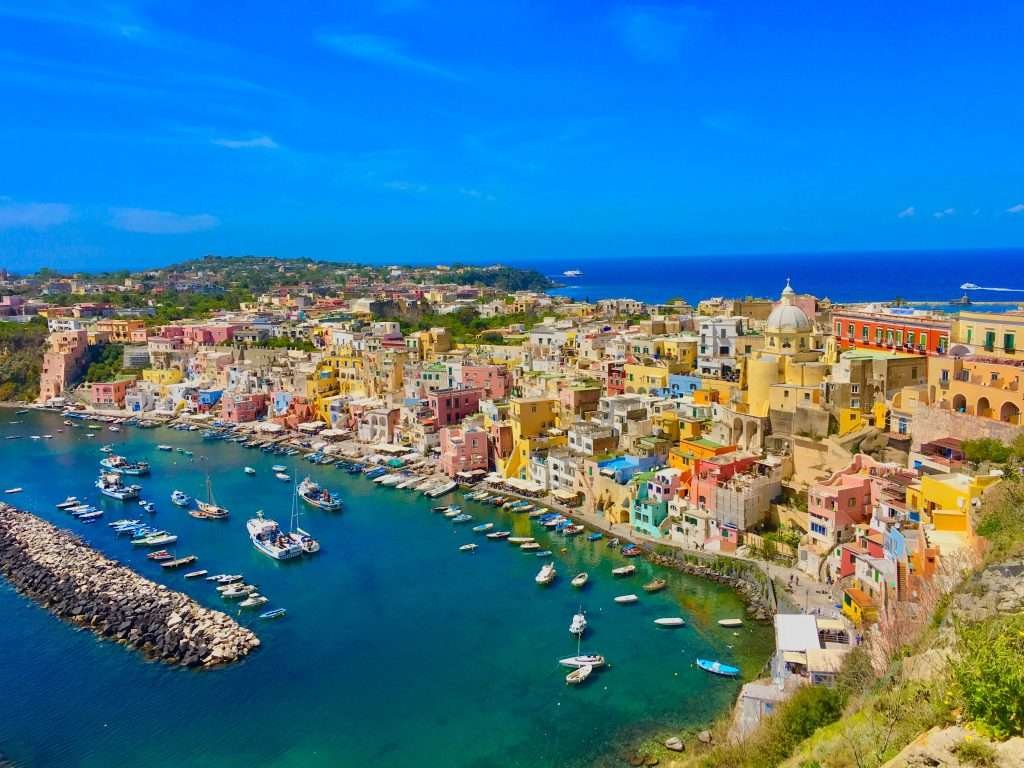
Naples sits 230 km south of Rome in the shadow of Vesuvius. The historic center is a UNESCO World Heritage Site – narrow medieval streets strung with laundry, Baroque churches around every corner, scooters everywhere. It operates on its own terms. First-time visitors sometimes find it overwhelming. Give it 20 minutes and it clicks.
What to see
- Spaccanapoli: The dead-straight street that splits the old city in half. Artisan workshops, espresso bars, street food vendors, shrines cut into walls. Walk the full length.
- The National Archaeological Museum: If you want to see the best of Pompeii without going to Pompeii, come here. When archaeologists excavated the site, the finest mosaics, frescoes, and statues came to this museum in Naples. The Alexander Mosaic alone – a room-sized battle scene of extraordinary detail – is worth the trip.
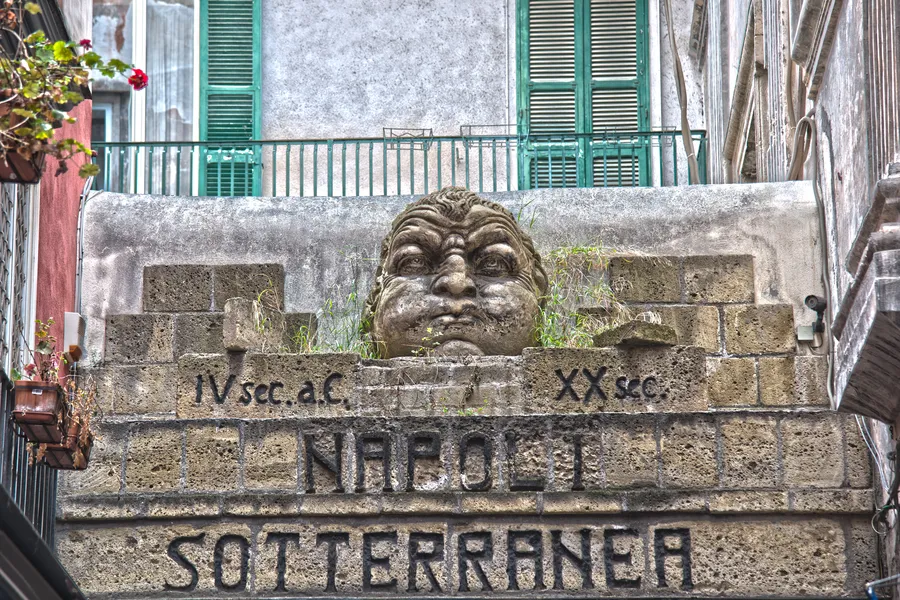
- Napoli Sotterranea: A guided tour through Greek and Roman aqueducts 40 meters below the city, later used as WWII bomb shelters. Claustrophobic in places and genuinely fascinating.


What to eat
This is not a secondary consideration – it is the primary reason many people make this trip.
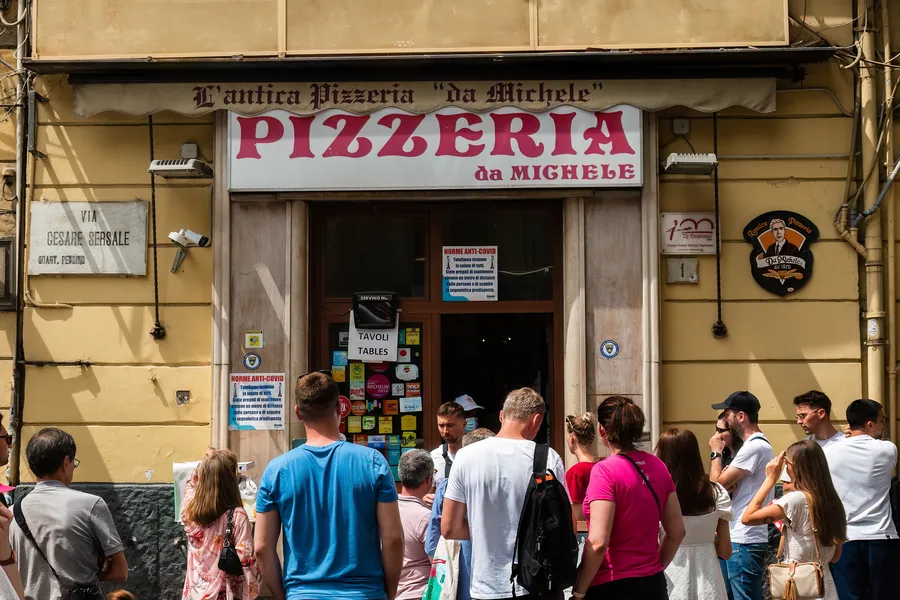
Authentic Neapolitan pizza has a soft, heavily blistered crust from a wood-fired oven running at around 485°C. The center is wet and yielding – you eat it with a knife and fork, folded, not held. The two canonical destinations are L’Antica Pizzeria da Michele (Margherita and Marinara only, expect a queue on the street) and Gino e Toto Sorbillo on Spaccanapoli. Budget an hour for queuing at either. It is worth it.
Also: sfogliatelle (shell-shaped pastry filled with sweet ricotta), available from bakeries on Spaccanapoli for €2-3. Buy one immediately on arrival.
The Pompeii question
A day in Naples is already full. However if you are specifically coming to Rome and Naples for Pompeii, it is entirely doable: take the Circumvesuviana commuter train from Napoli Centrale to Pompei Scavi (35 minutes, €3.20). Do Pompeii in the morning (arrive by 9 AM, leave by 1 PM before the afternoon heat), eat pizza in Naples in the afternoon, and take the high-speed back to Rome. It is a long day but not a brutal one if you start early.
How to get there
Book a Frecciarossa (Trenitalia) or Italo high-speed train from Roma Termini to Napoli Centrale. Journey time: 1 hour 6 minutes to 1 hour 13 minutes on the fastest services. This is dynamic pricing – book 3-4 weeks ahead on trenitalia.com or italotreno.it for fares starting around €15-20 each way. Same-day tickets can cost three times that. Trains run every 20-30 minutes throughout the day, so return flexibility is easy. Naples is also covered in depth in our First Time in Naples Guide.





3. Florence – The Renaissance in One Day (Just About)
Florence in a single day is genuinely hard. The city is dense with things worth seeing and the museums require advance booking and real time to do properly. Treat it as a targeted strike on two or three specific things rather than a general browse.
What it is
Florence is where the Renaissance happened. The Medici family funded the art, the artists delivered, and the result is the highest concentration of masterpiece-level painting and sculpture anywhere in Europe – in a historic center small enough to walk across in 20 minutes.
What to see – pick two, not all three
- The Accademia Gallery: Michelangelo’s David. The 17-foot marble statue is genuinely arresting in person in a way photos do not convey. The museum is small and manageable. Book timed entry months in advance – this is not an exaggeration, it sells out far ahead in peak season.
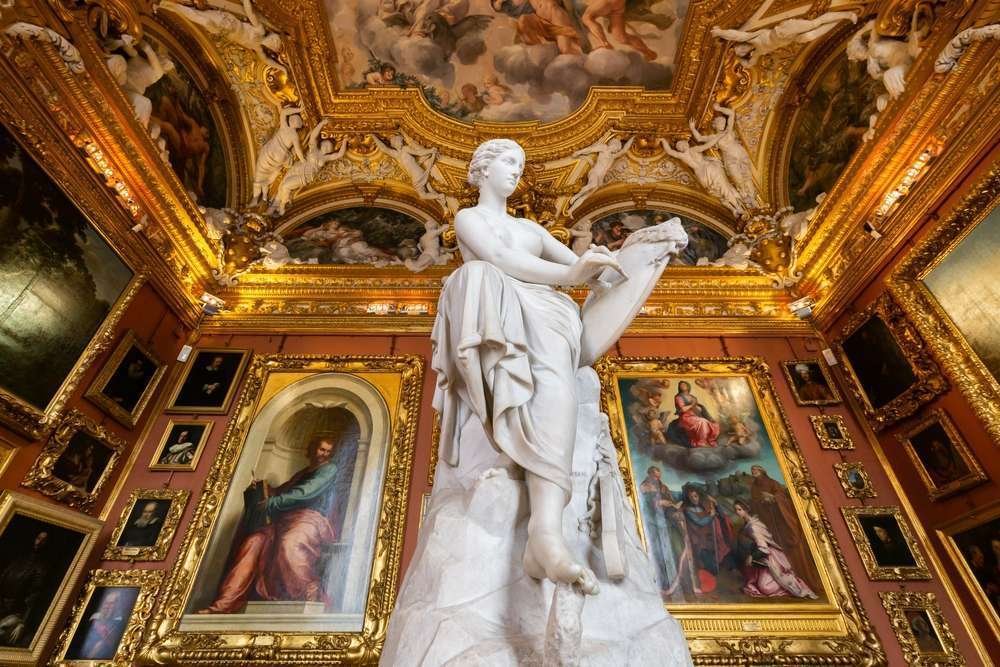
- The Uffizi Gallery: The greatest collection of Renaissance painting on earth – Botticelli’s Birth of Venus, Leonardo, Raphael, Caravaggio. It is a large, complex museum. You need at least 2.5 hours to do it properly. Book well in advance.
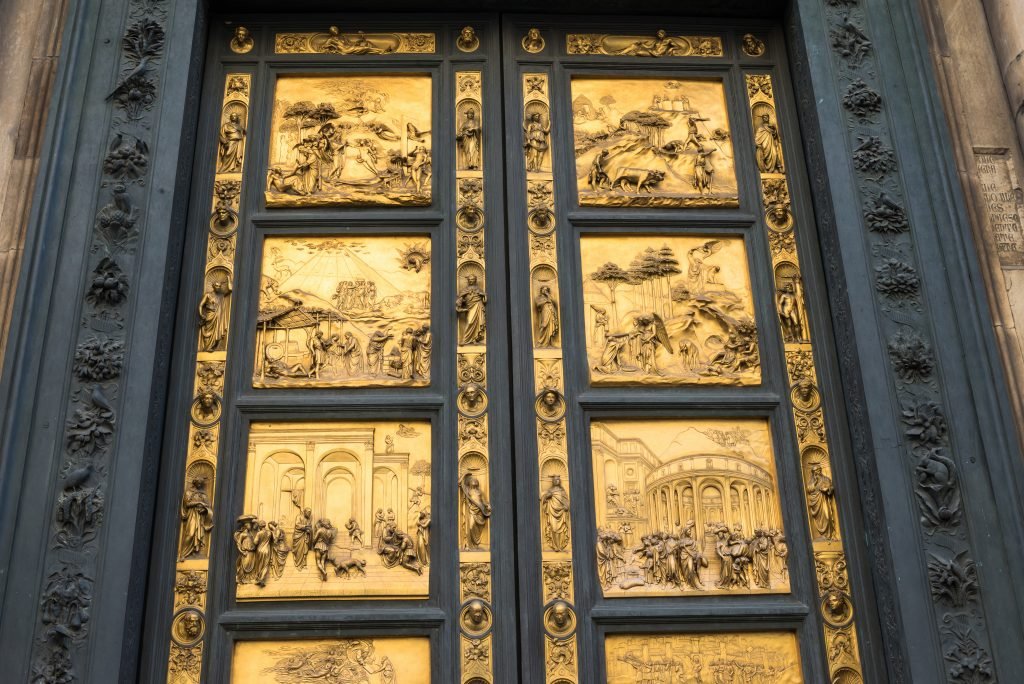
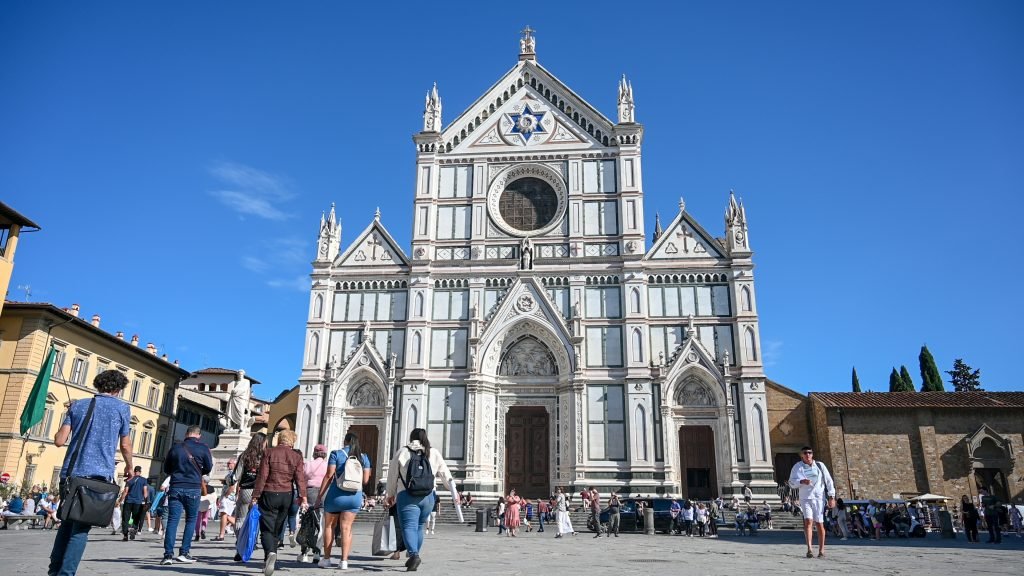
- The Duomo: The exterior alone – clad in pink, white, and green marble with Brunelleschi’s red dome rising above – requires no ticket and is worth an hour of your time. If you want to climb the dome (463 steps, extraordinary view), book the combined ticket for the cathedral complex in advance at operaduomo.firenze.it.
Honest assessment: Do not try all three in one day. Pick the Accademia or the Uffizi, not both, and spend the rest of your time walking the Oltrarno neighborhood across the Ponte Vecchio, or sitting at a cafe near the Piazza della Signoria watching the city.



What to eat
A Bistecca alla Fiorentina is the correct lunch: a thick T-bone from Chianina cattle, grilled over wood, aggressively salted, served rare. Do not ask for it well-done – most kitchens will refuse. It is sold by weight and shared between two. Pair it with a glass of Chianti Classico. Expect to pay €35-50 per person for a proper one.
For something cheaper: lampredotto (tripe) sandwiches from a street cart near the Mercato Centrale. A classic Florentine street food that costs around €5 and is excellent.



How to get there
Frecciarossa or Italo high-speed from Roma Termini to Firenze Santa Maria Novella. Journey time: 1 hour 25-35 minutes depending on the service. Book 3-4 weeks ahead for fares starting around €20-25 each way. Leave Rome no later than 7:00 AM to have a full day. Take the 8:00 PM train back. It is a long day but not an unreasonable one.
4. Orvieto – The Slow Day
When the pace of Rome and Naples starts to feel like too much, go to Orvieto. It is small, quiet, built on top of a cliff, and moves at a completely different speed.
What it is
Orvieto is a medieval town of around 20,000 people sitting on top of a flat plug of volcanic tufo rock in Umbria. From the valley floor it appears to float – sheer vertical cliffs on all sides, the town perched above them. It is famous for its Cathedral, its white wine, and its underground tunnels.
What to see
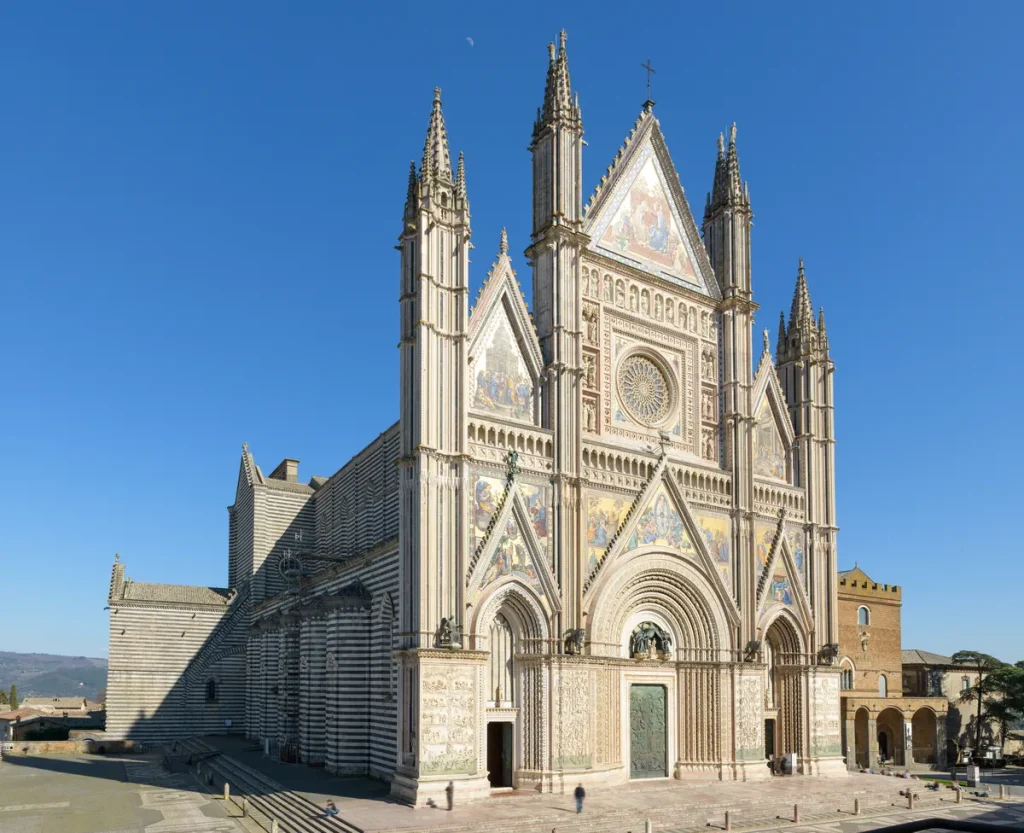
- The Cathedral (Il Duomo): The facade is one of the great Gothic statements in Italy – covered in intricate gold mosaics, colored marble reliefs, and bronze doors. Walk up to it from the quiet medieval streets and the sudden visual impact is striking. Inside, the Chapel of San Brizio contains Luca Signorelli’s frescoes of the Last Judgment – the direct source material for Michelangelo’s Sistine Chapel version painted 30 years later.
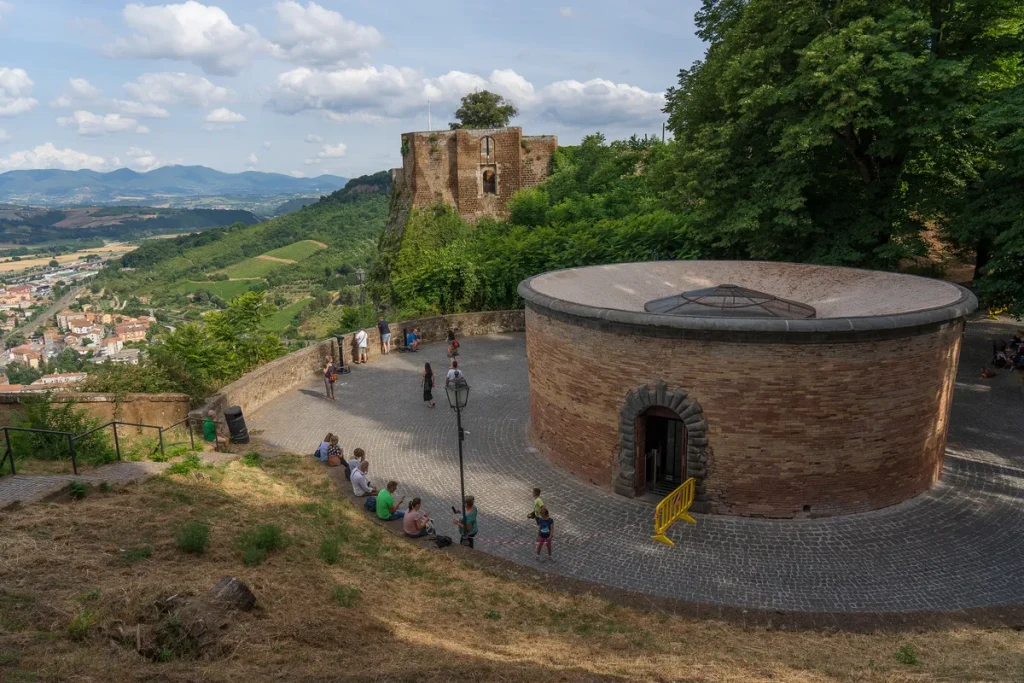
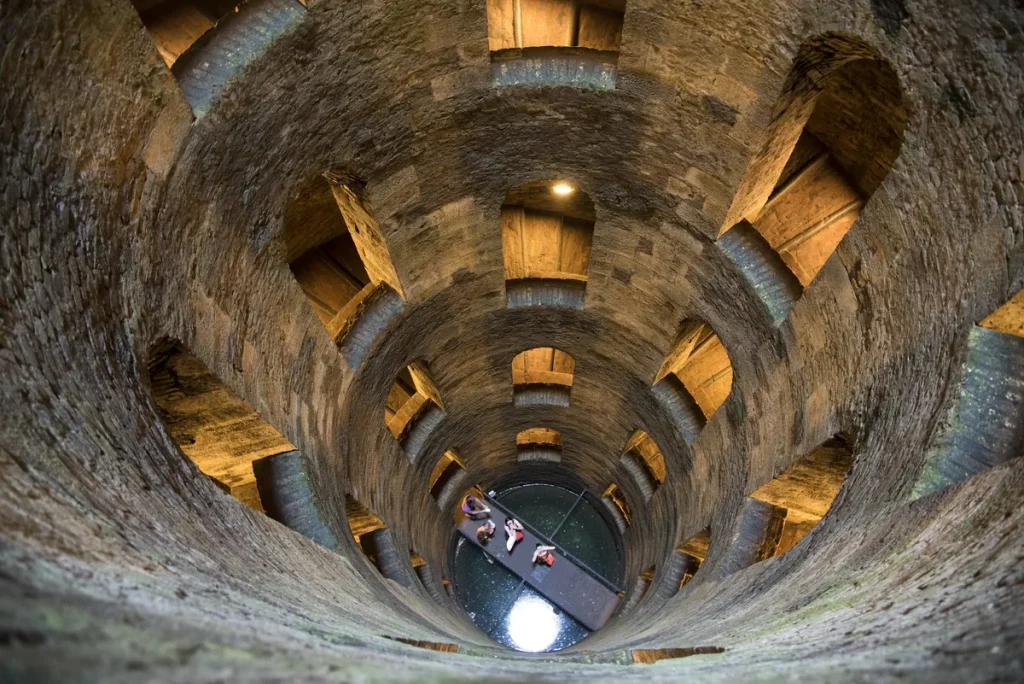
- St. Patrick’s Well (Pozzo di San Patrizio): A 175-foot well with a brilliant double-helix staircase commissioned by Pope Clement VII in the 16th century so water donkeys going up never crossed paths with those coming down. You can walk all the way to the bottom.
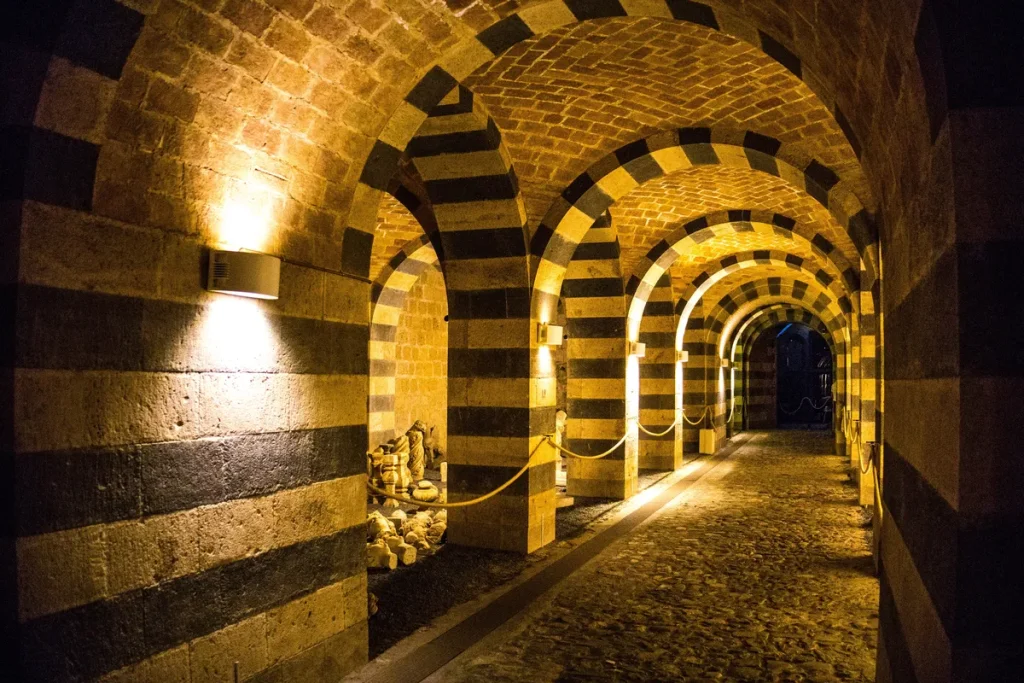
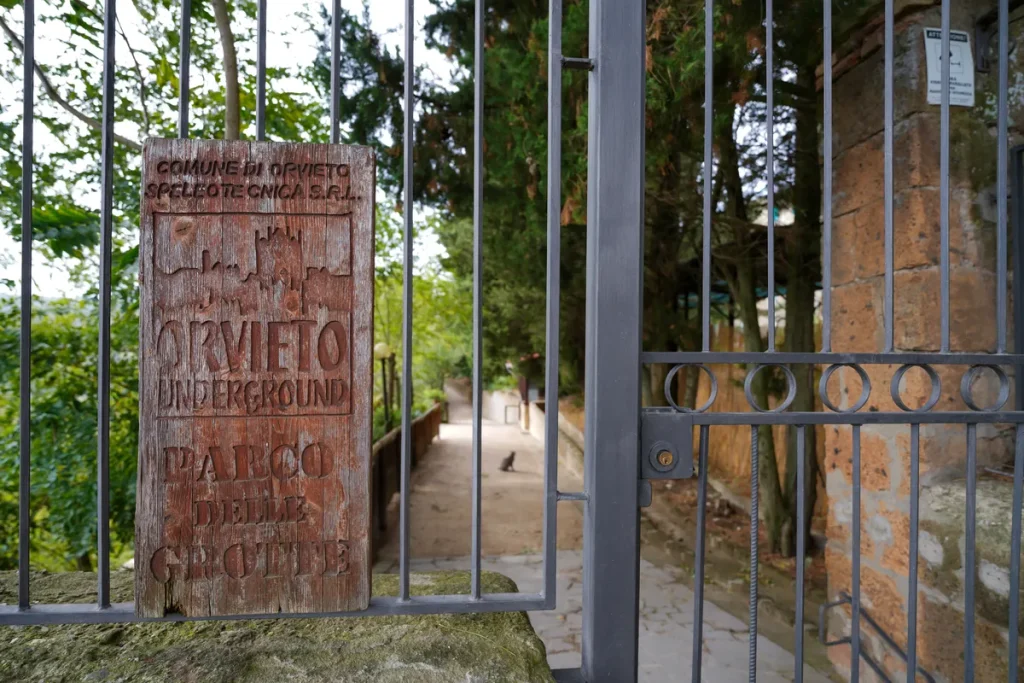
- Orvieto Underground: A network of Etruscan and medieval tunnels carved through the tufo beneath the city, used for everything from wine storage to pigeon farming to WWII shelters. Guided tours run regularly and cost around €7.
What to eat
Orvieto is Umbria, which means truffles. Look for strangozzi al tartufo – thick hand-rolled pasta with black truffle shavings. Also: a glass of Orvieto Classico, the local dry white wine, at almost any bar in the main piazza.

The real advantage of Orvieto
No advance booking required for anything. The Cathedral, the well, the underground – all manageable on arrival. Regional train prices are fixed, not dynamic. This is the day trip you can decide on at 8 AM and execute by 9 AM with zero preparation.
How to get there
Standard Trenitalia Regionale Veloce from Roma Termini to Orvieto. Journey time: around 1 hour 15 minutes. Ticket: roughly €9 each way, fixed price. The funicular from the station up to the historic center takes 3 minutes and costs €1.30. No dynamic pricing, no advance booking pressure. Just go. Also, check out our First Time in Florence Guide.
5. Tivoli – Two UNESCO Sites, 45 Minutes Away
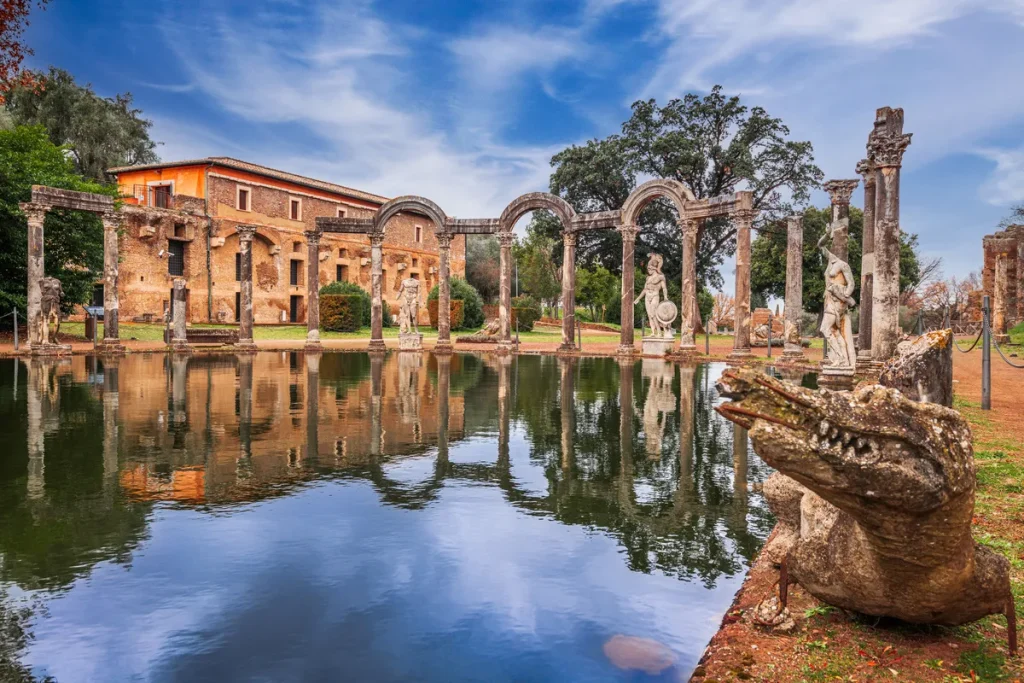
Tivoli is the closest quality day trip from Rome and the most underused. It is a 45-minute commuter train ride and contains two UNESCO World Heritage Sites – one Renaissance garden, one Roman imperial complex.
What it is
For 2,000 years, the wealthy escaped Rome’s summer heat by coming to Tivoli in the Sabine Hills. The emperor Hadrian built his personal estate here in the 2nd century AD. A Renaissance cardinal built his villa and gardens in the 16th century. Both survive in extraordinary condition.
Villa d’Este
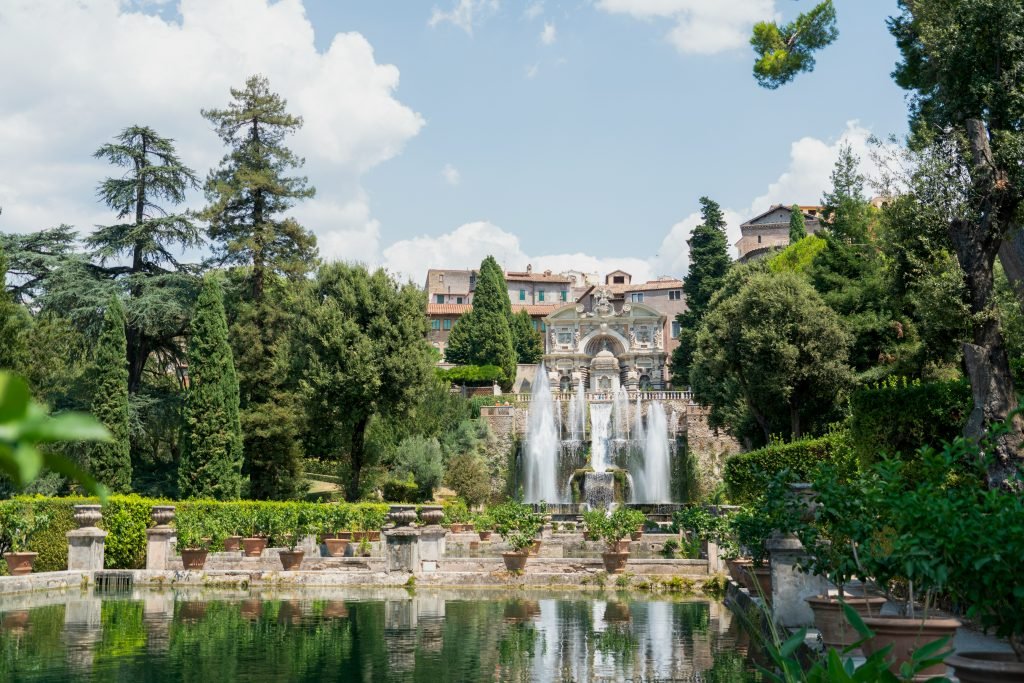
The gardens of Villa d’Este are a 16th-century engineering achievement built on a hillside – hundreds of fountains powered entirely by gravity and a diverted river, arranged across terraced levels with long avenues of water jets, grottos, and moss-covered stone. It is genuinely spectacular. Arrive early – the morning light through the cypress trees is the best time visually. Ticket: €14. Book in advance at villadestetivoli.info.
Hadrian’s Villa (Villa Adriana)
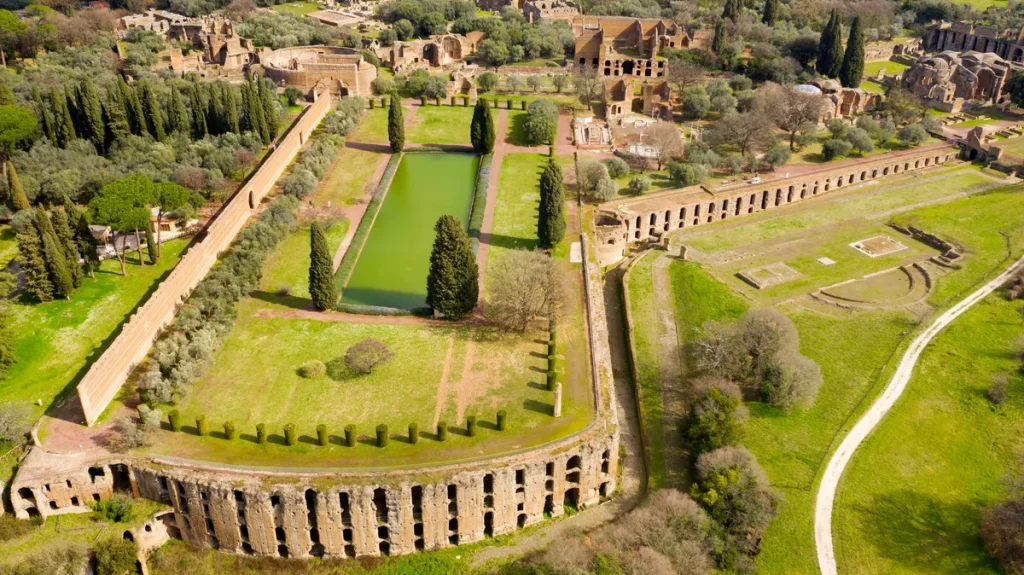
Down the hill from the town, this is not a villa – it is a complex the size of a small town. Emperor Hadrian designed it to replicate the best architecture he had seen on his travels across the empire: Egyptian temples, Greek baths, Athenian libraries. Most of it is ruined but the scale is still comprehensible, and unlike the Colosseum or the Forum, it is rarely crowded. Wear comfortable shoes – there is significant walking. Ticket: €12. Book at coopculture.it.
Important: Villa d’Este and Hadrian’s Villa are 3 km apart. Do not try to walk between them along the main road. Take the local CAT bus between the two sites (line 4 or 4X from Largo Garibaldi in the town center), or take a taxi (around €10).
How to get there
Two options:
- Train: From Roma Tiburtina (not Termini) to Tivoli on the regional line. Journey: around 1 hour. Fare: approximately €3.20 each way. Trains run frequently.
- Bus: Metro Line B to Ponte Mammolo, then Cotral bus to Tivoli town center. Around 50 minutes. Useful if you want to be dropped directly in the town rather than the station.
Hadrian’s Villa is the better morning site (cooler, fewer people). Villa d’Este works better in the afternoon when the fountains are fully running. Structure your day around that order.
Plan Your Trip
- First Time in Rome
- 1 Day in Rome
- 3 Days in Rome
- 5 Days in Rome
- Rome on a Budget
- Foodies Guide to Rome
- Where to Stay in Rome
- Day Trips from Rome
- 25 Best Things to Do in Rome
- Rome in Winter
- Rome vs Florence
- Rome vs Venice
- 10 Days in Southern Italy
- Milan vs Rome
- Naples vs Rome
- Day Trip to Tivoli from Rome
- Amalfi Coast Travel Guide
What is the easiest day trip from Rome?
Ostia Antica. Take Metro Line B to Piramide station, walk two minutes to Porta San Paolo station, and board the Metromare commuter train – the journey takes around 28 minutes and costs €1.50 on a standard transit ticket. No advance booking, no dynamic pricing, no transfers. The archaeological site itself is one of the best-preserved Roman cities in Italy and far less crowded than Pompeii. The only preparation required is arriving at opening time (8:30 AM) in summer to avoid the heat – the site has almost no shade.
How far in advance do you need to book day trips from Rome?
It depends entirely on the destination. Ostia Antica and Orvieto require no advance booking for anything – you can decide the morning of and execute without preparation. Florence requires booking the Accademia or Uffizi weeks to months ahead in peak season – same-day entry is not realistic. Naples and Pompeii require advance train tickets for the best fares (book three to four weeks ahead on trenitalia.com), though the sites themselves can be visited without pre-booking outside July and August. Tivoli’s Villa d’Este and Hadrian’s Villa both accept online bookings and are worth reserving a few days ahead in summer.
Can you do Naples as a day trip from Rome?
Yes, and it is the most rewarding day trip on this list if you do it efficiently. The Frecciarossa covers the 230 kilometers in just over an hour. Leave Rome by 7:30 AM, spend the morning walking Spaccanapoli and the National Archaeological Museum, eat pizza at L’Antica Pizzeria da Michele or Sorbillo at lunch, and take the 7:00 or 8:00 PM train back. Book the train three to four weeks ahead for fares starting around €15 to €20 each way. If you want to add Pompeii, take the Circumvesuviana from Naples to Pompei Scavi, do the ruins from 9:00 AM to 1:00 PM, then return to Naples for the afternoon.
Is Florence worth visiting as a day trip from Rome?
Yes, but only if you go with a specific plan rather than a general intention to see Florence. The high-speed train takes around 90 minutes – leave Rome no later than 7:00 AM and take the 8:00 PM train back. Choose either the Accademia (Michelangelo’s David) or the Uffizi, not both – trying to do both in one day leaves no time for the city itself. Book whichever museum you choose months in advance in peak season. Spend the rest of the day in the Oltrarno neighborhood, eat a Bistecca alla Fiorentina for lunch, and walk the Ponte Vecchio in the evening.
What is the most underrated day trip from Rome?
Orvieto. It is 75 minutes by regional train, costs around €9 each way at a fixed price with no dynamic pricing, and requires no advance booking for anything. The Cathedral facade is one of the most striking Gothic statements in Italy. St. Patrick’s Well has a double-helix staircase commissioned so water donkeys going up never crossed those coming down. The Orvieto Underground tour costs €7 and takes you through Etruscan tunnels carved directly into the volcanic rock below the town. The whole day costs under €50 including transport, entry fees, and lunch – and the crowds are a fraction of anything you will encounter in Florence or Naples.
5 Best Day Trips from Rome — 2026
From 28 minutes to 90 minutes. Click any stop for what to book, what to eat, and the transit from Rome.