Part 5: Culture, Experiences, and Food
To truly engage with Granada, you must participate in the free economy and the Gypsy traditions.
19. Execute a Flawless Tapas Crawl Granada is the undisputed capital of the free tapas economy. If you order a caña (a small draft beer) at any traditional bar, you will be handed a free plate of food. The food escalates with every round of drinks you order. To do this right without overspending, arm yourself with my specific bar-hopping routing in Granada on a Budget: The Ultimate Money-Saving Guide (2026).
20. Eat a Pionono You cannot leave the city without eating its signature, highly specific pastry. The Pionono was invented in the nearby town of Santa Fe to honor Pope Pius IX. It is a small, sticky cylinder of sponge cake heavily drenched in sweet syrup, topped with toasted pastry cream. It is aggressively sweet and requires a dark, bitter espresso to balance it out. (For the exact bakeries to buy them, check my What to Eat in Granada: The Ultimate Foodie Guide (2026 Edition)).

21. Watch a “Zambra” in a Sacromonte Cave Sacromonte is the historic home of Granada’s Roma (Gypsy) community, who historically carved their homes directly into the soft rock of the hillside. This neighborhood is the birthplace of the Zambra, a raw, passionate, incredibly intimate variation of flamenco danced barefoot in the caves. The Rule: Avoid any promoter selling a €70 “dinner and a show” package. Book a ticket for the show only at a respected historical cave like Zambra María la Canastera.

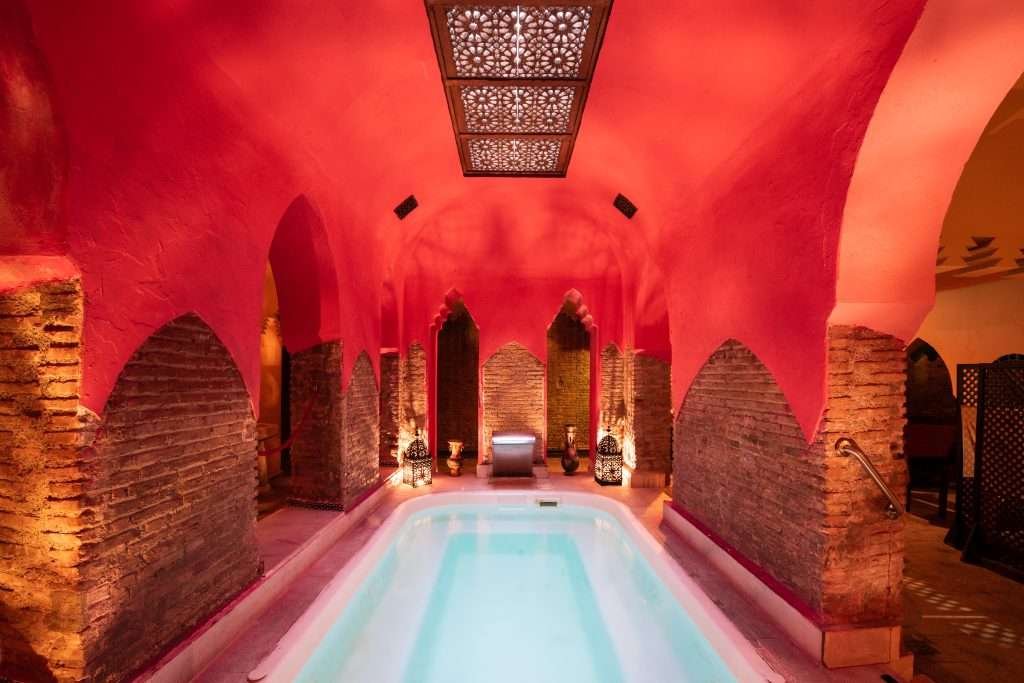
22. Soak in the Hammam Al Ándalus After two days of climbing jagged cobblestone hills, your legs will be destroyed. Book a session at the Hammam Al Ándalus, located near Plaza Nueva. Built on the ruins of an original 16th-century Arab bathhouse, it features stunning Moorish arches, dim lighting, and thermal pools of varying temperatures. It is the ultimate physical reset button.
23. Wander the Carmen de los Mártires Gardens Most tourists walk right past these gardens on their way down from the Alhambra. Do not make this mistake. This sprawling, 19th-century estate features French, English, and Andalusian gardens, complete with roaming peacocks, a small lake, and incredible views of the city. Best of all, entry is completely free.

24. Escape the History at Parque de las Ciencias If you are traveling with children, or if you simply have “ruin fatigue” from looking at 15th-century architecture all week, walk south of the city center to the Science Park. It is one of the largest interactive museums in Europe, featuring a massive biodome, a butterfly house, and brilliant interactive physics exhibits.
25. Escape to the Mountains (The Alpujarras) Granada sits at the base of the Sierra Nevada. You can literally take a 45-minute bus ride from the palm trees of the city center to a ski resort. If you have an extra day, rent a car or take a bus into Las Alpujarras, a series of high-altitude, whitewashed mountain villages famous for their sweeping valley views and for producing Jamón de Trevélez, some of the sweetest cured ham in Spain. For the exact bus logistics and hiking routes, you must bookmark my guide on the 5 Best Day Trips from Granada (Worth the Effort).
Do I really need to book the Alhambra in advance?
Yes, absolutely. During the spring and autumn high seasons, general admission tickets for the Alhambra (specifically the Nasrid Palaces) sell out months in advance. You cannot simply walk up to the ticket booth on the day of your visit and expect to get inside.
Are the tapas actually free everywhere in Granada?
In traditional bars, yes. Granada fiercely protects the free tapas economy. Whenever you order a paid beverage (like a draft beer, glass of wine, or a soda), the bartender will automatically bring you a small plate of food at no additional cost.
What is the best viewpoint to see the Alhambra?
The Mirador de San Nicolás in the Albaicín neighborhood is the most famous and provides the classic, direct view of the Alhambra with the Sierra Nevada mountains behind it. However, if you want a higher, quieter view, hike up to the Mirador de San Miguel Alto.
Is the Albaicín neighborhood accessible for wheelchairs or strollers?
The Albaicín is a historic Arab quarter built on a steep hill. It is a labyrinth of very narrow, winding alleys paved with jagged cobblestones (empedrado). It is highly inaccessible for cars, incredibly difficult for strollers, and largely inaccessible for wheelchairs.
What is a Zambra?
A Zambra is a specific, highly emotional, and raw variation of flamenco that originated in the Roma (Gypsy) community of Granada’s Sacromonte neighborhood. It is traditionally performed incredibly close to the audience inside whitewashed cave dwellings.