Part 3: The Catholic Reconquest and Grand Architecture
After 1492, the Catholic Monarchs aggressively stamped their architectural authority over the Islamic city.
8. The Royal Chapel (Capilla Real) Ferdinand and Isabella, the monarchs who conquered Granada and funded Columbus, loved this city so much they ordered their bodies to be buried here. The Capilla Real is an ornate, late-Gothic mausoleum. You can view their spectacular, elevated marble tombs, and then walk down a narrow staircase into the stark, chillingly unadorned crypt below to see their actual, simple lead coffins.
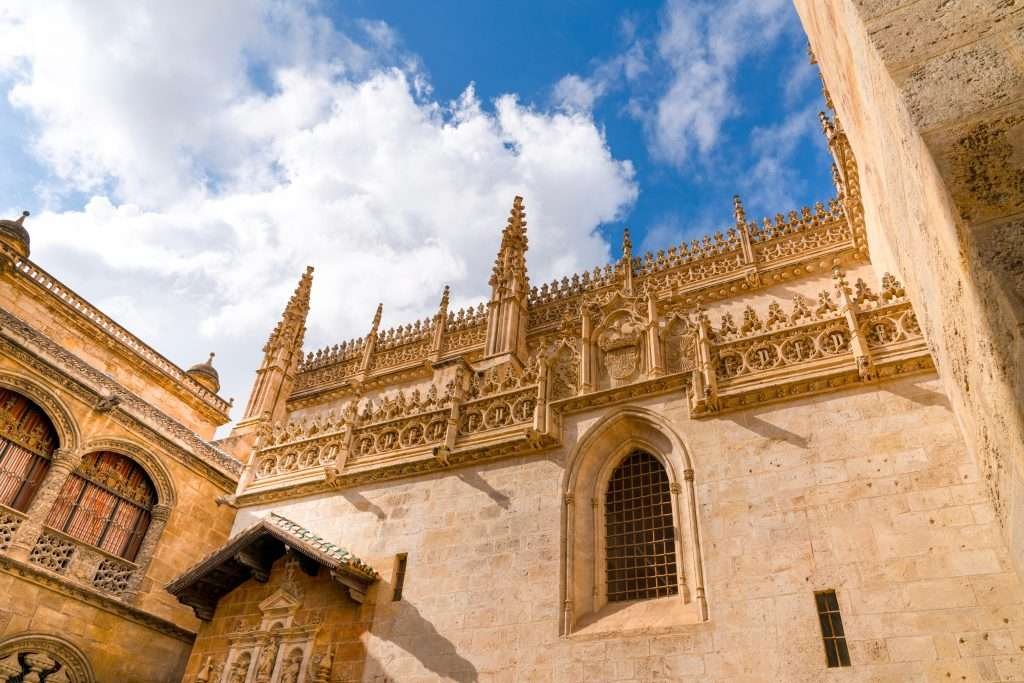
9. Granada Cathedral (Catedral de la Encarnación) Built directly adjacent to the Royal Chapel (and intentionally constructed over the site of the city’s main mosque to project dominance), this Cathedral is a towering shock to the system. After the intimate, delicate scale of the Alhambra, the Cathedral’s cavernous, blindingly white Renaissance interior and colossal Corinthian columns feel overwhelmingly massive.
10. Monasterio de San Jerónimo Located slightly outside the chaotic immediate center, this massive monastery was the first one built in Granada after the reconquest. It is wildly famous for its spectacular main cloister, which is planted with fragrant orange trees and surrounded by arched Renaissance corridors. It is an oasis of total silence.

11. The Cartuja Monastery (Monasterio de la Cartuja) You will have to take a short bus ride or a long walk to the northern edge of the city to see this, but it is mandatory for art history fans. From the outside, it looks plain and austere. Inside, it is arguably the most violently ornate, over-the-top explosion of Spanish Baroque architecture in existence. The sacristy is a dizzying swirl of painted stucco, gold leaf, and rare marbles.
