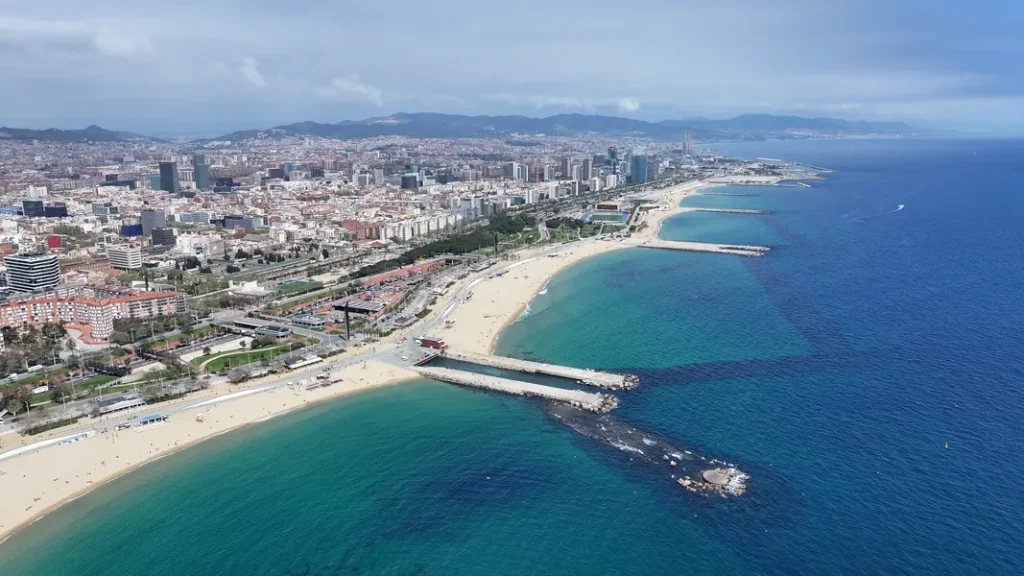
If you are planning a weekend in Barcelona, you need a plan before you book your flights.
Barcelona has an over-tourism problem. Show up without a strategy and your trip becomes an expensive, exhausting mess – hours queuing in direct sun, a pickpocketed wallet on the Green Line, and frozen paella reheated under the Las Ramblas tourist lights.
Plan it properly and it is one of the best cities in Europe. Gothic medieval streets running directly into Gaudí’s architecture. A Mediterranean coastline paired with a Catalan culture that operates on its own distinct schedule and rules. Good food at every price point if you know where to look.
If you have 72 hours, you cannot waste a single one. This itinerary covers what to book, where to eat, and which traps to avoid. If this is your first time in the city, read our first time in Barcelona guide before you continue – it covers the transport card, meal times, and the Sagrada ticketing process in detail.
Pre-Trip Logistics: Read This Before Day One
1. Book tickets now, not later
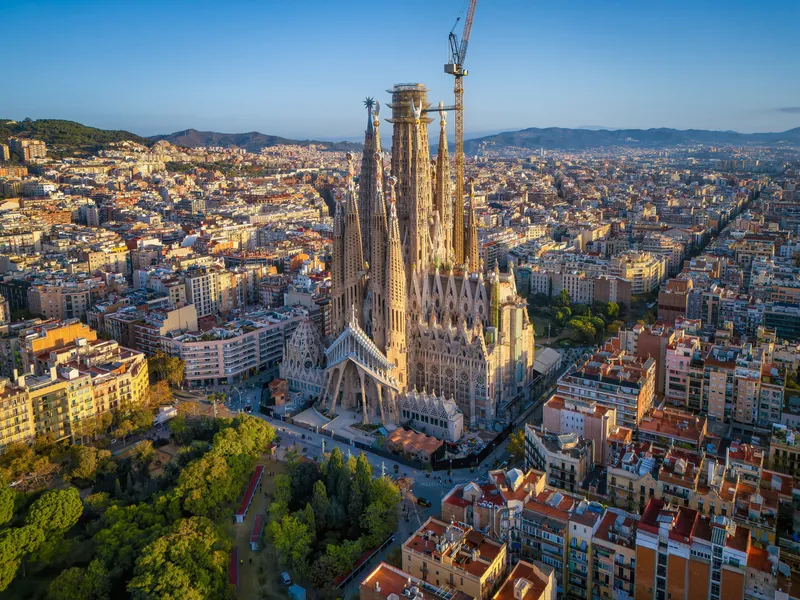
The Sagrada Família and Park Güell both require timed entry tickets booked online. During spring and summer, they sell out weeks in advance. There are no walk-up queues, no standby lines. Book both before you read the rest of this guide so you can be tranquil during your 3 days in Barcelona.

2. Pickpockets
Barcelona has a serious pickpocket problem, concentrated on the Metro around Espanya and Catalunya stations, and in the Gothic Quarter crowds. Cross-body bag. Phone in a front pocket. Nothing hanging on the back of a café chair. Full breakdown in our first time in Barcelona guide.
3. The paella rule
A proper paella takes 45 minutes from scratch. If you order one on Las Ramblas and it arrives in ten minutes, it was microwaved. Locals eat paella at lunch, never dinner – it’s too heavy. More on where to actually eat in our Barcelona food guide.


Day 1: Gaudí and the Village of Gràcia
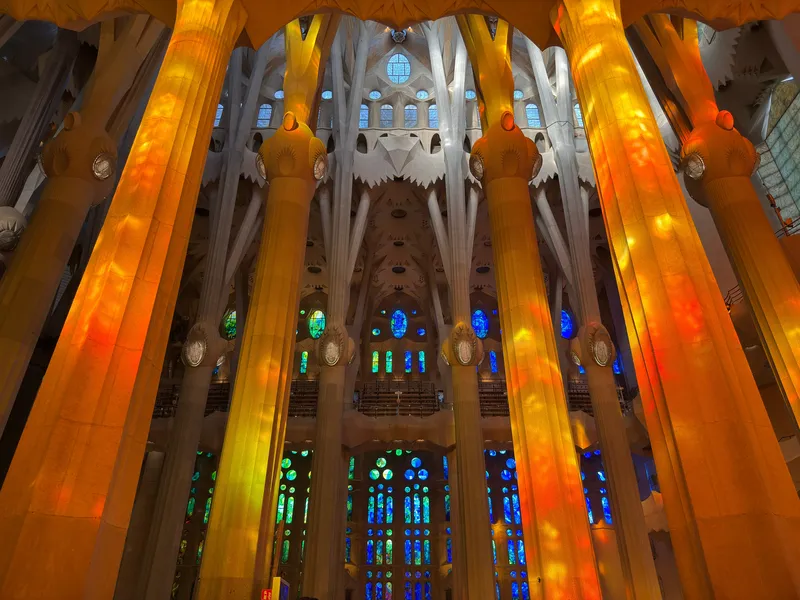
08:30 AM – Sagrada Família
Book the first slot of the morning. The afternoon brings cruise ship crowds and the entry gates become chaos by 11:00 AM.
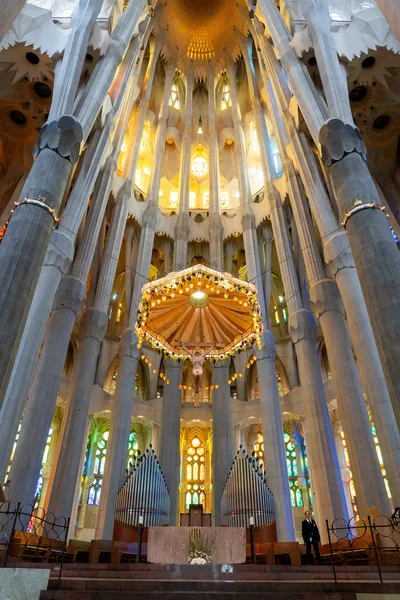
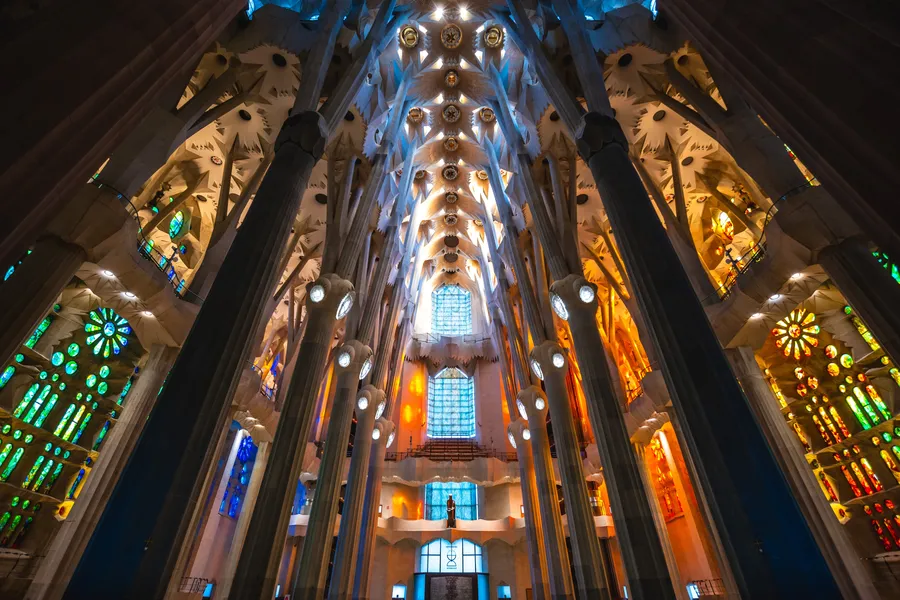
Gaudí designed the interior to look like a stone forest – the columns branch as they rise, supporting a canopy of geometric vaulting. The light shifts dramatically by time of day: the eastern facade uses cool blue and green glass for morning light; the western facade runs amber and red for evenings. Get there at opening and spend at least 90 minutes inside.
(Skip the tower climb – claustrophobic, adds 45 minutes, and construction scaffolding partially blocks the view.)

10:30 AM – Eixample District
Walk southwest from the basilica into Eixample. This grid district was built in the 19th century when the city expanded beyond its medieval walls. The intersections are chamfered octagonal corners – every block has clipped edges creating small plazas at each junction. Walk south down Passeig de Gràcia.

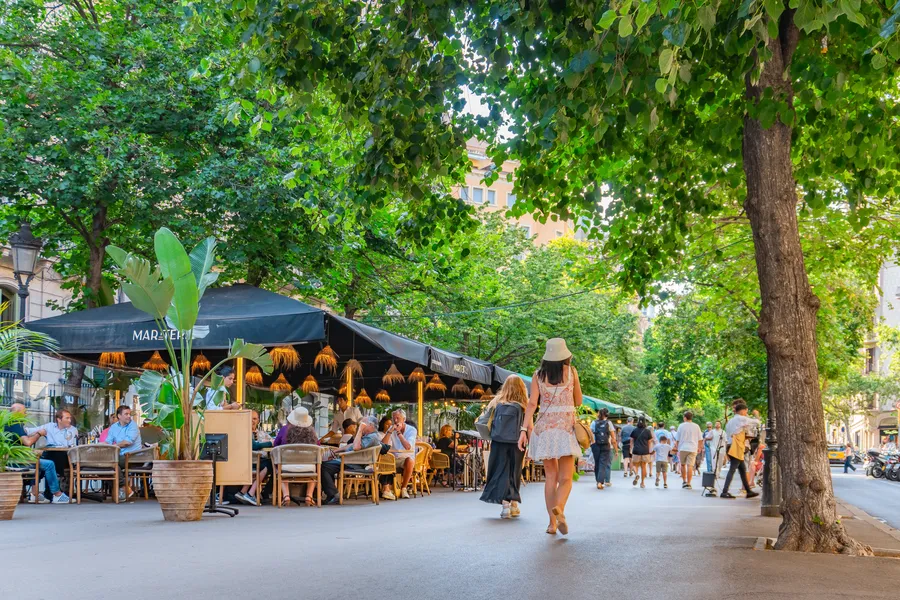
11:30 AM – The Block of Discord
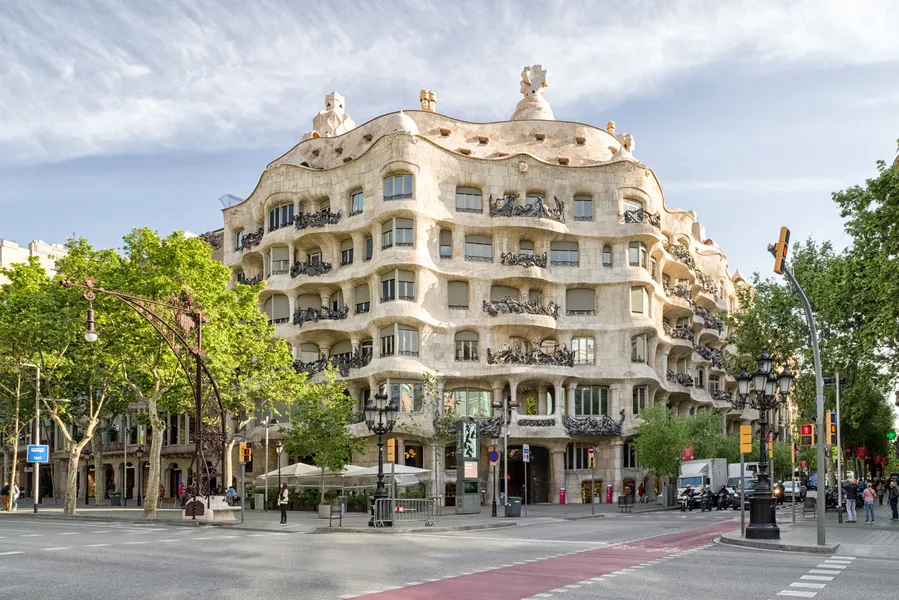
On Passeig de Gràcia between Carrer d’Aragó and Carrer del Consell de Cent, three Modernista architects built competing buildings on the same block.
Choose one to go inside:
Casa Batlló (No. 43): The facade is covered in iridescent ceramic tiles that shift color as you move. The balconies look like skulls. The roof resembles a dragon’s back. The interior has virtually no straight lines.
Casa Milà / La Pedrera (No. 92): A massive undulating limestone building. The rooftop is the reason to visit – covered in warrior-helmet chimneys that allegedly inspired the stormtrooper design in Star Wars.
Doing both costs too much time and money. Pick one.

02:00 PM – Lunch in Gràcia
Walk north across Avinguda Diagonal into the Gràcia neighborhood. Until the late 19th century this was a separate village and it still feels like one – narrow pedestrian streets and shaded squares replacing the wide Eixample boulevards.
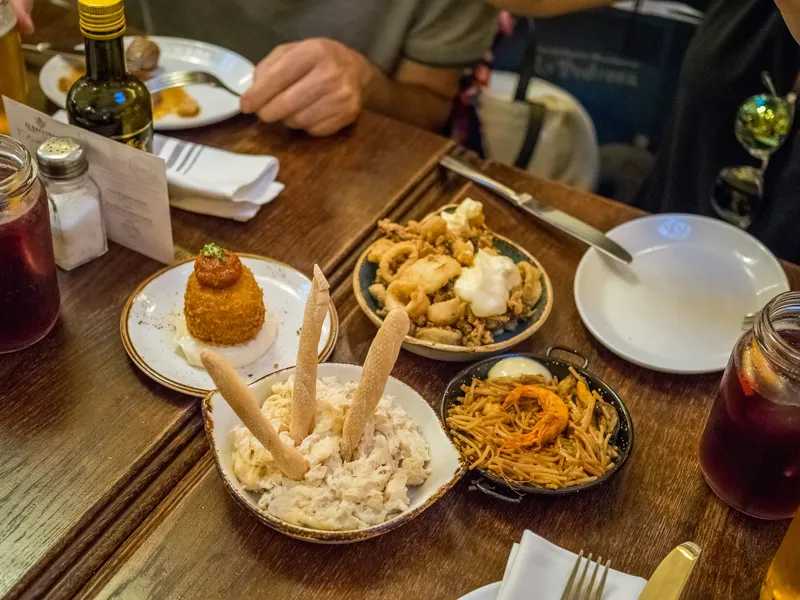
Eat here, not in the tourist center. Try La Pepita or Lluritu. Order Bomba (a deep-fried potato and meat ball with brava sauce and aioli), razor clams, and a glass of cold Catalan cava.
05:00 PM – Park Güell
Book the late afternoon slot to catch the golden hour light on the city.
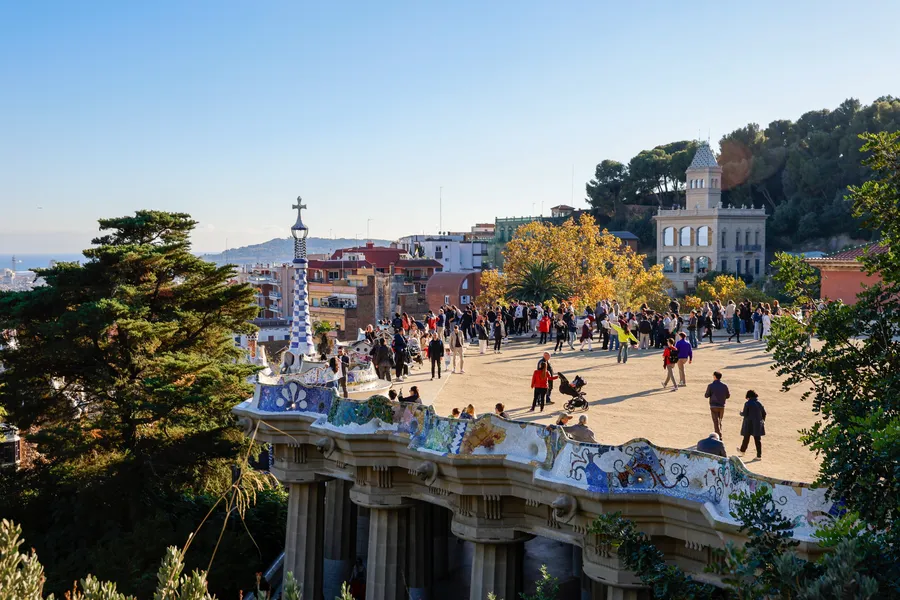
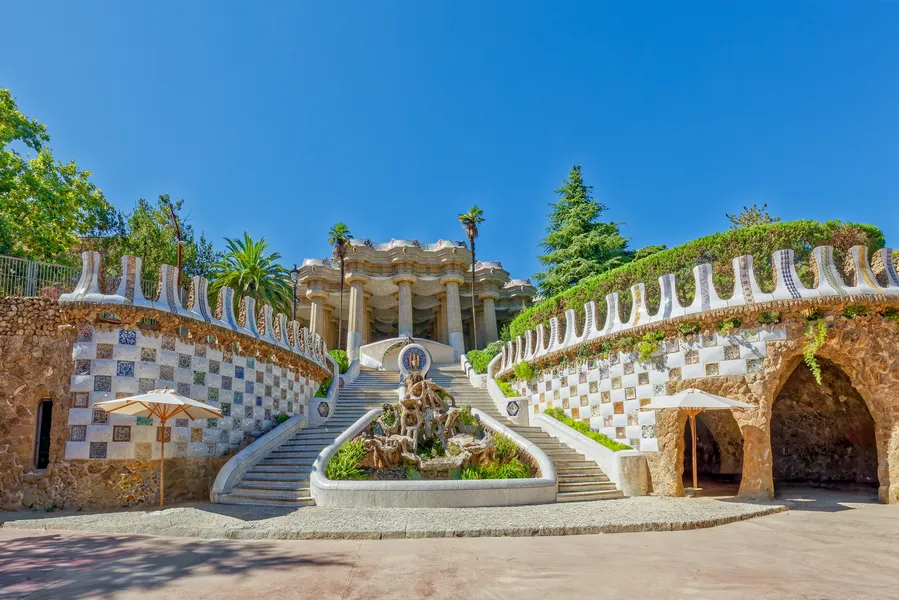
From Gràcia, use the outdoor escalators on Baixada de la Glòria to save the uphill climb. Park Güell was originally designed as a failed luxury housing development – only two houses were ever built before the project collapsed. The mosaic terraces, gingerbread gatehouses, and viaducts carved into the hillside are what remains. Sit on the main serpentine bench and look out over the city to the sea.
09:00 PM – Dinner in Gràcia
Stay out of the center. Find a wood-paneled spot in upper Gràcia and order Pan con Tomate (bread rubbed with garlic, fresh tomato, and olive oil) and a plate of Jamón Ibérico. Simple, correct, cheap relative to anything near Las Ramblas.
Day 2: Gothic Quarter and the Coast
08:00 AM – Gothic Quarter
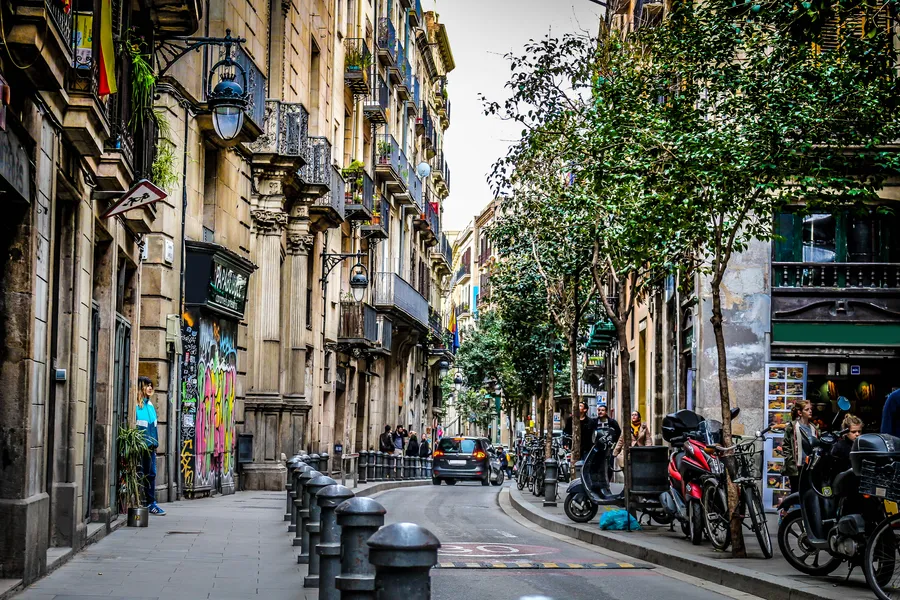
The Barri Gòtic at 2:00 PM is shoulder-to-shoulder tour groups. At 8:00 AM the streets are empty, the shops are shuttered, and you can actually see the place.
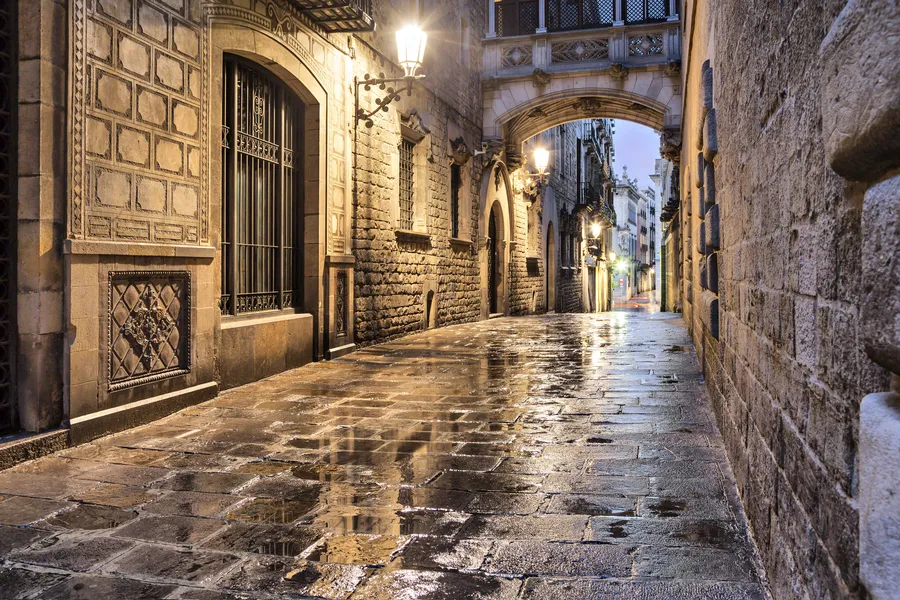
Walk to Pont del Bisbe on Carrer del Bisbe – a neo-Gothic bridge spanning the alley between two government buildings. Then find Plaça de Sant Felip Neri. The church walls are heavily pockmarked from a bomb dropped in 1938 during the Spanish Civil War that killed 42 people, mostly children. Worth stopping at before the crowds arrive.

10:00 AM – Barcelona Cathedral
Walk to the Catedral de Barcelona – not the Sagrada Família; this is the older Gothic cathedral in the heart of the medieval quarter. Pay the entry fee, walk the nave, and find the central cloister. Thirteen white geese live here permanently, representing the thirteen years of Saint Eulalia’s life when she was martyred. They have been here continuously since the 14th century.

11:30 AM – El Born and the Picasso Museum
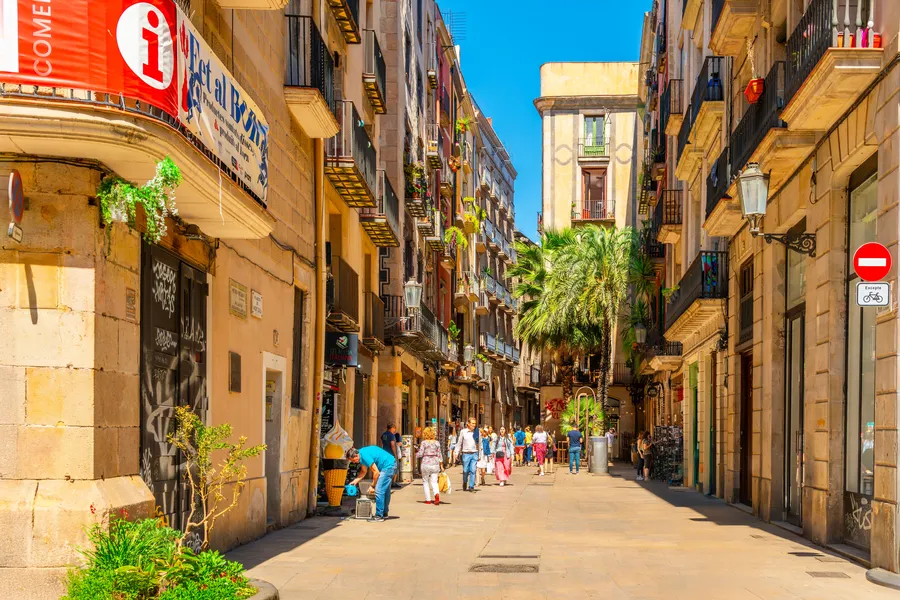
Cross Via Laietana east into El Born. More open than the Gothic Quarter, with independent coffee shops, artisan leather shops, and wine bars replacing the souvenir stalls.
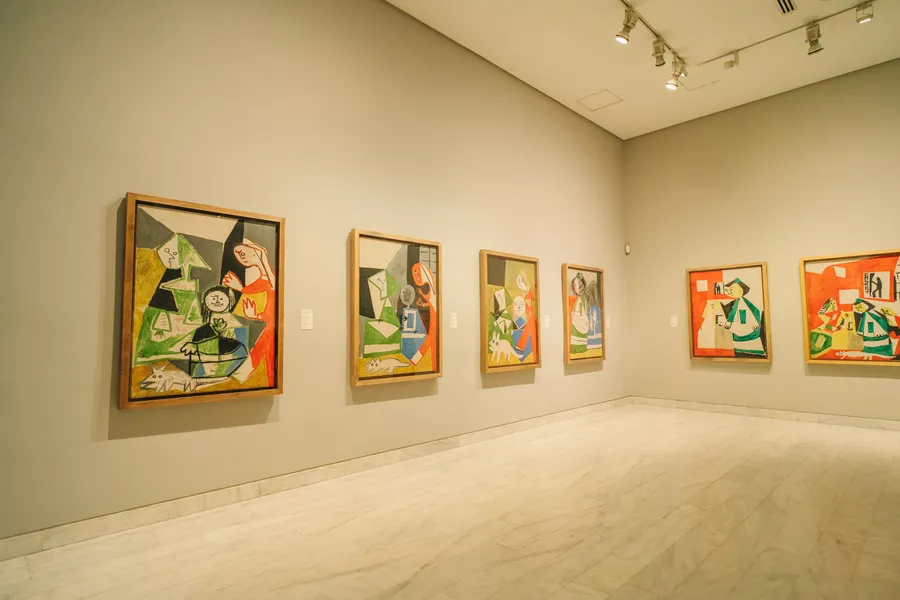
The Museu Picasso (pre-booked ticket required) is housed in five adjoining medieval palaces and focuses on Picasso’s early years in Barcelona – childhood sketches, academic paintings, his classical training before he broke all the rules. The collection is not what most people expect and is better for it.




01:30 PM – Santa Caterina Market
Skip the Boqueria. It was overrun years ago and is now expensive pre-cut fruit cups for tourists.
Walk to the Mercat de Santa Caterina in El Born – identifiable by the wildly colorful mosaic roof. This is a working neighborhood market. Sit at Bar Joan inside, order grilled squid and a draft beer, and eat next to the market workers on their lunch break.

03:30 PM – Barceloneta
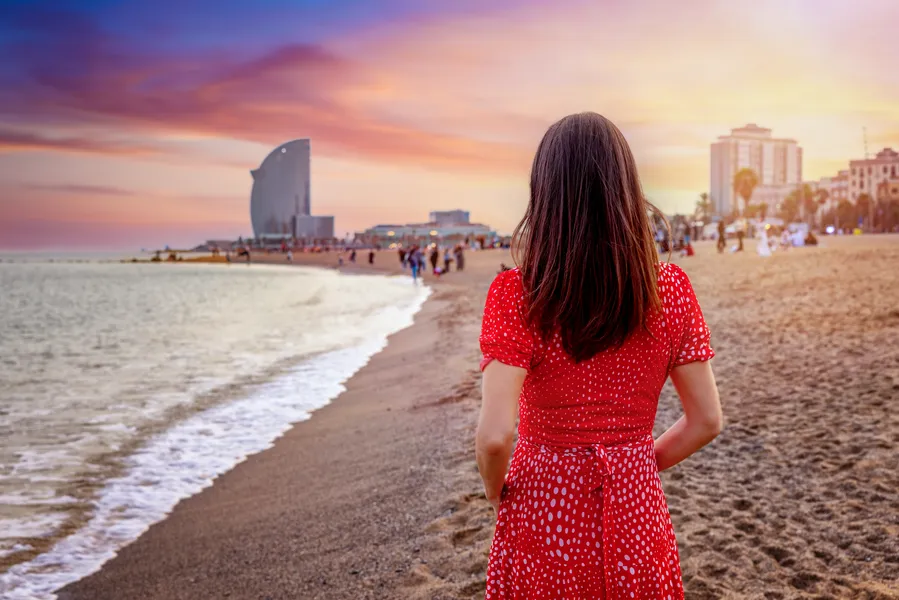
Walk south to the sea. The honest version of Barceloneta: the beach is largely artificial (sand was imported for the 1992 Olympics), the water quality is mediocre, and the promenade is aggressively marketed by warm mojito sellers. It is not a relaxing beach day.
Treat it as a boardwalk. Walk the seafront, look at the boats in Marina Port Vell, and get a feel for the city’s relationship with the Mediterranean before heading back inland.

06:00 PM – Vermouth Hour in El Born
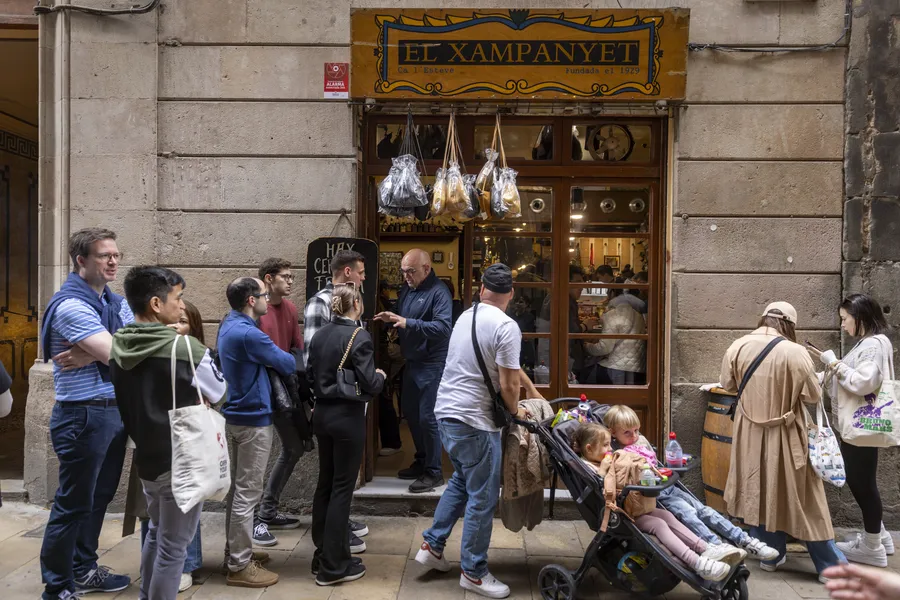
Back in El Born for La Hora del Vermut. Find a standing-room bar – El Xampanyet or Bar del Pla both work. Order a dark vermouth over ice with an olive and orange slice. Pair with pickled anchovies (boquerones en vinagre). This is what people are doing in every bar in the neighborhood at this hour.

09:00 PM – Seafood dinner
If you are going to eat paella in Barcelona, do it properly. Book a table at Can Majó or Pez Vela near the water. Do not order mixed paella (meat and seafood together – a tourist invention). Order Arroz Negro (rice cooked in squid ink) or a proper seafood paella. The socarrat – the crispy burnt rice scraped from the bottom of the pan – is the best part.

Day 3: Montjuïc, Pintxos, and the Boqueria Exit Strategy
09:30 AM – Montjuïc
Montjuïc is a large wooded hill bordering the southern edge of the city. It hosted the 1992 Olympics and the 1929 International Exposition. Take the funicular from Paral·lel metro station, which connects to the Telefèric de Montjuïc cable car. The cable car runs over the treetops and deposits you at the top.
10:30 AM – Castle and Joan Miró Foundation
Start at Castell de Montjuïc – a 17th-century military fortress used as a political prison during the Spanish Civil War. The views cover the industrial shipping port on one side and the entire city grid on the other.
Walk down the hill to the Fundació Joan Miró. Even without a strong interest in modern art, this museum is worth an hour. The stark white building frames Miró’s large, colorful canvases well, and the permanent collection is better than most people expect.


01:30 PM – Pintxo Crawl on Carrer de Blai
Walk down from the mountain into Poble Sec and find Carrer de Blai. This pedestrian street is entirely pintxo bars.
How it works: walk into a bar (La Tasqueta de Blai or Blai 9 are both reliable), ask for a plate, take whatever looks good from the bar counter, save your toothpicks. The bartender counts toothpicks at the end – around €2 each. Two pintxos and a beer, then move to the next bar and repeat.
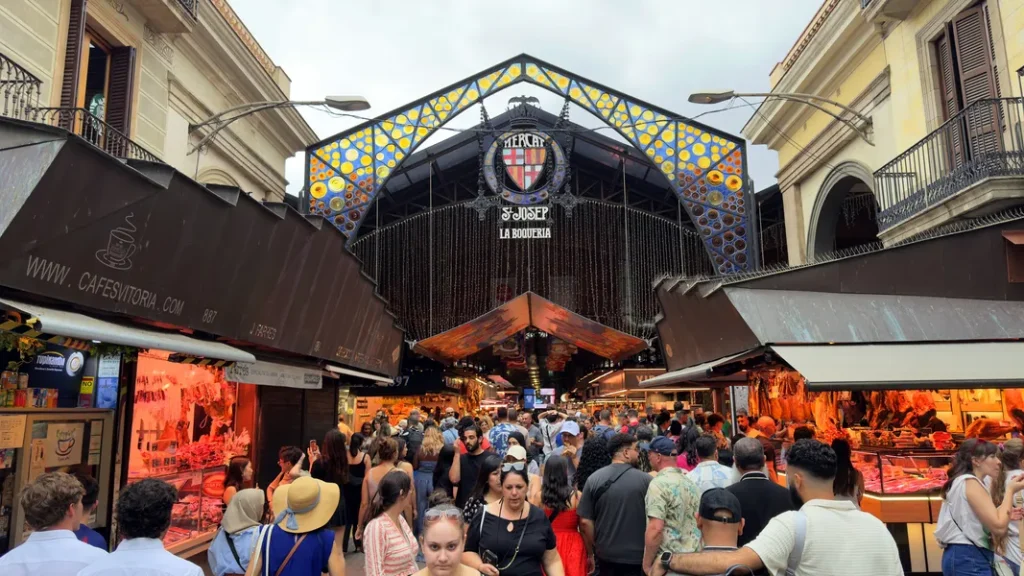
04:00 PM – Boqueria: In and Out
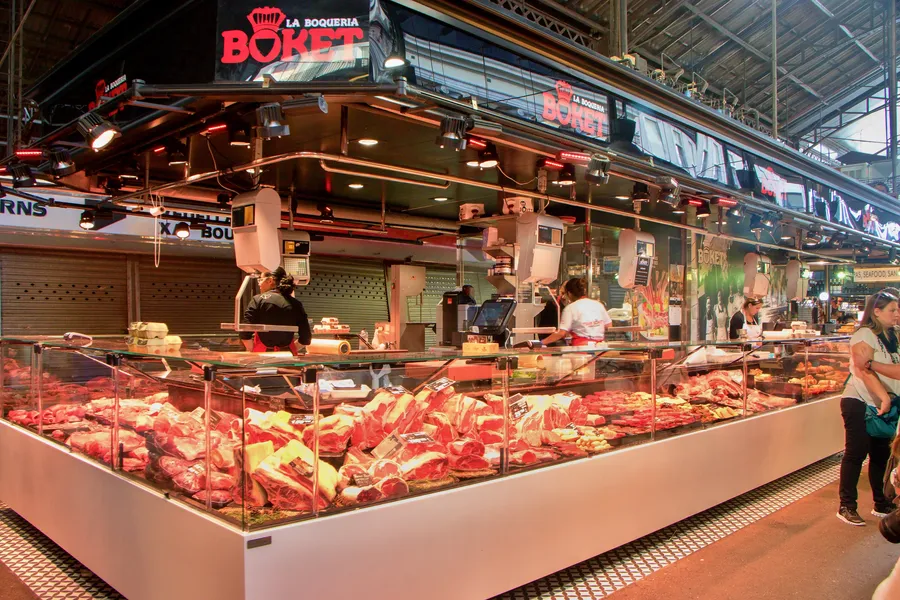
You should see it once. The Mercat de Sant Josep de la Boqueria on Las Ramblas is the most famous market in Spain and worth five minutes of your time. Go in the late afternoon when it’s marginally less chaotic. Buy a €2 cup of freshly squeezed juice, look at the hanging Iberian hams, keep one hand on your wallet, and leave. Do not eat a meal here.

06:30 PM – Rooftop at Ayre Hotel Rosellón
The Bunkers del Carmel viewpoint has been heavily restricted following years of illegal parties. It is not worth attempting in 2026.
Instead, book a table in advance on the rooftop of the Ayre Hotel Rosellón in Eixample. It has an unobstructed direct view of the Sagrada Família spires. Order a drink and watch the sun go behind the towers.
09:30 PM – Final dinner
Skip the heavy rice dishes on your last night. Ciudad Condal or Cervecería Catalana are both good (no reservations, expect to wait). Order patatas bravas, gambas al ajillo, and huevos cabreados (broken eggs over fried potatoes with jamón). Finish a bottle of Rioja.


Final Thoughts
Three days in Barcelona rewards planning and punishes improvisation. The ticketing systems are rigid, the pickpockets are professional, and the tourist traps are well-funded. Follow the routing above and you bypass most of it.
Tight on budget? Our Barcelona on a budget guide covers where the tourist price premium is worth paying and where it is not. Only have one day? The one day in Barcelona itinerary covers the tightest possible version of the highlights. Have more time? The 5 days in Barcelona guide adds Montserrat, a proper beach day, and deeper time in each neighborhood.
Heading south after Barcelona? Read the first time in Granada guide – the cultural shift from Catalonia to Andalusia is significant and worth preparing for.
Is 3 days enough for Barcelona?
Three days covers the architecture (Sagrada Família, Park Güell, Block of Discord), the historic center (Gothic Quarter, El Born), and Montjuïc with the Pintxo crawl. For a day trip to Montserrat you need four days minimum.
Do I really need to book the Sagrada Família in advance?
Yes, completely non-negotiable. Tickets sell out weeks in advance during spring and summer. There is no physical ticket office or standby queue. Book online before anything else.
Is the metro safe in Barcelona?
Physically safe. Pickpocket hotspot. Wear a cross-body bag, keep zippers closed, and stay alert boarding crowded trains at Espanya and Catalunya. Details in our first time in Barcelona guide.
Where is the best place to eat paella?
Not Las Ramblas. A proper paella takes 40 minutes – if it arrives in ten minutes it was microwaved. Head to Barceloneta or Poblenou: Can Majó, Pez Vela, or Xiringuito Escribà. Full breakdown in the Barcelona food guide.
What is the difference between tapas and pintxos?
Tapas are small plates ordered from a menu. Pintxos are a Basque tradition – bite-sized combinations on bread, skewered with a toothpick, served from the bar counter. You help yourself and pay by the toothpick at the end. Carrer de Blai in Poble Sec is the best street for them in Barcelona.
3 Days in Barcelona — All Stops
Click any pin for timing, prices, and what to know before you go.