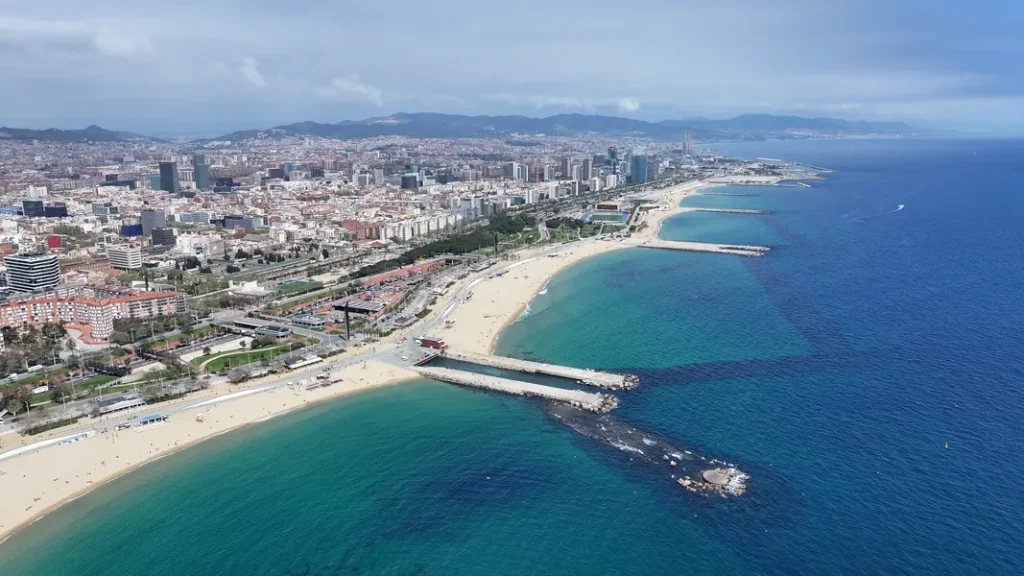
Barcelona is not a cheap city. The Sagrada Família costs €26 minimum. A sit-down lunch near La Rambla costs €25 for food that came out of a freezer. A hotel in the Gothic Quarter in July costs more per night than equivalent rooms in Paris. Anyone telling you Barcelona is a budget destination has not been recently.
What Barcelona does have is a parallel local economy that operates at entirely different prices. The menú del día system means a three-course lunch with wine costs €13 at the same restaurant where dinner costs €35. The pintxos street in Poble Sec charges €1 per bite. The best view in the city is free. Most of the Gaudí experience happens on the exterior, not the interior. If you understand where the local economy starts and the tourist economy ends, Barcelona is genuinely affordable.
This guide covers how to eat, move, sleep, and see the city for under €70 per day including accommodation.
For the full planning framework before budgeting, see First Time in Barcelona.
The Food System
The Menú del Día – The Single Most Important Rule
Spain has a lunch culture built around the menú del día – a set menu served between 1:00 PM and 3:30 PM at most local restaurants. You get a first course (salad, soup, or pasta), a second course (meat or fish), dessert, bread, and a drink (wine, beer, or water). Total cost: €12 to €16.


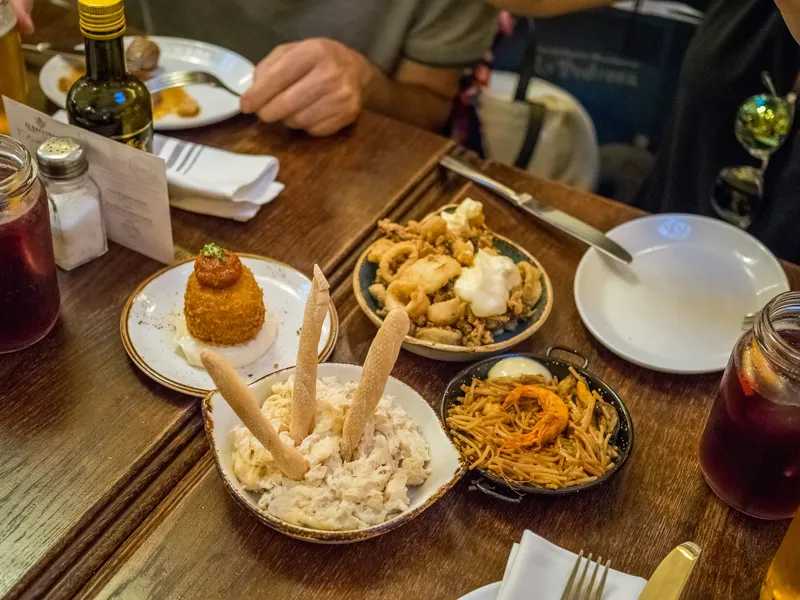

The exact same food ordered à la carte at dinner costs €30 to €40. The menú del día is how the local workforce eats – it exists because restaurants offer it to fill tables during the slow midday hours with regulars who want a full meal at a reasonable price.
How to find it: Look for handwritten chalkboard signs outside restaurants rather than printed menus with photos of food. The chalkboard signals the menu changes daily and is aimed at return customers, not tourists. Neighborhoods where this works well: Gràcia, Eixample (side streets, not Passeig de Gràcia itself), Poble Sec, and Sant Antoni.
What to avoid: Restaurants on La Rambla, directly adjacent to the Sagrada Família, or with English menus posted outside at eye level. These are calibrated for visitors who will not return, and prices reflect it.
Pintxos on Carrer de Blai
Carrer de Blai in Poble Sec is a pedestrian street lined with pintxos bars – the Catalan/Basque version of tapas on bread. Each piece costs €1 to €2. You pick a plate, take whatever looks good from the bar counter, and keep the toothpicks. At the end, the waiter counts the sticks.

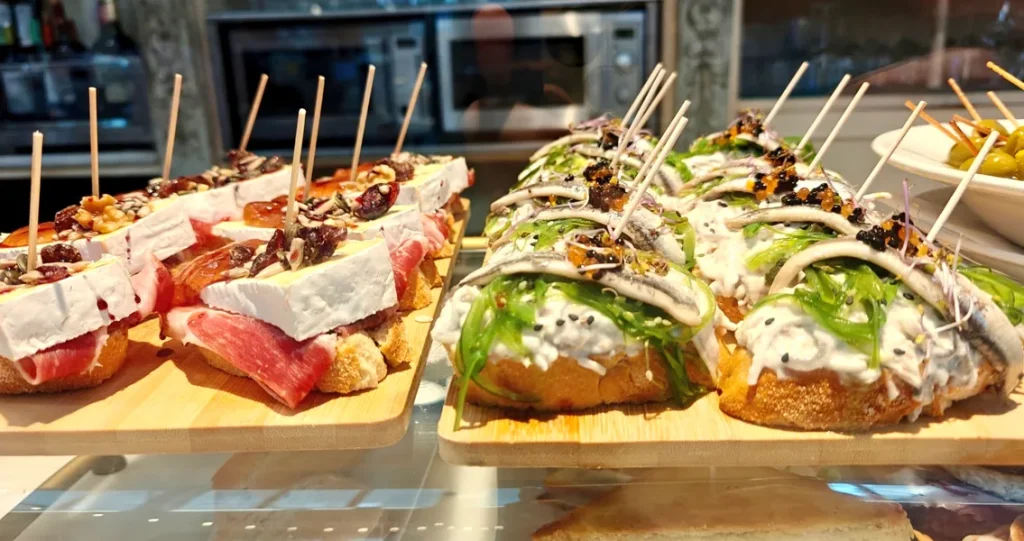

A full dinner of eight pintxos and a beer costs around €12 to €14. This is the best cheap dinner in the city.
Best time: 7:00 PM to 9:00 PM when the food is freshest and the street is at its most atmospheric. By 10:00 PM the selection gets thin.
Specific bars worth stopping at: El Quim de la Boqueria equivalent on this street does not exist – they are all roughly similar quality. Walk the full length, look at what is behind each counter, and choose based on what looks freshest rather than which has the most people outside.
The Standing Coffee Rule
Every bar in Barcelona has two prices – standing at the bar (al banco) and sitting at a table. A coffee standing costs €1.20 to €1.50. The same coffee at a table costs €3 to €4.50. This applies everywhere in Spain and is not a trick – it is the pricing structure.
Stand at the bar, order, drink, leave. You save €2 to €3 per coffee and drink it the way locals do.
Supermarkets
Mercadona and Lidl have multiple locations throughout the city. A 5-liter water jug costs €1.50 – buy one on arrival and refill your bottle throughout the day rather than buying €2 individual bottles at tourist shops near the monuments. Over five days this saves €15 to €20.
Supermarket breakfast (fruit, yogurt, pastry from the bakery section) costs €3 to €4 versus €8 to €12 at a cafe near the Gothic Quarter. Useful for the first meal of the day before you reach a neighborhood with reasonable prices.
Transport
T-Casual Card
Do not buy single Metro tickets at €2.40 each. Buy the T-Casual card – 10 trips for around €12.20, which works out to €1.22 per journey. It covers Metro, bus, tram, and the Montjuïc funicular.
One card per person – you cannot share between two people on the same journey (this changed from the old T-10 system). Each person needs their own card.
The “Hola BCN” tourist pass (24-hour, 48-hour, 72-hour unlimited travel) is only worth it if you are making six or more Metro journeys per day. For most visitors doing three to four trips daily, the T-Casual works out cheaper.
Walking
The Gothic Quarter, El Born, Barceloneta, and the Eixample are all connected on foot. The Sagrada Família is a 20-minute walk from the Gothic Quarter. Park Güell requires either a bus or Metro plus a steep uphill walk. For most of Days 1 and 2 of any Barcelona itinerary, the Metro is unnecessary if you are comfortable walking 30 to 40 minutes between areas.
Bus 24 from Plaça de Catalunya goes directly to Park Güell – it is covered by the T-Casual and saves the 20-minute uphill walk from the Metro stop. Use it in summer specifically.
Airport
The Aerobus from El Prat airport to Plaça de Catalunya costs €6.75 each way. The alternative is Metro Line L9 Sud to the airport connection at Zona Universitària, then L3 – longer journey (around 45 minutes vs 35 minutes) but covered by the T-Casual if you have one, or around €5.15 with the airport supplement on a single ticket. For arrivals with luggage, the Aerobus is worth the small premium for the direct connection.
Accommodation
Barcelona accommodation prices are high relative to the rest of Spain. A private room in a decent central hostel runs €60 to €100 per night. A basic hotel in Gràcia or Poble Sec runs €80 to €130. The Gothic Quarter is the most expensive neighborhood and offers the worst value – you pay a premium for proximity to streets that are unpleasant at 10:00 AM due to tour group density.
Best neighborhoods for budget accommodation:
Gràcia – local neighborhood north of the Eixample, 20 minutes walk from the Sagrada Família, noticeably cheaper than the Gothic Quarter for equivalent quality. The best neighborhood to be based in for a longer stay.
Poble Sec – below Montjuïc, good Metro connection to the center, Carrer de Blai for dinner, and a genuinely local atmosphere. 15 minutes by Metro to anywhere central.
Sant Antoni – west of the Eixample, the strongest mid-range neighborhood currently in Barcelona with good restaurants, a Sunday market, and prices below the Gothic Quarter.
Avoid: Anything marketed primarily on its proximity to La Rambla. The street itself is the tourist trap and the hotels adjacent to it price accordingly.
For hostel dormitories, €25 to €40 per night is the realistic range for a decent bed in a central location. Private rooms in hostels run €60 to €80. Budget hotels in Gràcia or Poble Sec start around €70 to €90 for a double with private bathroom.
The Gaudí Budget Strategy
The full Gaudí circuit – Sagrada Família, Park Güell, Casa Batlló, and La Pedrera – costs around €97 if you pay entry to all four. That is not a budget approach.
The correct strategy:
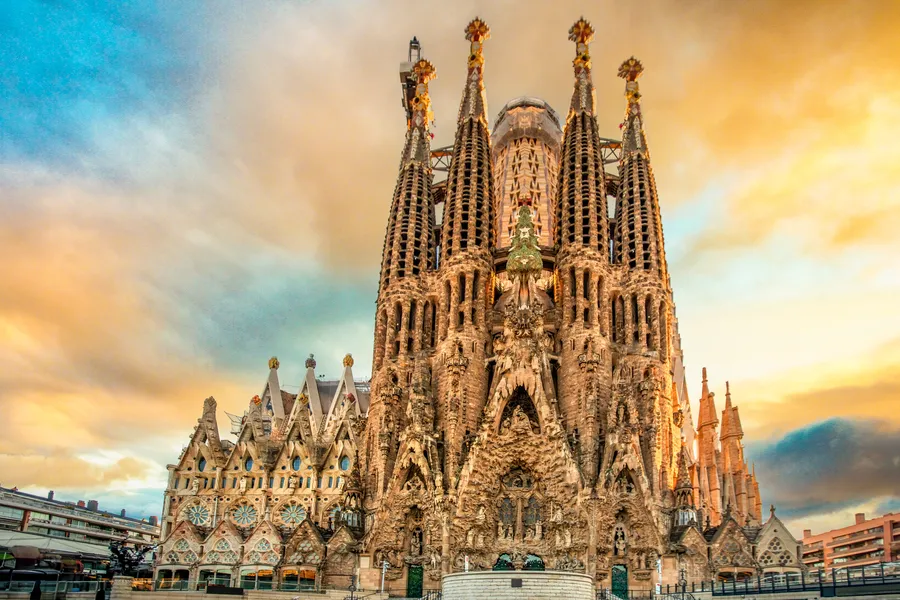
Sagrada Família (€26): Pay the entry. The interior – the branching columns, the stained glass, the scale of the nave – is the one Gaudí experience that photographs do not adequately represent and that the exterior does not substitute for. Book timed entry online weeks ahead in summer. Tower access adds around €10 and is worth it for the close-up view of the pinnacles.
Park Güell (€10): Pay the Monumental Zone entry. The mosaic terrace, the dragon staircase, and the view over the city are the three things you come for and all require the ticket. The free sections of the park surrounding the Monumental Zone are pleasant but not the main event. Book timed entry online.

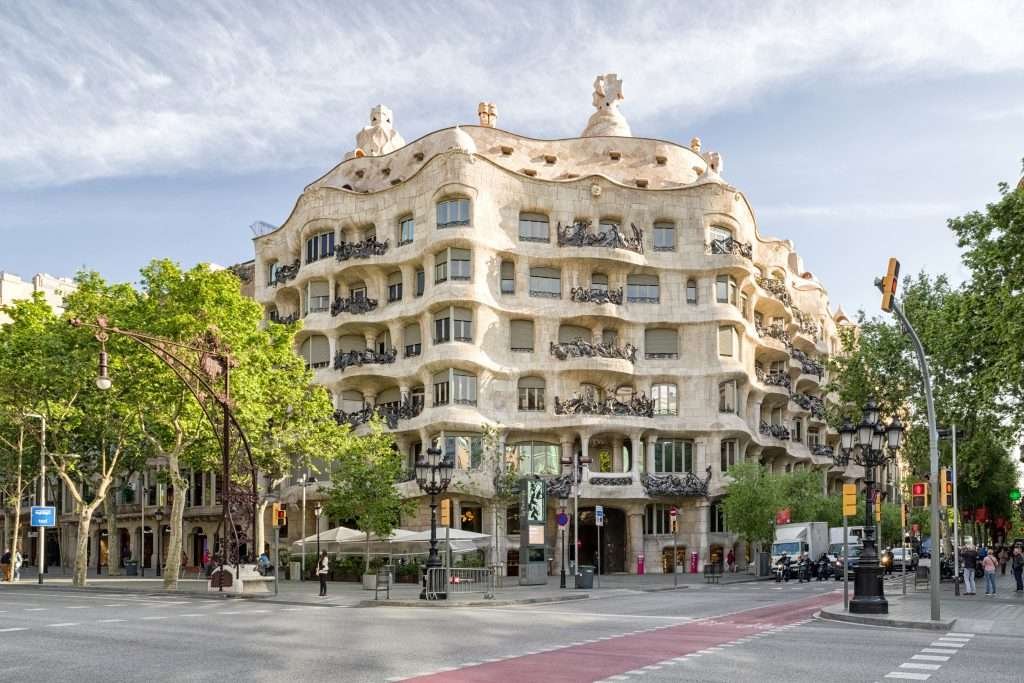
Casa Batlló (€35) and La Pedrera (€25): Skip the interior entry. Both buildings are the most dramatic from the street. The Passeig de Gràcia sidewalk at dusk gives you the facade, the roofline, and the scale without paying for the interior. Walk the full block between them slowly. If you have to choose one interior, Casa Batlló has the stronger experience (the AR technology, the dragon-scale roof) but at a higher price.

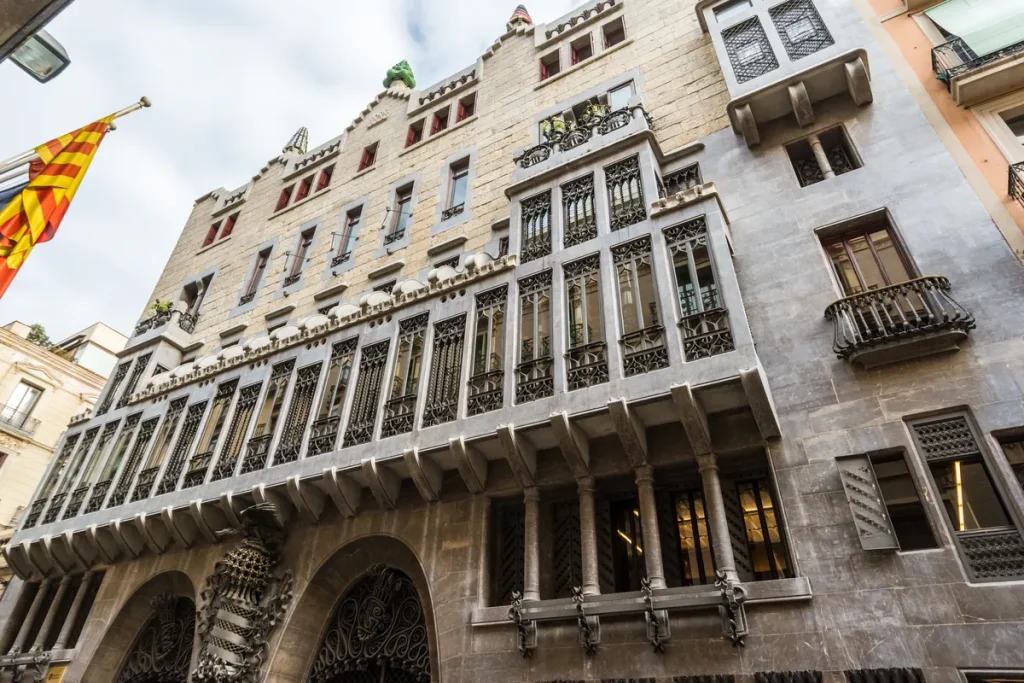
The free Gaudí: The Palau Güell (Carrer Nou de la Rambla, 3) is Gaudí’s earlier work for the Güell family – the rooftop terrace with the ceramic chimneys is the visual centerpiece. Entry around €12, significantly less than Casa Batlló. The Colònia Güell crypt (30 minutes by train from Plaça Espanya) is the experimental structure Gaudí built before the Sagrada Família – less visited, structurally fascinating, entry around €7.
Free and Cheap Sights
Bunkers del Carmel
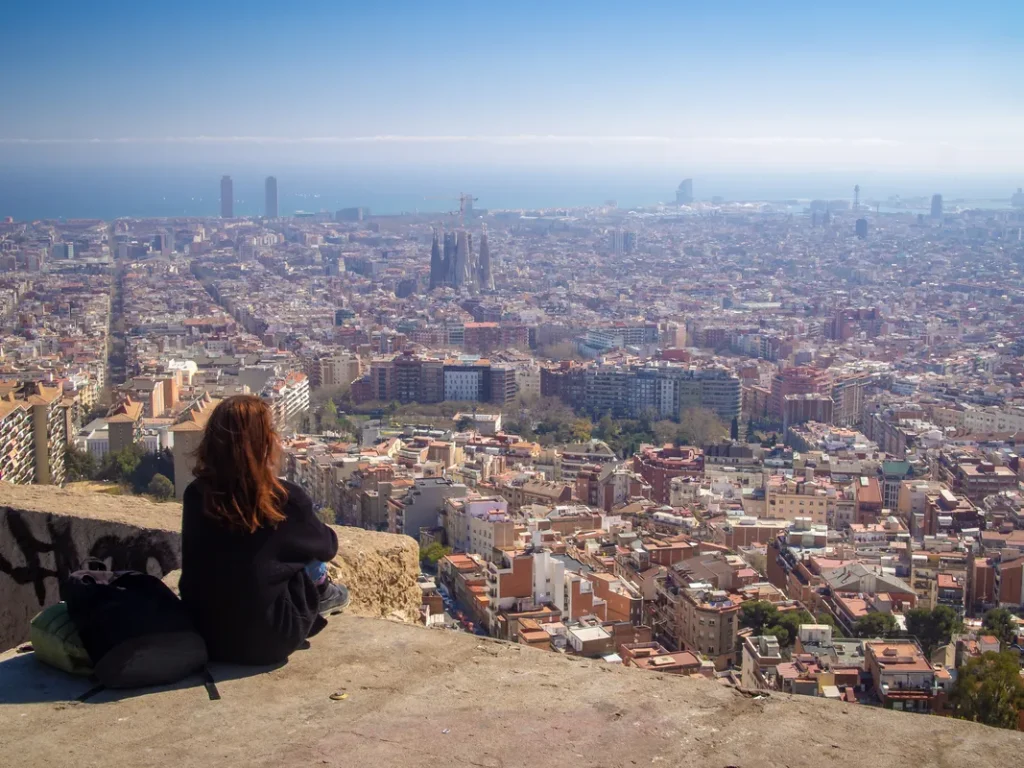
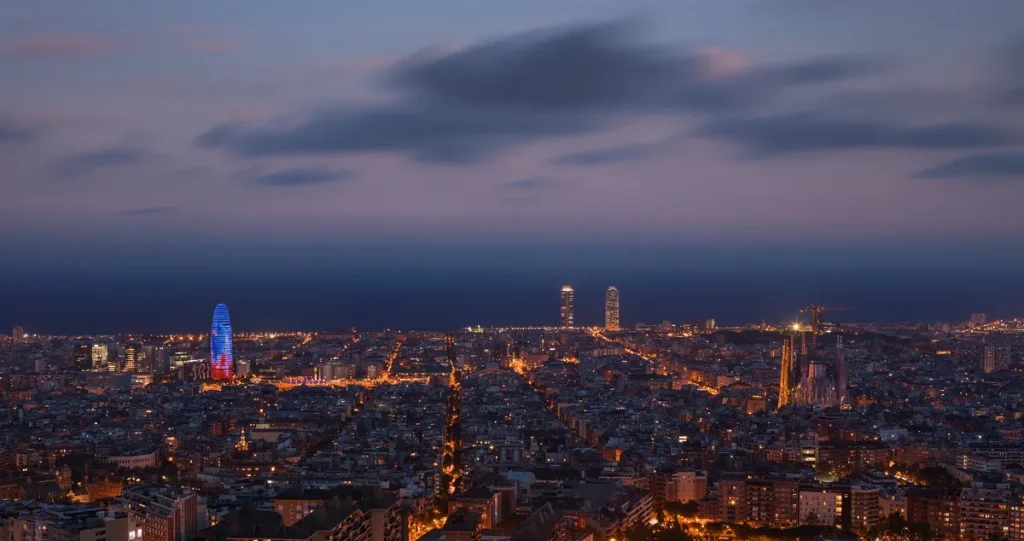
The best view in Barcelona and completely free. A ruined anti-aircraft battery from the Civil War on a hill above the Gràcia neighborhood, giving a 360-degree panorama of the city, the sea, and Montjuïc. Take the Metro to El Carmel or Bus V17 from Passeig de Sant Joan, then a 15-minute uphill walk.
Go at sunset. The view of the city with the Sagrada Família in the middle distance and the sea behind it is better than anything you pay for. Bring a drink – there is no bar at the top.
MNAC Steps
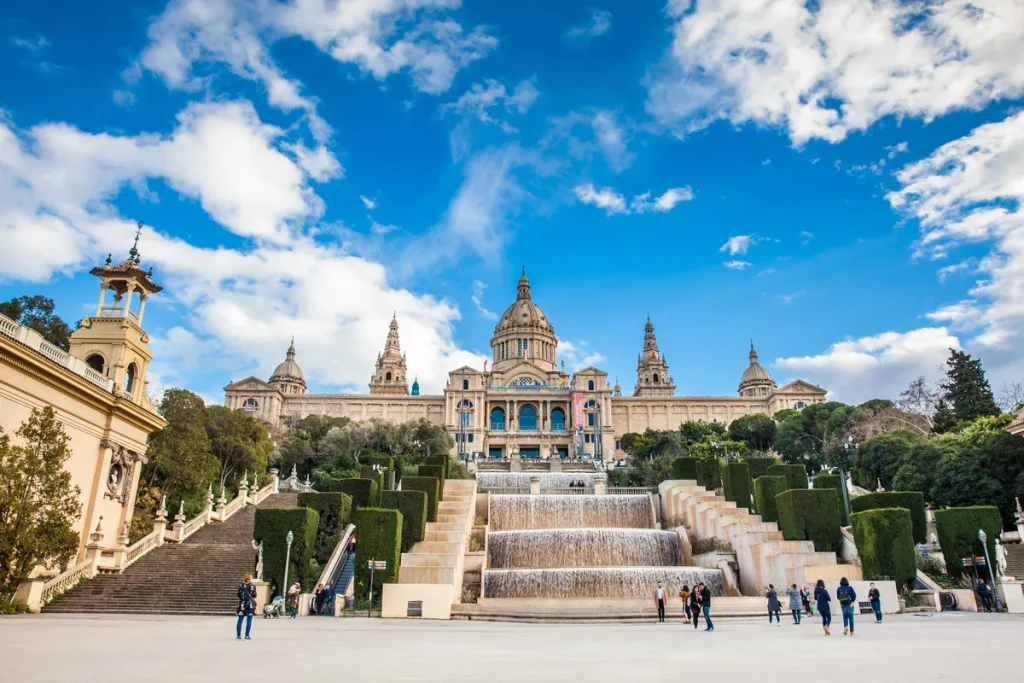
The steps leading up to the Museu Nacional d’Art de Catalunya on Montjuïc face directly down the Avinguda de la Reina Maria Cristina toward Plaça Espanya – the neoclassical building framed by the two towers and the fountains of the 1929 Exposition. Free to stand on. The view is better in the evening when the fountains run (Thursday to Sunday in summer, check the schedule).
The museum itself (entry around €12) has the best Romanesque art collection in the world and is genuinely undervisited. Free on the first Sunday of the month and every Sunday after 3:00 PM.
Parc de la Ciutadella
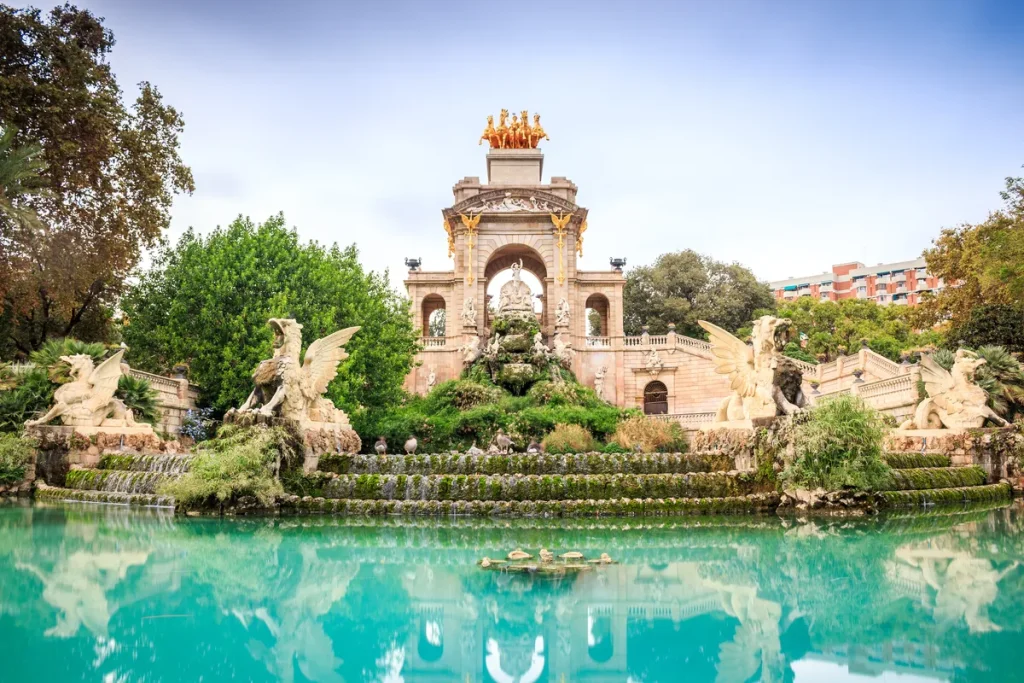
Barcelona’s central park, free to enter, containing the large ornamental cascade fountain that a young Gaudí helped design. The rowing lake, the zoo perimeter, and the Hivernacle (glass greenhouse, free) make it a full afternoon without spending anything. Located directly east of El Born – combine with the neighborhood in the same day.
Free Museum Hours
Most major museums offer free entry on specific days:
- Picasso Museum: First Sunday of the month and every Sunday from 3:00 PM to 5:00 PM – free
- MNAC: First Sunday of the month – free, and every Sunday from 3:00 PM – free
- Fundació Joan Miró: First Sunday of the month – free
- CCCB (Centre de Cultura Contemporània): Sundays from 3:00 PM – free
Building your visit schedule around a Sunday afternoon unlocks two or three free museum entries. The Picasso Museum on a Sunday afternoon (arrive at 2:45 PM for the queue before it opens at 3:00 PM) is the strongest free museum experience in the city.
La Boqueria – What to Actually Do Here
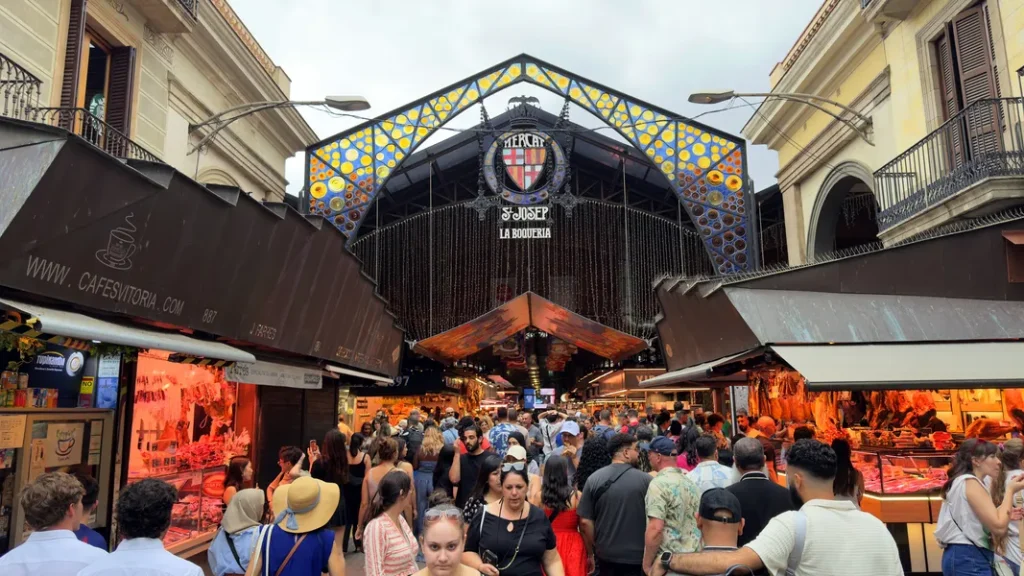
La Boqueria market on La Rambla is not a place to eat. The stalls facing the entrance are priced for tourists and the quality is average. The correct use of La Boqueria: walk to the back third of the market where the working stalls are, buy a bag of local cherries or figs in season (€2 to €3), and leave. The Mercat de Santa Caterina in El Born is the better market for actually eating.

The Daily Budget
A realistic day in Barcelona on a budget:
- Coffee standing at a bar: €1.50
- Supermarket breakfast: €3
- Metro (2 journeys): €2.44
- Menú del día lunch with wine: €14
- Afternoon water from supermarket bottle: €0
- Pintxos dinner on Carrer de Blai (8 pieces + beer): €13
- Evening beer at a local bar: €3
Daily total excluding accommodation: €37
Add a budget hostel dorm bed (€30 to €40) and you are at €67 to €77 for the full day. Add one museum entry (€12 to €14) and you stay under €90.
The days you pay Sagrada Família entry (€26) or Park Güell (€10) push the total higher – budget those as specific days and keep everything else at the lower end.
What to Skip
La Rambla restaurants: Every restaurant with a terrace on La Rambla is a tourist trap. The paella is frozen and reheated. The prices are 40 to 60 percent above equivalent food in any neighborhood one block away. Walk down La Rambla once to see it, eat nowhere on it.
The Columbus Monument elevator (€6.80): The view is inferior to the Bunkers del Carmel, which is free.
Sangria: Overpriced and not what locals drink. Order clara (beer with lemon, €2 to €3) or house wine by the glass (€2 to €4) instead.
Hop-on Hop-off bus: €30+ per person for a slow, crowded bus covering sights reachable by the T-Casual card for €1.22 per journey.
Plan Your Trip
- First Time in Barcelona
- One Day in Barcelona
- 3 Days in Barcelona
- 5 Days in Barcelona
- Where to Stay in Barcelona
- Foodie’s Guide Barcelona
- Barcelona with Kids
- Day Trip to Sitges from Barcelona
- 25 Best Things to Do in Barcelona
- 25 Best Things to Do in Sitges
- Day Trip to Tarragona from Barcelona
Is Barcelona expensive for tourists?
Barcelona is mid-range expensive if you eat and drink where locals do, and genuinely expensive if you do not. The gap between tourist-facing and local-facing prices is larger in Barcelona than in most Spanish cities. A three-course lunch with wine costs €13 at a neighborhood restaurant running a menú del día. The same meal ordered à la carte at a restaurant on La Rambla costs €35 to €45. A coffee standing at a bar costs €1.50. The same coffee sitting at a terrace near the Gothic Quarter costs €4.50. Geography and posture are your two main budget levers.
What is the cheapest way to get around Barcelona?
The T-Casual card – 10 Metro, bus, and tram journeys for around €12.20, which works out to €1.22 per trip. Do not buy single tickets at €2.40 each and do not buy the Hola BCN tourist pass unless you are making six or more Metro journeys per day. The card covers the Montjuïc funicular. For most of the central sightseeing – Gothic Quarter, El Born, Barceloneta, Eixample – walking is faster than the Metro and costs nothing.
How much does it cost to see the Gaudí buildings in Barcelona?
The full Gaudí circuit adds up to around €97 if you pay entry to all four major sites. The budget approach: pay for the Sagrada Família (€26) because the interior cannot be replicated by looking at the exterior, and pay for Park Güell Monumental Zone (€10) for the mosaic terrace and city view. Skip the Casa Batlló interior (€35) and La Pedrera interior (€25) – both buildings are more dramatic from the Passeig de Gràcia sidewalk at dusk than from inside. The Palau Güell (€12) is the undervisited alternative if you want a second interior Gaudí experience at half the price.
What is the best free view in Barcelona?
Bunkers del Carmel – a ruined Civil War anti-aircraft battery on a hill above Gràcia with a 360-degree panorama of the city, the sea, and Montjuïc. Take the Metro to El Carmel or Bus V17 from Passeig de Sant Joan, then a 15-minute uphill walk. Go at sunset. The view of the city with the Sagrada Família in the middle distance and the Mediterranean behind it is better than anything you pay for in the city. Completely free, no booking required.
How much should you budget per day in Barcelona?
Around €60 to €80 per day including a budget hostel dorm bed (€30 to €40), covering coffee and supermarket breakfast (€4 to €5), a menú del día lunch with wine (€13 to €16), Metro journeys (€2 to €4), and a pintxos dinner on Carrer de Blai with a beer (€12 to €14). Days with paid museum or Gaudí entry push the total to €80 to €100. Keep food costs at the lower end on days you are spending on entry fees and the daily average stays manageable across a five-day trip.
Barcelona on a Budget — Money Map
Free views, cheap food, smart transport, what to pay for, and where the tourist economy traps you. Click any pin.