
Your alarm goes off at 7:30 AM. You have exactly one day in Rome before your train to Florence leaves tomorrow morning. If you have more flexibility, our 3 days in Rome itinerary covers the Colosseum interior, the Vatican, and Villa Borghese properly. Here is how you spend it without wasting a single hour in a ticket line.
This one day in Rome itinerary is built for layover travelers, cruise passengers docking at Civitavecchia, and anyone passing through the Eternal City on a tight schedule. We are skipping the Vatican Museums and the Colosseum interior – not because they are not worth it, but because each one can eat 3+ hours of your day just standing in security lines and shuffling through corridors. With only one day in Rome, that math does not work.
Instead, you are going to walk the historic center, see every major monument from the outside (where the best photos are anyway), and eat better than most tourists who spend a week here.
Total walking distance: roughly 8 km (5 miles). Total cost for the day: €30-50 depending on how much you eat and drink.
What You Need Before You Leave the Hotel
Three things. First, comfortable shoes with thick soles. Rome’s streets are paved with sampietrini – small, uneven cobblestones that will destroy thin-soled shoes and your feet along with them. Sneakers are perfectly acceptable everywhere in Rome, including restaurants. First time in the city entirely? Read our First Time in Rome guide for the scams, metro rules, and booking traps to know before you arrive.
Second, a refillable water bottle. Rome has over 2,500 nasoni – small iron drinking fountains scattered across the city that run cold, clean water all day. You will pass dozens of them on this route. Do not spend €2-3 on plastic bottles from street vendors when free water is ten steps away.
Third, sunscreen in summer. There is almost zero shade on the walk between the Colosseum and Piazza Venezia. In July and August, that stretch feels like a griddle.
8:30 AM – Start at the Colosseum (Metro Line B, “Colosseo” Stop)

Step out of the metro station and the Colosseum is right there. No buildup, no dramatic reveal – it is just suddenly filling your entire field of vision. Even after seeing it in a thousand photos, the scale catches you off guard. The thing is 48 meters tall and held 50,000 spectators.
The strategy: do not go inside. The ticket line starts building before 9:00 AM, and even with a pre-booked skip-the-line pass, you are looking at 1.5-2 hours minimum once you factor in the security screening and the shuffling crowd inside. That is time you cannot afford today.
Instead, walk the full perimeter. It takes about 15 minutes and you will see every angle, including the side where large sections of the outer wall are missing – that is where medieval Romans stripped the travertine blocks to build churches and palaces.
Photo tip: Walk up the stairs toward Via Nicola Salvi (the street that runs uphill to the right of the Colosseum as you face it from the metro). From that elevated position, you get the classic postcard shot with the full amphitheater below you and the Arch of Constantine in the frame. This spot is far less crowded than the plaza directly in front.
The Arch of Constantine sits between the Colosseum and the Palatine Hill entrance. It is free to walk right up to. Most tour groups rush past it, but this is the largest surviving Roman triumphal arch, and it is in remarkably good shape for something built in 315 AD.

9:00 AM – The Roman Forum (Free From the Street)
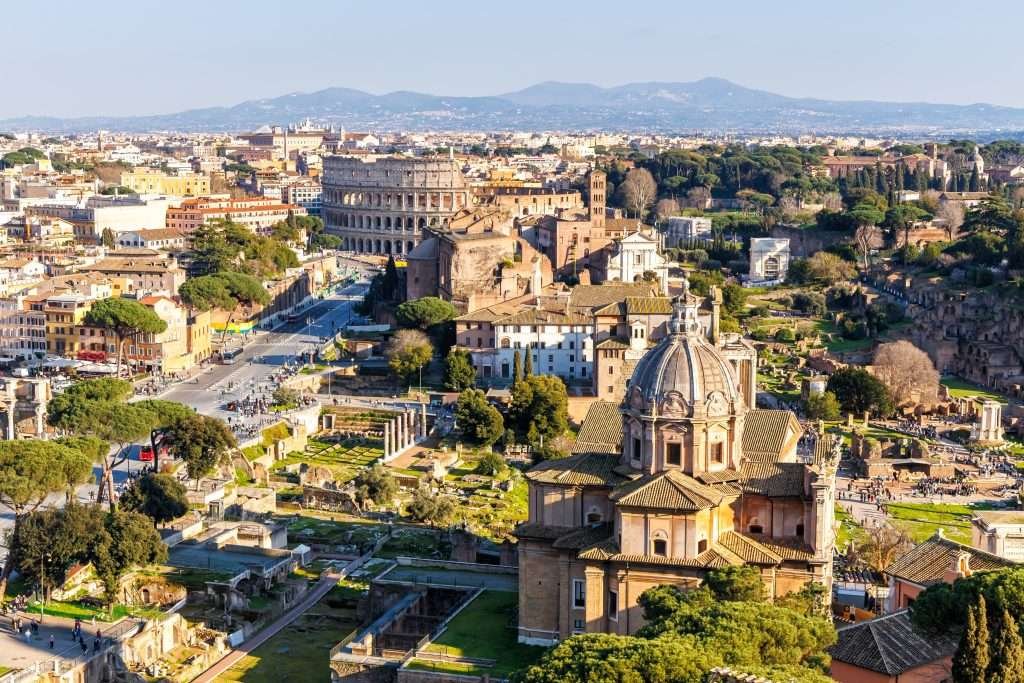
From the Colosseum, walk northwest down Via dei Fori Imperiali, the broad boulevard that Mussolini bulldozed through ancient ruins in the 1930s to create a parade route. It is a straight shot toward the giant white monument you can see in the distance.
The hack: You do not need a ticket to see the Forum. As you walk down the left side of Via dei Fori Imperiali, the ground drops away and the entire Forum spreads out below you behind a railing. From this elevated vantage point, you can clearly pick out the Temple of Saturn (the eight standing columns), the Arch of Septimius Severus, and the long brick building that was the Basilica of Maxentius.
This free view from the street is honestly better for photos than what you get from inside the Forum, where you are down among the ruins and cannot see the layout. The paid ticket (€16 combo with the Colosseum) is worth it if you have two or three days in Rome, but not today.
Halfway down the boulevard, on your right, you will pass Trajan’s Column. Stop for a minute. The carved spiral frieze that winds from base to top tells the story of Trajan’s military campaigns in incredible detail – 2,662 individual figures carved into the marble. You can see the lower bands clearly from street level.


9:45 AM – Piazza Venezia and the “Wedding Cake”
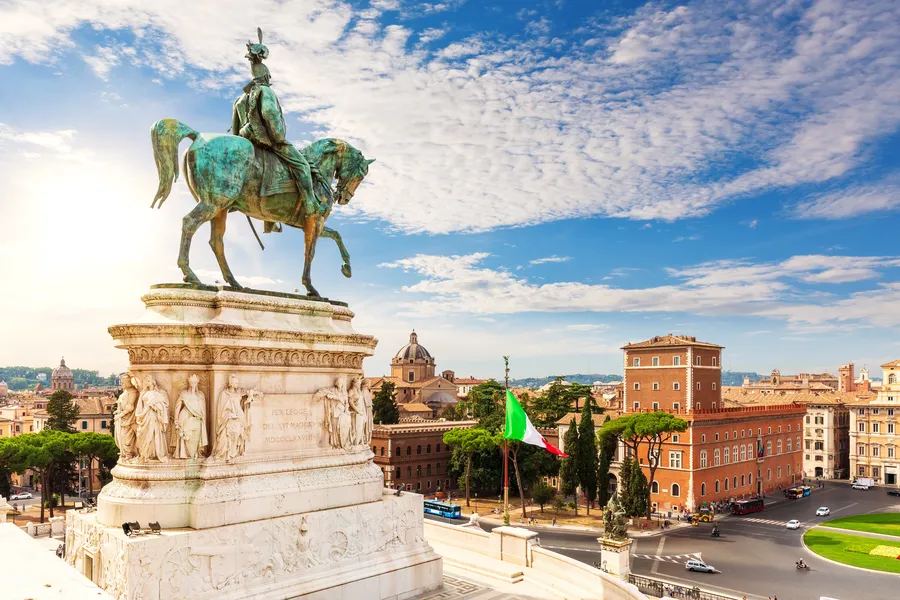
Via dei Fori Imperiali ends at Piazza Venezia, the chaotic roundabout that marks the center of modern Rome. Dominating the square is the Altare della Patria (Altar of the Fatherland), a colossal white marble monument that Romans lovingly call “The Wedding Cake” or “The Typewriter” because of its shape.
Most tourists snap a photo from the piazza and move on. Do not make that mistake. Walk up the front steps – they are free to climb – and turn around. You now have one of the best panoramic views in Rome: the Forum to your right, the tree-lined boulevard stretching back to the Colosseum, and the dome of St. Peter’s in the hazy distance to your left.
Paid option: There is a glass elevator to the very top of the monument. It costs €12 and the view from up there covers the entire city in 360 degrees. If you are going to pay for one view in Rome, this is better value than most rooftop bars.

10:30 AM – Walk to the Pantheon
From Piazza Venezia, walk west into the narrow streets of Rome’s historic center. The route is roughly 15 minutes on foot and takes you through real Roman neighborhoods where laundry hangs from windows above your head and scooters squeeze through gaps that look too narrow for a bicycle.
Follow Via del Corso north for two blocks, then turn left toward Piazza della Rotonda. You will hear the Pantheon before you see it – the sound of the crowd in the piazza carries down the side streets.
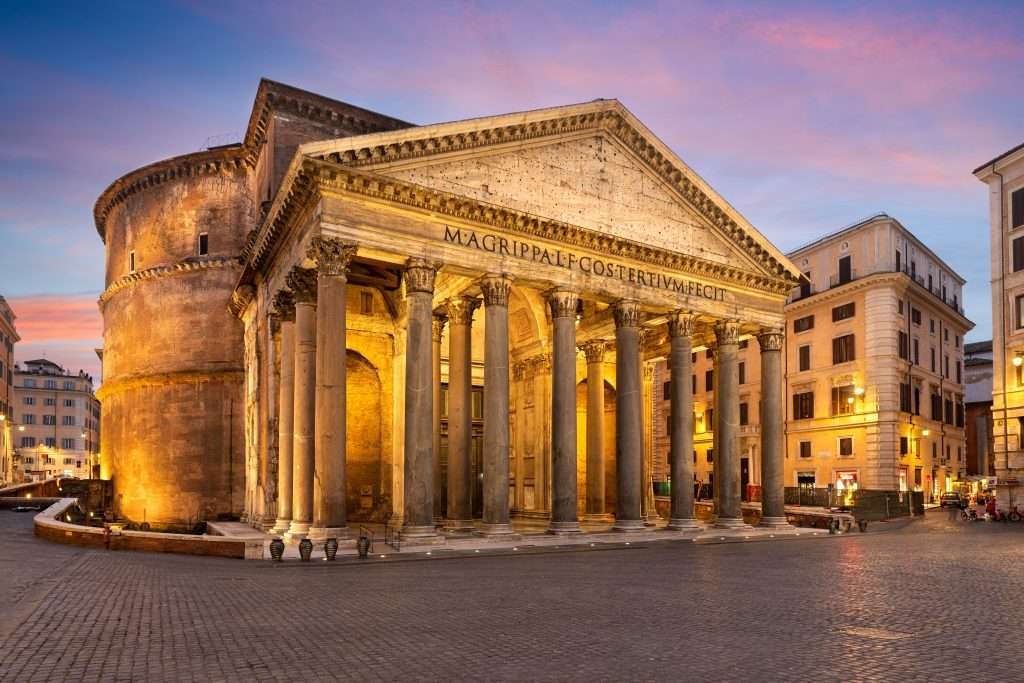
The Pantheon is the best-preserved building from ancient Rome and it is not close. Built in 125 AD, its dome is still the largest unreinforced concrete dome ever constructed – wider than St. Peter’s dome by over a meter. The oculus (the circular hole at the top) is 9 meters across and open to the sky. When it rains, water falls directly onto the slightly convex marble floor and drains through almost-invisible holes.
Entry now requires a ticket: €5. Lines can stretch 20-30 minutes during peak hours (roughly 11:00 AM to 2:00 PM). If you arrive around 10:30 AM as this itinerary suggests, you should be fine. If the line looks long and you are tight on time, the exterior is impressive enough – the 16 granite columns in the portico are each a single piece of stone, quarried in Egypt and shipped across the Mediterranean.
(Quick tip: the best cafe near the Pantheon is not one of the overpriced ones in the piazza. Duck down Via della Maddalena and you will find spots where an espresso costs €1.20 instead of €4.)



11:15 AM – Lunch: Pizza al Taglio
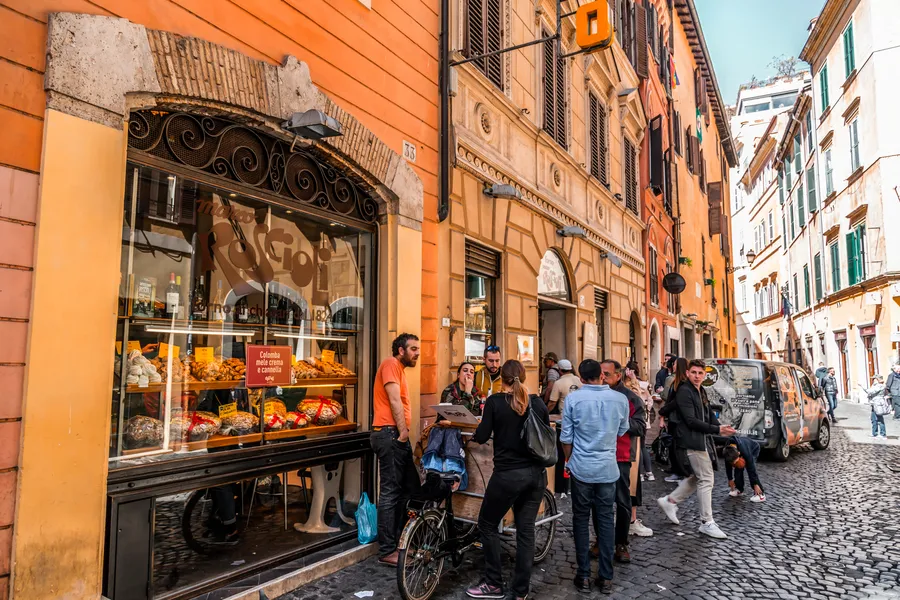
Do not sit down for a full Roman lunch. That is a 90-minute affair with pasta, secondo, and wine, and you do not have the time today. Instead, you are eating pizza al taglio – Roman-style pizza baked in long rectangular trays and sold by weight.
Go to Antico Forno Roscioli on Via dei Chiavari, a 10-minute walk from the Pantheon through the backstreets toward Campo de’ Fiori. This bakery has been operating since 1824 and the pizza is worth every step.
Order the Pizza Rossa – just tomato sauce on a thin, crispy base. No cheese, no toppings. It sounds too simple, but the sauce is sweet, slightly smoky, and the crust shatters when you bite it. Also try the Pizza Bianca – just olive oil and sea salt on puffy dough that is somehow both crispy on the outside and airy inside.
You point at what you want, they cut it with scissors, weigh it, and hand it to you wrapped in paper. A solid lunch here costs €5-8. Eat it standing at the counter or walking toward your next stop.
Alternative: If Roscioli has a massive line (it happens), walk five minutes to Forno Campo de’ Fiori on the square itself. Similar quality, similar prices.
Eating this well on €8 is the norm here, not the exception – our Rome Food guide goes deeper on where locals actually eat by neighborhood.

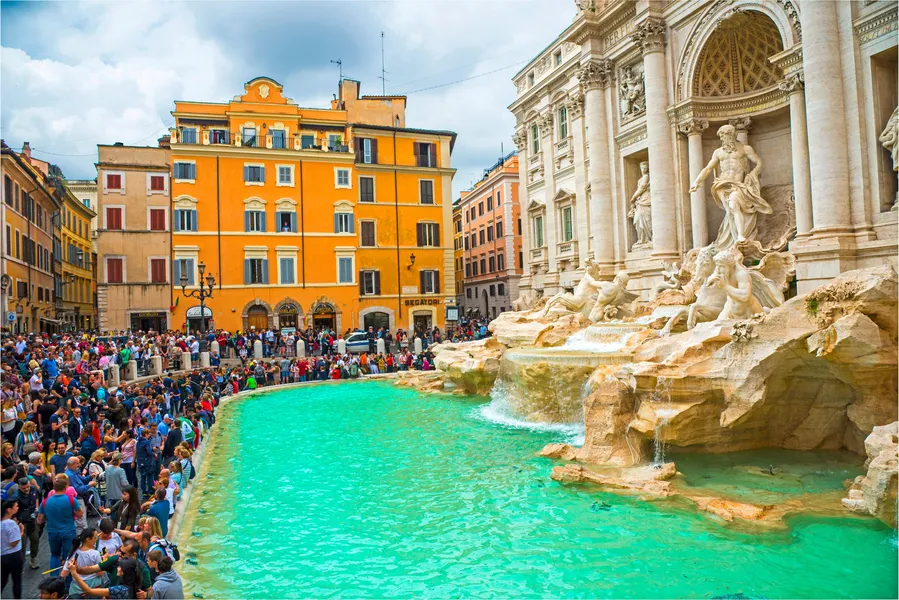
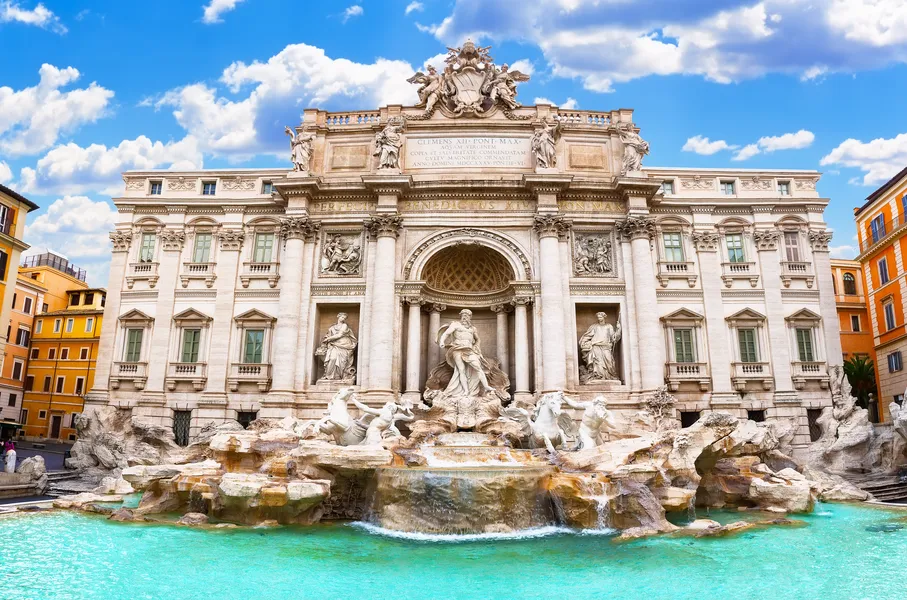
12:00 PM – Trevi Fountain
From lunch, follow the signs toward Fontana di Trevi. Every major intersection in central Rome has small brown signs pointing toward the main monuments – follow the ones for “Fontana di Trevi.”
Let’s be honest: the Trevi Fountain is going to be crowded. There is no secret time to visit when it is empty. At midnight there are still 200 people here. The fountain sits at the bottom of a small piazza surrounded by tall buildings, so the space feels even more packed than it is.
But it is genuinely spectacular. The entire facade of a palazzo has been turned into a sculptural waterfall, with Neptune riding a shell chariot pulled by sea horses through churning carved water. It is 26 meters high and 49 meters wide – far bigger than most people expect.
The ritual: Throw a coin over your left shoulder with your right hand. Legend says it guarantees you will return to Rome. (The coins are collected every night and donated to Caritas, a Catholic charity. They pull an estimated €3,000 per day from the fountain.)
Crowd strategy: Do not try to fight your way to the front rail at water level. Instead, stay on the upper steps at the back of the piazza. You get the full fountain in your frame without someone’s selfie stick poking into the shot.
12:45 PM – Spanish Steps
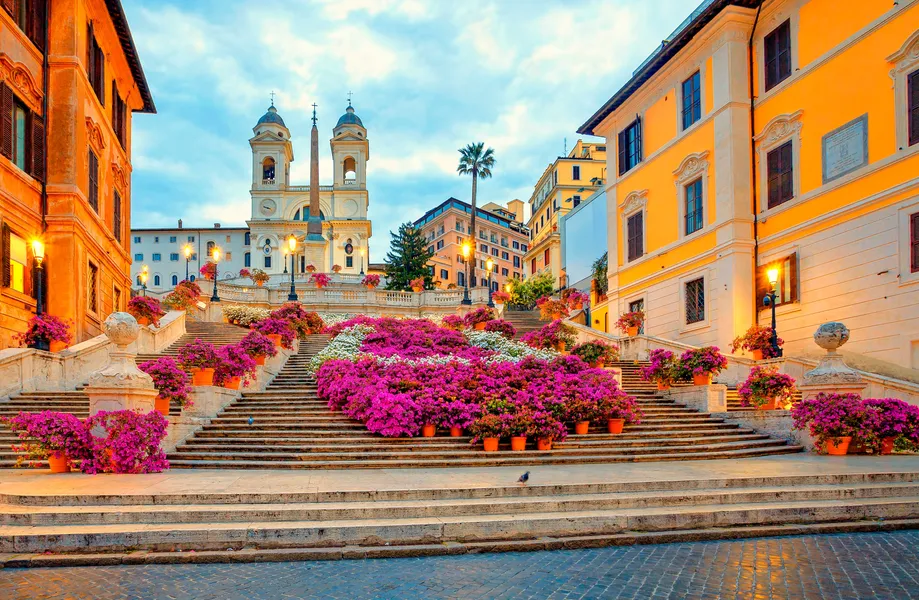
A 10-minute walk north from the Trevi Fountain brings you to Piazza di Spagna and the famous Spanish Steps. The 135 steps connect the piazza below with the Trinita dei Monti church above.
Climb to the top. From here, you can look down Via Condotti, Rome’s luxury shopping street, all the way to Via del Corso. If you are into window shopping, the stretch below has Gucci, Prada, Valentino, and Bulgari (which was founded in Rome in 1884).
(Note: Sitting on the Spanish Steps was banned in 2019. You can still walk up and down them, but if you park yourself on a step, you risk a fine of €250. The rule is loosely enforced, but it is not worth testing.
At the base of the steps, the Barcaccia Fountain by Bernini’s father is worth a glance – it is shaped like a sinking boat, which was his clever solution to the area’s low water pressure.

1:30 PM – Gelato Break
You have earned it. But do not buy gelato from any place that has the stuff piled in huge colorful mountains above the rim of the container. That is a sign of artificial stabilizers and food coloring.
Look for gelato stored in flat, covered metal tins. The colors should be muted – pistachio should be grayish-green, not neon. Banana should be gray-white, not yellow.
Good options near the Spanish Steps area: Fatamorgana (multiple locations, all-natural ingredients, unusual flavors) or Come il Latte on Via Silvio Pellico (their cream-based flavors are excellent). A medium cup runs €3-4.


2:30 PM – Piazza Navona
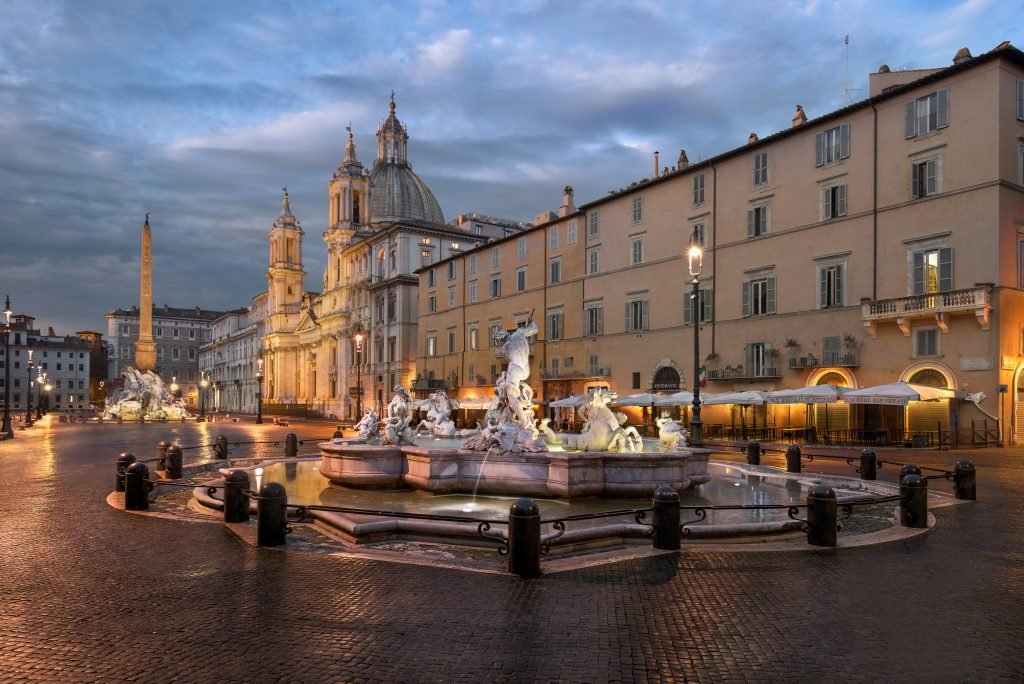
Walk south to Piazza Navona, one of Rome’s most beautiful squares. It was built on the footprint of a 1st-century stadium (Emperor Domitian’s), which is why it has that distinctive elongated oval shape. You can still see the original Roman arches in the basement of a building on the north end.
The centerpiece is Bernini’s Fountain of the Four Rivers – four massive marble figures representing the Nile, Ganges, Danube, and Rio de la Plata. The obelisk on top was brought from Egypt.
Piazza Navona is a great spot to sit at a cafe and people-watch, but the drink prices reflect the location. Expect to pay €6-8 for a coffee or soft drink if you sit down. If you just want to look, there is no charge for wandering through.


4:00 PM – Cross the Tiber (Optional: Trastevere)
If your legs still have life in them, cross the Tiber River and spend an hour in Trastevere, Rome’s most photogenic neighborhood. Narrow cobblestone lanes, ivy climbing terracotta walls, laundry lines stretched between buildings – this is the Rome you picture when you close your eyes.
Walk across Ponte Sisto (the pedestrian bridge south of Piazza Navona) and wander. There is no specific route needed here. Get lost on purpose. The neighborhood is small enough that you will always find your way back to the river.
If you are hungry again, Trastevere has better-value restaurants than the historic center. Look for places where the menu is only in Italian and the tables are full of people who live there.


6:00 PM – Aperitivo: The Roman Happy Hour
You survived one day in Rome. Now you drink.
Aperitivo is the Italian pre-dinner ritual, and in Rome it usually runs from 6:00 PM to 8:30 PM. The deal is simple: you order a drink – an Aperol Spritz (€8-12), a glass of wine (€6-10), or a Negroni (€10-14) – and it comes with a plate of snacks. Olives, chips, bruschetta, mini sandwiches, sometimes small pasta dishes. Some places have full buffets.
Where to go: The area around Piazza del Popolo has several good aperitivo bars. If you want something more local, head back to Trastevere – the bars along Via di San Francesco a Ripa draw a younger Roman crowd and the prices are lower.
For a splurge, find a rooftop bar. Several hotels near the Spanish Steps have terraces where you can watch the sun drop behind St. Peter’s dome with a Spritz in your hand. You will pay €15-20 per drink, but the view is the kind of thing you remember ten years later.


Getting Around: Transport Notes
Rome’s historic center is compact. Everything on this itinerary is walkable and that is intentional – the Metro does not reach the deepest parts of the center (the Pantheon, Trevi Fountain, Piazza Navona area have no nearby stations).
The Metro is useful for two things today:
- Line B to “Colosseo” for your morning start
- Line A to “Spagna” if you want to skip walking to the Spanish Steps
A single Metro ticket costs €1.50 and is valid for 100 minutes. Buy them from machines in any station – they take coins and cards.
Do not take taxis from the Colosseum area. Unlicensed drivers hang around tourist sites and will charge you €30 for a ride that should cost €8. If you need a taxi, use the FreeNow app or find an official white taxi at a marked stand.
Quick Budget Breakdown
Here is what one day in Rome actually costs if you follow this route:
- Metro tickets: €3 (two rides)
- Pantheon entry: €5
- Pizza al taglio lunch: €5-8
- Gelato: €3-4
- Aperitivo drink + snacks: €8-14
- Refillable water bottle: €0 (thanks, nasoni)
Total: roughly €24-34 without the Wedding Cake elevator or rooftop bar. Rome is surprisingly affordable when you stop buying bottled water and overpriced restaurant lunches near the monuments. For more ways to cut costs, see our full Rome on a Budget guide.
If You Have More Time
One day in Rome covers the greatest hits, but it barely scratches what the city has. If your schedule opens up, spend the next morning at the Vatican Museums – book a skip-the-line ticket online at least two weeks in advance – our 5 days in Rome itinerary covers both the Vatican and the Appian Way if your schedule opens up, and aim for the 8:00 AM entry slot before the corridors turn into a human traffic jam.
The Colosseum interior is also worth it with a pre-booked ticket, especially if you add the underground level where gladiators waited before fights. But that is a half-day commitment at minimum.
For now, finish your Spritz. Watch the light turn gold on the rooftops. You just walked through 2,000 years of history in a single day, and your feet are going to remind you about it tomorrow morning.
Do I need to book anything in advance for this one-day Rome itinerary?
Only the Pantheon requires a ticket (€5), and you can buy it on arrival if you get there by 10:30 AM before the midday rush hits. Everything else on this route – the Colosseum exterior, the Forum street view, the Spanish Steps, Trevi Fountain, Piazza Navona – is free to access with no booking needed. Save your advance booking energy for a return trip when you tackle the Vatican or Colosseum interior.
Is 8 km of walking realistic for one day?
Yes, but wear the right shoes. Rome’s sampietrini cobblestones are brutal on thin soles – running shoes or chunky-soled trainers are the move, not sandals or dress shoes. The route is mostly flat through the historic center with one uphill stretch near the Colosseum. If your legs give out mid-afternoon, Metro Line A (€1.50) gets you between the Spanish Steps area and the river quickly.
Can I do this itinerary with kids?
The route works, but adjust the pace. The Trevi Fountain coin toss is an easy win with younger kids, and the Colosseum exterior is genuinely impressive without the crowd stress of going inside. Skip the aperitivo and swap it for an early dinner in Trastevere – places there open for dinner around 7:00 PM, earlier than most of Rome’s historic center restaurants.
What if it rains?
The Pantheon actually becomes more interesting in rain – water falls through the open oculus and drains through the marble floor in real time. The pizza al taglio lunch and aperitivo both work indoors. The main casualty is Piazza Navona and Trastevere, which lose their atmosphere when wet. If you get a rainy afternoon, that is the day to spend €12 on the glass elevator at the Altare della Patria and watch the storm roll over the city from above.
How far is this from Civitavecchia if I’m on a cruise?
The port at Civitavecchia is about 75-80 km from central Rome. The fastest option is the direct train from Civitavecchia station to Roma Termini – roughly 45-70 minutes depending on the service, with tickets around €5-9. Trains run frequently. Factor in at least 30 minutes to get from the port to the station, and give yourself a hard turnaround time that’s at least 3 hours before your ship’s all-aboard. Missing a cruise ship is expensive.
One Day in Rome — The Walking Route
Click any pin for timing, tips, and what to skip. Total route: ~8 km on foot.