
If you are planning a trip to southern Spain, you will undoubtedly feel the magnetic pull of Granada. For decades, however, this city has been the victim of the “day-trip treatment.” Travelers sleeping in Seville or on the beaches of Malaga will wake up before dawn, board a massive coach bus, endure a three-hour drive, sprint through the Alhambra, buy a cheap postcard, and leave before the sun goes down.
Doing this is an absolute tragedy.
Granada is not a museum; it is a fiercely independent, geographically isolated, wildly complex city that operates entirely on its own rhythm. It was the final stronghold of the Moorish empire in Western Europe, falling to the Catholic Monarchs in 1492. Because of this late conquest, the city is a striking, often jarring collision of delicate Islamic palaces, towering Renaissance cathedrals, narrow medieval Arab quarters, and bohemian street culture.
Furthermore, Granada is one of the last remaining cities in Spain that strictly adheres to the ancient, glorious tradition of the free tapas economy. You cannot experience this on a rushed six-hour layover.
To actually understand this city, you need exactly three days. This itinerary is built for the realities of traveling in 2026. It will show you how to navigate the punishingly steep hills without destroying your knees, how to hack the merciless ticketing system of the Alhambra, and how to eat like absolute royalty for the price of a few beers.
Pre-Trip Logistics: The Rules of Engagement
Before you even look at a map of the city, you must secure your logistics. Granada does not reward spontaneous travelers.
The Alhambra Ticket Crisis You cannot execute this itinerary without an Alhambra ticket, and you cannot buy an Alhambra ticket at the door. During the spring and autumn, tickets sell out months in advance. The moment your flights to Spain are booked, you must go to the official Patronato de la Alhambra y Generalife website and secure your entry.
When you book, you will choose a specific time slot (e.g., 10:30 AM). This time is strictly for entering the Nasrid Palaces. The guards are ruthless. If you arrive at 10:40 AM, the barcode scanner will reject you, the turnstile will lock, and your vacation is ruined. There are no refunds or apologies. You must bring your physical, original passport-a paper photocopy or a photo on your phone will result in you being denied entry.
The Topography Warning Granada is built on and around two massive, steep hills separated by the Darro River gorge. The streets in the historic Albaicín neighborhood are paved with empedrado (jagged, slick river stones). Leave your high heels and stiff dress shoes at home. You need thick-soled, highly supportive walking sneakers. If it rains, those river stones become an ice rink, so tread carefully.
(If you haven’t booked your accommodation yet, ensure you aren’t accidentally staying at the top of an inaccessible hill by referencing my deep-dive guide on Where to Stay in Granada: Best Areas & Hotels for First Timers).
Day 1: The Moorish Masterpiece and the Tapas Economy
Your first day is dedicated to the absolute pinnacle of Islamic architecture in Europe, followed by a crash course in Granada’s most beloved culinary tradition.
08:30 AM: Ascending the Sabika Hill Do not attempt to walk up the massive, incredibly steep Cuesta de Gomérez from Plaza Nueva to the Alhambra gates unless you want to start your day dripping in sweat. Instead, walk to the stop behind the monument of Isabel la Católica (near Plaza Nueva) and board the red C30 or C32 minibus. These tiny, aggressive buses will rocket you up the hill directly to the main ticket pavilions for less than €2.
09:00 AM: The Alhambra and Generalife Allocate a minimum of three to four hours for the Alhambra. It is not just a palace; it is an entire fortified military city.

Start your morning in the Generalife, the spectacular summer palace of the Nasrid sultans. It is a masterpiece of landscape architecture, featuring long, perfectly manicured courtyards, blooming rose gardens, and a constant, cooling flow of water channeled through ancient fountains.
Next, walk to the Alcazaba, the original, imposing military fortress at the tip of the promontory. Climb the Torre de la Vela (Watchtower) for a sweeping, panoramic view of the entire city of Granada and the snow-capped Sierra Nevada mountains looming in the distance.
The Main Event: The Nasrid Palaces Ensure you are standing in line at least 15 minutes before your ticketed Nasrid Palace time slot, with your physical passport in hand. Once inside, you will experience the absolute zenith of Moorish art. You will walk through rooms completely covered in mind-boggling, geometric stucco work (arabesques), intricately carved wooden ceilings that mimic the night sky, and the world-famous Court of the Lions, featuring a spectacular alabaster fountain supported by twelve marble lions. It is poetry carved into stone.

01:30 PM: The Descent and the Carrera del Darro Exit the Alhambra via the Gate of Justice (Puerta de la Justicia) and take a slow, downhill walk through the shaded woods back into the city. You will emerge onto the Carrera del Darro. This narrow, cobblestone street winds alongside the Darro River at the base of the Alhambra gorge. It is routinely voted one of the most romantic streets in the world, lined with 16th-century stone bridges and ancient palaces.
02:30 PM: Introduction to the Free Tapas Economy You have burned thousands of calories; it is time to engage in Granada’s greatest tradition.
Head to the area around Calle Navas or Plaza Nueva. Here is how the economy works: You walk into a loud, crowded bar. You order a caña (a small draft beer) or a tinto de verano (red wine and lemon soda). The bartender will deliver your drink, and along with it, they will drop a plate of food on the table. Do not pay for this food. It is entirely free. The magic lies in the escalation. Your first free tapa will be simple-perhaps olives or a slice of Spanish omelet. Order a second round of drinks, and the food upgrades to fried fish or meatballs. By your third drink, you are essentially receiving a main course. The Golden Rule: Do not sit down and immediately order a massive, paid plate of food off the menu. Drink, wait for the free food, pace yourself, and move to a new bar every two drinks.

07:00 PM: Sunset at the San Nicolás Viewpoint After a much-needed siesta at your hotel, it is time for the iconic Granada experience. Take the C31 minibus up into the Albaicín neighborhood and get off at the Mirador de San Nicolás.
Yes, it will be crowded with other tourists, backpackers, and gypsy flamenco guitarists playing for tips. Ignore the crowds and look across the gorge. The view of the Alhambra turning a burning, fiery red against the backdrop of the mountains as the sun sets is a core travel memory that you will never forget.
09:00 PM: Dinner in the Albaicín Instead of heading back downtown, stay in the hills for dinner. Find a table at a restaurant with a terrace, such as Carmen de Aben Humeya or Restaurante El Trillo. A Carmen is a traditional rustic house with an internal walled garden and orchard, completely unique to Granada. Eating a plate of slow-cooked oxtail while staring at the illuminated Alhambra at night is spectacular.
Day 2: The White Labyrinth and Gypsy Caves
Day two is about getting lost. You are going to explore the ancient residential quarters of the city, transitioning from Moorish tea houses to the raw, emotional heart of Roma culture.
10:00 AM: Plunging into the Albaicín The Albaicín is the ancient Arab quarter, built on the hill facing the Alhambra. It is a blindingly white labyrinth of impossibly narrow, winding alleys designed specifically to confuse invading armies. There is no grid here. Google Maps will routinely fail you as the GPS bounces off the high stone walls.
The best way to experience it is to simply walk downhill from the top. Wander past the whitewashed houses, peek into open wooden doors to see spectacular hidden courtyards, and smell the jasmine and jasmine hanging heavy in the air.
12:30 PM: The Moroccan Tea Houses As you reach the lower edge of the Albaicín, turn onto Calle Calderería Nueva. The atmosphere shifts instantly. You are no longer in Europe; you are in a North African souk.
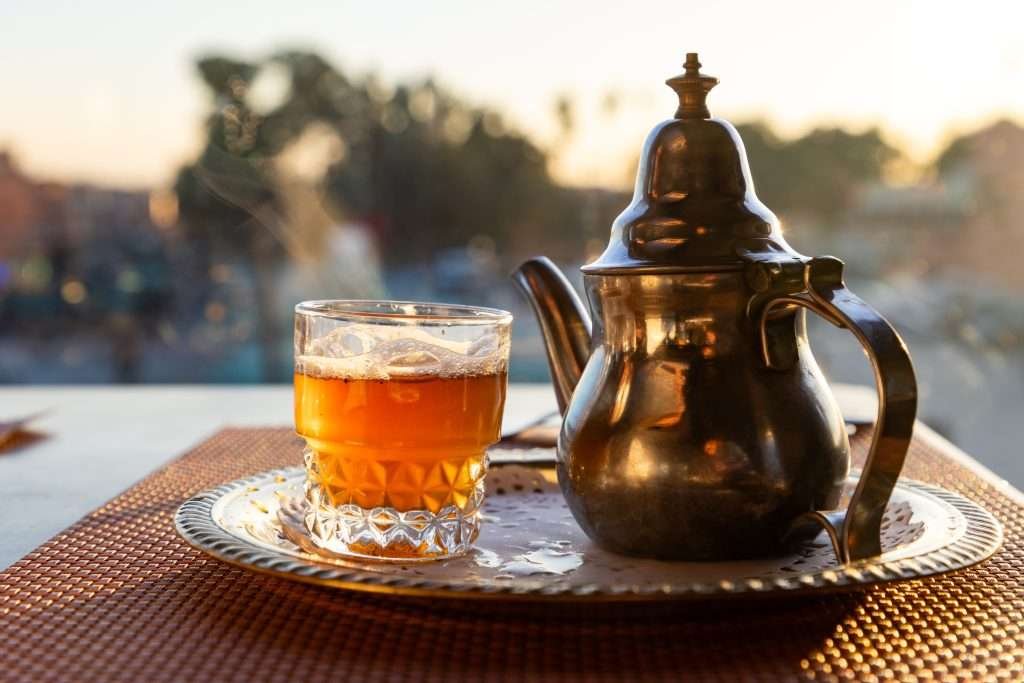
This pedestrian street is lined with teterías (traditional Arab tea houses), shops selling leather poufs, and bakeries displaying massive trays of honey-soaked baklava. Step out of the midday sun and walk into a tea house like Tetería Dar Ziryab. Sit on the low, velvet-cushioned benches and order a pot of boiling hot Moroccan mint tea and an assortment of almond pastries. It is the ultimate, quiet cultural reset.
02:30 PM: A Traditional Andalusian Lunch Walk back into the flat, commercial center of the city for lunch. If you want a break from the bar-hopping tapas scene, sit down for a proper, heavy meal.
Seek out a traditional dish like Habas con Jamón (fava beans pan-fried with massive chunks of cured Trevélez ham and olive oil) or the notorious Plato Alpujarreño. The latter is a massive, cholesterol-heavy mountain dish originating from the nearby villages, consisting of fried eggs, potatoes, morcilla (blood sausage), chorizo, and sweet green peppers. It is designed to fuel farmers through the winter, and it will absolutely put you to sleep. (If you want a full breakdown of exactly what to order and avoid, check my master guide: What to Eat in Granada: The Ultimate Foodie Guide).


07:00 PM: The Sacromonte Neighborhood To the east of the Albaicín lies Sacromonte, the historic home of Granada’s Roma (Gypsy) community. Instead of building houses, the residents here carved their homes directly into the soft rock of the hillside.
Walk up the Camino del Sacromonte. The road is lined with whitewashed cave facades, prickly pear cacti, and sweeping views of the valley below. To understand how these communities lived, visit the Museo Cuevas del Sacromonte, an open-air ethnographic museum featuring preserved, historically accurate cave dwellings.

09:30 PM: The Zambra Flamenco Experience You cannot visit Sacromonte without seeing flamenco. But you must be incredibly careful to avoid the massive tourist traps.
If a man in the street tries to sell you a €70 ticket for a “cave show with dinner,” walk away immediately. The food will be microwaved garbage, and the dancing will be a soulless, choreographed routine for tour buses.
Instead, you want to experience a Zambra. This is a highly specific, raw, passionate variation of flamenco born in these exact caves, originally performed at gypsy weddings. The dancing is closer, the footwork is percussive, and the emotion is intense. Look for respected, historical venues (tablaos) like Cueva de la Rocío or Zambra María la Canastera. Buy the ticket that only includes a drink and the show. Sit in the cramped, whitewashed cave, let the acoustic guitar echo off the rock walls, and watch true Andalusian passion unfold feet from your face.

Day 3: The Catholic Monarchs and The Jewish Quarter
After two days of immersing yourself in Granada’s Islamic and Roma history, your final day focuses on the dramatic, heavy, and triumphant architecture of the Catholic reconquest.
09:30 AM: The Royal Chapel (Capilla Real) In 1492, King Ferdinand and Queen Isabella finally conquered Granada, uniting Spain under Catholic rule. They loved the city so much that they ordered their bodies to be buried here instead of in the traditional royal crypts.
Walk to the Capilla Real. This ornate, late-Gothic chapel was built specifically as their mausoleum. You will walk past massive wrought-iron grilles to see their exquisitely carved marble tombs. However, the most profound moment is walking down the narrow stairs into the stark, unadorned crypt below, where you can look directly at the simple lead coffins actually containing the remains of the monarchs who funded Christopher Columbus.
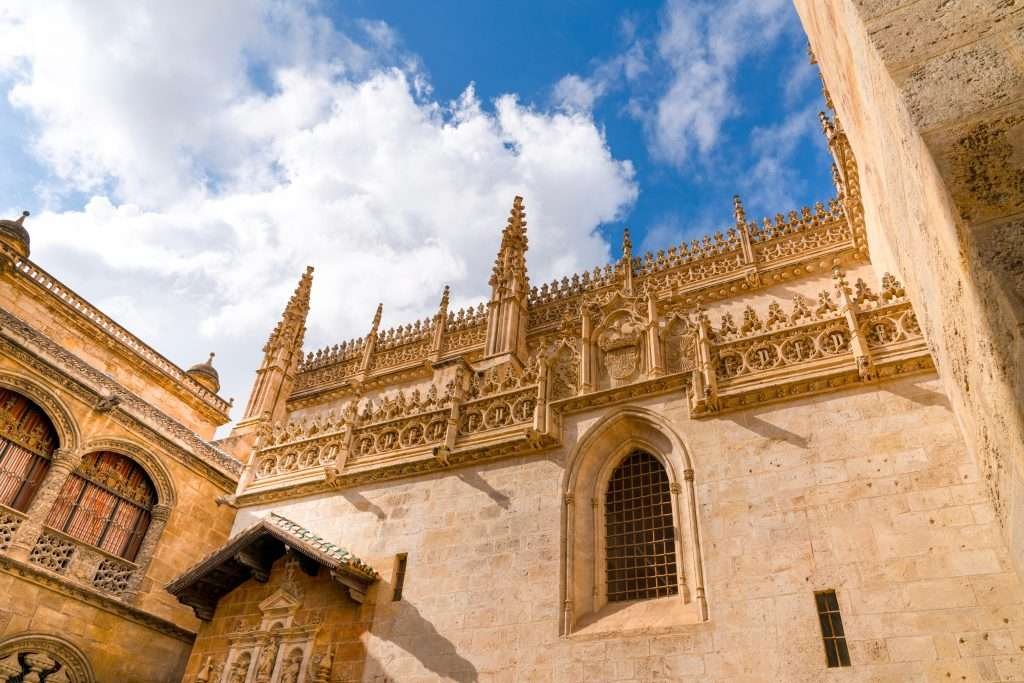
11:00 AM: The Granada Cathedral Directly adjacent to the Royal Chapel is the Catedral de la Encarnación. After spending day one in the delicate, intricately detailed, intimately scaled rooms of the Alhambra, walking into this Cathedral is a massive architectural shock.
It is a towering, massive masterpiece of the Spanish Renaissance. The blindingly white, cavernous interior features colossal Corinthian columns and a spectacular main altar. It was built specifically to project the immense power, wealth, and dominance of the Catholic church over the newly conquered territory.
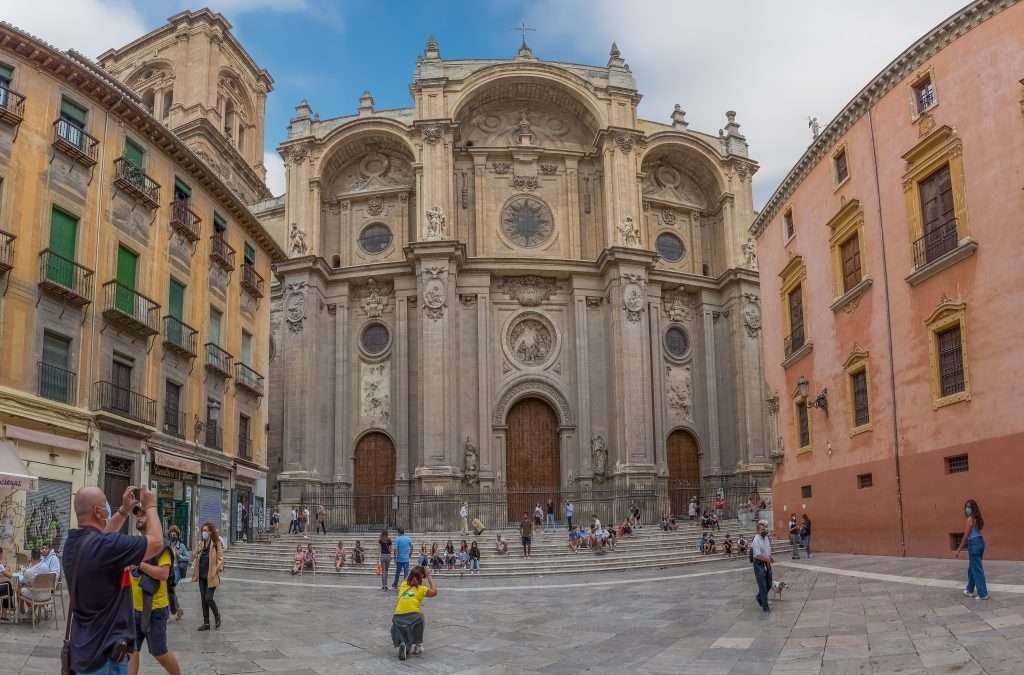
01:00 PM: Exploring Realejo (The Old Jewish Quarter) Walk south from the Cathedral into the Realejo neighborhood. This was the ancient Jewish quarter of the city before the 1492 expulsion. Today, it is the bohemian, hipster, university heart of Granada.
The stark white walls of the historic center are replaced here with spectacular, massive street art murals. Look out for works by “El Niño de las Pinturas” (The Boy of the Paintings), a world-famous local graffiti artist whose beautiful, thoughtful murals cover entire apartment buildings and alleyways throughout the district.
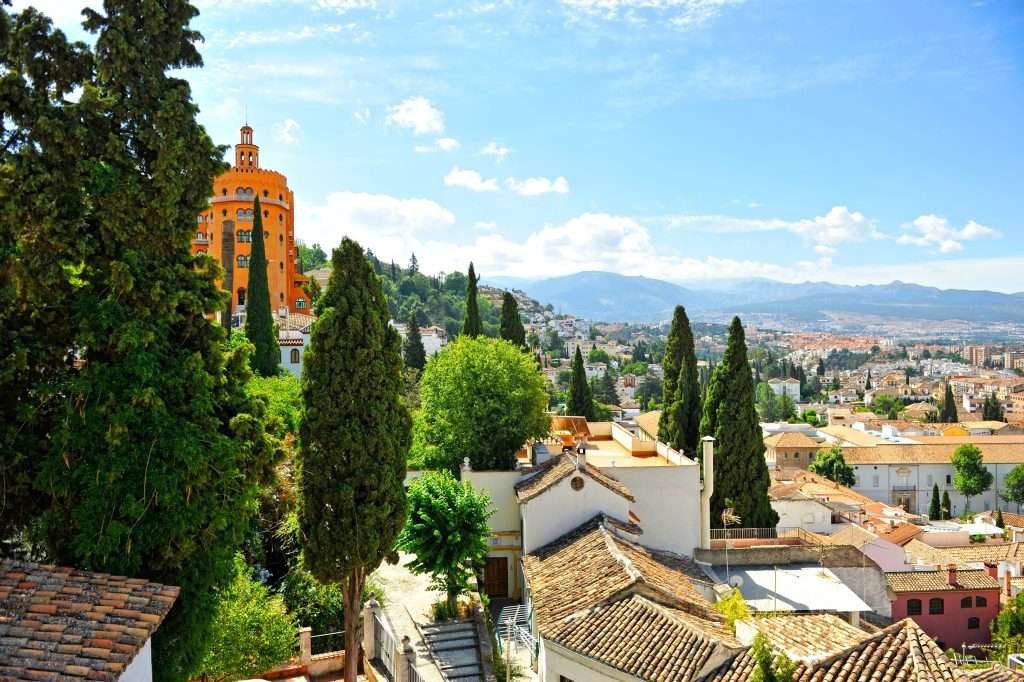
02:30 PM: Lunch at Campo del Príncipe Navigate to the center of Realejo to find the Campo del Príncipe, a wide, sun-drenched plaza built over a former Muslim cemetery. It is surrounded by fantastic, unpretentious tapas bars highly favored by local university students. Grab an outdoor table, order an ice-cold Alhambra beer, and dive back into the free tapas economy for a long, lazy afternoon lunch.
05:00 PM: The Alcaicería and Final Souvenirs Walk back toward the Cathedral to explore the Alcaicería. Historically, this was the grand, sprawling silk market of the Moorish city. It burned down in the 19th century and was rebuilt on a much smaller scale. Today, it is a narrow, maze-like alleyway packed with vendors selling intricate Fajalauza ceramics, colorful glass lamps, inlaid wood boxes (Taracea), and spices. Yes, it is aimed at tourists, but it is highly photogenic and the perfect place to buy your final souvenirs.

08:30 PM: The Ultimate Farewell Tapas Crawl For your final night, you must execute a flawless, high-energy tapas crawl in the city center.
Start at Bar Los Diamantes (there are several locations, but the one on Calle Navas is the most chaotic and historic). You will have to fight for space at the bar, but the reward is plates of the freshest flash-fried seafood in the city. Next, move to Bodegas Castañeda, a legendary, wood-paneled tavern with barrels stacked to the ceiling. Order their famous caliente (a potent mix of sweet wines and liquors) and enjoy whatever hearty, traditional stew the bartender places in front of you.
End your night exactly as the locals do: standing on the cobblestones, shouting over the noise, eating free food, and soaking in the electric, unyielding energy of the greatest city in southern Spain.
Final Thoughts on Your 3 Days in Granada
Granada is not a city you visit just to take a photo of a palace. It is a city that requires you to physically engage with it. You have to climb its punishing hills, navigate its confusing, winding alleys, and shoulder your way to the front of a crowded bar to get a beer.
If you follow this 3-day routing, you will bypass the massive tour groups, avoid the overpriced traps, and experience the raw, unfiltered soul of Andalusia. You will leave exhausted, well-fed, and entirely ruined for standard European city breaks.
(If you are using Granada as a launchpad to explore the rest of the region, be sure to read my guide on the 5 Best Day Trips from Granada or my First Time in Seville guide to prepare for your next stop!).
Frequently Asked Questions: 3 Days in Granada
Is 3 days enough time to see Granada?
Three days is the absolute perfect amount of time for a first-time visitor. It allows you to dedicate a full, unhurried day to the massive Alhambra complex, spend a day exploring the Albaicín and the Sacromonte caves, and have a final day for the Cathedral, the central markets, and heavy tapas crawling without suffering from travel burnout.
How do I get to the Alhambra without walking up the steep hill?
Do not walk up the Cuesta de Gomérez in the midday sun! Head to the bus stop located right behind the Isabel la Católica monument near Plaza Nueva. Board the red C30 or C32 minibus. They run constantly and will drive you straight up the mountain to the main ticket gates for under €2.
Are the tapas really free in Granada?
Yes. Granada is one of the very few major cities left in Spain that strictly honors the free tapas tradition. Whenever you order a paid drink (like a draft beer, a glass of wine, or a soda) at a traditional bar, the bartender will automatically bring you a small plate of food for free.
What is the difference between standard flamenco and a Zambra?
Standard flamenco is often performed on a raised wooden stage (tablao) and features highly polished, structured routines. A Zambra is a specific, deeply emotional, raw variation of flamenco born in the gypsy caves of the Sacromonte neighborhood. It is danced barefoot, incredibly close to the audience, and was originally performed during wedding celebrations.
Do I need to bring my physical passport to the Alhambra?
Yes, this is completely non-negotiable. Your ticket is linked specifically to your passport number. When you arrive at the Nasrid Palaces, the guards will demand to see your original, physical passport to scan it against your ticket. A paper copy or a photo on your phone will not be accepted.