
The 5 best day trips from Granada will take you from ski slopes to prehistoric caves to the greatest mosque in Europe – all within 90 minutes of the city center. If you are planning your first time in Granada, you are likely consumed by the Alhambra and the chaotic, brilliant free tapas culture of the city center. However, while the city itself is an absolute masterpiece, treating Granada merely as an isolated urban destination is a massive geographical mistake.
Granada possesses an objective, undeniable superpower: its location.
The capital of this province is wedged perfectly between a massive, snow-capped mountain range, a spectacular Mediterranean coastline, and a surreal, arid desert landscape. Because the regional infrastructure relies heavily on the excellent ALSA bus network and modern highways, you can wake up in Granada, go skiing at 10,000 feet, and be back in the city center to eat free tapas by 9:00 PM. You can leave your hotel, explore prehistoric caves on the coast, and return in time to watch the sunset over a 14th-century Moorish palace.
However, the paradox of choice here is paralyzing. If you look at a map, everything looks deceptively close, but the reality of navigating Andalusian mountain roads or regional train schedules can quickly turn a fun excursion into a logistical nightmare.
If you are trying to maximize a tight 3 Days in Granada: The Perfect Itinerary for First Timers (2026 Edition), you cannot afford to waste six hours on a poorly planned transit route. This comprehensive, brutally honest guide breaks down the 5 absolute best day trips from Granada. We will cover the exact logistics, what to eat, and what to avoid so you can escape the city limits with zero stress.
1. Las Alpujarras: The High-Altitude White Villages

If you only have time for one single day trip from Granada, this is the one you must take. Las Alpujarras is a series of isolated, blindingly white villages clinging precariously to the southern slopes of the Sierra Nevada mountain range.
The Vibe and The History This region is historically profound. After the Catholic Monarchs conquered Granada in 1492, the remaining Moorish population was forced to retreat high up into these unforgiving mountains. Because of this, the architecture here is utterly unique in Spain. It does not look European; it looks exactly like the Berber villages of the Moroccan Atlas Mountains. The houses feature flat clay roofs, distinctive tall chimneys, and narrow, winding alleyways designed to break the fierce mountain winds.
The air here is crisp, completely silent, and smells of woodsmoke and curing ham.
The Poqueira Gorge (The Big Three) The most spectacular sub-region of the Alpujarras is the Poqueira Gorge, home to three specific villages stacked on top of one another: Pampaneira (the lowest), Bubión (the middle), and Capileira (the highest).


- What to do: If you are physically fit, the best way to experience this area is to hike between the villages. An ancient network of footpaths connects them, weaving through terraced farms and cherry orchards. In Pampaneira, you must browse the local artisan shops selling vibrant, hand-woven jarapas (heavy wool rugs).
- What to eat: The mountain air here is famous for curing meat. You must order a plate of Jamón de Trevélez (a sweet, unsmoked cured ham produced in the neighboring village). If you read my guide on What to Eat in Granada: The Ultimate Foodie Guide (2026 Edition), you already know about the Plato Alpujarreño-a massive, cholesterol-heavy plate of fried potatoes, eggs, blood sausage, and ham designed to fuel farmers through brutal winters. Eat it here, at the source.
Logistics and Practicalities
- By Bus: The ALSA bus leaves the main Granada bus station in the morning and takes roughly 2 hours to reach the Poqueira Gorge. The bus physically climbs the winding mountain, dropping you in Pampaneira or Capileira. It is cheap (around €6 each way) and highly reliable. Just be sure to check the return schedule, as the last bus down the mountain leaves relatively early in the evening.
- By Car: Driving gives you total freedom, but the A-348 mountain road is terrifying if you are an anxious driver. It is essentially a continuous series of blind, guardrail-free hairpin turns shared with massive tour buses. Rent a car only if you are highly confident in your driving abilities.
2. Cordoba: The Glory of the Caliphate

While you can technically sleep in Granada and take a day trip to Seville, I strongly advise against it (Seville requires its own dedicated multi-day trip, which you can plan using my First Time in Seville guide). Cordoba, however, is the perfect historical companion piece to Granada and is easily doable in a single day.
The Vibe and The History Before Granada rose to power under the Nasrid dynasty, Cordoba was the beating heart of the Islamic world. In the 10th century, it was the largest, most advanced, and wealthiest city in Europe. A day trip here provides massive historical context for what you are seeing back in Granada.
The Main Attractions You are going to Cordoba for one primary reason: The Mezquita-Catedral (The Mosque-Cathedral). It is one of the most staggering buildings on earth. Originally a massive mosque, it features a mesmerizing, seemingly infinite forest of 856 columns supporting striking red-and-white striped double arches. When the Christians conquered the city, they were so awed by the structure that they refused to tear it down. Instead, they inexplicably built a towering, soaring Renaissance cathedral directly in the dead center of the mosque. Walking from the quiet, dim, geometric symmetry of the Islamic arches straight into the blindingly bright, gold-leafed Catholic nave is a massive architectural shock to the system.

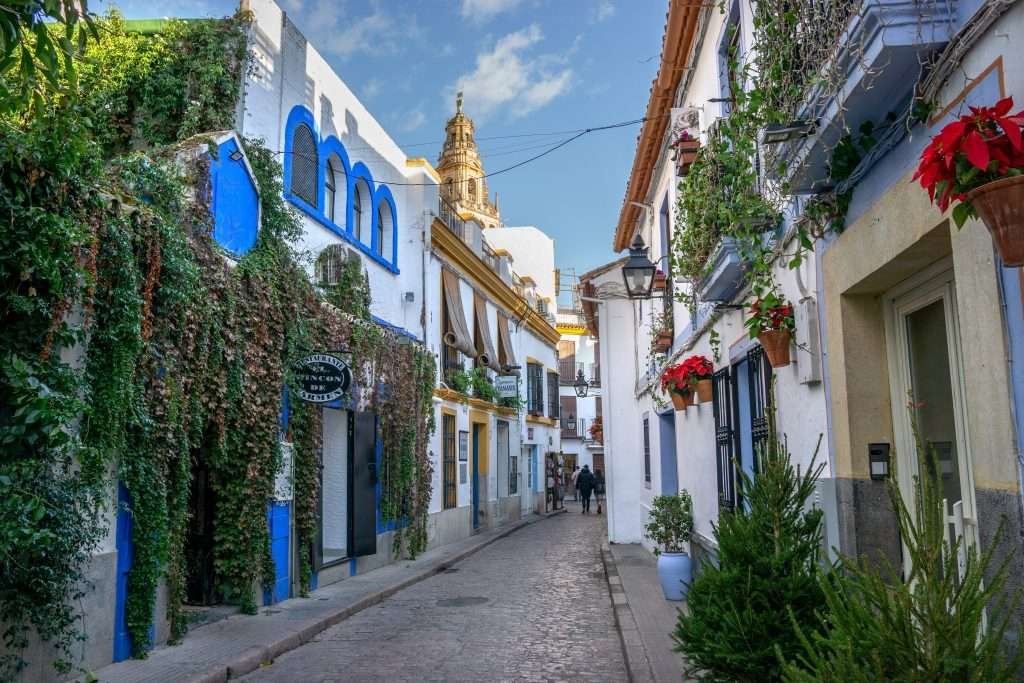
After the Mezquita, wander through the Judería (the old Jewish Quarter), a pristine maze of whitewashed alleys famous for its hidden patios-internal courtyards overflowing with hundreds of potted blue geraniums.


Logistics and Practicalities
- The Train: This is the only way you should make this trip. Do not take the bus. Do not drive. Go to the Granada train station and board the high-speed Avant or AVE train. It will rocket you through the Andalusian countryside to Cordoba in roughly 1 hour and 30 minutes.
- The Ticketing Warning: Just like the Alhambra, you absolutely must purchase your entry tickets to the Mezquita online weeks in advance.
- The Heat Warning: Cordoba is affectionately known as the “frying pan of Spain.” In July and August, temperatures routinely exceed 42°C (107°F). If you visit in the summer, you must arrive early, stay in the shade, and retreat to an air-conditioned restaurant for a heavy bowl of Salmorejo (Cordoba’s incredibly thick, rich version of cold tomato and garlic soup).
3. Sierra Nevada National Park (Pradollano)
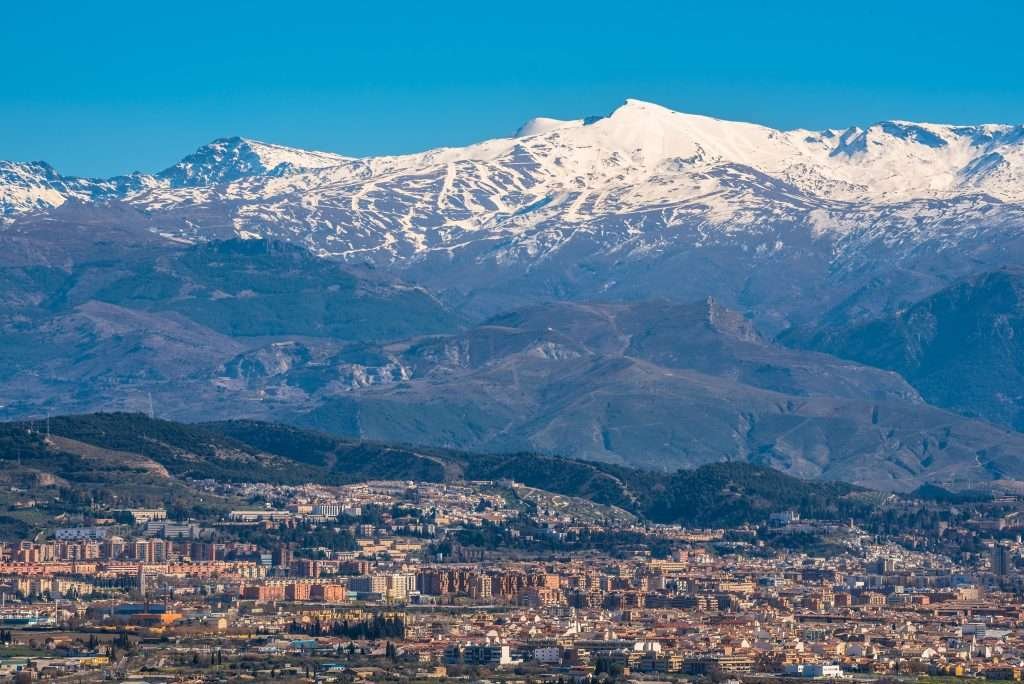
It is a bizarre, surreal experience to stand in the warm, palm-tree-lined squares of Granada in a t-shirt while staring directly at a massive wall of snow. The Sierra Nevada mountains are less than an hour away from the city center, making it one of the most geographically dramatic day trips in Europe.
Winter: The Ski Resort From December to April, the town of Pradollano operates as a massive, highly modern ski resort. It is the southernmost ski resort in Europe. The sheer novelty of this excursion is unmatched: you can wake up in a 16th-century Moorish city, take a 45-minute bus ride, rent a snowboard, spend six hours carving down pristine alpine powder, and be back in Granada to eat free tapas by 7:30 PM. You do not need to bring gear; the rental shops in Pradollano will outfit you with skis, boots, and a heavy jacket for a reasonable daily rate.
Summer: The High-Altitude Hike When the snow melts, the Sierra Nevada transforms into a hiker’s paradise. The ski lifts are repurposed to carry hikers high up the mountain slopes. If you are an experienced trekker, you can take a shuttle bus to Hoya de la Mora and attempt the hike to the summit of the Veleta peak (the second-highest peak in the range at 3,398 meters). On a clear day from the summit, you can look completely across the Mediterranean Sea and see the northern coast of Africa.
Logistics and Practicalities
- The Ski Bus: ALSA operates a dedicated “Ski Bus” from the main Granada bus station to Pradollano. During the winter season, it usually departs around 8:00 AM and returns at 4:00 PM. It costs roughly €9 round trip.
- Altitude Sickness: Do not underestimate the elevation change. You are going from roughly 700 meters in Granada to over 2,500 meters in Pradollano in under an hour. Drink a massive amount of water to avoid altitude headaches.
4. Nerja and Frigiliana: The Coast and The Caves
If you need a break from heavy historical monuments and simply want to feel the Mediterranean sun on your face, you need to head south to the Costa Tropical. (If you prefer the wider coastal vibe, refer to my First Time in Malaga guide, but Nerja is much closer and highly accessible from Granada).
This day trip is the perfect “two-for-one” special: you get a pristine coastal beach town in the morning and a flawless mountain village in the afternoon.
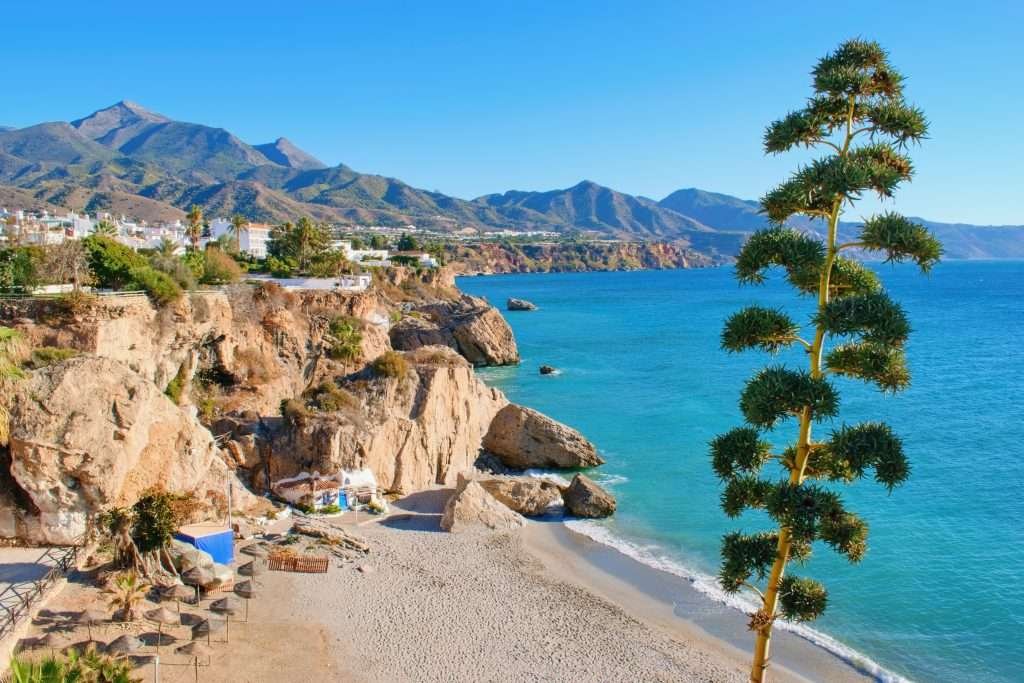
Nerja and the Balcony of Europe Nerja is a coastal town that has brilliantly avoided the high-rise concrete hotel development that plagues other parts of the Spanish coast. The focal point of the city is the Balcón de Europa (Balcony of Europe), a stunning, circular promenade built on a rocky promontory that juts directly out into the Mediterranean Sea. It offers endless, sweeping views of the blue horizon.
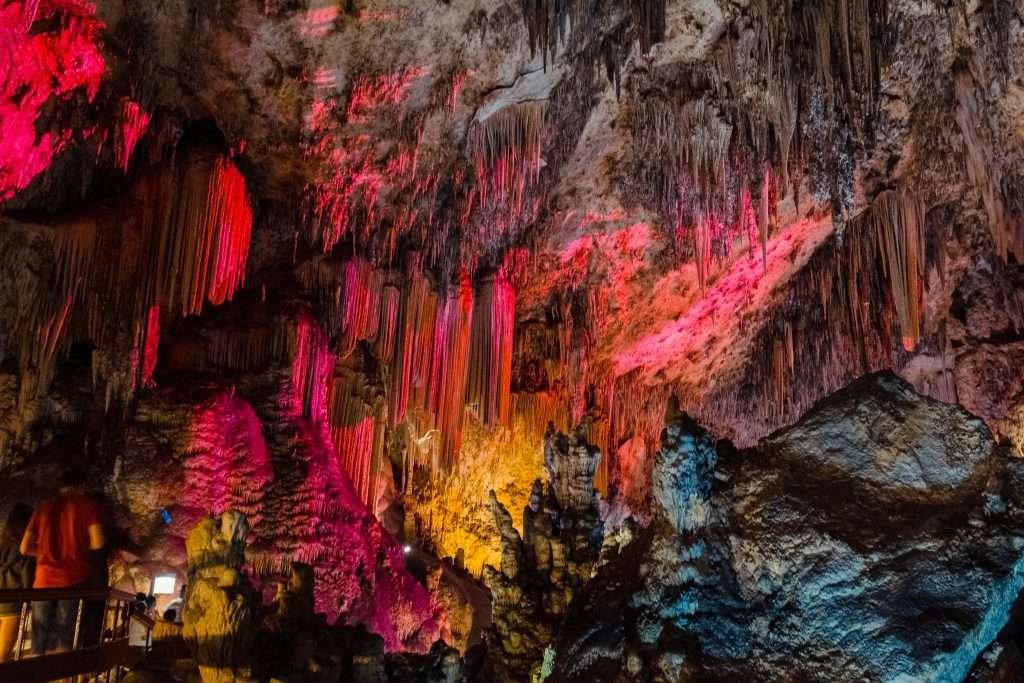
Before you hit the beach, you must visit the Cuevas de Nerja (Nerja Caves), located just outside the town. Discovered by accident in 1959 by local boys chasing bats, this colossal subterranean cave network stretches for almost 5 kilometers. It houses the largest stalactite in the world (a staggering 32 meters high). Walking through the main cavern feels like standing inside a natural, subterranean cathedral.
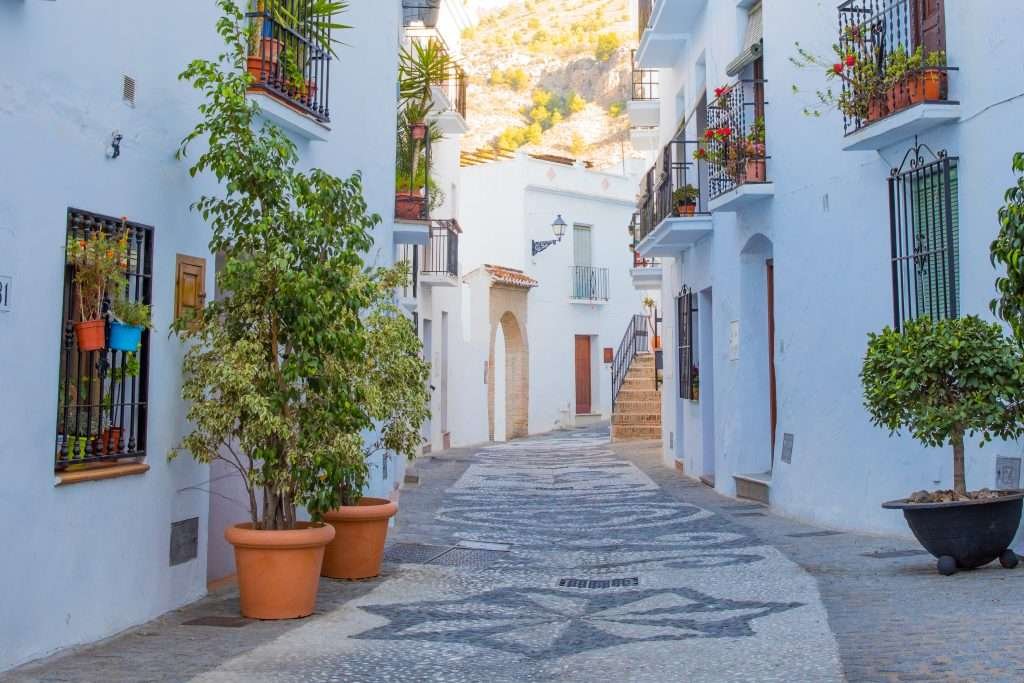
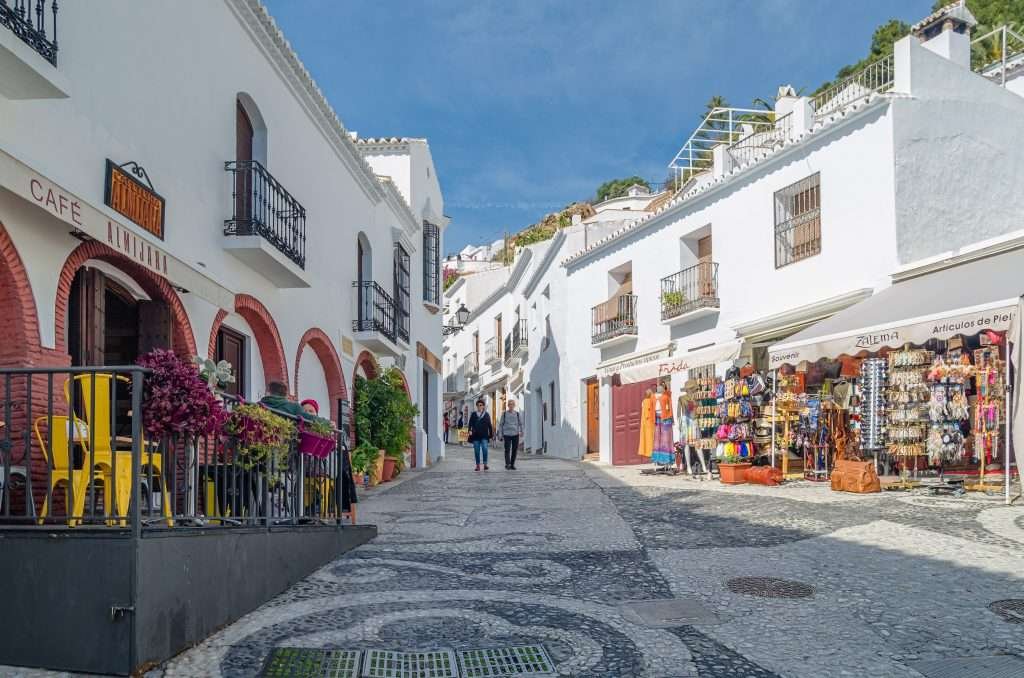
Frigiliana: The Spotless White Village After a seafood lunch on the coast, take the 15-minute local bus straight up the mountain to Frigiliana. This town is routinely voted one of the most beautiful Pueblos Blancos (White Villages) in all of Spain.
The old Moorish neighborhood is a perfectly preserved labyrinth of narrow, winding, cobbled streets, blindingly white walls decorated with bright blue doors, and thousands of potted red geraniums. There is no checklist of monuments here; the goal is to simply get lost, walk up the steep Calle Real, browse the artisan ceramic shops, and find a rooftop terrace to drink a cold beer while looking all the way down the mountain to the sea.

Logistics and Practicalities
- The Bus: ALSA runs direct buses from Granada to Nerja. The journey takes about 2 hours and 15 minutes. From the Nerja bus station, you can easily catch the local blue shuttle bus that runs up the hill to Frigiliana every hour.
- What to Eat: Frigiliana is the only place in Europe that still operates a traditional molasses factory. You must order Berenjenas Fritas con Miel (crispy deep-fried eggplant drizzled with rich, dark sugar cane honey).
5. Guadix and the Gorafe Desert: The Cave Dwellers
If you want to completely escape the tourist crowds and see a side of Andalusia that feels like a bizarre mix of the American Wild West and the Flintstones, you must travel east to the province of Guadix.
The Barrio de las Cuevas (The Cave Quarter) Guadix is globally famous for its troglodyte architecture. Over 2,000 active cave houses are carved directly into the soft, clay-like hillsides. When you stand on a high viewpoint, the landscape looks absurd: rolling green grassy hills with hundreds of bright white, conical clay chimneys poking directly out of the earth.

People have lived in these caves since the Moorish era because the thick earth provides perfect, natural insulation. It stays roughly 20°C (68°F) inside the cave year-round, regardless of whether it is freezing or boiling outside. You can visit the Centro de Interpretación Cuevas de Guadix to walk through a preserved historical cave, and many locals have converted their caves into highly unique Airbnbs or small restaurants.
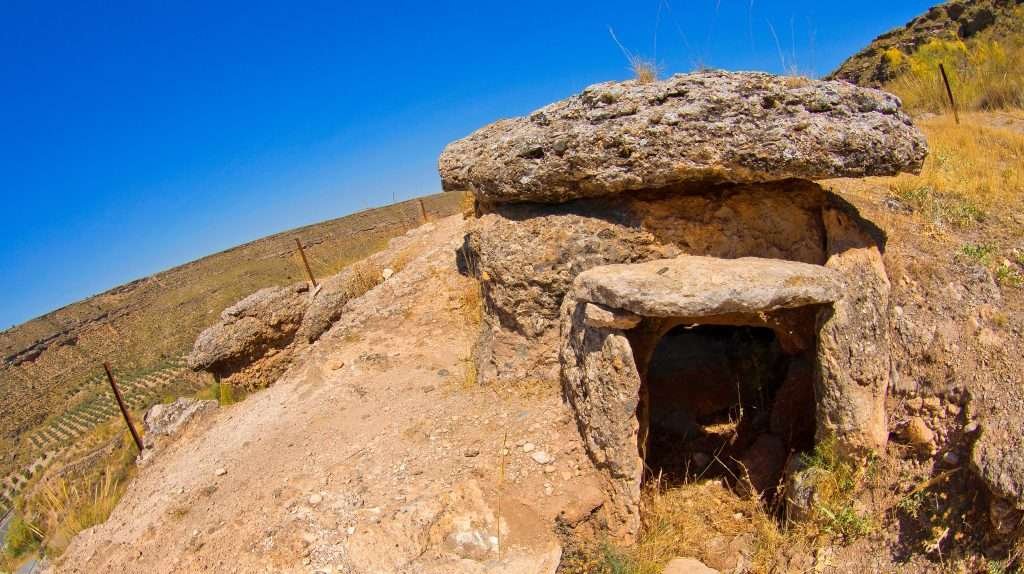
The Gorafe Megalithic Park (The Badlands) Just a short drive past Guadix lies the Gorafe Desert. The landscape here violently shifts from lush valleys to arid, jagged red clay canyons and deep ravines (Los Coloraos). It looks exactly like the Grand Canyon. You can hike the desert trails, which are dotted with over 240 ancient megalithic dolmens (prehistoric burial tombs dating back thousands of years). It is completely silent, entirely untouristed, and visually staggering.
Logistics and Practicalities
- How to Get There: While there is a regional train and an ALSA bus that can get you to the town of Guadix from Granada in about 50 minutes, you absolutely need a rental car to properly execute this day trip. The Gorafe desert and the best viewpoints are spread out across a wide, arid region that public transport simply does not service.
Final Thoughts on Exploring the Province
Using Granada as your logistical base camp is one of the smartest travel hacks in Spain. You get the distinct advantage of unpacking your suitcase only once (hopefully in a great neighborhood you found via my Where to Stay in Granada guide), enjoying the phenomenal, cheap dining scene of a major city every night, and still experiencing the incredible geographical diversity of the region during the day.
Whether you are staring down into an ancient prehistoric cave, skiing down a mountain, or wandering through the greatest mosque in European history, the region surrounding Granada offers a density of world-class experiences that few places on earth can match.
Is it safe to drive in the Alpujarras?
Driving in the Alpujarras provides incredible freedom, but it is not for anxious drivers. The A-348 mountain road is a series of very tight, blind hairpin turns carved directly into the cliffside, often without guardrails. If you are not a confident driver, take the cheap and highly reliable ALSA bus from Granada instead.
Can I visit Cordoba as a day trip from Granada?
Yes, it is highly recommended! The best way to do this is by taking the high-speed Avant or AVE train from the Granada station, which will get you to Cordoba in roughly 1 hour and 30 minutes. Just remember to book your tickets for the Mezquita-Catedral weeks in advance.
How close is the beach to Granada?
Granada is not on the coast, but the Mediterranean Sea is very accessible. You can take an ALSA bus to the coastal towns of Salobreña, Almuñécar, or Nerja (on the Costa Tropical). The bus ride usually takes between 1 hour and 15 minutes to 2 hours, depending on the route and destination.
Do I need to bring my own ski gear to the Sierra Nevada?
No. If you want to take a spontaneous day trip to ski in Pradollano, you can rent everything you need (skis, boots, poles, and heavy winter apparel like jackets and waterproof pants) from dozens of rental shops located directly at the base of the mountain.
What is inside the caves of Guadix?
The caves in Guadix are not dark, damp caverns; they are fully functional, modern homes carved into the earth. Because the clay provides perfect natural insulation, they stay at a comfortable 20°C (68°F) year-round. Many feature modern kitchens, Wi-Fi, and electricity, with only their white clay chimneys visible above ground.