
For decades, Malaga suffered from an unfair reputation. To millions of European holidaymakers, it was merely an airport-a place where you collected your luggage, grabbed a rental car, and immediately drove west toward the sprawling, all-inclusive beach resorts of the Costa del Sol.
But over the last decade, a spectacular cultural renaissance has occurred. The birthplace of Pablo Picasso decided it was time to reclaim its identity. The city invested hundreds of millions of euros into pedestrianizing its historic center, developing a gleaming, world-class port promenade, and opening over 30 spectacular museums.
Today, visiting Malaga in 2026 means stepping into one of the most dynamic, vibrant, and culturally profound cities in southern Europe. It is a place where you can touch 11th-century Moorish fortress walls, view cutting-edge contemporary art inside a giant glass cube, and eat freshly caught seafood roasted over an open fire on the beach-all in the exact same afternoon.
If this is your maiden voyage to Andalusia, you are in for an absolute treat. However, navigating a bustling Spanish city comes with a learning curve. From understanding the notoriously late dining schedule to figuring out the labyrinth of the historic center, this ultimate first-timer’s guide to your First Time in Malaga will provide you with the exact blueprint you need to travel like a seasoned local.
Chapter 1: When to Visit and Weather Expectations
Malaga boasts a staggering 300 days of sunshine a year. While it is technically a year-round destination, the season you choose will dramatically impact the vibe, the cost, and the physical comfort of your trip.
Spring (March to May): The Sweet Spot For a first-time visitor, spring is arguably the greatest time to be in Malaga. The oppressive heat of summer has not yet arrived, but the temperatures are generally resting in the comfortable low-to-mid 20s Celsius (70s Fahrenheit). It is warm enough to sit at an outdoor café without a jacket and occasionally warm enough for a brave dip in the Mediterranean. If you visit in March or April, you might align with Semana Santa (Holy Week), a massive, emotionally charged religious festival where colossal, ornate floats are carried through the city streets.
Summer (June to August): High Season Chaos Summer in Andalusia is not for the faint of heart. Temperatures routinely spike well above 35°C (95°F), and the sun beats down relentlessly. This is when the city is at its absolute busiest, packed with tourists seeking beach time and vibrant nightlife. Hotel prices skyrocket, and securing dinner reservations becomes a competitive sport. If you love heat, bustling energy, and long, balmy nights that stretch until 4:00 AM, summer is fantastic. Just remember to pack lightweight linen and serious sunscreen.
Autumn (September to October): The Golden Months September and October offer a glorious reprieve. The massive summer crowds retreat, the hotel prices begin to normalize, but the Mediterranean Sea has spent the last three months baking in the sun, meaning the water is incredibly warm and perfect for swimming. The evenings take on a beautiful, golden hue, making it the perfect season for rooftop cocktails.
Winter (November to February): Mild and Local While you won’t be sunbathing in a bikini in January, Malaga’s winters are incredibly mild compared to the rest of Europe. Daytime temperatures often hover around 16°C to 18°C (60s Fahrenheit). This is the best time to visit if your primary goal is to hike up to the mountaintop castles without suffering heatstroke or to explore the museums without battling crowds.
Chapter 2: Arrival Logistics and Getting Around
Malaga-Costa del Sol Airport (AGP) is the fourth busiest airport in Spain, and thankfully, it boasts some of the best infrastructure in the country.
Getting to the City Center Do not waste your money on an expensive private transfer or a taxi right away. When you land, follow the signs for the Cercanías (the local commuter train). The C1 line leaves directly from Terminal 3 every 20 minutes. For just a couple of euros, this sleek, air-conditioned train will rocket you to the Málaga María Zambrano central train station in exactly 12 minutes, or to the Centro Alameda station (closer to the historic center) in 15 minutes. It is cheap, flawless, and immune to road traffic.
Navigating the City Once you have dropped your bags, put your transit apps away. The historical heart of Malaga is incredibly compact, entirely flat, and heavily pedestrianized. Walking is not just the best way to get around; it is the only way to truly appreciate the architecture and discover hidden alleyways.
You will only need to use public transport if you are heading east to the traditional fishing villages. In that case, the EMT local buses are fantastic. You can simply tap your contactless credit card or phone directly on the reader when you board the bus-no need to fumble with cash or pre-purchase tickets.
If you are trying to figure out how to structure your walking routes so you don’t burn out, I highly recommend following the incredibly efficient, step-by-step routing laid out in my 3 Days in Malaga: The Perfect Itinerary for First Timers (2026 Edition).
Chapter 3: Adjusting to the Andalusian Clock
If you try to impose your normal, home-country schedule onto Malaga, you will end up frustrated, hungry, and eating in overpriced tourist traps. You must surrender to the Spanish clock.
The Morning (9:00 AM – 11:30 AM) Mornings start slow. Do not expect to find a bustling cafe culture at 7:00 AM. Breakfast is a quick, light affair-usually a coffee and a pitufo (a small toasted roll with crushed tomato and olive oil) or churros.
La Comida (The Main Event: 2:00 PM – 4:30 PM)Lunch is the heaviest, most important meal of the day. Restaurants will not even open their kitchens until 1:30 PM at the earliest, and the true local rush happens around 2:30 PM or 3:00 PM. This is the time to order massive plates of fried fish, paella, or a Menú del Día (a fixed-price, multi-course worker’s lunch). For a breakdown of the best local dishes to try, check out my full guide on what to eat in Malaga.

The Siesta Lull (5:00 PM – 8:00 PM) Let’s clarify a myth: modern Spaniards in busy cities do not put on pajamas and sleep every afternoon. However, the siesta hours still heavily dictate commerce. While massive international chains will stay open, many small boutiques, independent pharmacies, and neighborhood markets will roll down their metal shutters and close. Use this time to visit major museums, relax at the beach, or rest your feet at your hotel.
La Cena (Dinner: 9:00 PM – 11:30 PM) Dinner is a lighter, highly social, and very late event. If you walk into a restaurant at 7:00 PM, you will be the only person there, and the waiters will likely still be eating their own staff meal. Do not head out for tapas until 8:30 PM at the earliest.
Chapter 4: Setting Up Your Basecamp
Because the city requires a massive amount of walking, the location of your hotel will dictate the entire rhythm of your trip.
If you want to be right in the middle of the action, surrounded by centuries-old architecture and hundreds of tapas bars, you must stay in the Centro Histórico. However, be warned: the historic center is vibrant and loud, and noise travels easily down the narrow cobblestone streets.
If you want a trendy, slightly quieter, and highly creative atmosphere, look just south of the center to the Soho District. It is covered in massive street art murals and is packed with specialty coffee shops and craft beer bars.

If your priority is waking up and immediately putting your toes in the sand, you need to look at La Malagueta, the upscale residential neighborhood that lines the city’s primary urban beach.

To ensure you don’t accidentally book a hotel next to a noisy nightclub or a steep hill, you absolutely must read my comprehensive, neighborhood-by-neighborhood breakdown in Where to Stay in Malaga: Best Areas & Hotels for First Timers (2026).
Chapter 5: The Essential First-Timer Hit List
Malaga has an overwhelming density of monuments. While you shouldn’t try to sprint through them all, there are a few absolute non-negotiables that every first-timer must see.
1. The Moorish Fortresses (Alcazaba and Gibralfaro) Sitting proudly on a hill overlooking the city are two incredible remnants of Spain’s Islamic history. The Alcazaba, built in the 11th century, is a palatial fortress featuring tranquil courtyards, bubbling fountains, and intricate horseshoe arches. It is a smaller, quieter cousin to the Alhambra in Granada. Directly above it sits the Castillo de Gibralfaro, a 14th-century castle designed to protect the Alcazaba. The steep hike up to the castle ramparts offers the single best panoramic view of the Malaga coastline.

2. The Roman Theatre Located directly at the foot of the Alcazaba, this 1st-century BC amphitheater was completely hidden for centuries until it was discovered by accident during a 1951 construction project. You can view the incredibly preserved stone tiers right from the street for free.

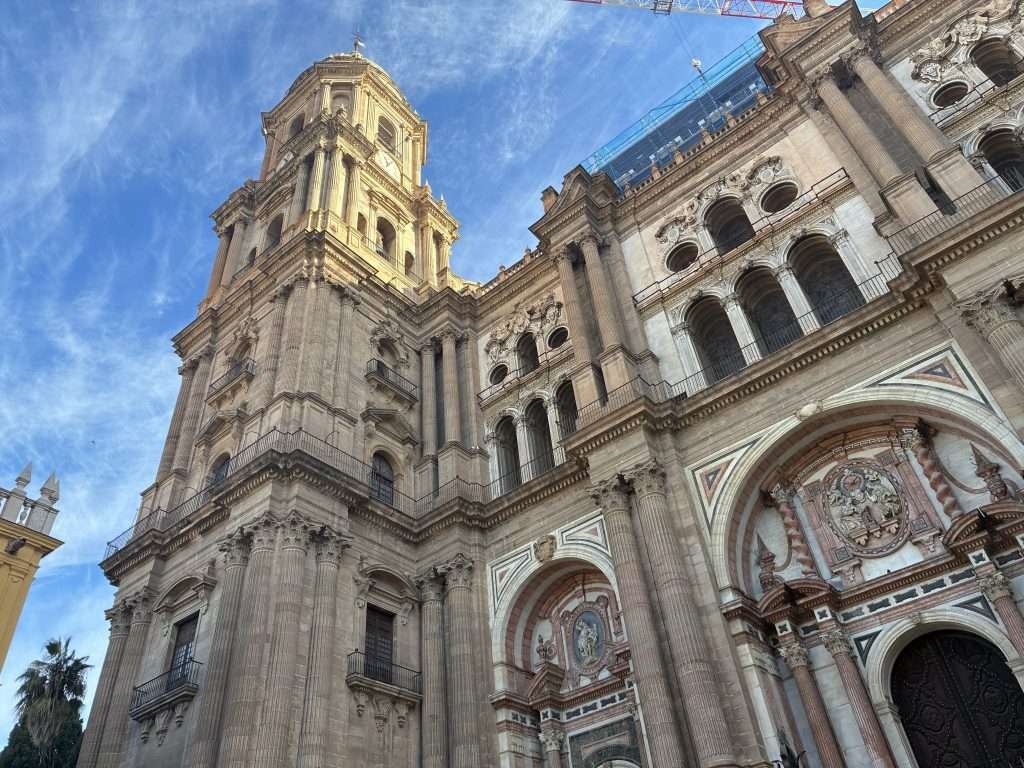
3. La Manquita (The Malaga Cathedral) Built on the site of a former mosque, this stunning Renaissance cathedral took over 200 years to construct and was never actually finished. Funds ran dry in the late 18th century, leaving the south tower permanently unbuilt. Because of this, locals affectionately call the cathedral La Manquita (The One-Armed Lady).
4. The Art Scene You cannot visit the birthplace of Pablo Picasso without paying homage. The Museo Picasso Málaga, housed in a stunning 16th-century palace, holds over 200 works donated by the artist’s family. Beyond Picasso, the city is bursting with art. Check out the Centre Pompidou (housed under a giant, multi-colored glass cube near the port) or the Carmen Thyssen Museum for incredible Andalusian landscapes.

For a complete, ranked list of every museum, park, and historic site you should consider, grab my massive checklist covering the 25 Best Things to Do in Malaga: The Ultimate 2026 Guide.
Chapter 6: The Culinary Rules of the Costa del Sol
Malaga’s food scene is a beautiful collision of fresh Mediterranean seafood, Moorish agricultural influence, and fiercely proud local traditions.
The Rule of the Espeto The single most iconic dish in Malaga is the espeto de sardinas. You will not find this in the fancy restaurants of the historic center. You must walk east along the promenade to the beaches of La Malagueta or Pedregalejo. Here, local beach bars (chiringuitos) take six fresh sardines, skewer them on a stick of olive wood, and roast them over an open fire built inside a sand-filled wooden boat on the beach. You eat them with your hands, and they are salty, smoky perfection.
Tapas Etiquette Unlike in Granada, where a free plate of food arrives with every drink, in Malaga, you must explicitly order and pay for your tapas. The goal is to hop from bar to bar, ordering one drink and one or two small plates at each. You must try Porra Antequerana (a thick, cold tomato and garlic soup) and Ajoblanco (a cold soup made of crushed almonds and garlic, topped with grapes).


Sweet Wine and Sticky Bars You must end at least one evening at Antigua Casa de Guardia, the oldest tavern in the city (founded in 1840). You stand at a sticky wooden bar, point to one of the massive ancient oak barrels lining the wall, and the bartender will pour you a glass of sweet local Moscatel wine, keeping your tab written in chalk on the bar top.
If you want a deep dive into exactly what to order, how to order it, and which specific restaurants to avoid, you need to arm yourself with my dedicated post: What to Eat in Malaga: The Ultimate Foodie Guide (2026 Edition).
Chapter 7: Exploring Beyond the City Limits
While the city of Malaga is spectacular, its greatest asset might be its geographical location. It serves as the ultimate high-speed launchpad for exploring the wider region of Andalusia.
Because the infrastructure is so brilliant, you can wake up in Malaga, experience a completely different topography and culture, and be back in your hotel room by dinner time.
If you want dramatic, dizzying mountain scenery, take the 90-minute bus ride up to Ronda, a town famously split in half by a terrifyingly deep 120-meter river gorge. If you want pristine, whitewashed streets, head east to the mountain village of Frigiliana. And if you are an adrenaline junkie, you absolutely must book tickets for the Caminito del Rey, a wooden boardwalk pinned to the side of a sheer cliff face suspended 100 meters in the air.
Trying to figure out bus schedules and train lines can be intimidating, so I have mapped out the exact logistics, travel times, and ticket requirements for all of these excursions in my guide to the 5 Best Day Trips from Malaga (Worth the Effort). (And if you are following my master 3 Days in Malaga: The Perfect Itinerary for First Timers (2026 Edition) you will see exactly which day is best suited for an escape out of town).
Chapter 8: Essential Local Tips and Faux Pas to Avoid
To ensure you blend in and travel with respect, keep these final few golden rules in mind:
- Tipping is Not American: Do not leave a 20% tip. In Spain, service workers are paid a standard wage, and a service charge is factored into the menu prices. If you have a coffee, leave the small change (a few coins). If you have a wonderful sit-down meal, leaving €2 to €5 on the table is considered a polite and generous gesture.
- Dress for the City, Not the Beach: While Malaga is a coastal city, the historic center is treated like a proper urban environment. Locals do not walk around the cobblestone streets in bikinis, board shorts, or flip-flops. Keep your beachwear on the sand. When you head into town for lunch or museums, throw on a sundress or a lightweight button-down shirt.
- Book the Big Hitters in Advance: As Malaga’s popularity has exploded, the days of simply walking up to a museum ticket counter are over. If you want to visit the Picasso Museum or take a guided tour of the Alcazaba-both of which feature prominently on my 25 Best Things to Do in Malaga: The Ultimate 2026 Guide-you absolutely must purchase your tickets online at least a week before you arrive.
- Embrace the Chaos: Traditional tapas bars are loud. Waiters will not fawn over you or rush to bring you the check (you must always ask for la cuenta when you are ready to leave). The floor of a great old-school bar might be covered in crumpled napkins. Do not view this as bad service; view it as the passionate, chaotic, and beautiful reality of life in southern Spain.
If you pack comfortable shoes, a healthy appetite, and a willingness to slow down, your first time in Malaga will undoubtedly be the first of many.
When is the best time of year to visit Malaga?
For a first-time visitor, Spring (March to May) and Autumn (September to October) are the absolute best times to visit. The weather is perfectly warm (usually in the 70s Fahrenheit / 20s Celsius), you avoid the blistering heat of the summer, and the massive high-season tourist crowds have either not yet arrived or have already gone home.
How do I get from the Malaga Airport to the city center?
Skip the expensive taxis and private transfers. Follow the signs at Terminal 3 for the Cercanías (the local commuter train). The C1 line leaves every 20 minutes and will rocket you directly to the Maria Zambrano central train station in just 12 minutes for only a couple of euros.
What time should I go out for dinner in Malaga?
You must adjust to the Spanish clock! Locals eat very late. Most traditional restaurants will not even open their kitchens for dinner until 8:00 PM at the earliest. If you want to experience the true, vibrant atmosphere of the city, plan to head out for tapas around 9:00 PM.
How much should I tip at restaurants in Malaga?
Do not leave a standard American 20% tip. In Spain, service workers are paid a standard wage, and a service charge is already factored into the prices on the menu. If you have a coffee, simply leave the small coin change. For a wonderful sit-down dinner, leaving €2 to €5 on the table is considered polite and generous.
What is the one local dish I absolutely must try?
You cannot leave Malaga without trying an espeto de sardinas (sardine skewers). However, you won’t find the best ones in the historic center. You need to head to the beaches of La Malagueta or Pedregalejo, where local beach bars (chiringuitos) roast freshly caught sardines over open olive-wood fires built inside wooden boats on the sand.