If you are planning your First Time in Malaga, you will quickly realize it is no longer just an airport city where tourists touch down before fleeing to the resorts of the Costa del Sol. Over the last decade, it has transformed into a cultural powerhouse, boasting world-class museums, a phenomenal culinary scene, and a beautifully restored historic center. However, as incredible as the city itself is, one of its greatest assets is its geographical location.
Situated perfectly on the southern coast of Spain, Malaga acts as the ultimate launchpad for exploring the wider region of Andalucia. The infrastructure is spectacular. Between the high-speed AVE trains operating out of the Maria Zambrano station, the extensive ALSA and Avanza bus networks, and the flawlessly maintained highways, you can wake up in Malaga, explore an ancient Moorish palace or a dizzying mountain gorge, and be back in the city in time for late-night tapas.
But with so many options, the paradox of choice can easily paralyze you, especially if you are trying to organize a tight 3 Days in Malaga itinerary. Should you go coastal or mountainous? Should you prioritize history or nature? To help you cut through the noise, this guide breaks down the five absolute best day trips from Malaga.
In this guide, we will explore the 5 Best Day Trips from Malaga that you won’t want to miss.
Day Trip Summary Matrix
| Destination | Travel Time (One Way) | Best Transport Method | Primary Vibe |
| Ronda | 1.5 Hours | Car or Bus (Avanza) | Dramatic Scenery & Wine |
| Caminito del Rey | 1 Hour | Train to El Chorro | Adventure & Nature |
| Nerja & Frigiliana | 1 Hour | Car or Bus (ALSA) | Beaches & White Villages |
| Granada | 1.5 – 2 Hours | Train or Bus (ALSA) | Moorish History & Architecture |
| Marbella | 45 Minutes | Bus (Avanza) or Car | Luxury & Historic Charm |
1. Ronda: The City on the Edge of the World
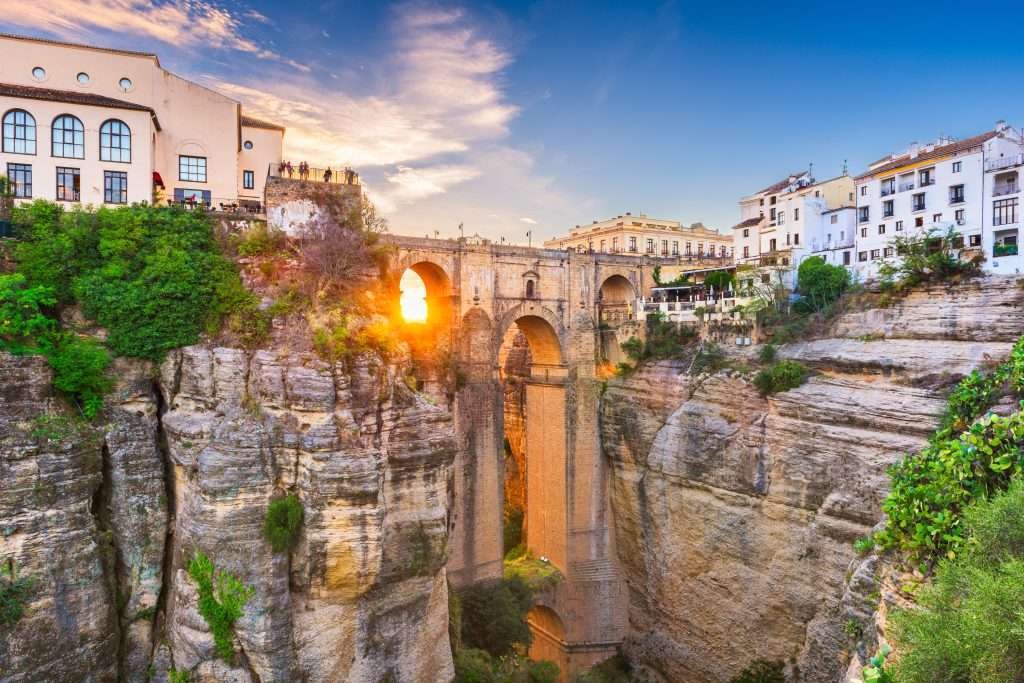

If you only have time for one day trip from Malaga, make it Ronda. Perched high in the Serrania de Ronda mountains, this town is physically split in half by the El Tajo gorge, a plunging, 120-meter-deep limestone chasm carved by the Guadalevin River. It is dramatic, dizzying, and undeniably romantic.
The Main Attractions
The undisputed centerpiece of Ronda is the Puente Nuevo (New Bridge). Completed in 1793 after 42 years of highly dangerous construction, this massive stone bridge spans the gorge, connecting the Moorish old town (La Ciudad) with the newer 15th-century parts of the city (El Mercadillo). The views from the top are spectacular, but to truly appreciate the scale of the bridge, you must hike down the Camino de los Molinos pathway into the valley below. Looking up at the arches from the canyon floor is a humbling experience.
Beyond the bridge, Ronda is heavily steeped in Spanish lore. It is widely considered the birthplace of modern bullfighting. The Plaza de Toros, built entirely of stone in 1785, is one of the oldest and most picturesque bullrings in Spain. Even if you have no interest in the sport itself, the architecture of the ring and its accompanying museum provide fascinating insight into a deeply ingrained cultural tradition that fascinated writers like Ernest Hemingway and Orson Welles (both of whom spent significant time here).
For a workout and a history lesson combined, visit the Casa del Rey Moro (House of the Moorish King). The house itself is closed, but the real attraction is the water mine. You will descend over 200 damp, dimly lit steps carved directly through the solid rock of the cliff face, which the Moors used to secretly extract water from the river during Christian sieges.


Logistics and Practicalities
- How to get there: The drive takes about 1.5 hours via the winding A-397 mountain road. If you do not have a rental car, the Avanza bus from Malaga’s central bus station is the best public transport option, taking roughly 1 hour and 45 minutes. The train route from Malaga to Ronda is notoriously inefficient and often requires a transfer, so stick to the bus or a car.
- What to eat: While my guide on what to eat in Malaga focuses heavily on fresh Mediterranean seafood, the mountain town of Ronda is famous for Rabo de Toro (slow-braised bull’s tail stew). It is incredibly rich, tender, and perfect with a glass of local red wine. Look for restaurants tucked away from the main bridge area, such as Restaurante Almocabar.
2. Caminito del Rey: The King’s Little Pathway

Once infamous as the “most dangerous walkway in the world,” the Caminito del Rey is a narrow cliffside path pinned against the sheer rock walls of the Desfiladero de los Gaitanes gorge. Originally built in 1905 to provide access for hydroelectric power plant workers, the path fell into massive disrepair over the decades, losing entirely large sections of its concrete base.
In 2015, the Spanish government completed a massive, multi-million-euro restoration. They built a brand-new, incredibly safe wooden boardwalk directly above the decaying original path. Today, it is a thrilling, completely safe, and visually spectacular hike that requires zero technical climbing skills.
The Experience
The hike is strictly one-way, running from north to south. You will start by walking through a beautiful, pine-scented forest trail just to reach the official control cabin. From there, you are handed a hard hat (mandatory for falling pebbles) and you step out onto the boardwalk.
For the next two hours, you will walk along a one-meter-wide path suspended up to 100 meters in the air. The river rushes turquoise and violent far below you, and griffon vultures circle the thermals overhead. The sheer scale of the rock walls is awe-inspiring. The climax of the trek is crossing the suspension bridge that spans the gorge right at the end of the route. It bounces slightly in the wind, and the metal grating beneath your feet allows you to see straight down to the water-it is not for the faint of heart, but it is entirely exhilarating.
Logistics and Practicalities
- Securing Tickets: This is the most crucial part of this day trip. You must book tickets months in advance via the official website. Only a strict number of people are allowed on the path per day, and it sells out constantly. If the official site is sold out, your only backup option is to book a slightly more expensive guided tour through a third-party operator.
- How to get there: Take the Renfe train from Malaga Maria Zambrano to the El Chorro – Caminito del Rey station. From there, you must catch the shuttle bus up to the Northern Access point (Ardales) to begin the hike. Your hike ends back at the El Chorro train station.
- What to bring: Water, sunscreen, and proper closed-toe footwear. They will strictly deny entry to anyone wearing flip-flops, sandals, or high heels.
3. Nerja and Frigiliana: The Coast and the Mountains
If you want a day trip that offers two completely different atmospheres, heading east from Malaga to the Axarquia region is the perfect solution. You can spend your morning deep inside prehistoric caves and your afternoon wandering the spotless, whitewashed streets of an idyllic mountain village.
Nerja: The Balcony of Europe

Nerja is a coastal town that has managed to avoid the high-rise concrete development that plagues some areas west of Malaga. The focal point of the town is the Balcón de Europa, a stunning circular promenade built on a rocky promontory jutting out into the Mediterranean Sea. Legend has it that King Alfonso XII stood here after a massive earthquake in 1884, looked out at the endless blue horizon, and declared it the “Balcony of Europe.”
However, the real geological wonder lies just outside the town center: the Nerja Caves (Cuevas de Nerja). Discovered by accident in 1959 by a group of local boys chasing bats, this colossal subterranean cave network stretches for almost 5 kilometers. It houses the largest stalactite in the world (a staggering 32 meters high) and features ancient Neanderthal cave paintings. The sheer size of the caverns feels like entering a natural, underground cathedral.
Frigiliana: The Quintessential White Village

Just a 15-minute bus ride straight up the mountain from Nerja lies Frigiliana. It is routinely voted one of the most beautiful Pueblos Blancos (White Villages) in Spain. The old town, known as the Morisco-Mudéjar neighborhood, is a perfectly preserved labyrinth of narrow, winding, cobbled streets, blindingly white walls decorated with bright blue doors, and thousands of potted red geraniums.
Unlike the massive, monument-heavy checklists found in my 25 Best Things to Do in Malaga guide, there are no major museums or monuments to check off a list here. The joy of Frigiliana is simply getting lost. Walk up the steep Calle Real, browse the local artisan shops selling ceramics, and find a rooftop terrace to drink a cold beer while looking all the way down the mountain to the sea.
Logistics and Practicalities
- How to get there: An ALSA bus from Malaga will get you to Nerja in about an hour. From the Nerja bus station, you can catch the local shuttle bus that runs up the hill to Frigiliana. Driving is also incredibly easy along the A-7 coastal highway.
- What to eat: In Frigiliana, look for anything made with Miel de Caña (sugar cane honey). Frigiliana is home to the only remaining molasses factory in Europe, and they drizzle this dark, rich syrup over everything, most notably over crispy fried eggplant (berenjenas fritas con miel).
4. Granada and the Alhambra: The Moorish Masterpiece
Let’s address the elephant in the room: Granada is the furthest destination on this list, and trying to see it in a single day is a massive undertaking. However, if you are visiting Andalucia and you do not have time to stay overnight in Granada, taking a day trip from Malaga is absolutely worth the exhaustion.
The Alhambra


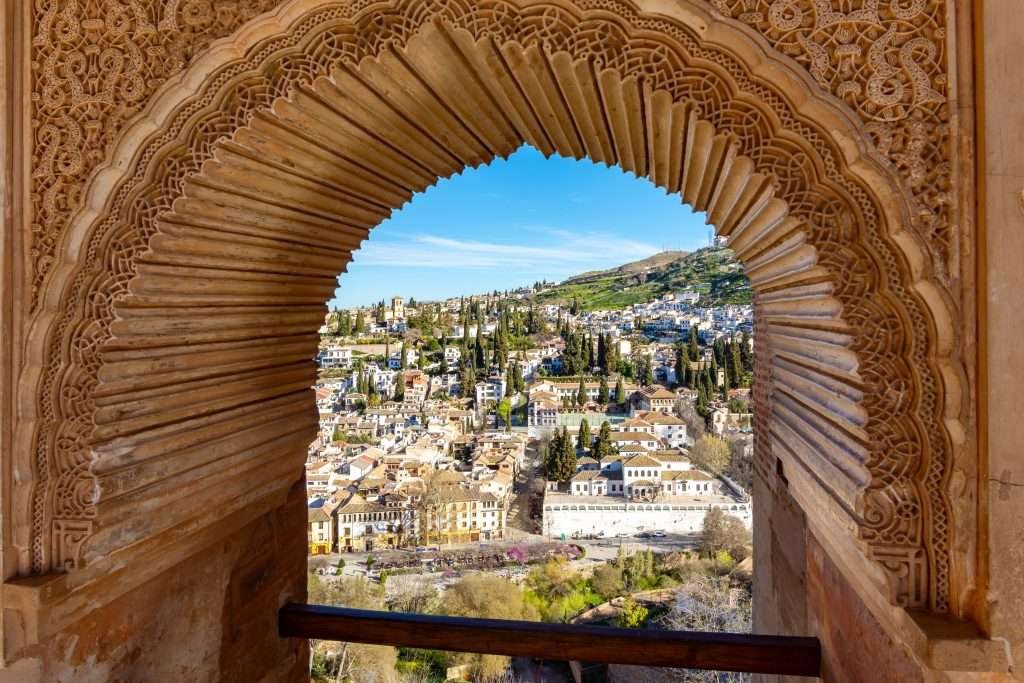
The reason you make this trip is the Alhambra. It is not just a palace; it is an entire fortified city that sits on a wooded hill above Granada. Built primarily during the 13th and 14th centuries by the Nasrid dynasty, it represents the absolute pinnacle of Moorish art and architecture in Europe.
The complex is divided into several main areas. The Alcazaba is the original military fortress offering panoramic views of the city. The Generalife is the spectacular summer palace of the sultans, featuring perfectly manicured gardens, courtyards, and water features designed to cool the air.
But the undisputed crown jewels are the Nasrid Palaces. This sequence of rooms and courtyards (including the famous Court of the Lions) features some of the most intricate, mind-boggling stuccowork, carved wooden ceilings, and geometric tilework ever created. It is poetry in stone.
The Albaicín and Tapas Culture
After your Alhambra visit, walk down into the Albaicín, the ancient Arab quarter of Granada. It is a steep, confusing maze of narrow streets and white houses. Your goal is to reach the Mirador de San Nicolás at sunset. Yes, it will be crowded with tourists and flamenco guitarists, but the view of the Alhambra glowing red against the backdrop of the snow-capped Sierra Nevada mountains is a core memory you will never forget.
Finally, you cannot leave Granada without participating in its legendary tapas culture. Unlike Malaga, where you must order and pay for tapas, Granada maintains the ancient tradition of giving you a massive, free plate of food with every single drink you order.
Logistics and Practicalities
- The Ticket Warning: Do not attempt to go to Granada without buying an Alhambra ticket in advance. They sell out months ahead of time. Crucially, your ticket will have a specific time slot for the Nasrid Palaces. If you are even 10 minutes late for that specific entry time, the guards will deny you entry, and there are no refunds.
- How to get there: The high-speed AVE train takes about 1 hour and 15 minutes, but the schedules can sometimes be limited. The ALSA bus is incredibly reliable, runs constantly, and takes about 1.5 to 2 hours.
5. Marbella and Puerto Banús: The Contrast of Old and New
For decades, Marbella has carried a reputation as the playground of the ultra-rich, European royalty, and reality television stars. While that glitzy, champagne-spraying reputation is entirely accurate in certain areas, limiting Marbella to that stereotype does a massive disservice to the historical reality of the city. A day trip here offers a fascinating study in contrasts.
The Casco Antiguo (Old Town)

Start your day completely ignoring the yachts and the supercars. Instead, head straight for Marbella’s Casco Antiguo. This is one of the most beautiful and well-preserved historic centers on the entire Costa del Sol.
The layout still follows the original 16th-century urban planning. The heart of the old town is the Plaza de los Naranjos (Orange Square), named for the fragrant citrus trees that shade the outdoor dining terraces. The square is surrounded by historic buildings, including the 16th-century Town Hall and the Ermita de Santiago, the oldest religious building in the city.
Wandering away from the main square, you will find narrow streets lined with boutique clothing stores, artisan leather shops, and fantastic tapas bars. You can also still find remnants of the 10th-century Arab castle walls that originally protected the city from pirate attacks.
Puerto Banús: The Glittering Marina
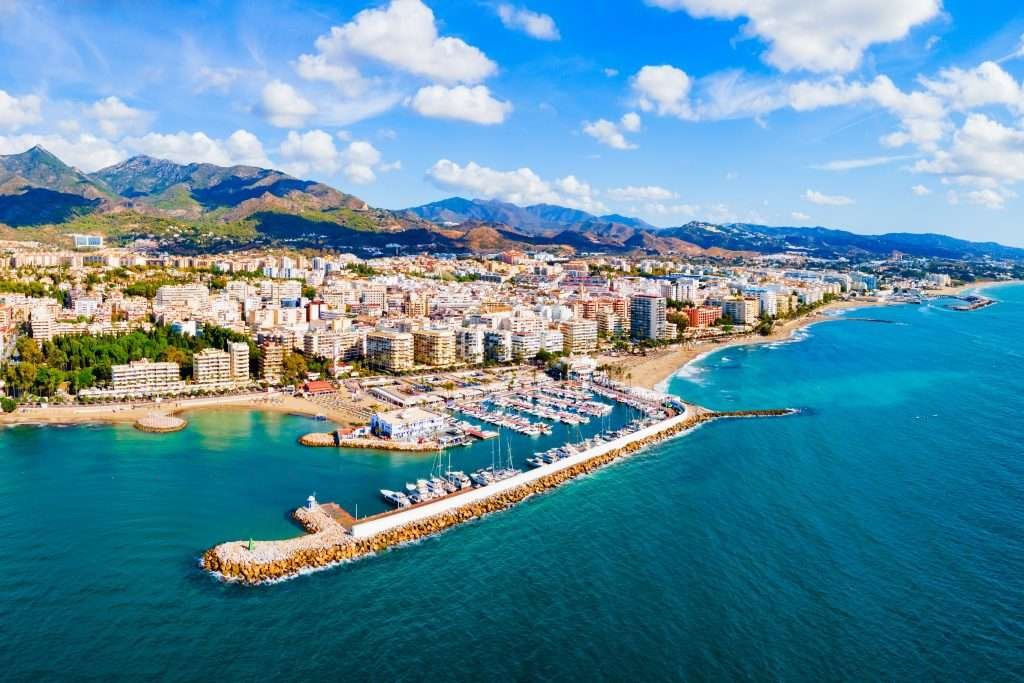
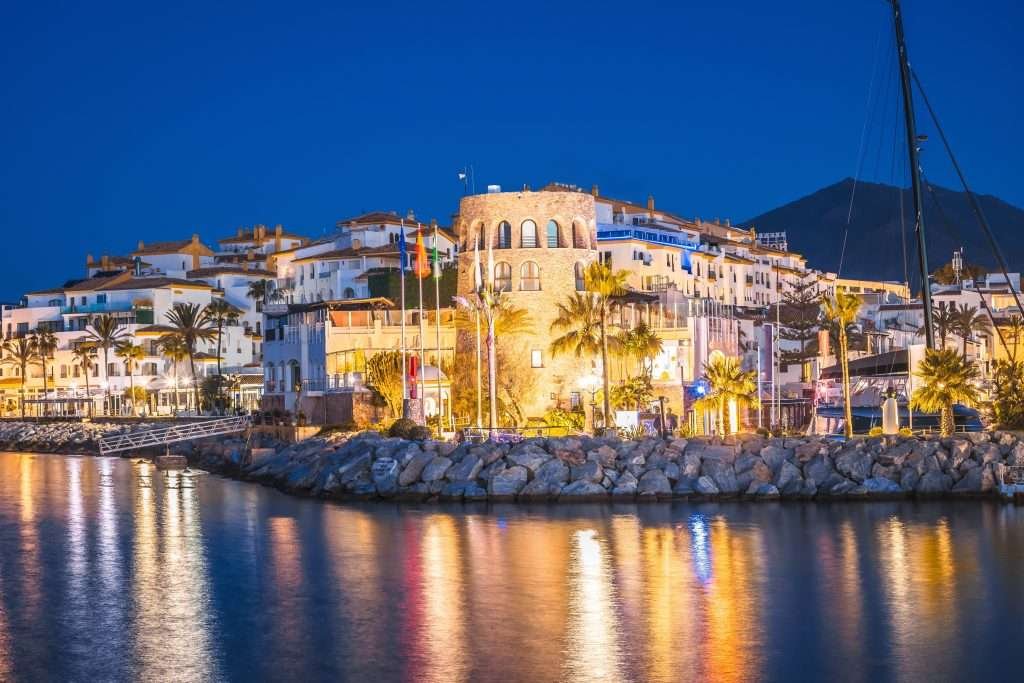
Once you have soaked in the history, take a walk along the beautifully paved Paseo Marítimo (the coastal promenade) that runs for miles along the beach. You can walk, rent a bike, or take a quick taxi to Puerto Banús, the marina located just west of the main city.
This is where the ostentatious wealth lives. Built in 1970 by a local property developer, the marina was designed to look like a traditional Andalucian village, but the storefronts are exclusively Dior, Gucci, and Louis Vuitton. The water is filled with multi-million-euro mega-yachts, and the parking lots look like an exotic car dealership featuring Ferraris, Lamborghinis, and Bentleys. It is completely surreal, wonderfully absurd, and incredibly fun for people-watching. Grab a vastly overpriced coffee at a marina-side cafe and watch the international elite parade by.
Logistics and Practicalities
- How to get there: There is no train line that runs down the coast to Marbella. You must either drive (about 45 minutes on the AP-7 toll road or slightly longer on the free A-7 coastal road) or take the Avanza bus from the Malaga central bus station, which takes about 45 to 60 minutes.
- What to pack: If you plan on walking the promenade between the old town and Puerto Banús, bring comfortable walking shoes. It is a stunning walk, but it is roughly 7 kilometers (over 4 miles) long.
Final Thoughts on Day Tripping
Using Malaga as a base camp is the smartest logistical decision you can make when planning an Andalucian itinerary. (Be sure to consult my guide on Where to Stay in Malaga to ensure you pick a neighborhood close to the train or bus stations!). You get the benefit of unpacking your suitcase only once, enjoying the phenomenal dining scene of a major city every night, and still experiencing the incredible geographical and historical diversity of southern Spain during the day.
Whether you are staring down into a river gorge, admiring 14th-century Moorish plasterwork, or eating free tapas in the shadow of the Sierra Nevada, the region surrounding Malaga offers a density of world-class experiences that few places on earth can match.
Is the Caminito del Rey safe to hike, and what should I wear?
Yes, it is a thrilling, completely safe hike that requires zero technical climbing skills. In 2015, the Spanish government completed a massive restoration, building a brand-new, incredibly safe wooden boardwalk directly above the decaying original path. You must bring water, sunscreen, and proper closed-toe footwear. They will strictly deny entry to anyone wearing flip-flops, sandals, or high heels.
Do I really need to book tickets in advance for the Alhambra and the Caminito del Rey?
Yes, absolutely! For the Caminito del Rey, you must book tickets months in advance via the official website because it sells out constantly. The same goes for the Alhambra in Granada; tickets sell out months ahead of time. Your Alhambra ticket will have a specific time slot for the Nasrid Palaces, and if you are even 10 minutes late, the guards will deny you entry with no refunds.
What is the best way to get to Ronda from Malaga?
If you do not have a rental car, the best public transport option is the Avanza bus from Malaga’s central bus station, taking roughly 1 hour and 45 minutes. If you are driving, it takes about 1.5 hours via the winding A-397 mountain road. You should stick to the bus or a car because the train route from Malaga to Ronda is notoriously inefficient and often requires a transfer.
How can I travel to Marbella from Malaga without a train?
Because there is no train line that runs down the coast to Marbella, you must either drive or take the bus. Driving takes about 45 minutes on the AP-7 toll road or slightly longer on the free A-7 coastal road. Alternatively, you can take the Avanza bus from the Malaga central bus station, which takes about 45 to 60 minutes.
Are tapas free in Granada like they are in Malaga?
Actually, the tapas culture in Granada is very different from Malaga! Unlike Malaga, where you must order and pay for tapas, Granada maintains the ancient tradition of giving you a massive, free plate of food with every single drink you order.