
Seville does not ease you in. The heat hits you at the airport. The city center is louder than you expect. The ticketing systems for the main monuments are strict to the point of being unforgiving. And none of it is open when you think it will be.
Get past the adjustment period and it delivers. The Alcázar is one of the finest buildings in Europe. The tapas culture in Triana is genuinely different from anywhere else in Spain. The flamenco – when you find the right venue – is the real thing. This list covers the 25 best things to do in Seville, with the practical information that actually matters.
Before anything else: read the three rules that govern your entire trip.
Rule 1 – The heat controls your schedule. From 2:00 PM to 6:00 PM in summer, temperatures exceed 40°C and the city shuts down. Do your heavy sightseeing before 1:00 PM. Retreat in the afternoon. Come back out when the sun drops.
Rule 2 – Book tickets months in advance. The Alcázar and Cathedral both require timed entry booked online. During spring and summer they sell out weeks ahead.
Rule 3 – Dinner is at 10:00 PM. Traditional tapas bars don’t open in the evening until 8:30 PM at the earliest. Adjust immediately or you’ll eat badly all trip.
For a full breakdown of how to navigate the city before you land, our first time in Seville guide covers the logistics in detail.
Part 1: The Monumental Core
1. The Real Alcázar – ticketing system
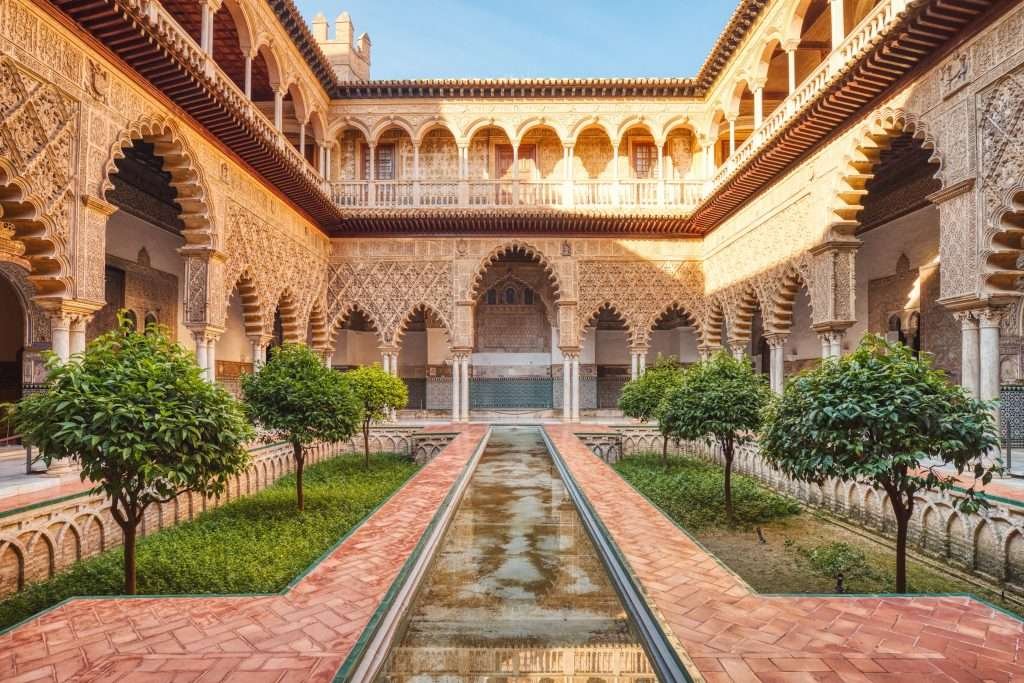
The Alcázar is the oldest royal palace still in active use in Europe and one of the finest examples of Mudéjar architecture anywhere – Moorish style built for Christian rulers after the reconquest. It is worth every bit of the planning effort it requires.
The ticketing rules are strict. Your ticket is nominative – when booking you provide your exact name, passport or ID number, and nationality. At the gate you present the original document. Photocopies and phone photos will get you turned away. The time slot is rigid: entry is permitted 15 minutes before your reserved time and up to 30 minutes after. Tickets are non-refundable.
Book the first slot of the morning. By 11:00 AM it is crowded and hot. Opening hours: April to September, last entry 6:00 PM, closes 7:00 PM. October to March, last entry 4:00 PM, closes 5:00 PM.
2. The Secret Royal Apartments (Cuarto Real Alto)
The standard Alcázar ticket covers the main palaces and gardens. A separate, highly limited ticket gives access to the Cuarto Real Alto – the upper apartments still used by the Spanish royal family during official visits. A small-group guided visit with an official palace guide. Photography is prohibited inside.
These sell out faster than the general admission. Book the moment your travel dates are confirmed.
3. The Alcázar Gardens
Your timed entry ticket has no exit deadline – you can stay until closing. Use this. The gardens cover 7 hectares and are significantly less crowded than the palace interiors. Intricate fountains, ancient trees, and peacocks moving between the orange trees. When the palace rooms feel claustrophobic with tour groups, the gardens are the escape.
Note: staff begin clearing visitors 45 minutes before closing. Don’t get caught in the final sweep.

4. The Cathedral – scale and ticketing
Directly next to the Alcázar. The Catedral de Santa María is the largest Gothic cathedral in the world. The interior is dark and vast, designed to make you feel small – the vaulted ceilings and the golden altarpiece succeed at this. Book online in advance: general admission online is €13, cheaper than the ticket office price of €14, and it skips the queue in Plaza del Triunfo.
5. The Giralda Tower
Attached to the Cathedral. Originally the minaret of the mosque that stood on this site before the Catholic reconquest. To reach the top you don’t climb stairs – 35 continuous slanted ramps, engineered so the sultan could ride a horse to the top for the call to prayer. The view from the bell chamber covers the city in every direction. Your Cathedral ticket includes Giralda access but there is a separate access control point – keep your ticket out.


6. The Tomb of Christopher Columbus
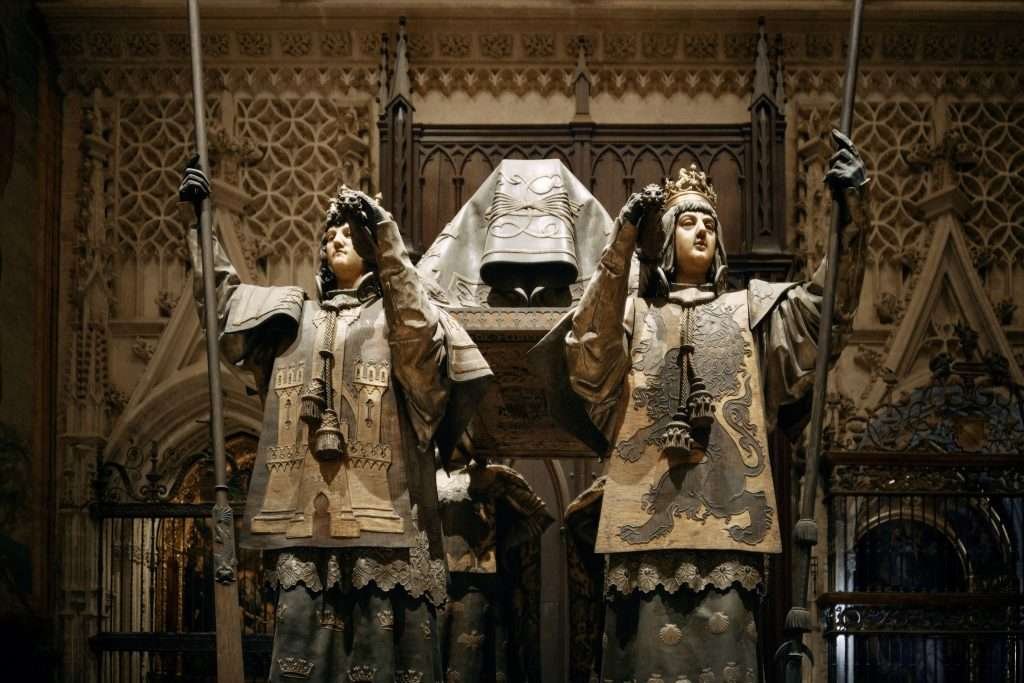
Inside the Cathedral, southern transept. A bronze coffin carried on the shoulders of four towering statues representing the historical kingdoms of Spain: Castile, Leon, Aragon, and Navarre. The moment when Seville was the wealthiest city in the world – the port through which all New World wealth entered Europe – is concentrated in this single piece of architecture.
Part 2: Plazas and Parks
7. Plaza de España – the entry fee
Built for the 1929 Ibero-American Exposition. A 50,000 square meter semi-circular complex in brick and painted tile, with a canal running along the curve of the building and 48 alcoves each representing a different Spanish province. Filming location for Lawrence of Arabia and Star Wars Episode II.
One practical update for 2026: tourists now pay an entry fee of €3-4. It was free for decades; local authorities introduced the charge to fund maintenance and 24-hour security. Seville residents retain free access.

8. Rowboat on the canal
Even with the entry fee Plaza de España is worth it. Rent a small rowboat and paddle the 500-metre canal that mirrors the building’s curve. The Renaissance Revival architecture seen from water level is different from street level and significantly less photographed.
9. Come at the right time
At 2:00 PM the plaza is an unshaded brick oven with nowhere to hide. At 7:30 PM in summer the setting sun hits the brickwork and turns the entire complex amber. At 8:00 AM you have the place largely to yourself. Plan accordingly.
10. Parque de María Luisa
Directly next to Plaza de España. When the afternoon temperature exceeds 40°C and the city has closed down around you, this park is the best option. Dense tree canopy, tiled fountains, shaded benches. Cheap cold drinks from the park kiosks. Wait here until the sun drops rather than attempting to walk back to your hotel in the heat.

11. Torre del Oro at golden hour
13th-century military watchtower on the Guadalquivir riverbank. During Spain’s Golden Age, when Seville held a monopoly on trade with the Americas, galleons carrying silver and gold from the New World docked here. There’s a small maritime museum inside if you want context, but the tower’s main value is as a photography backdrop – the warm evening light on the golden stonework from 7:00 PM onwards is the shot most people are after.
Part 3: Neighborhood Immersions
12. Barrio Santa Cruz at 8:00 AM
The ancient Jewish quarter directly next to the Cathedral. Narrow white alleyways designed to block sunlight, tiny plazas with orange trees, the most photographed streets in Seville. At 10:00 AM it is packed with tour groups and the alleys feel suffocating. At 8:00 AM the streets are empty, damp, and quiet. Walk it then.

13. Cross the Triana Bridge
Walk across the Puente de Isabel II. The transition is immediate – Triana feels like a separate city. Historically the neighborhood of sailors, ceramic makers, and the Roma communities who developed flamenco. Less polished than the historic center, more local, and significantly better for eating and drinking.

14. Mercado de Triana
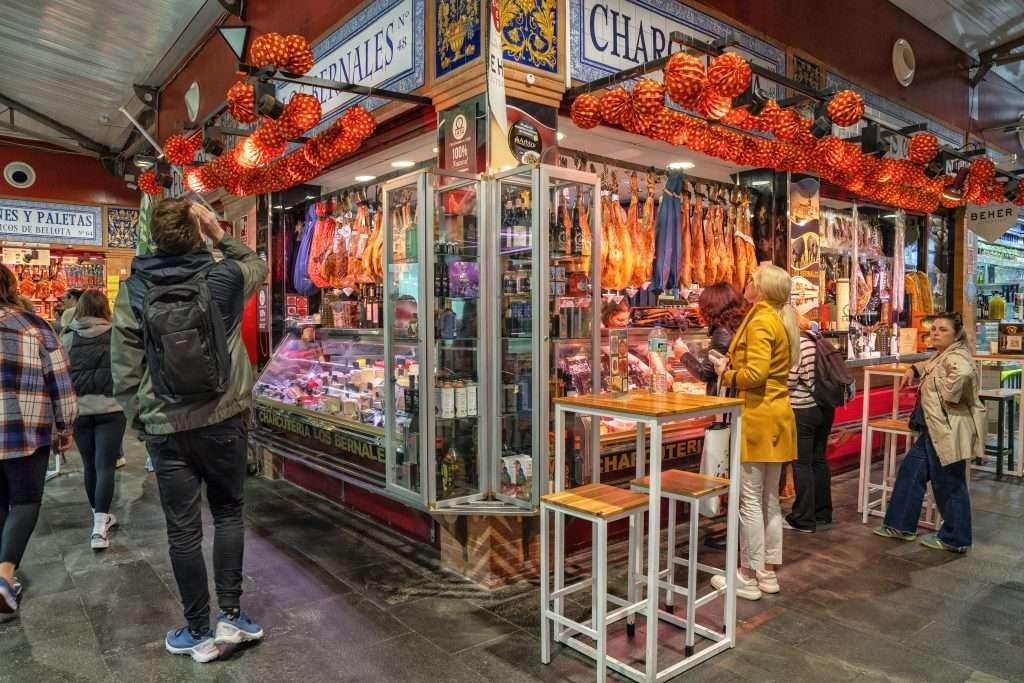
Immediately after the bridge on your right. A working neighborhood market – butchers with hanging Iberian hams, fishmongers shouting prices, locals buying the day’s food. Nothing here is aimed at tourists. A cone of fried fish from the market costs a fraction of what you’d pay at a café near the Cathedral.

15. Castillo de San Jorge (underneath the market)
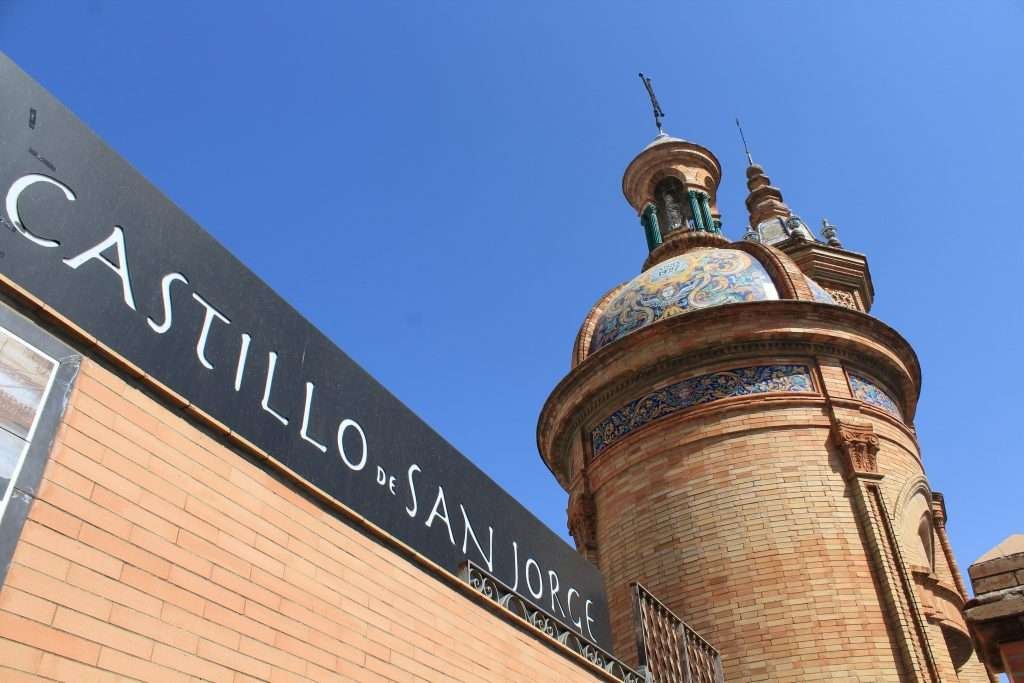
The Mercado de Triana is built directly on top of the ruins of the Castillo de San Jorge – the headquarters of the Spanish Inquisition. The free museum underneath the market lets you walk through the excavated prison cells. Takes 30 minutes and provides a sharp counterpoint to the decorative beauty of everything else you’ve seen.
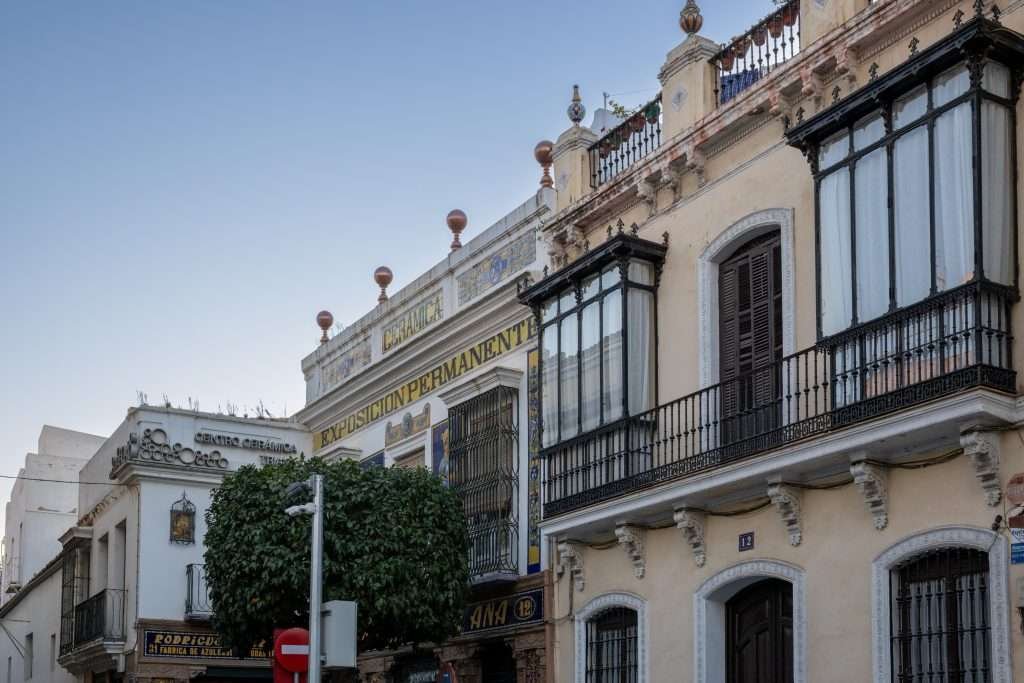
16. Azulejo workshops on Calle Alfarería
Triana has made painted ceramic tiles (azulejos) for centuries – they cover nearly every important building in the city. Walk Calle Antillano Campos and Calle Alfarería to see the working workshops. The Centro Cerámica Triana museum is built inside an original factory with the brick kilns still in place. Buy tiles here, not from the gift shops near the Cathedral – better quality, direct from the people who make them, and significantly cheaper.

17. Casa de Pilatos
A 16th-century aristocratic mansion northeast of the main tourist zone, combining Italian Renaissance courtyards with Mudéjar tilework. The practical difference from the Alcázar: it is much quieter. You can stand in the central courtyard and hear the water in the fountain without a tour group pressing around you. If the Alcázar crowds frustrated you, this is the alternative.

18. Palacio de las Dueñas
Walk north into the Macarena district. The Palacio de las Dueñas was the residence of the late Duchess of Alba, who held more aristocratic titles than any other person in Europe. The exterior walls are covered in bougainvillea. The interior has personal tapestries, bullfighting memorabilia, and Moorish garden courtyards. It feels like a private house rather than a state museum, which makes it more interesting than most of the larger palaces.


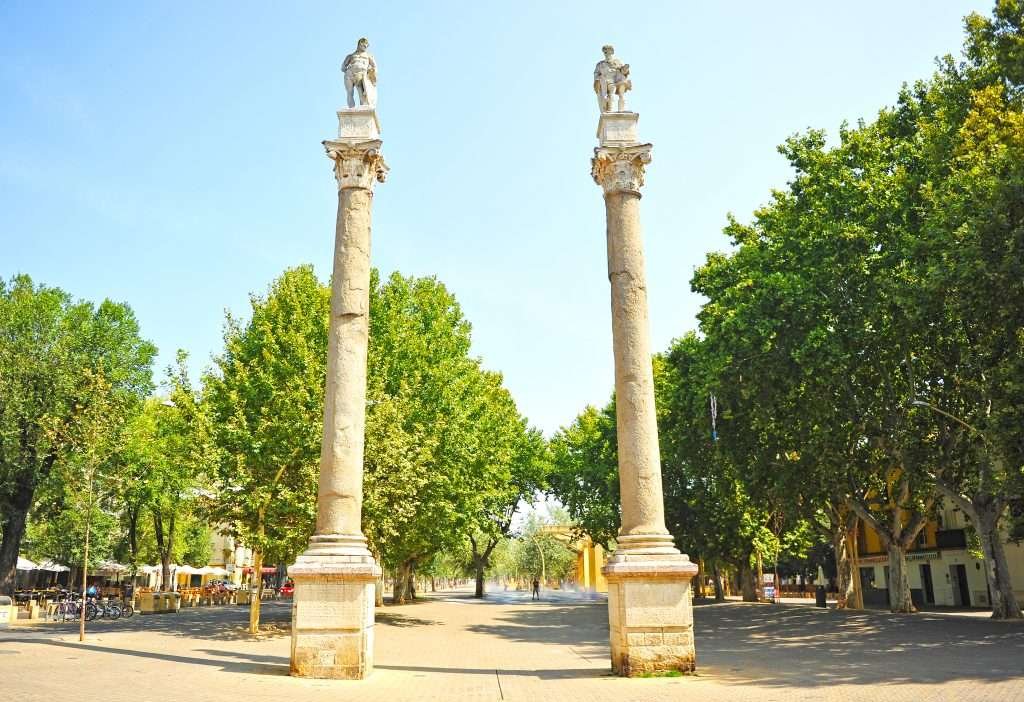
19. Alameda de Hércules
Originally a swamp, converted in the 16th century into what is claimed to be the oldest public garden in Europe, marked at one end by two ancient Roman columns. Today the Alameda is the bohemian center of Seville – long tree-lined plaza, outdoor terraces, younger local crowd, some of the best modern tapas bars in the city. More relaxed and less expensive than the historic center.
Part 4: The Food Rules
20. Execute the tapas crawl correctly
Unlike Granada, where every drink comes with free food, Seville charges for tapas. The menu structure is standard across most traditional bars: Tapa (small individual portion, €3-5), Media Ración (half portion for two, €7-10), Ración (full plate for a group, €12-18).
The correct method: walk into a crowded bar, stand at the counter, order one drink and one or two tapas per person, eat standing up, pay and move to the next bar. Bar-hopping, not sitting down for a full meal. The best streets for this are around the Barrio Santa Cruz edge, the Alameda, and Calle Betis in Triana.
21. What to order
Four dishes worth going out of your way for:
- Carrillada de Cerdo – pork cheeks braised in Pedro Ximénez sherry until they collapse. One of the best things you will eat in Andalusia.
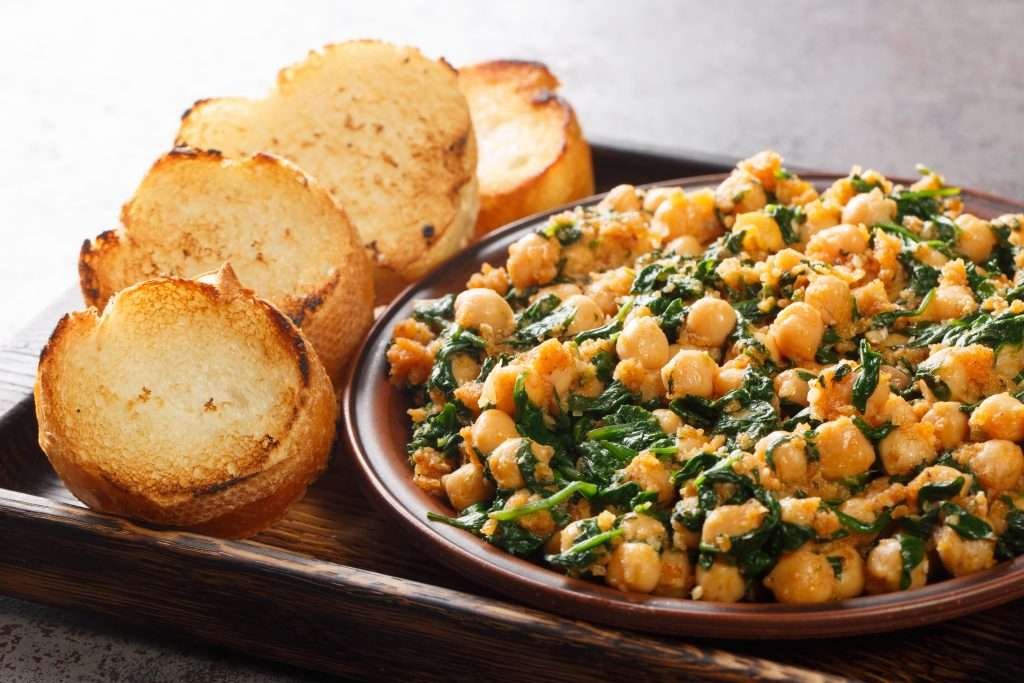
- Espinacas con Garbanzos – spinach and chickpeas with cumin and garlic. Moorish in origin, on every menu, consistently good.
- Cazón en Adobo – dogfish marinated in vinegar and cumin, flash-fried. Cheap, crispy, very Sevillian.
- Montadito de Pringá – small toasted sandwich filled with slow-cooked pork, chorizo, and blood sausage from an Andalusian stew. Order at least two.

22. Salmorejo instead of gazpacho
Every tourist menu lists gazpacho. Order Salmorejo instead. It originates from Córdoba but is on every Sevillian menu. Thicker, richer, and more interesting than gazpacho – a cold tomato soup emulsified with olive oil and bread, topped with Iberian ham and hard-boiled egg. In 40°C heat it is the most practical thing on the menu.

23. El Rinconcillo
The oldest tapas bar in Seville, founded in 1670. Dark interior, mahogany bar, the bartender writes your tab in white chalk directly on the wood. Order a glass of dry Manzanilla sherry and Espinacas con Garbanzos. The atmosphere is the point as much as the food.

24. Cruzcampo, served correctly
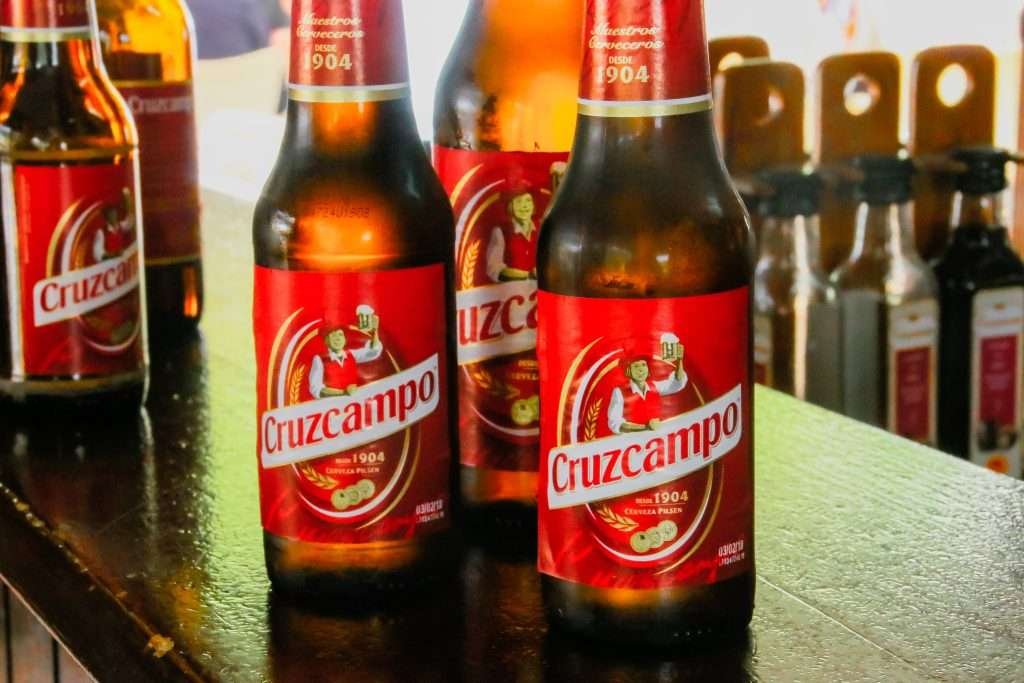
Seville runs on Cruzcampo, the local lager. It gets dismissive reactions from beer drinkers in other parts of Spain. In Seville it is served at a temperature that makes it genuinely useful in summer heat – poured from a chilled glass into a pre-chilled vessel. At 40°C, this matters more than the beer’s flavor profile.

Part 5: Flamenco and Views
25. Find real flamenco
Seville is the most important city in the history of flamenco. It has been heavily commercialized. The distinction that matters:
Avoid any venue offering a dinner show in a large room with microphones and a choreographed routine. That is a tourist performance, not flamenco.
Book a Tablao – a smaller dedicated venue with no food service and no amplification. Casa de la Memoria works well. You hear the raw footwork on the wooden boards, unamplified singing, and acoustic guitar at close range. Book tickets in advance – these sell out.
Find a Peña Flamenca if you want the most authentic version. These are local cultural clubs in Triana or Macarena, not heavily advertised to tourists. Ask at your hotel. Unpredictable and unpolished, which is the point.
Las Setas – Metropol Parasol
Go to Plaza de la Encarnación roughly 40 minutes before sunset. The Metropol Parasol – Las Setas to every local – is a colossal undulating wooden structure completed in 2011, claimed to be the largest wooden structure in the world. Take the elevator to the basement first to see the Roman ruins found during construction, then go up to the roof walkways. The view of the Giralda from the elevated wooden paths as the sky turns gold behind it is the best visual summary of Seville – ancient and modern, side by side.

Do I need to book the Alcázar in advance?
Yes – months ahead during spring and summer. Original passport at the gate. No photocopies. Closed on December 25, January 1, January 6, and Good Friday.
Are tapas free in Seville?
No – unlike Granada you pay for everything. Generally €3-5 per tapa, good quality, affordable if you stick to the tapas format rather than ordering full portions.
Is Plaza de España free?
Not in 2026 – €3-4 entry fee for tourists. Seville residents enter free. The fee funds maintenance and security.
Best time to visit?
April-May or October. Temperatures around 25-30°C. The spring orange blossom smell is genuinely worth timing a trip around. July and August regularly exceed 40°C – manageable but demanding.
Dress code for Cathedral and Alcázar?
No sleeveless shirts, very short shorts, or swimwear. Guards will deny entry. Pack a light scarf or layer that covers shoulders.
Planning the full trip? Our 3 days in Seville itinerary maps the exact routing day by day. Coming from or heading to Granada? The first time in Granada guide covers the Alhambra system, the free tapas economy, and the Sacromonte flamenco caves.
25 Best Things to Do in Seville
Click any pin for what to know, what to book, and what to skip.