
3 days in Seville requires one honest conversation about endurance before we get to the itinerary.
The city operates on a rigid schedule dictated by heat. Show up with a standard tourist plan – sightseeing until 3:00 PM, dinner at 6:30 PM, early nights – and the city will defeat you. The afternoon heat shuts everything down. The tapas bars don’t open until the locals are ready. Dinner before 9:30 PM means eating alone in tourist restaurants that stay open precisely because other tourists haven’t figured this out yet.
Get the rhythm right and Seville is one of the best cities in Spain. This itinerary is built around that rhythm. If you haven’t read our first time in Seville guide yet, start there – it covers the heat, the ticketing systems, the neighborhood breakdown, and the tapas culture in full before you commit to a day-by-day plan.
Pre-Trip Logistics: Three Rules Before Day One
1. Book tickets months in advance – and bring your passport
Walk-up tickets for the Real Alcázar are effectively gone. Book timed entry online, one to two months ahead for spring and summer visits.
One rule that catches people out: your Alcázar ticket is linked to your identity. You must present your original, physical passport at the gate. A photocopy or a phone photo will get you turned away. No exceptions. The same rule applies at the Alhambra in Granada if you’re continuing south – worth knowing before the whole trip, not just for Seville.
2. The siesta is non-negotiable
From 2:00 PM to 6:00 PM the city shuts down – shops lock, churches close, streets empty. Your schedule should match it: hard sightseeing before 1:00 PM, long lunch, air conditioning in the afternoon, back out when the sun drops. Fighting this rhythm is the single biggest mistake most visitors make.
3. The dining clock
Locals eat dinner at 9:30 PM to 10:00 PM. Traditional tapas bars don’t open until 8:30 PM at the earliest. Adjust on day one or you’ll be eating in the wrong places all trip. If you arrive hungry at 7:00 PM, grab a small snack at a bar that’s open – a slice of tortilla or a plate of olives – and wait.
Day 1: The Monumental Core and the Tapas Initiation
08:30 AM – Real Alcázar
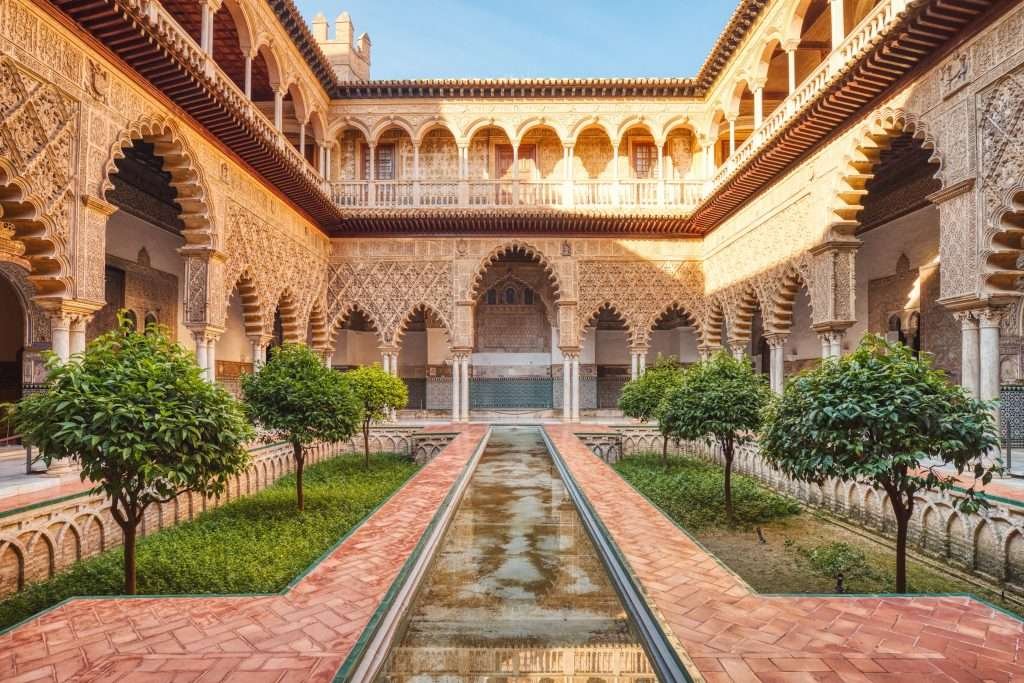
Book the first slot of the morning. By 1:00 PM the palace is crowded and hot.
The Alcázar is a sprawling royal palace complex built in the Mudéjar style – Moorish architecture adapted for Christian rulers after the reconquest. If it looks familiar, it was used as the kingdom of Dorne in Game of Thrones.
Walk through the Patio de las Doncellas, featuring geometric stucco work and a long central reflecting pool. Find the Baths of Doña María de Padilla – a vaulted underground cistern still filled with water, cool and noticeably quiet compared to the palace rooms above. Budget at least an hour in the walled gardens at the back of the complex, where peacocks move between the orange trees. The gardens are significantly less crowded than the interior and your ticket lets you stay until closing – use them as an escape route when the palace rooms fill up with tour groups.
The complex closes at 7:00 PM from April to September, 5:00 PM from October to March. Staff start clearing visitors 45 minutes before closing.
11:30 AM – Cathedral and the Giralda

Exit the Alcázar into Plaza del Triunfo and cross to the Catedral de Santa María de la Sede – the largest Gothic cathedral in the world. The interior is dark and enormous, the vaulted ceilings high enough to feel genuinely overwhelming. Walk the southern transept to see the Tomb of Christopher Columbus, carried by four bronze statues representing the historical kingdoms of Spain – Castile, Leon, Aragon, and Navarre.
Before you leave, climb the Giralda. The bell tower was originally the mosque minaret before the Catholic reconquest. There are no stairs – 35 continuous slanted ramps, designed so the sultan could ride a horse to the top for the call to prayer. It takes around 20 minutes at a steady pace. The view from the bell chamber covers the city in every direction, including the Alcázar gardens directly below. Keep your ticket out – the Giralda has its own access control separate from the Cathedral entrance.
Book both the Cathedral and Giralda online before you arrive. General admission online is €13, cheaper than the €14 ticket office price, and skips the queue in Plaza del Triunfo.
01:30 PM – Lunch in Barrio Santa Cruz

You are in the ancient Jewish quarter – narrow white alleyways designed to block the sun, tiny plazas, orange trees. Photogenic and also full of tourist restaurants with laminated menus in six languages and paella that arrives in ten minutes.
Go to Bodega Santa Cruz (Las Columnas) instead. Loud, crowded, packed with locals and tourists together – the noise level tells you it’s working correctly. Fight to the bar, order a Cruzcampo beer, and ask for a montadito de pringá – a small toasted sandwich with slow-cooked pork and blood sausage. Follow it with a plate of espinacas con garbanzos. Cheap, fast, correct. The tab will be written on the bar in chalk.
03:00 PM – 06:30 PM – Siesta
Back to the hotel. Cold shower. Sleep. Do not walk around in the heat. This is not optional in summer – it is a genuine health consideration above 40°C.
07:30 PM – Plaza de España
Walk south through Parque de María Luisa to Plaza de España. Built for the 1929 Ibero-American Exposition – a semi-circular brick and tile complex with a canal, rowboats, and 48 alcoves representing the provinces of Spain. It was a filming location for Lawrence of Arabia and Star Wars Episode II.


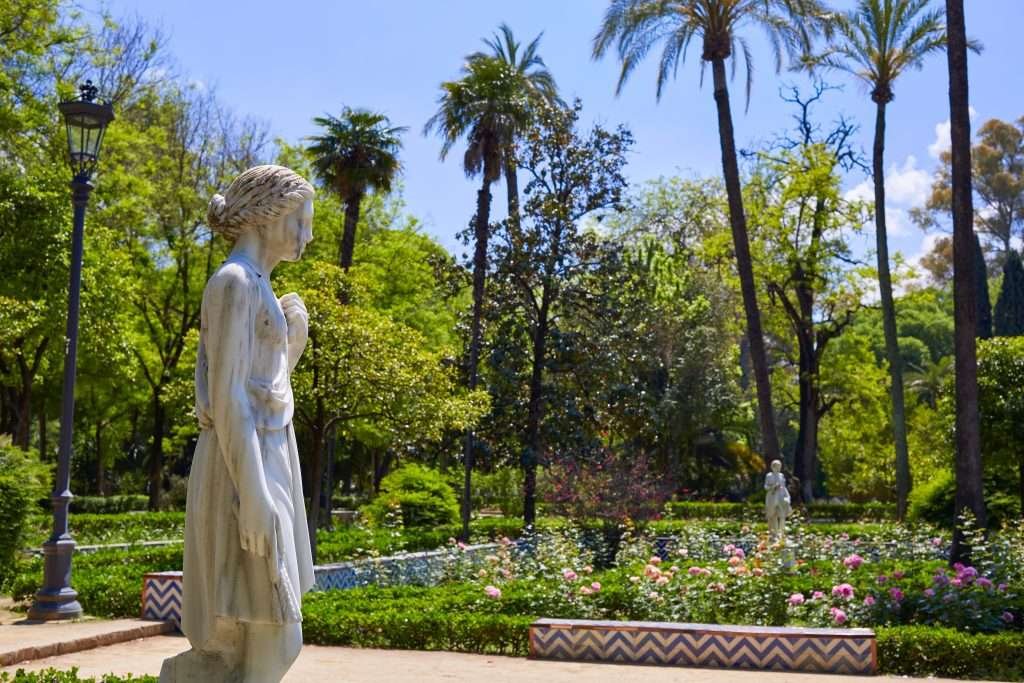
Note for 2026: tourists now pay a €3-4 entry fee. It was free for decades – local authorities introduced the charge to fund maintenance and 24-hour security.
At 2:00 PM this is an unshaded brick oven. At 7:30 PM the setting sun hits the brickwork and turns the entire plaza deep orange. Come now, not at midday. Rent a rowboat for 20 minutes to see the building from the water – the scale reads differently from canal level.
09:30 PM – Tapas Crawl: El Rinconcillo
Head to El Rinconcillo, the oldest tapas bar in Seville, founded in 1670. Dark interior, mahogany bar, completely unpretentious. The bartender writes your tab in white chalk directly on the wooden bar surface. Order a glass of dry Manzanilla sherry, a plate of thinly sliced Jamón Ibérico, and Espinacas con Garbanzos – spinach and chickpeas spiced with cumin, Moorish in origin and still one of the most ordered tapas in the city. Stay for one round then move – the point of the Sevillian tapas crawl is the movement, not the settling.
Day 2: Triana and the Flamenco Quarter
09:30 AM – Torre del Oro and the riverfront
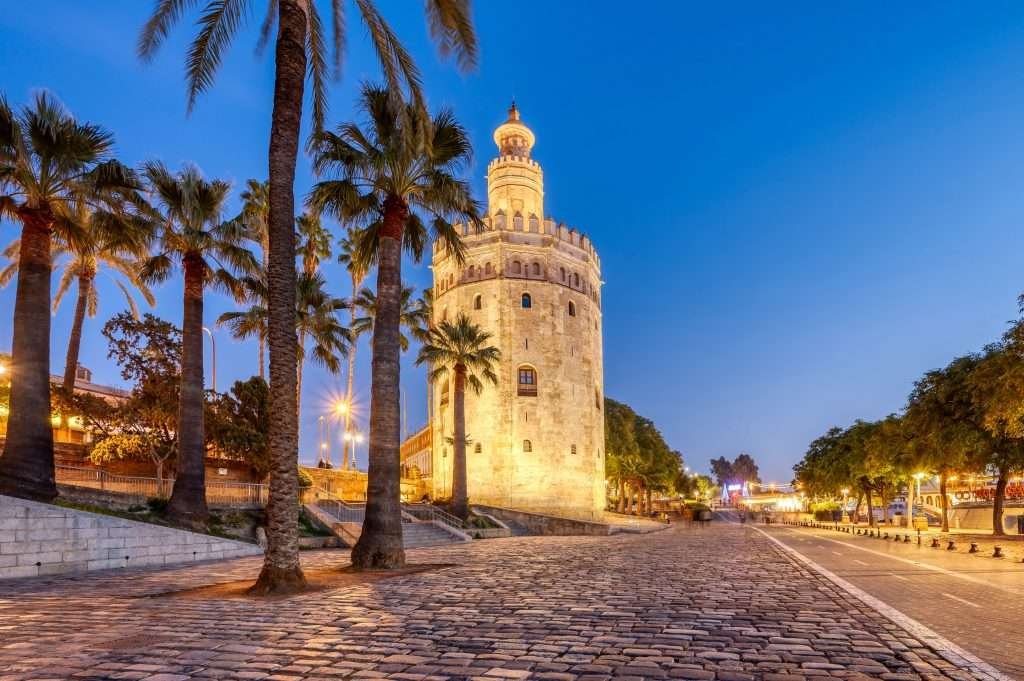
Walk along the east bank of the Guadalquivir River. You pass the Torre del Oro – a 13th-century military watchtower built to control river access to the city. During Spain’s Golden Age, when Seville held a monopoly on all trade with the Americas, every galleon carrying silver and gold from the New World had to pass this point and unload here. The city was the wealthiest port in Europe for over a century. There is a small maritime museum inside if you want the full context, but the tower works as a photography subject without going in – the best light is early morning or evening.
10:30 AM – Cross into Triana
Walk across the Puente de Isabel II. The transition is immediate – Triana feels like a separate city. Historically the neighborhood of sailors, ceramic makers, and the Roma communities who developed flamenco. Less polished than the historic center, fewer souvenir shops, more locals going about their day.

On your right immediately after the bridge is the Mercado de Triana – a working neighborhood market with butchers, fishmongers, and a daily crowd that is not there for tourists. Buy a cone of fried fish and eat it while you walk. One detail worth knowing: the market is built directly on top of the ruins of the Castillo de San Jorge, the headquarters of the Spanish Inquisition. The free museum underneath shows the excavated prison cells and provides a sharp counterpoint to the decorative beauty of the Alcázar – both buildings were centers of power, one more visible about it than the other.
12:00 PM – Ceramic workshops
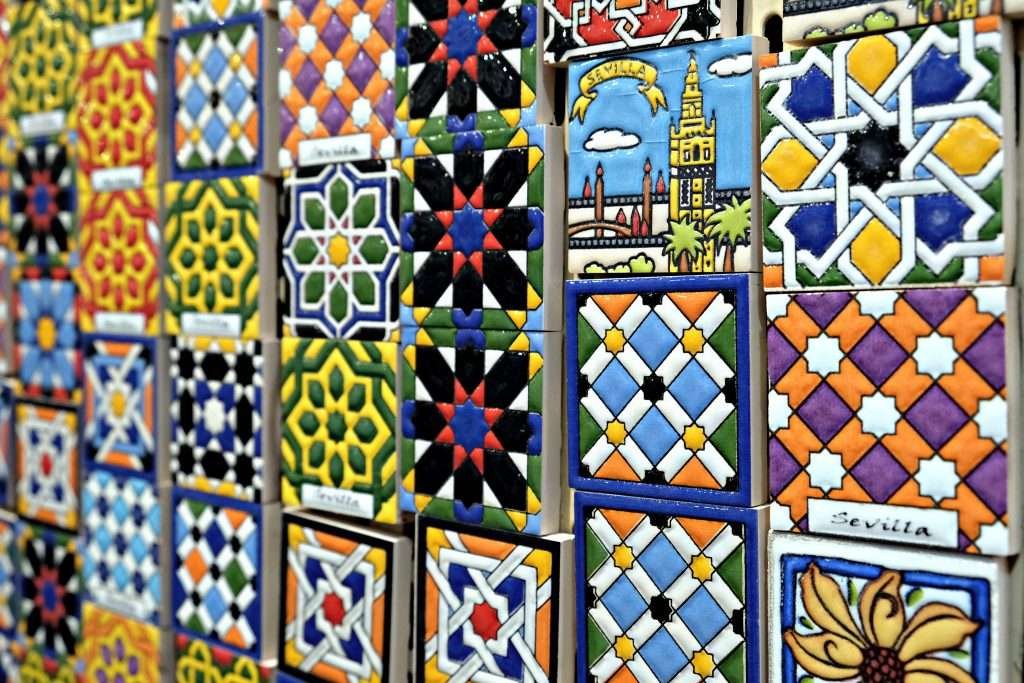

Walk down Calle Antillano Campos and Calle Alfarería. Triana has been producing painted tiles (azulejos) for centuries – they cover nearly every important building you’ve seen in Seville. The Centro Cerámica Triana museum is built inside an original factory with the brick kilns still in place. Spend 30 minutes here before buying anything. You’ll understand what you’re looking at and make better choices. Buy tiles and ceramics in Triana, not from the shops near the Cathedral – better quality, direct from the workshops, and cheaper.
01:30 PM – Lunch in Triana
Blanca Paloma or Las Golondrinas. Order Carrillada de Cerdo – pork cheeks braised slowly in Pedro Ximénez sherry until they collapse under a fork – and Cazón en Adobo – dogfish marinated overnight in vinegar and cumin, then flash-fried. Cold Cruzcampo poured at the correct temperature to cut through the richness of the meat. This is the meal most people remember from Seville.
03:30 PM – 07:00 PM – Siesta
08:00 PM – Flamenco
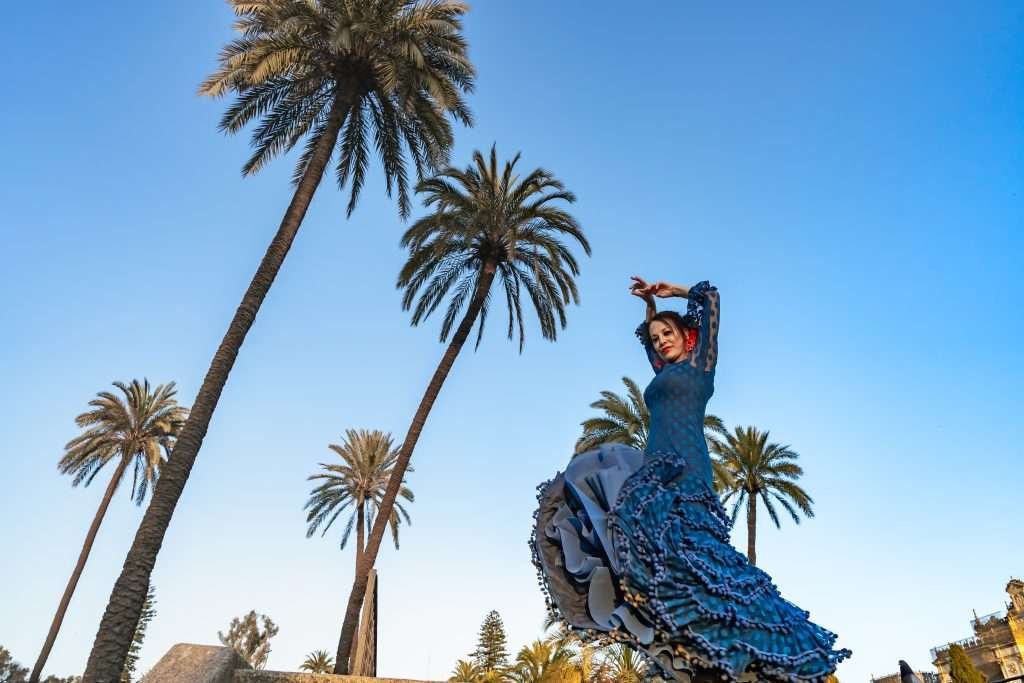
Seville is the most important city in the history of flamenco – it developed here, in the Roma communities of Triana and Macarena, and the city takes it seriously. Which means the tourist version is particularly bad.
Avoid any venue offering a dinner show in a large room with microphones and a staged routine. Book a Tablao instead – a smaller dedicated venue where the performance is the only thing happening. Casa de la Memoria or Museo del Baile Flamenco both work well. Intimate rooms, no amplification, no dinner service. You hear the raw footwork on the wooden floor, the unamplified cante jondo, and the acoustic guitar at close range. The performers are professionals, not actors. Book tickets at least a week in advance – they sell out regularly.
If you want the least commercial version possible, find a Peña Flamenca – a local cultural club in Triana or Macarena. These are not advertised to tourists. Ask at your hotel or a local bar. Unpredictable in terms of timing and quality, but entirely genuine.
10:00 PM – Calle Betis


After the show walk down to Calle Betis in Triana – the street running directly along the western bank of the Guadalquivir. A long row of outdoor terraces facing the illuminated Giralda and Torre del Oro across the water. Order choco frito (fried cuttlefish), find an outdoor table, and stay as long as you want. The view across the river at this hour is the best in Seville.
Day 3: Quiet Palaces and the Modern City
09:30 AM – Casa de Pilatos
If the Alcázar crowds frustrated you, Casa de Pilatos is the corrective. A 16th-century aristocratic mansion northeast of the main tourist zone, combining Italian Renaissance courtyards with Mudéjar tilework and Roman statues. Significantly quieter than anything in the monumental core – you can stand in the central courtyard and hear the water running in the fountain. The wooden ceilings in the upper galleries are some of the finest in Andalusia. Budget 90 minutes.
11:30 AM – Macarena and Palacio de las Dueñas

Walk north into the Macarena district – more residential, more local, less visited than the areas around the Cathedral. The Basilica de la Macarena houses the city’s most revered religious statue – the weeping Virgin Mary (La Esperanza Macarena), carried through the streets on an elaborate float during Semana Santa in a procession that brings the city to a complete standstill. The emotion attached to this statue by Sevillians is not performative – it is genuine and worth understanding before you see it.
The Palacio de las Dueñas was the residence of the late Duchess of Alba, the most titled aristocrat in European history. The exterior walls are covered in bougainvillea. The interior has personal tapestries, bullfighting memorabilia, portraits, and Moorish garden courtyards. It feels like a house rather than a museum, which makes it more interesting than most of the larger state-owned palaces.
01:30 PM – Lunch at Alameda de Hércules
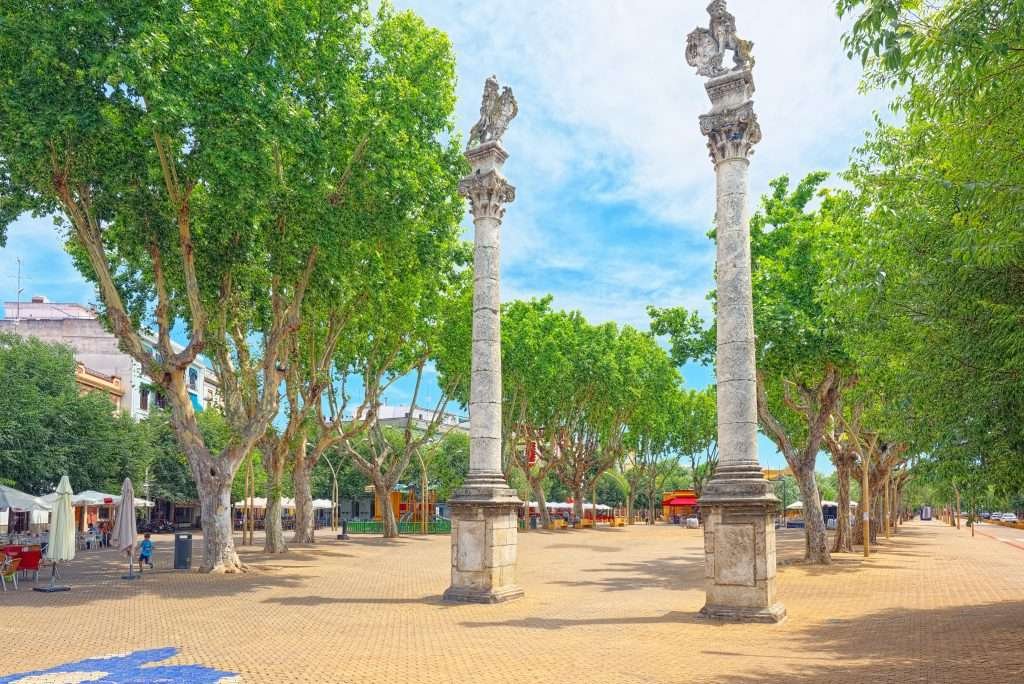
The Alameda is a long tree-lined boulevard originally built on drained swampland in the 16th century – claimed to be the oldest public garden in Europe. Two ancient Roman columns mark the southern end. The surrounding bars and terraces attract a younger, more local crowd than the historic center and the prices reflect it.
Eslava is the standout restaurant on the Alameda. Expect to wait for a table – no reservations for lunch. Their slow-cooked egg over boletus mushroom cake with caramelized wine reduction is modern tapas done at a Michelin standard. Order two or three dishes to share rather than a full portion each.
04:00 PM – 07:00 PM – Final siesta, pack bags
07:30 PM – Las Setas at sunset

Walk to Plaza de la Encarnación. The Metropol Parasol – Las Setas (The Mushrooms) to every local – is a colossal undulating wooden structure completed in 2011, claimed to be the largest wooden structure in the world. It towers over the surrounding 19th-century buildings in a way that should feel wrong and somehow doesn’t.
Take the elevator to the basement first to see the Roman ruins and mosaic floors discovered during construction – the contrast between these and what’s above ground is the whole point of the building. Then go up to the roof walkways roughly 40 minutes before sunset. Watch the sky turn gold over the Giralda from the elevated paths. The juxtaposition of ancient skyline and modern structure is the best visual summary of what Seville actually is.
09:30 PM – El Arenal, final dinner
Bodeguita Romero near the Plaza de Toros bullring. Order the pringá sandwich – slow-cooked pork, chorizo, and blood sausage on toasted bread – and Papas Aliñás, a cold potato salad dressed heavily in olive oil with onions and parsley. A final glass of dry Manzanilla Sherry. Done.
Is 3 days enough for Seville?
Yes. One day for the Alcázar and Cathedral, one day for Triana and flamenco, one day for the quieter palaces and Las Setas. If you want a day trip to Córdoba – the Mezquita-Catedral is 45 minutes by AVE and worth a full day – you need four days minimum.
Do I need to book the Alcázar in advance?
Yes – months ahead during spring and summer. Original passport at the gate, no exceptions. Closed December 25, January 1, January 6, and Good Friday.
Best way to get around?
Walk. The historic center doesn’t accommodate cars or taxis on most streets. For longer distances the MetroCentro tram (T1) runs down the main avenue from San Bernardo to Plaza Nueva. The riverfront bike lane network is flat and good for the Triana crossing.
How do tapas work in Seville?
Unlike Granada, you pay for everything. Bar-hop rather than sit down for a full meal. Order one or two tapas per person per bar, eat standing at the counter, pay and move on. Full breakdown in our first time in Seville guide.
Best time to visit?
April-May or October. 25-30°C, manageable crowds, and the spring orange blossom smell is worth timing a trip around. July and August exceed 40°C regularly – survivable but demanding.
Heading to Granada after Seville? The first time in Granada guide covers the Alhambra ticketing system, the free tapas economy – which works completely differently from Seville – and where to find real flamenco in the Sacromonte caves.