
Venice looks simple on a map until you try to book a hotel. You see a cluster of islands, a maze of narrow alleys, and a city split by the Grand Canal into six historic districts. The instinct is to assume that anywhere on the main island is roughly equivalent – central, walkable, fine.
It is not. In Venice, your neighborhood determines how many stone bridges you haul your luggage over, whether your morning coffee costs €1.50 or €6, and whether you wake up to church bells or the PA system of a cruise ship. Get the neighborhood wrong and you spend your trip fighting crowds you could have avoided entirely.
This guide breaks down all six sestieri, plus the outer options, so you can match your budget and travel style to the right base. If you are still deciding how long to stay, read the First Time in Venice guide first – the neighborhood question only makes sense once you have settled on your itinerary structure.
The Access Fee: What Overnight Guests Need to Know
If you visit Venice on a peak spring or summer weekend, day-trippers pay a €5 entry fee (Contributo di Accesso). As an overnight guest, you are exempt – but you still need to act on this.
Your hotel will usually send you a registration link after booking. Follow it, register your stay on the official Venice portal (cda.ve.it), and generate a QR code before you arrive. Spot checks happen at the train station and at major entry points. Getting caught without the code costs €50 to €300. The registration takes five minutes – do it when your booking confirmation arrives.
San Marco: The Tourist Center
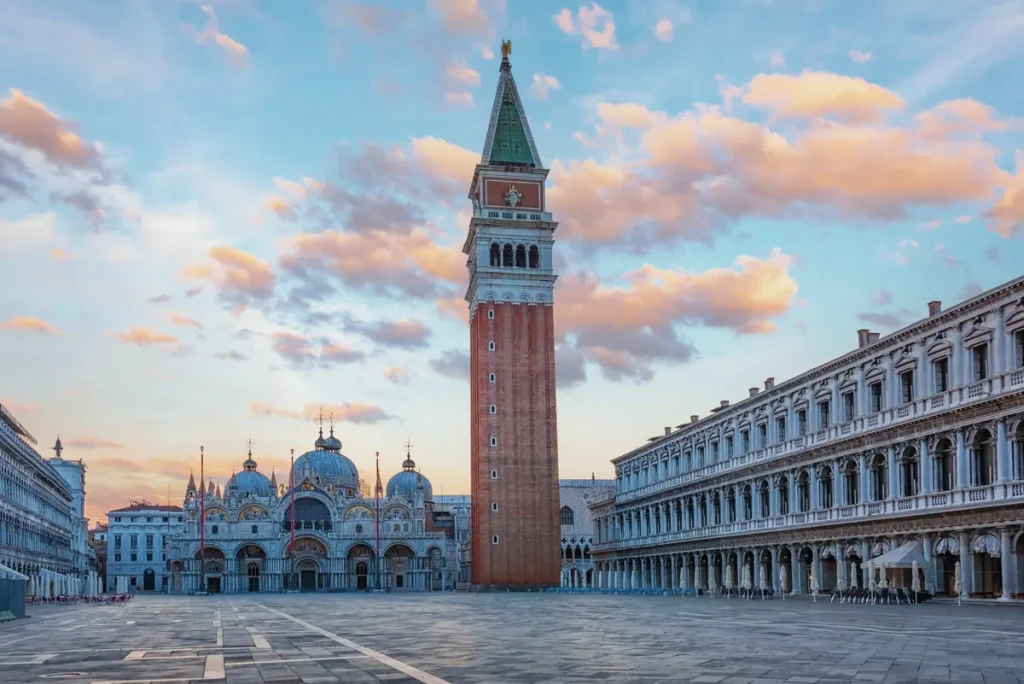
Best for: First-timers, stays of one or two nights, travelers who want zero navigation friction.
San Marco is the Venice of postcards – the Basilica, the Doge’s Palace, the Campanile, the most famous square in Italy. It is the geographic and historical heart of the old Republic and the neighborhood every yellow sign in the city points toward.
Pros: You are within walking distance of every major monument. Navigation is straightforward even without a map. The highest concentration of luxury hotels is here, and the service standards reflect it.
Cons: By 10:00 AM the alleys are a slow-moving river of tour groups. The restaurants in San Marco are the most reliable tourist traps in the city – €28 pasta, €15 cocktails, €5 cover charges. The noise level during the day is significant.
The move: If you stay here, do not eat here. Walk ten minutes north into Cannaregio or east into Castello for dinner. Use San Marco for the monuments and retreat for everything else.
2026 price range: €200 to €1,200+ per night.
Hotels to consider:
- Luxury: The Gritti Palace – Grand Canal frontage, the benchmark for Venetian luxury

- Mid-range: Novecento Boutique Hotel – family-run, eclectic design, unusually personal service for the neighborhood

- Budget anchor: Hotel Serenissima – one of the few genuinely affordable options in central San Marco

Cannaregio: The Residential District

Best for: Repeat visitors, anyone prioritizing food and value, travelers who want to feel like they are in an actual city.
Cannaregio is the largest district and the most populated by actual Venetians. It runs from the train station east to the Rialto, taking in the Jewish Ghetto, the Fondamenta della Misericordia, and a dense network of local bacari (wine bars) that have nothing to do with tourism.
Pros: Real neighborhood feel – grocery shops, local bars, residents doing their shopping. The fondamente (canal-side walkways) are wide and good for evening walking. Home to the Jewish Ghetto, established in 1516 and one of the quietest, most historically layered corners of the city. Prices for food and coffee drop noticeably compared to San Marco.
Cons: St. Mark’s Square is a 20 to 30-minute walk. The blocks immediately around the train station are generic and crowded – the quality of the neighborhood improves significantly once you move east.
The move: Aim for the stretch near the Madonna dell’Orto church, roughly in the middle of the district. You get the local feel without the station chaos, and the walk to the Rialto is under 15 minutes.
2026 price range: €120 to €400 per night.
Hotels to consider:
- Upscale: Ca’ Sagredo Hotel – a 15th-century palazzo that functions as a national monument; frescoed ceilings, Grand Canal position
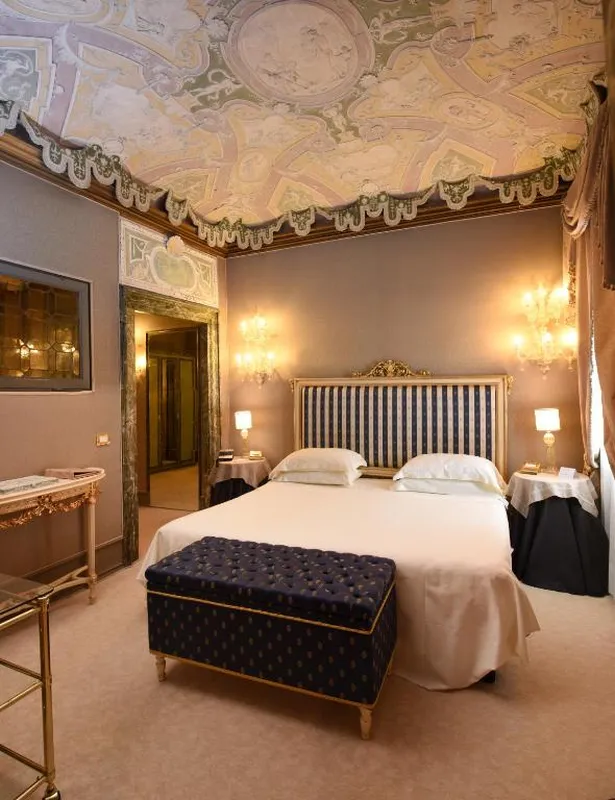
- Mid-range: Hotel Giorgione – classic Venetian style with a private courtyard, rare at this price point

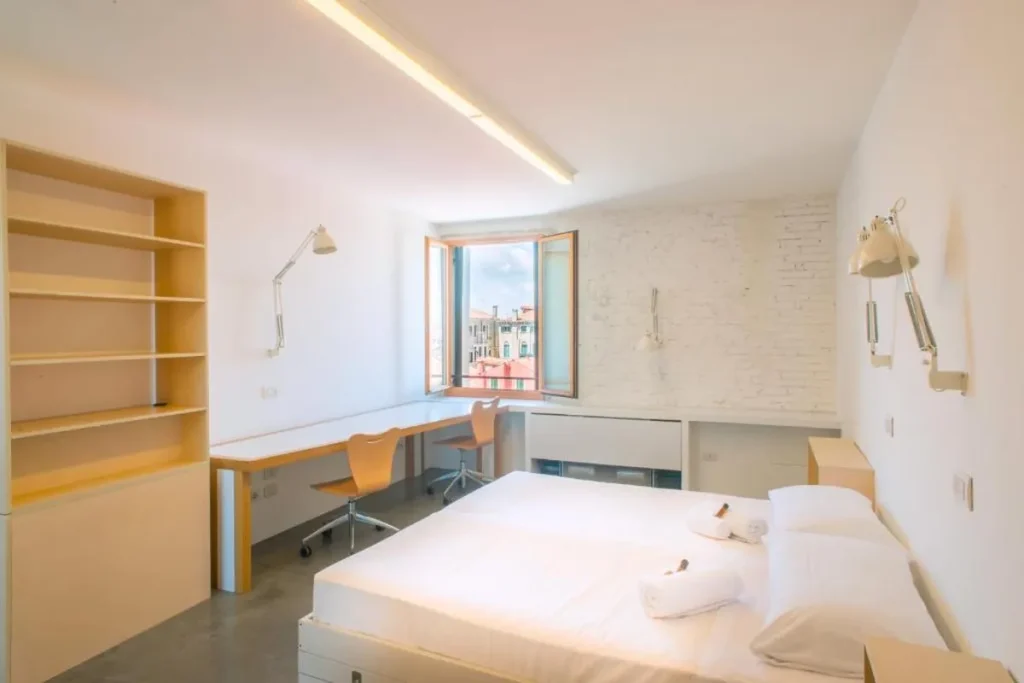
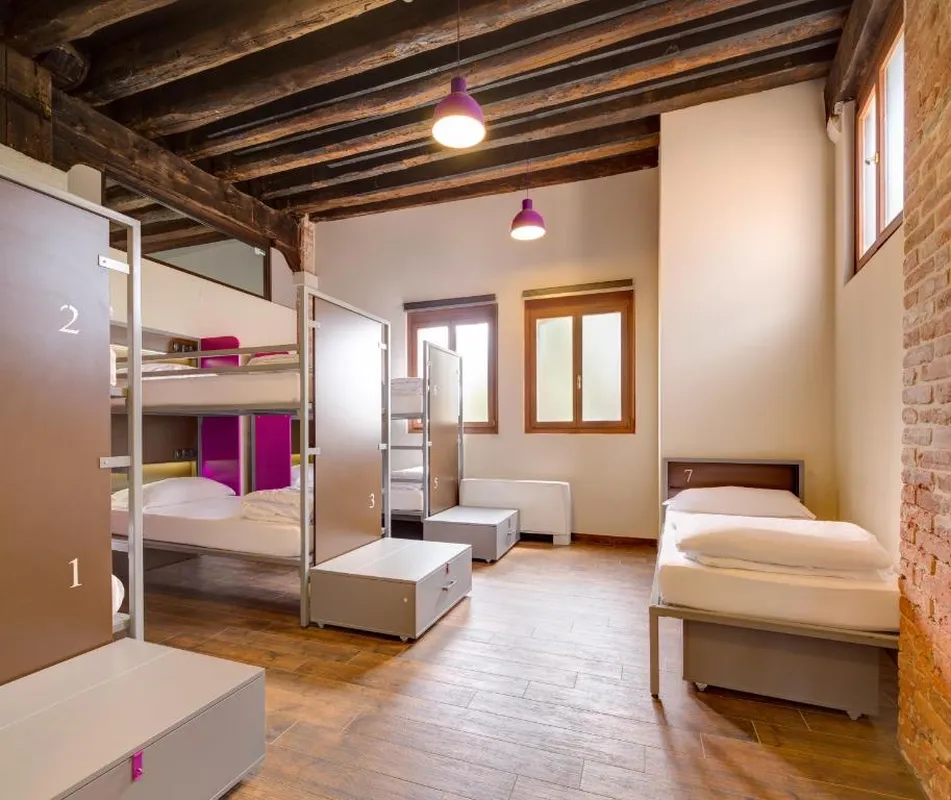
- Budget/hostel: Combo Venezia – converted monastery, well-designed communal spaces, the best budget option in the district
Dorsoduro: The University Quarter

Best for: Couples, art-focused travelers, anyone who wants the most atmospheric neighborhood in Venice.
Dorsoduro sits across the Accademia Bridge from San Marco and runs along the southern edge of the main island to the tip at Punta della Dogana. It is home to the Peggy Guggenheim Collection, the Accademia Gallery, and the Zattere promenade – a wide, sun-facing walkway along the Giudecca Canal where locals walk, eat gelato, and watch container ships pass.
Pros: Arguably the most beautiful neighborhood to simply walk through. The university presence keeps the energy younger and the prices more honest than San Marco. Campo Santa Margherita is the best everyday square in the city – wide, lively without being overwhelming, and surrounded by good bars.
Cons: Fewer budget options than Cannaregio. Some of the smaller hotels here are priced at a premium for the location without the service to match – check reviews carefully.
The move: Stay near the Accademia Bridge. You can cross into San Marco in four minutes on foot while retreating to a quiet, genuinely beautiful neighborhood at night.
2026 price range: €180 to €600 per night.
Hotels to consider:
- Luxury: Ca’ Maria Adele – small, design-led, consistently rated among the most romantic hotels in Venice
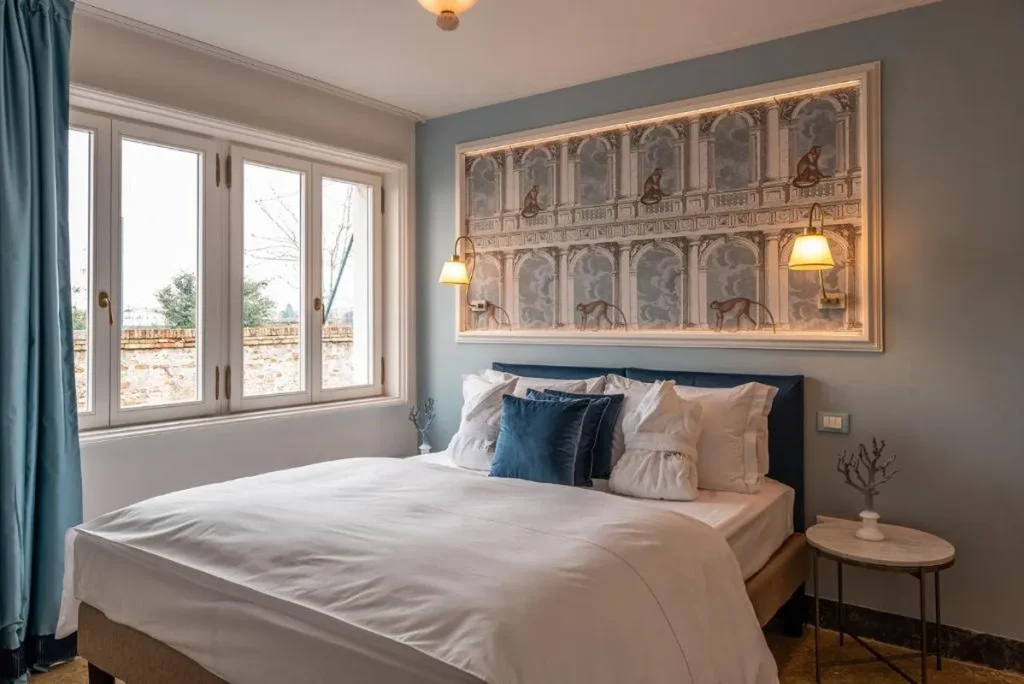
- Mid-range: Pensione Accademia – Villa Maravege – a genuine villa with a garden on a side canal, exceptional for the price
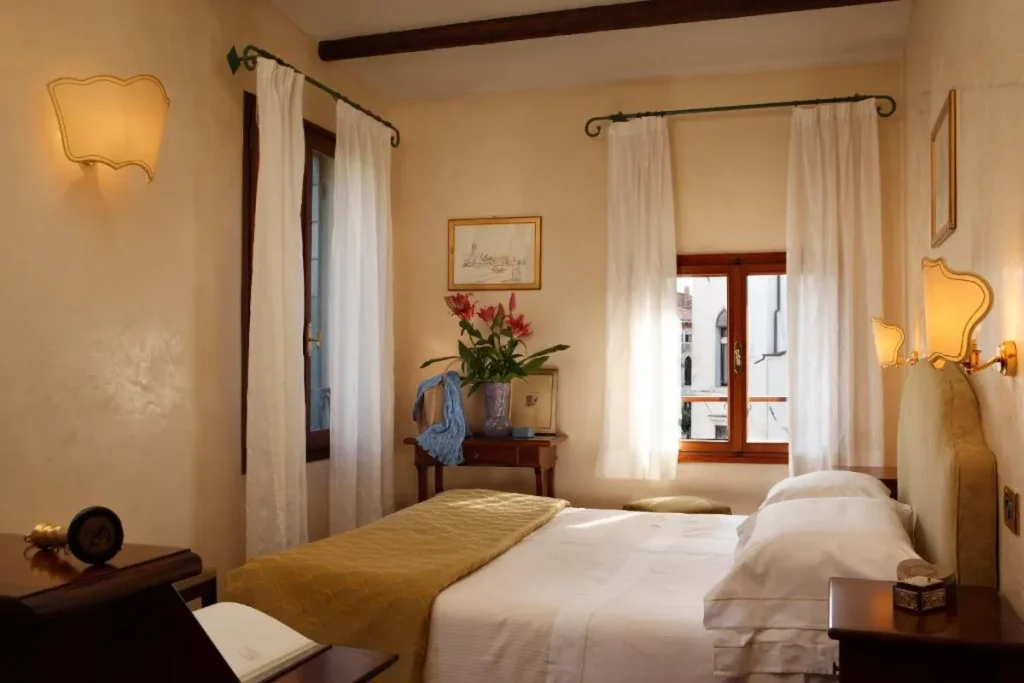
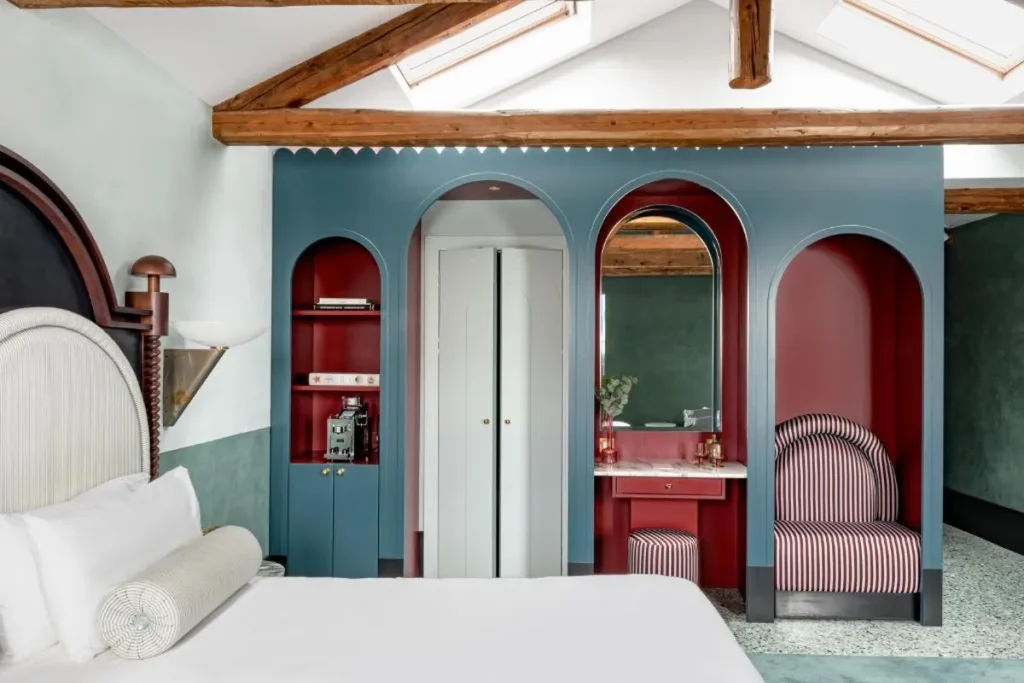
- Modern: Il Palazzo Experimental – high-design, well-located, better bar than most hotels in the city
San Polo: The Market District

Best for: Food-focused travelers who want a central base without San Marco prices.
San Polo is the smallest district – dense, ancient, and built around the Rialto Bridge and the fish market that has operated on the same site since the 11th century. If you are planning a bacaro crawl or want to be at the Rialto market at 7:30 AM when the fish stalls open, this is the right neighborhood. See the Food Guide Venice for the full breakdown of where to eat in this district.
Pros: Extremely central – almost anywhere on the main island is 15 minutes on foot. The culinary infrastructure is the best in Venice: Cantina Do Mori, All’Arco, and the Rialto market are all within a five-minute walk. The Basilica dei Frari and the Scuola Grande di San Rocco are both here.
Cons: The blocks immediately around the Rialto Bridge are as crowded as anything in San Marco between 10:00 AM and 5:00 PM. Noise from the market starts early.
The move: Look for a hotel near Campo San Polo – the second-largest square in Venice, quieter than the Rialto area, and a genuinely pleasant place to come back to at the end of the day.
2026 price range: €160 to €500 per night.
Hotels to consider:
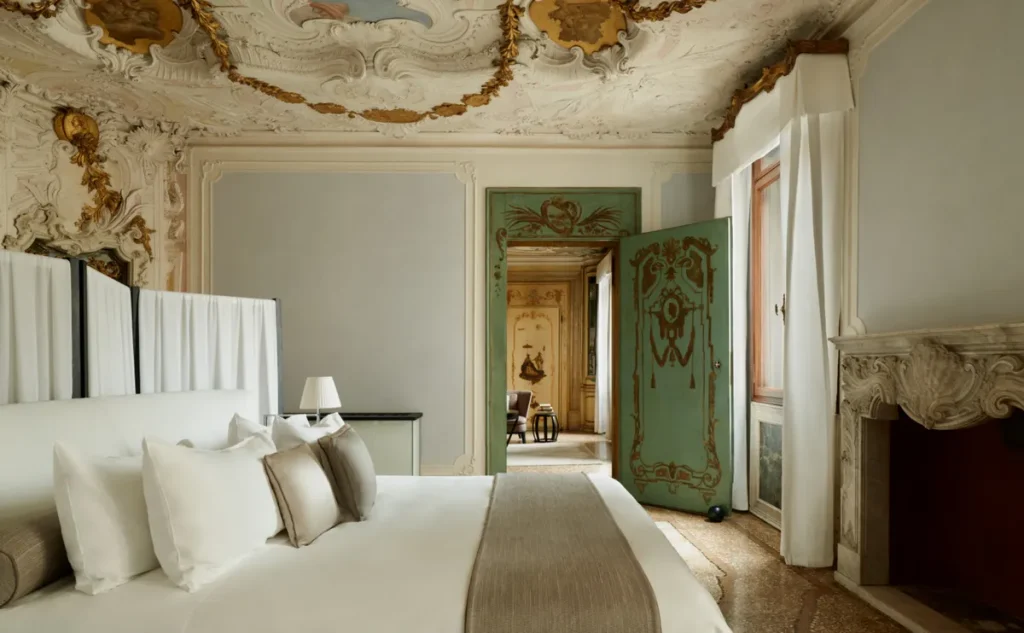
- Luxury: Aman Venice – occupies a 16th-century palazzo on the Grand Canal; the most exclusive address in the district
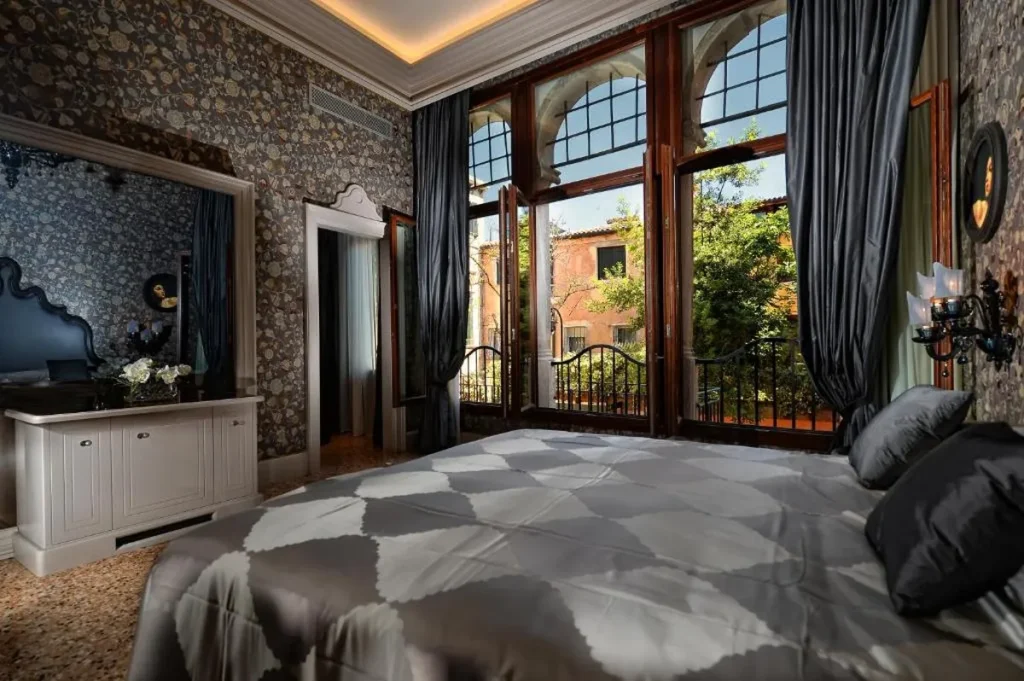
- Mid-range: Palazzetto Madonna – well-run, classic Venetian interior, good location
- Affordable: H10 Palazzo Canova – modern four-star with a Grand Canal terrace; good value for the position
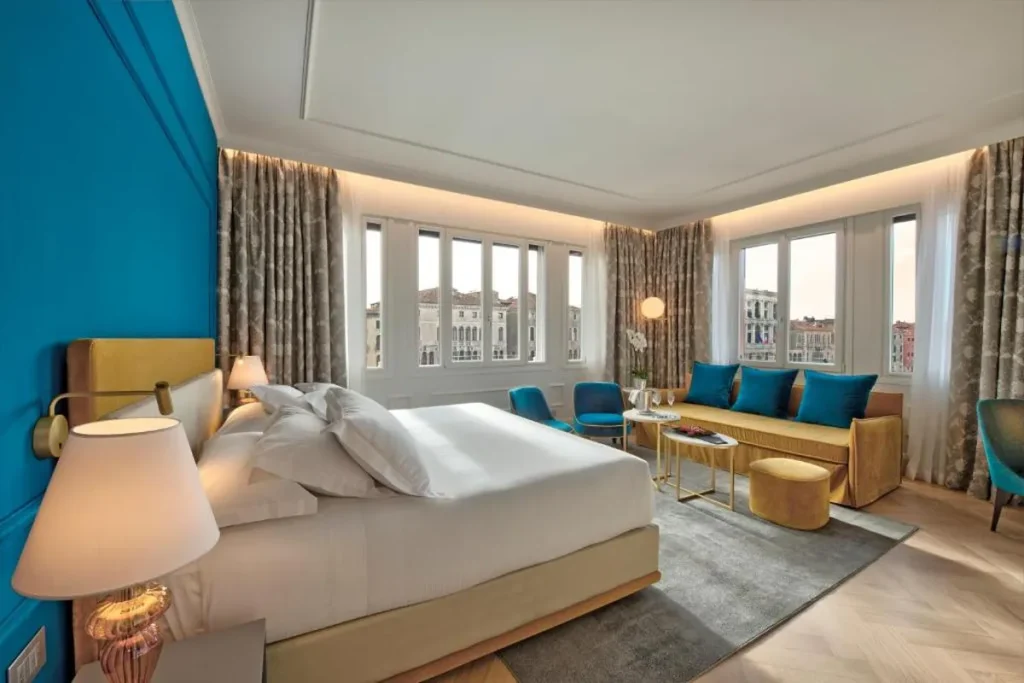
Castello: The Quiet East

Best for: Long-stay visitors, travelers prioritizing peace, anyone visiting the Venice Biennale.
Castello is the eastern tail of the main island. It starts just behind St. Mark’s and stretches to the Arsenale shipyards and the Giardini public gardens. This is where laundry hangs over canals, kids play football in the squares, and the tourist infrastructure thins out noticeably. For a full picture of how to use Venice beyond the main sights, see the Things to Do in Venice guide.
Pros: The quietest neighborhood on the main island. Genuinely residential in the eastern sections. During the Venice Biennale (held in odd-numbered years), the Giardini and Arsenale pavilions are a five-minute walk from hotels in this district.
Cons: The far eastern end is a 25-minute walk or a long Vaporetto ride from the center. If you need to get back quickly after a late evening, the distance becomes a problem.
The move: Stay in the western part of Castello, near Santa Maria Formosa. You get the neighborhood’s quiet character while remaining five minutes from San Marco on foot.
2026 price range: €130 to €450 per night.
Hotels to consider:
- Luxury: Hotel Metropole – eccentric, decadent, lagoon-facing; one of the more characterful luxury options in Venice

- Mid-range: Hotel Bucintoro – nautical theme, direct water views, solid value
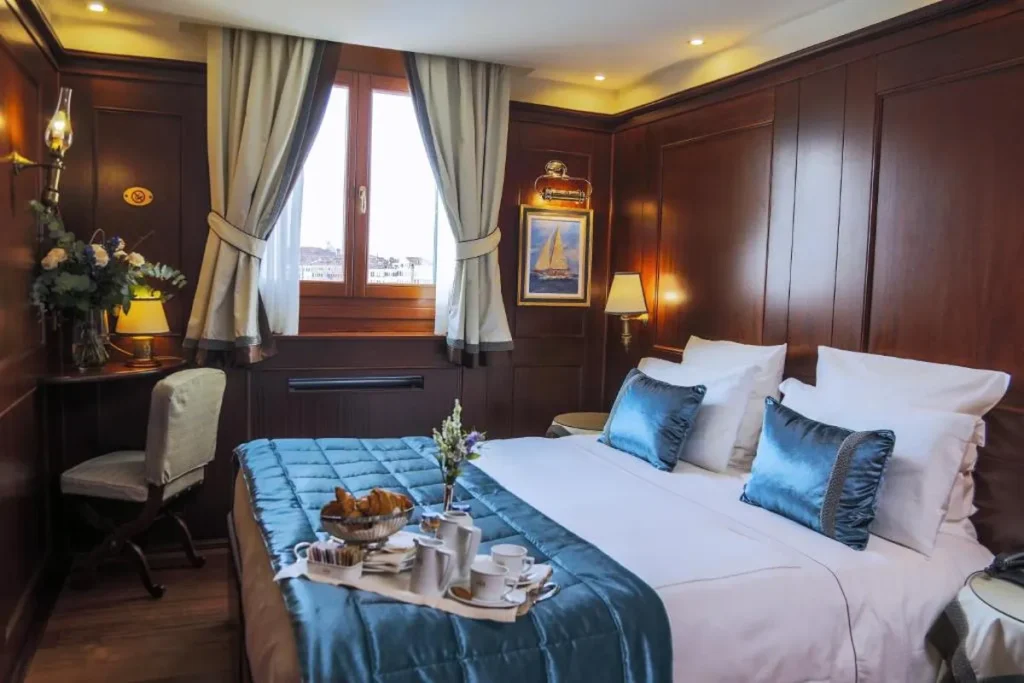
- Value: Hotel Colombina – traditional style, private bridge entry, well-reviewed for service

Santa Croce: The Arrival District

Best for: Travelers with heavy luggage, one-night stopovers, early departures.
Santa Croce is the only part of Venice where road vehicles are permitted – specifically at Piazzale Roma, the main bus terminal. If you arrive by bus or car, this is where you land.
Pros: Zero bridges between the bus terminal and hotels in this district. If you are traveling with a large suitcase, staying here eliminates the main logistical problem of Venice entirely. Convenient for early morning departures.
Cons: The blocks near Piazzale Roma are the least atmospheric in Venice. It does not feel much like Venice at all near the terminal itself.
The move: Walk five minutes away from the bus station into the San Giacomo dell’Orio area. The square here is one of the most genuinely local in the city – wide, tree-lined, surrounded by good bars and a church that dates to the 9th century. Most visitors never find it.
2026 price range: €140 to €350 per night.
Hotels to consider:
- Upscale: Hotel Moresco – consistently high ratings for service and interior quality

- Convenient: Hotel Antiche Figure – directly opposite the train station, no bridges required
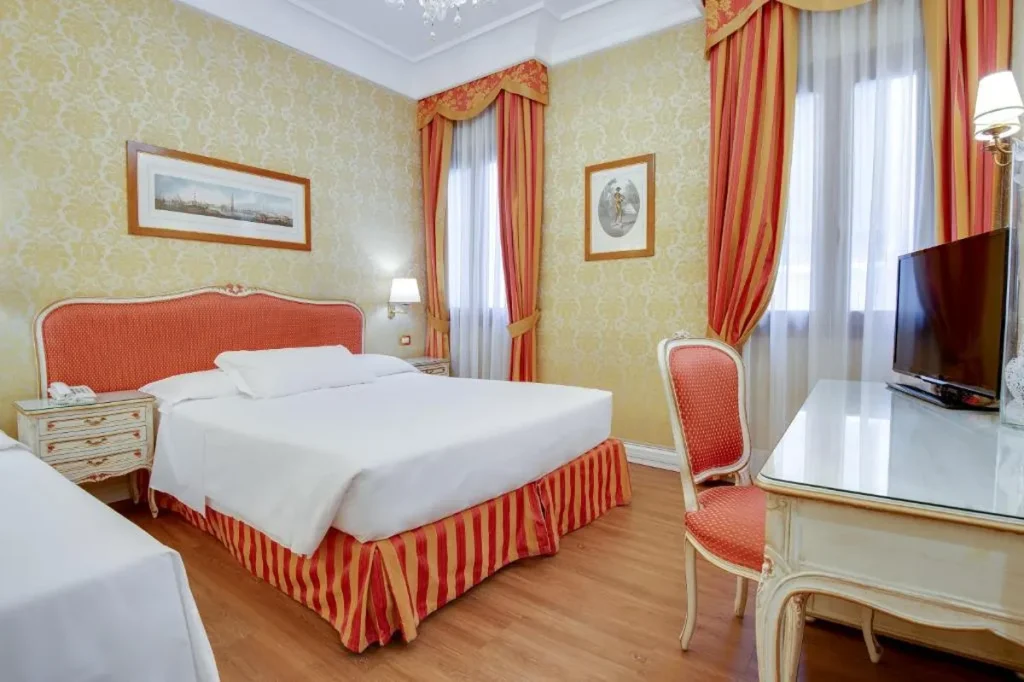
- Mid-range: Palazzo Odoni – historic palazzo, family-run, good value for Santa Croce
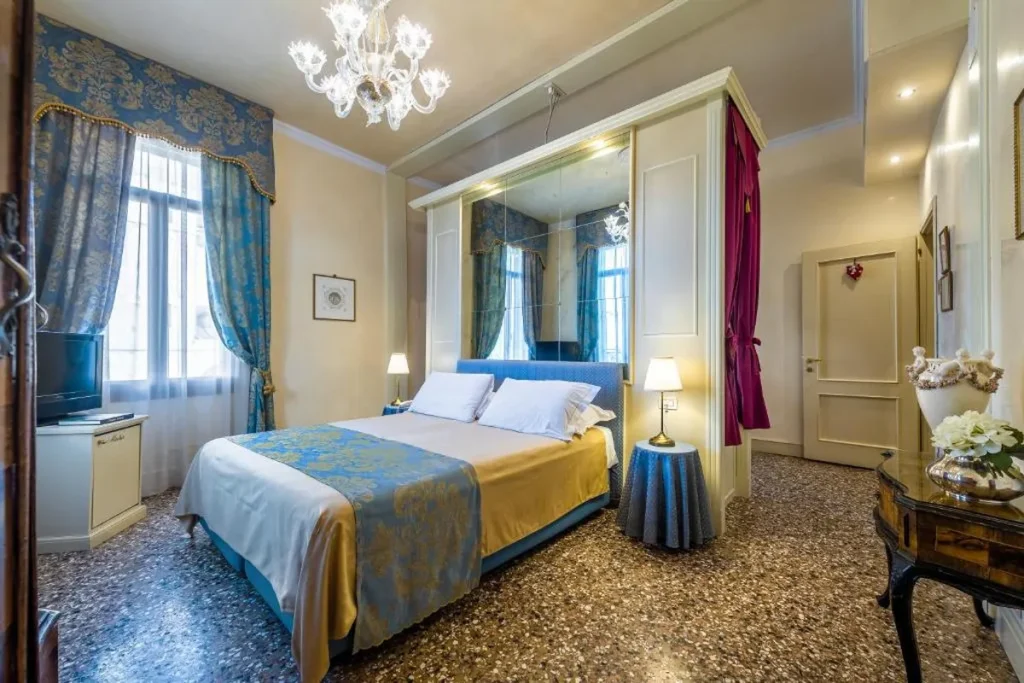
Giudecca: The Luxury Escape

Best for: Luxury travelers, honeymooners, anyone who wants resort facilities and distance from the crowds.
Giudecca is a long, thin island south of the main city connected only by Vaporetto – Lines 2, 4.1, and 4.2. The crossing takes three minutes but puts you in a completely different environment: quiet streets, no tour groups, and an unobstructed view across the water to San Marco and the Doge’s Palace.
Pros: The view looking back at the main island at sunset is the best in Venice – better than any bell tower. Extremely quiet. The two major hotels here have facilities (pools, private boat service) that nothing on the main island can match.
Cons: Every trip to the center requires a Vaporetto ride. If you forget something in your room, it costs you 30 minutes. The boat service stops running on its normal schedule late at night – check the last departure time before committing to a late dinner in San Marco.
2026 price range: €100 (hostels) to €1,500+ (luxury resorts) per night.
Hotels to consider:
- Ultra-luxury: Belmond Hotel Cipriani – private launch service, Olympic-length pool, the most celebrated hotel in Venice

- Modern luxury: Hilton Molino Stucky – converted 19th-century flour mill, rooftop pool with panoramic views

- Budget: Generator Venice – well-designed hostel, the best budget option if you don’t mind the Vaporetto commute
A Note on Mestre
Mestre is the mainland suburb directly connected to Venice by a 12-minute train or bus crossing. Hotels are 40 to 50 percent cheaper than equivalent options on the island.
The trade-off is straightforward: you are not in Venice. You are in a modern industrial suburb with no canals, no atmosphere, and a commute that costs you 40 minutes of travel time per day. The magic of Venice happens after 6:00 PM when the day-trippers leave and the city quiets down. You only experience that if you are sleeping on the island. If budget is the primary constraint, use Venice on a Budget to reduce costs on the island rather than moving to the mainland.
Where Should You Stay: Quick Reference
| Your priority | Best neighborhood | Backup |
|---|---|---|
| First visit, easy navigation | San Marco | San Polo |
| Budget, local feel | Cannaregio | Giudecca (hostels) |
| Romance, atmosphere | Dorsoduro | Giudecca |
| Food and markets | San Polo | Cannaregio |
| Heavy luggage, short stay | Santa Croce | Cannaregio (near station) |
| Peace and quiet | Castello | Dorsoduro |
Plan Your Trip
- First Time in Venice
- 1 Day in Venice
- 3 Days in Venice
- Things to Do in Venice
- Venice on a Budget
- Food Guide Venice
- Best Day Trips from Venice
Do I need to book hotels in Venice far in advance?
Yes, especially for peak season. July and August dates in Cannaregio and Dorsoduro – the neighborhoods with the best value-to-location ratio – fill up three to four months ahead. San Marco luxury hotels can book out six months in advance for summer weekends. If you are visiting in April, May, September, or October, six to eight weeks ahead is usually sufficient. November through March you can often book two weeks out and still find decent options at reduced rates.
Is it safe to stay in Venice?
Yes. Venice has one of the lowest crime rates of any major tourist city in Italy. The main risks are practical rather than criminal – getting lost after dark in an unfamiliar sestiere, missing the last Vaporetto back from Giudecca, or leaving luggage unattended in a busy campo. Pickpocketing exists but is far less prevalent than in Rome or Florence. The bigger financial danger is restaurants and shops targeting tourists who don’t know local prices.
What is the best area to stay in Venice for the first time?
San Marco for convenience, Cannaregio for value. If this is your first visit and you want zero navigation stress, San Marco puts you within walking distance of every major sight. If you want a more honest experience of the city at a lower price point, stay in the middle section of Cannaregio – near Madonna dell’Orto – and budget 25 minutes to walk to St. Mark’s.
Should I stay in Venice or Mestre to save money?
Stay in Venice if you can stretch the budget at all. Mestre hotels are 40 to 50 percent cheaper but the commute costs you 40 minutes of travel per day and, more importantly, you miss the city after 6:00 PM when the day-trippers leave. The evening and late-night version of Venice is what makes the trip worth it. Use the bacaro system, public fountains, and the budget strategies in the Venice on a Budget guide to reduce costs on the island rather than moving to the mainland.
Which Venice neighborhood is quietest at night?
Castello, specifically the eastern section near the Arsenale. It has the lowest tourist footfall of any district on the main island after dark. Dorsoduro is the second quietest, with the exception of Campo Santa Margherita which stays lively until midnight during university term. San Marco is the loudest – the orchestras in the square play until late and the narrow alleys amplify sound considerably.
Where to Stay in Venice — Hotels by District
21 hotels across all 6 sestieri plus Giudecca. Click any pin for price tier and what makes it worth booking.