1 day in Florence is a targeted mission, not a casual visit. The historic center is small enough to walk across in 20 minutes, which sounds like an advantage until you realize that the same 20-minute radius contains the David, the Uffizi, the Duomo, and the Ponte Vecchio – all requiring advance booking and drawing combined visitor numbers that rival small cities.
Get the logistics right before you arrive and the day is genuinely extraordinary. Get them wrong and you spend it standing in queues that eat your entire afternoon.
Pre-Trip: Three Rules That Determine Whether This Works
1. Book tickets months in advance
Book online the Uffizi Gallery and the Accademia Gallery for timed-entry. In peak season (April-October) the Accademia sells out 6-8 weeks ahead. The Uffizi, being larger, has more availability but still sells out weeks out. If you arrive without tickets, your day restructures around these two galleries being inaccessible. Book the moment your travel dates are confirmed.
2. Wear proper shoes
Florence has no metro. The historic center is pedestrian-only, paved entirely with pietra serena – hard, uneven grey sandstone that destroys ankles and cheap soles over a 12-hour walking day. Thick-soled, supportive shoes are not optional.
3. Do not come on a Monday
The Uffizi and Accademia are closed Mondays. If your one day falls on a Monday, restructure the itinerary entirely around outdoor sites and the Duomo complex – both of which operate on Monday.
08:15 AM – The Accademia Gallery
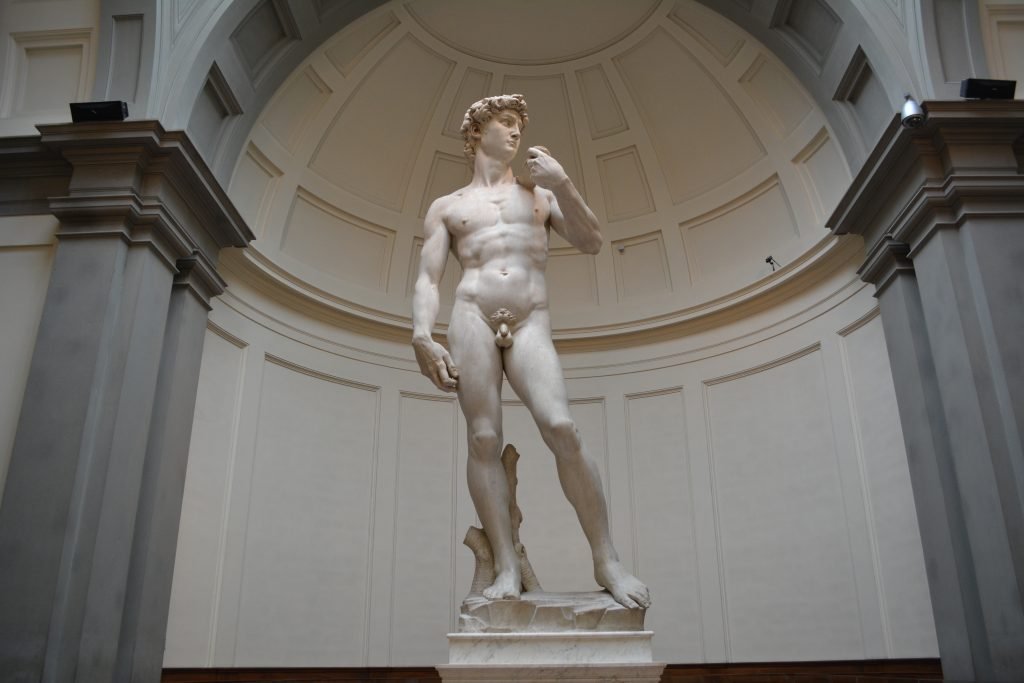
Start with the first time slot of the morning. The Galleria dell’Accademia is a small, unpretentious building that exists almost entirely to house Michelangelo’s David.
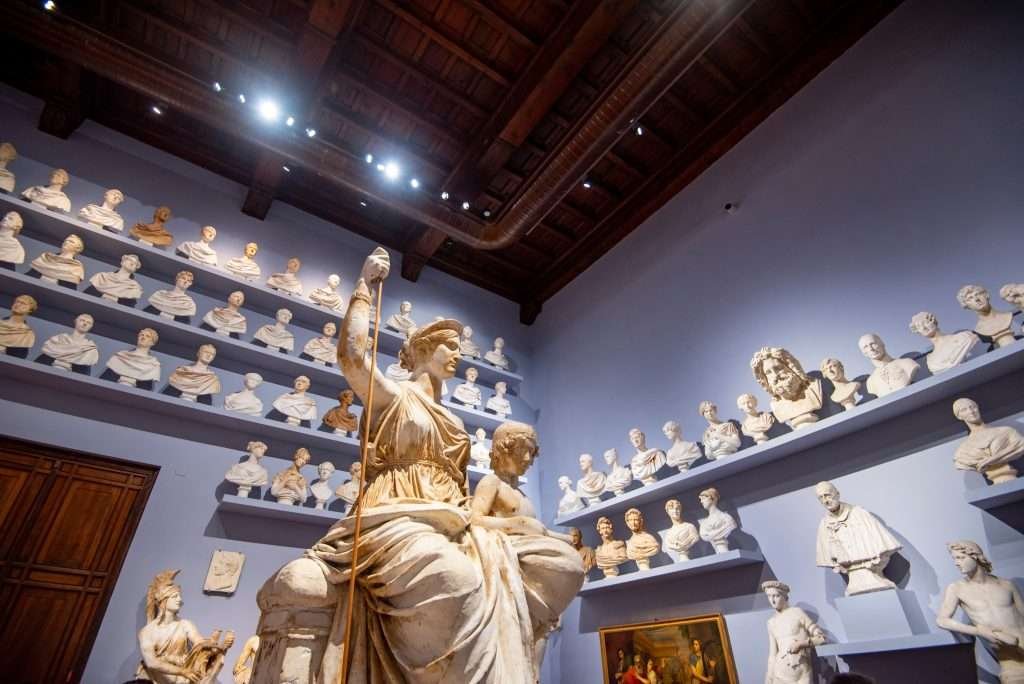
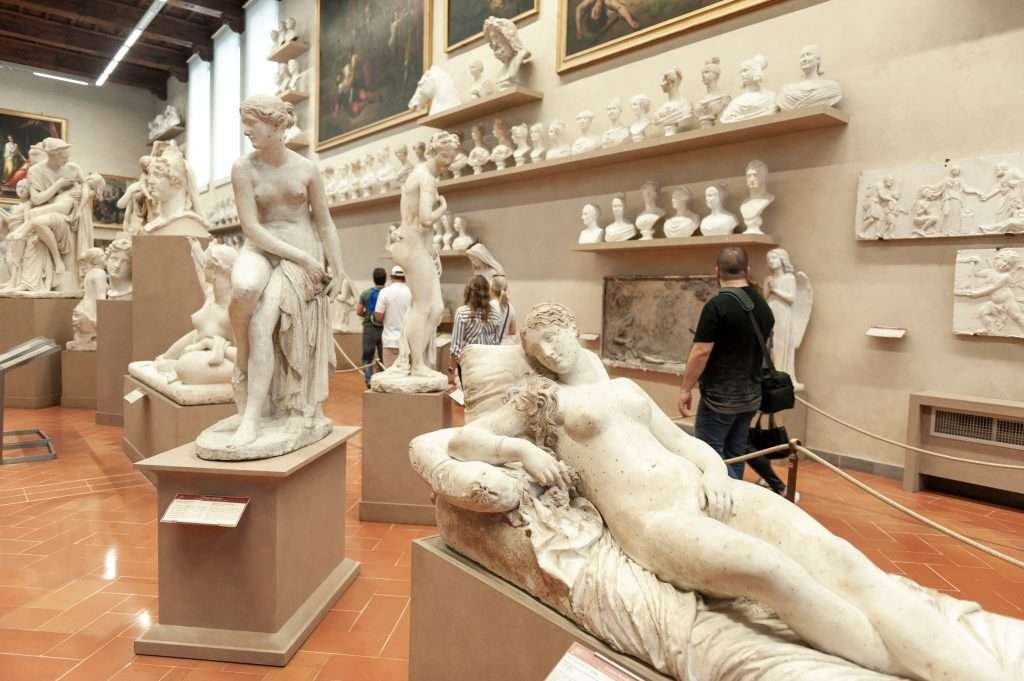
Walk through the security gates and past the plaster cast rooms directly into the main hall (The Tribune). The statue is 17 feet tall, carved from a single flawed block of Carrara marble that two other sculptors had already rejected. What you notice first is the scale. What you notice second, looking more carefully, are the details: the outsized right hand (Michelangelo carved it larger deliberately – manu fortis, strong of hand, was David’s biblical attribute), the visible tension in the neck, the bulging veins running across the forearms.
Spend 30 minutes here. Walk the full circle around the statue. Look at Michelangelo’s unfinished Prigioni (Prisoners) lining the entrance corridor on the way out – figures that appear to be struggling to free themselves from the raw marble, left incomplete by design. Then leave. The side galleries are minor work and not worth your time today.


09:15 AM – Piazza del Duomo
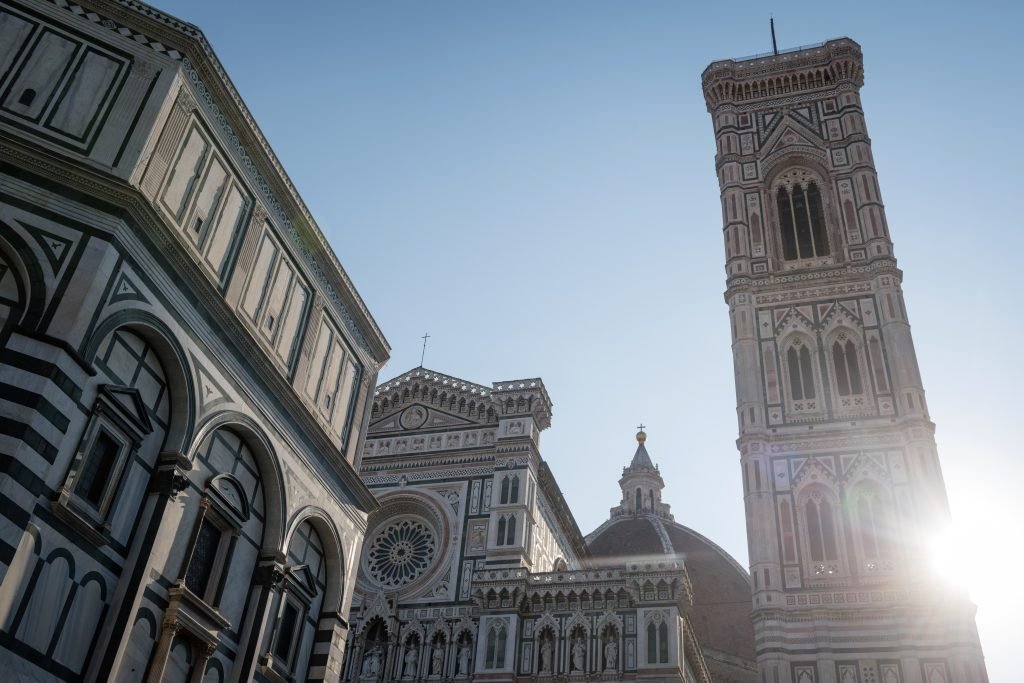
Walk 10 minutes south. The narrow medieval streets will open without warning into the Piazza del Duomo, and the Cathedral of Santa Maria del Fiore will appear at full scale in front of you.
The exterior is clad in geometric panels of white, green, and pink marble – Florentine Gothic at its most deliberately theatrical. Brunelleschi’s red-tiled dome rises above it. Built in the early 15th century, it remains the largest masonry dome ever constructed and was achieved without external scaffolding using an engineering method Brunelleschi invented specifically for this project.
On climbing the dome: The 463-step climb is genuinely spectacular and worth doing if you have three days. With one day, skip it. The climb takes two hours minimum and leaves your legs wrecked for the afternoon. The exterior view from ground level is the money shot anyway.
10:00 AM – The Baptistery
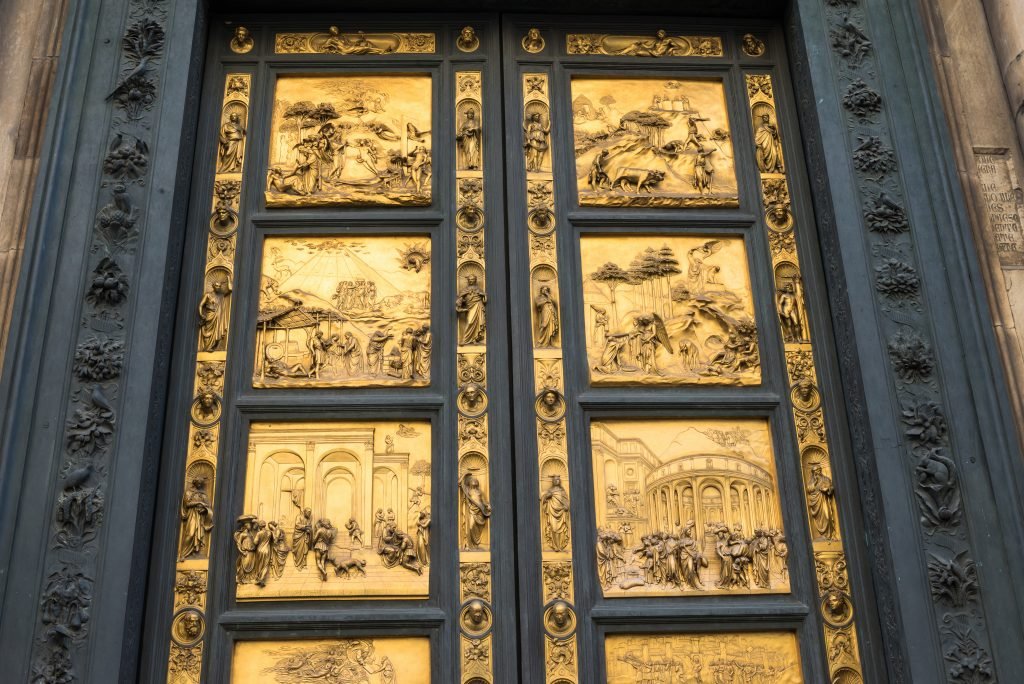
Stand in front of the Baptistery of San Giovanni, the octagonal building directly in front of the Cathedral. The gilded bronze east doors are what Michelangelo called “the Gates of Paradise” – 10 panels depicting Old Testament scenes in extraordinary sculptural depth. The panels outside are high-quality replicas; the originals are in the Museo dell’Opera del Duomo nearby, protected from pollution. Worth knowing, not worth detour time today.
For the full list of what the Duomo complex contains and which elements require separate booking, our 25 best things to do in Florence guide breaks it down.

11:00 AM – Piazza della Signoria
Walk south down Via dei Calzaiuoli to the Piazza della Signoria – the political heart of the city, dominated by the Palazzo Vecchio’s 94-meter tower.
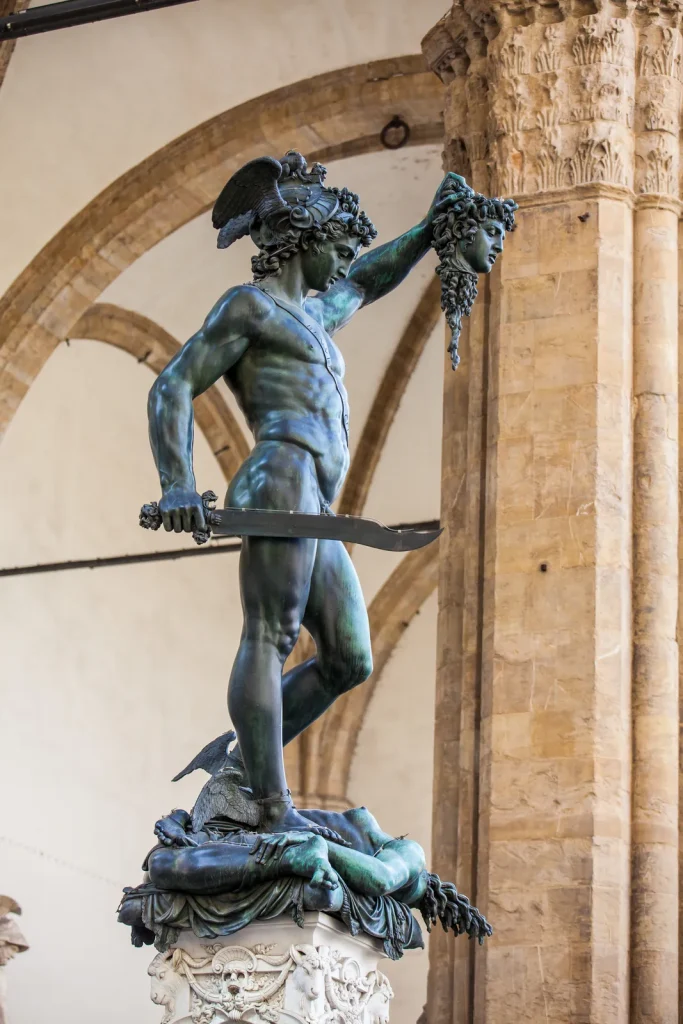
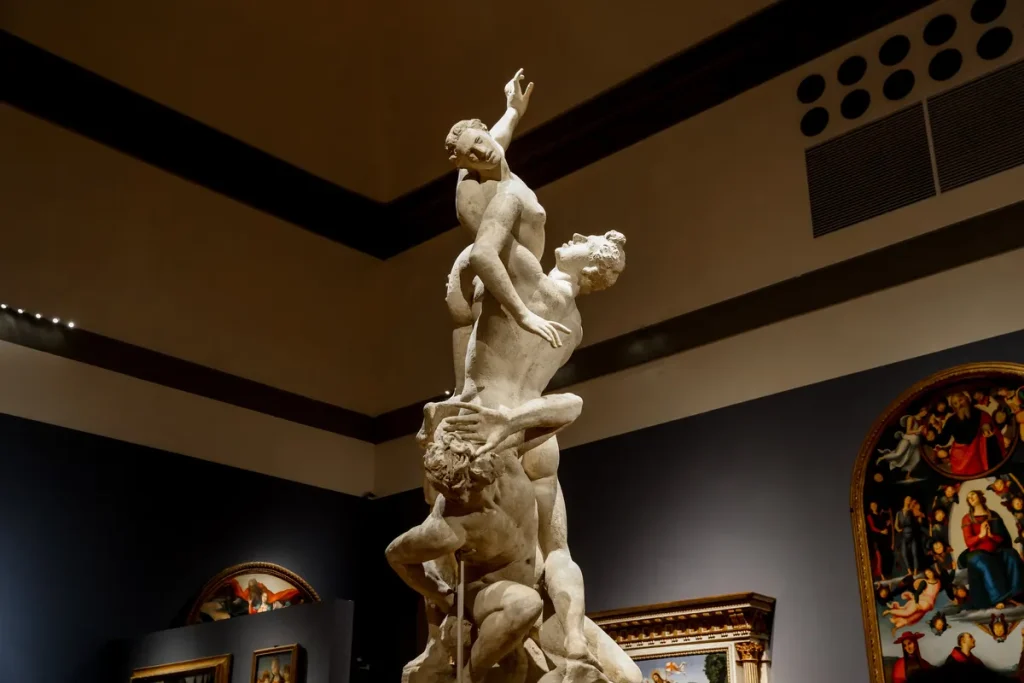
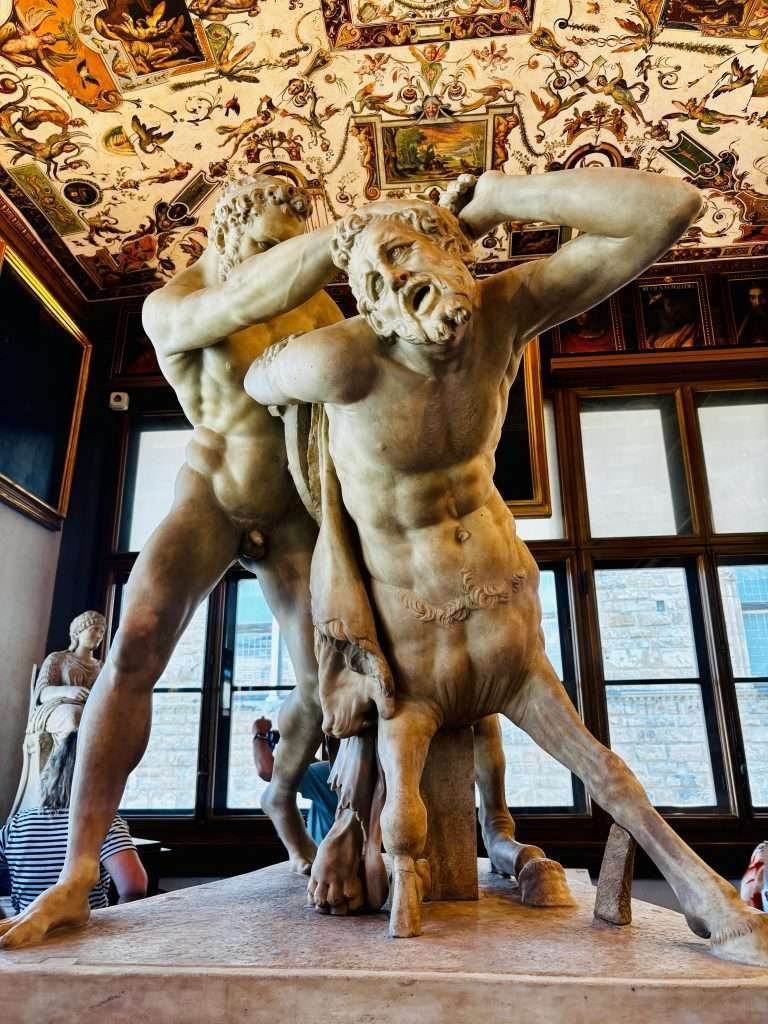
On the right side of the square is the Loggia dei Lanzi – an open-air vaulted pavilion containing original Renaissance sculpture. No ticket, no queue. Walk directly up to Benvenuto Cellini’s bronze Perseus with the Head of Medusa (1554) and Giambologna’s Rape of the Sabine Women (1583) – two of the great works of Florentine Mannerism, standing in the open air. This is one of the more quietly astonishing things in the city.
12:30 PM – Lunch
Every restaurant with a view of a monument in Florence’s center serves mediocre food at tourist prices. Avoid all of them.
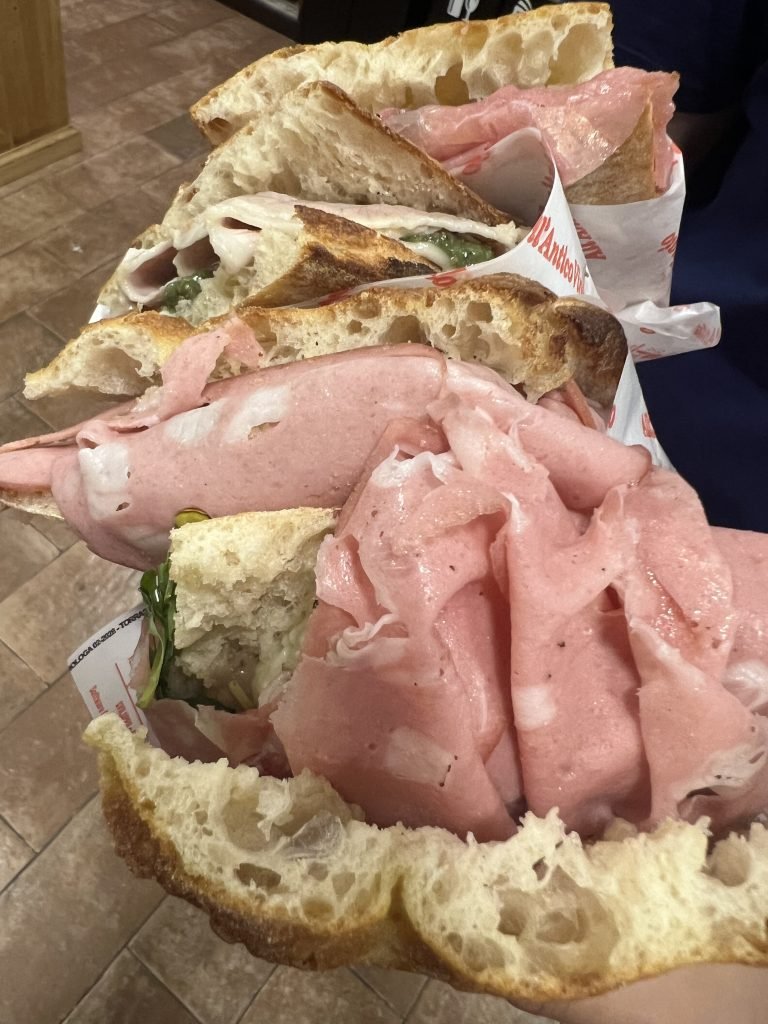
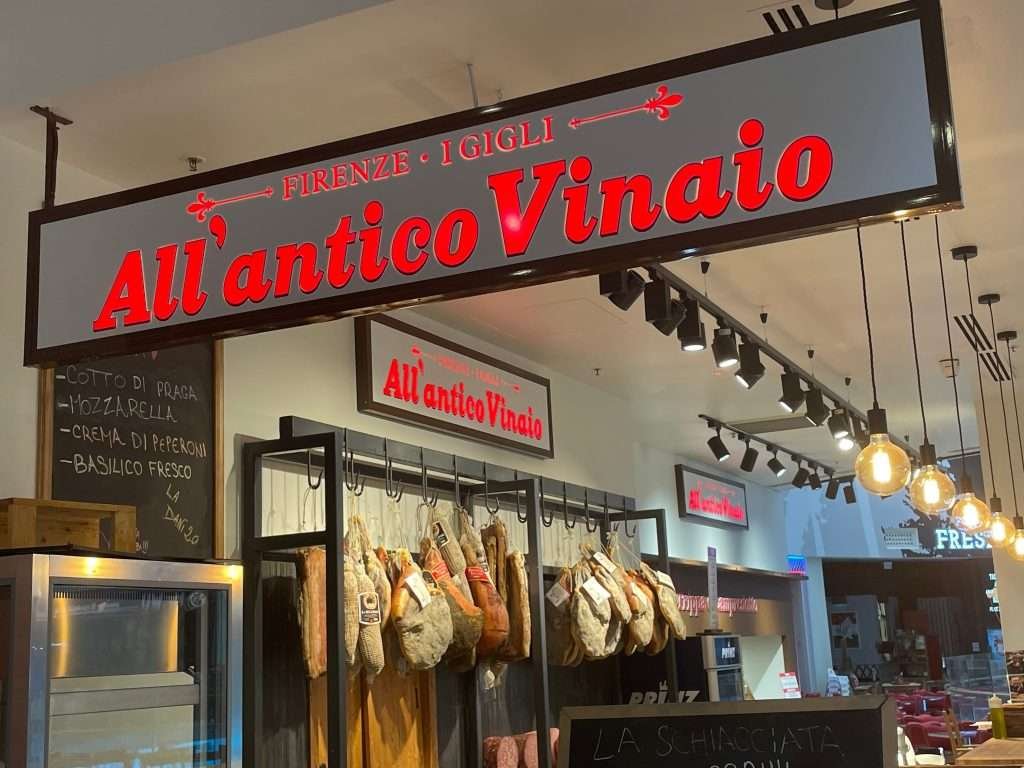
All’Antico Vinaio on Via dei Neri is the most famous sandwich shop in the city – enormous schiacciata sandwiches stuffed with Tuscan meats, pistachio cream, and stracciatella. The quality is real. So is the queue, which routinely runs 45-60 minutes. On a one-day visit, that is a significant portion of your afternoon.
Faster alternatives: I Due Fratellini on Via dei Cimatori – a tiny counter in the wall serving simple, excellent sandwiches and cheap glasses of wine. No seating, no ceremony. Or head toward Santa Croce to Buca Mario or any of the small alimentari along Via dei Neri that sell schiacciata without the wait.
Order finocchiona (fennel-spiced Tuscan salami) with pecorino and truffle cream on schiacciata bread. Sit on a curb, eat quickly, move on.
02:00 PM – The Uffizi Gallery
The Uffizi is U-shaped, built as the Medici administrative offices (uffizi means offices), converted to house their art collection in the late 16th century. It now holds the most important collection of Italian Renaissance painting in existence.
You have pre-booked tickets. Enter, climb to the top floor, and execute a targeted route. Do not attempt to read every label in every room – you will run out of time and mental energy by Room 15.
The four rooms that matter most:
- The Botticelli Rooms (10-14): The Birth of Venus and Primavera. Both are large, both are in better condition than you expect from reproductions. Primavera in particular rewards close attention – the figures on the right side (the Three Graces, Mercury) are separate from those on the left, and art historians have been arguing about whether they form a unified narrative since the 15th century.
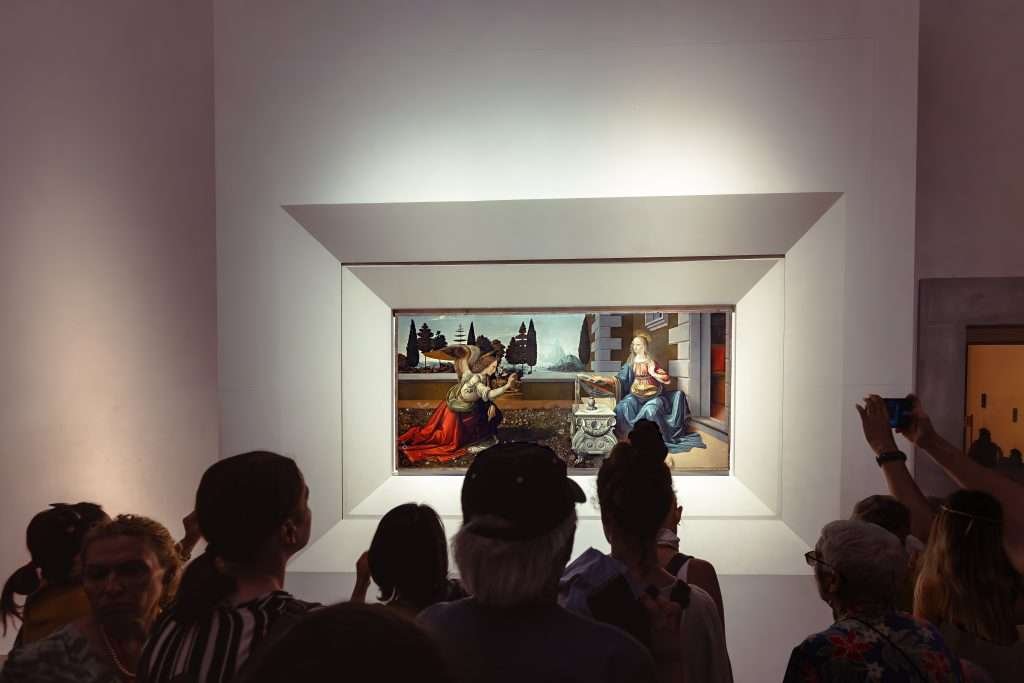
- Leonardo’s Annunciation (Room 79): The extraordinary detail in the angel’s wings – painted feather by feather – and the atmospheric recession of the background mountains. An early work that already shows the scientific precision Leonardo would apply to everything.
- Michelangelo’s Doni Tondo (Room 41): His only surviving finished panel painting. The acidic, almost neon colors and the muscular twisting of the Holy Family are the direct visual precedent for the Sistine Chapel ceiling painted 25 years later.
- Caravaggio’s Medusa (Room 90, lower floor): A painted shield showing the severed head of Medusa. The face is frozen mid-scream. The snakes move. It is deeply uncomfortable to look at, which was entirely the point.
Exit when you have seen these. The corridor windows looking down the Arno are worth a moment on your way out.


04:30 PM – Ponte Vecchio
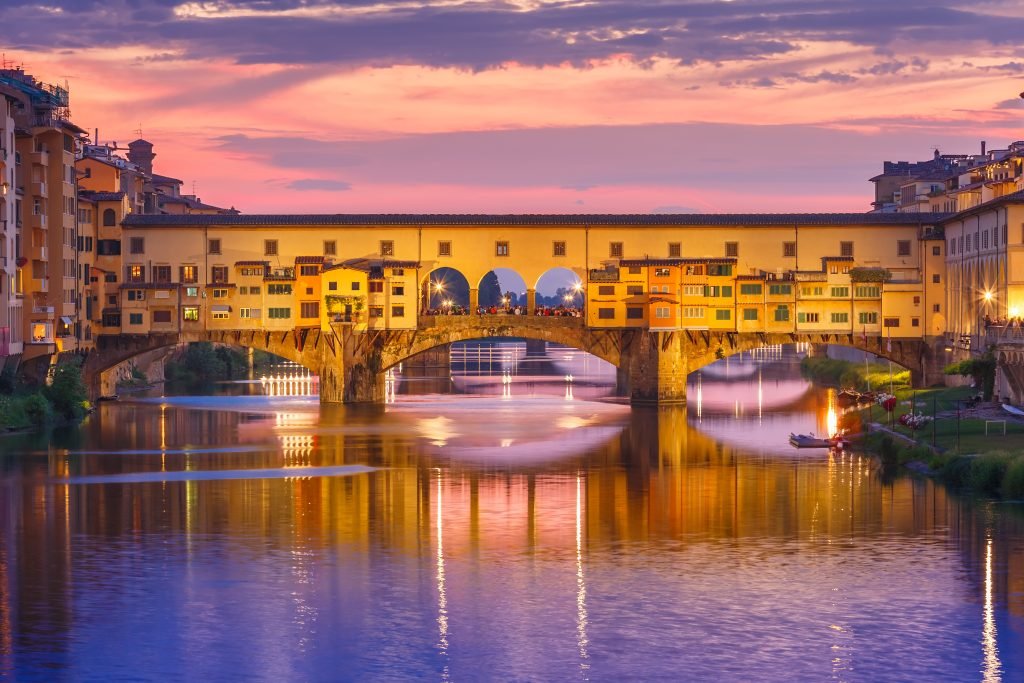
Walk from the Uffizi exit directly to the river. The Ponte Vecchio is immediately visible.
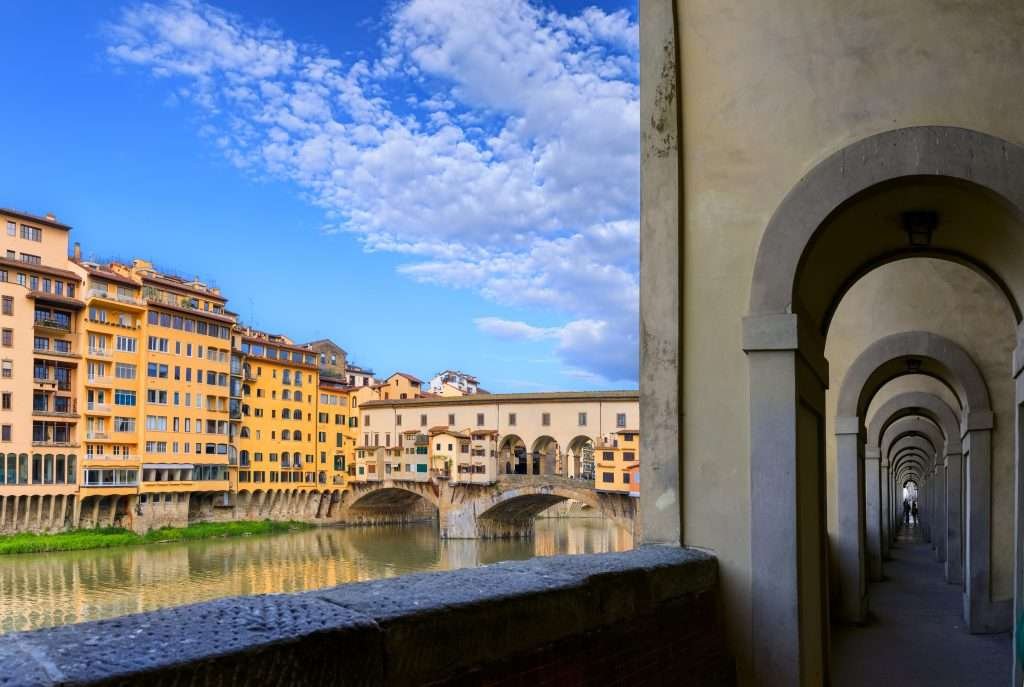
It is the only bridge in Florence that German forces did not destroy in their 1944 retreat – allegedly on direct orders from Hitler, who had visited the city in 1938 and found the view from this bridge specifically striking. Every other bridge was blown. This one was not.
The shops on it are jewelers, as they have been since the 16th century when the Medici evicted the butchers who had previously occupied them – the smell of rotting meat scraps thrown into the river was apparently incompatible with the elevated passage the Medici had built above the bridge to travel between the Uffizi and Palazzo Pitti without contact with the public. Look along the upper level – those windows are the Vasari Corridor.
Walk across. You are now in the Oltrarno.
05:30 PM – The Oltrarno
The Oltrarno (literally “beyond the Arno”) is the artisan quarter – slightly grittier than the museum-heavy north bank, populated by woodcarvers, bookbinders, leather workers, and bars that serve actual Florentines. Walk down Via Santo Spirito and look into the ground-floor workshops.
06:00 PM – Piazzale Michelangelo
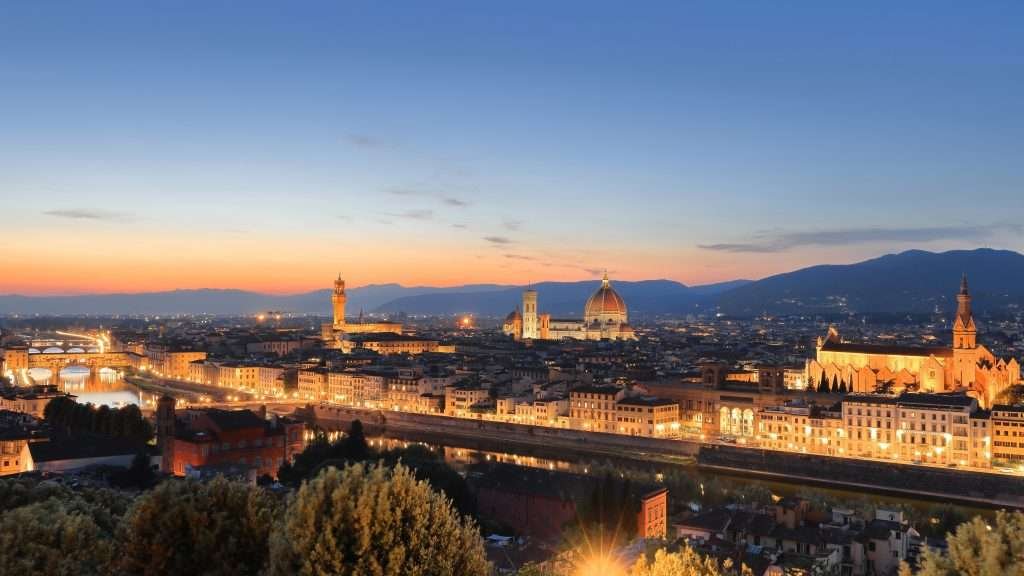
From the Oltrarno, navigate to the base of the hill bordering the city’s south edge and climb the footpath to Piazzale Michelangelo. It is a 15-20 minute uphill walk.
Yes, it is touristy. The view is also genuinely one of the best in any European city. The entire historic center opens up below you – the Arno, the Ponte Vecchio, the Palazzo Vecchio tower, and the Duomo’s dome in the distance. Buy a bottle of local Chianti from one of the kiosks (around €5), find space on the stone steps, and watch the sun drop behind the hills. The light at this hour on the terracotta rooftops is specifically what every photograph of Florence is trying to capture.

08:30 PM – Bistecca alla Fiorentina
Walk back down into the Oltrarno or the Santo Spirito neighborhood for dinner. Book a table in advance at a traditional steakhouse – Osteria di Giovanni, Trattoria dell’Oste, or for a chaotic communal lunch atmosphere, Trattoria Mario near the Central Market (lunch only, no reservations, worth the experience).
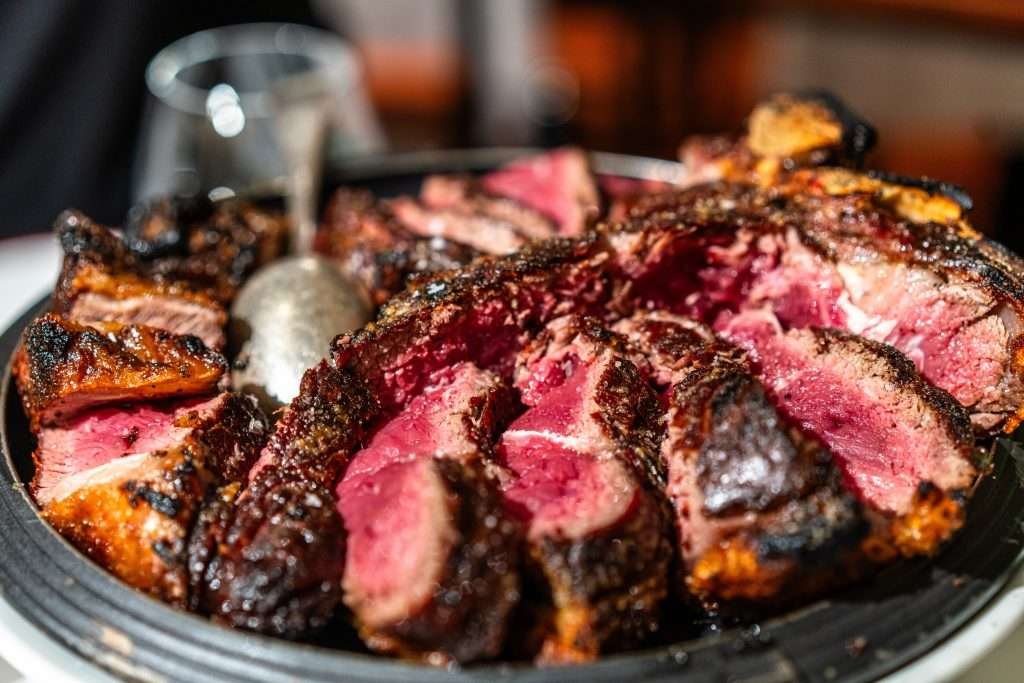
The rules of the Bistecca alla Fiorentina:
- Chianina cattle only – a massive ancient breed from the Tuscan and Umbrian valleys
- Bone-in T-bone, cut 5-6cm thick minimum
- Sold by weight, minimum 800g, usually 1.2-1.5kg – designed for two people
- Cooked over wood fire, served rare (al sangue) – the interior will be lukewarm and bloody
- Do not ask for it medium or well-done. Most kitchens will politely decline
Price: roughly €50-60 per kilogram. Order roasted potatoes and cannellini beans in olive oil alongside it. Drink Chianti Classico or Brunello di Montalcino.

11:00 PM – Gelato
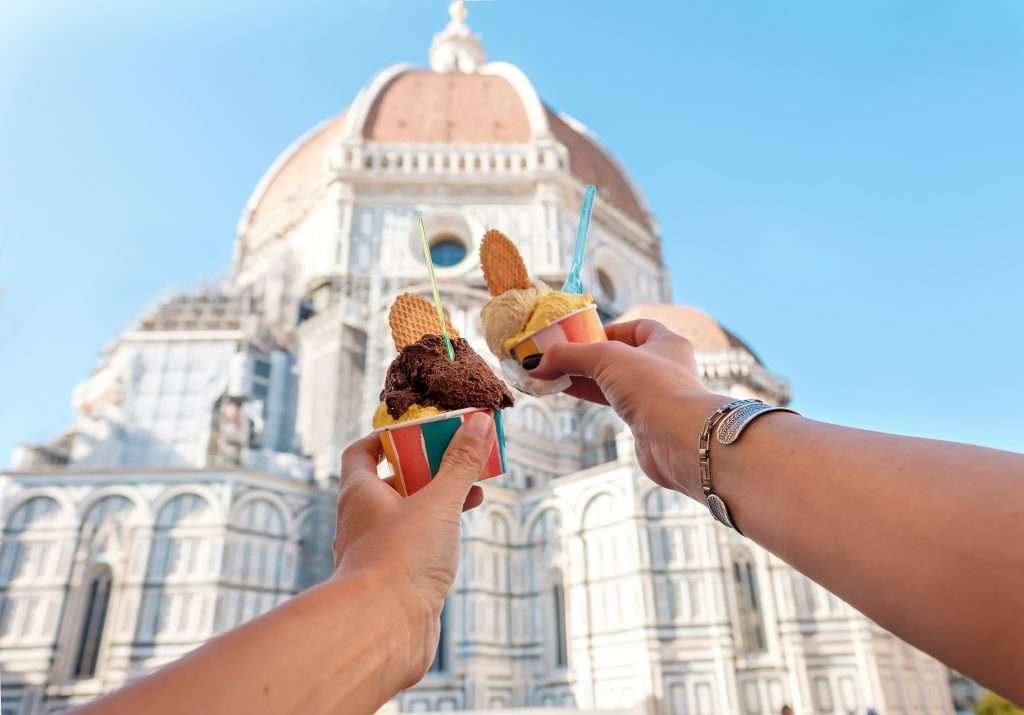
After dinner, walk off the steak through the quiet Oltrarno streets to Gelateria La Carraia on the Ponte alla Carraia, or Gelateria Santa Trinita nearby.
The test for quality gelato: it should be dense and kept flat in metal tubs, often covered with lids to maintain temperature. If it is whipped into towering neon-colored peaks, walk past it. Order dark chocolate and pistachio, cross back over one of the bridges, and walk along the Arno in the dark.

Is one day actually enough?
For a first visit, one day covers the non-negotiable essentials if you are disciplined with your time. For anything beyond the core circuit – the Pitti Palace, Boboli Gardens, Santa Croce frescoes, the Chianti hills – you need three days minimum. Our 3 days in Florence itinerary covers the full picture.
Do I really need to book months ahead?
Yes. The Accademia in particular sells out far in advance during peak season. For everything the city has to offer and how booking works for each, our 25 best things to do in Florence guide has the current ticketing details.
Dress code for the Duomo?
Shoulders and knees covered are required to enter the Cathedral. Pack a lightweight scarf in your bag regardless of the temperature – the guards enforce this at the door.
How do I get around?
On foot only. The entire historic center is pedestrianized. Taxis cannot enter. There is no metro. The walk from the Accademia to Piazzale Michelangelo at the end of the day is around 2km.
Where should I base myself?
For a one-day visit, staying near the Duomo or Santa Maria Novella train station minimizes transit time. Our where to stay in Florence guide covers the neighborhoods and the specific elevator/AC considerations that matter in the city’s historic palazzos.
Arriving from Rome?
Take the Frecciarossa or Italo high-speed train from Roma Termini to Firenze Santa Maria Novella. Journey time: 1 hour 25-35 minutes depending on the service. Book 3-4 weeks ahead at trenitalia.com or italotreno.it for fares starting around €20-25 each way. Arrive at the station, walk 10 minutes, and you are at the Accademia. If you have more time in Tuscany, our day trips from Florence guide covers Chianti, Siena, and Cinque Terre.