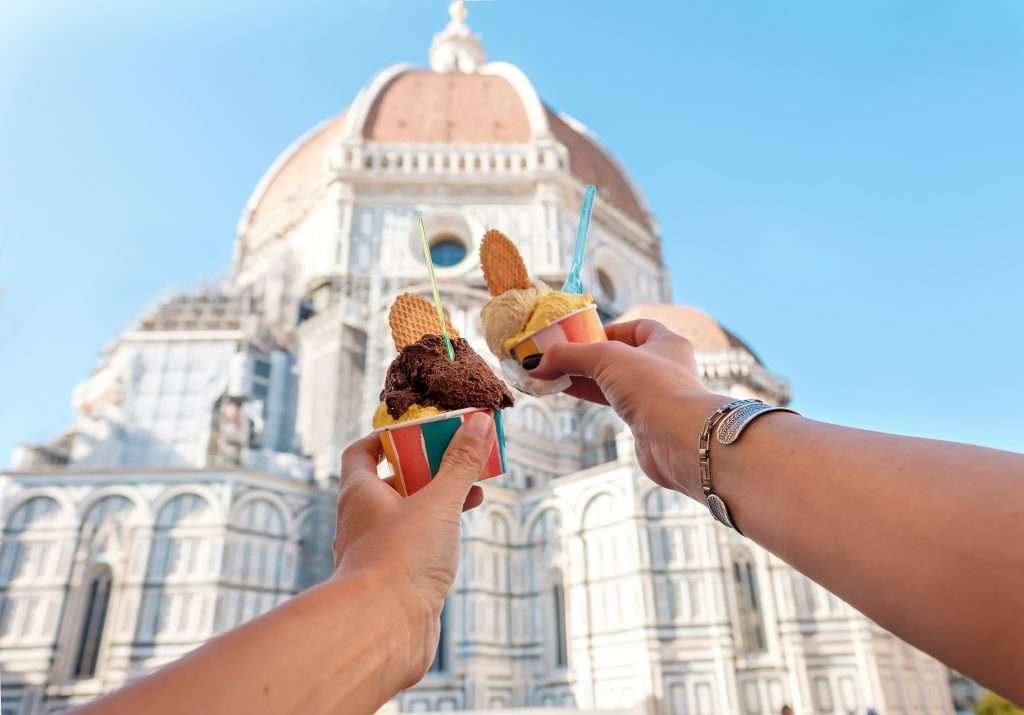
Florence on a budget is harder than it sounds – this city is specifically designed to extract money at every turn. Not because it’s inherently expensive, but because the tourist infrastructure is specifically designed to extract money at every turn. If you’ve already read the things to do in Florence guide and you’re now trying to figure out how to actually afford them, this is where to start. A cappuccino at an outdoor table in Piazza della Signoria runs €8 or more. Walking up to the Uffizi without pre-booked tickets costs €29 per person and still puts you at the back of a two-hour line.
This guide is for people executing a 1 day in Florence itinerary or full 3 days in Florence who need to know exactly how to avoid those traps. It covers the free museum windows, where to eat for under €8, and the two-floor rule at the Mercato Centrale that most visitors never figure out.
The Ticketing Trap and the Free Masterpieces
In 2026, a standard single-entry Uffizi ticket purchased in advance costs €29. Add the Accademia Gallery (Michelangelo’s David) and the Pitti Palace and you’re approaching €70 per person before you’ve eaten a single meal.
If that’s not in your budget, you have two real options.
Option 1: Domenica al Museo (Free First Sundays)
The Italian Ministry of Culture runs a nationwide initiative called Domenica al Museo. On the first Sunday of every month, entry to all state-run museums is free – including the Uffizi, the Accademia, the Pitti Palace, and the Boboli Gardens.
The catch: you cannot book in advance. No reserved time slot means standby queues that form early. To see the David for free, be in line by 6:45 AM. Arrive at 10:00 AM and the line wraps around multiple city blocks. You’re trading time for money – decide which is worth more to you before committing.
Option 2: Free Art Outside the Museums
You don’t need to buy a ticket to stand in front of major Renaissance work.
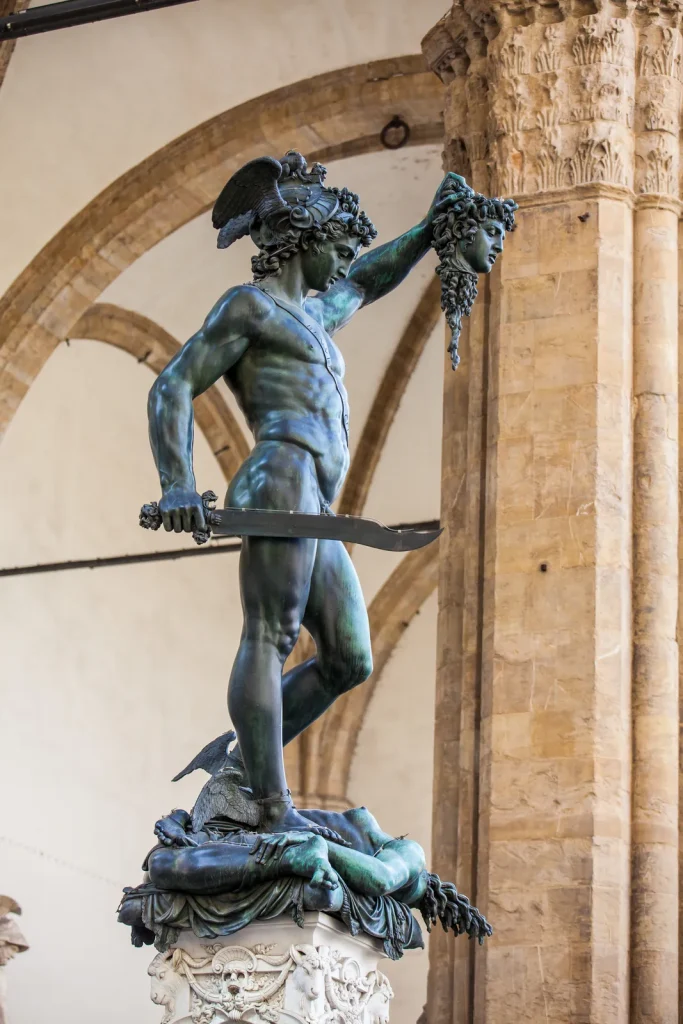
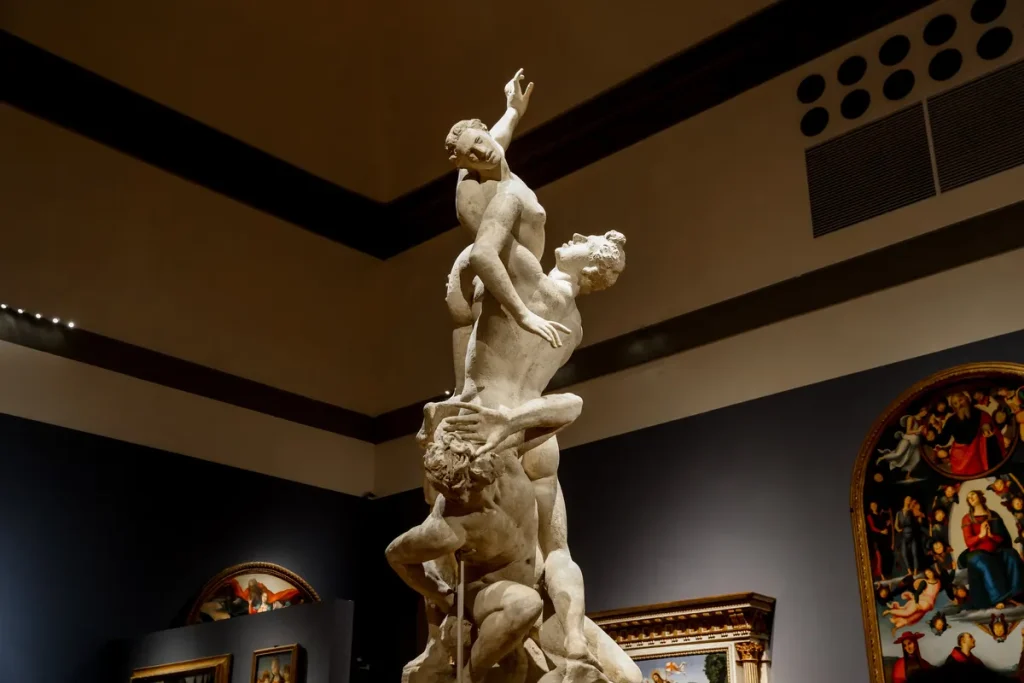
- Loggia dei Lanzi (Piazza della Signoria, free): An open-air pavilion containing Cellini’s bronze Perseus with the Head of Medusa and Giambologna’s Rape of the Sabine Women. No ticket, no line, no closing time.
- Church of Santa Trinita (free): Domenico Ghirlandaio’s frescoes in the Sassetti Chapel are here and consistently overlooked by tourists doing the standard museum circuit.
- Basilica of San Miniato al Monte (free): An 11th-century Romanesque church on the hill above the city with a mosaic apse that most visitors never see because they stop at Piazzale Michelangelo below it.
Street Food: Under €8 Per Meal
Do not sit down for lunch in the historic center. You will be charged a coperto – a mandatory cover charge of €2 to €4 per person just for occupying the table – on top of €18 pasta. Florence has a street food economy that feeds you far better for a fraction of the cost.
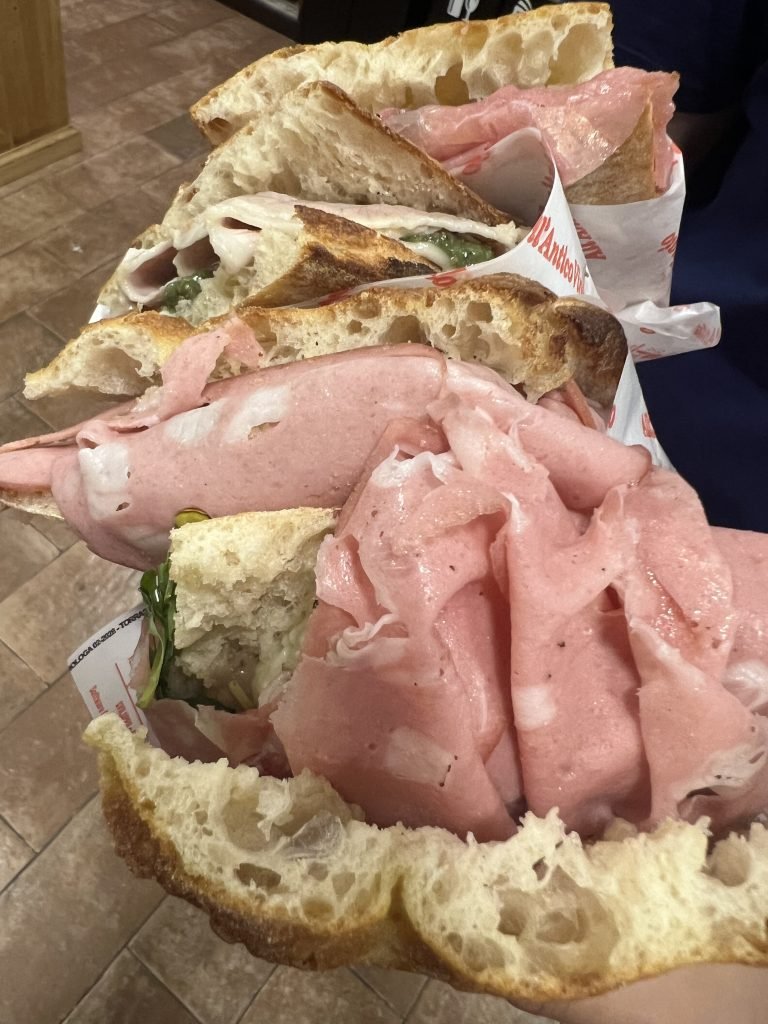
Schiacciata
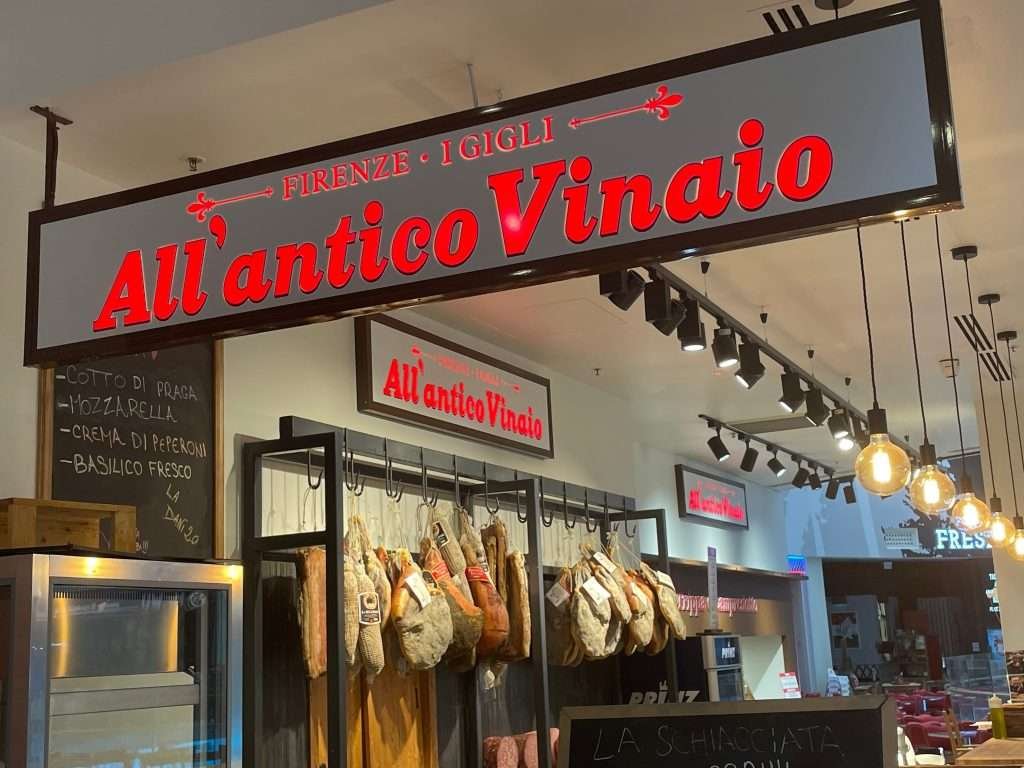
Schiacciata is a Florentine flatbread – thinner and saltier than focaccia, drenched in olive oil, and stuffed with cured meats and cheese. All’Antico Vinaio is the famous one, and the sandwiches (€7-10) are genuinely good. The problem is the line, which runs over an hour in summer.
Skip it. Go to I Due Fratellini near Piazza della Signoria instead – a literal hole in the wall that has been selling sandwiches from the same address since 1875. A sandwich here costs €5; a small glass of wine to go with it costs €2. You eat standing on the sidewalk. (If you want to sit, the Piazza della Repubblica benches are a 4-minute walk.)
Lampredotto
This is the cheapest, most authentically Florentine meal you can eat. Lampredotto is the fourth stomach of a cow, slow-boiled in vegetable broth, chopped, and served on a roll that’s been dipped into the same hot broth. It comes with salsa verde – a sharp parsley and caper sauce – and chili oil on request.
Cost: around €5. It is heavy, messy, and genuinely excellent.
Buy it from a trippaio cart. Navigate to Sergio e Pierpaolo Pollini Lampredotto on Via dei Macci, or find the Trippaio del Porcellino near the bronze boar statue at Mercato Nuovo. There is no indoor seating. You stand at the cart with napkins and eat it the way the local tradesmen do.
If you want the full picture before you go, the Florence food guide breaks down every neighborhood and meal type – but for pure budget efficiency, lampredotto is the answer.


The Mercato Centrale: The Two-Floor Rule
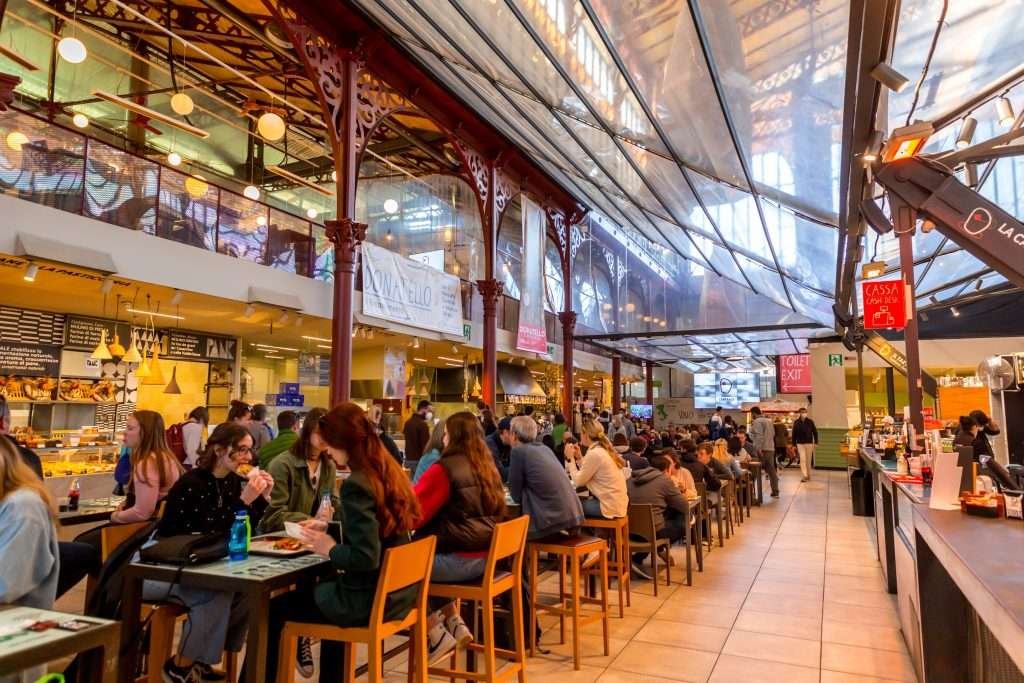
The Mercato Centrale in the San Lorenzo neighborhood is a large iron and glass market building, and most visitors either skip it entirely or wander in without understanding how it works. The two floors operate on completely different schedules and price structures.
Ground Floor – The Traditional Market
This is the raw, loud, working market where Florentines buy fresh produce, pecorino, and butchered wild boar. Hidden among the butcher stalls is Da Nerbone, which has been serving food from this location since 1872. A plate of pasta or a boiled meat sandwich plus a small cup of house wine costs under €10.
Critical logistics: the ground floor closes at around 2:00 PM. If you show up for dinner, the metal grates will be locked.
Top Floor – The Modern Food Court
Renovated in 2014 into a two-story artisan food court, the upper level has stalls selling truffle pasta, wood-fired pizza, cheese boards, and more. Individual dishes run €12-14. The key advantage for budget travelers: no coperto. You order at the stall, carry your food to a communal table, and that’s it.
The top floor stays open until midnight every day – making it a reliable fallback if you miss the Italian dinner window or need to feed a group that can’t agree on cuisine. If you’re planning with early starts, this is also the easiest dinner before an early night.


The Aperitivo Dinner Hack
Between 6:30 PM and 8:30 PM, bars across the city offer what’s called Aperitivo a Buffet. Order one cocktail – typically €12 to €15 at the premium spots – and you get unlimited access to a food spread.
In Florence, this isn’t crisps and olives. A good aperitivo buffet runs to cold pasta salads, grilled vegetables, focaccia, cured meats, and mini pizza. By choosing a generous buffet around 7:30 PM and loading a plate properly, you can replace a full sit-down dinner for the price of a single drink.
The best spots for this are in Santo Spirito and around San Frediano (both in the Oltrarno, across the river) – more local, more generous portions, and significantly cheaper than anything near Piazza della Repubblica.

Transit and Accommodation
On foot only. Florence’s historic center is about 25 minutes across on foot from the Accademia in the north to the Pitti Palace in the south. There is no metro. Taxis cannot navigate the narrow streets efficiently and charge a premium for sitting in delivery traffic. Walk.
Where to base yourself:
- The Oltrarno: The artisan quarter across the Arno is grittier and significantly cheaper than the northern bank. Look for guesthouses near Piazza di Santo Spirito. It’s also the best neighborhood for the aperitivo spots mentioned above.
- Santa Maria Novella: Unattractive, functional, and the best location if you’re running on high-speed trains. Budget hotels cluster immediately around Firenze SMN station.
Free water: Florence has filtered water kiosks in public squares called Fontanelli ad Alta Qualità. The one behind the Palazzo Vecchio in Piazza della Signoria dispenses chilled still water for free and sparkling water for a few euro cents. Bring a reusable bottle.
Free Views, Sunsets, and the Wine Windows
You don’t need to pay €20 to climb the Duomo or the Campanile to get a view. All three of the best vantage points in the city cost nothing.
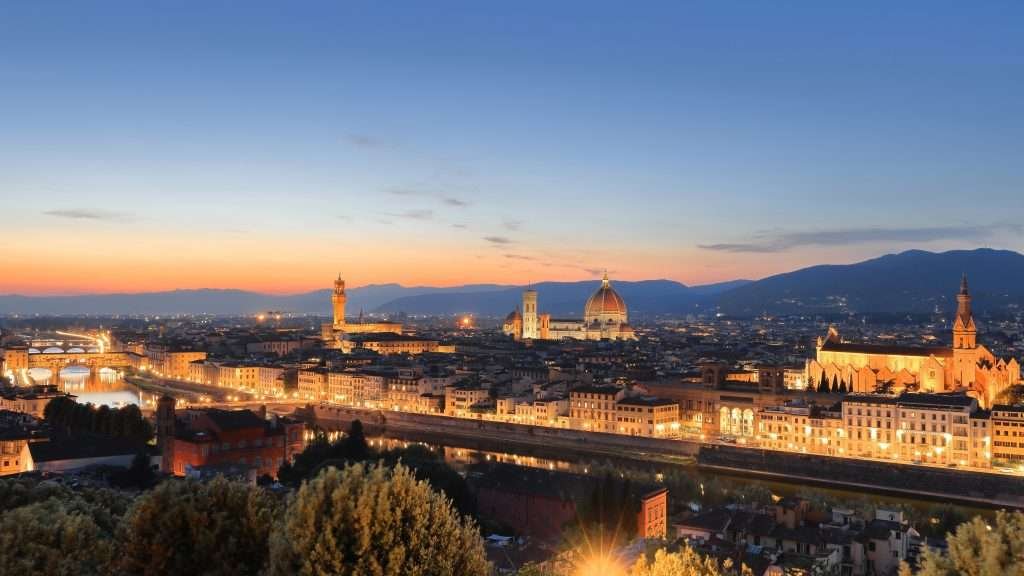
Piazzale Michelangelo: The most famous panoramic terrace in Tuscany. Walk across the river and follow the footpaths uphill. Arrive one hour before sunset – the view of the red-tiled rooftops and the cathedral dome in the low light is worth the climb. Gets crowded, but not impossibly so if you’re not there at peak summer.
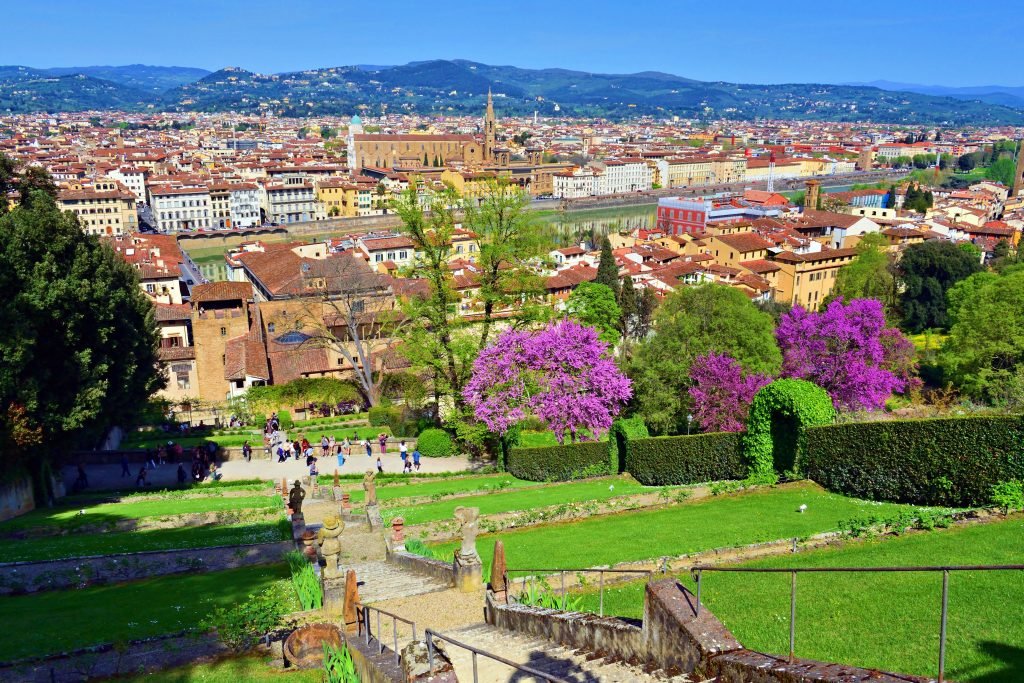
Giardino delle Rose: On the same hill, just below Piazzale Michelangelo. Free to enter, quieter, framed by rose bushes and strange bronze sculptures by Jean-Michel Folon. The city view is slightly lower but more intimate. Most people stopping at the piazza above never come here.
San Miniato al Monte: Keep climbing past both. The terrace in front of this ancient basilica is the highest vantage point on the south side of the river, and the crowd thins dramatically with every extra meter of elevation. This is also the free church mentioned in the art section above, so the detour covers two things.
The Wine Windows (Buchette del Vino)
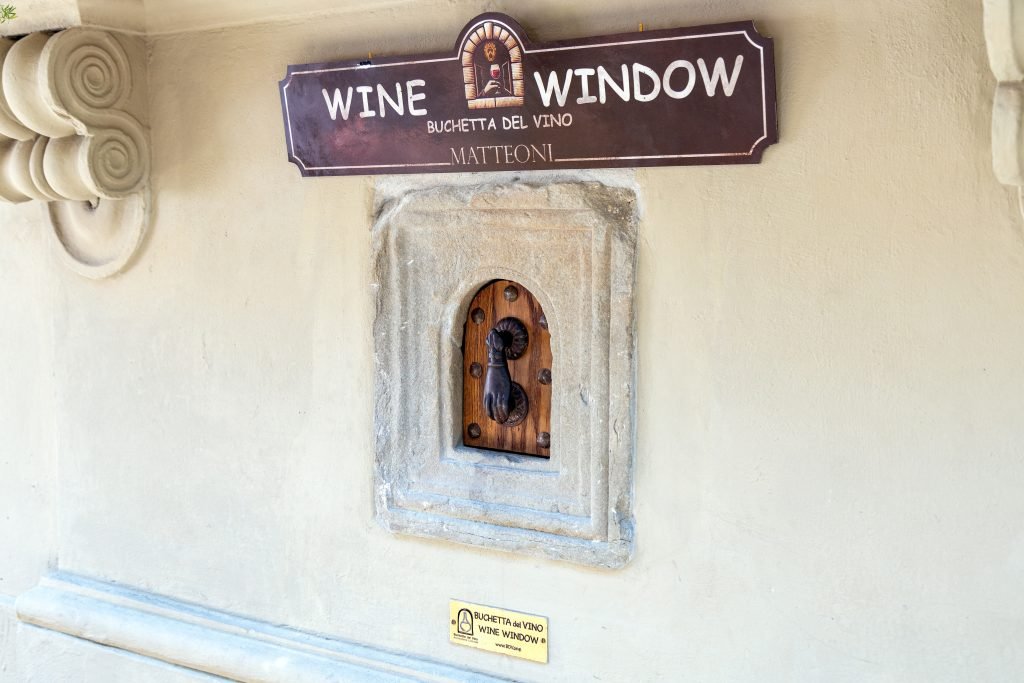
In the 17th century, wealthy Florentine families built small arched windows directly into the stone walls of their palaces to sell surplus wine from their estates without paying city taxes. During plagues, they served as socially distanced transaction points. Several have been reopened by restaurants operating inside those same buildings.
The experience: walk to Babae in the Oltrarno or the window at Osteria delle Brache in Piazza Peruzzi, ring the bell, hand over €3-4, and a glass of local Chianti comes through the hole in the wall. You drink it on the cobblestones. It is a 400-year-old budget drinking ritual and one of the few genuinely irreplaceable things in this city.

Do I need to tip in Florence?
No. Waiters in Italy are paid a living wage. If you sit down, you’ll see a coperto (€2-4) on the bill for the table and bread – that covers it. Leaving a few coins for genuinely good service is fine; 15-20% is not expected and not normal.
Cash or card?
Card is fine for almost everything, including a €5 sandwich. Use a no-foreign-transaction-fee card to avoid ATM conversion markups. Keep around €20 in small coins for public toilets and street vendors that don’t take card.
Are the free walking tours worth it?
The tours themselves are good – several companies run departures from Piazza Santa Maria Novella daily. They’re not technically free: guides work for tips only, and the expected amount is around €5-10 per person at the end. Worth it if the timing works.
Can I drink the tap water?
Yes. The tap water in Florence is safe and regulated. Ask for una brocca d’acqua di rubinetto at any restaurant and they’re required to provide it. Don’t pay €3 for a branded bottle.
Cheapest month to visit?
Late January and February. Cold, occasionally wet, and the crowds are gone. Flights from most European hubs drop significantly, and boutique hotels that charge €250 a night in July often go for under €100.