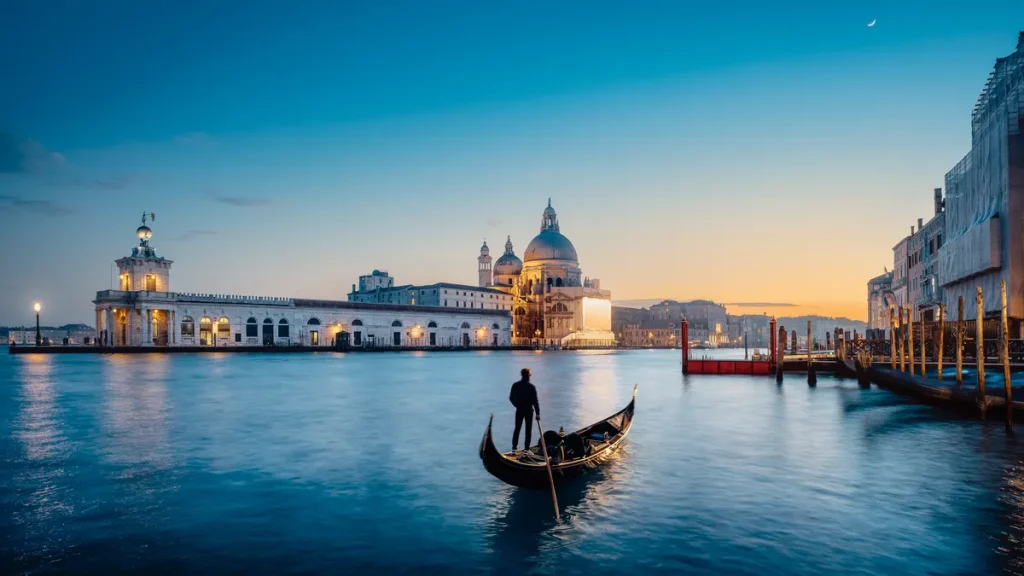
3 days in Venice is the difference between surviving the city and actually seeing it. You rush St. Mark’s Square with 40,000 other people, overpay for a panino, and leave exhausted. Three days is a different trip entirely. It’s enough time to hit the heavy monuments tactically, escape to the outer islands, and experience what Venice actually is after midnight when the day-trippers disappear.
Venice doesn’t operate like a normal European city. No Ubers. No buses. 435 bridges, almost all with steep stone stairs. Arrive unprepared and you’ll be physically wrecked and financially gutted by day two.
This itinerary tells you exactly where to go, when to show up, and what to avoid.
Pre-Trip Logistics
Lock these down before you arrive.
- Luggage: You cannot wheel a hard-shell suitcase over Venetian bridges. Pack a travel backpack, or pay for a private water taxi to deliver you directly to your hotel’s water entrance.
- Transit: A single ACTV vaporetto ride costs €9.50. Buy a 72-Hour Unlimited Pass (roughly €45) the moment you arrive. It covers the entire lagoon network and pays for itself by day two.
- 2026 Access Fee: Day-trippers pay a daily fee on peak dates. Overnight guests are exempt – but you must register your stay on the official Venice portal to generate a QR exemption code. Spot-checks happen at the train station.
- Where to sleep: Skip San Marco. It’s the loudest, most expensive, most crowded district. Stay in Cannaregio (residential, good food, local atmosphere) or Dorsoduro (university district, wide promenades, quieter streets). Full breakdown in our Venice accommodation guide.
Day 1: The Monuments and The Bacaro Crawl
Hit the heaviest, most crowded part of the city first. Start early.
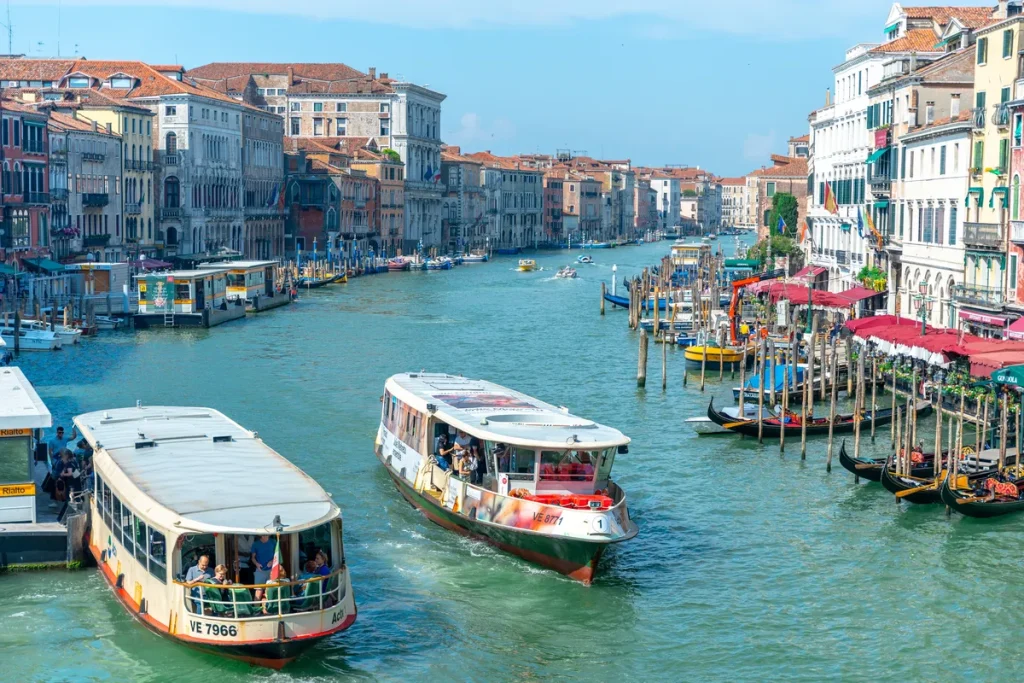
08:30 AM – Grand Canal by Vaporetto
Board Line 1 from Santa Lucia station. Stand at the front or rear deck – don’t sit inside. The Grand Canal is a 3.8-km inverted S-curve lined with palazzos that have been here since before Columbus. You’ll pass the Ca’ d’Oro and slide under the Rialto Bridge. Get off at San Marco Vallaresso.
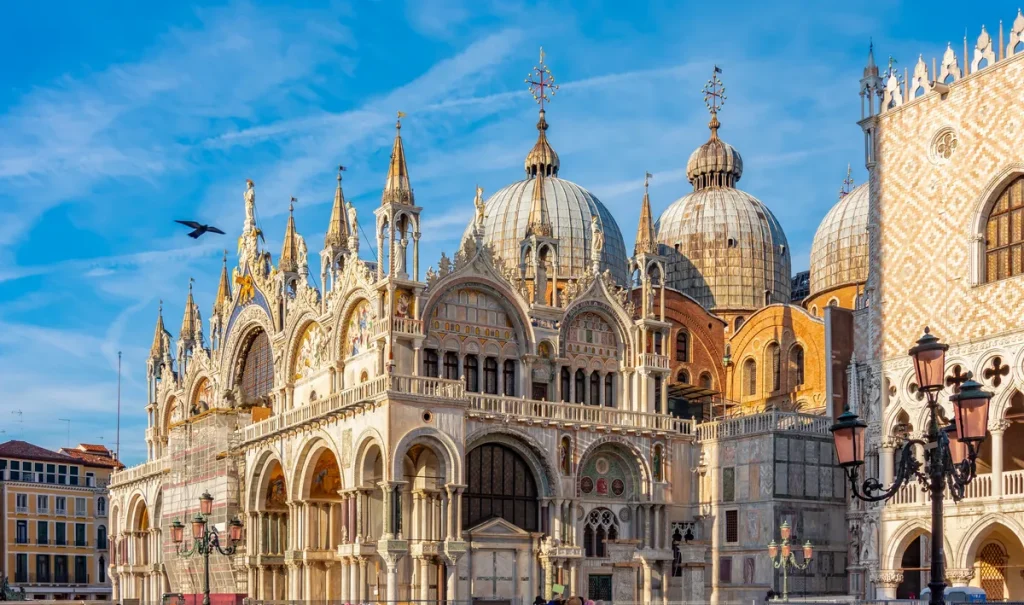
09:00 AM – St. Mark’s Basilica
8,000 square meters of gold mosaics and treasure looted during the Fourth Crusade. It’s worth every minute inside.
- Book skip-the-line entry online, weeks ahead. Without it, you’re standing in an unshaded plaza queue for two hours.
- Dress code is enforced. No bare shoulders. No shorts or skirts above the knee. Guards turn people away at the door without exception.
- Pay for the Loggia dei Cavalli (upper balcony). The original bronze horses looted from Constantinople are up there, and it’s the best elevated view of the piazza.

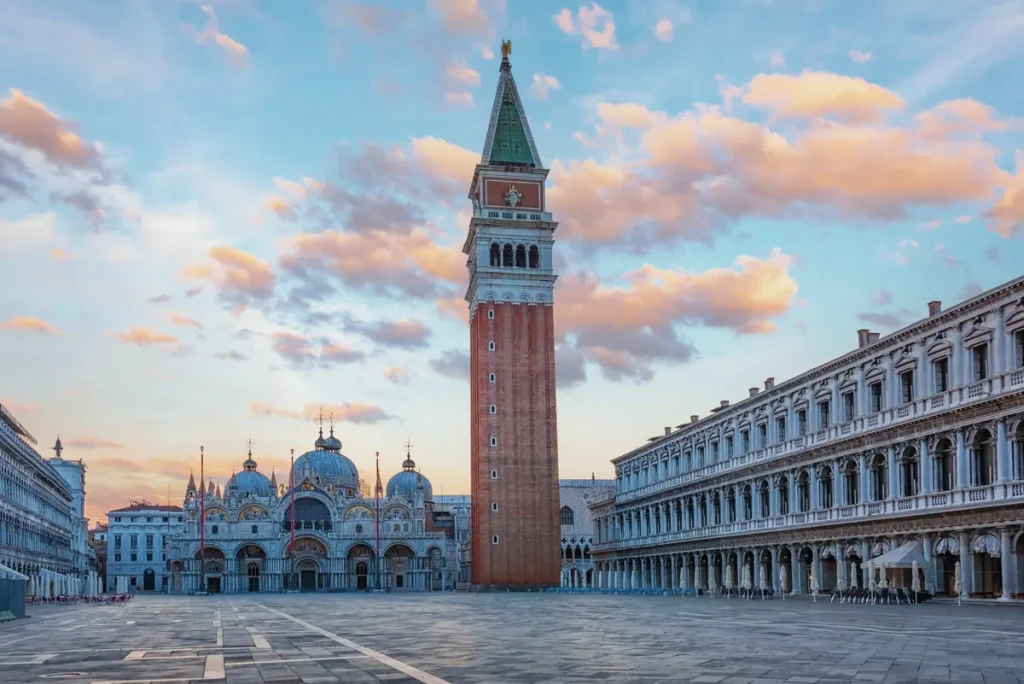
10:30 AM – The Campanile
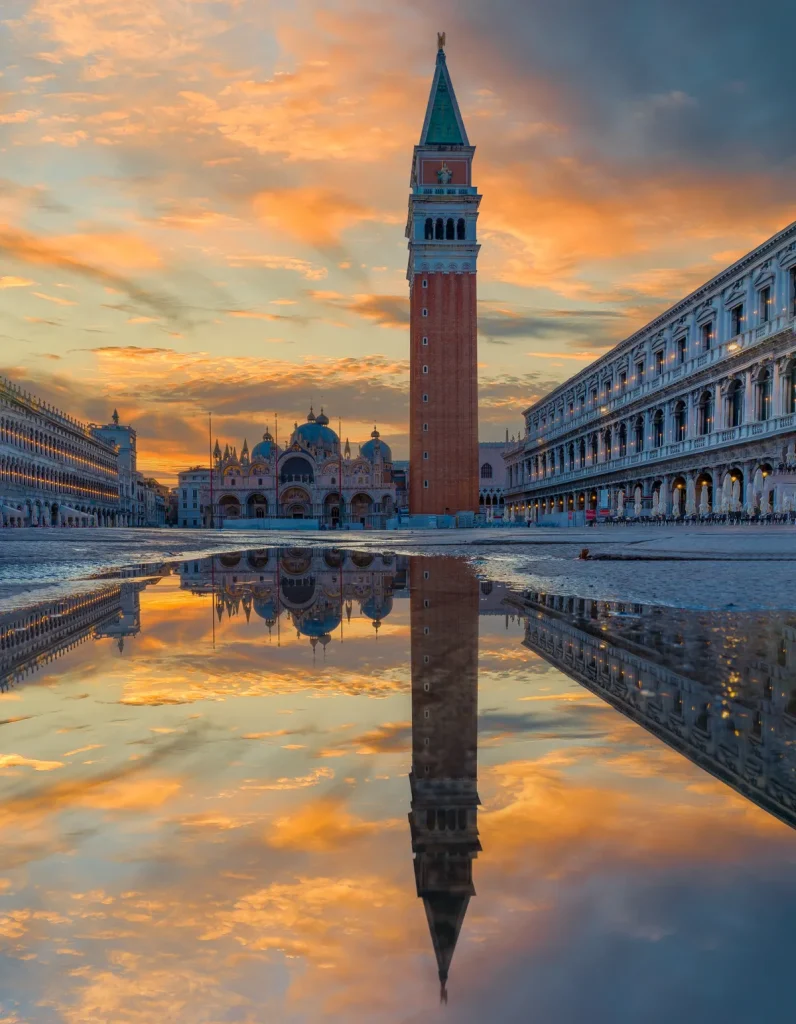
The brick bell tower directly across from the Basilica. Unlike Florence or Rome, you don’t climb stairs – Venice installed a lift. Book a timed-entry ticket online. From the top: red rooftops, canal bends, and on a clear day, the snow-capped Dolomites.
11:30 AM – Doge’s Palace
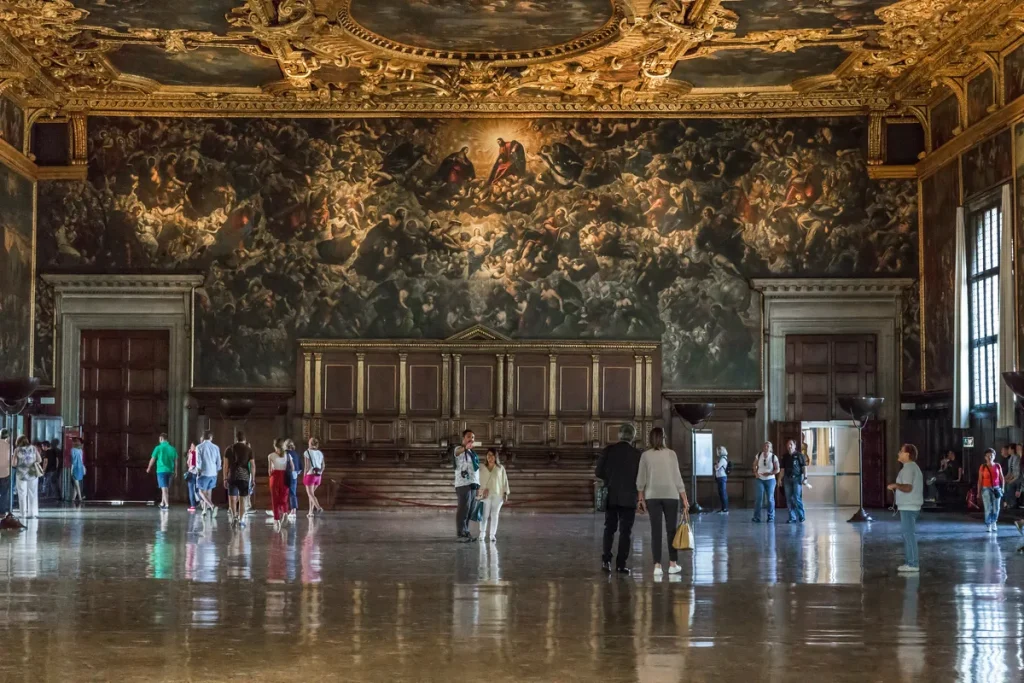
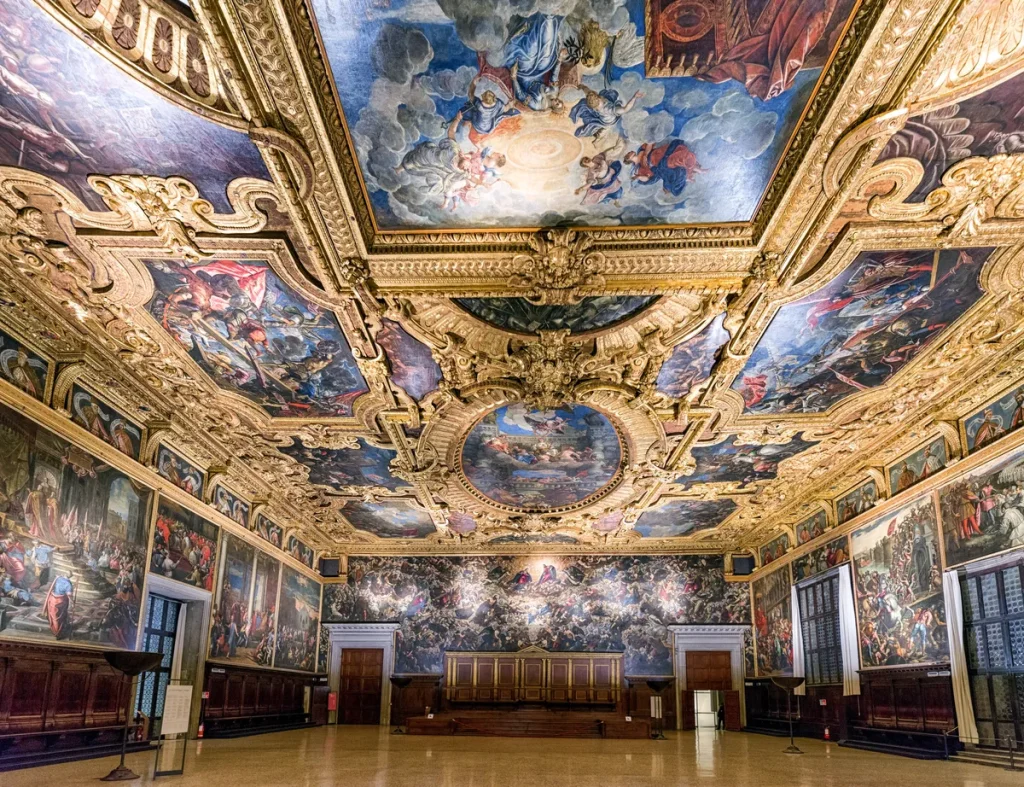
The seat of the Doge and the feared Council of Ten. Tintoretto paintings the size of tennis courts cover the walls.
Skip standard admission. Book the Secret Itineraries (Itinerari Segreti) guided tour instead. It gets you into the hidden administrative offices, the torture chambers, and the attic prison cell Casanova escaped from. The tour ends inside the Bridge of Sighs – not looking at it from outside, but walking through it.


01:30 PM – Rialto Bacaro Crawl
By early afternoon, San Marco is a disaster. Cross the Rialto Bridge into San Polo and eat standing up.
A bacaro is a tiny Venetian wine bar with a glass counter covered in small plates of food. This is how locals eat lunch. For a full rundown of what to order across the city, see our Venice food guide.
- Order: baccalà mantecato (whipped salt cod on bread), fried polpette (meatballs), marinated octopus. Each piece costs €2-4.
- Drink: Order an ombra (small house wine) or a Select Spritz. Skip Aperol – Select is the ruby-red bitter liqueur that actually originated in Venice. Less sweet, served with a large green olive.
- Go to: Cantina Do Mori (founded 1462, the oldest bar in Venice) and All’Arco (right next to the Rialto fish market – the seafood on the counter is from that morning).

04:00 PM – Get Lost in San Polo
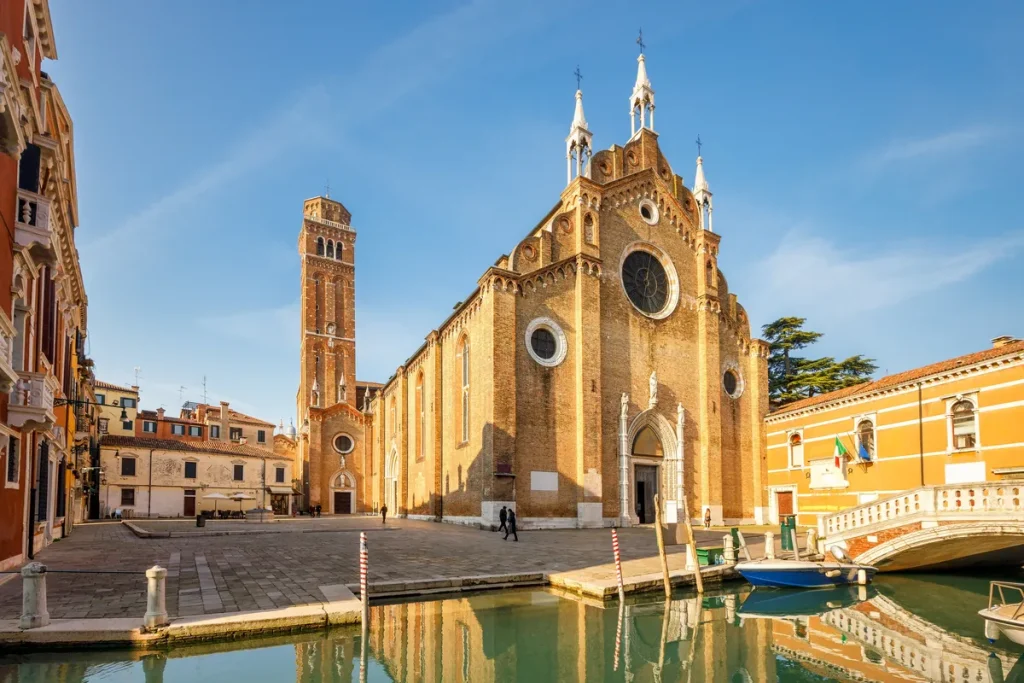
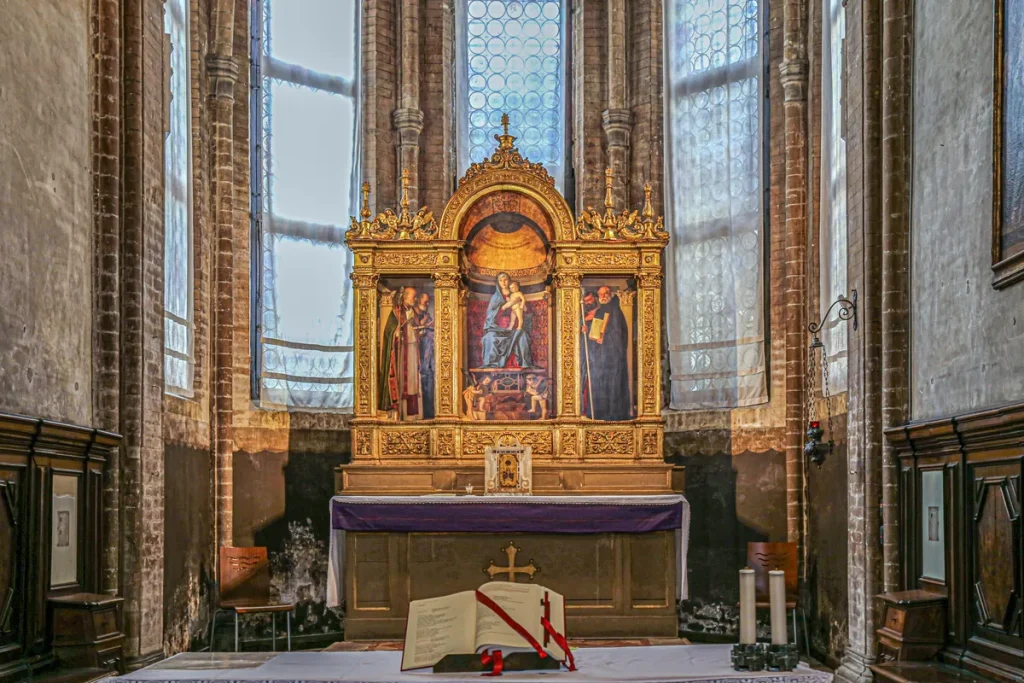
Put the map away. Follow the yellow directional signs painted on building walls. Wind through San Polo and Santa Croce. Stop at the Basilica dei Frari – a plain Gothic brick church that contains Titian’s Assumption of the Virgin and Titian’s own tomb. The contrast between the stripped-back exterior and the painting inside is worth it.
07:30 PM – Dinner in Cannaregio
Walk north to Cannaregio. Avoid any restaurant with a waiter standing outside pulling people in.
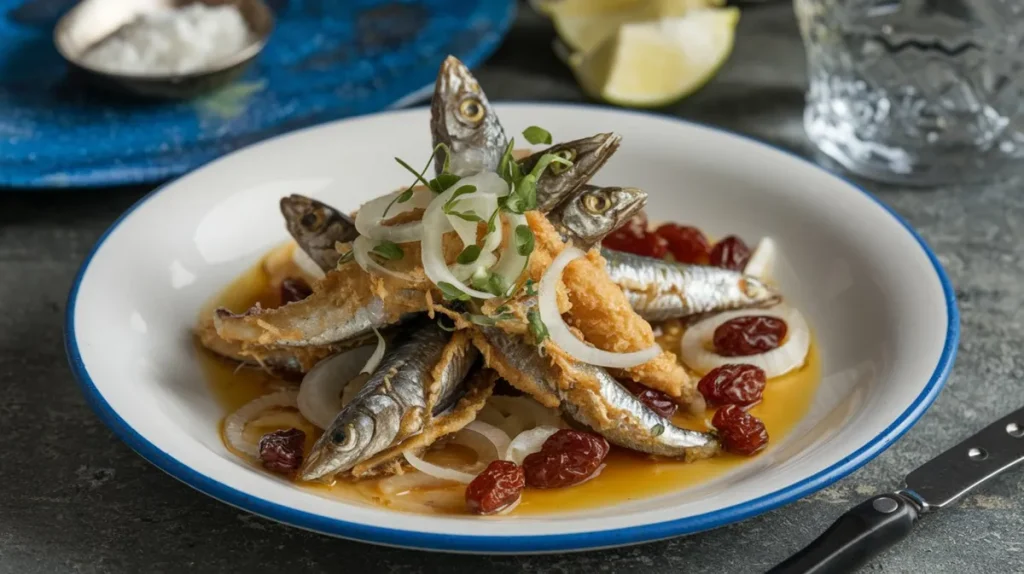
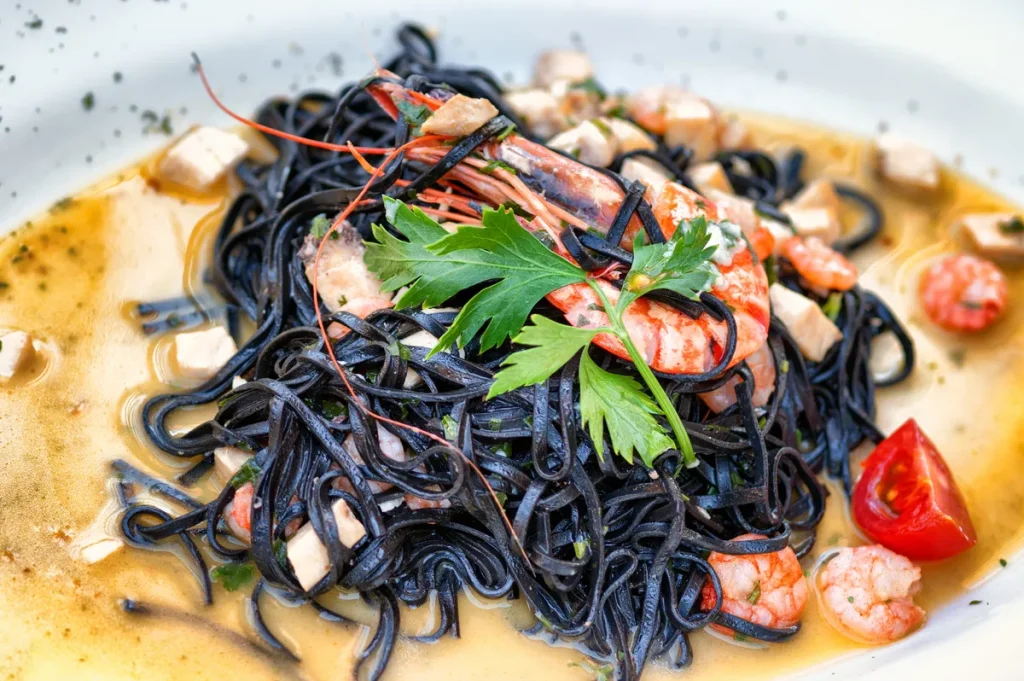
Find a table at an osteria on the Fondamenta della Misericordia. Order lagoon food: Sarde in Saor (sardines in a marinade of caramelized onions, pine nuts, and vinegar) and Spaghetti al Nero di Seppia (squid ink pasta). The ink turns your teeth black. That’s fine.
Day 2: Murano, Burano, and Torcello
Venice is an archipelago. Today you leave the main island and cover three of the outer islands using your vaporetto pass.
09:00 AM – Murano
Go to Fondamente Nove on the northern edge of the city. Board Line 4.1 or 4.2.
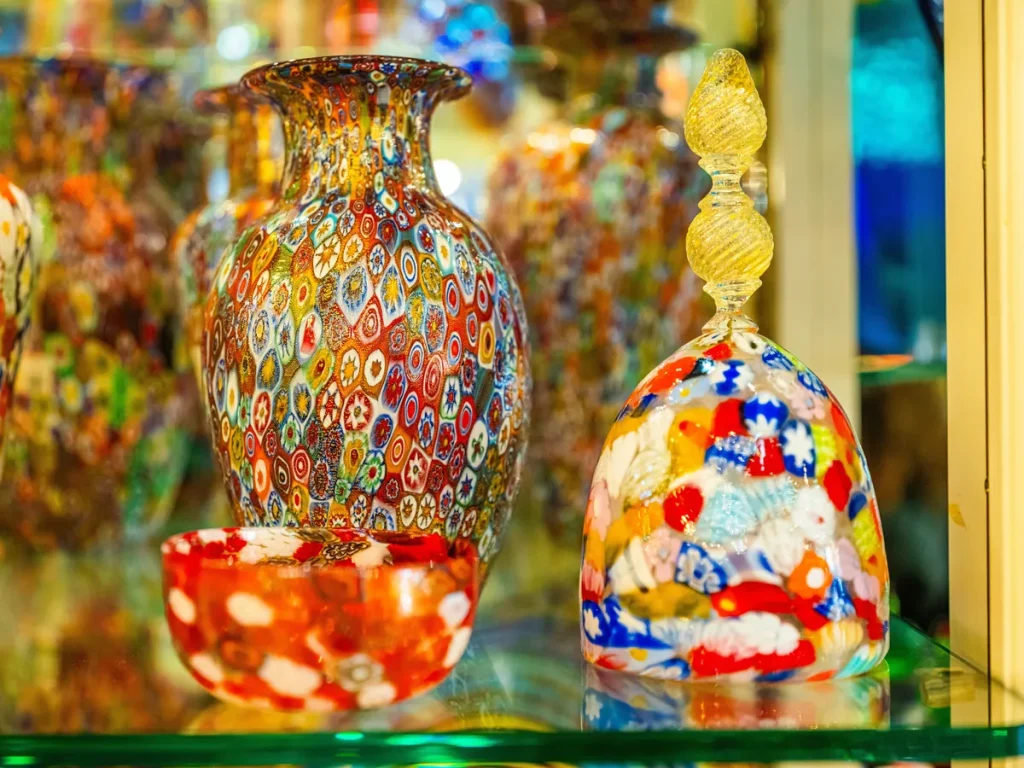
In 1291, the Republic ordered all glassmakers to relocate to Murano – partly to stop them burning down the wooden city, partly to keep the trade secrets contained on an island they couldn’t easily leave.
- Avoid: Anyone outside your hotel offering a “free boat ride to Murano.” They take you to a specific factory, lock the doors, and pressure-sell overpriced glass.
- Do this instead: Take the public vaporetto. Walk the island independently. Small workshops charge €3 to watch a master blower pull a glowing mass of silica from a 1,000°C furnace and shape it into a horse in under sixty seconds.


11:30 AM – Burano
From Murano Faro, board Line 12. The crossing takes 45 minutes across open lagoon.
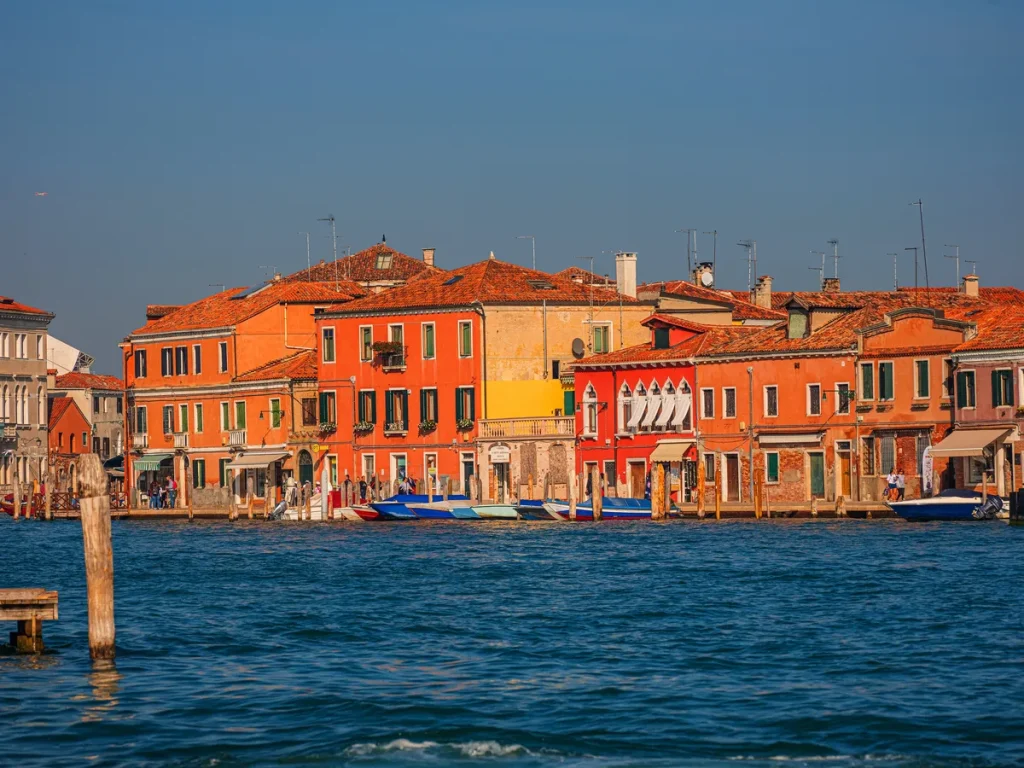
Burano’s houses are painted in saturated neon colours – pink, yellow, cobalt, orange. The story is that fishermen painted them bright so they could navigate home through the winter fog. Whether or not that’s true, the effect is genuinely extreme.
- Lunch: Order Risotto al Gò. It’s made with the broth of the ghiozzo – a small, ugly fish native to the Venetian lagoon. You won’t find it anywhere else. It’s creamy, saline, and local in a way that most Italian food on the tourist trail isn’t.
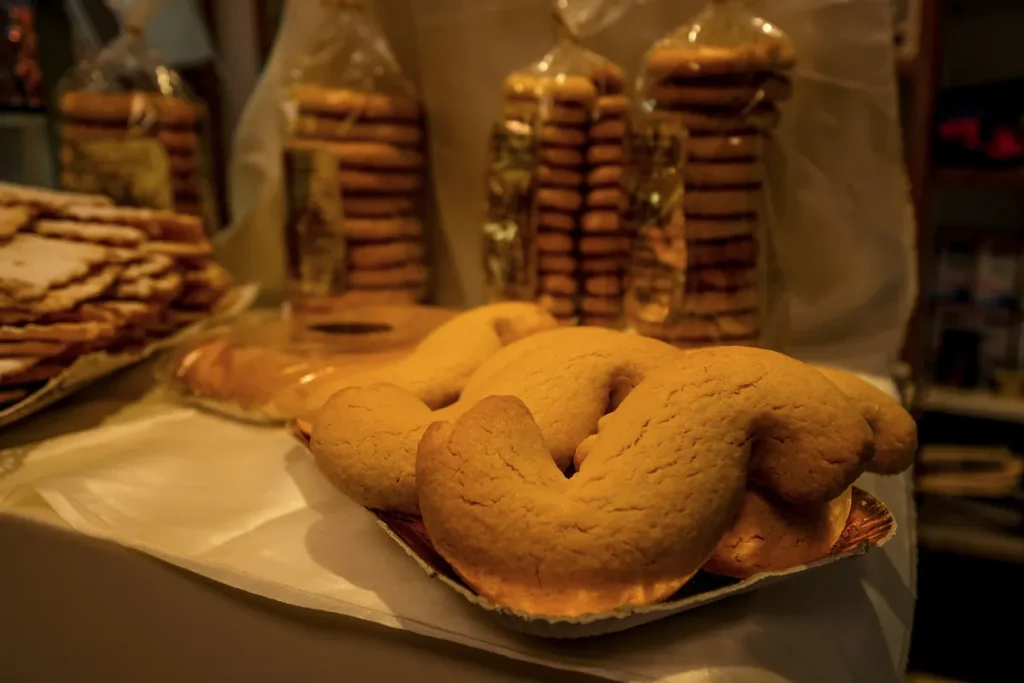
- Before you leave: Pick up Bussolà from a local bakery – dense, buttery, S-shaped cookies native to the island. Eat them on the boat to Torcello.


03:00 PM – Torcello
A 5-minute vaporetto from Burano. Fewer than 15 people live here now.
Torcello was settled before Venice. It had 20,000 residents until malaria and silting canals drove everyone out. What’s left is overgrown, quiet, and genuinely eerie.
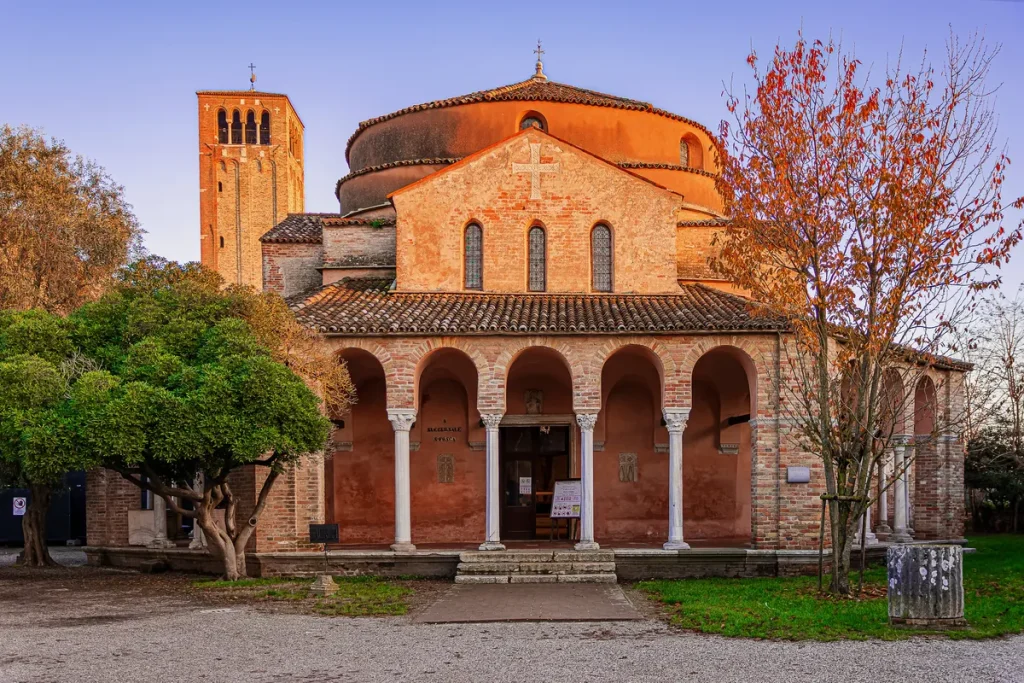
- Cathedral of Santa Maria Assunta (founded 639 AD): The 11th-century Byzantine mosaic of the Last Judgment covers the entire back wall. It’s detailed, enormous, and worth the walk down the empty brick path to see it.
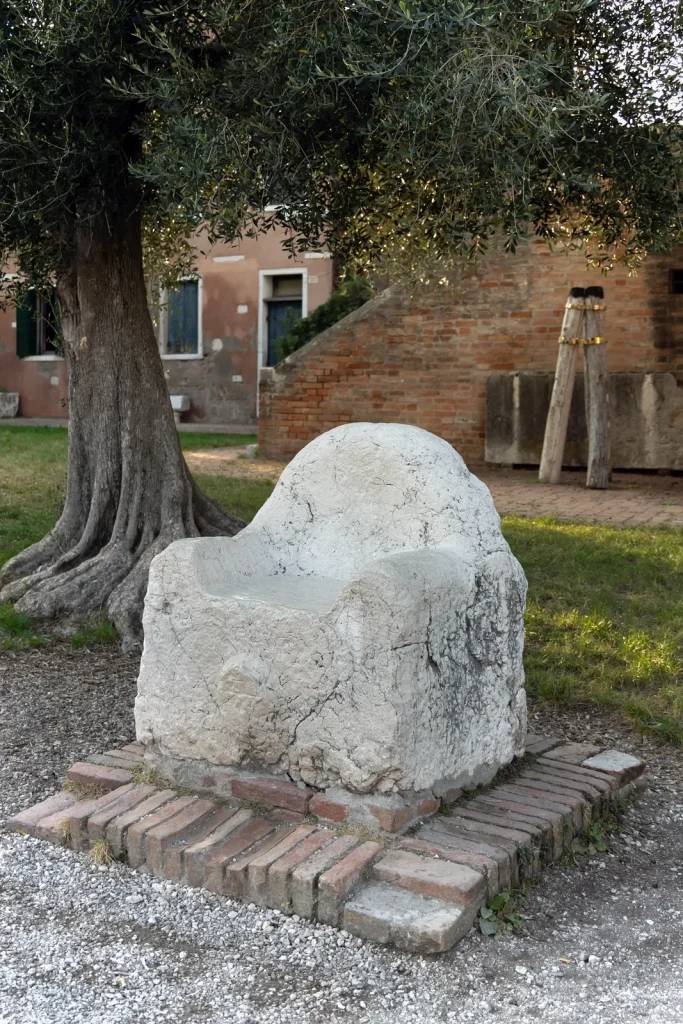
- Attila’s Throne: An ancient stone chair in the courtyard, supposedly used by the King of the Huns. Sit in it.
06:00 PM – The Traghetto Back
Take Line 12 to Fondamente Nove, then walk south toward the Grand Canal.
Don’t pay €90 for a gondola. Find a Traghetto sign. These are working gondolas that cross the canal where there are no bridges. Hand the gondolier €2 in coins. The crossing takes 90 seconds. You’re expected to stand for the duration. It’s what locals actually use. (Tight on budget? See our full Venice on a budget guide for more moves like this.)
Day 3: Art, Altitude, and the Quiet South
The southern districts. Better art-to-crowd ratio. The best view in Venice.
09:30 AM – Peggy Guggenheim Collection
Cross the Accademia Bridge into Dorsoduro. The Guggenheim is housed in a low, unfinished 18th-century palazzo directly on the Grand Canal – Peggy Guggenheim’s actual home until she died in 1979.
Picasso, Dalí, Pollock, Magritte. The sculpture garden faces the water. The terrace is one of the better spots in the city to stop moving for a few minutes.


11:30 AM – Santa Maria della Salute
Walk to the eastern tip of Dorsoduro. The white octagonal church at the water’s edge is a plague church – built after a 1630 outbreak of bubonic plague killed roughly a third of Venice’s population. The Senate promised the Virgin Mary a church if she saved the city. The plague ended. They built this on 100,000 wooden pilings driven into the mud. Free to enter.

01:00 PM – The Zattere
Walk the southern edge of Dorsoduro along the Zattere promenade. It faces south over the Giudecca Canal, so it gets sun all afternoon.
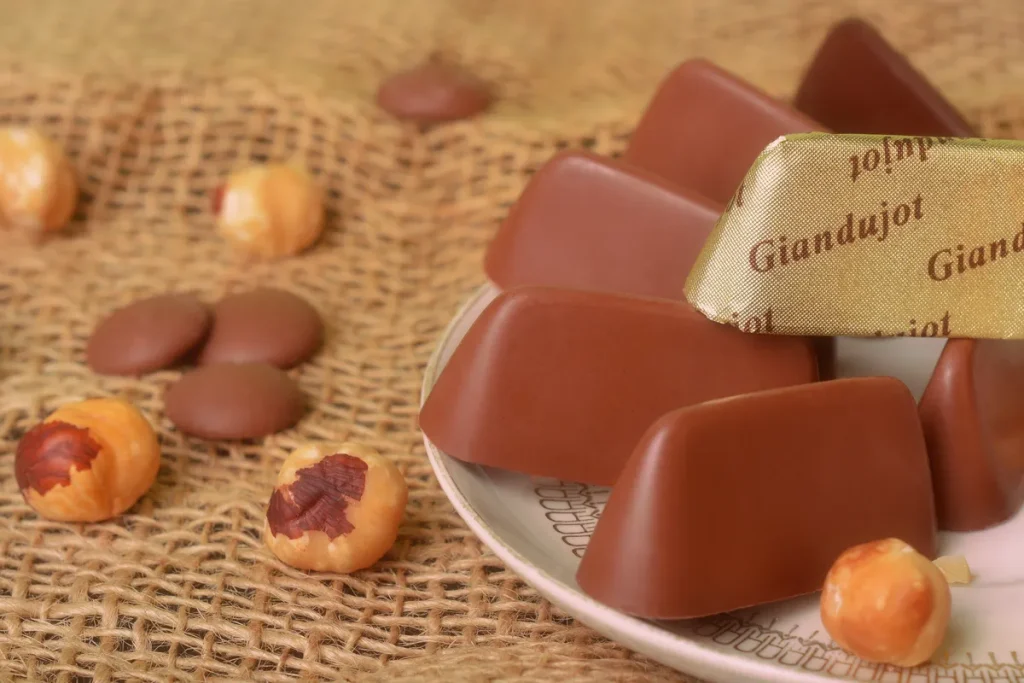
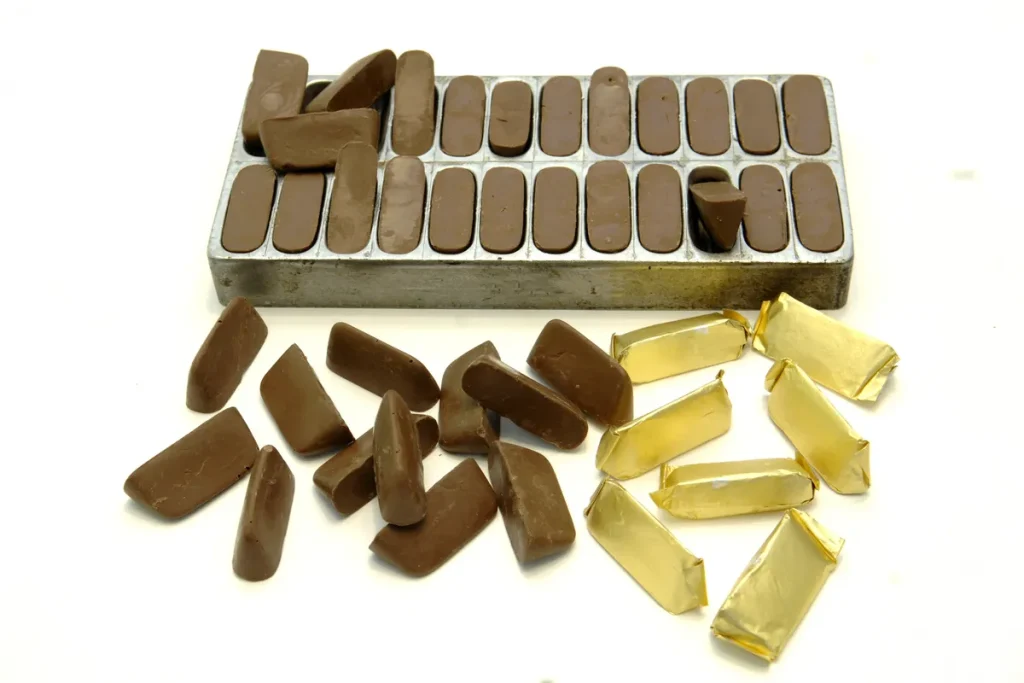
Stop at Gelateria Nico. Order the Gianduiotto – a dense block of hazelnut chocolate submerged in fresh whipped cream. Eat it sitting on the edge of the water while ships pass.
03:00 PM – San Giorgio Maggiore (The Better Viewpoint)
Take the vaporetto across to San Giorgio Maggiore. Most people stay at the main Campanile and look at the lagoon. This is smarter.
Pay the small fee to take the lift up the Campanile di San Giorgio Maggiore. Because you’re standing on a separate island, you get an unobstructed view looking directly back at the Doge’s Palace, St. Mark’s Square, and the full sweep of the Grand Canal. Rarely a queue. Objectively better angle.

08:00 PM – Castello for Dinner
Eat in the backstreets of Castello – the easternmost district, the least visited, and where you’ll find restaurants without “TOURIST MENU €15” signs in the window.
Midnight – Piazza San Marco
After dinner, walk back to St. Mark’s Square.
The cruise passengers are on their boats. The day-trippers took the last train. The piazza is empty. The orchestras at Caffè Florian and Caffè Quadri are playing to nobody. Fog comes off the lagoon. You can hear your own footsteps on the marble.
This is what three days gets you.
Is the canal water safe to touch?
No. The lagoon is a tidal saltwater system and functions as the city’s drainage basin. Don’t touch the water. If you drop something in, leave it.
What is Acqua Alta?
Oscillating sirens mean the tide is surging. The city deploys raised wooden walkways (passerelle) along main routes. Don’t buy plastic over-boots from street vendors – they split within minutes. Navigate via higher ground: the Rialto area, the Ghetto. Follow the wooden walkways until it recedes.
Can I drink the tap water?
Yes. Venice has cast-iron public fountains (fontanelle) in squares throughout the city dispensing cold, regulated drinking water pumped from the mainland. Carry a reusable bottle.
What’s the coperto on my bill?
The cover charge is legal and covers bread and table settings. In San Marco, if live music is playing when you sit down, you’ll also pay a music supplement of €6-10 per person – written in small print on the menu. Check before you sit.
Early morning flight from Marco Polo?
The standard ACTV vaporetto is too slow and infrequent for a 6:00 AM departure. Book an Alilaguna water bus (Blue or Orange line) in advance – it runs through the night – or split a private water taxi.
More Venice Guides
- 1 Day in Venice – Short on time? Here’s how to prioritise.
- First Time in Venice – Everything you need to know before you arrive.
- Venice on a Budget – How to keep costs down without missing the essentials.
- Where to Stay in Venice – The best districts and hotels by budget.
- Venice Food Guide – What to eat, where to eat it, and what to avoid.
- Best Day Trips from Venice – Verona, Padua, the Dolomites, and more.
3 Days in Venice — All Stops
Click any pin for timing, logistics, and what not to miss. Outer islands (Day 2) are northeast — zoom out to see them.