
The best day trips from Venice cover a 90-minute radius by train from Santa Lucia station – Padua in 25 minutes, Vicenza in 45, Verona in 75, the Prosecco Hills in 60 minutes to Conegliano. The lagoon islands (Murano, Burano, Torcello) are accessible by vaporetto without leaving the water at all. The practical question is which destination fits your remaining days: if you’ve covered the main Venice sights and want more art, Padua’s Scrovegni Chapel is the answer. If you want Roman architecture and opera, Verona. If you want wine and landscape, the Prosecco Hills. This guide covers eight destinations with the transport logistics, what’s actually worth your time at each one, and what to skip.
Before building day trips into your Venice schedule, the 3 days in Venice itinerary places the day trip options in context – some work better as Day 3 or 4 additions than others. For keeping costs manageable including transport, the Venice on a budget guide covers the Venezia Unica pass and which rail tickets to book in advance.
Leaving Venice: The Logistics
Venice has two exit points for day trips:
Venezia Santa Lucia – the train station at the western end of the main island. All mainland day trips start here. It’s at the end of the rail line – trains depart on time and platforms are assigned 10-15 minutes before departure. Arrive at least 15 minutes early to find your binario (platform).
Piazzale Roma – immediately across the causeway from Santa Lucia, accessible by vaporetto or on foot from the station. Bus departures for Cortina d’Ampezzo (Dolomites) and some regional destinations leave from here. No trains.
Book return tickets before you leave. The queue at Santa Lucia’s ticket windows in the afternoon runs 30-45 minutes in summer. Buy on the Trenitalia or Italo apps the evening before.
Regional vs. high-speed: For Padua and Treviso, the Regionale Veloce (RV) costs €4-5 and adds only 10-15 minutes over the Frecciarossa. For Verona, the high-speed service (€15-20) cuts the journey from 90 to 75 minutes and is worth the difference. For Milan, always take the high-speed.
1. Padua (Padova) – Best Overall Day Trip
Distance: 25 minutes by Frecciarossa, 50 minutes by Regionale Veloce. Fare: €4.50-15 each way depending on service.
Padua is the highest-value day trip from Venice in terms of what you get for the travel time. The Scrovegni Chapel is one of the most significant single rooms in Western art history. The university – founded 1222, one of the oldest in the world, where Galileo taught mechanics from 1592 to 1610 – gives the city a student energy and a price level that contrasts sharply with Venice. A coffee in Padua costs €1.20; the same coffee in Venice’s tourist corridor costs €4.
Scrovegni Chapel
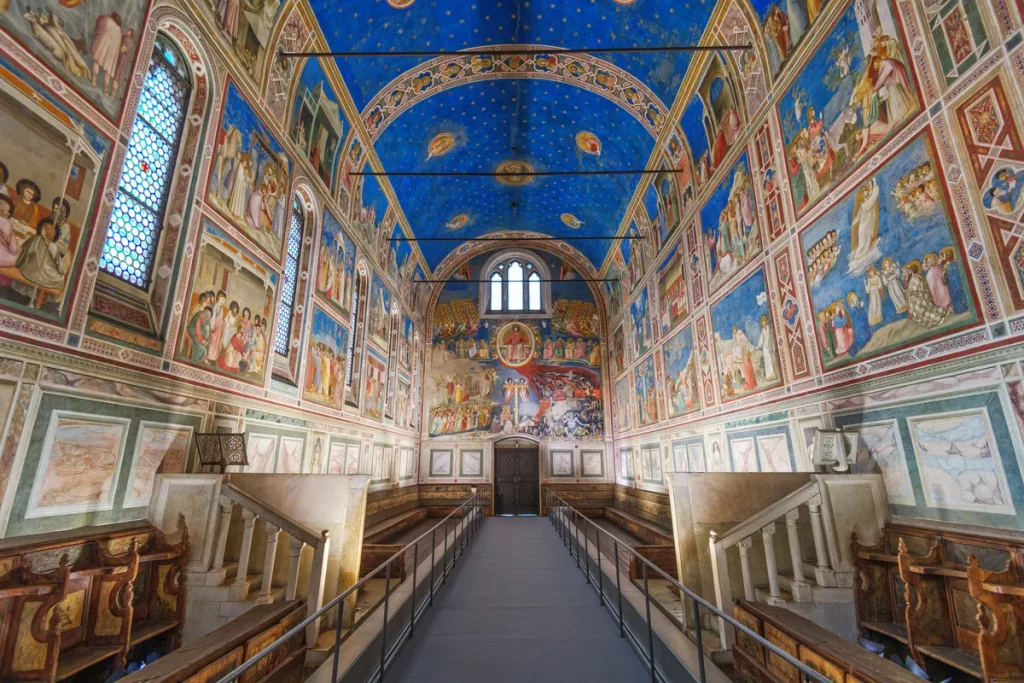
Enrico Scrovegni commissioned Giotto to paint the interior of a private chapel in 1303-1305 as an act of atonement for his father’s usury. What Giotto produced is the moment European painting changed: figures with weight and shadow, faces with recognizable emotion, spatial depth constructed through architecture in the background. It was painted 200 years before Leonardo and Michelangelo and it looks nothing like anything that came before it.
The visit is tightly controlled to protect the frescoes from humidity. You spend 15 minutes in a climate-controlled decompression chamber before entering; inside you have 15 minutes. Book weeks in advance – timed entry at musei.padova.it. Entry: €14 including the decompression wait. Worth every logistical complication.
Basilica di Sant’Antonio
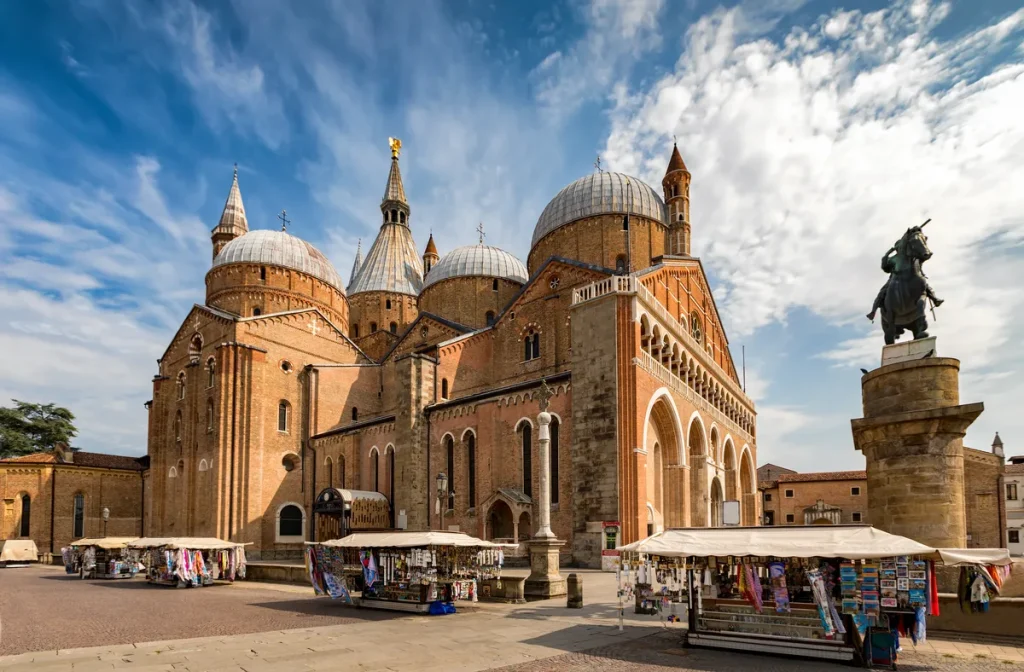
A large pilgrimage church with eight domes that combine Romanesque, Gothic, and Byzantine elements – it looks unlike any other Italian church. Inside, the Chapel of the Relics contains the tongue and chin of St. Anthony, preserved and displayed in elaborate reliquaries. Donatello’s bronze relief panels on the high altar are among the finest examples of Renaissance sculpture outside Florence. Free entry.
Prato della Valle
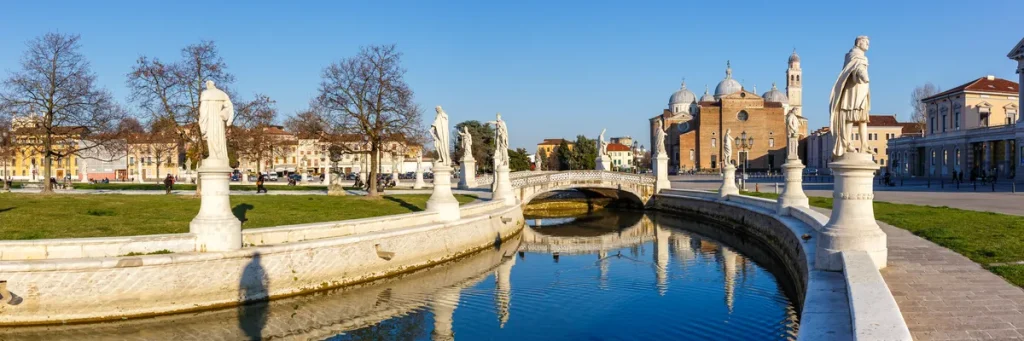
One of the largest public squares in Europe – an elliptical island garden surrounded by a moat and 78 statues of notable Paduans (a further 40 statue niches are empty, intended for figures the city never got around to commissioning). The square is where students eat lunch and locals walk their dogs. The tramezzini (crustless triangular sandwiches on soft white bread) sold at the bars around the perimeter are a Venetian regional specialty. A tramezzino and a Spritz costs €5-7.
2. Verona – Best for Roman Architecture and Opera
Distance: 1 hour 15 minutes by Frecciarossa. Fare: €15-25 each way.
Verona has two tourist pulls that are genuinely worth the journey and one that isn’t. The Arena and the Roman bridge are real. Juliet’s Balcony – a 13th-century palazzo that was assigned to the fictional Shakespeare character in the 20th century, now covered in love padlocks and managed by the local council as a paid attraction – is a fabrication. Skip it; spend that time at Castel San Pietro instead.
Arena di Verona
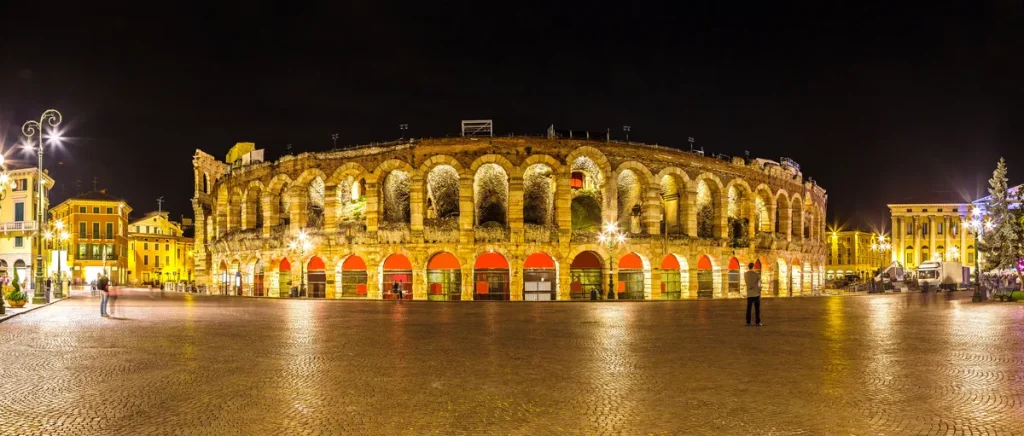
A first-century Roman amphitheatre in pink-white limestone, seating 30,000, and better preserved than the Colosseum because it was used continuously through the medieval period rather than stripped for building material. Since 1913 it has been an outdoor opera venue – the summer opera festival runs July through September, with productions of Aida, Nabucco, and Tosca staged in the original arena. Tickets from €30 standing to €250+ for the numbered stone seats. Even without an opera, the interior is worth the €10 daytime entry.
Ponte Pietra and Castel San Pietro
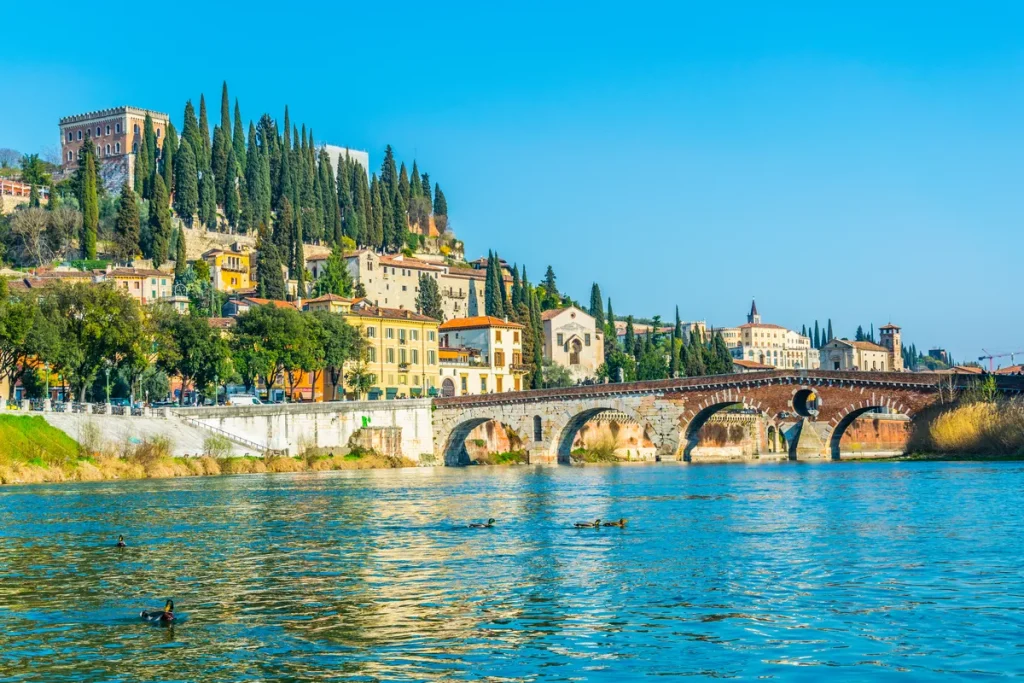
The Ponte Pietra is a Roman bridge – two of its five arches are original Roman construction from the 1st century BC; the others were rebuilt after World War II when retreating German forces destroyed the bridge. Cross it and take the funicular (or the steep staircase) up to Castel San Pietro for the view over Verona’s red rooftops and the Adige river bend below. Free to walk up; funicular €2.
Food in Verona
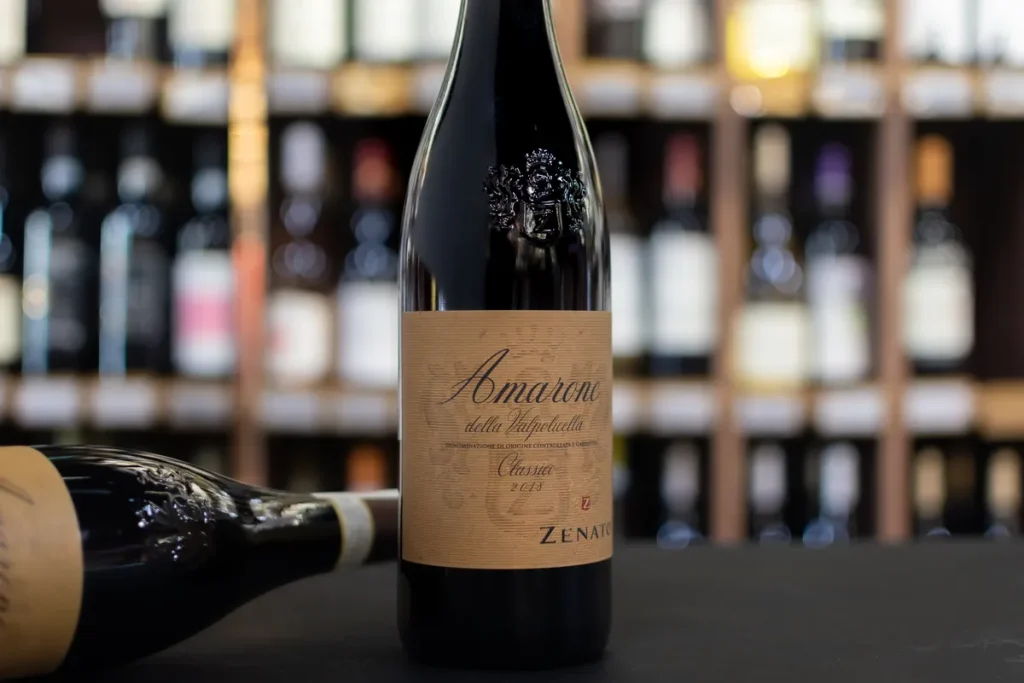
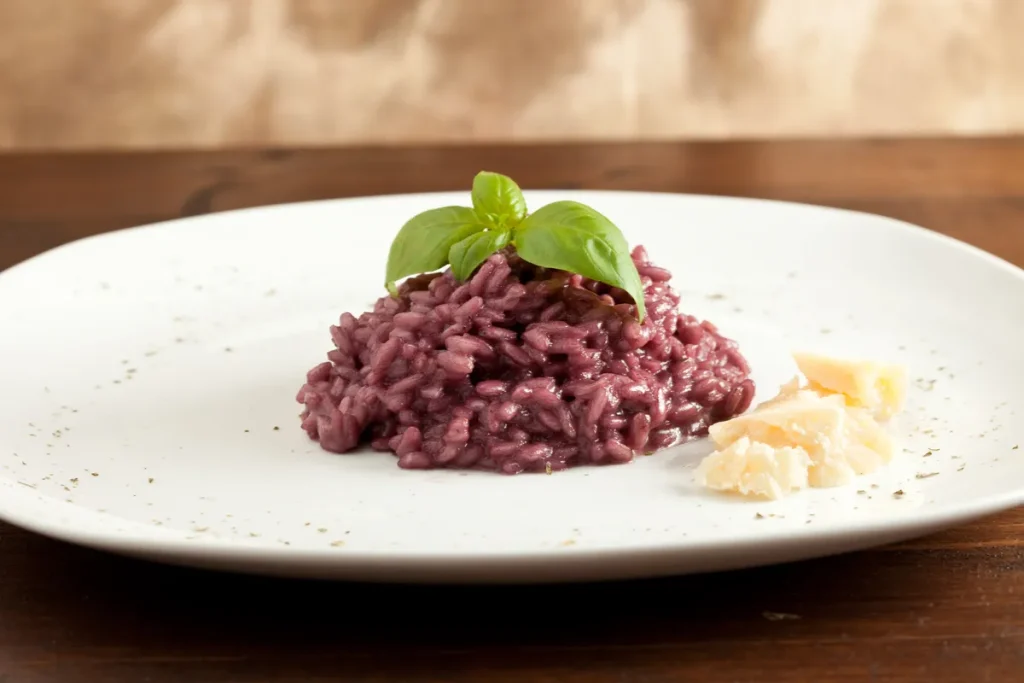
Verona is the commercial center of the Valpolicella and Soave wine regions. Amarone della Valpolicella – a dry red made from dried Corvina grapes with intense concentration and 15-17% alcohol – is the local specialty. A glass at a proper enoteca costs €8-12. Amarone risotto (risotto cooked and finished with Amarone) is the dish specific to the area.
3. Vicenza – Best for Architecture
Distance: 45 minutes by train. Fare: €5-8 each way.
Vicenza is where Andrea Palladio (1508-1580) built his career and his legacy. Palladio’s influence on Western architecture is difficult to overstate – the White House, the Pantheon in Paris, most British country estates, and countless civic buildings across Europe and America are based on principles he formalized here in the 16th century. If you have any interest in architecture, Vicenza is not optional.
Teatro Olimpico
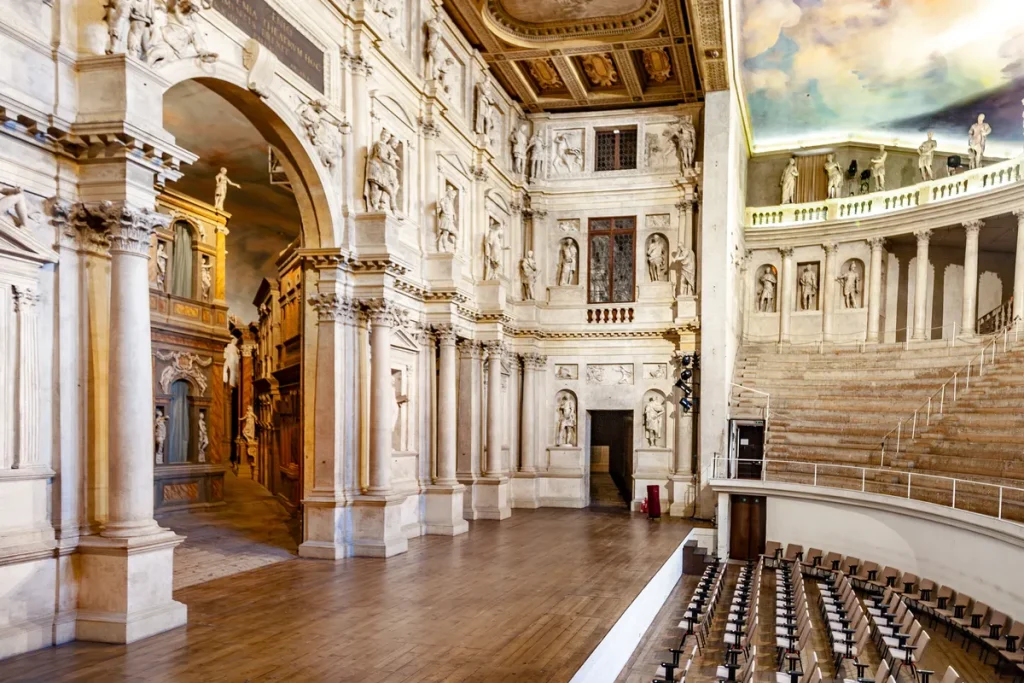
Palladio’s final project, completed after his death by Vincenzo Scamozzi and opened in 1585. The oldest surviving indoor theatre in the world – a permanent wooden stage set depicting the streets of Thebes, built with forced perspective so the streets appear to recede into infinity but are actually only a few meters deep. The trompe l’oeil effect still works and is still startling. Entry: €11 (combined ticket with other Palladian sites available).
Villa La Rotonda
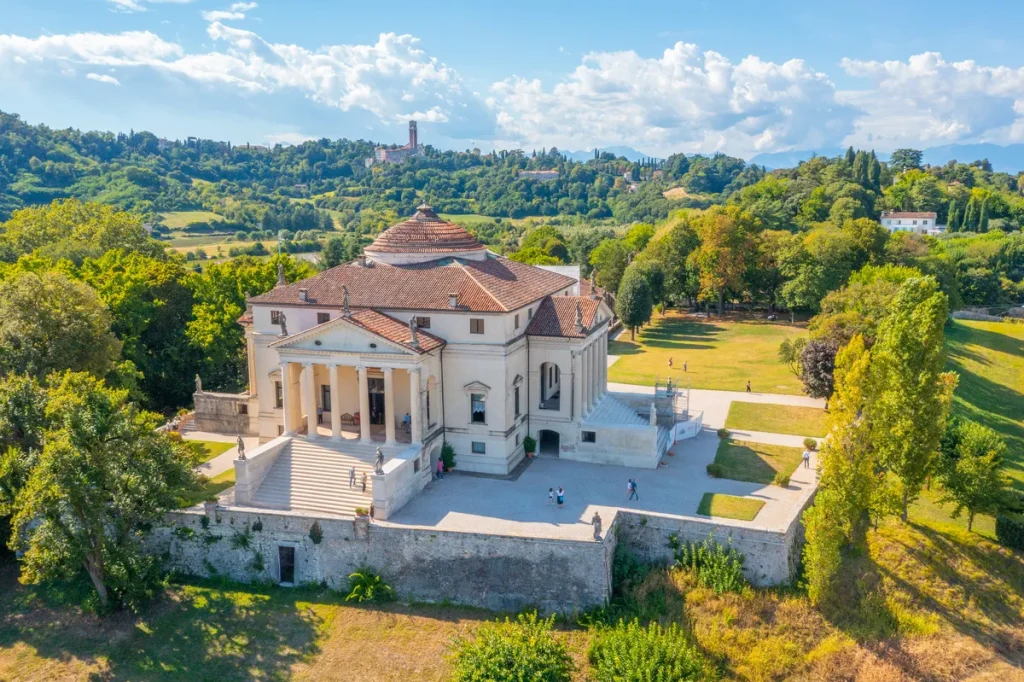
A 20-minute walk or short taxi from the center. The most copied building in Western architecture – perfectly symmetrical, with a central dome and four identical porticoed facades, one on each side. Built from 1567 for Paolo Almerico as a summer house. The interior is only accessible on limited days (Wednesday and Saturday typically); the exterior and gardens can be visited more broadly. Entry varies: €5 exterior, €10 interior on open days.
Palladian Basilica
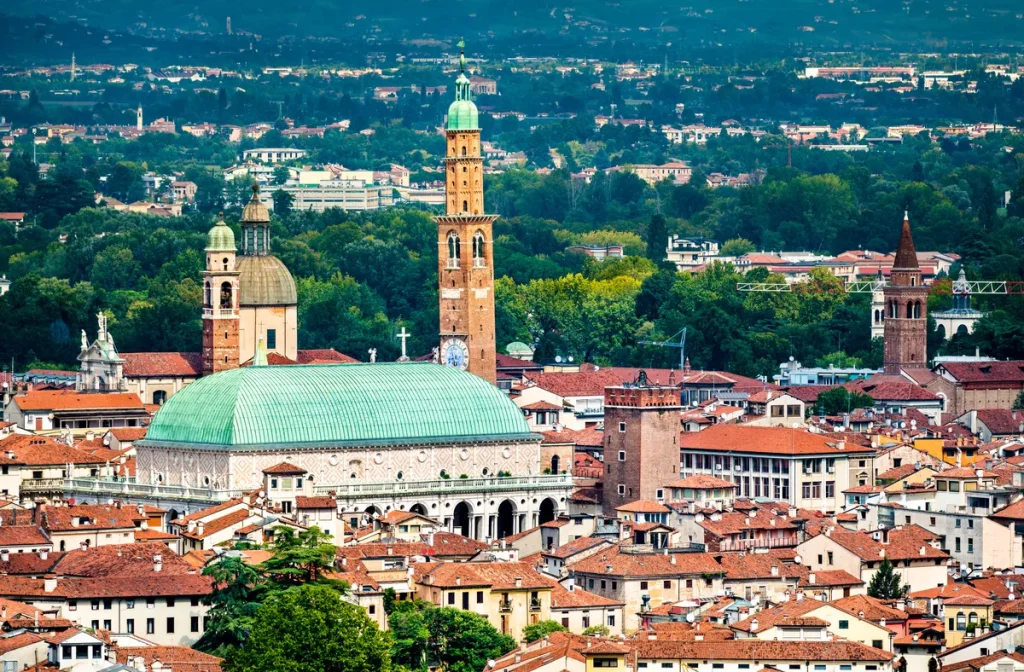
In the Piazza dei Signori in the center of Vicenza – a Gothic town hall wrapped in a Palladian loggia that Palladio designed in 1549. It’s what made his reputation in the city. Free to view from outside; interior open for exhibitions.
4. The Prosecco Hills (Valdobbiadene and Conegliano)
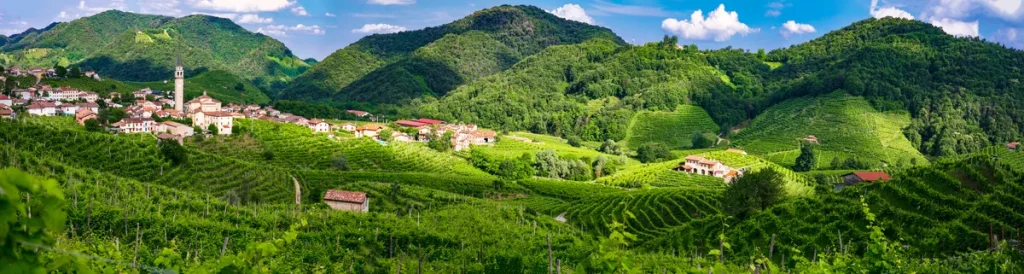
Distance: 1 hour by train to Conegliano. Fare: €6-8 each way.
The Prosecco Hills became a UNESCO World Heritage site in 2019 – 107-hectare Cartizze hill and the surrounding Conegliano-Valdobbiadene zone are the source of Prosecco Superiore DOCG, which is substantially different from the cheap supermarket version. The landscape is genuinely beautiful: steep terraced vineyards, hilltop villages, and winding roads between the two main towns.
The logistics require a car or a hired driver from Conegliano. The public bus connections between the winery villages are infrequent and poorly timed for a day trip. The practical approach: train to Conegliano, hire a driver for 3-4 hours (approximately €80-120 for the vehicle) to take you through the Strada del Prosecco between Conegliano and Valdobbiadene, stopping at producers along the way.
What to drink: Cartizze is the Grand Cru designation – a single-vineyard classification within the DOCG covering only 107 hectares. The wine from here is more complex and more expensive (€20-40 per bottle at the producer) than standard Prosecco. Prosecco Col Fondo (unfiltered, refermented in bottle) is the ancestral style – cloudy, dry, and earthy, the opposite of the sweet mass-market product.
The Osteria senz’Oste (Hostless Tavern) near Combai is a self-service structure on a hilltop where bread, cheese, salami, and Prosecco are available via an honor-system payment box. You take what you want, calculate the cost from the listed prices, and leave the money. Tables overlook the vineyards. Open when someone has stocked it – not guaranteed, but the experience when it works is specific to this corner of Italy.
5. Treviso – Best for a Relaxed Local Day
Distance: 30 minutes by regional train. Fare: €3.50 each way.
Treviso is the Veneto city most Venetians actually visit when they want a day away. It has its own canals (smaller than Venice’s), frescoed medieval buildings, a working fish market, and prices that are roughly half what you pay on the islands. It’s also the headquarters of Benetton, De’Longhi, and Dino Zoff’s football career, which gives it a quiet prosperity without the tourist overlay.
Le Beccherie on Piazza Ancilotto is the restaurant where Tiramisu was invented in 1969 by pastry chef Roberto Linguanotto. The original recipe – ladyfinger biscuits soaked in espresso, layered with mascarpone cream, dusted with cocoa – is served here. The restaurant has changed hands and had periods of variable quality; check recent reviews before making it a priority. A portion costs €8-10.
The Pescheria fish market operates on an island in the Sile river in the center of town, open Tuesday through Saturday mornings. The produce market surrounding it is genuinely local. Treviso radicchio – the elongated, bitter red chicory with white veins grown in the surrounding countryside – appears in local dishes from October through March.
6. The Lagoon Islands: Murano, Burano, Torcello
By vaporetto from Santa Lucia or Fondamente Nove. Covered by the standard ACTV vaporetto pass.
These are not mainland day trips but feel like separate worlds from the main island. A logical sequence is Murano in the morning, Burano for lunch, Torcello in the afternoon – all connected by the same vaporetto lines.
Murano

Line 3 or 4.1 from Fondamente Nove, approximately 10 minutes. The entire island was given over to glassblowing in 1291 when the Republic moved the furnaces here to reduce fire risk on the main island. The craft has been here for over 700 years.
Avoid the free boat tours offered by touts near St. Mark’s – they’re high-pressure sales operations that drop you at a factory showroom. Take the public vaporetto, walk to a furnace independently. Fornace Venier does demonstrations without an accompanying sales pitch. The Museo del Vetro (Glass Museum) covers the history and technique in a 14th-century palazzo; entry €10.
Burano

Line 12 from Fondamente Nove to Burano, approximately 45 minutes. The houses are painted in saturated, distinct colors – each house a different shade, the tradition traced to fishermen identifying their homes through lagoon fog. The lace-making industry (merletto di Burano) dates to the 16th century; handmade Burano lace is expensive (€50-200+ for small pieces) and identifiable by its needle-based technique versus cheaper machine-made alternatives sold at tourist prices.
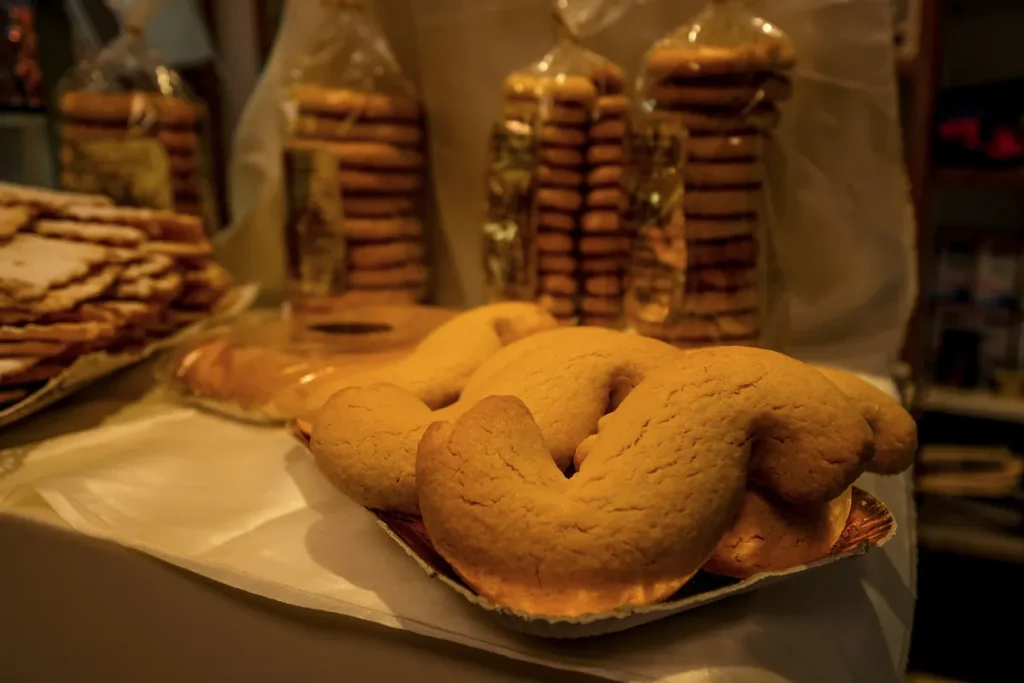
Bussolà – S-shaped butter cookies, dry and dense, traditional to Burano – are sold at every bakery. They keep for weeks and cost €4-6 per bag. Worth buying.
Torcello
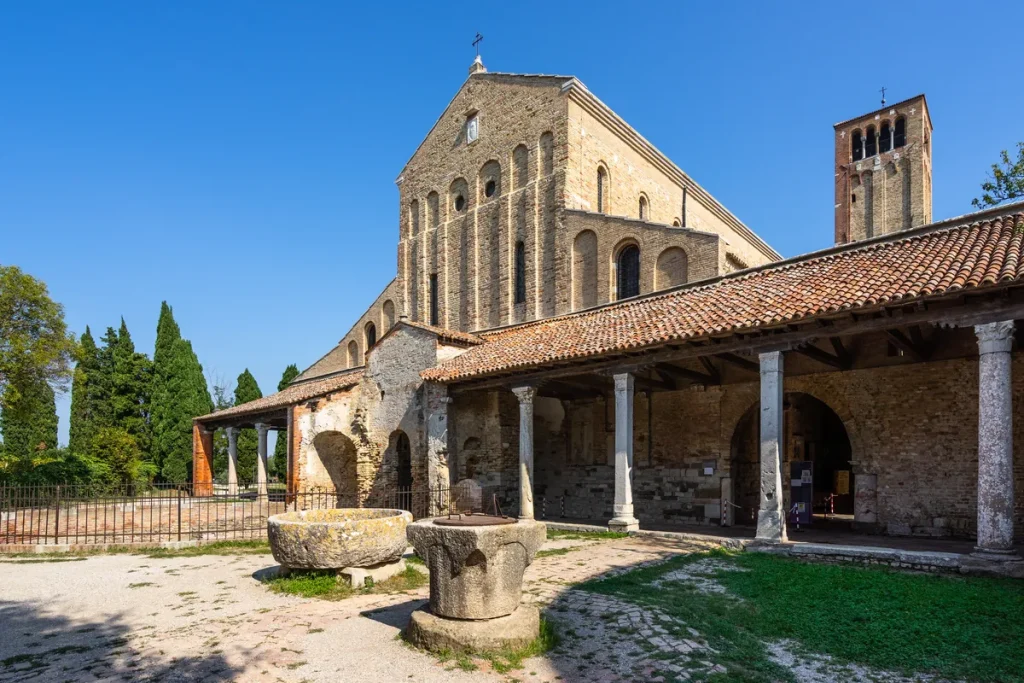
A further 5-minute vaporetto from Burano. A marshy island with a few dozen permanent residents, a handful of buildings, and the Basilica di Santa Maria Assunta – the oldest church in the lagoon, founded 639 AD, with 11th and 12th century Byzantine mosaics covering the entire west wall (a Last Judgment scene of considerable scale and detail) and the apse (a single standing Madonna on a gold ground). Entry €5. The Throne of Attila – a simple stone chair in the piazza, probably used as a magistrate’s seat rather than by Attila – is free and always accessible.
Torcello at midday on a weekday has perhaps 50 visitors. It’s as close to empty Venice as you can get.
7. The Dolomites (Cortina d’Ampezzo)
Distance: 2 hours 15 minutes by Cortina Express bus from Piazzale Roma. Fare: approximately €20 each way.
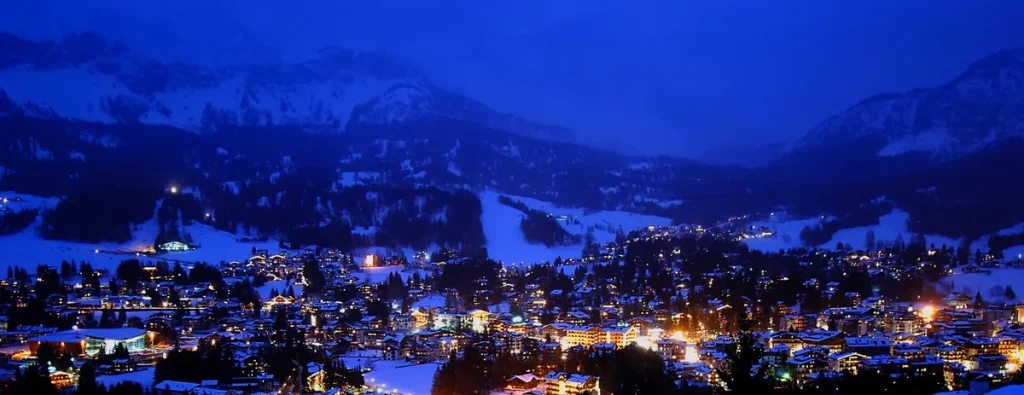
The Dolomites are visible from Venice on clear days – the jagged pink-grey peaks of the Pale di San Martino and the Marmarole range to the north. Getting there for a day is possible but demanding. The Cortina Express bus runs from Piazzale Roma directly to Cortina d’Ampezzo; book online in advance.
In Cortina, the Faloria cable car (€20 return) rises from the valley floor to a plateau at 2,123 meters with views across the Dolomite peaks in multiple directions. In summer (July-September) the plateau has walking trails and a mountain refuge restaurant. In winter, Cortina is a ski resort, but winter day trips from Venice require checking snow conditions and cable car schedules.
Only do this on a clear forecast. Mountain weather changes in 30-minute windows, and the specific appeal – the rock formations, the scale of the peaks – is invisible in cloud. If the forecast is uncertain, Verona or Padua are more weather-resilient alternatives.
8. The Brenta Riviera – Palladian Villas by Boat
Distance: Dependent on boat service. Fare: €35-50 for the Burchiello boat tour.
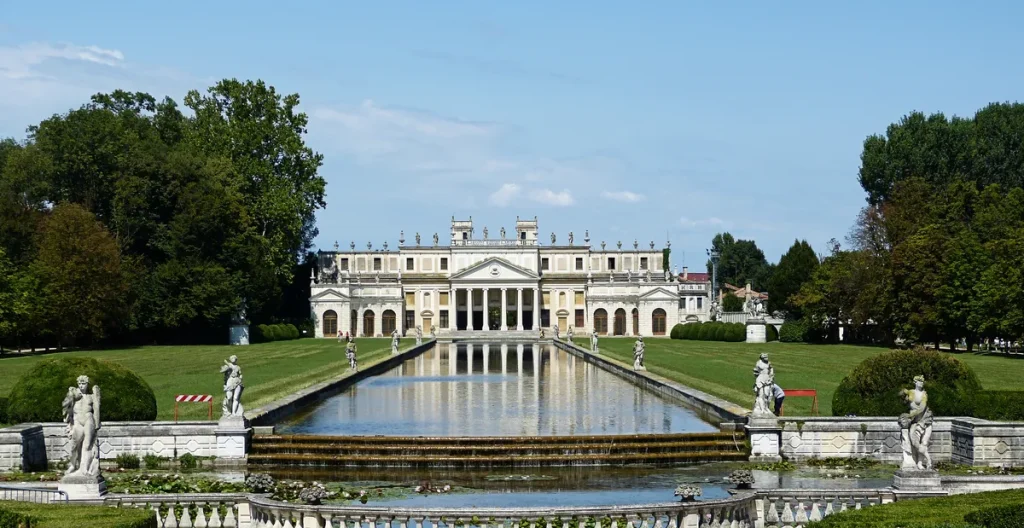
The Brenta Riviera is the stretch of the Brenta river between Padua and Venice, lined with more than 80 Venetian villas built by aristocratic families as summer retreats. Several are open to visitors.
The Burchiello boat runs between Padua and Venice along the Brenta (or in reverse), stopping at Villa Pisani (Musolini and Napoleon both stayed here; the largest villa on the Brenta with an extraordinary 18th-century hedge maze – entry €10), Villa Foscari (La Malcontenta, designed by Palladio in 1558, one of his most significant works – entry €12), and others.
The boat runs from April to October; check the burchiello.it website for the current schedule. This works as a one-way journey (Padua to Venice or reverse) using the train for the other leg.
Practical Summary
| Destination | Train time | Fare (return) | Best for |
|---|---|---|---|
| Padua | 25-50 min | €9-30 | Scrovegni Chapel, student energy |
| Verona | 75 min | €30-50 | Roman arena, opera, Amarone |
| Vicenza | 45 min | €10-16 | Palladio architecture |
| Treviso | 30 min | €7 | Local feel, Tiramisu, low cost |
| Prosecco Hills | 60 min + driver | €80-120 total | Wine, landscape |
| Murano/Burano/Torcello | 10-45 min vaporetto | ACTV pass | Glass, color, Byzantine art |
| Dolomites | 135 min bus | €40 | Mountain scenery (clear days only) |
| Brenta Riviera | Boat | €35-50 | Palladian villas, slow travel |
If you’re still building your Venice itinerary before adding day trips, the best things to do in Venice covers what needs to come first on the main island. The 1 day in Venice guide is useful if you’re tight on time and weighing a day in the city versus a day trip. For managing overall costs including transport, the Venice on a budget guide covers the Venezia Unica pass and which rail tickets save money when booked ahead. For where to base yourself during the trip, where to stay in Venice covers all six sestieri with transport access to Santa Lucia factored in.
What is the best day trip from Venice for a first-time visitor?
Padua. The Scrovegni Chapel is 25 minutes by fast train and is genuinely one of the most important single art experiences in Italy – more manageable than Florence’s Uffizi and less logistically demanding than Rome’s Vatican. Book the chapel entry weeks ahead; the rest of the day is easy.
Can you do Verona and Padua in the same day from Venice?
Possible but rushed. Padua to Verona by train is 50-60 minutes, so the route Venice-Padua-Verona-Venice is geographically logical. The problem is time: the Scrovegni Chapel requires a specific slot, the Arena deserves 2 hours, and you need to eat. A combined day works if you skip Padua’s Basilica and Verona’s castle view and are willing to move briskly. Most visitors are better served by choosing one.
Are the lagoon islands (Murano, Burano, Torcello) worth a full day?
Yes, if you sequence them properly: Murano in the morning (furnace demonstration, Glass Museum), vaporetto to Burano for lunch (fish, bussolà cookies), vaporetto to Torcello for the afternoon (Basilica mosaics, near-empty island). The ACTV day pass covers all three legs. Allow 6-7 hours.
How far in advance should I book the Scrovegni Chapel?
As far ahead as possible – weeks in summer, 1-2 weeks in shoulder season. Timed entry is strictly enforced and the slots are limited by the climate-control system. The booking site is musei.padova.it.
Is the Prosecco Hills trip worth doing without a car?
Only if you hire a driver from Conegliano. The train gets you there; the driver covers the winery road. Budget €80-120 for 3-4 hours of private transport and factor that into whether the trip makes sense relative to other options.
Best Day Trips from Venice — 2026 Practical Guide
All departures from Venezia Santa Lucia (train) or Piazzale Roma (bus). Book return tickets the evening before. Click any pin.