
Venice is not a standard European city. It is a 1,500-year-old labyrinth built on millions of wooden pilings driven into a saltwater lagoon. No cars. No bikes. No ride-sharing. Just canals, narrow pedestrian alleys (calli), and 435 bridges – almost none of which have ramps.
Because it is genuinely unlike anywhere else on earth, it also absorbs an almost unmanageable volume of tourists. Arrive unprepared and you will drag a heavy suitcase over thirty stone bridges in the heat, pay €18 for frozen pizza near San Marco, and spend your afternoon wedged inside a slow-moving crowd of cruise ship passengers. Arrive with a plan and the city is completely different.
This guide covers the logistics that actually matter: how to get in, how to move around, when to be where, and where not to eat. If you are still deciding how long to stay, the 3 days in Venice itinerary covers how to structure your time across the main island and the outer islands.
Arrival Logistics: The Luggage Problem
The first mistake most visitors make is the suitcase. You cannot roll a hard-shell case from the train station to your hotel. You will lift it up a flight of steep stone stairs, carry it over the bridge, bring it down the other side, and repeat that ten or fifteen times. By bridge four, you are done.
The rule: Pack a travel backpack or a small, lightweight carry-on. If you are mid-way through a larger European trip and have big luggage, use the left-luggage facility (Deposito Bagagli) at Santa Lucia train station and carry only an overnight bag into the city.
Getting in: Venice is an island. You arrive at one of three points – Marco Polo Airport (VCE), Santa Lucia train station (the only station actually on the island), or Piazzale Roma (the bus and taxi terminal, and the furthest point any wheeled vehicle reaches).
From there, three options:
- Water taxi – The private mahogany boats from the airport run €130-€150. Fast, memorable, and worth it if you are splitting among four people.
- Vaporetto – The public water bus. A single ticket is €9.50, which makes it expensive fast. Buy a 2-day or 3-day unlimited ACTV pass the moment you arrive – it pays for itself within 24 hours. Note: the ACTV does not serve the airport directly; take the Alilaguna water bus or a land bus to Piazzale Roma first.
- Walking – Viable if your hotel is in Cannaregio or Santa Croce, both close to the train station. Factor in the bridges.

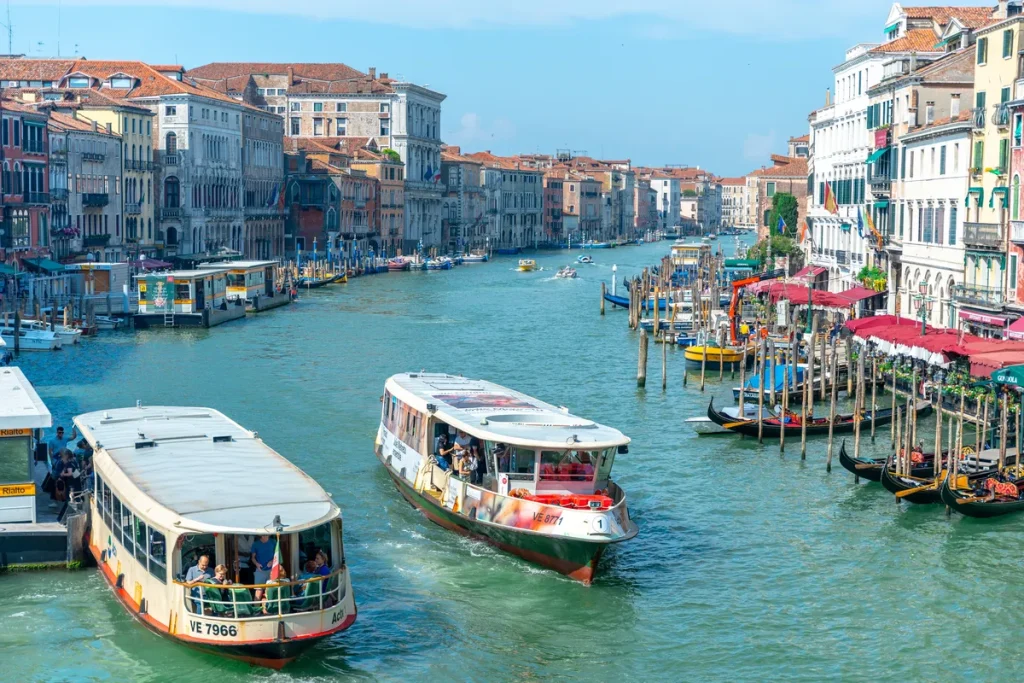
The 2026 access fee: Venice charges day-trippers a daily access fee (Contributo di Accesso) on peak spring and summer weekends. If you are staying overnight in a booked hotel or rental, you are exempt – but you still need to register online to generate a QR code proving it. Spot checks happen at the train station and the fines are significant.
San Marco: How to Handle the Crowds
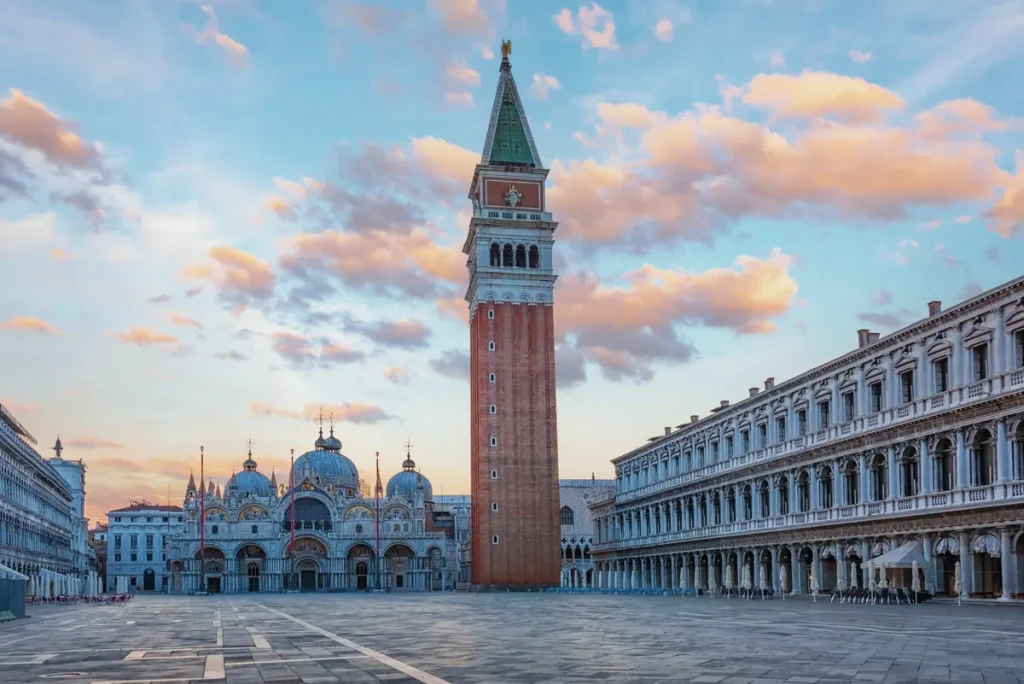
Piazza San Marco is the historic heart of the city and the most congested point in Venice. At 1:00 PM it is almost unbearable. At 7:00 AM it is empty and extraordinary.
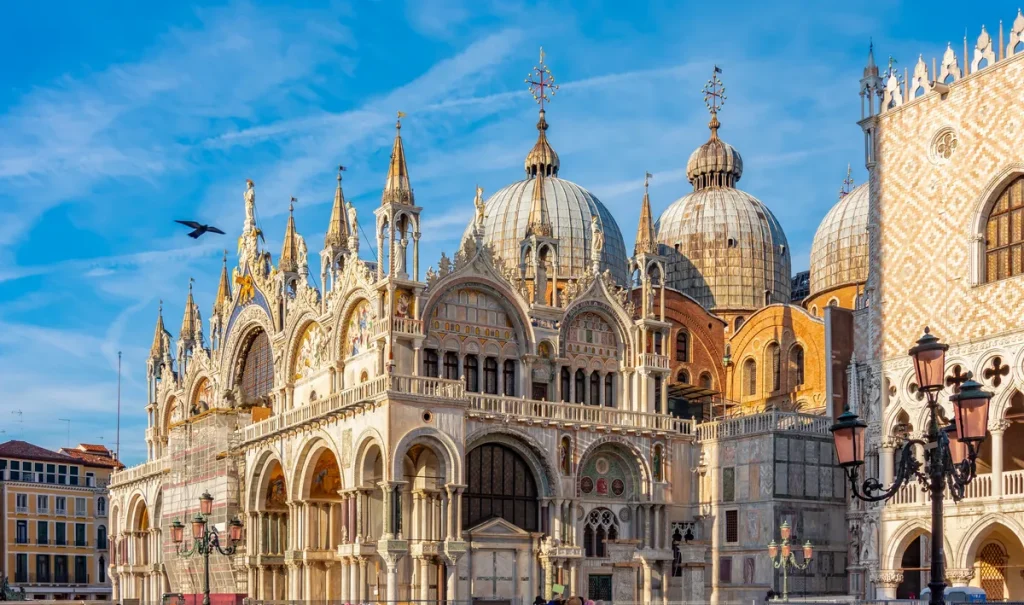
St. Mark’s Basilica: Entry to the main floor is free in theory, but the standby queue stretches across the plaza and means standing in direct sun for hours. Buy a skip-the-line ticket on the official website for a few euros and book a timed slot. Dress code is strict – no bare shoulders, no shorts or skirts above the knee. Guards turn people away regardless of how long they waited. Bring a lightweight layer.
The Doge’s Palace: The standard entry gets you the main rooms, which are worth it on their own – enormous canvases by Tintoretto and Veronese covering every wall. The better option is the Secret Itineraries tour (Itinerari Segreti), which must be booked in advance. It takes you through the restricted administrative offices, the torture chambers, the attic prison cell Casanova escaped from, and across the interior of the Bridge of Sighs. Book it before you leave home.
The Campanile: The bell tower has a lift to the top – no stair climbing required, unlike Florence’s Duomo. Views of the red rooftops and the lagoon are clear on a good day. Book timed entry online.


The Neighbourhoods Worth Your Time
Venice is shaped like a fish, divided down the middle by the S-shaped Grand Canal into six historic districts (sestieri). San Marco is the expensive, crowded centre. The interesting parts are elsewhere.
Cannaregio (north): The largest residential neighbourhood – where people actually live. Walk the wide canal-side paths (fondamente) in the early evening. Find the Venetian Ghetto, established in 1516 and the oldest in the world. The buildings here are noticeably taller than the rest of the city – the Jewish population was confined to a small island and had to build upward.
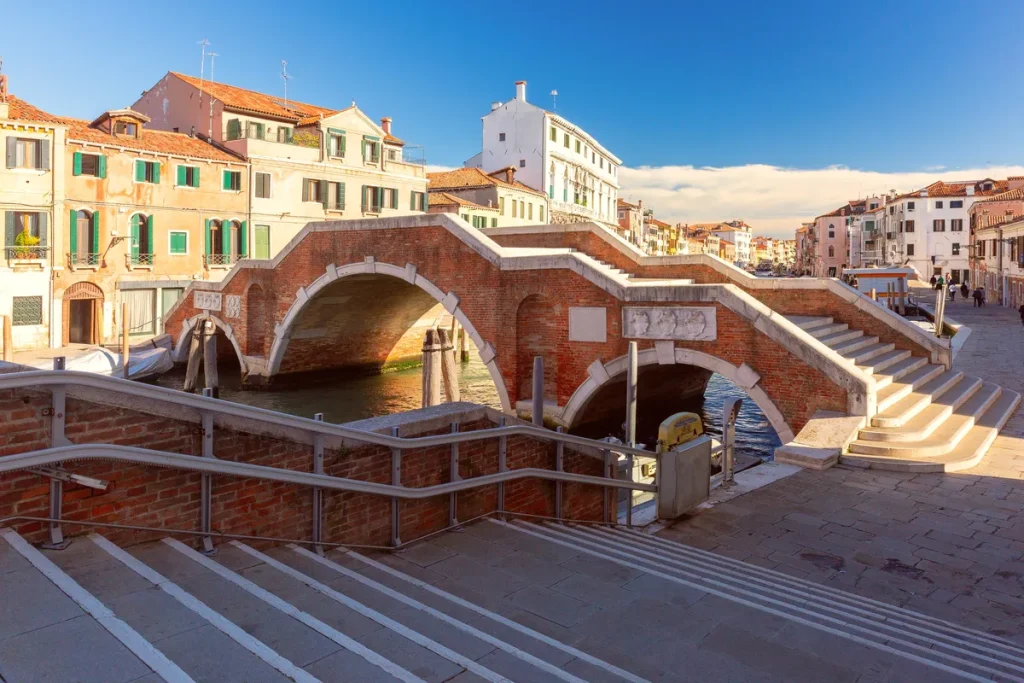

Dorsoduro (south): The university district, quieter and significantly cheaper than San Marco. Walk the Zattere, the wide promenade facing the Giudecca Canal. Stop at Gelateria Nico for a Gianduiotto – a dense block of hazelnut chocolate topped with whipped cream, eaten on the waterfront. The Peggy Guggenheim Collection is here too, one of the best modern art museums in Europe, in an unfinished palazzo directly on the Grand Canal.


The timing rule: Between 10:00 AM and 5:00 PM the city belongs to day-trippers. The alleys between the Rialto Bridge and San Marco become a slow-moving crowd. At around 5:30 PM the cruise ships leave, the day-trippers board their trains, and the city empties. Be out at 6:30 AM for the empty plazas, retreat to a museum or your hotel during the midday peak, and reclaim the streets from sunset onward.
Where to Eat: Avoiding the Traps
Venice has the highest concentration of predatory tourist restaurants in Italy. The signals are consistent: laminated menus with photos printed in six languages, someone standing outside trying to pull you in, anything claiming to be “authentic Neapolitan pizza” (wood-fired ovens are largely banned in Venice due to fire risk in a tightly packed ancient city).
The bacaro crawl: Skip the formal lunch. Do this instead. A bacaro is a small, wood-paneled, standing-room wine bar. Walk in, go to the glass counter, and order cicchetti – the Venetian equivalent of tapas. Crusty bread topped with whipped salt cod (baccalà mantecato), deep-fried meatballs (polpette), marinated octopus, half-boiled eggs with anchovy. Each piece costs €2-€4. Order an ombra – a tiny, cheap glass of house wine – eat standing at the bar or leaning against a bridge outside, and move on to the next one.
Three worth finding:
- Cantina Do Mori – Founded in 1462, the oldest bacaro in Venice. Dark interior, copper pots hanging from the ceiling.
- Al Timon (Cannaregio) – Eat your cicchetti sitting on the wooden boats moored in the canal outside.
- Cantinone Già Schiavi (Dorsoduro) – An old wine shop with some of the most inventive cicchetti in the city.
The spritz: Order a Select Spritz rather than Aperol. Select is a ruby-red liqueur actually made in Venice – less sweet than Aperol, less aggressive than Campari, always served with a large green olive. It is the correct local order.

Dinner, done properly: When you sit down for a full meal, order from the lagoon:
- Sarde in saor – sweet and sour sardines marinated with caramelised onions, pine nuts, raisins, and vinegar. An ancient sailor’s preservation method.
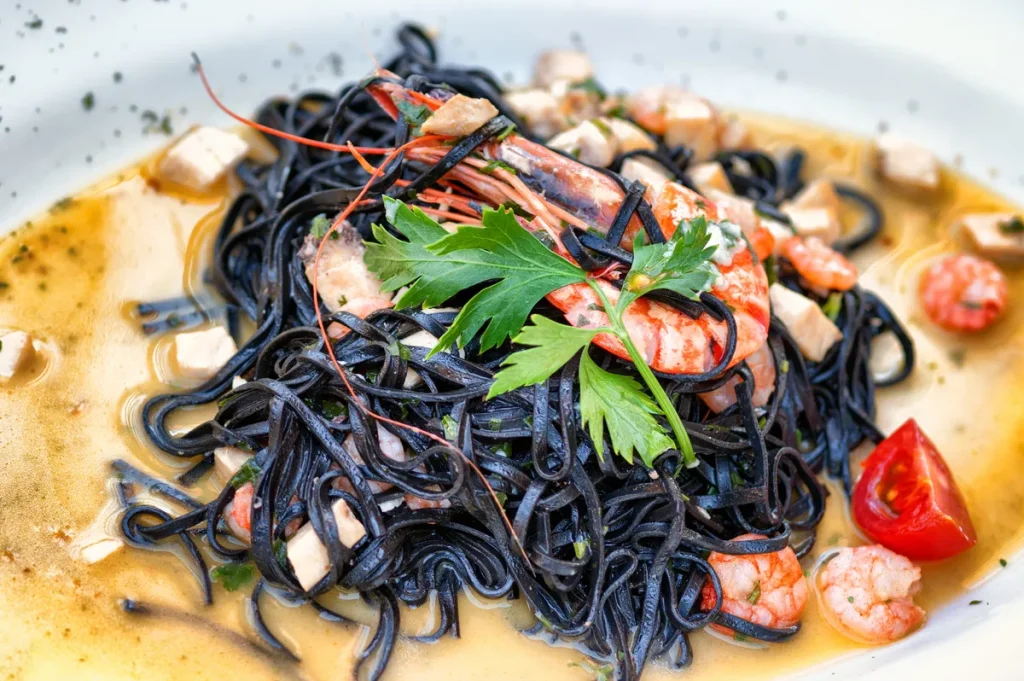
- Spaghetti al nero di seppia – jet-black pasta in squid ink with cuttlefish. It will stain your teeth and is worth it.
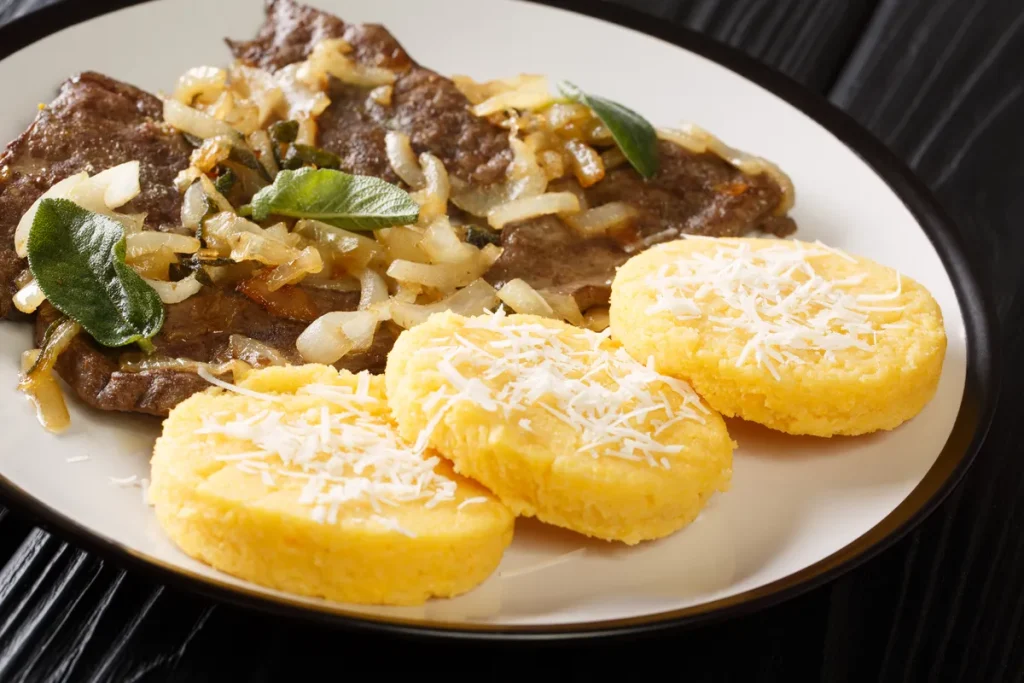
- Fegato alla veneziana – thinly sliced calf’s liver slow-cooked with caramelised onions, served over white polenta.

The Gondola: What It Actually Costs
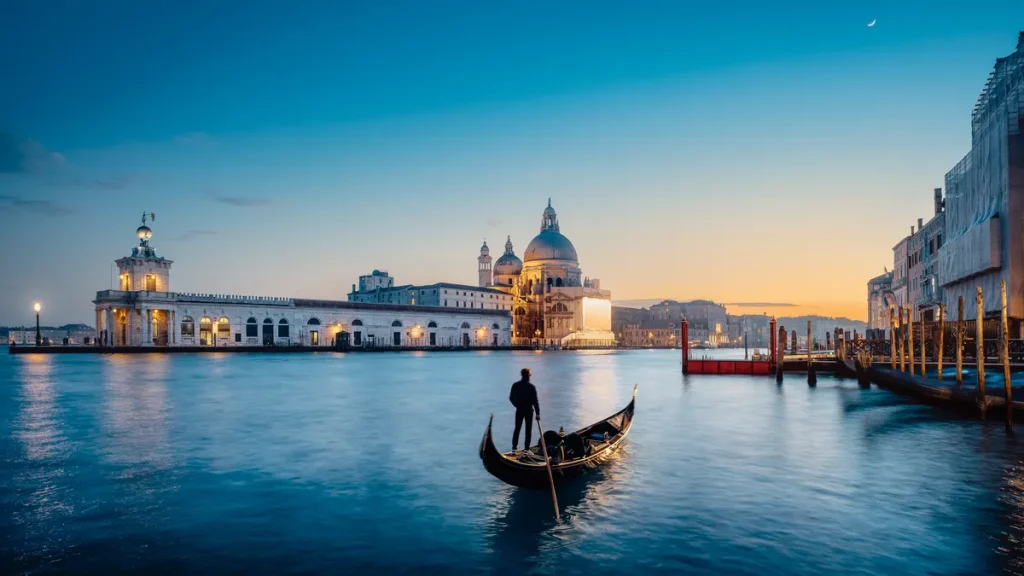
The city-mandated rate in 2026 is €90 for 30 minutes during the day, €110 after 7:00 PM. If it is your first time in Venice and the budget allows, do it once – but not on the Grand Canal, where you compete with water buses and the experience is chaotic.
Walk into the residential back-canals of San Polo or Dorsoduro, find a gondolier on a quiet bridge, and ride through the narrow alleys where you can touch the brick walls. That is a different experience entirely.


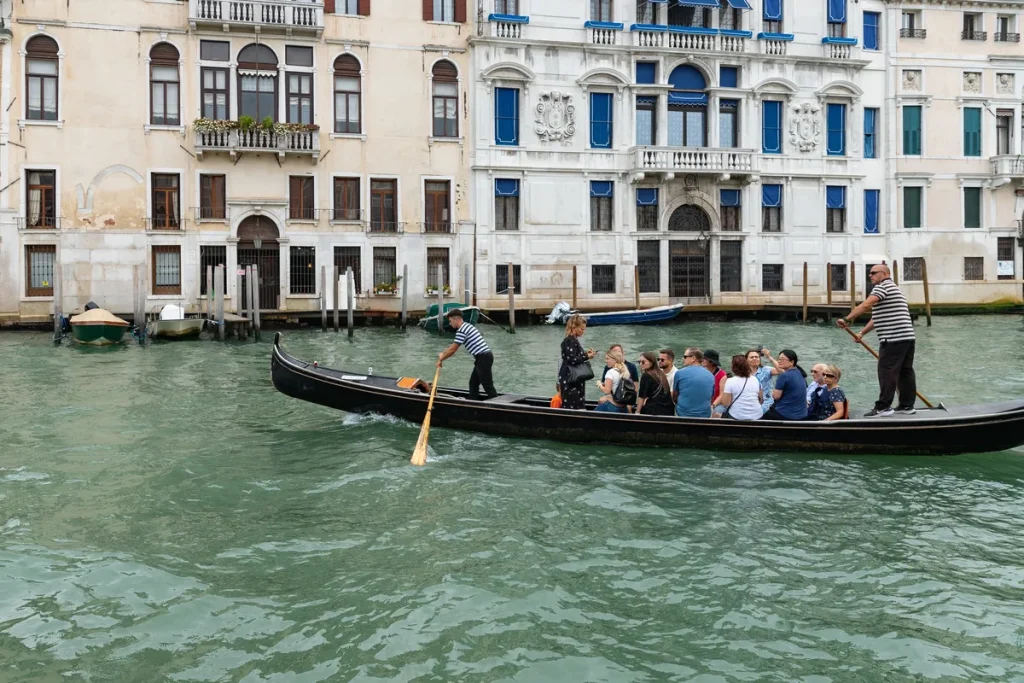
The traghetto (€2-€3): Only four bridges cross the full length of the Grand Canal. To fill the gaps, the city runs traghetti – large, undecorated gondolas rowed by two gondoliers. Board at specific wooden docks (the one near the Rialto Market is the easiest to find), hand over €2-€3 in coins, and they row you across. The ride takes 90 seconds. Tradition says you stand for the crossing.
The Outer Islands
If you have more than 48 hours, get on a Vaporetto and leave the main island.
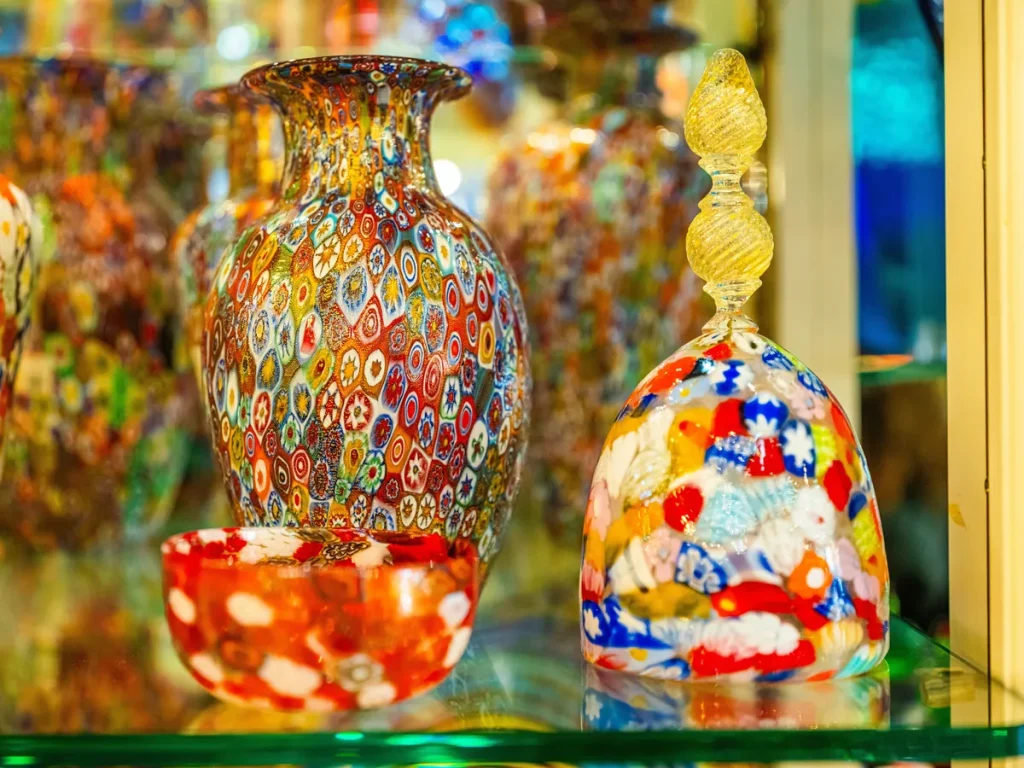
Murano: In the 13th century the Venetian Republic relocated all glassmakers here – officially to prevent fires in the wooden city, practically to isolate them and protect their trade secrets. You can watch master blowers work in small workshops for a few euros. One warning: do not accept a “free boat ride” to Murano from anyone outside your hotel. It is a setup – they take you to a specific factory, lock the doors, and pressure you into buying overpriced glass. Take the public Vaporetto (Line 4.1 or 4.2) and arrive independently.
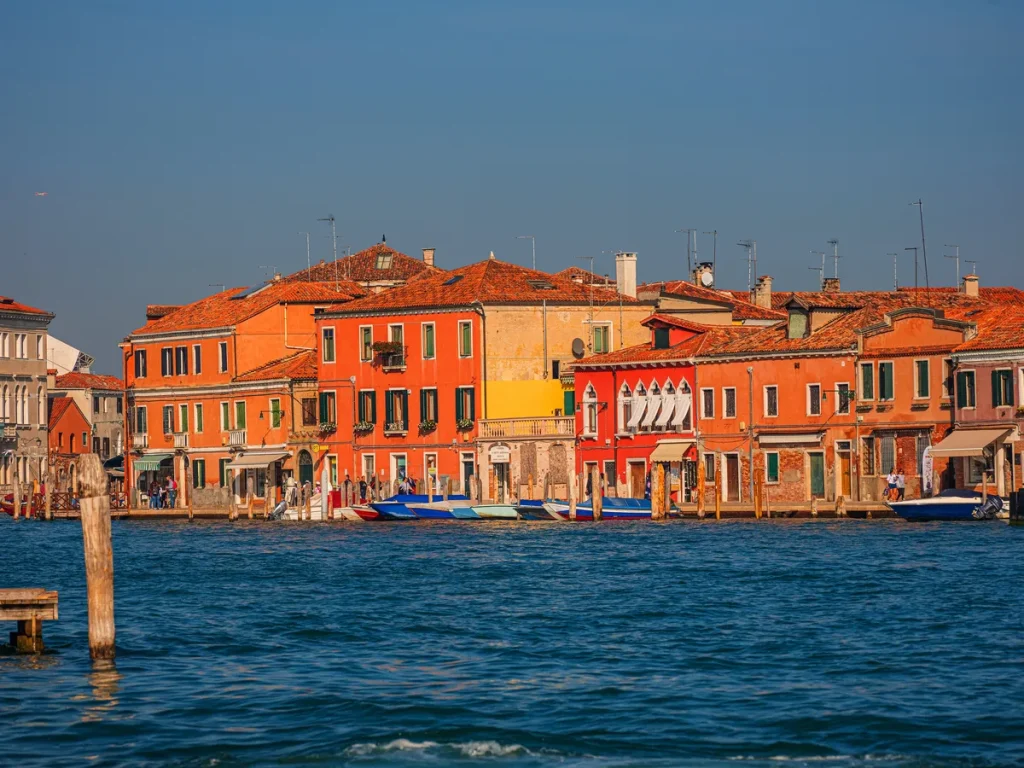

Burano: About 45 minutes out on Line 12, this small fishing island is famous for lace-making and intensely coloured houses – fishermen painted them bright colours to spot them through the winter lagoon fog. Go early morning, before the afternoon crowds arrive. Buy a bag of Bussolà (dense, S-shaped butter cookies, the local specialty) and walk the canals while they are quiet.


Do I need to book everything in advance?
The Doge’s Palace Secret Itineraries tour and the Basilica skip-the-line ticket should both be booked before you travel. The Campanile timed entry can usually be sorted a day or two ahead. If you are visiting in peak season (April-October), book all three as early as possible.
How many days do I need in Venice?
Two full days covers the main island thoroughly if you are efficient. Three days lets you add Murano and Burano without rushing. One day is doable but you will leave feeling like you only saw the surface. For a full day-by-day breakdown, see the 3 days in Venice itinerary.
Is Venice worth the cost?
It is one of the more expensive cities in Italy – the isolation makes everything cost more. The bacaro crawl keeps food costs manageable. The ACTV pass keeps transport reasonable. The access fee is minor. Where people overspend is restaurants in San Marco and water taxis taken unnecessarily. For neighbourhood-by-neighbourhood pricing context before you book, the where to stay in Venice guide breaks down what each area actually costs.
When is the worst time to visit?
July and August are the most crowded and hottest months. Acqua alta (flooding) peaks between October and January – not a reason to avoid it, but bring waterproof shoes and check the tide forecast app (Città di Venezia) daily.
Is Venice suitable for visitors with mobility issues?
The 435 bridges are the main obstacle, and most have steep stairs with no ramps. The city has been gradually adding accessible routes, but it remains genuinely difficult to navigate in a wheelchair. The Vaporetto is accessible at most stops.
First Time in Venice — Orientation Map
Where things are, how to arrive, where to sleep, and what to avoid. Click any pin.