
Visiting Granada on a budget is surprisingly easy because it remains the best-value city in Andalusia. The reason is structural: this is the last major Spanish city where ordering a drink means receiving a free plate of food. Execute the tapas economy correctly and your evening food bill disappears entirely.
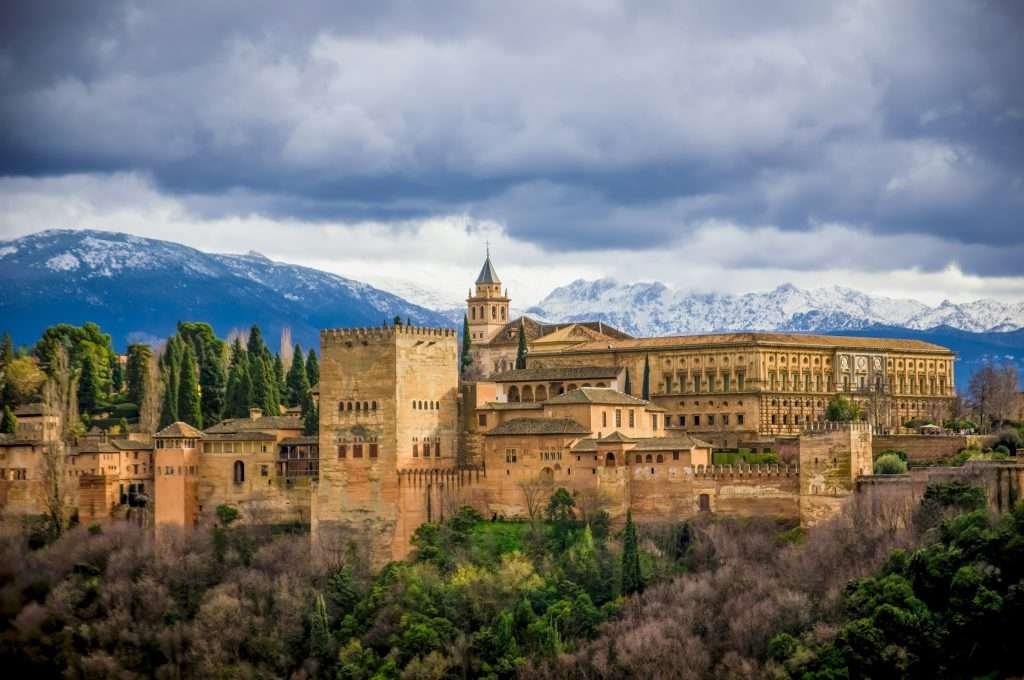
The catch is the Alhambra. Because it is the most visited monument in Spain, a layer of overpriced tourist infrastructure surrounds it. Miss the ticketing window and you lose the main event. Misjudge the topography and you end up in a taxi queue at the top of the Albaicín with broken suitcase wheels. This guide covers both the savings and the traps.
For the full picture of what Granada offers before you budget for it, our first time in Granada guide covers the logistics of the minibus network, the steep neighborhoods, and how to arrive without drama.
The Free Tapas Economy
In Madrid and Barcelona you pay for tapas. In Granada, the concept of paying for a tapa is treated as a violation of the social contract. Order a drink and a plate of food arrives. This is not a promotion – it is how the city works.
The mechanics:
Walk into a traditional bar. Push to the metal counter. Do not look for a menu. Order your drink:
- Una caña – small draft beer, €2.50-3.00
- Un tinto de verano – red wine with lemon soda and ice
- Un mosto – non-alcoholic grape juice, for non-drinkers

A few minutes after your drink arrives, a small plate of food follows. You did not order it. You do not pay extra for it.
The escalation system
In most traditional bars you do not choose your tapa – the kitchen decides. Your first drink usually yields something basic: potato salad, olives, bread with ham. Order a second drink and the plate improves. By the third round you are receiving fried fish, miniature burgers, or slow-cooked pork cheek (carrillada). The kitchen is rewarding you for staying.
The crawl strategy
One drink, eat the food, pay around €3, move to the next bar. Do not stay for four rounds – the escalation resets at each new venue and you see more of the city. A complete evening of three bars, three drinks each, costs €9 in beer and produces the equivalent of a full dinner.
Where to go
Calle Navas in the historic center is tourist-facing. The free tapas there have shrunk and the portions are dispiriting. Go to the neighborhoods:
- Realejo (the old Jewish quarter at the base of the Alhambra): authentic standing-room bars, consistent free food, no tourist pricing
- Zaidín (south of center, residential and working-class): requires a bus ride but the portions are the largest in the city – two beers here equals dinner
- Bar Los Diamantes on Calle Navas: despite the street, one of the few exceptions – chaotic, loud, specializing in free fried seafood
- La Riviera: one of the rare bars where you actually choose your free tapa from a short menu
The full tapas guide – which bars deliver on the free food promise, what to order, and how to read the room – is in our what to eat in Granada guide.
The Alhambra: Ticketing and the Free Sections

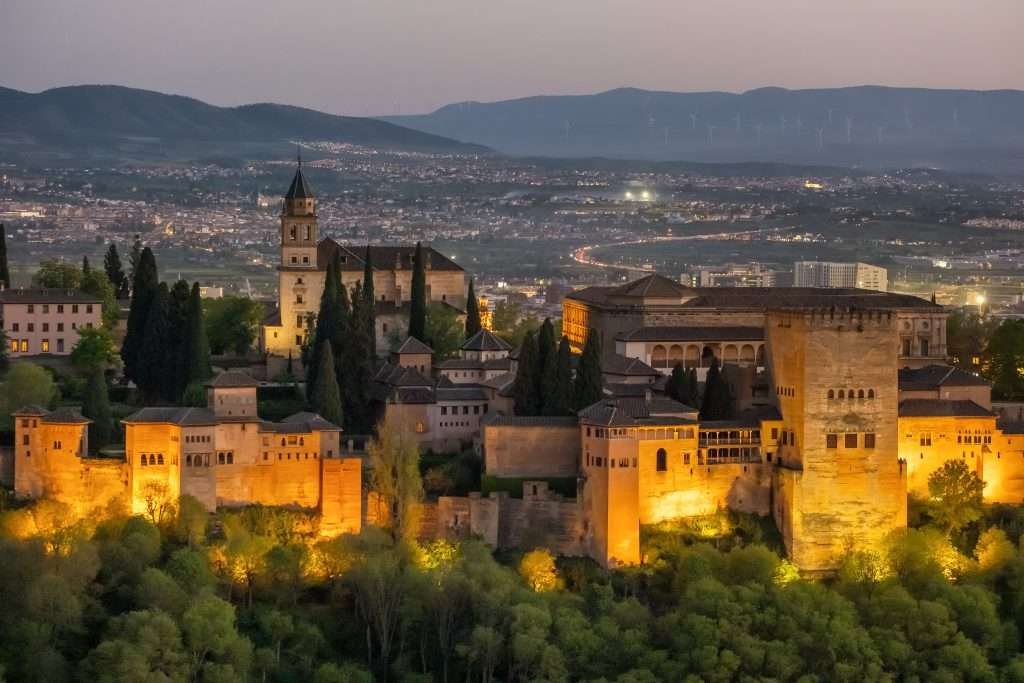
If you are visiting Granada on a budget, the Alhambra is likely your biggest single expense. It is a fortified hilltop city, not just a palace. The Nasrid Palaces inside are the most complex Islamic interiors in Europe. You must see them, but you must also book months in advance
The ticketing rules
Tickets are €19 and sold through the official Patronato de la Alhambra website. They sell out 2-3 months ahead in spring and summer.
- Your ticket includes a specific 30-minute entry slot for the Nasrid Palaces. Arrive 15 minutes late and the guards turn you away with no refund. No exceptions.
- Tickets are nominal – bring the physical passport used during booking. They scan it at the gate to prevent resale.
Book the moment your travel dates are confirmed. Our 25 best things to do in Granada guide has the full breakdown of what to prioritize inside the complex and how long to allocate each section.
If tickets are sold out
Around 40% of the hilltop complex requires no ticket. Walk up the Cuesta de Gomérez through the Alhambra forest and enter through the Puerta de la Justicia (the 14th-century Moorish archway). You are inside the walls.
- Palace of Charles V: A Renaissance palace dropped into the middle of the Moorish complex by the Holy Roman Emperor after the Reconquest. The exterior is a severe square. The interior is a circular colonnaded courtyard of considerable architectural quality. Completely free.
- Museum of Fine Arts: Top floor of Charles V’s palace. Free for EU citizens, €1.50 for non-EU.
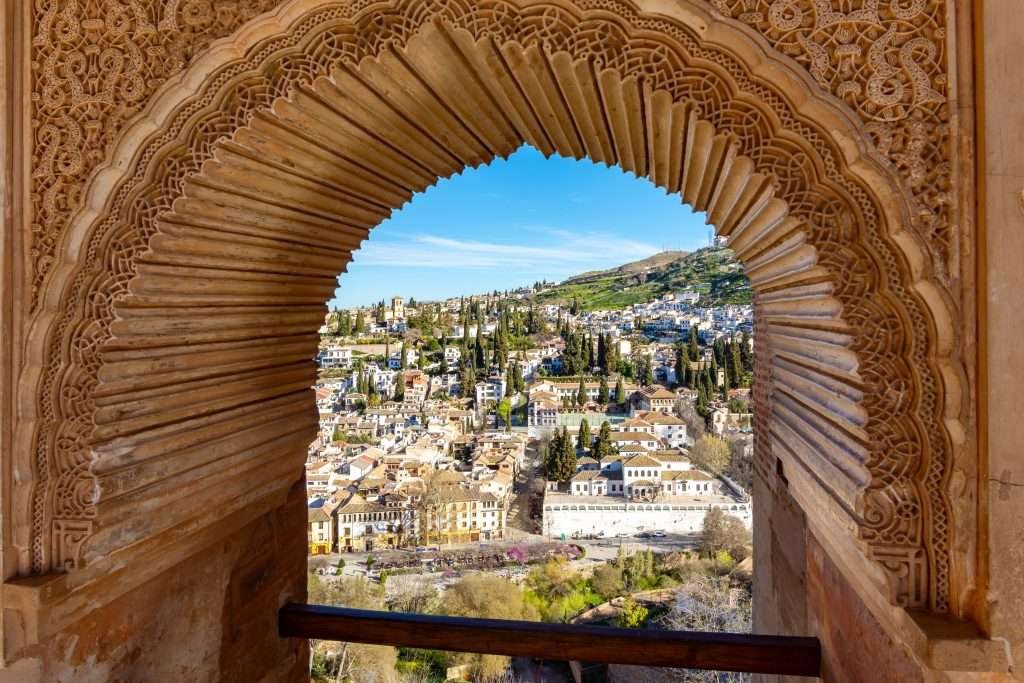
- Wall views near the Puerta del Vino: Free views down into the Albaicín neighborhood from the defensive walls.

The Albaicín: The Physical Reality
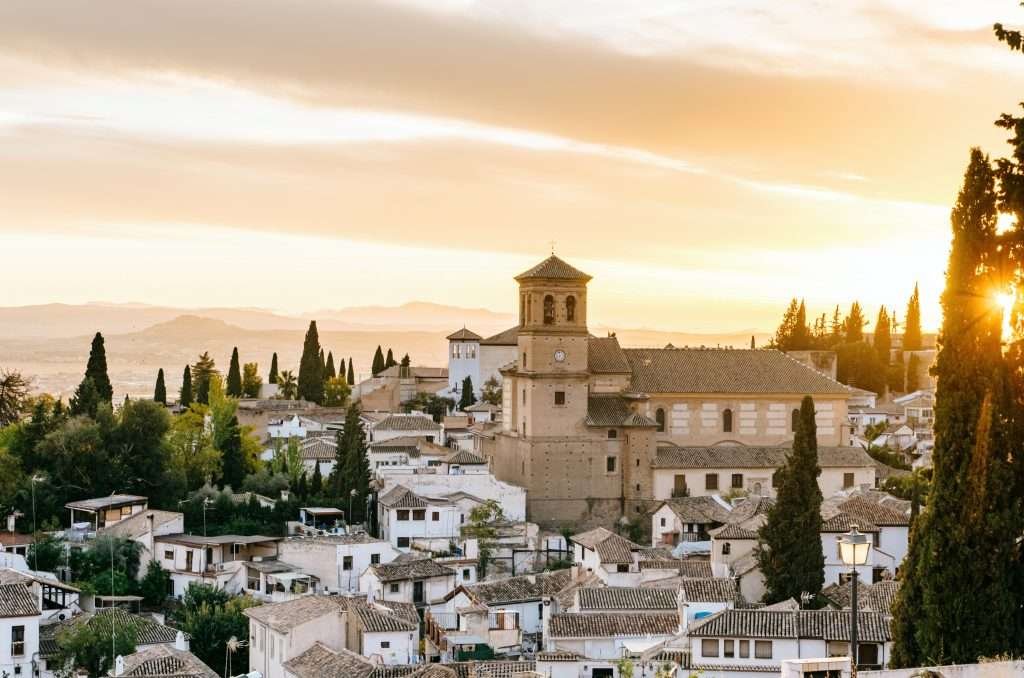
Across the Darro River valley from the Alhambra sits the Albaicín – the ancient Moorish quarter, a white labyrinth of cobblestone alleys, hidden courtyard gardens, and steep climbs. It is the most visually striking neighborhood in the city and a genuine physical challenge.
The heat warning
In July and August, the valley traps heat and temperatures regularly exceed 40°C. Do not hike the Albaicín between noon and 5 PM in summer without serious water supply. Visit in the morning or after 6 PM.
The three viewpoints, ranked honestly
- Mirador de San Nicolás: The most famous. Bill Clinton called it the most beautiful sunset in the world. By 5 PM it is a shoulder-to-shoulder crowd of tourists competing for the same photograph, with aggressive buskers and active pickpockets working the density. The view is genuinely good. The experience is not. If you go, arrive before 9 AM or after 9 PM.
- Mirador de San Miguel Alto: The correct answer for budget travelers willing to walk. Hike past the top of the Albaicín on the dirt paths to the Ermita de San Miguel Alto – the highest point overlooking the city. You look down at the Albaicín, the Alhambra, and the full valley. The crowd is local students with supermarket beer and acoustic guitars. Free, sparse, and the actual panorama.
- Mirador de San Cristóbal: Western edge of the Albaicín near the main road. Quieter than San Nicolás, excellent view of the fortress. A good compromise if San Miguel Alto is too far.


The Flamenco Trap
Past the Albaicín, the paved roads end and the terrain becomes dusty. This is Sacromonte – the historic Roma neighborhood, birthplace of Zambra flamenco, where residents historically lived in caves carved directly into white rock.

What to avoid
The commercial caves on Camino del Sacromonte sell “Flamenco and Dinner” packages for €35-50. The food is poor. The flamenco is skilled but staged for tourist turnover – the same synchronized show running every two hours for different bus groups. Skip it.
What to do instead
- Peña La Platería in the Albaicín: the oldest flamenco club in Spain. A peña is a local cultural association – no theatrical lighting, cheap chairs, local artists performing without microphones. Cover charge €10-15. The difference in authenticity is significant.
- Bar Candela in the Realejo: a small cave bar where local guitarists sometimes appear after midnight and play for the crowd. No cover charge beyond the cost of a beer. Not guaranteed, but when it happens it is the real thing.
Tea Houses: Cheap Calories and Rest
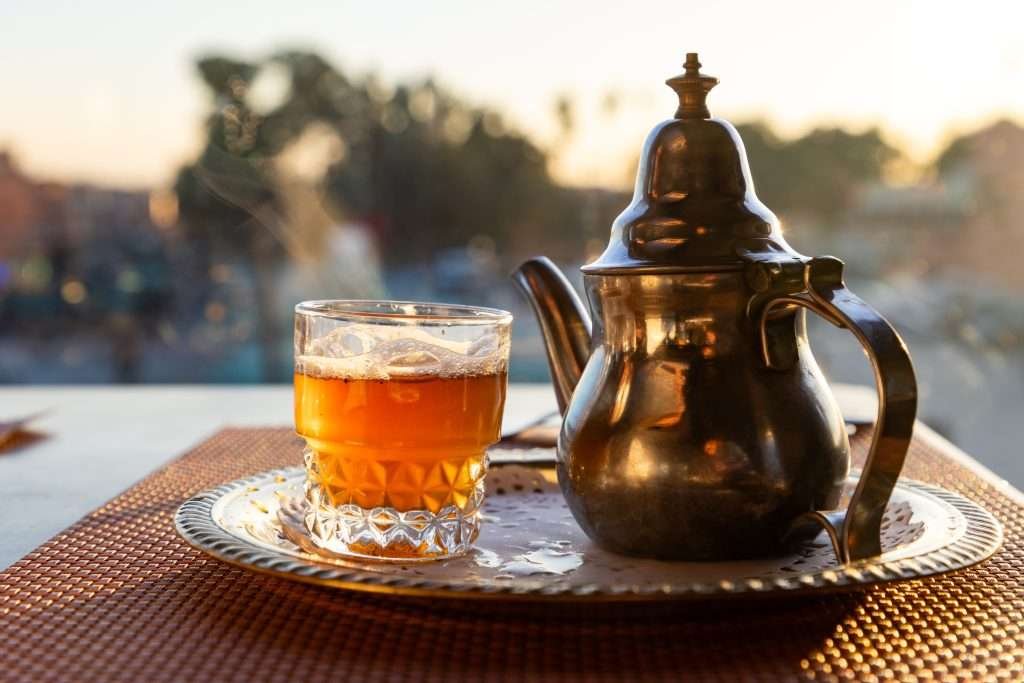
Walk down Calle Calderería Nueva in the lower Albaicín and you enter what locals call “La Calle de las Teterías.” Brass lamps, leather goods, spices – it looks like a Moroccan souk and functions like one.
The tea houses (teterías) here are useful for budget travelers not because they are free, but because they are cheap, filling, and give your legs a rest after the Albaicín climbs.
Walk into any decorated tetería – Tetería Dar Ziryab and Tetería Alfaguara are reliable. For €4-6 you get a large silver teapot of Moroccan mint tea or spiced black tea. Pair it with pastelas – dense phyllo pastries packed with crushed almonds and pistachios, drizzled in honey. The combination costs around €8, occupies an hour, and replaces a sit-down dinner if you have already eaten on the tapas crawl.
Getting There and Getting Around
From the airport
Federico García Lorca Granada Airport (GRX) is 15 km from the center. A taxi costs €30-35 flat rate. Instead, take the ALSA airport shuttle bus – it meets every arriving flight, costs €3, and drops you directly on the Gran Vía de Colón in the historic center. You save €27 before you check in.
The red minibuses
Granada’s red C-line minibuses are the solution to the topography problem. Lines C31 and C32 run a continuous loop from Plaza Nueva up through the Albaicín and over to the Alhambra. Cost: €1.40 per ride.
Use them going uphill. Walk downhill for free. Do not drag a rolling suitcase up the Albaicín cobblestones – you will destroy the wheels and arrive soaked. Take the C31 to your accommodation, then walk back down into the center.
Bus vs. train from the coast
If you are coming from Málaga or Seville, the ALSA bus network is more direct and cheaper than the train connections across southern Andalusia. Málaga to Granada by bus: 90 minutes, around €12. Air-conditioned, Wi-Fi, direct. The train routes require transfers and are slower.
Free Monuments and Hidden Parks
The Royal Chapel over the Cathedral
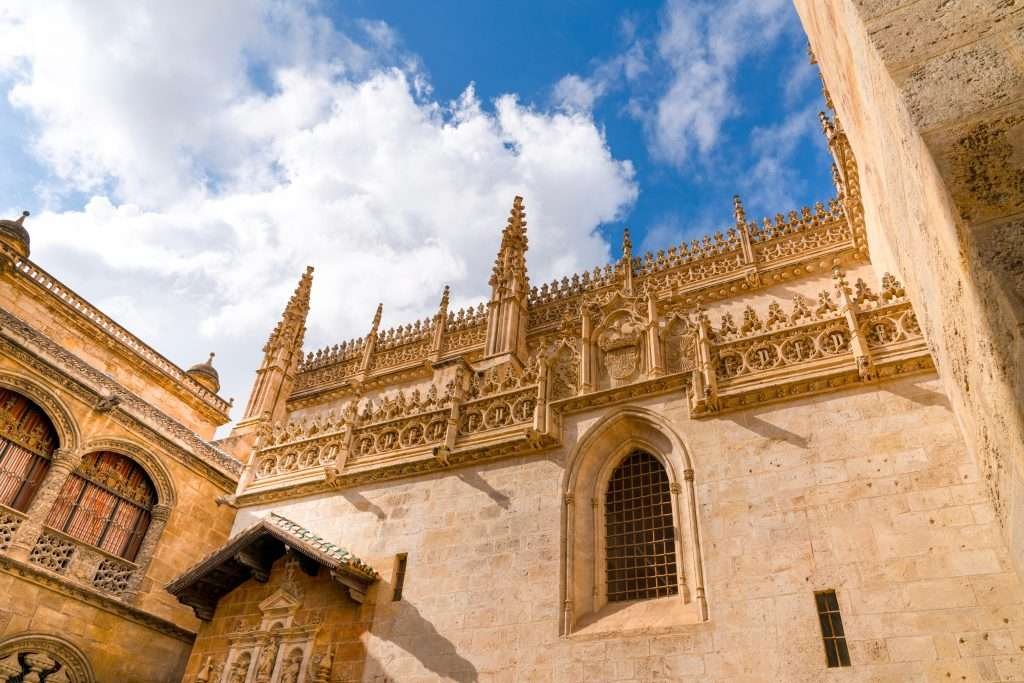
The Granada Cathedral charges €6 to enter. If you are rationing your budget, skip the main Cathedral and pay €6 for the Capilla Real (Royal Chapel) instead. You walk down into an underground crypt to view the lead coffins of Queen Isabella and King Ferdinand – the monarchs who conquered the city, expelled its Moorish population, and funded Columbus. It is claustrophobic, eerie, and one of the genuinely significant rooms in Spanish history. Far more interesting than the Cathedral nave.
Carmen de los Mártires
On the Alhambra hill, a short walk past the main ticket offices, is the Carmen de los Mártires – a 19th-century estate with French and English-style gardens, romantic grottos, and an artificial lake. Entry is completely free. Almost no tourists find it because they are focused on the Alhambra entrance 200 meters away. It is quiet, populated by wild peacocks, and gives you the royal garden atmosphere without the ticket price.
For how all of this fits into a structured multi-day visit, our 3 days in Granada itinerary sequences the Alhambra, Albaicín, Sacromonte, and tapas crawl across three days without overlapping or backtracking. And if you are still deciding where to base yourself, our where to stay in Granada guide covers which neighborhoods require the red minibuses and which ones put you within walking distance of everything.
FAQ
Is the tap water safe to drink?
Yes, and it is excellent. Granada’s tap water comes from Sierra Nevada glacial snowmelt – cold, clean, and better-tasting than most bottled water in Spain. Bring a reusable bottle.
Best area for budget travelers?
The Realejo for proximity to the best tapas bars and walking access to the Alhambra paths. The Centro Histórico near the Cathedral for flat terrain, easy bus connections, and cheaper accommodation. Avoid booking deep in the Albaicín with a rolling suitcase.
Do I tip bartenders for free tapas?
No. The cost of the food is built into the drink price. Leaving exactly what you owe is correct and expected.
Best time to visit?
April-May or October. Temperatures around 20-25°C, the Alhambra grounds are in full color, and crowds are manageable. Avoid July and August – the valley traps heat above 40°C and the Albaicín is genuinely dangerous to hike in midday.
Best budget souvenir?
Skip the magnets. In the Alcaicería (the ancient Arab market near the Cathedral) or the Albaicín, look for Taracea – Moorish marquetry inlaying microscopic pieces of bone, mother-of-pearl, and colored wood into geometric patterns. Small authentic boxes start at around €15.