What to eat in Valencia is a question dictated by the city’s unique geography. Flanked by the Mediterranean to the east, citrus orchards to the north, and the Albufera rice paddies to the south, the city produces a cuisine with its own rules, its own seasonal calendar, and its own traditions.
It is also a city where tourists regularly pay €20 for frozen, reheated rice because they do not know the signals. This guide exists so that does not happen to you.
For the logistics of getting around, what to pay for, and how to sequence your time, our first time in Valencia guide and 25 best things to do in Valencia cover the rest.
The Paella Rules
You are in Valencia. Eating paella here is non-negotiable. Understanding what you are eating is equally non-negotiable.
The ingredients
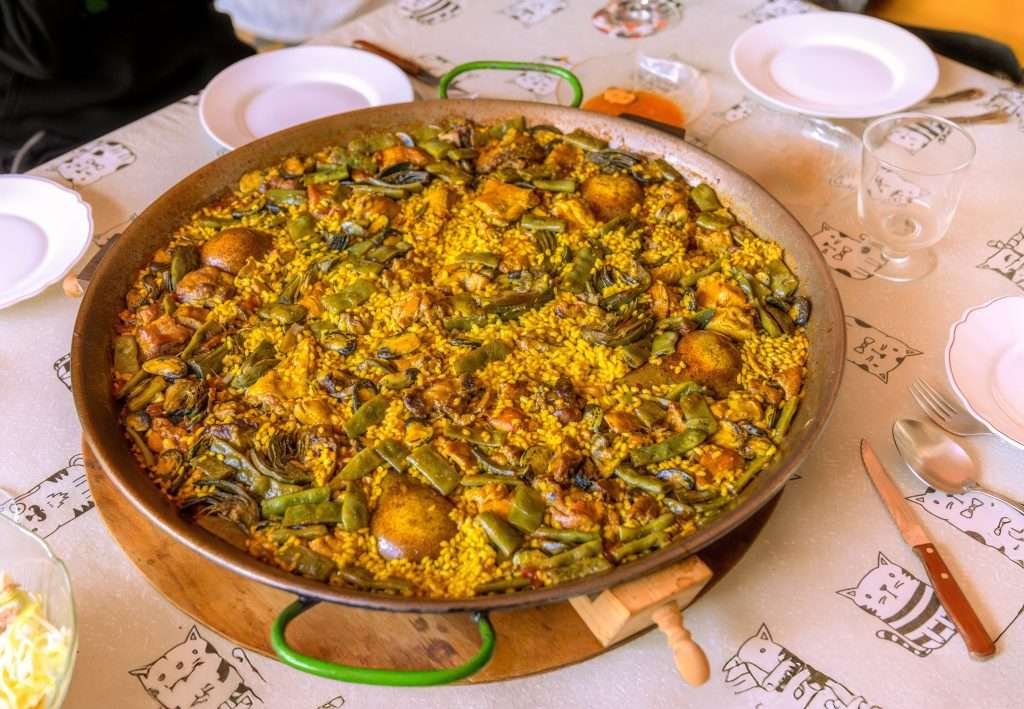
Authentic Paella Valenciana contains chicken, rabbit, flat green beans (bajoqueta), large white butter beans (garrofó), saffron, rosemary, crushed tomato, olive oil, and short-grain rice – exclusively Bomba, Senia, or Albufera varieties. Traditionally also includes snails (vaquetes).
It does not contain seafood. It does not contain peas or bell peppers. It absolutely does not contain chorizo. Chorizo in a paella is treated locally as a serious culinary offense – this is not an exaggeration, it is a genuine cultural flashpoint. If you want prawns and mussels, order Paella de Marisco. The mixed meat-and-seafood version is largely a modern invention for tourists.
The time
Locals eat paella for lunch only, between 2:00 PM and 4:00 PM. It is too heavy to eat before bed. Any restaurant advertising paella dinners at 8:30 PM is targeting tourists who do not know this.
The cooking time
Real paella takes a minimum of 40 minutes from order to table. The rice must absorb the broth slowly in a wide, shallow carbon-steel pan – the word paella refers to the pan, not the dish – to create the socarrat, the caramelized crust of rice at the bottom that is the most prized element. If your paella arrives in 10 minutes, it was frozen and reheated.
The socarrat
When you get a real paella, do not complain about the burnt rice at the bottom. Use your spoon to scrape it off the pan. That is the point.
The fire
The best paellas are cooked over open fires fueled by local orange wood (leña de naranjo). The wood infuses a subtle smokiness and allows the chef to control heat distribution in a way a gas stove cannot.
Where to eat it
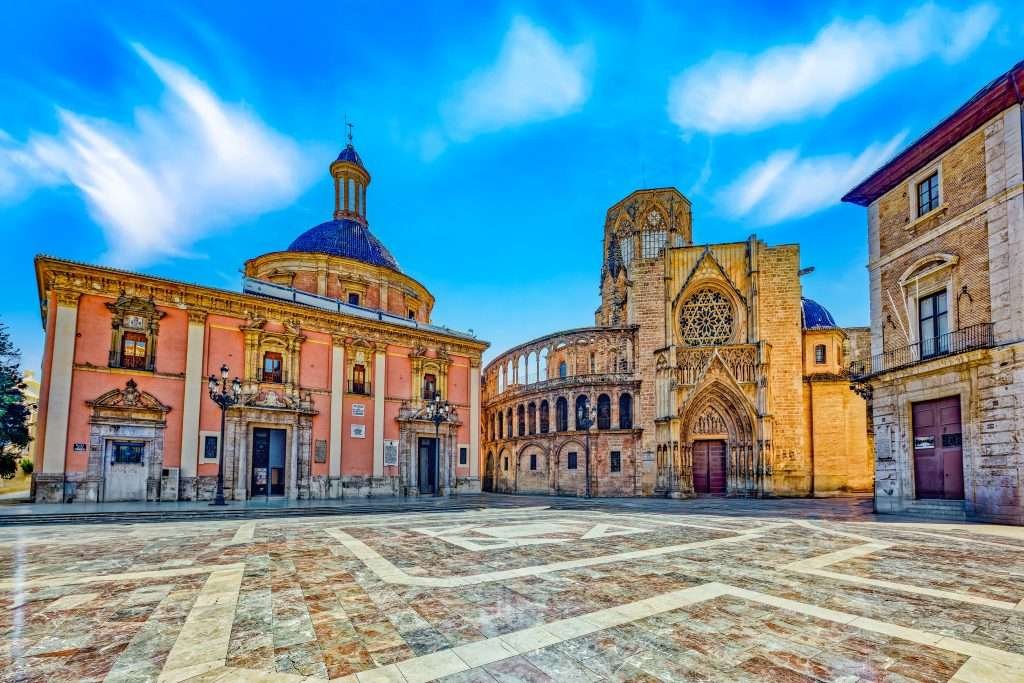
Do not eat paella in the Plaza de la Reina or the Plaza de la Virgen.
- Casa Carmela: Near Malvarrosa beach, cooking over an open wood fire since 1922. Rice served in the pan at the center of the table, eaten with a wooden spoon. Book weeks ahead.
- El Palmar: Take the city bus south to this small village on the Albufera lagoon – where paella was actually developed by field workers. The rice is grown in the surrounding paddies. Competition between restaurants is intense and prices are significantly lower than the city center.
L’Esmorzaret: The Mid-Morning Meal
Between 9:30 AM and 11:30 AM, a significant portion of Valencia stops for L’Esmorzaret – the mid-morning second breakfast. Bankers, builders, students, and politicians crowd into local bars for a three-part ritual designed to carry you through until the 2:30 PM lunch. It is cheap, caloric, and one of the most distinctly Valencian things you can do.
Phase 1 – La Picaeta
The moment you sit down, a small plate arrives: brined peanuts (cacahuetes), seasoned olives, and pickled lupin beans (altramuces). Always accompanied by a draft beer (caña) or tinto de verano (red wine with soda water and ice).
Phase 2 – El Entrepà
A large crusty baguette stuffed with heavy, cooked ingredients. The classic options:
- Chivito: Grilled pork loin, bacon, fried egg, cheese, lettuce, tomato, mayonnaise. The most caloric and most popular.
- Blanco y Negro: Morcilla (blood sausage) and longaniza (white pork sausage) with slow-cooked broad beans.
- Almussafes: Sobrasada (spreadable spiced cured pork), caramelized onions, melted cheese.
- Briscada: Thin-sliced beef, grilled onions, sharp mustard.
Phase 3 – El Cremaet
The bartender takes dark rum, sugar, a cinnamon stick, and lemon peel, and sets it on fire in a clay cup, burning off the harsh alcohol. When the flame dies to a blue flicker, a shot of espresso goes in over the top. Warm, sweet, caffeinated, and cuts through the grease of the sandwich precisely.
Where to go: Any unpretentious neighborhood bar in Ruzafa, El Cabanyal, or Benimaclet. Specific institutions: Bar La Pascuala (famous for oversized sandwiches) and Pelayo Gastro Trinquet (a restaurant inside a functioning historic handball court).
The Rice Dishes Beyond Paella
Paella dominates the conversation but Valencians eat several other rice and noodle dishes regularly. Menus categorize them by texture: Seco (dry, like paella), Meloso (creamy, closer to risotto), and Caldoso (soupy, served in a bowl).
Fideuà
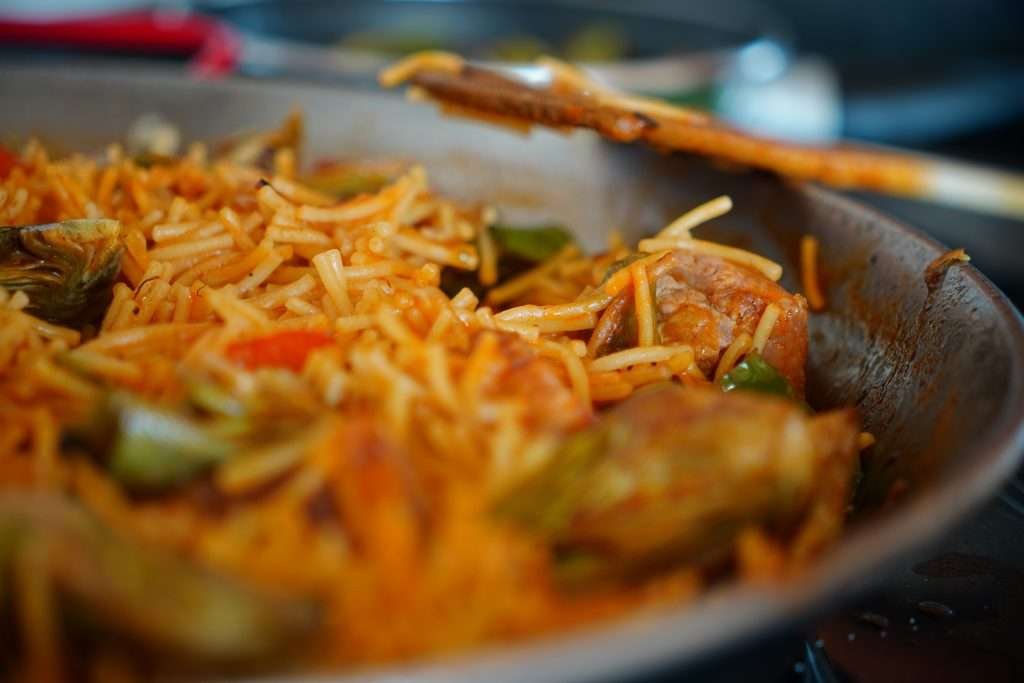
Born in nearby Gandia, supposedly invented by fishermen who forgot to bring rice. Same wide pan as paella, but short hollow pasta noodles instead of rice, cooked in rich dark seafood broth with cuttlefish, monkfish, and large red shrimp. Eat it with allioli – raw garlic emulsified with olive oil – stirred directly into your portion.
Arroz al Horno
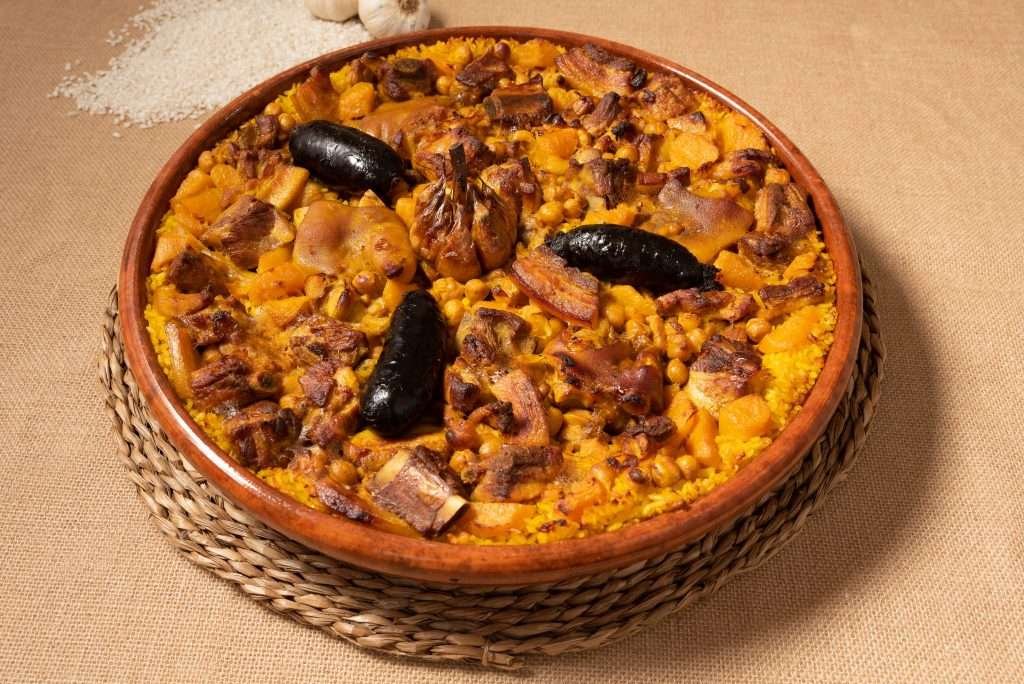
The winter version. Cooked in a deep clay pot in the oven rather than over a flame, using leftover meats from a traditional stew. Pork ribs, blood sausage, chickpeas, bacon, tomatoes, and a whole head of unpeeled garlic roasted in the center of the rice. Rich, fatty, deeply savory.
Arroz a Banda
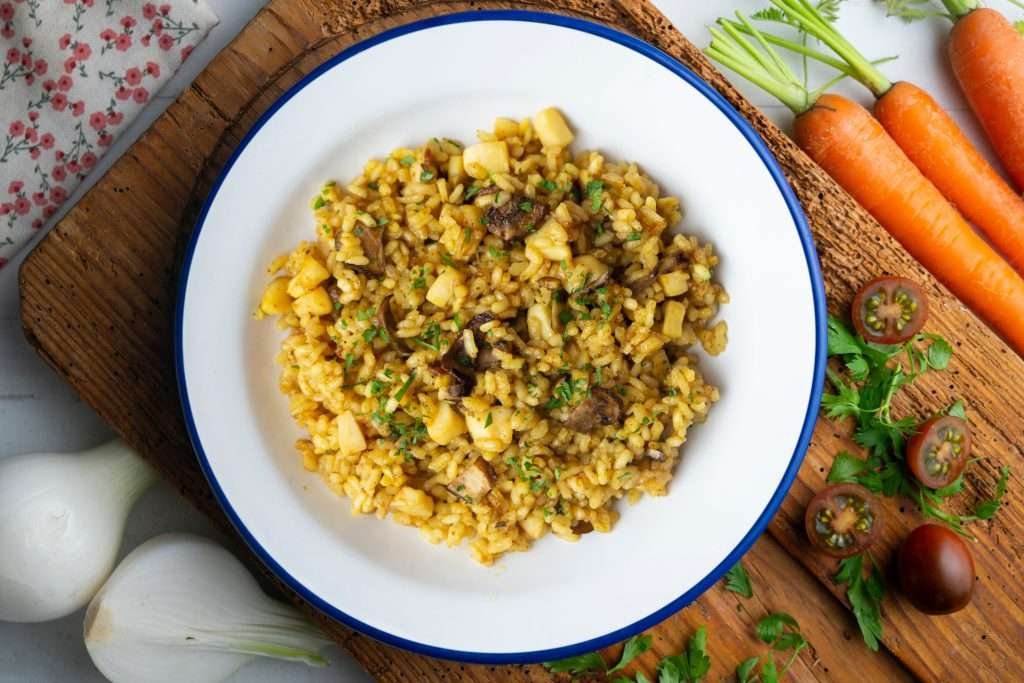
Translates to “rice on the side.” Originally a fishermen’s dish: cheap fish boiled with potatoes and onions for stock, fish eaten separately, then the stock used to cook a plain dry rice. Today a deeply flavorful yellow rice served with allioli. Deceptively simple-looking.
Arroz Negro
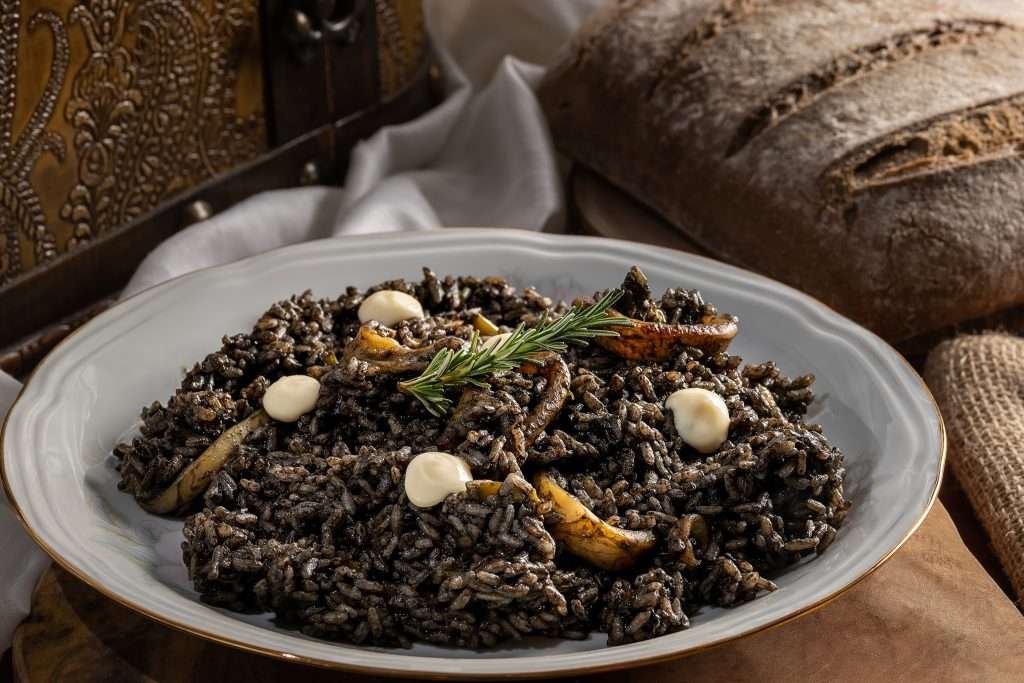
Short-grain rice cooked in cuttlefish or squid broth dyed jet black with squid ink. Studded with squid and shrimp. The ink provides a briny, earthy depth. Serve with garlic mayonnaise.
Local Tapas and Seasonal Specialties
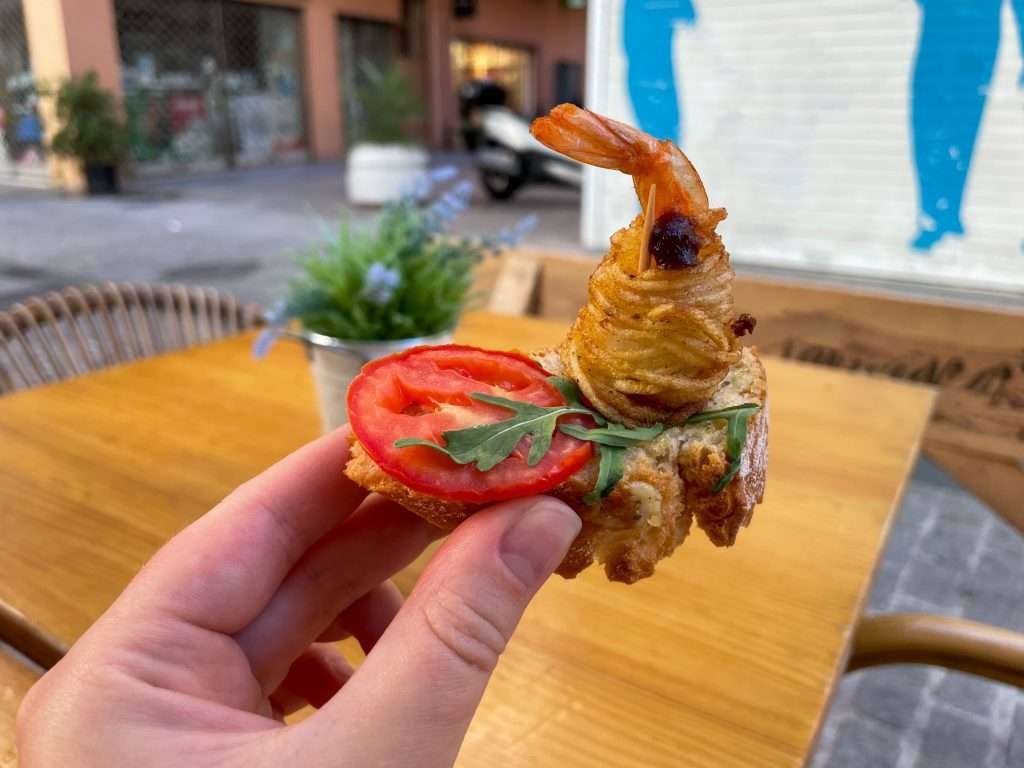
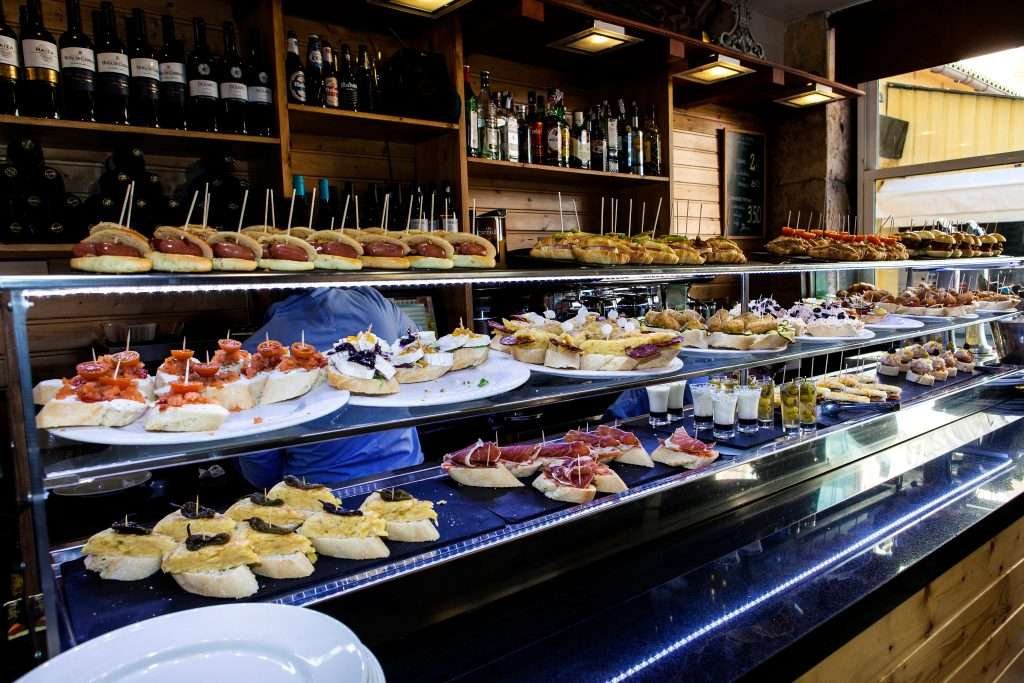
Valencia is not a free-tapas city like Granada – you pay for everything here. But the local small plates are specific to this region and worth knowing.
Esgarraet
Roasted red peppers, blistered in the oven and torn into strips by hand, mixed with shredded salt cod (bacalao), raw garlic, and good local olive oil. Sweet peppers against salty fish. You eat it by dragging bread through the oil at the bottom of the plate.
All i Pebre
A working-class stew from the Albufera lagoon: wild eel and potatoes in a broth of crushed garlic, smoked paprika, chili, and ground almonds. Earthy, slightly spicy, completely local. Order it if you see it.
Clóchinas – the seasonal mussel
A small species of Mediterranean mussel grown exclusively in Valencia’s coastal waters. Smaller than standard Atlantic mussels, sweeter, softer, more intensely flavored. Only available in months without an “R” in their Spanish name: Mayo, Junio, Julio, Agosto (May-August). If you order them in October, you are eating imports. Served simply: steamed with lemon, garlic, and a bay leaf. When restaurants chalk “Hay Clóchinas” outside, that is the signal.
Titaina
From El Cabanyal, the fishermen’s quarter behind Malvarrosa beach. A slow-roasted tomato and pepper stew with pine nuts and tonyina de sorra (cured, salted tuna belly). Concentrated, umami-heavy, eaten with bread or used as an empanada filling.
Tellinas
Tiny, flat clams harvested from the Mediterranean shoreline. Ordered by the plate – there are many and they are small. Grilled on a flat-top with garlic, olive oil, and parsley. You eat them by sucking the meat from the shell.
Drinks and Desserts
Horchata and Fartons
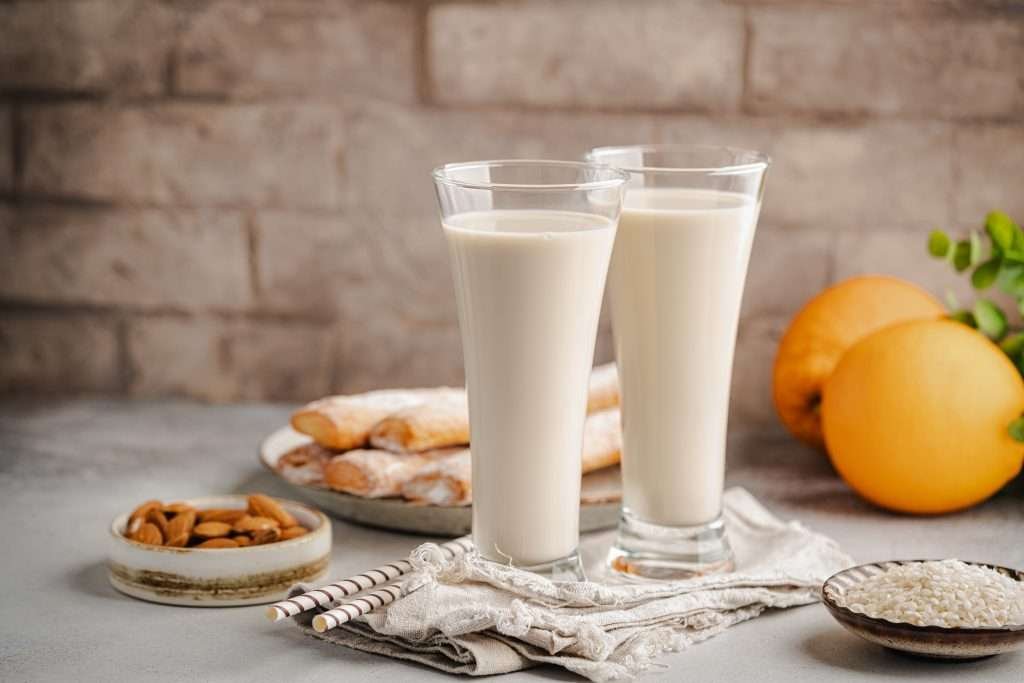
Forget Mexican horchata – this has no rice and no cinnamon. Valencian Horchata de Chufa is made from tiger nuts (small root tubers grown almost exclusively in the sandy Alboraya district north of the city), ground and pressed with water and sugar. Cold, milky, earthy, and specific to this region.
You order it with Fartons – long, airy, cylindrical sugar-glazed pastries that you dip directly into the horchata to soak up the liquid before eating.
Avoid the tourist squares for this. Go to Horchatería Santa Catalina in the historic center, or take the metro to Alboraya village to visit Horchatería Daniel, where the tiger nuts come from.
Agua de Valencia
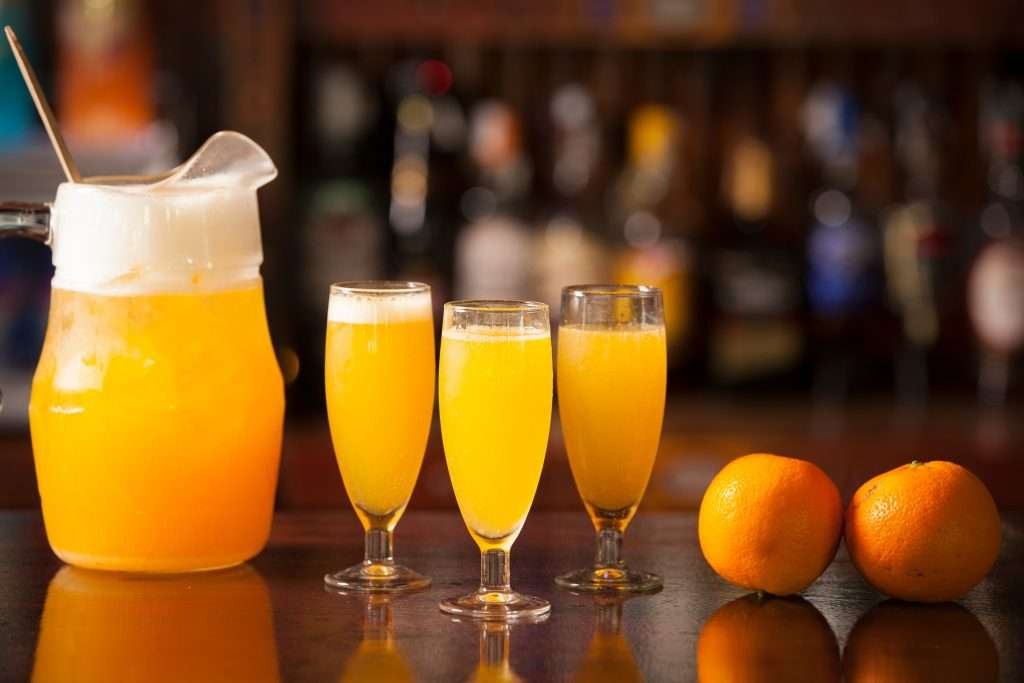
Fresh orange juice, cava, vodka, and gin. Served in large glass pitchers. It tastes like orange juice and has the alcohol content of three cocktails. It goes down easily in the afternoon sun and will end your day if you underestimate it. Order it to split with a group, not alone.
The classic venue: Café de las Horas, an extravagantly decorated neo-Baroque cafe near the Cathedral.
Bunyols de Carabassa (Las Fallas only)
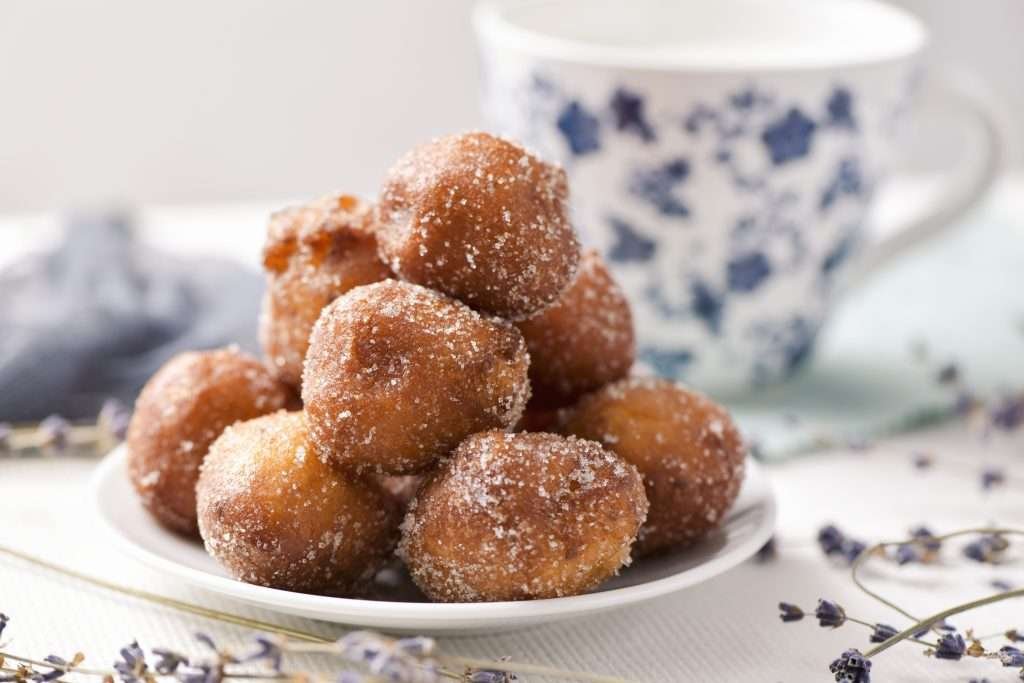
If you visit in March during Las Fallas, the streets fill with frying dough. Bunyols are deep-fried donut fritters made with roasted pumpkin dough – slightly sweet, slightly dense, orange-tinged. Served with thick hot chocolate for dipping.
Coca de Llanda
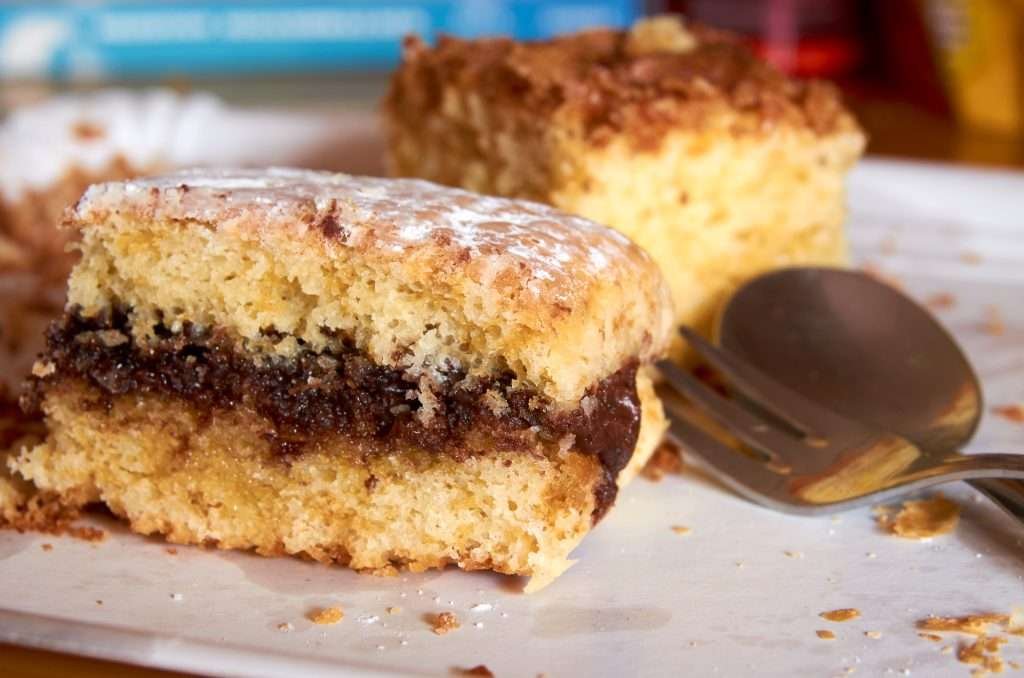
The standard bakery cake: dense olive oil sponge with lemon zest, dusted with cinnamon and sugar, baked in a rectangular tin. Cheap, available everywhere. Good with a morning coffee.
The Mercado Central
The Mercado Central is one of the largest active food markets in Europe, housed in a 1920s Art Nouveau iron and glass building. Entry is free. Open Monday to Saturday, 7:30 AM to 3:00 PM. Closed Sundays.
Central Bar: In the middle of the market floor, run by multi-Michelin-starred chef Ricard Camarena. Standing room only. He sources ingredients directly from the stalls around him. Order patatas bravas, local oysters, or a bocadillo of slow-cooked meats. Worth it.
Buying to cook or picnic: Walk past the packaged tourist displays near the entrance. Find the active charcuterie stalls where someone is slicing Jamón Ibérico de Bellota by hand. Buy 100g of ham, a wedge of sheep’s milk cheese, Valencian tomatoes, and bread. Take it to the Turia park. This beats most restaurants in the tourist zone for a fraction of the price – a strategy covered in detail in our Valencia on a budget guide.
The Dining Clock
Apply a northern European or North American dining schedule to Valencia and you will either eat alone or end up in tourist traps. The local timetable:
- Breakfast: 8:00-10:00 AM. Light – coffee and tostada con tomate (toast with crushed tomato and olive oil).
- L’Esmorzaret: 9:30-11:30 AM. The heavy mid-morning sandwich described above.
- Lunch: 2:00-4:00 PM. The main meal of the day. Paella, stews, or the Menú del Día. Arrive at noon and the kitchen is closed.
- Dinner: 9:00-11:30 PM. Lighter – shared tapas or grilled fish. Arrive at 7:30 PM and you will be alone and the staff will still be eating their own meal.
Tipping: Not expected in the way it is in North America. Leave a few coins to round up the bill after a good sit-down meal. Nothing for coffee or drinks at a bar.
Bread charge: When a basket of bread appears on the table, it is usually not free. A servicio charge of €1.50-2.50 per person will appear on the bill. Legal and standard.
Water: Tap water (agua del grifo) is safe but high in minerals and does not taste great. At a restaurant, ask explicitly for una jarra de agua del grifo to avoid paying €2.50 for a bottled water.
FAQ
What is the authentic Paella Valenciana?
Authentic Paella Valenciana consists of chicken, rabbit, bajoqueta (green beans), garrofó (white butter beans), saffron, and snails. It is never made with seafood, peas, or chorizo. To be truly authentic, it should be cooked over an orange wood fire and eaten at lunch.
Can you eat paella for dinner in Valencia?
While many restaurants serve it to tourists at night, locals only eat paella for lunch (2:00 PM – 4:00 PM). Because the dish is heavy and rice-based, it is considered difficult to digest before bed. If you see a restaurant packed with locals at 9:00 PM, they are likely eating tapas or grilled fish, not paella.
What is the best time to visit the Mercado Central?
The Mercado Central is open Monday through Saturday from 7:30 AM to 3:00 PM. It is closed on Sundays. For the best experience, arrive by 10:00 AM to see the stalls in full swing before the lunchtime rush hits the Central Bar.
What is the “Cremaet” drink in Valencia?
A Cremaet is a layered coffee drink served at the end of a mid-morning esmorzaret. It consists of rum or brandy flamed with sugar, cinnamon, and lemon peel, topped with a short espresso. It is the traditional way to finish a heavy meal in the Valencia region.
Is the tap water in Valencia safe to drink?
Yes, tap water in Valencia is safe to drink, but it has a very high mineral content and a taste many travelers find unpleasant. In restaurants, you can ask for una jarra de agua del grifo (a pitcher of tap water), but most locals prefer bottled water for flavor.