
Most first-timers to Spain split their trip between Barcelona and Madrid and never look south. That’s a mistake. Valencia is cheaper, less crowded, and arguably eats better than both of them.
Valencia doesn’t make sense on paper. A futuristic white spaceship complex sits at the end of a nine-kilometer park built inside a drained riverbed. A 15th-century silk exchange stands across the street from a market selling €3 cones of hand-sliced jamón. It is a city that fiercely protects its 15th-century Gothic silk exchanges while simultaneously boasting one of the most vibrant, youthful, and trendy foodie scenes in the Mediterranean.
Valencia runs on its own clock – different language on the street signs, different rules about rice, and a layout that confuses everyone the first day. Here’s how to navigate all of it.
(If you want a day-by-day walking plan, jump straight to my 3 Days in Valencia: The Perfect Itinerary for First Timers.)
Chapter 1: The Logistics of Arrival
Before you can order a massive pan of rice and a cold beer, you need to get your feet on the ground and figure out the layout of the city. Valencia is incredibly well-connected, but understanding how to move around will save you hours of frustration.
Getting From Valencia Airport (VLC) to the City Center Valencia’s Manises Airport is located just eight kilometers from the city center. You have a few incredibly easy options to get to your hotel:
- The Metro: This is the cheapest and most efficient route. Lines 3 (Red) and 5 (Green) run directly from the airport terminal into the heart of the city (stopping at key stations like Xàtiva and Colón). The journey takes about 20 to 25 minutes. You will need to buy a rechargeable paper or plastic transit card at the airport machine.
- Taxi or Ride-Share: If you have heavy luggage, a taxi from the airport to the historic center operates on a standard meter and will generally cost between €20 and €25. Ride-share apps like Cabify and FreeNow also operate legally and efficiently in Valencia.
The Geographic Anchor: The Turia Park To understand the map of Valencia, you must understand the Jardín del Turia. In 1957, a catastrophic flood devastated the city. In response, the government made a radical decision: they diverted the entire Turia River south of the city and turned the dry, sunken riverbed into a massive, nine-kilometer-long park.
This park curves like a green smile around the northern and eastern edges of the historic center. If you ever get lost, simply walk until you find the sunken park. It serves as the ultimate pedestrian and cycling highway, connecting the Bioparc (zoo) in the northwest all the way to the City of Arts and Sciences in the southeast.
Chapter 2: Deciphering the Valencian Culture
Valencia is not just “Spain”-it is the capital of the autonomous Valencian Community. It has its own fiercely protected culture, its own language, and its own chaotic festival that defies all logic.
The Language: Spanish vs. Valenciano When you walk the streets, look at the street signs, or read a menu, you will notice a language that looks like a blend of Spanish and Catalan. This is Valenciano. It is an official language alongside Castilian Spanish. While absolutely everyone speaks Spanish (and English is widely understood in tourist and hospitality sectors), the locals deeply appreciate it if you understand that their regional language is a point of massive cultural pride. Do not be confused if your map says “Carrer” instead of “Calle” (street), or “Plaza” is spelled “Plaça.”
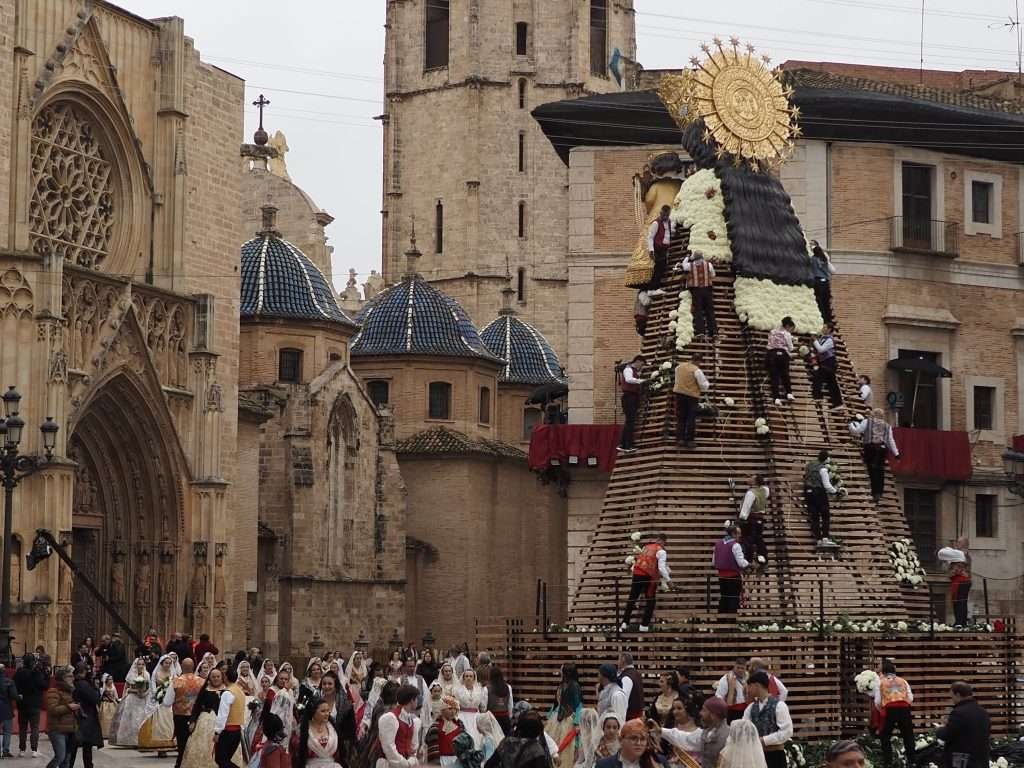
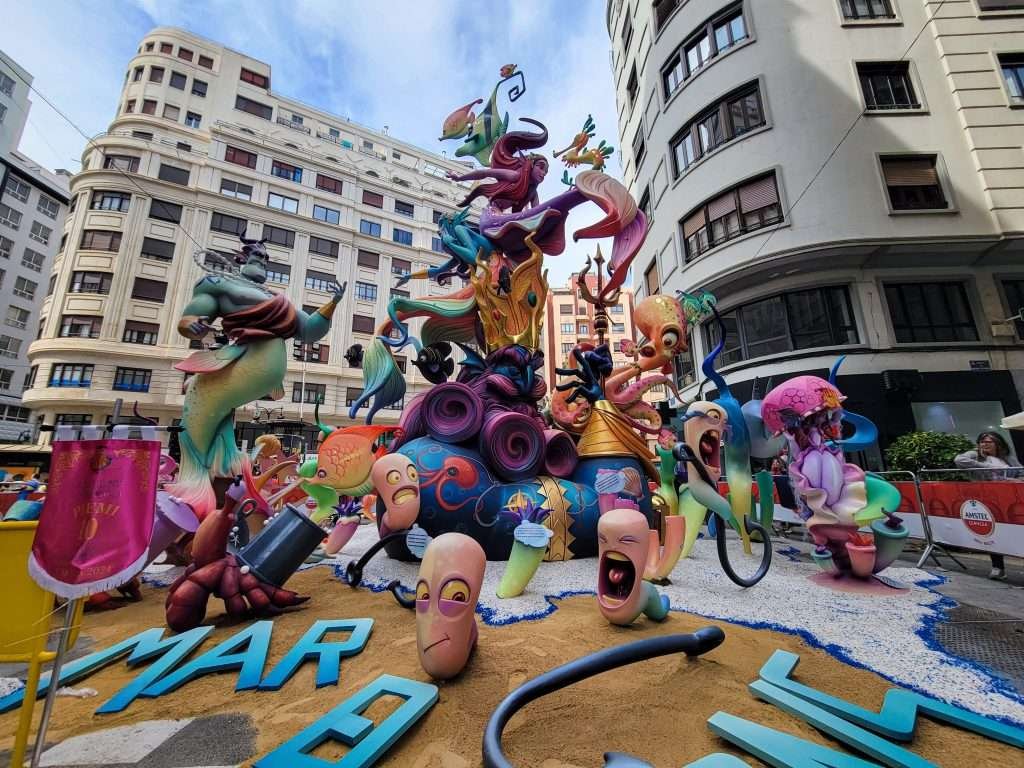
The Fallas Festival (Las Fallas) If you are planning a trip in March, you must be prepared for Las Fallas. This is a UNESCO Intangible Cultural Heritage event, and it is arguably the loudest, most chaotic street festival in Europe. Neighborhoods spend the entire year building massive, multi-story satirical sculptures out of wood and papier-mâché. They place them in the intersections, party in the streets for five days with constant firework displays, and then, on the final night (La Cremà), they burn every single sculpture to the ground. If you want peace and quiet, do not visit Valencia between March 15th and 19th. If you want the party of a lifetime, book your hotel a year in advance.
The Siesta Reality Valencia holds onto the traditional Spanish afternoon schedule a bit more tightly than Madrid or Barcelona. Between 2:00 PM and 5:00 PM, outside of the immediate tourist core around the Cathedral, you will find that small shops, independent boutiques, and neighborhood markets completely shut down. Do not plan a shopping spree at 3:00 PM. Instead, use this time exactly as the locals do: eat a massive, slow lunch, and then take a walk through the Turia Park.
Chapter 3: Setting Up Your Basecamp (Neighborhood Guide)
Valencia is a sprawling city, but the areas of interest for a first-time visitor are highly concentrated. Where you choose to drop your bags will completely dictate the rhythm of your trip.
Ciutat Vella (The Historic Center & El Carmen) If you want to step out of your hotel and immediately be surrounded by 15th-century Gothic architecture, narrow winding alleys, and vibrant street art, you must stay in the Ciutat Vella. The northern section of this district, known as Barrio del Carmen, is famous for its bohemian nightlife, alternative cafes, and ancient city gates.

- The Pros: You are within walking distance of the Cathedral, the Central Market, and the Silk Exchange.
- The Cons: It can be very noisy at night, and the narrow, pedestrianized streets make taking a taxi to your hotel door virtually impossible.
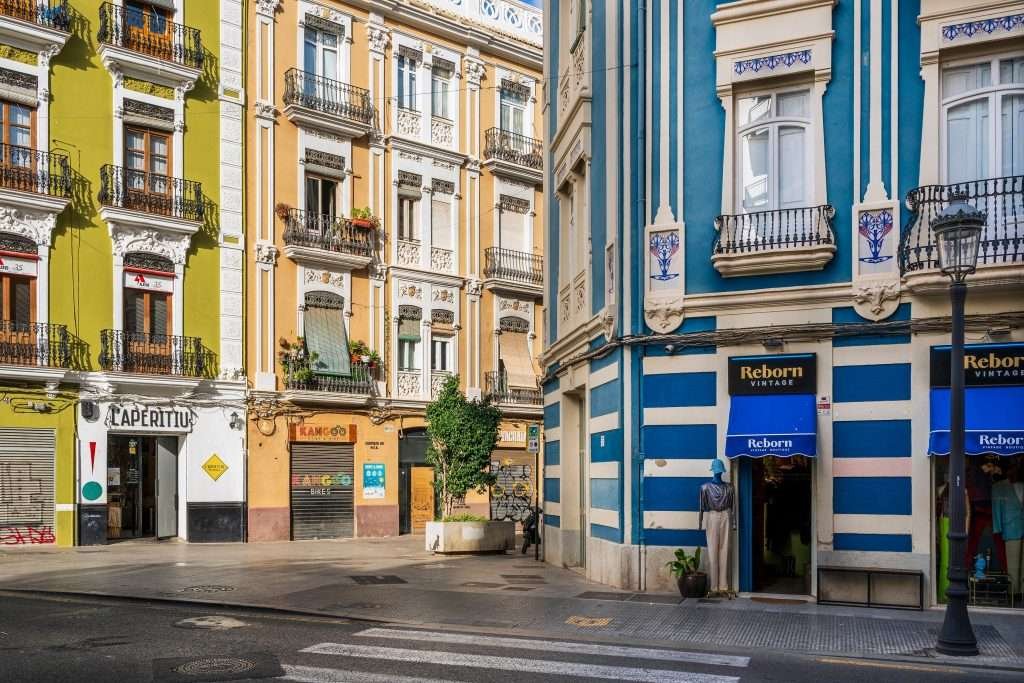
Ruzafa (The Hipster & Foodie Hub) Located just south of the historic center (behind the Estació del Nord train station), Ruzafa is Valencia’s answer to Brooklyn or Shoreditch. Once a gritty working-class neighborhood, it is now the epicenter of the city’s culinary and trendy nightlife scene. The streets are grid-like and lined with mid-century architecture, vintage clothing stores, craft coffee roasters, and incredible fusion restaurants.
- The Pros: The absolute best dining and cocktail scene in the city. A highly local, youthful vibe.
- The Cons: It is a 20-minute walk to the historic monuments, and it lacks the ancient, cobblestone romance of the Ciutat Vella.
El Cabanyal (The Maritime District) If your priority is the beach, look east to El Cabanyal. This is the historic fishermen’s quarter, located right behind the Malvarrosa and Las Arenas beaches. It is visually striking, featuring streets lined with small, two-story houses covered in colorful, modernist ceramic tiles. It is currently undergoing rapid gentrification, bringing a wave of excellent new vermouth bars and tapas joints.

- The Pros: Immediate beach access and a highly authentic, slightly unpolished, maritime atmosphere.
- The Cons: You are quite far from the historic center. You will need to take a 20-minute tram or bus ride to see the major museums.
L’Eixample (Upscale and Elegant) Situated between the historic center and the Turia Park, L’Eixample is the elegant, wealthy, bourgeois heart of Valencia. Characterized by wide, tree-lined boulevards, high-end designer boutiques (centered around Calle Colón), and immaculate modernist architecture, it is quiet, sophisticated, and spotlessly clean.

- The Pros: Very safe, very quiet at night, and fantastic for high-end shopping and upscale dining.
- The Cons: Accommodation here is significantly more expensive, and it lacks the bohemian edge of Ruzafa or El Carmen.
(For a deep dive into every neighborhood with specific hotel recommendations at every budget, check out my full guide on Where to Stay in Valencia: Best Areas & Hotels for First Timers.)
Chapter 4: The Holy Grail of Valencian Food
If you take only one piece of advice from this entire guide, let it be this: Valencia takes its food more seriously than almost anywhere else in Spain. Do not come here expecting to eat cheap, frozen tapas on a plastic chair. You are in the agricultural heartland of the Mediterranean.
The Strict Rules of Paella Valenciana Valencia is the birthplace of paella, and the locals guard the recipe with a ferocity that borders on religious fanaticism. If you order “Paella Valenciana,” you must understand exactly what you are getting.

- Rule 1: No Seafood. Authentic Paella Valenciana does not contain shrimp, mussels, or squid. It is a humble, inland farmer’s dish. It contains short-grain rice, chicken, rabbit, flat green beans (bajoqueta), butter beans (garrofón), saffron, and sometimes snails.
- Rule 2: It is a Lunch Dish. Locals practically never eat paella for dinner. It is a heavy, carbohydrate-dense meal meant to be consumed at 2:30 PM on a Sunday with family. If you see a restaurant actively advertising paella at 9:00 PM, it is a tourist trap.
- Rule 3: Look for the Socarrat. The mark of a perfect paella is the socarrat-the layer of caramelized, slightly toasted, crispy rice at the very bottom of the pan. It is the most coveted part of the dish.
Where to eat it: Avoid the restaurants directly surrounding the Cathedral. Instead, take a bus or taxi down to El Palmar, a small village surrounded by rice paddies on the edge of the Albufera lake just south of the city. This is where paella was invented, and the restaurants here cook it over open wood fires.
Beyond Paella: What Else to Order
- Esgarraet: A fantastic, savory starter consisting of roasted red peppers, cured salt cod, garlic, and massive amounts of high-quality olive oil. You eat it by soaking it up with crusty bread.
- All i Pebre: A traditional fisherman’s stew made with chunks of fresh eel (caught in the nearby Albufera lake), potatoes, garlic, and smoked paprika. It is rich, spicy, and deeply traditional.
- Horchata and Fartons: You must experience the traditional Valencian afternoon snack. Horchata de chufa is a milky, sweet, ice-cold beverage made from crushed tiger nuts (it is entirely dairy-free). You drink it while dipping fartons-long, light, sugar-glazed pastries-directly into the glass. Head to the historic Horchatería Santa Catalina to try it.
- Agua de Valencia: Do not let the name (Water of Valencia) fool you. This is a highly potent, dangerous, and delicious cocktail made from freshly squeezed Valencian oranges, cava (Spanish sparkling wine), gin, and vodka. It is served by the pitcher and goes down entirely too easily.
(For the complete breakdown of where to eat, what to order, and which restaurants are worth the wait, read my dedicated guide to What to Eat in Valencia: The Ultimate Foodie Guide (2026 Edition).)
Chapter 5: Exploring the Historic Heart
The Ciutat Vella is a dense concentration of thousands of years of history, heavily influenced by Roman, Moorish, and Christian rulers. You can spend two full days simply wandering these narrow streets, but there are a few absolute non-negotiables.
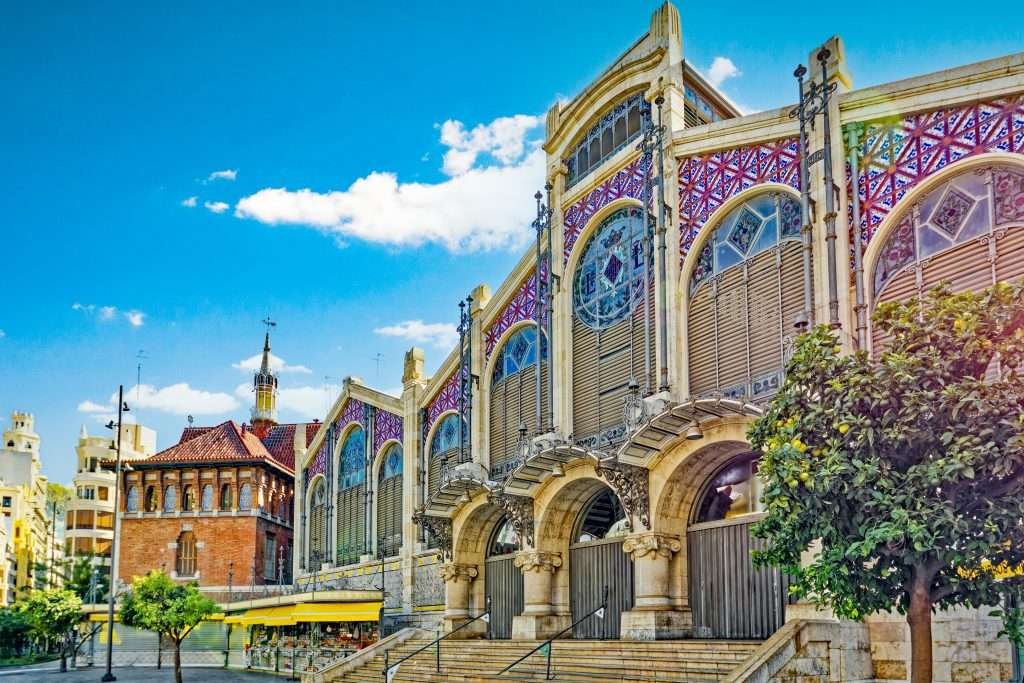
The Central Market (Mercado Central) This is arguably the most spectacular functioning food market in Europe. Built in the 1920s in the Valencian Art Nouveau style, it features a massive iron, glass, and ceramic dome. Inside, over 1,000 vendor stalls sell the freshest produce, hanging hams, exotic spices, and glistening seafood from the Mediterranean. Come at 10:00 AM, grab a cone of sliced Jamón Ibérico, and watch the chaotic, beautiful daily life of the city unfold.
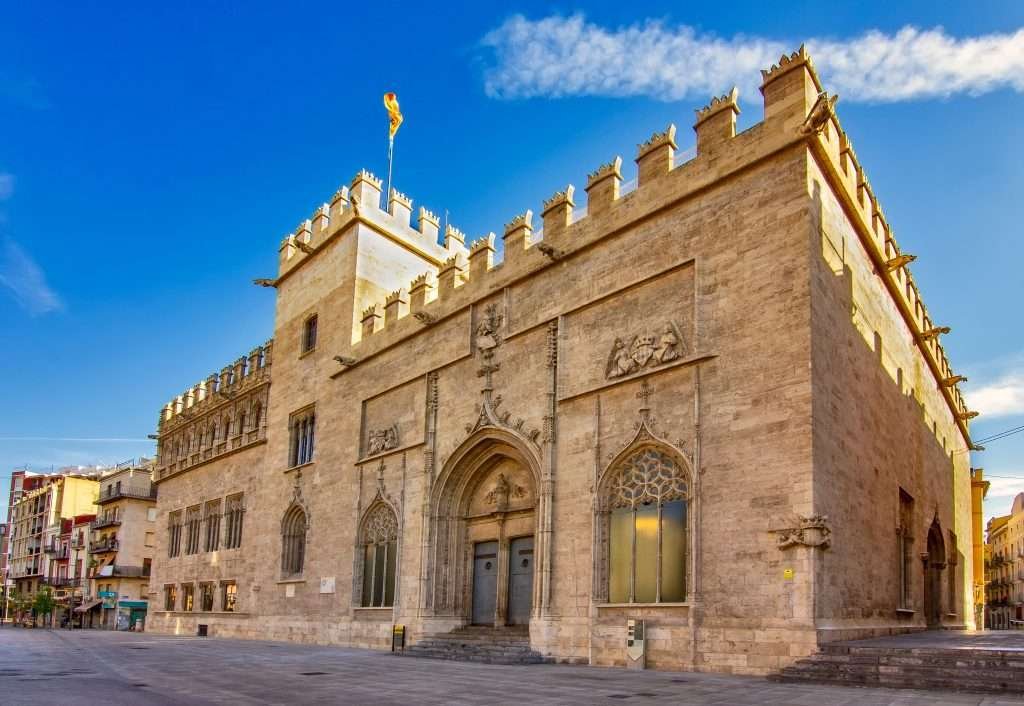
La Lonja de la Seda (The Silk Exchange) Located directly across the street from the Central Market, this 15th-century masterpiece is a designated UNESCO World Heritage site. During Valencia’s Golden Age, this building was the financial heart of the Mediterranean. The main trading hall (The Contract Room) is breathtaking, featuring towering, twisting stone columns that fan out at the top to resemble a canopy of palm trees.The wealth behind this building came from silk – Valencia was the trade capital of the western Mediterranean in the 1400s.
The Valencia Cathedral and The Holy Grail The Cathedral is a fascinating architectural mishmash, featuring Romanesque, Gothic, and Baroque elements. But its most famous draw is located in a small, ornate side chapel: The Holy Chalice. Recognized by the Vatican as the most likely candidate for the actual cup used by Jesus Christ at the Last Supper, this ancient agate stone cup sits behind glass and draws pilgrims from around the world. Before you leave, climb the Miguelete Tower (the cathedral’s bell tower) via its 207 spiraling stone steps for a sweeping view of the city’s rooftops.

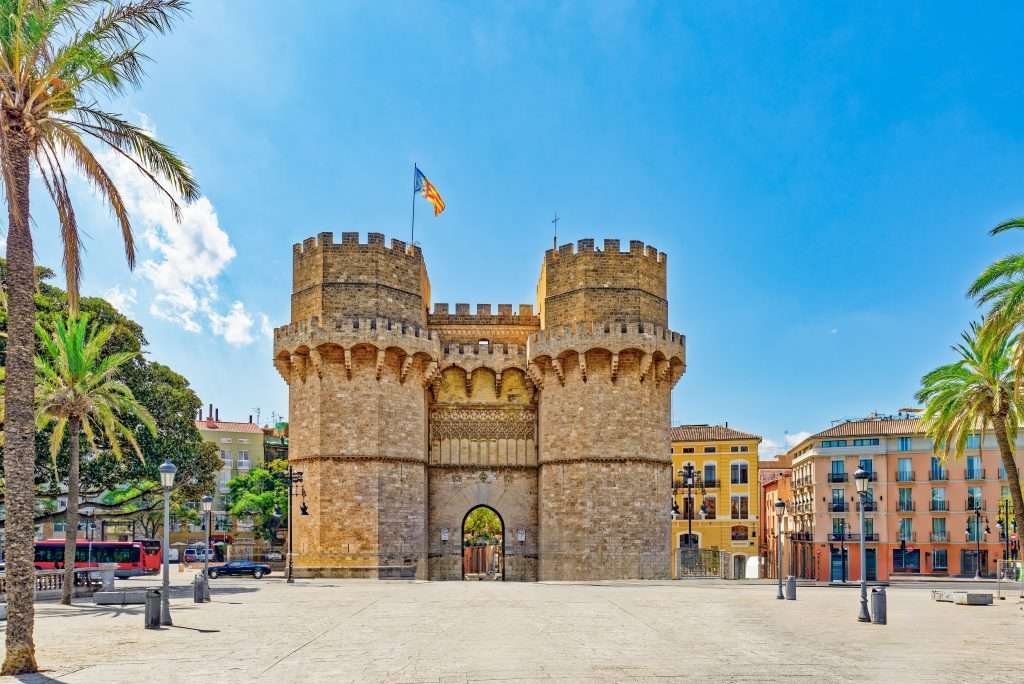
The Serranos and Quart Towers In the Middle Ages, Valencia was surrounded by a massive defensive wall. While the walls were torn down in the 19th century to allow the city to expand, two of the colossal, fortified gatehouses remain: the Torres de Serranos and the Torres de Quart. You can climb to the top of both for fantastic views. If you look closely at the Torres de Quart, you can still see the massive crater-like holes left by the cannonballs fired by Napoleon’s troops during the French siege of the city in 1808.
(Need help deciding what to prioritize? I’ve ranked everything in my list of the 25 Best Things to Do in Valencia.)
Chapter 6: The Future – The City of Arts and Sciences
You simply cannot comprehend the architectural scale of the Ciudad de las Artes y las Ciencias until you stand in the middle of it. Designed primarily by native Valencian architect Santiago Calatrava, this sprawling, gleaming white complex looks like it was dropped onto the earth by an advanced alien civilization.
Located at the very end of the Turia Park, the complex is made up of several distinct buildings surrounded by massive, shallow, turquoise reflecting pools.
What to See Inside the Complex:
- The Hemisfèric: Shaped perfectly like a giant human eye (the “eyelid” can even open and close), this building houses a massive IMAX theater and planetarium.
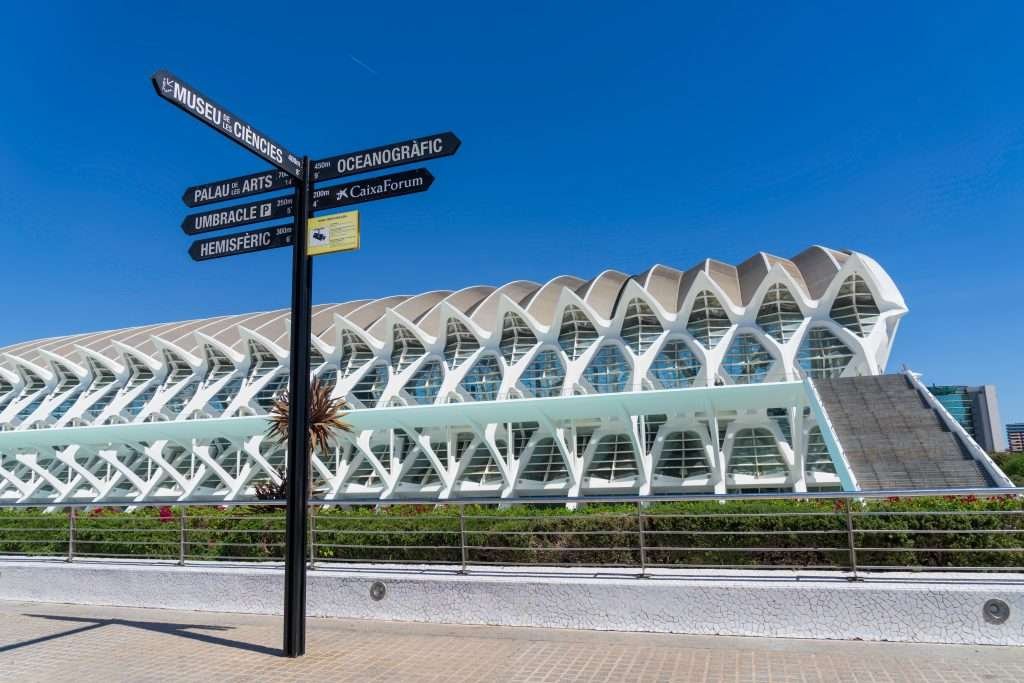
- The Science Museum (Museo de las Ciencias Príncipe Felipe): Designed to look like the bleached ribcage of a massive prehistoric whale, this is a highly interactive, hands-on science museum. It is phenomenal if you are traveling with children, though the architecture of the exterior is often more impressive than the exhibits inside.
- The Oceanogràfic: This is the largest aquarium in Europe. Designed by architect Félix Candela (shaped like a water lily), it houses multiple distinct aquatic environments, ranging from the Arctic to the Red Sea, and features a stunning underwater glass tunnel where sharks and rays swim directly over your head.
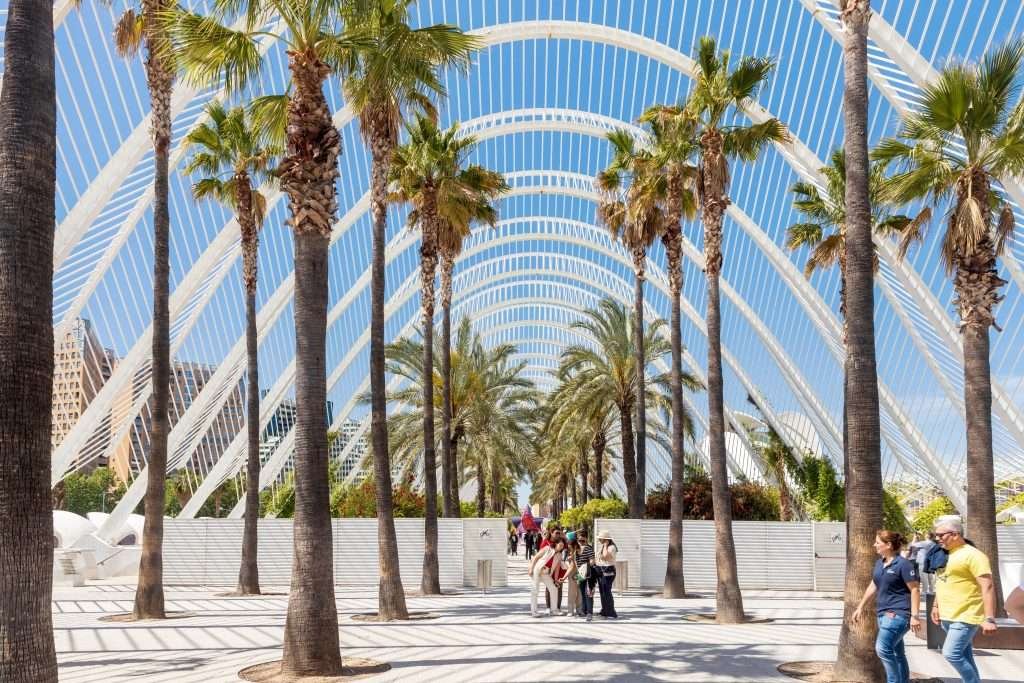
- The Umbracle: A massive, open-air, arched promenade filled with indigenous Valencian plants and palm trees. It is completely free to walk through, and during the summer nights, the lower level transforms into a spectacular, high-end open-air nightclub (Mya).

Chapter 7: Embracing the Beach Culture
Because the historic center and the City of Arts and Sciences demand so much attention, first-time visitors often forget that Valencia is a major Mediterranean beach destination.
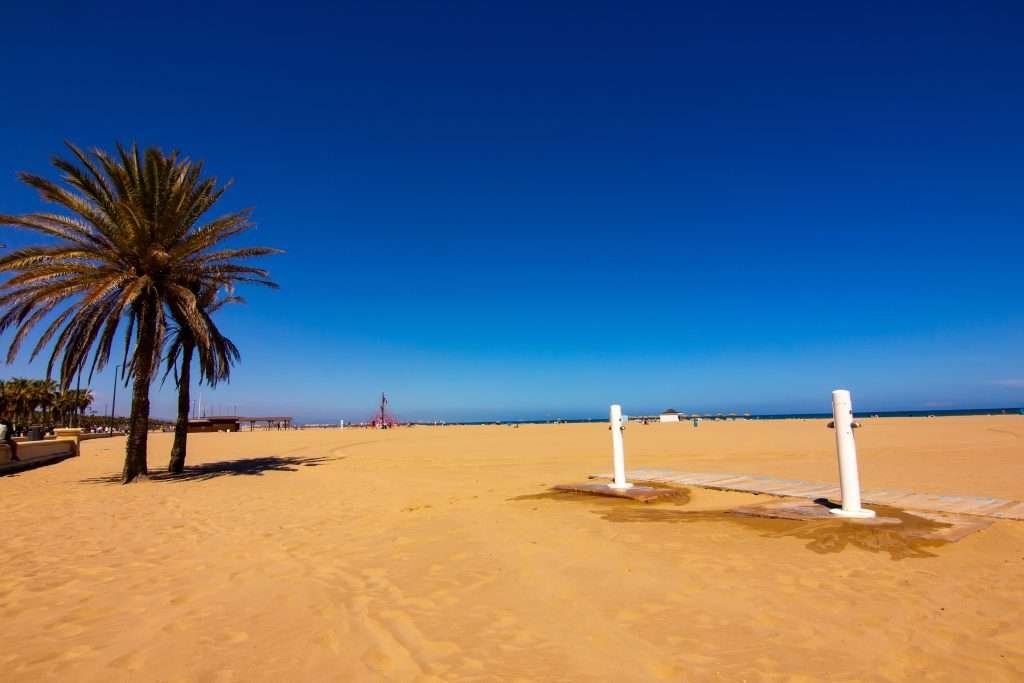
The city boasts over three kilometers of incredibly wide, fine golden sand directly accessible from the center via a quick tram ride.
Malvarrosa vs. Patacona
- Playa de la Malvarrosa: This is the main city beach. It is extremely wide, highly commercialized, and backed by a massive paved promenade lined with traditional paella restaurants and ice cream kiosks. It is busy, vibrant, and features great amenities like volleyball nets and sunbed rentals.
- Playa de la Patacona: If you continue walking north past Malvarrosa, you cross the municipal line into Alboraya and hit Patacona beach. This is where the younger, trendier locals go. The massive, old-school restaurants are replaced by chic beach clubs, boho-style cafes (like the famous La Más Bonita), and a slightly more relaxed, fashionable atmosphere.

Chapter 8: If You Have Time for a Day Trip
If your itinerary allows for an extra day, getting out of the immediate city limits provides a massive shift in scenery and culture.
The Albufera National Park Located just 15 kilometers south of the city, this massive freshwater lagoon is separated from the Mediterranean Sea by a thin strip of sand dunes and pine forests. This is the birthplace of paella and the heart of Spain’s rice production. The absolute best way to experience it is to arrive around 6:30 PM, hire a local boatman to take you out onto the lake in a traditional wooden boat, and watch one of the most spectacular, mirror-like sunsets in the country. Follow it up with a late dinner of All i Pebre in the nearby village of El Palmar.
Xàtiva If you prefer medieval history, take a 50-minute train ride inland to the town of Xàtiva. This was the ancestral home of the infamous Borgia family (who produced two ruthless Popes). The town is dominated by a colossal, twin-peaked fortress that snakes across the top of a mountain ridge. Hiking up to the castle walls and looking out over the citrus groves of the Valencian interior is an unforgettable experience.
(I’ve mapped out detailed itineraries, transport options, and crowd-avoidance tips for each destination in my complete guide to the 5 Best Day Trips from Valencia (Worth the Effort).)
Final Thoughts: The Light of Valencia
There’s a reason Joaquín Sorolla kept painting the same beach over and over – the light in Valencia hits differently. Late afternoon along the Malvarrosa, everything turns gold.
Don’t try to cram everything into two days. Valencia rewards you for slowing down. Rent a bicycle and ride aimlessly through the Turia Park. Sit on a terrace in Ruzafa and nurse a vermouth for two hours. Eat a pan of paella so massive it takes up the entire table.
This isn’t a city that exhausts you. Rent a bike, ride the Turia end to end, eat a pan of rice the size of your table, and call it a perfect day.
Is Valencia worth visiting, or should I just stick to Barcelona and Madrid?
Valencia is arguably better value than both. Hotels cost 30–40% less than Barcelona, the food is cheaper and arguably better (this is where paella was invented), the beaches are wider and less packed, and you can walk the entire historic center without fighting through cruise ship crowds. Three days here will change your Spain itinerary permanently.
When is the best time to visit Valencia?
April through June and September through October. Summer (July–August) hits 35°C+ and the city empties out as locals flee to the coast. If you visit in March, check the exact dates of Las Fallas – the festival is incredible but hotels triple in price and you won’t sleep because of the constant fireworks. Winter is mild (12–16°C) and the cheapest time to visit, but some beach restaurants shut down.
Do I need to speak Spanish in Valencia?
In hotels, major restaurants, and tourist sites, English works fine. In smaller neighbourhood bars in Ruzafa or El Cabanyal, less so. The street signs are in Valenciano (not Spanish), which confuses people – “Carrer” means street, “Plaça” means plaza. Don’t panic, it’s not a different country. Learning “bon dia” (good morning in Valenciano) instead of “buenos días” will earn you a genuine smile from locals.
How many days do I need in Valencia?
Three days is the sweet spot. Day 1 for the historic center (Cathedral, Central Market, Silk Exchange), Day 2 for the City of Arts and Sciences and the beach, Day 3 for a bike ride through Turia Park and a long paella lunch. If you have a fourth day, take the boat trip to Albufera at sunset – it’s one of the best experiences in southern Spain. More than five days and you’ll start running out of things to do in the city itself.
Can I eat paella for dinner in Valencia?
You can, but locals will judge you silently. Paella is a lunch dish here – heavy, rice-based, meant for 2:30 PM on a Sunday. Restaurants that advertise paella at 9 PM are almost always tourist traps serving pre-made rice reheated to order. If you absolutely must eat it at night, at least go to a restaurant in El Palmar (the village where paella was invented, 15 km south) rather than anywhere near the Cathedral.