
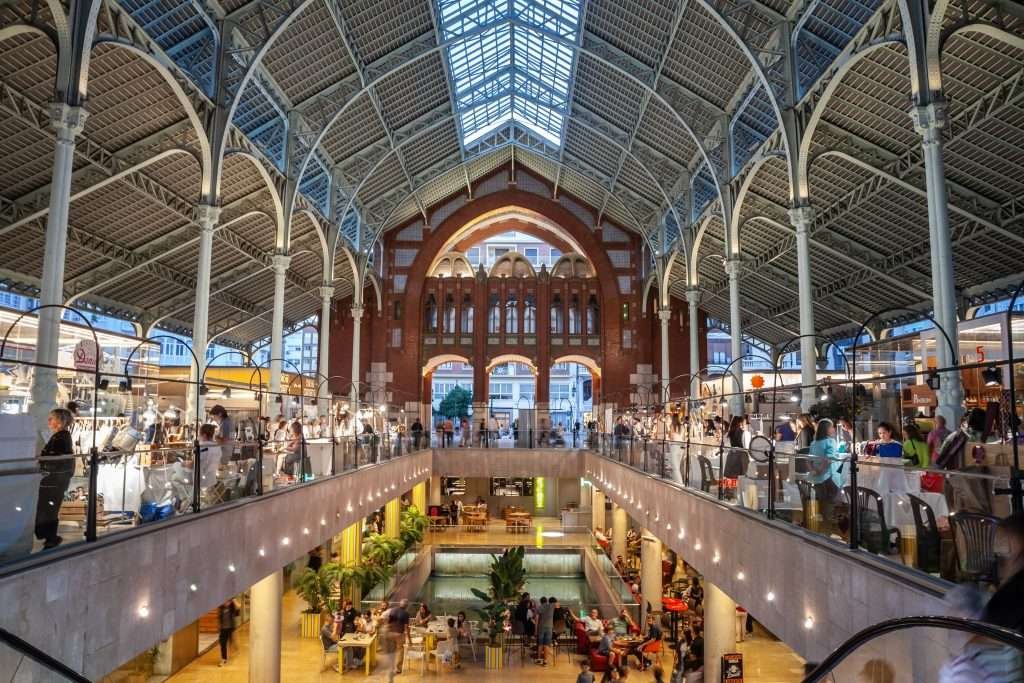
16. Relax at the Mercado de Colón Unlike the Central Market, the stunning 1916 Art Nouveau Mercado de Colón is no longer a traditional wet market selling raw meat and vegetables. Located in the upscale L’Eixample district, it has been completely transformed into a chic, open-air gourmet food hall. It is filled with high-end cafes, craft beer bars, and artisan florists. It is the perfect place to sit in the morning sun with an espresso and people-watch.

Art, Culture, and Neighborhoods
17. Hunt for Street Art in Barrio del Carmen The northern section of the historic center, known as El Carmen, is a labyrinth of narrow, winding medieval alleys that have been taken over by spectacular, large-scale street art. The crumbling walls of ancient buildings serve as canvases for both local and international graffiti artists. If you read my First Time in Valencia: The Ultimate 2026 Survival and Travel Guide, you know that getting intentionally lost in this specific neighborhood is a the best street art in the city is in El Carmen – getting intentionally lost there is the point.

18. Visit the Museo de Bellas Artes (Museum of Fine Arts) Located just across the Turia Park from the historic center, this is the second-largest art gallery in Spain (behind only the Prado in Madrid). Housed in a stunning 17th-century seminary, it boasts an incredible collection of Gothic altarpieces, Renaissance paintings, and works by Spanish masters like Velázquez, Goya, and the famous Valencian impressionist, Joaquín Sorolla. This is a must-add if you are padding out your 3 Days in Valencia: The Perfect Itinerary for First Timers (2026 Edition).

19. Experience the Madness of Las Fallas (or the Fallas Museum) If you visit Valencia between March 15th and 19th, you will experience Las Fallas-arguably the loudest, most chaotic street festival in Europe. Neighborhoods build massive, multi-story satirical sculptures out of wood and papier-mâché, party in the streets for five days with constant firework displays, and then burn every single sculpture to the ground on the final night. If you visit during the rest of the year, visit the Museo Fallero, which houses the single “pardoned” sculpture from each year that was saved from the flames.


20. Wander the Tiled Streets of El Cabanyal Located right behind the beach, El Cabanyal is the historic maritime and fishermen’s district. It is visually striking, completely different from the Gothic center. The streets are lined with small, two-story houses covered in colorful, modernist ceramic tiles. It is slightly unpolished but still genuinely working-class despite the restaurant openings and is currently undergoing a massive culinary renaissance, making it a fantastic neighborhood to explore.