
Where to stay in Rome is the most important decision you’ll make before your trip – get it wrong and you’ll spend half your holiday in transit or lying awake at 2 AM while the bar crowd below your window argues in Italian.
Rome does not work like other European capitals. It has no single downtown. Instead, it is a collection of distinct rioni (historic districts), each with its own character, noise level, and relationship to the main sights. A hotel in Trastevere and a hotel in Prati are both “central” on paper but they deliver completely different trips.
The good news: Rome’s best neighborhoods are all manageable for first-timers, and the price differences between them are significant enough to affect your overall budget by €30-50 per night. If you’re still building your itinerary, read our first time in Rome guide before locking in accommodation.
This guide breaks down the six neighborhoods worth considering, who each one suits, and the specific hotels worth booking in 2026.
The 30-Second Neighborhood Cheat Sheet
- Centro Storico – Pantheon, Navona, Campo de’ Fiori on your doorstep. Best for first-timers who want everything walkable.
- Trastevere – The most characterful neighborhood in the city. Best for repeat visitors and anyone who eats dinner as a social event.
- Monti – Between the Colosseum and the historic center. Best mid-range value and metro access.
- Prati – 15 minutes’ walk from the Vatican. Best for Vatican-heavy itineraries and modern hotel comfort.
- Termini area – Cheap and connected. Best only for strict budget travelers or anyone relying on train connections.
- Testaccio – Rome’s food neighborhood. Best for travelers who prioritize eating well over proximity to monuments.
1. Centro Storico – Best for First-Timers Who Want Everything Walkable
If you want to walk out of your hotel and be 10 minutes from the Pantheon, 18 minutes from the Trevi Fountain, and 6 minutes from Piazza Navona, stay in the Centro Storico.
This is Rome’s historic core – the tangle of medieval and Renaissance streets packed between the Tiber bend and Via del Corso. It was built for walking, not for cars, which means cobblestone alleys, no metro access, and zero through-traffic. It also means the highest concentration of tourists in the city and the highest concentration of overpriced restaurants targeting them.
The Vibe: Genuinely beautiful during the day. The light on the travertine buildings in the late afternoon is the Rome of postcards. At night in summer, Campo de’ Fiori fills with a bar crowd that does not go home quietly before 2:00 AM. The noise carries.
Who Should Stay Here: First-time visitors on 3-4 night trips who want to maximize walking time; couples who plan to explore on foot; anyone for whom waking up near the Pantheon is the point.
Who Should Avoid It: Light sleepers in summer; anyone arriving with large rolling suitcases (cobblestones are punishing); travelers whose itinerary centers on the Colosseum or Vatican rather than the historic center.
Transport: No metro. Bus routes 40, 64, and 492 connect to Termini and Prati. Nearest metro stops are Spagna (Line A, 20-minute walk east) and Barberini (Line A, 15 minutes east).
Price Range: €130-280/night mid-range; €280+ for boutique luxury.
Best Hotels in Centro Storico
Luxury: Hotel Nazionale On Piazza Montecitorio, 400 meters from the Pantheon. A 19th-century palazzo with frescoed ceilings, marble floors, and a position that puts you inside the historic center rather than adjacent to it. Ask for a renovated room when booking – the property has updated some floors more recently than others. Breakfast on the terrace overlooking the piazza is worth factoring into the rate.
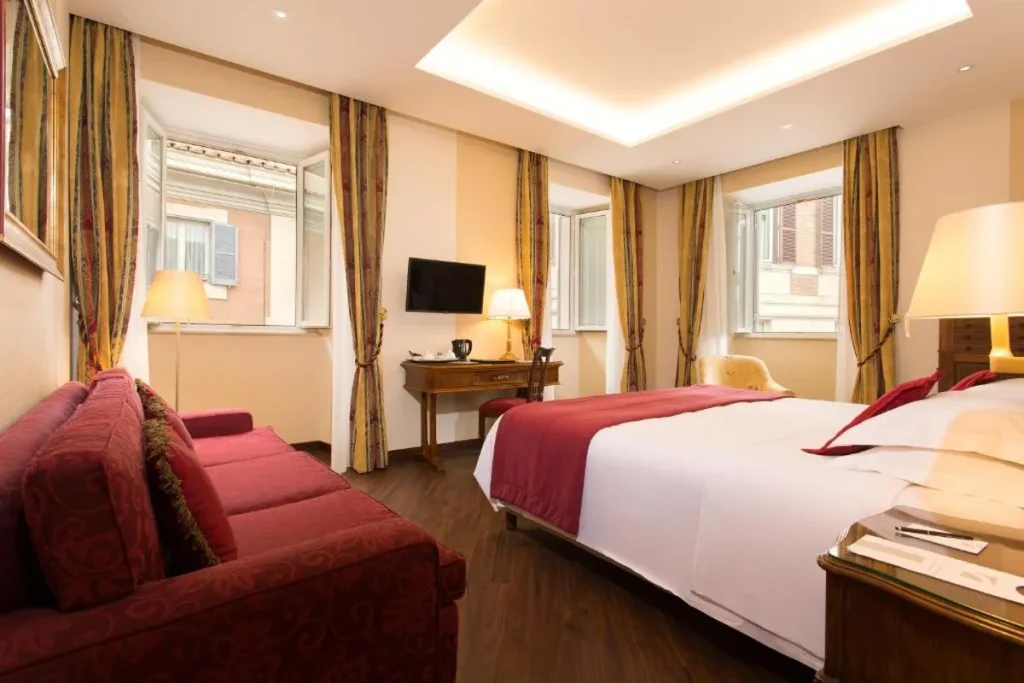
Mid-Range: Hotel Campo de’ Fiori A quiet 3-star tucked into a residential street near Campo de’ Fiori that manages something rare in this neighborhood: interior-facing rooms that actually block the street noise. The building is 17th century, the rooms are compact but well-maintained, and the price reflects its location without exploiting it. Around €140-170 for a double in shoulder season.
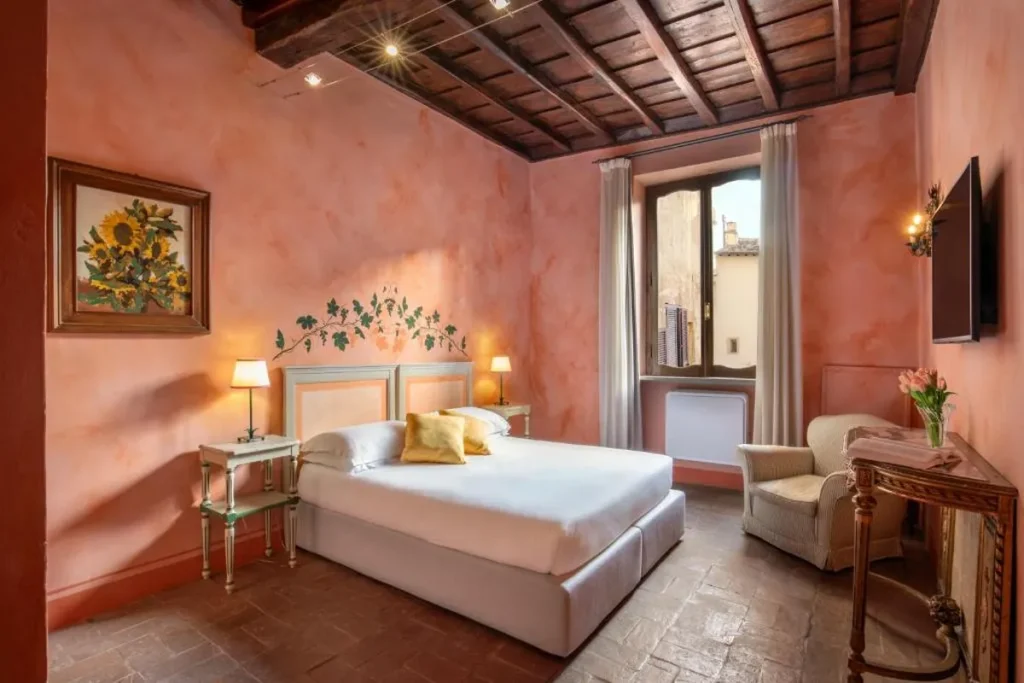
Budget: Hotel Smeraldo A few streets from Campo de’ Fiori, this is one of the honest budget options in the centro storico – rooms are small, decor is unremarkable, but the location is correct and the beds are clean. Around €90-110 for a double. Book directly for the best rate and always request a courtyard room.
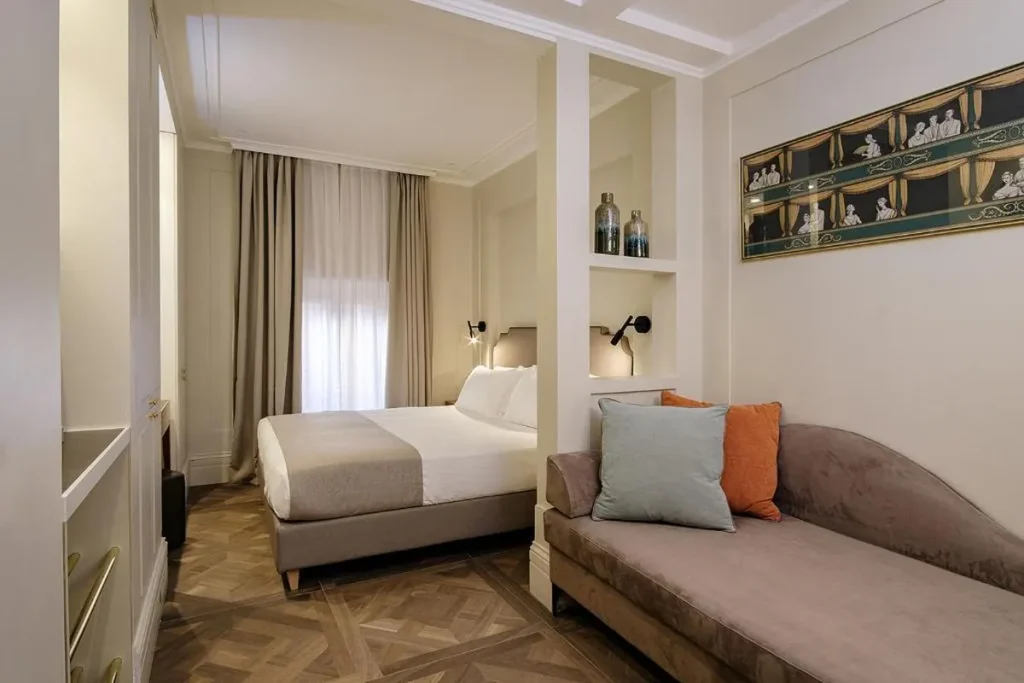
2. Trastevere – Best for Character and the Most Liveable Neighborhood in Rome
Trastevere sits across the Tiber from the historic center – a maze of narrow streets, ivy-covered buildings, and restaurants operating as social institutions rather than tourist facilities. It is Rome’s most genuinely residential neighborhood, which means the morning bar on Via della Lungaretta is serving espresso to builders and office workers at 7:30 AM, not hotel guests at 10:00 AM.
The trade-off is distance. Trastevere to the Pantheon is 25 minutes on foot across Ponte Sisto. Tram 8 from Viale di Trastevere to Largo Argentina takes 12 minutes, then it’s an 8-minute walk to the Pantheon from there. The Colosseum from Trastevere is 35 minutes by bus or 40 on foot – not impossible, but worth knowing before you book.
The Vibe: Relaxed during the day, genuinely social in the evening. The piazzas fill up from 7:00 PM onward with a mix of locals, students from Roma Tre, and tourists who got the memo that this is where to eat. The noise is cheerful rather than aggressive and dies down earlier than the centro storico.
Who Should Stay Here: Repeat Rome visitors who already know the monuments; anyone whose trip is built around eating and walking rather than ticking sites; couples who want an evening atmosphere without being in the tourist center.
Who Should Avoid It: Anyone doing the Vatican on Day 1 who wants to walk there; travelers who need metro access for early departures.
Transport: No metro. Tram 8 to Largo Argentina (historic center). Bus 23 toward Castel Sant’Angelo and Vatican. Bus H toward Termini.
Price Range: €90-180/night mid-range; some excellent B&Bs at €80-100.
Best Hotels in Trastevere
Luxury/Mid-Range: Hotel Santa Maria Built around a 16th-century cloister with an orange tree courtyard where breakfast is served. The courtyard absorbs street noise, which makes this one of the quieter hotels in an otherwise lively neighborhood. Rooms are mid-sized and well-maintained. Parking available, which is relevant in Trastevere. Around €150-175 for a double in shoulder season.
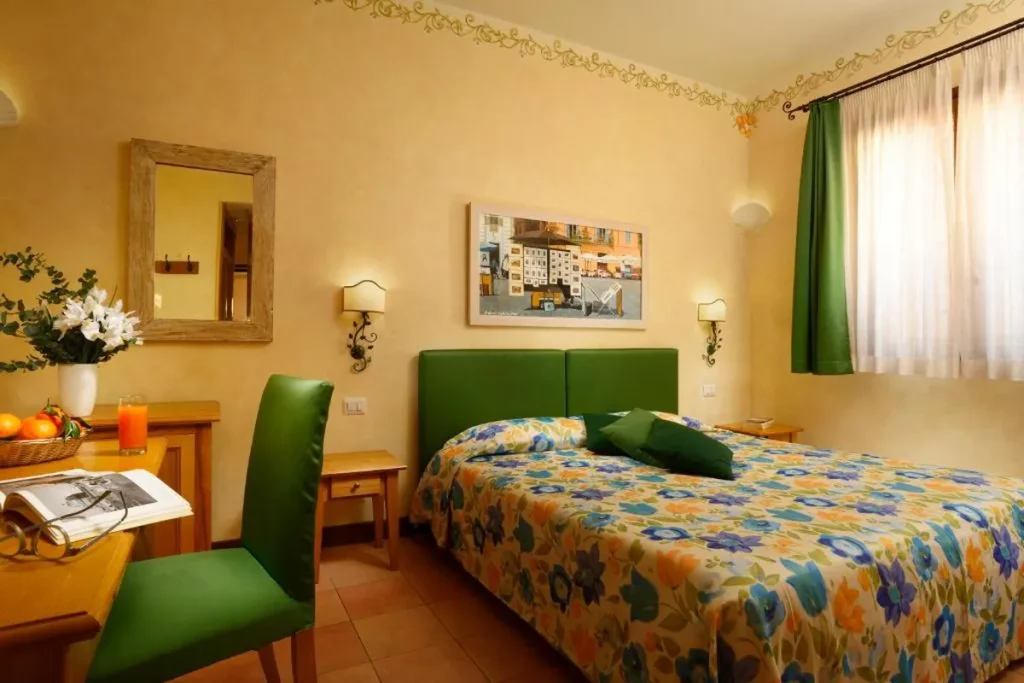
Mid-Range: Residenza San Calisto is set in a renovated historical building in the picturesque Trastevere quarter, in the heart of Rome. It offers rooms and apartments.
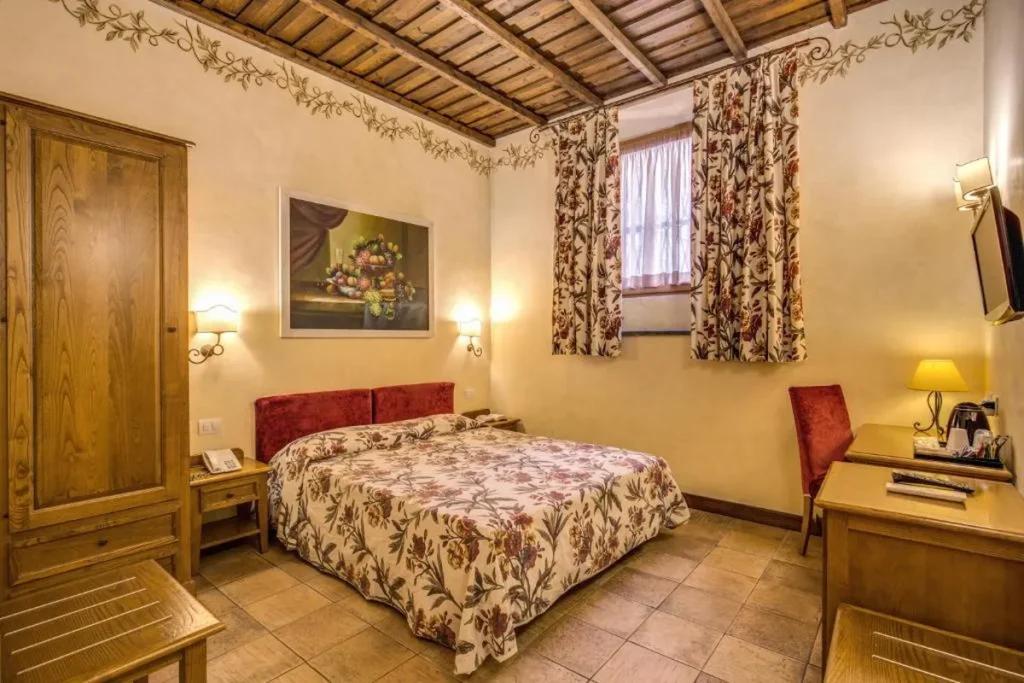
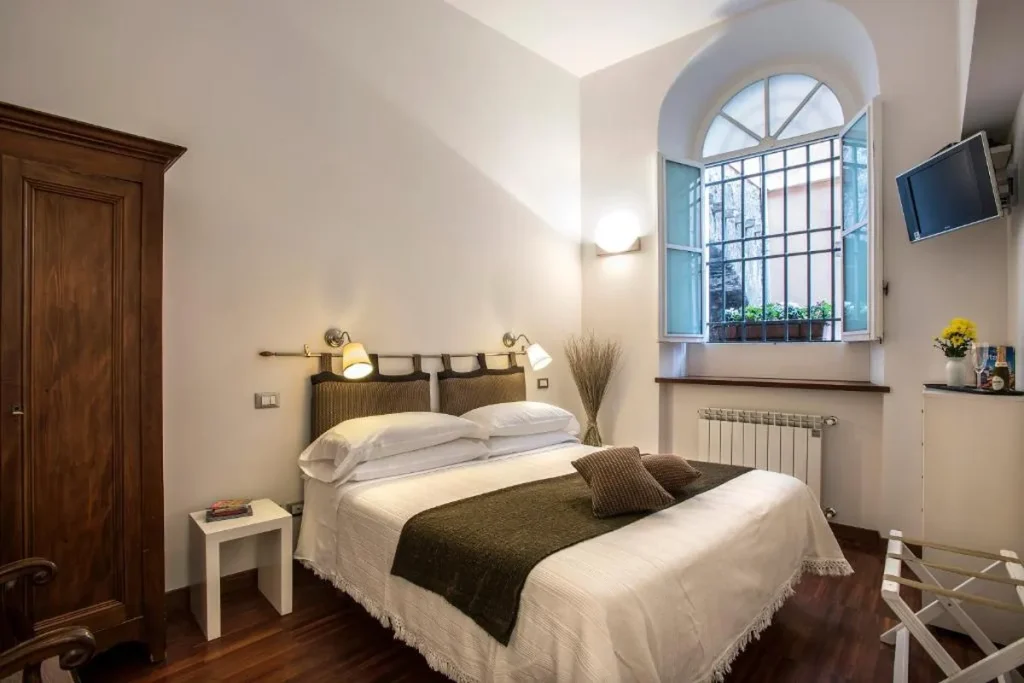
Budget: Arco del Lauro B&B Six rooms on Via dell’Arco de’ Tolomei, one of the prettier alleys in central Trastevere. The alley location means significantly less noise than street-facing rooms in other budget properties nearby. Breakfast included and decent. Around €80-100 for a double – book early because it fills consistently.
3. Monti – Best Mid-Range Value and Colosseum Access
Monti is Rome’s oldest rione, squeezed between the Colosseum to the east and Via Nazionale to the west. It went through a gentrification phase that added wine bars and independent boutiques without completely erasing the neighborhood’s older character – there are still Romans who have lived here for 40 years sharing streets with the aperitivo crowd on Via dei Serpenti.
The geography works efficiently for sightseeing: Colosseum is a 10-minute walk, the Roman Forum entrance is 12 minutes, and Piazza Venezia (the practical center of Rome) is 15 minutes. Metro Line B at Cavour or Colosseo stations reaches Termini in 4 minutes.
The Vibe: Relaxed and residential by day, good aperitivo bars in the early evening, quieter than the centro storico at night. Via dei Serpenti has most of the bar life; the side streets are quiet by 11:00 PM.
Who Should Stay Here: Anyone whose itinerary centers on ancient Rome; mid-range travelers who want a real neighborhood with actual residents; visitors who want metro access without Termini-area grit.
Who Should Avoid It: Anyone prioritizing Vatican above everything else (you’ll metro across the city every Vatican day); travelers who want the Pantheon-Trevi-Navona circuit on foot.
Transport: Metro Line B at Colosseo or Cavour (2 stops to Termini). Bus routes on Via Nazionale and Via Cavour connect to most of the city.
Price Range: €90-160/night for mid-range 3-stars; B&Bs from €75.
Best Hotels in Monti
Luxury/Boutique: Palazzo Manfredi Nine suites on Via Labicana with the Colosseum visible from the rooftop restaurant. The hotel sits on archaeological layers from the imperial period and the ground floor displays some of the finds. Small, deliberately exclusive. The rooftop dinner with the Colosseum lit at night is the specific experience this hotel exists to provide. Rates from €400.
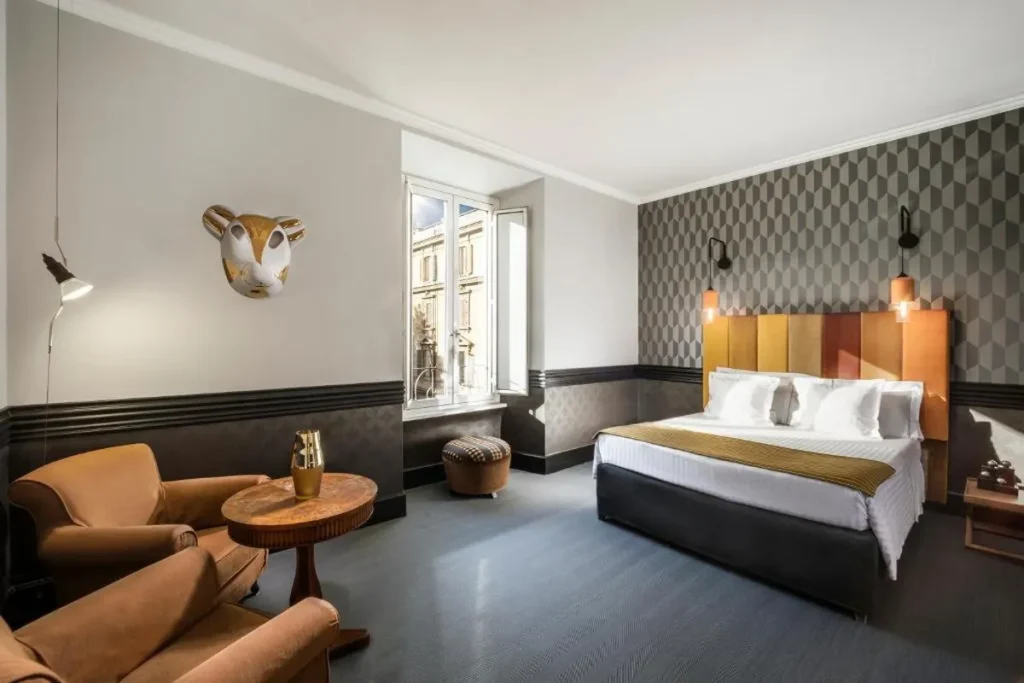
Mid-Range: Hotel Lancelot A 60-room property on quiet Via Capo d’Africa, between the Colosseum and the Lateran. Family-run since 1970, which explains why the service is consistent in the way only long-term staff produces. The rooftop terrace has a direct sight line to the Colosseum through the gap in the buildings at the end of the street. Around €130-160 for a double.
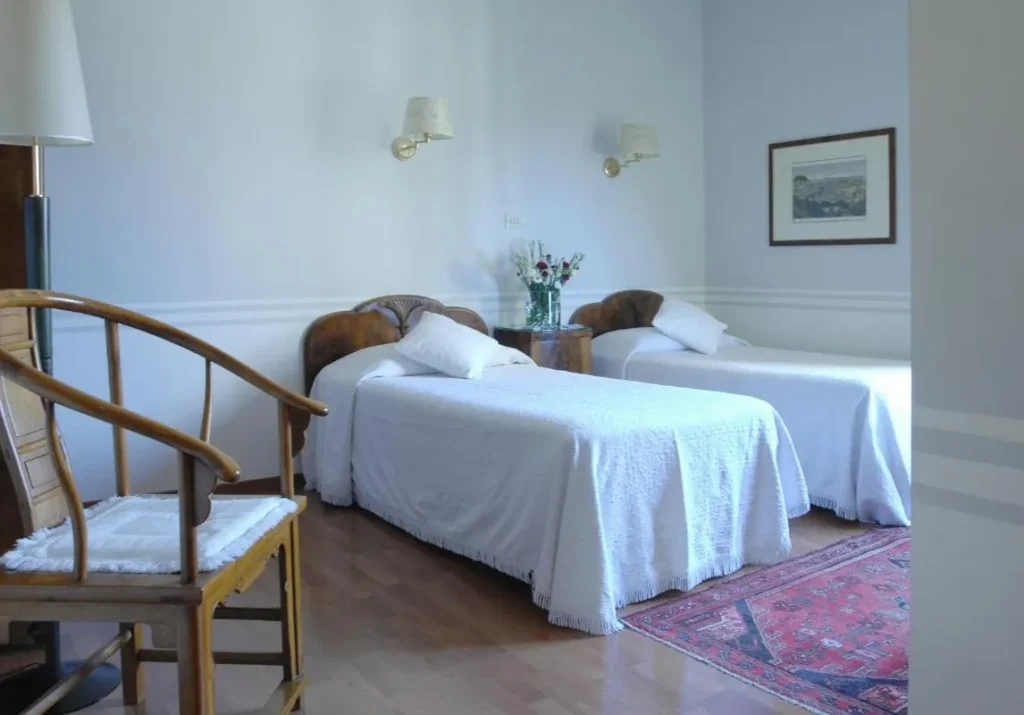
Budget: Duca d’Alba Hotel A solid 3-star on Via Leonina, the main residential street running through the heart of Monti. Clean, reliable, well-located. Rooms are not large but they’re properly maintained, and the location on a pedestrian-friendly street means less noise than comparable properties on Via Nazionale. Around €85-115 for a double.
4. Prati – Best for Vatican Access and Modern Hotel Comfort
Prati was built in the late 19th century as a planned residential district north of the Vatican, which means it has what the centro storico and Trastevere largely don’t: wide pavements, reliable lifts in buildings, and actual supermarkets. Via Cola di Rienzo – Prati’s main street – has a Conad, two pharmacies, and a Feltrinelli. That kind of infrastructure matters when you’re staying somewhere for a week.
Vatican Museums and St. Peter’s Basilica are a 15-20 minute walk. Castel Sant’Angelo is 10 minutes. For the historic center, you’re looking at a 30-minute walk across the Tiber or bus routes 40 and 64, which take 20 minutes to reach Campo de’ Fiori.
The Vibe: Pleasant, orderly, and slightly bland compared to the older neighborhoods. The evening aperitivo scene on Via degli Scipioni is genuine – locals, not tourists – and the gelateria on Via Cola di Rienzo near the market is the best on the street. But you’re not staying in Prati for the neighborhood; you’re staying here because it’s the most sensible base for a Vatican-heavy itinerary.
Who Should Stay Here: Vatican-focused itineraries; families or groups who need reliable logistics; anyone who values working air conditioning and proper lift access over historic charm; travelers arriving late and leaving early who need a fuss-free base.
Who Should Avoid It: Visitors whose heart is in Trastevere and the centro storico; anyone who wants the classic Roman neighborhood experience.
Transport: No metro in Prati itself. Bus 23 along the Tiber. Bus 40/64 to historic center. Lepanto (Metro A) is a 10-minute walk east and connects to the Spanish Steps and Termini.
Price Range: €110-210/night for mid-range; chain hotels (NH, Starhotels) at €120-170.
Best Hotels in Prati
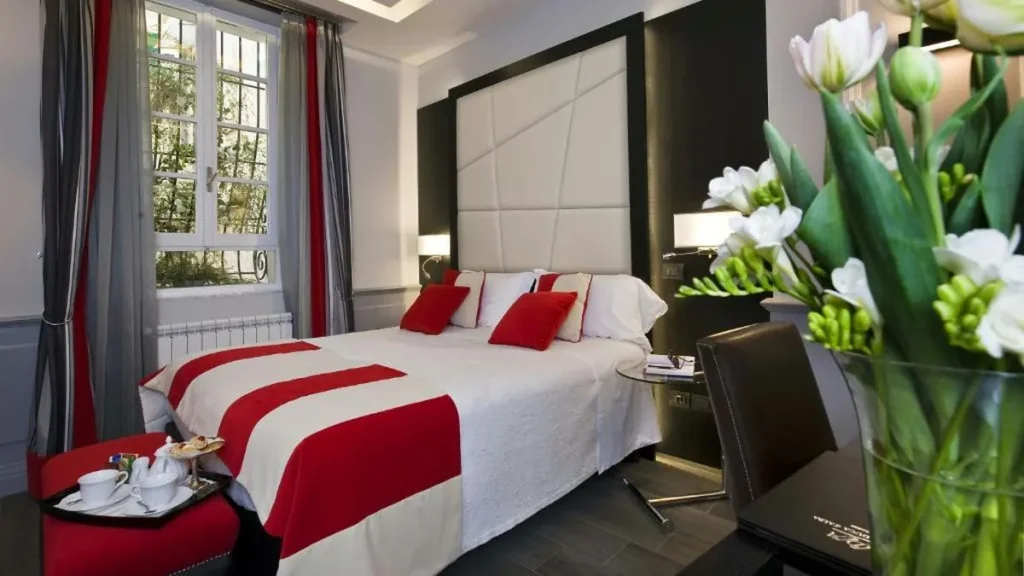
Luxury: Hotel Dei Mellini A 4-star on Via Muzio Clementi, one of the quieter streets in Prati, with 80 rooms, a rooftop terrace, and a small pool – genuinely rare in central Rome. The breakfast is one of the better hotel breakfasts in the city. Around €200-240 for a double in shoulder season.
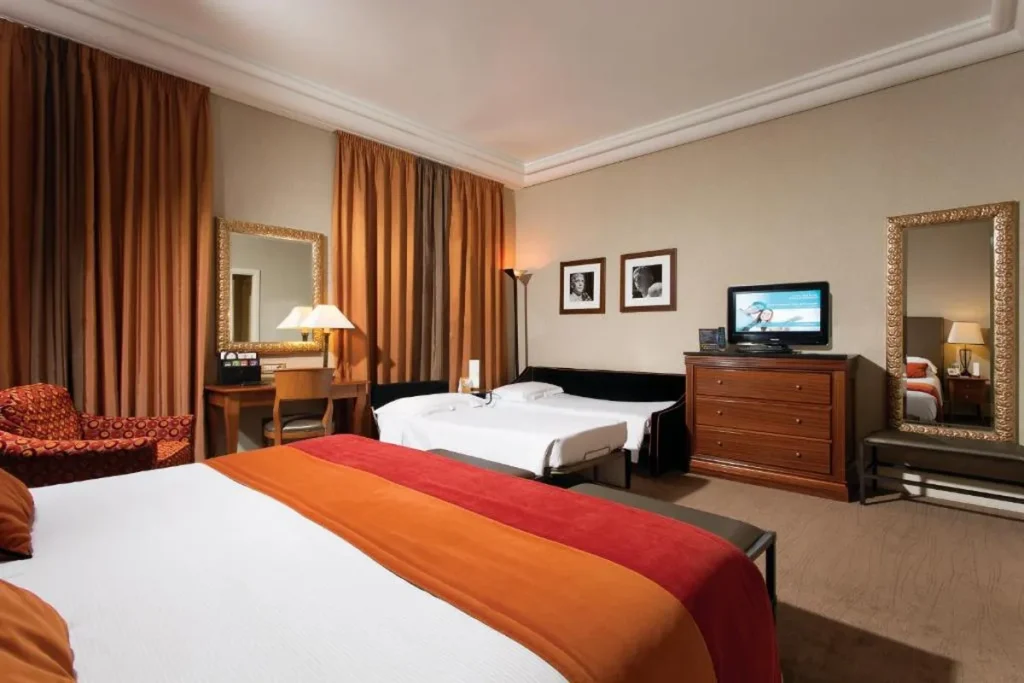
Mid-Range: NH Collection Roma Palazzo Cinquecento Technically on the edge of Prati near the Vatican, this NH property delivers the reliable modern comfort the chain is known for – proper soundproofing, consistent air conditioning, a working gym. No surprises, which is sometimes exactly what you need. Around €140-170 for a double.

Budget: Hotel Gerber A family-run 3-star on Via degli Scipioni, the most pleasant residential street in Prati. 27 rooms, small garden terrace, consistently strong reviews for cleanliness and service. The owners have run it for decades and it shows in the detail. Around €95-125 for a double.
5. Termini Area – Best for Budget Travelers and Train Connections
The area around Roma Termini – Rome’s main rail hub – has a mixed reputation that is partly deserved and partly overstated. The streets immediately south of the station (Esquilino) are gritty, dense, and have a high concentration of budget hotels that range from fine to genuinely unpleasant. The streets north, toward San Lorenzo and the university district, are considerably calmer.
What Termini gives you is connections: Metro Lines A and B both stop here. From this one station you’re 2 stops from the Colosseum (Line B), 4 stops from the Spanish Steps (Line A), and directly connected to Fiumicino Airport via the Leonardo Express (35 minutes, €14). If your itinerary involves day trips to Florence, Naples, or Pompeii, Termini is the strategic base.
The Vibe: Transactional. Nobody stays near Termini because they love the neighborhood. They stay there because it’s cheap and it moves them efficiently around the city and country.
Who Should Stay Here: Budget travelers; visitors arriving and departing by train; anyone on a 1-2 night stopover who needs transport above atmosphere.
Who Should Avoid It: Anyone who wants to feel like they’re actually in Rome rather than adjacent to a large train station; families with young children (the station environs can be disorienting).
Transport: Metro A and B at Termini. Leonardo Express to Fiumicino Airport (35 min, €14). Regional trains to Naples, Florence, and everywhere else.
Price Range: €50-90 for budget; €90-130 for a decent 3-star.
Best Hotels Near Termini
Mid-Range: Hotel Oceania A 3-star on Via Firenze, north of the station in a quieter block, with 24 rooms and a consistent record of good reviews for cleanliness and service. The location puts you 5 minutes from Termini but away from the station chaos. Around €95-120 for a double.
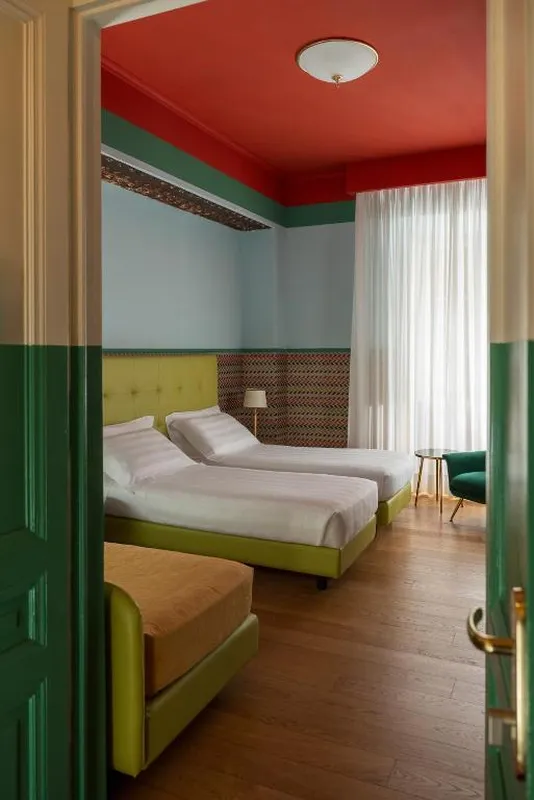
Mid-Range: iQ Hotel Roma A design-focused property on Via Firenze that delivers better-than-expected room quality for the price point. Strong soundproofing for a Termini-area hotel and a rooftop terrace. Around €100-130 for a double.
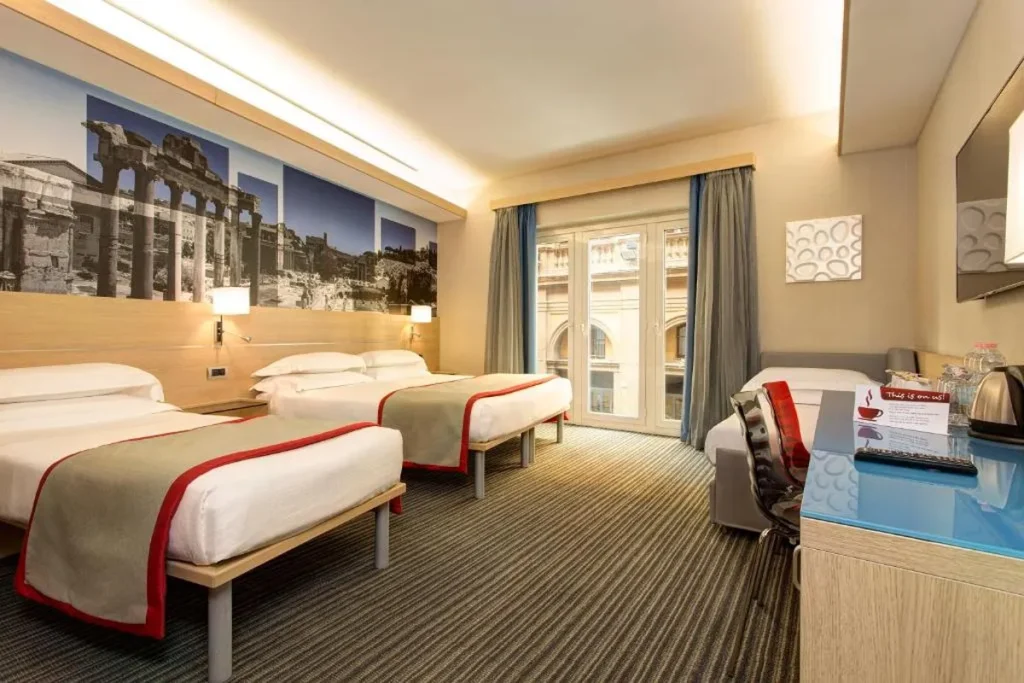
Budget: The Beehive Via Marghera, a 7-minute walk from Termini. Rome’s most respected independent hostel – private rooms available alongside dorms. The owner-operators have been running it since 1999 with no apparent intention of cutting corners. Private double rooms with shared bathroom around €65-90. Books out consistently; reserve early.
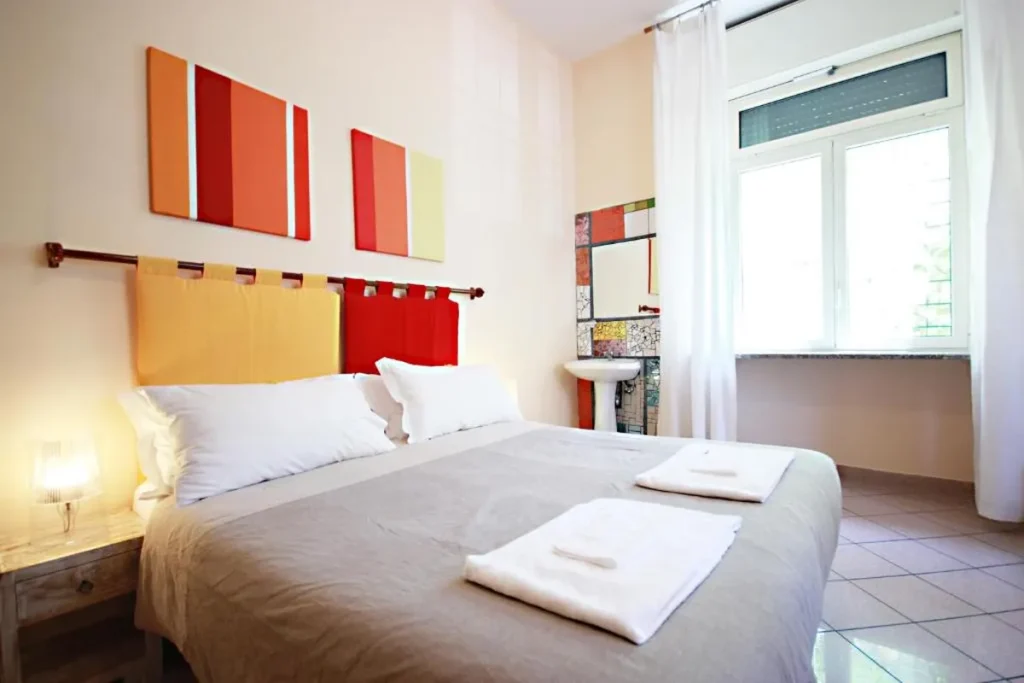
6. Testaccio – Best for Serious Eaters and Authentic Roman Neighborhood Life
Testaccio is Rome’s food neighborhood – historically the slaughterhouse district, now a dense residential rione south of the Aventine Hill where the trattorias serve the dishes (offal-based Roman classics, fried artichokes, supplì) that are watered down everywhere else in the city. Flavio al Velavevodetto is built inside Monte Testaccio, an ancient hill made entirely of broken Roman amphora sherds. Roscioli Salumeria is a 15-minute walk. The covered Mercato di Testaccio runs Tuesday through Saturday and is where actual Romans buy produce.
It is not the most convenient base for first-time visitors – the Colosseum is a 20-minute walk and there’s no metro stop in the neighborhood itself (Piramide on Line B is a 10-minute walk). But for anyone whose Rome trip is structured around eating well, it is the correct choice.
The Vibe: Residential and local. The piazzas here are used by children and elderly residents, not by tour groups. The night scene is younger than Trastevere and cheaper than Prati.
Who Should Stay Here: Repeat visitors who’ve already done the monuments; food-focused travelers; anyone staying a week and wanting to feel embedded rather than visiting.
Who Should Avoid It: First-timers who want the classic Rome walking circuit without transit; anyone for whom Vatican and Colosseum access is the daily priority.
Transport: Bus 23 along the Tiber. Bus 75 toward Termini. Walk 10 minutes to Piramide (Metro B) for connections.
Price Range: €85-150 for mid-range; fewer hotel options than other neighborhoods.
Best Hotels in Testaccio
Mid-Range: Hotel Aventino A 3-star on Via San Domenico, on the Aventine Hill between Testaccio and Circus Maximus. Quiet street, garden, small pool. The Circus Maximus and the keyhole view of St. Peter’s dome through the Knights of Malta gate are both a 5-minute walk. Around €120-155 for a double.
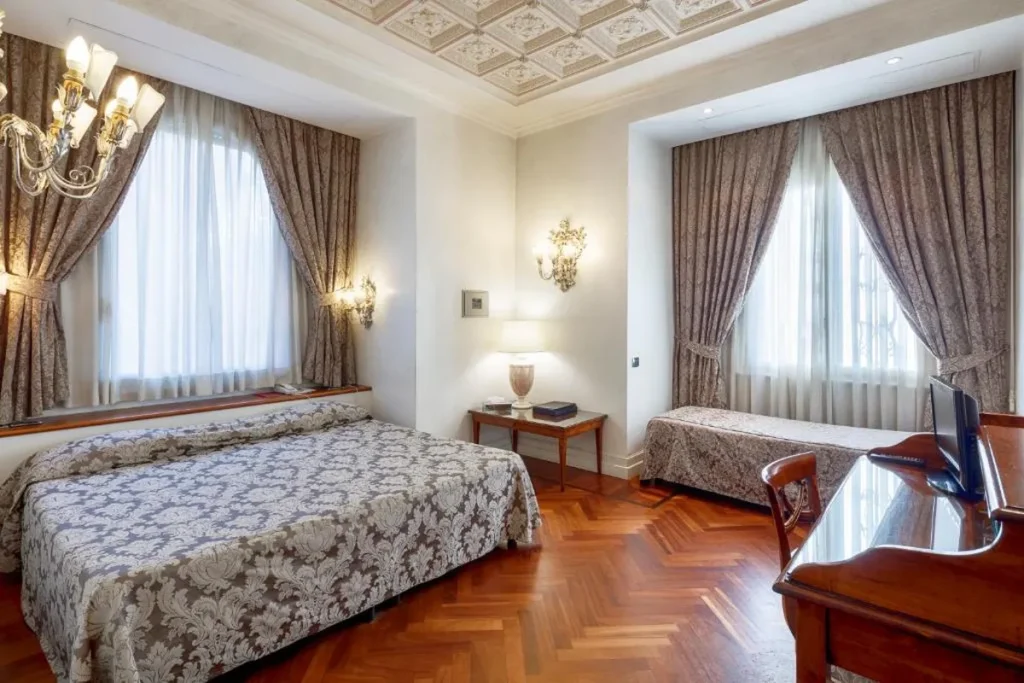
Mid-Range: Sant’Anselmo Hotel On the Aventine, a 4-star villa hotel with a garden and a genuinely calm atmosphere. The breakfast terrace overlooks the garden, not a piazza. Around €140-180 for a double. One of the better options in Rome if you want the 4-star experience at a price point below the centro storico equivalents.
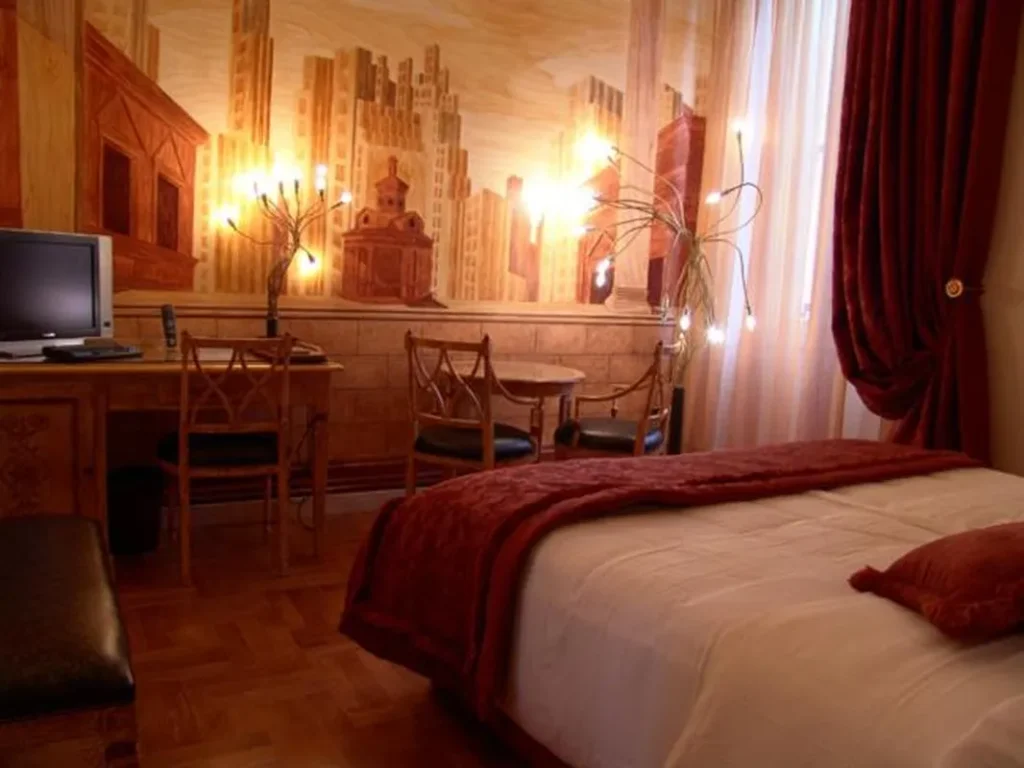
Budget: Residenza Arco dei Tolomei Technically Trastevere but walking distance to Testaccio across the bridge. Seven rooms in a Trastevere alley, honest prices, no frills that aren’t needed. Around €80-100. (Same property as Arco del Lauro mentioned above – cross-listed here for Testaccio visitors.)
Practical Logistics for Rome Accommodation
When to book
June, July, August, and October are the hardest months to find decent availability at reasonable prices. Book 2-3 months ahead for anything specific in those periods.
January, February, and most of November are the softest months – hotel rates drop 30-40% and the main sights are uncrowded. The weather is cold but manageable (10-15°C), and the Vatican Museums and Colosseum booking situation is considerably less stressful.
Avoid Holy Week (the week before Easter) regardless of when it falls. Rome fills completely, Vatican queues become extreme, and hotel prices spike. If your dates land there, book 4-5 months ahead.
Airport to accommodation
From Fiumicino (FCO): Leonardo Express to Roma Termini – €14, every 30 minutes, 35 minutes. The right answer for most hotels. Regional trains (slower, more stops, €8) also connect Fiumicino to Termini if you’re watching costs.
Official Rome taxis have a fixed rate of €50 to any address within the Aurelian Walls – which covers all neighborhoods in this guide. The driver must agree to the fixed rate before you get in. Unofficial taxis will quote €70-80; decline.
From Ciampino (CIA): No direct train. SIT Bus Shuttle or Terravision bus to Roma Termini for €6-7 (40-50 minutes). Official taxi: €31 fixed rate to the center.
The noise reality
Most noise: Campo de’ Fiori area (bars until 2-3 AM in summer), streets near the Pantheon and Trevi on summer weekends, the Termini station area (never fully sleeps).
Moderate noise: Via del Corso, Monti main streets, Prati avenues.
Quietest options: Courtyard-facing or interior rooms anywhere in the centro storico; Prati residential streets; Trastevere side alleys; Testaccio and Aventine.
Always request a courtyard or interior-facing room when booking anywhere in the centro storico. The difference on a summer Saturday night near Campo de’ Fiori between a street-facing room and a courtyard room 10 meters away is the difference between 4 and 7 hours of sleep.
What is the best area to stay in Rome for first-time visitors?
The centro storico (historic center) – the area around the Pantheon, Campo de’ Fiori, and Piazza Navona – gives first-timers the most walkable access to Rome’s main sights. Expect to pay a premium of €30-50 per night over equivalent hotels in Monti or Trastevere, and expect more noise at night in summer. If budget is a serious constraint, Monti offers better value with metro access to both the Colosseum and the rest of the city.
Is it safe to stay near Roma Termini?
The station area is safe but not pleasant. Petty theft (bag snatching, pickpockets) is more common around Termini than in residential neighborhoods like Trastevere or Monti – keep your bag in front of you on the metro and don’t use your phone while walking on Via Giolitti at night. The streets immediately north of the station (toward San Lorenzo) are noticeably calmer than those to the south.
How far is Trastevere from the main sights?
Trastevere to the Pantheon is about 25 minutes on foot (Ponte Sisto across the Tiber, then north). Tram 8 from Viale di Trastevere to Largo Argentina takes 12 minutes. From Largo Argentina, the Pantheon is an 8-minute walk and Campo de’ Fiori is 5 minutes. The Colosseum from Trastevere is 35 minutes on foot or 25 minutes via bus 23 to Termini then Metro Line B one stop.
Should I rent an apartment instead of booking a hotel in Rome?
For stays of 5 nights or more, a Trastevere or Monti apartment often makes more sense than a hotel – you get a kitchen (useful for breakfast and cheap lunches), more space, and frequently a better price per night than a comparable hotel room. The risks are: no front desk if something goes wrong, variable cleanliness standards, and the check-in logistics (often a key handoff from a property manager) can be complicated on a late arrival.
Does the neighborhood matter for Vatican visits?
If the Vatican is your first-day priority, Prati is the most logical base – you walk directly there in 15-20 minutes without any transport. From the centro storico, you’re looking at a 30-minute walk across the Tiber or a bus (routes 40, 64) that takes 20 minutes. Neither is difficult, but it’s worth knowing. The Vatican Museums require pre-booked timed entry regardless of where you’re staying – book via the official Vatican Museums website before you arrive.
Plan Your Trip
Before finalizing where to stay, read our first-time guide to Rome for the logistics of tickets, transport, and common mistakes. If you’re planning your days around neighborhoods, the 3 days in Rome itinerary and 5 days in Rome itinerary group sights by area so your accommodation choice makes strategic sense. For keeping costs down across the whole trip, Rome on a budget covers transport, food, and entry fee tactics.
- Milan vs Rome
- Rome vs Venice
- Rome vs Florence
- Naples vs Rome
- First Time in Rome
- 1 Day in Rome
- 3 Days in Rome
- 5 Days in Rome
- Rome on a Budget
- Foodies Guide to Rome
- Where to Stay in Rome
- Day Trips from Rome
- Rome with Kids
- Rome in Winter
- 10 Days in Southern Italy
- Day Trip to Tivoli from Rome
- Amalfi Coast Travel Guide
Where to Stay in Rome — Neighbourhood & Hotel Map
13 hotels across 6 neighbourhoods. The geography tells the story: Centro Storico and Trastevere center, Monti east toward the Colosseum, Prati northwest toward the Vatican, Testaccio and Aventine south. Click any pin.