
Knowing what to eat in Venice separates a good trip from an expensive disappointment – most visitors eat within 50 meters of St. Mark’s Square or the Rialto Bridge, where restaurants are paying some of the highest commercial rents in Italy and charging accordingly. Move two streets in any direction and the same dishes cost 40% less and come from actual kitchens. Venetian cuisine is one of the most distinctive in Italy: shaped by 1,000 years of maritime trade, the spice monopoly the Republic held from the 13th to 16th centuries, and a lagoon system that produces specific ingredients – soft-shell crabs, grey shrimp, violet artichokes – found almost nowhere else. This guide covers the dishes, the bacari worth knowing, the Rialto market logistics, and the neighborhoods where the food is worth eating.
For the full Venice logistics picture before you plan where to eat, the first time in Venice guide covers vaporetto passes, the access fee, and how to structure your days. The Venice on a budget guide has the full cost breakdown including where food pricing works in your favor.
How Eating in Venice Actually Works
The bacaro crawl (Giro d’Ombra)
The correct way to eat in Venice is standing at a bar. A bacaro is a small wine bar serving cicchetti – bite-sized snacks that cost €1.50-3 each. You walk in, look at what’s behind the glass counter or on the bar top, point at two or three things, order a glass of wine (an ombra – literally “shadow,” named for wine merchants in St. Mark’s Square who moved their stalls to follow the bell tower’s shadow to keep their wine cool), eat standing up, and move to the next bar. Three or four bacari constitute a full Venetian dinner for €15-20 per person including wine.
This is not the budget option – it’s what Venetians actually do. It’s also the fastest way to eat well in a city where sitting down at a restaurant adds a coperto charge (€2-4 per person), a service charge, and 15 minutes of waiting.
The best areas for the crawl: Cannaregio along Fondamenta degli Ormesini and Fondamenta della Misericordia; San Polo in the streets around the Rialto Market; Dorsoduro around Campo Santa Margherita.
The timing problem
Most authentic bacari close between 9:00 PM and 10:00 PM. Venice operates on an earlier schedule than the rest of Italy – locals eat at 12:30 PM and 7:30 PM, not 2:00 PM and 9:00 PM. Arrive at a bacaro at 8:30 PM and the cicchetti selection will be depleted. Arrive at 6:30 PM and you’re eating with the neighborhood.
If you need food after 10:00 PM, you are limited to the tourist-facing restaurants near the station and San Marco that keep later hours specifically because they’ve identified the market.
Coperto and water
Sit-down restaurants charge a coperto (cover charge) of €2-4 per person. This is mandatory, legal, and covers the bread and the table – it’s not a tip. Check the menu for it before sitting down; it will be there.
Ask for acqua in caraffa (tap water) rather than bottled. Venice’s tap water comes from the mainland via a pipeline and is clean and cold. Ordering bottled water at a sit-down restaurant adds €3-5 to your bill unnecessarily.
The Key Dishes
Cicchetti
The building blocks of the bacaro experience. Common types:
Baccalà mantecato – salt cod (not fresh cod) soaked for 48 hours to remove salt, poached in milk, then whipped with olive oil at room temperature until it becomes a mousse – white, silky, intensely savory. Served on a round of grilled white polenta or on bread. The technique arrived in Venice in 1432 when a storm blew a ship off course to Norway and the crew returned with dried stockfish. It is the most distinctively Venetian single thing you can eat.

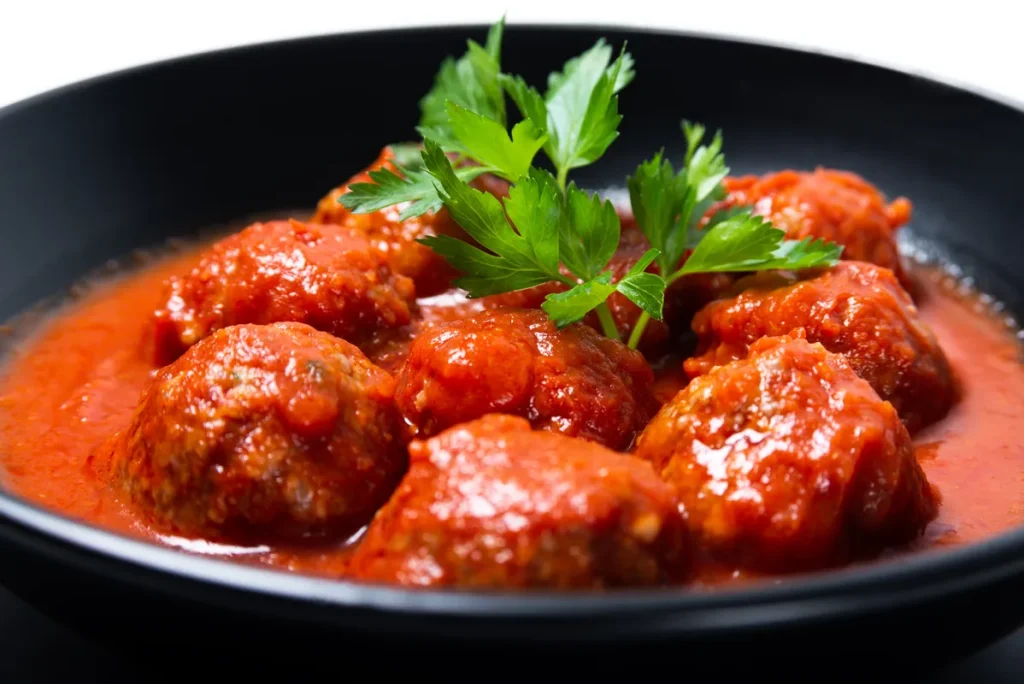
Polpette – fried meatballs, usually a mix of beef and pork or occasionally fish. The version at Ca’ d’Oro alla Vedova in Cannaregio are referenced in every serious Venice food guide as the benchmark.
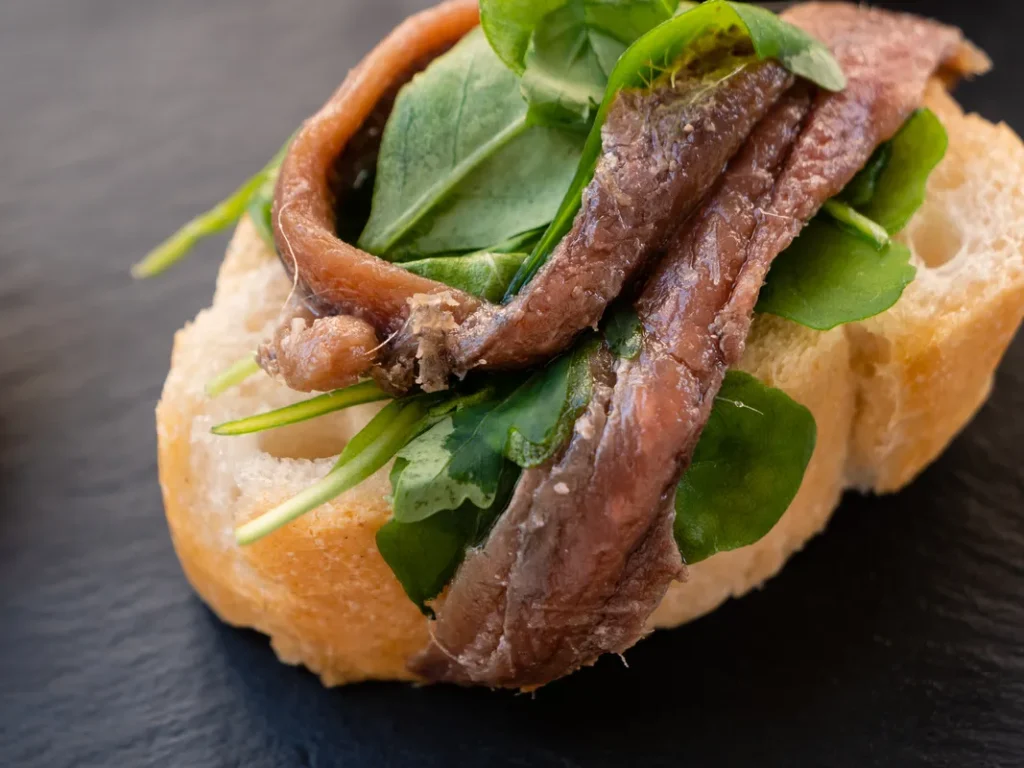
Crostini – small toasts with toppings that change by bar and by day. Common: liver pâté with onion, anchovy with butter and parsley, baccalà mantecato, creamed salt cod with vegetables.
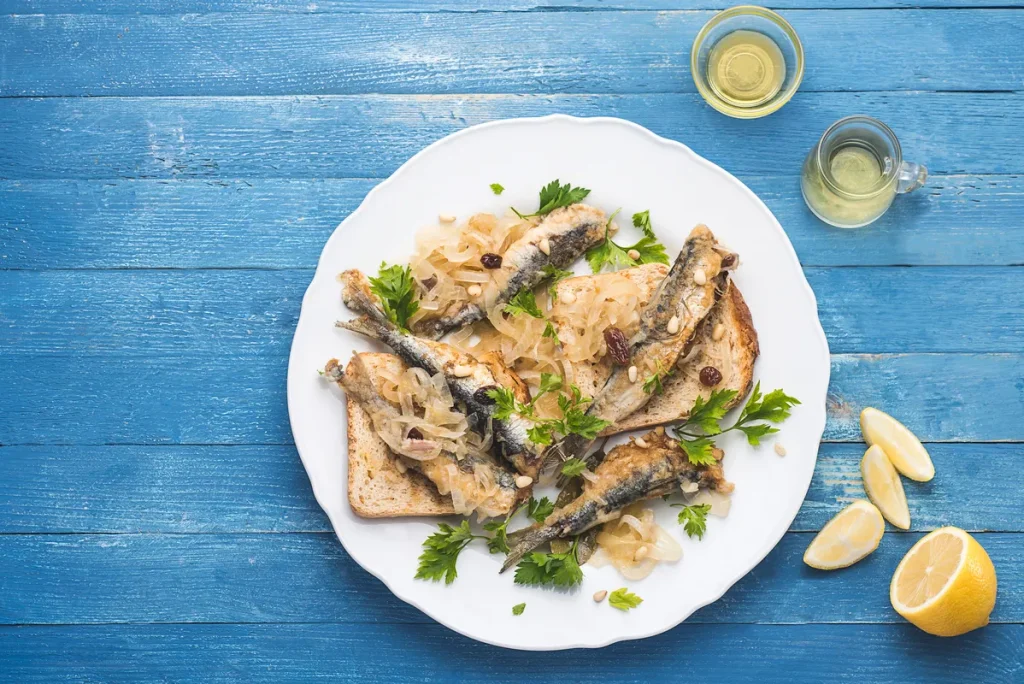
Sarde in saor – fried sardines marinated with slow-cooked onions, white wine vinegar, pine nuts, and raisins. The combination of sweet, sour, oily, and briny is specifically Venetian, the result of the spice trade making raisins and pine nuts household ingredients here when they were luxury items elsewhere. Originally a preservation technique for sailors – the vinegar kept the fish edible for weeks at sea. Now served as a cicchetto or as a first course.
Pasta and risotto
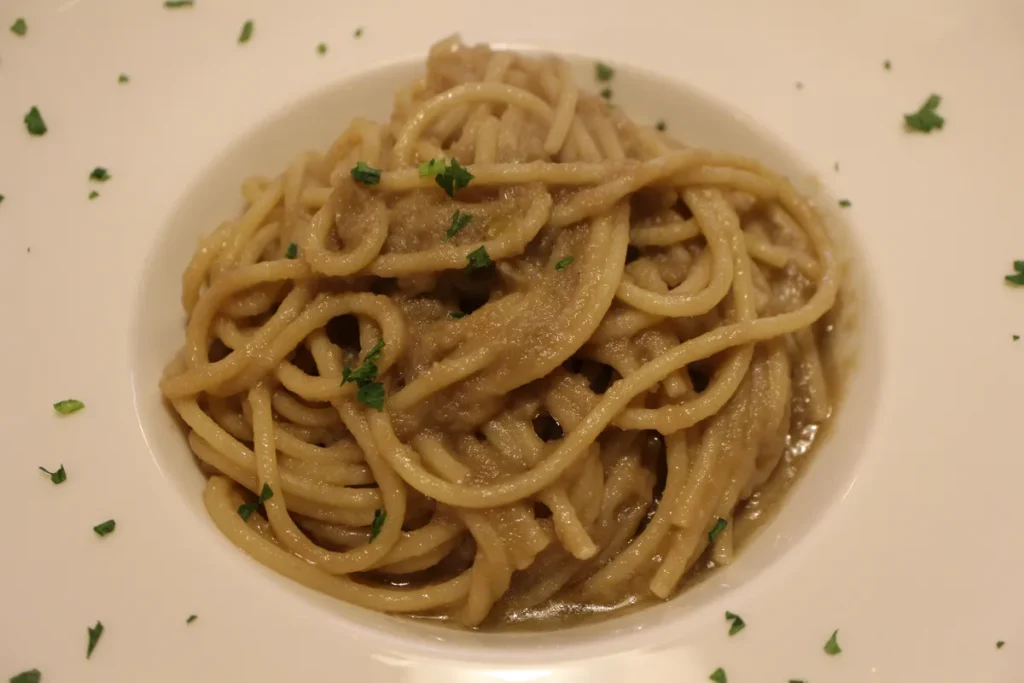
Bigoli in salsa – the Venetian pasta. Bigoli is thick, rough, whole-wheat spaghetti made with a torchio (a hand press), which gives it a porous texture that grips sauce. The salsa is a slow-cooked reduction of white onions and salt-cured anchovies or sardines cooked down until they dissolve. The result is dark, deeply savory, and sweet-salty from the onion and fish combination. Served without cheese – adding Parmigiano to a fish pasta is not done in Venice. Price at a proper osteria: €12-16.
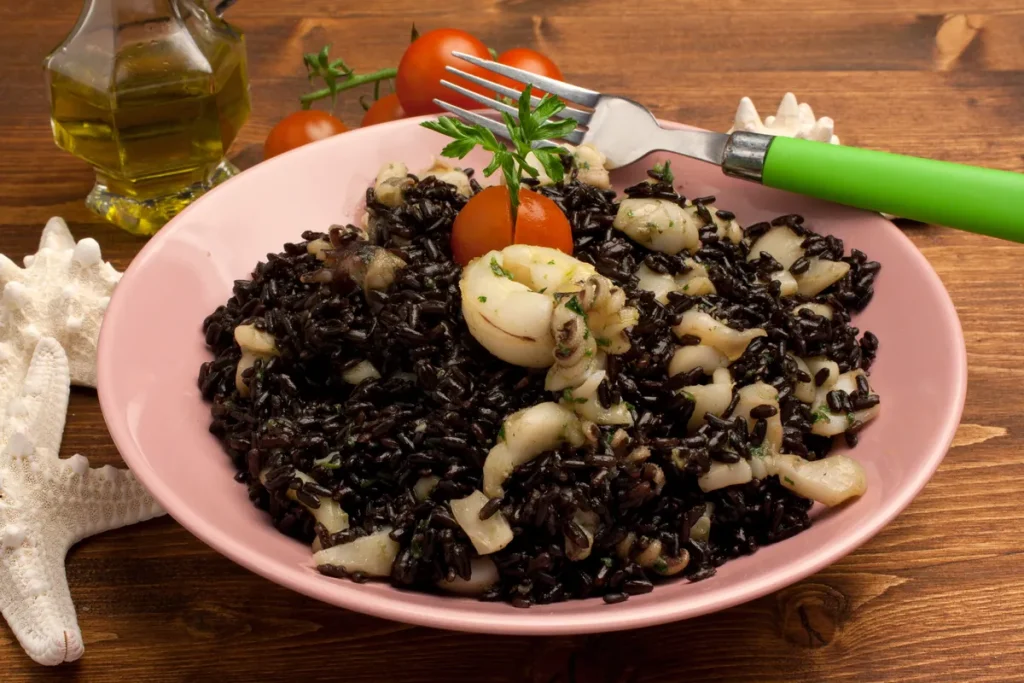
Risotto al nero di seppia – risotto cooked with cuttlefish ink, which turns it uniformly black and adds a briny, slightly metallic depth. Usually includes cuttlefish or squid pieces in the rice. The ink will stain your teeth and tongue for an hour. This is worth knowing, not a reason to avoid it. Price: €16-22.
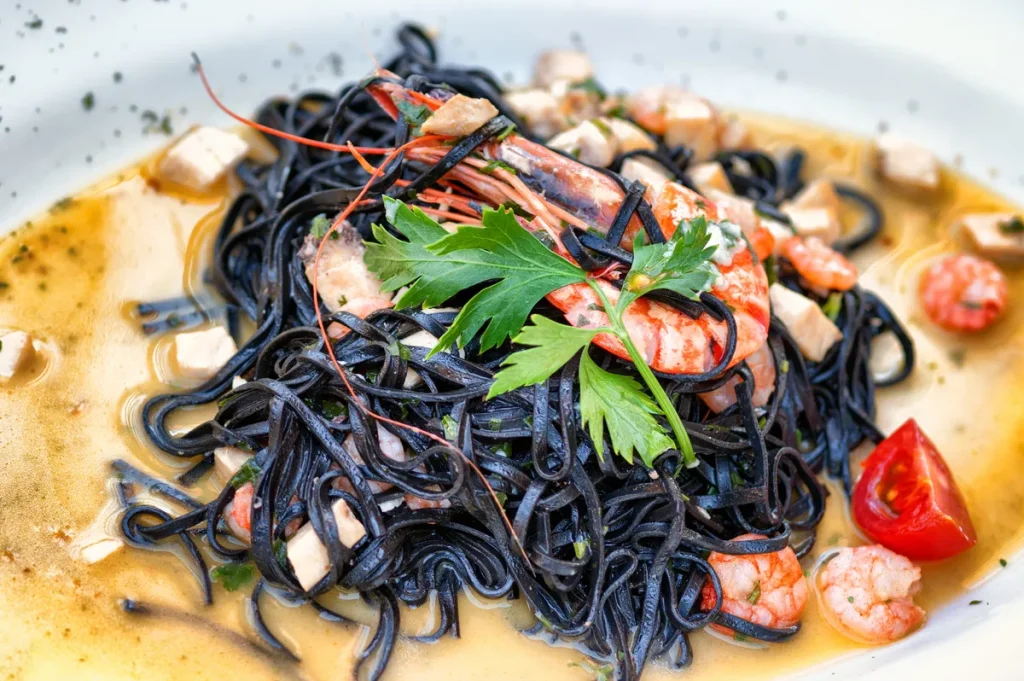
Pasta al nero – same ink, this time as a sauce for fresh pasta (typically tagliolini or spaghetti). Less common than the risotto version but worth ordering if it appears on a daily board.
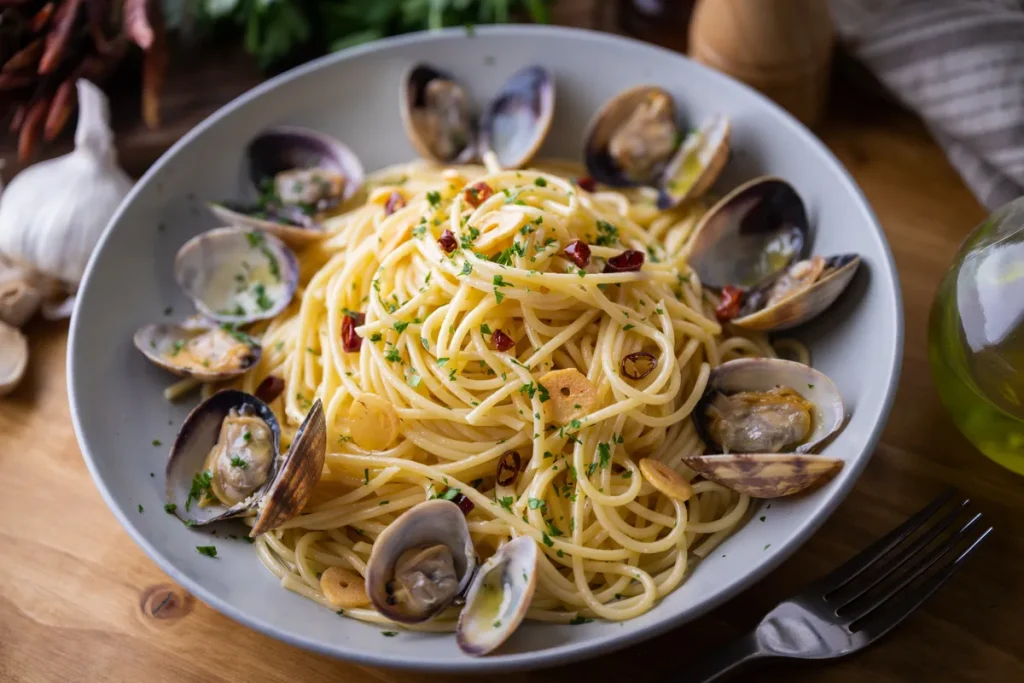
Spaghetti alle vongole – clams from the lagoon, garlic, white wine, olive oil, parsley. The lagoon clams (vongole veraci) are smaller and more intensely flavored than the ones you get in Rome or Naples. Price: €14-18.
Secondi
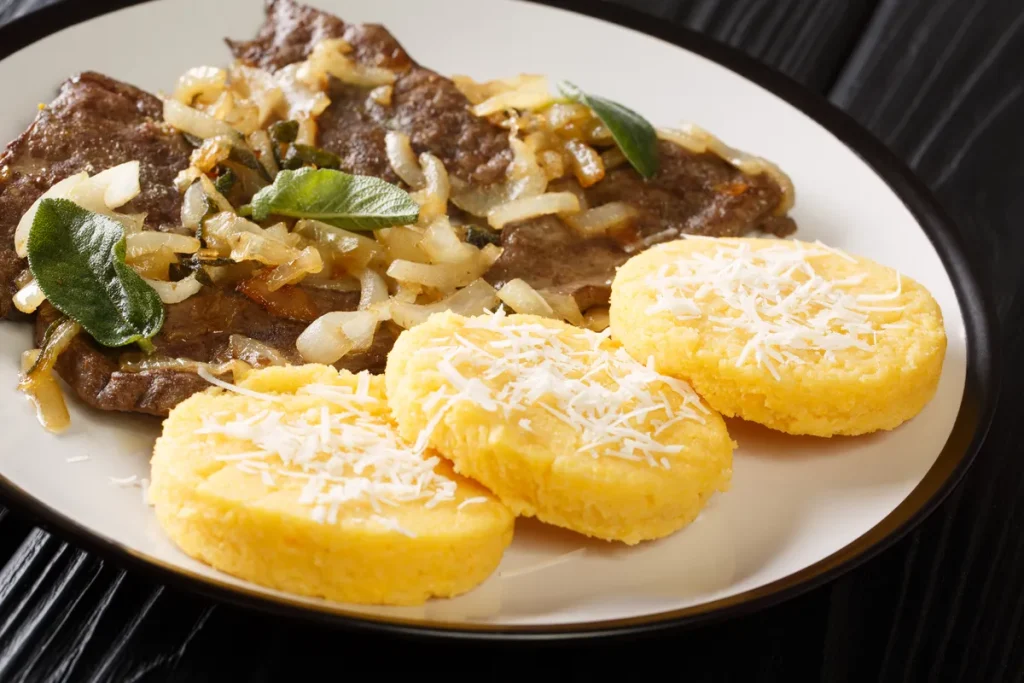
Fegato alla veneziana – calf’s liver sliced thin and cooked quickly in a pan with an equal weight of white onions that have been slow-cooked for 30-40 minutes until completely soft and sweet. The onion sweetness cuts the liver’s iron edge. Served on soft white polenta. This is one of those dishes that converts people who think they don’t like liver. Price: €14-18 at a trattoria.
Moeche – soft-shell crabs from the lagoon, available only in spring (April-May) and autumn (October-November) when the crabs shed their shells. They’re dipped in beaten egg, fried whole, and eaten entire – shell, legs, claws, everything. The texture is crisp outside, rich inside. Expensive (€20-30 per portion) and worth it when in season. Out of season, don’t order them – they’ll be frozen from elsewhere.
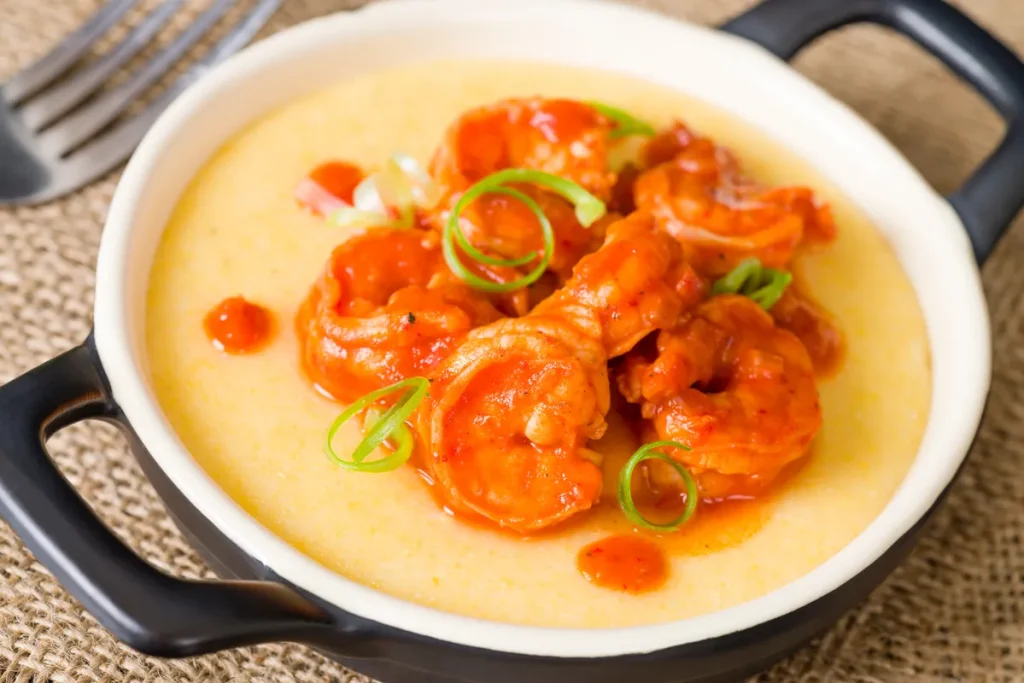
Schie con polenta – tiny grey lagoon shrimp, sweeter and more delicate than regular shrimp, boiled and served cold on white polenta. A quintessential cicchetto or starter. Schie don’t travel well and are essentially only available in Venice and the immediate lagoon area.
The spice influence
The Republic’s monopoly on the Eastern spice trade from the 13th century left a specific mark on Venetian cooking. Cinnamon, nutmeg, cloves, and raisins appear in savory dishes in a way you don’t find anywhere else in Italy. Sarde in saor is the most visible example. The peara sauce (a bread and bone marrow sauce with black pepper) served with boiled meats uses pepper so aggressively it was considered medicinal. When you taste something unexpectedly sweet or spiced in a Venetian dish, this is the historical reason.
Where to Eat: Specific Bacari and Osterie
San Polo – The Rialto Market Area
All’Arco – Via dell’Occhialer 436, San Polo. A tiny bar that opens at 8:00 AM and is where the fishmongers and market workers from the Rialto come for their morning ombra and cicchetti. By 11:00 AM the cicchetti selection is at its best; by 1:00 PM it’s picked over. Cash only or card depending on the day – bring cash. This is consistently cited as the most genuine bacaro experience available to visitors.
Cantina Do Mori – Calle Do Mori 429, San Polo. Operating since 1462, the oldest bar in Venice. The ceilings are hung with copper pots; the wine list runs to hundreds of options; the cicchetti are traditional. Stand at the bar. It gets crowded from noon onward; go at 11:00 AM or at 6:00 PM.
Osteria Al Squero – Fondamenta Nani, Dorsoduro (technically across the canal from San Polo but worth including). On the canal opposite a working gondola repair workshop. Small, basic, cheap Spritz and cicchetti. The outdoor seating on the fondamenta across from the squero is the specific draw.
Cannaregio – The Local Stronghold
Cannaregio is where a significant portion of the city’s remaining residential population lives. The streets along Fondamenta degli Ormesini and Fondamenta della Misericordia (the canal-side paths running east-west through the northern part of the sestiere) have the highest concentration of genuinely local bars in Venice.
Al Timon – Fondamenta degli Ormesini 2754. Well-known for crostini and for the wooden boat moored alongside the fondamenta where you can eat and drink canal-side. Gets busy in the evenings; arrive by 7:00 PM for a spot.
Ca’ d’Oro alla Vedova – Calle del Pistor 3912. The polpette here are the specific reason to visit – fried meatballs with a crisp casing and a dense interior that have been on the menu for decades. Tiny, cash only, closes early.
Osteria Anice Stellato – Fondamenta della Sensa 3272. A proper sit-down osteria rather than a bacaro, focused on lagoon fish. The menu changes daily based on the market. Reservations are strongly recommended. A full meal with wine runs €35-45 per person – not budget, but the cooking is worth it.
Dorsoduro – Students and Galleries
Dorsoduro has the lowest tourist-to-resident ratio of the main sestieri, partly because the Ca’ Foscari University is here. The area around Campo Santa Margherita is the most useful for the food crawl – several bacari and osterie within 5 minutes’ walk.
Cantine del Vino già Schiavi – Fondamenta Nani 992. Directly opposite the gondola repair workshop. The wine selection is one of the most serious in Venice; the cicchetti are creative rather than traditional (one regular option: brie with nettle nectar on bread – unusual and good). Busy in the early evening aperitivo hour.
Gelateria Nico – Zattere 922. On the Zattere promenade facing the Giudecca Canal. The house specialty is the gianduiotto – frozen chocolate and hazelnut cream on a cup of gelato. Open late. The tables on the Zattere are some of the better public seating in Venice in the evening.
The Rialto Market
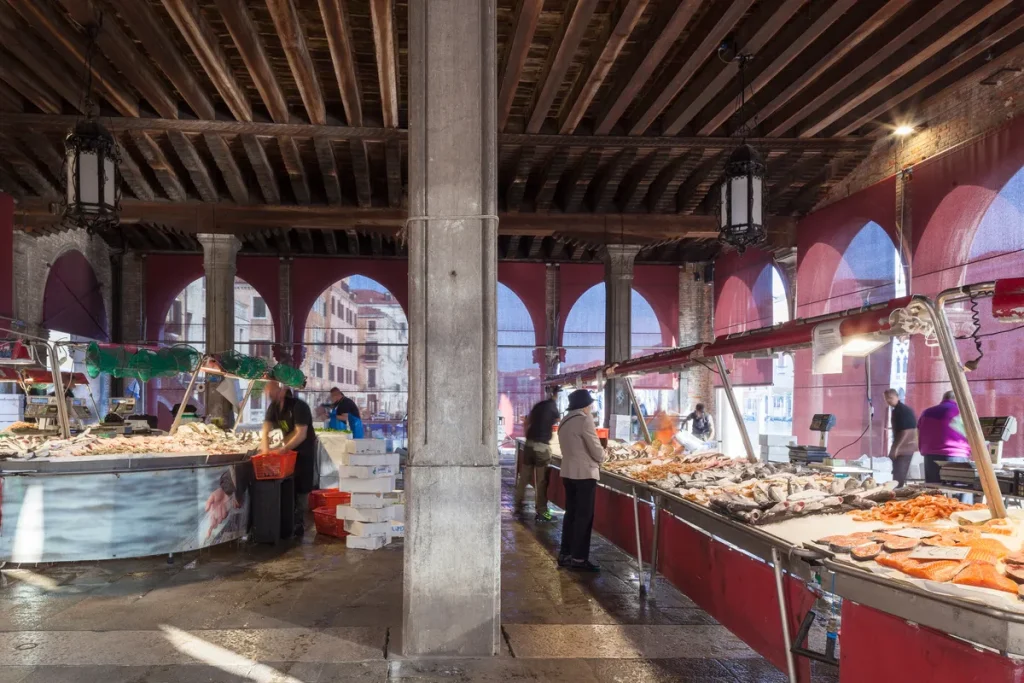
The Pescheria (fish market) and surrounding produce market at the Rialto have been operating on the same site since the 11th century. It’s the practical center of the food economy for Venice’s remaining residents.
Hours: Tuesday through Saturday, 7:30 AM to 1:00 PM approximately. The fish market closes earlier (around 12:00 PM); the produce market runs until early afternoon. Closed Sunday and Monday.
Arrive at 7:30-8:00 AM. By 10:30 AM the tourist crowd makes navigation difficult. By 11:30 AM the best fish is sold and the stalls are cleaning up.
What to look for:
Moeche (soft-shell crabs) – in season April-May and October-November. If you see them, you’re visiting at the right time.
Schie – tiny grey lagoon shrimp in wooden crates. These are what gets served at the bacari as schie con polenta.
Sant’Erasmo violet artichokes – the island of Sant’Erasmo in the northern lagoon grows artichokes in salt-rich lagoon soil. The violet-tipped variety (castraure) are the first artichokes of the season, harvested by removing the central bud which allows the plant to produce side buds. Available April-May. More tender and less fibrous than mainland artichokes.
Dorona grapes from Mazzorbo – a yellow grape variety that nearly went extinct, revived by the Venissa winery on the island of Mazzorbo. Available in autumn at the market and in wines listed on serious restaurant menus.
If you’re self-catering from an apartment, the market is the right place to shop. For everyone else, it’s worth 30 minutes to understand what ingredients are actually in season and what the bacari are working with.
Wine: What to Drink
The ombra
A small (100-125ml) glass of house wine, almost always white and almost always from the Veneto or Friuli. Costs €1.50-2.50 at a bacaro. Ask for ombra bianca (white) or ombra rossa (red). This is the unit of consumption during the bacaro crawl.
Select Spritz
Venice has a specific relationship with Spritz. Select is the bitter liqueur actually produced in Venice (since 1920), darker and more herbal than Aperol, less aggressive than Campari. A proper Venetian Spritz is Select, Prosecco, and a splash of soda with a green olive. In a local bacaro it costs €3.50-5. In a bar on the Grand Canal terrace it costs €12-15. The drink is identical; only the postcode changes.
Prosecco Col Fondo
Standard Prosecco uses the Charmat method (secondary fermentation in tanks). Col Fondo is the ancestral method: secondary fermentation in the bottle, unfiltered, with the yeast sediment left in. The result is cloudy, bone dry, and earthy – nothing like the sweet, fizzy Prosecco in supermarkets. Look for it on wine lists in serious bacari and osterie. It’s produced in the Conegliano-Valdobbiadene area of the Veneto, about 80km from Venice.
Soave and Vermentino
White wines from the Veneto and Friuli dominate Venetian wine lists. Soave Classico (from the hills around Soave, made from Garganega) is the local white – mineral, slightly almondy, and made for seafood. Vermentino (from Sardinia and Liguria) also appears frequently. Both pair with the lagoon fish dishes better than anything from further south.
The Sweets
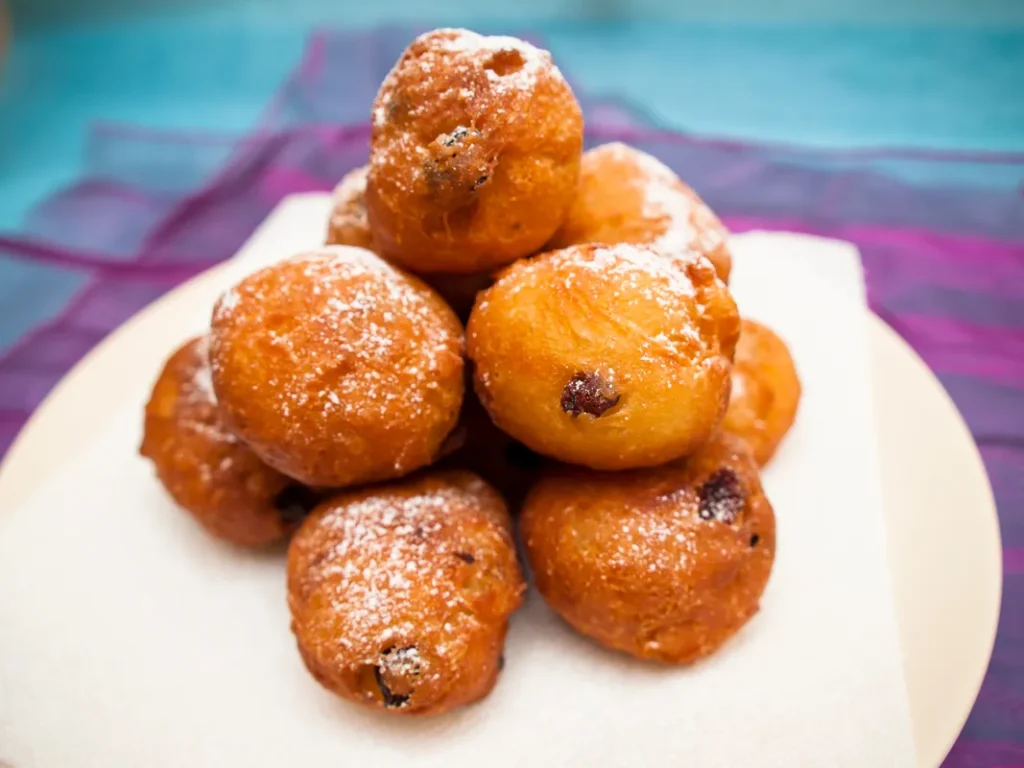
Frittelle – available only during Carnival (February). Fried doughnuts filled with pastry cream, zabaglione, raisins and pine nuts, or simply dusted with powdered sugar. Every pasticceria makes them from January through Shrove Tuesday. They’re addictive and cheap (€1.50-2 each).
Baicoli – thin, dry, twice-baked biscuits that have been made in Venice for centuries. Originally ship’s biscuits – designed to last long sea voyages. Now eaten with coffee or dipped in Vin Santo or Marsala. Available packaged in most food shops.

Pasticceria Tonolo – Crosera San Pantalon 3764, Dorsoduro. Open since 1886. The bignè (cream puffs) and tramezzini (triangular sandwiches on soft white bread – a Venetian institution) are the specific reasons to visit. Stand at the bar, not at the tables – same food, lower price. Open from 7:30 AM; closes Monday.
The No-Go Signals
“Menu Turistico” boards with photographs and text in four languages. These exist specifically for people who won’t be returning.
Restaurants on the Grand Canal with terrace seating. A small number are genuinely good; most are charging for the seat, not the kitchen. Check recent reviews specifically for food quality rather than the view.
An asterisk (*) next to fish dishes. Italian law requires restaurants to indicate frozen fish with an asterisk or explicit labeling. If most of the menu is asterisked, the restaurant is working from a freezer rather than the market. This is not automatically a dealbreaker for a €12 pasta, but it is information worth having.
The trap near the Rialto Bridge. The restaurants immediately on the San Marco side of the Rialto Bridge are among the most tourist-facing in the city. All’Arco (mentioned above) is 100 meters away and is the opposite in every respect.
24-Hour Venetian Food Itinerary
07:30 – Pasticceria Tonolo in Dorsoduro. Macchiato and a bignè at the bar.
08:00 – Walk to the Rialto Market via the Accademia Bridge and through San Polo. Arrive at 8:30 AM when the fish stalls are at their best.
10:00 – First bacaro stop: All’Arco near the Rialto Market. Baccalà mantecato on polenta, one ombra.
10:30 – Cantina Do Mori, 100 meters from All’Arco. Founded 1462. One more ombra, one more cicchetto.
12:30 – Sit-down lunch in Cannaregio: Osteria Anice Stellato. Book ahead. Bigoli in salsa and whatever the lagoon fish is today.
18:00 – Aperitivo crawl along Fondamenta degli Ormesini in Cannaregio. Start at Al Timon. Select Spritz, €4-5.
19:30 – Move south to Dorsoduro. Cantine del Vino già Schiavi for wine and creative cicchetti.
21:00 – Final gelato at Gelateria Nico on the Zattere. Walk west along the promenade toward Punta della Dogana.
For planning the full Venice trip around the food guide, the 3 days in Venice itinerary sequences the days so the Rialto market morning and the bacaro crawl evening fit into the sightseeing structure. For the broader Venice logistics – vaporetto passes, the access fee, accommodation – the first time in Venice guide covers everything before you arrive. For the full list of things worth your time in the city, best things to do in Venice covers the sights, the islands, and the free experiences. For managing costs across the whole trip, Venice on a budget has the complete breakdown. For choosing where to base yourself, where to stay in Venice covers all six sestieri with the food implications of each neighborhood factored in.
Is Venetian food really as bad as people say?
No – the reputation comes from eating in the wrong places. The tourist corridor between the station, Rialto, and St. Mark’s contains the worst food in the city at the highest prices. The bacari in Cannaregio, San Polo, and Dorsoduro serve genuinely excellent food at prices that are reasonable by any Italian standard. The issue is that most visitors never leave the corridor.
What should I absolutely not miss eating in Venice?
Baccalà mantecato at a bacaro, sarde in saor, and bigoli in salsa. These three dishes exist in forms specific to Venice and are difficult to find at equivalent quality anywhere outside the lagoon. If you eat all three, you’ve had the Venetian table experience.
When is the best time to do the bacaro crawl?
6:00-8:00 PM. The cicchetti selection is fresh, the bars are full but not overwhelmingly crowded, and you’re eating at the same time as residents. After 9:00 PM, most bacari close or run out of the best options.
Is it worth eating at a sit-down restaurant in Venice?
Yes, but choose carefully. A serious osteria focused on lagoon fish – Anice Stellato in Cannaregio, Ai Artisti in Dorsoduro – gives you a dining experience that the bacaro crawl doesn’t. Budget €35-50 per person with wine. The mistake is paying similar prices at a restaurant near St. Mark’s for food that comes from a supplier who isn’t working with the Rialto market.
What is moeche and when can I get it?
Moeche are soft-shell crabs from the Venetian lagoon, harvested during the brief periods when the crabs shed their shells – spring (April-May) and autumn (October-November). They’re fried whole and eaten entirely. If you’re in Venice during those windows and you see them on a menu or at the Rialto market, order them. They don’t exist outside the lagoon system in any meaningful way.
What to Eat in Venice — Food Map 2026
Bacari, osterie, the Rialto market, sweets, and the tourist traps to avoid. Move two streets from St. Mark’s and prices drop 40%. Click any pin.