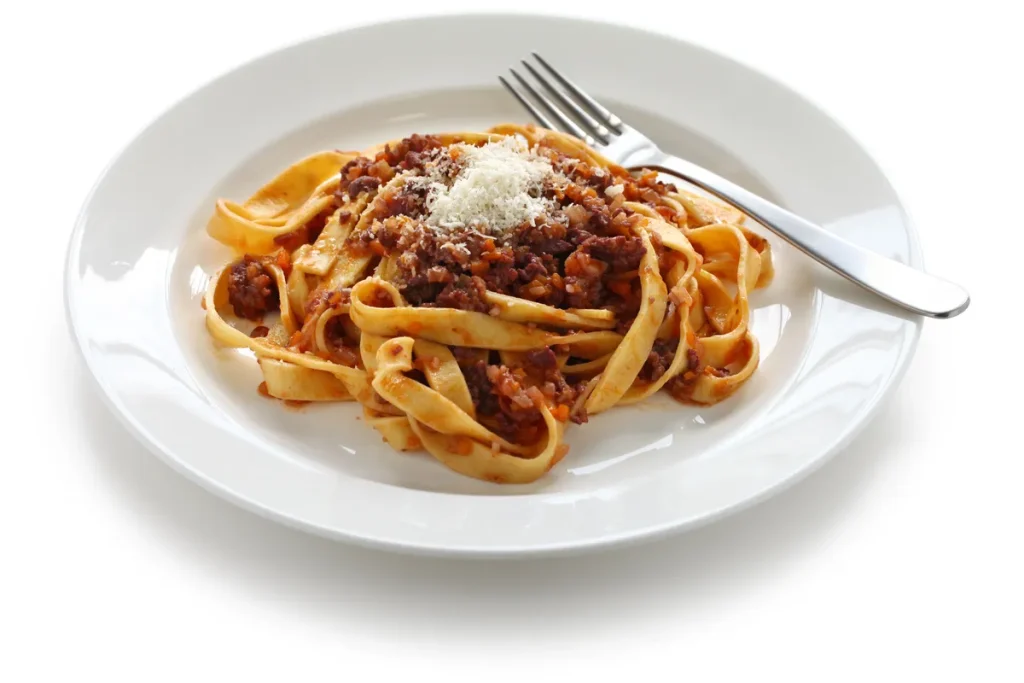
What to eat in Bologna starts with one correction: the dish is not Spaghetti Bolognese. It doesn’t exist in Bologna. The ragù is served on fresh egg tagliatelle or baked into lasagna – never on spaghetti, which is a smooth, dry pasta from the south that the sauce slides off. Any restaurant in Bologna advertising Spaghetti Bolognese on a sign is targeting visitors who haven’t read this far. Walk past it.
Bologna is the capital of Emilia-Romagna, a region with more DOP (Protected Designation of Origin) food products than almost anywhere else in Europe. Parmigiano-Reggiano, Prosciutto di Parma, Aceto Balsamico Tradizionale di Modena, and Mortadella Bologna are all from here. The city is called La Grassa (The Fat One) – a title it earns through butter, egg pasta, bone marrow, slow braises, and pork in every form the pig permits. This guide covers the dishes, the markets, the specific addresses worth knowing, and what to avoid.
Bologna is 35 minutes from Florence by Frecciarossa (€15-20 each way), making it the most accessible serious food detour on the standard Italian itinerary. If you’re building a Florence trip, the first time in Florence guide covers how to structure the main city days before adding Bologna as a day trip or overnight.
How Eating in Bologna Works
Reservations
The best osterie and trattorias in Bologna are small – 20 to 35 seats is common. They fill with a combination of university staff, local professionals, and a growing number of food-aware visitors. Showing up at 8:30 PM without a booking at a serious restaurant will result in being turned away. Book dinner at least a week ahead for the places named in this guide. Lunch is slightly more forgiving but still worth booking for specific addresses.
Lunch: 12:30 PM to 2:30 PM. Dinner: 8:00 PM to 10:00 PM. Kitchens close at their stated times.
Price expectations
Bologna is cheaper than Florence, Rome, and Milan for equivalent quality. A plate of handmade tagliatelle al ragù at a proper trattoria costs €12-16. A full sit-down dinner with wine runs €35-50 per person at a serious restaurant. The university population and the density of locals eating out keeps prices more honest than in cities where tourism is the primary economic driver.
The sfogline
The women (and increasingly men) who hand-roll pasta using a long wooden rolling pin (mattarello) are called sfogline. The dough is made from soft wheat flour and eggs only – one egg per 100 grams of flour, no water, no oil. The technique requires rolling the dough until it’s thin enough that, in the old description, you can read the newspaper through it. The result has a texture that dried pasta cannot replicate: silken, porous, and with enough surface roughness to hold sauce.
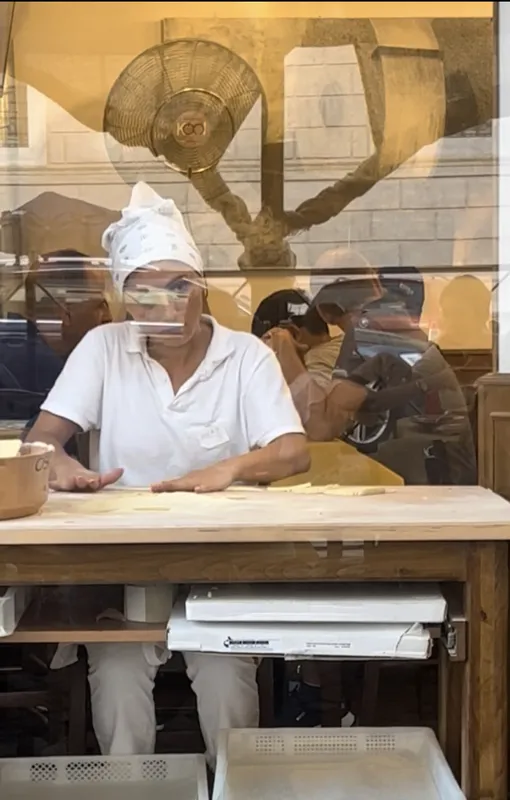
Several shops in the Quadrilatero have glass windows onto the pasta workroom. Walk past at 9:00-11:00 AM and you’ll see the sfogline at work. Watching 30 seconds of this explains why the pasta costs what it costs.
The Dishes
Tagliatelle al Ragù
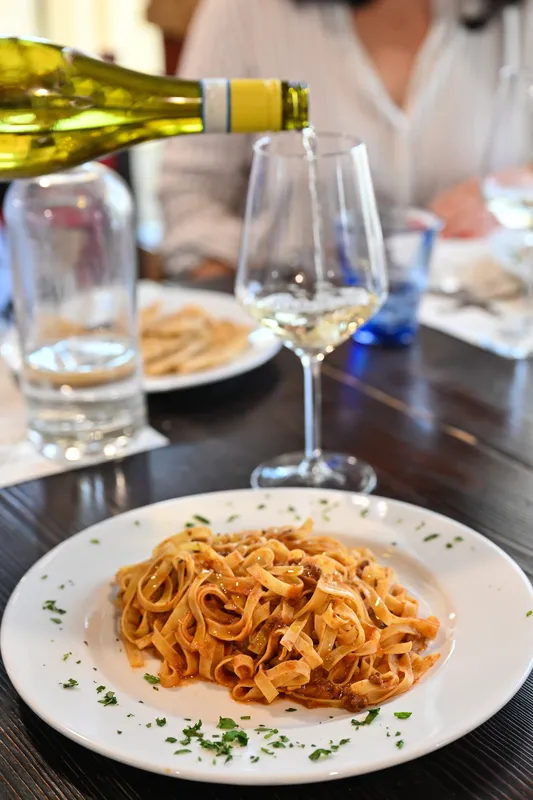
The benchmark dish of the city and the correct context for what the rest of the world calls “Bolognese sauce.”
The ragù is a slow reduction – 3 to 4 hours – of coarsely ground beef and pork belly (pancetta) with the standard Italian soffritto (celery, carrot, onion cooked down in butter), a small amount of tomato paste (not a tomato sauce base), white or red wine, and milk added near the end of cooking. The milk tenderizes the meat and rounds the acidity. The result is dense, meaty, and complex – nothing like the quick tomato-heavy version exported globally under the Bolognese name.
The dimensions of authentic tagliatelle are regulated by local tradition: 8mm wide when cooked, proportional to 1/12,270th of the height of the Torre degli Asinelli. A replica in gold is kept at the Bologna Chamber of Commerce. This sounds like a joke; it isn’t.
The pasta must be fresh, hand-rolled, egg-based. Dry pasta is not the right vehicle. Spaghetti is not the right vehicle. If either appears in a restaurant’s interpretation of this dish, the restaurant is not cooking Bolognese food.
Price at a proper trattoria: €12-16.
Tortellini in Brodo
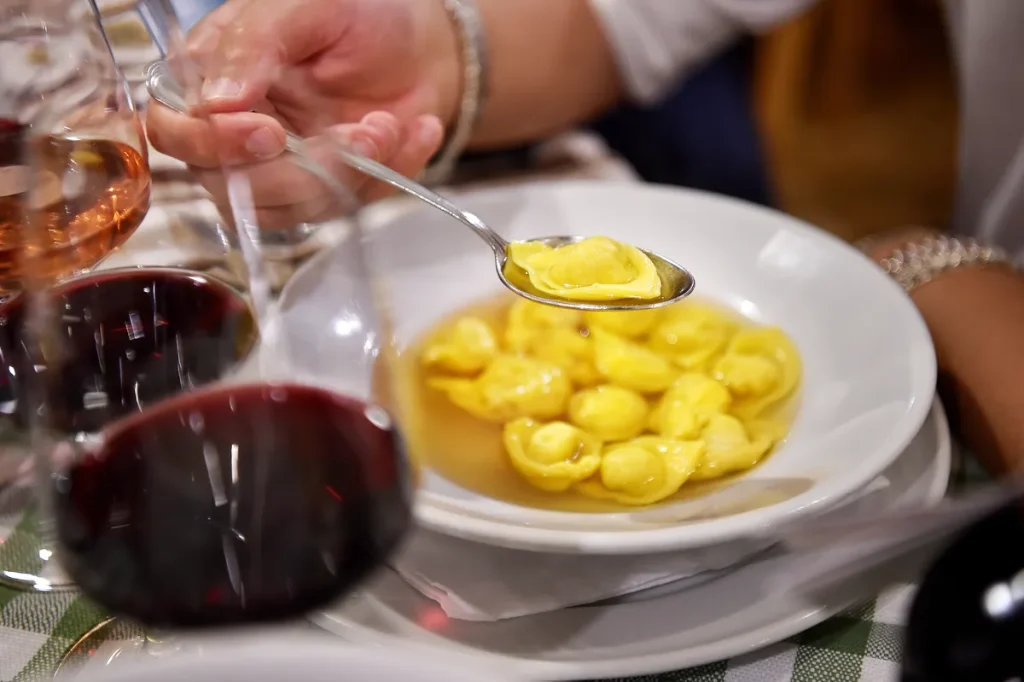
Smaller than a thumbnail, filled with a precise mixture of pork loin (cooked in butter first), Prosciutto di Parma, Mortadella, Parmigiano-Reggiano, egg, and nutmeg. The filling ratio has been debated and refined for centuries; the Learned Brotherhood of Tortellino, founded in 1964, maintains a notarized recipe deposited with the Bologna Chamber of Commerce.
Served in a clear golden broth – traditionally capon, sometimes beef, always long-simmered – that releases the nutmeg aroma from the filling as you eat. Not served with cream sauce. Not served dry. Not served with tomato. The broth is the dish.
This is the Christmas dish of Emilia-Romagna, which means it appears on menus year-round in Bologna but is taken most seriously in winter. Eating it on a cold November evening in a wood-paneled osteria is the specific experience most people are describing when they say Bologna is their favorite food city in Italy.
Price: €10-14 for a bowl as a first course.
Lasagna Verde alla Bolognese
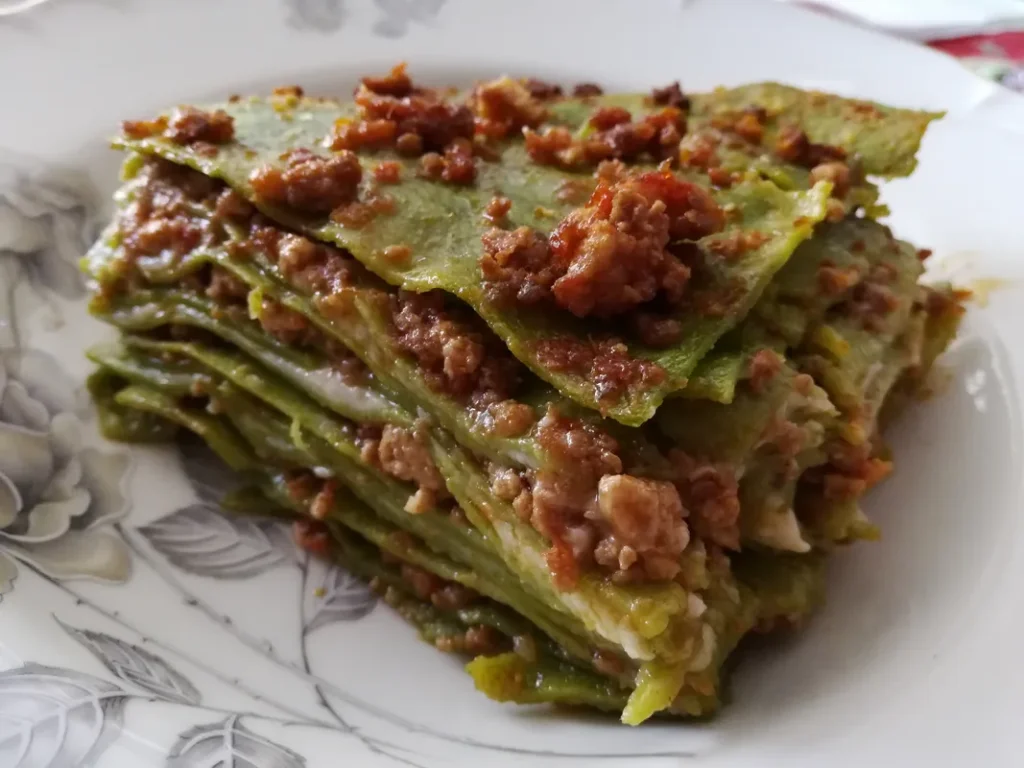
Green pasta sheets (the dough enriched with spinach) layered with ragù alla Bolognese, béchamel (besciamella), and Parmigiano-Reggiano, baked until the top layer caramelizes at the edges. No mozzarella. No ricotta. The spinach in the pasta gives the dish its color and a slight mineral undertone that cuts the richness of the other layers.
A single portion done correctly is filling but not heavy – the besciamella is used with restraint, and the pasta sheets are thin enough that the layers don’t compress into a solid block. The overloaded, mozzarella-heavy lasagna found everywhere else in Italy is a different dish.
Price: €12-16.
Cotoletta alla Bolognese (Petroniana)
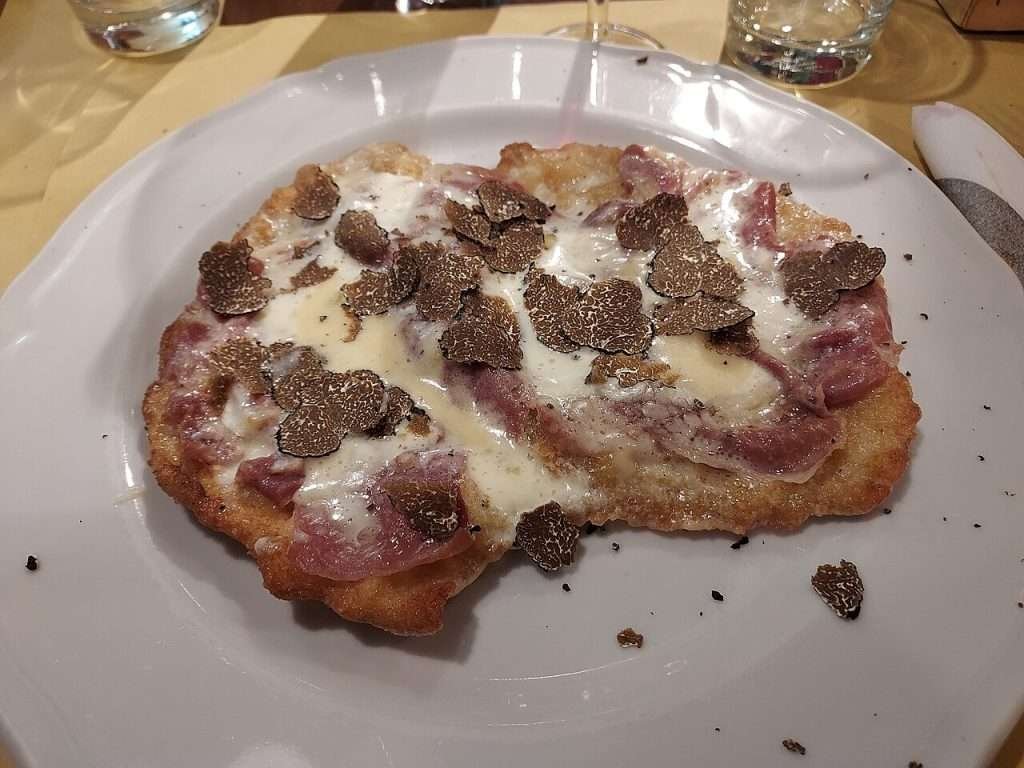
Milan’s cotoletta, taken further. A veal cutlet breaded and fried in butter or lard, then dipped briefly in rich meat broth, topped with a slice of Prosciutto di Parma, covered in grated Parmigiano-Reggiano, and finished under a broiler until the cheese melts into the prosciutto. Sometimes finished with shaved truffle. The name Petroniana references San Petronio, the patron saint of Bologna.
The result is a single plate that uses three of the region’s signature DOP products simultaneously. The broth-dipping step is what distinguishes it from the Milanese version – it adds moisture and integrates the flavors before the cheese goes on.
Price: €20-28.
Mortadella Bologna IGP

Not the pink commercial lunchmeat exported globally. The original is a cooked pork sausage with a specific production method: lean pork ground fine, seasoned with black pepper, myrtle berries, and sometimes pistachios, enriched with firm cubes of pork neck fat (lardelli) distributed through the mass, cooked in dry-air ovens at controlled temperatures.
When sliced correctly – very thin, almost translucent – the fat cubes in each slice melt on contact with the tongue, leaving a clean, subtle pork flavor. Sliced thick, it’s a different, less interesting experience. Buy it from a proper salumeria and specify thin.
Eat it with crescentina (fried dough puffs, also called tigelle depending on which part of the region you’re in) – the combination of hot fried dough and cold Mortadella is standard bar snack territory across Bologna.
Price at a salumeria counter: €2-4 per 100g. A tagliere (charcuterie board) with Mortadella, Prosciutto di Parma, and local cheeses at a bar or osteria: €12-18.
Tortelloni
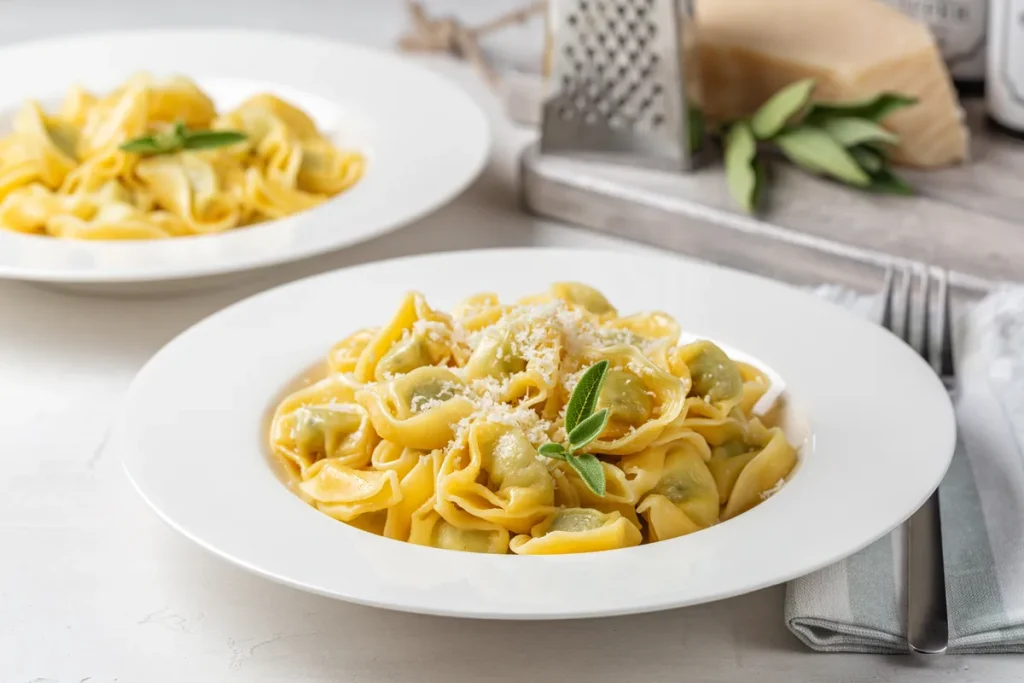
The vegetarian version of the tortellino: a larger pasta pocket filled with ricotta, parsley, and Parmigiano-Reggiano, served with butter and sage (burro e salvia) or occasionally with a light tomato sauce. The butter and sage version is the classic. It’s a simpler dish than the meat-filled options but done correctly with good ricotta and fresh pasta, it’s as satisfying. Worth knowing for vegetarian travelers navigating a heavily meat-based cuisine.
Price: €11-14.
The Markets
The Quadrilatero
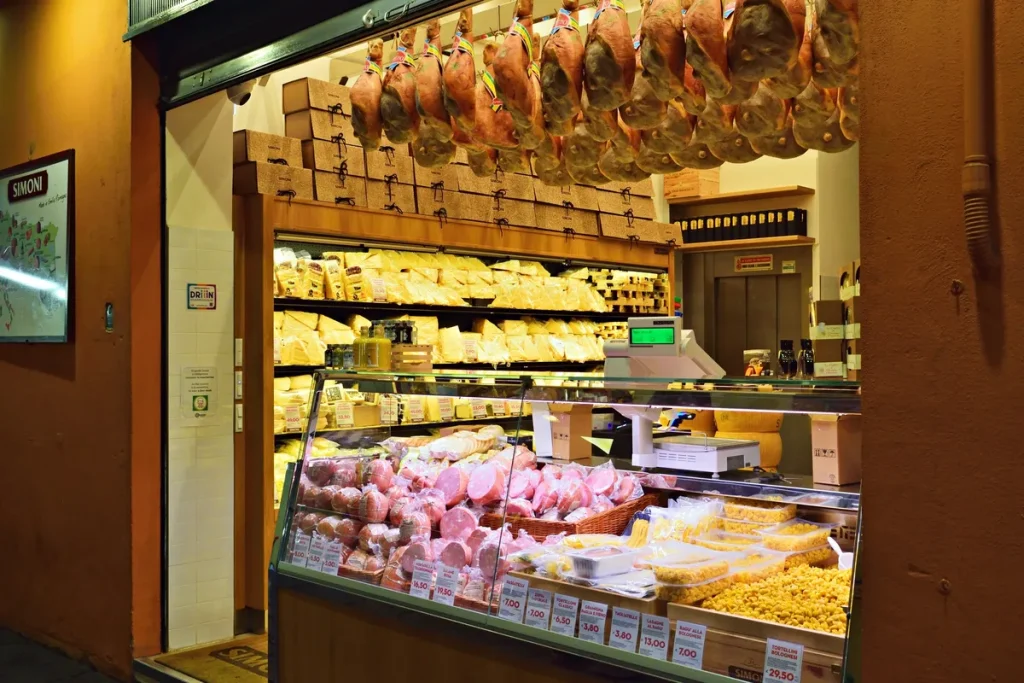
A tight grid of medieval alleyways immediately east of Piazza Maggiore. The food shops here – salumerie, cheese shops, pasta laboratori, fishmongers – have been operating on the same streets since Roman times. The density of quality in a 200-meter radius is unusual even by Italian standards.
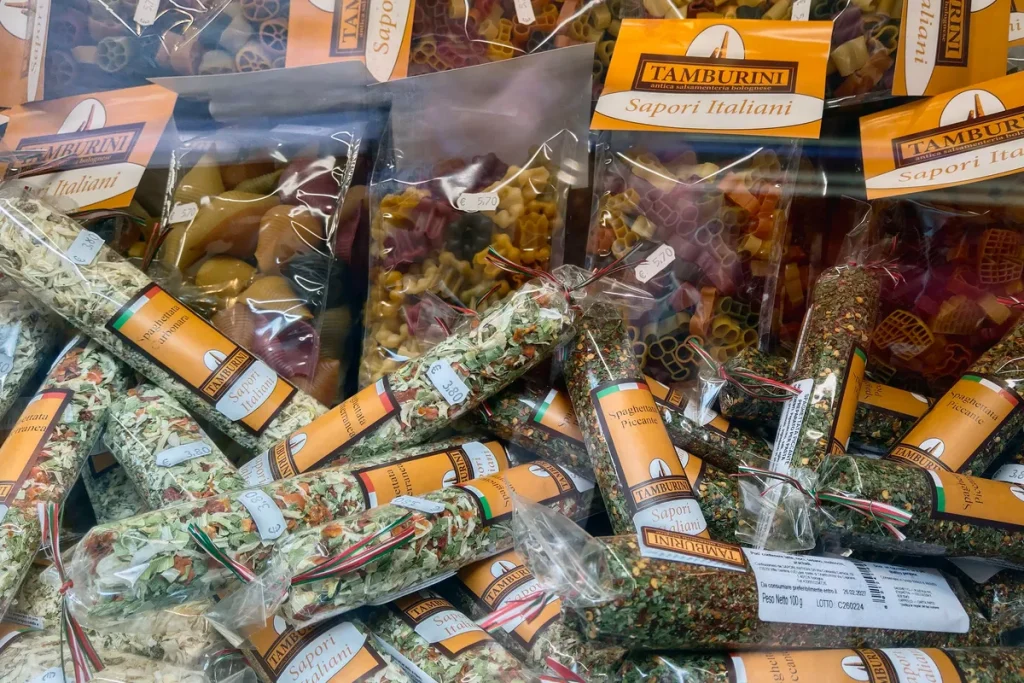
Tamburini (Via Caprarie 1, open since 1932) is the reference address: a salumeria with a counter of prepared foods, a wine cellar, and a deli counter of Parmigiano wheels at different ages (24 months, 36 months, 48 months – each notably different in flavor and texture).
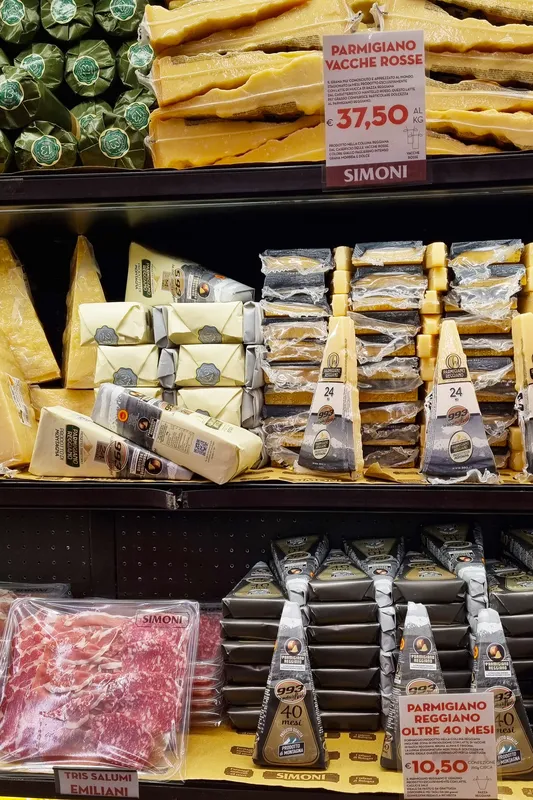
Salumeria Simoni (Via Drapperie 5) is the other serious option – known specifically for aged Parmigiano and for slicing Mortadella to the right thickness without being asked.
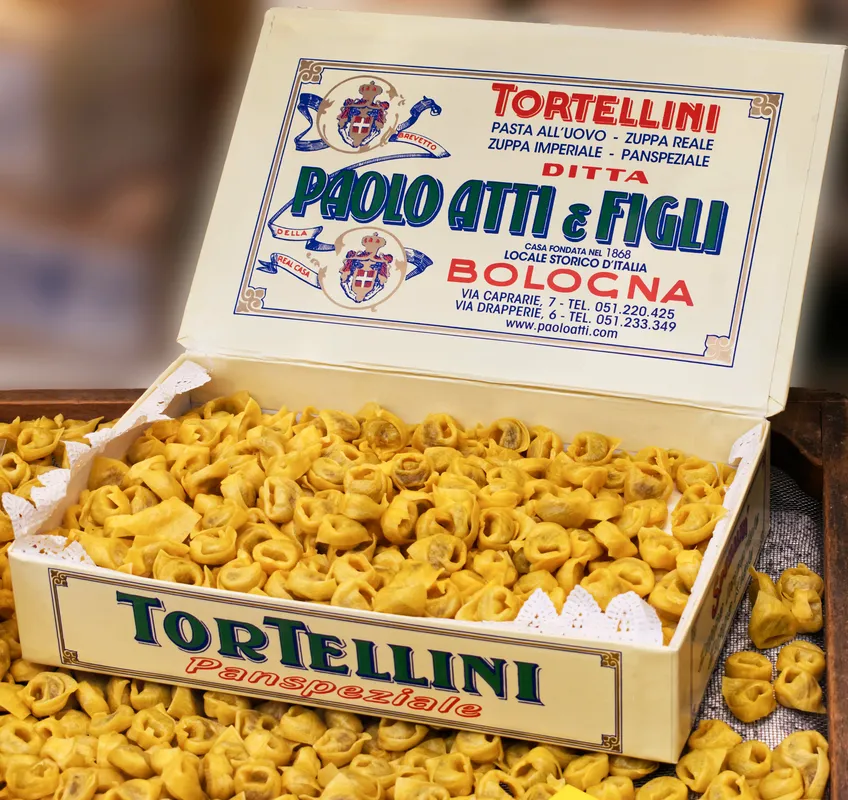
Paolo Atti & Figli (Via Caprarie 7, bakers since 1868) sells fresh pasta, tortellini, and tagliatelle to take away alongside bread and pastries. The glass window onto the pasta workroom is where you watch the sfogline.
The Osteria del Sole Maneuver
Osteria del Sole (Vicolo Ranocchi 1d, open since 1465) is the oldest bar in Bologna. They sell wine only – no food. But the house rule is that you can bring your own food from the market and eat it at their wooden tables with a glass of local Pignoletto or Lambrusco.
The sequence: buy 100g of Mortadella and some Parmigiano from Simoni, pick up crescentine from a nearby bar, walk to Osteria del Sole, order a €3-4 glass of wine, sit at a long wooden table. This costs under €15 total and is the most authentic lunch available to a visitor in Bologna.
Mercato delle Erbe
Via Ugo Bassi 27, the daily market where residents shop. Less touristy than the Quadrilatero, more functional. Fresh produce from the surrounding Po Valley, Adriatic seafood, and local cheeses. The perimeter of the market has been partially converted into a food court with communal tables – affordable lunches of tortelloni or local craft beer for €8-12. Open Monday through Saturday, mornings.
Specific Addresses
Trattoria da Gianni – Via Clavature 18. A small, traditional osteria in the Quadrilatero area. Tagliatelle al ragù, tortellini in brodo, and Lasagna Verde executed without deviation from the regional canon. Cash preferred. Book ahead.
All’Osteria Bottega – Via Santa Caterina 51. One of the most serious addresses in the city for traditional Bolognese cooking. The ragù is made fresh daily, the tortellini in brodo is the benchmark version. 35 seats. Book a week ahead for weekend dinner.
Trattoria Anna Maria – Via Belle Arti 17. Known specifically for tortellini in brodo and for a room hung with photographs of famous visitors since the 1970s. Small, loud, and correct.
Caffè Terzi – Via Guglielmo Oberdan 10. Not a fast espresso bar – a coffee laboratory that treats extraction the way a sommelier treats wine. Single-origin beans, precise water temperatures, detailed explanations if you want them. The caffè d’orzo (roasted barley coffee) served here is the best version of a drink that’s usually mediocre. Espresso: €1.50 standing.
Cremeria Santo Stefano – Via Santo Stefano 70b. Gelato stored in traditional covered metal pozzetti rather than displayed in mountains. The pistachio (Bronte nuts from Sicily), the crema (egg custard), and seasonal fruit flavors. No artificial colors. A cone costs €2.50-3.50 depending on size.
Via del Pratello – The student strip running southwest from the center. Cheap wine bars, traditional osterie running fixed-price dinners at €15-20 including wine, and a general lack of tourist-facing menus. Useful for a budget dinner or late-night drink.
Wine
Lambrusco
Produced across Emilia-Romagna in several DOC designations. Lambrusco di Sorbara (lighter, more aromatic) and Lambrusco Grasparossa di Castelvetro (darker, more tannic) are the most serious. Both are dry (secco), sparkling, and served cold.
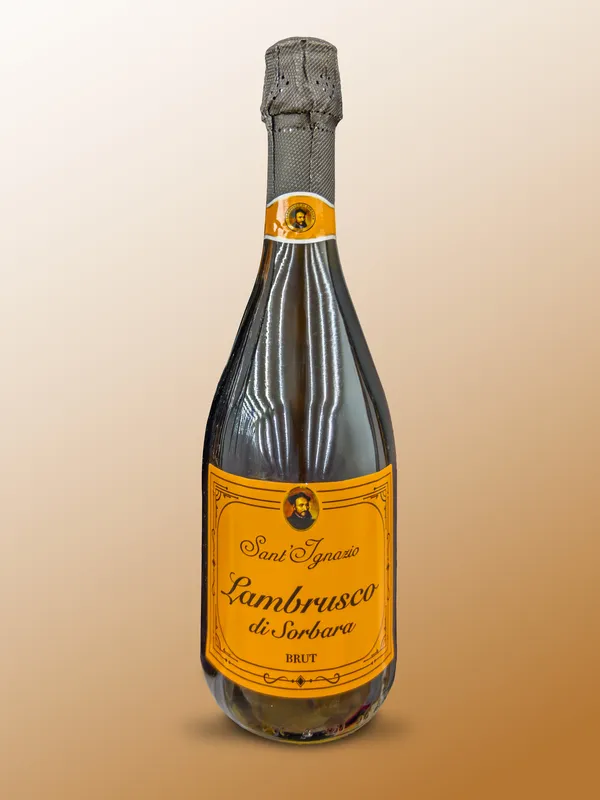
The physics of the pairing: the bubbles and high acidity cut through the fat of Mortadella and the richness of ragù, cleansing the palate between bites. This is not incidental – the wine developed alongside the food specifically for this purpose. The sweet, cheap Lambrusco exported globally in the 1970s and 1980s is a different product.
A glass at a good osteria: €4-6. A bottle at the Osteria del Sole: €8-12.
Pignoletto (Colli Bolognesi)
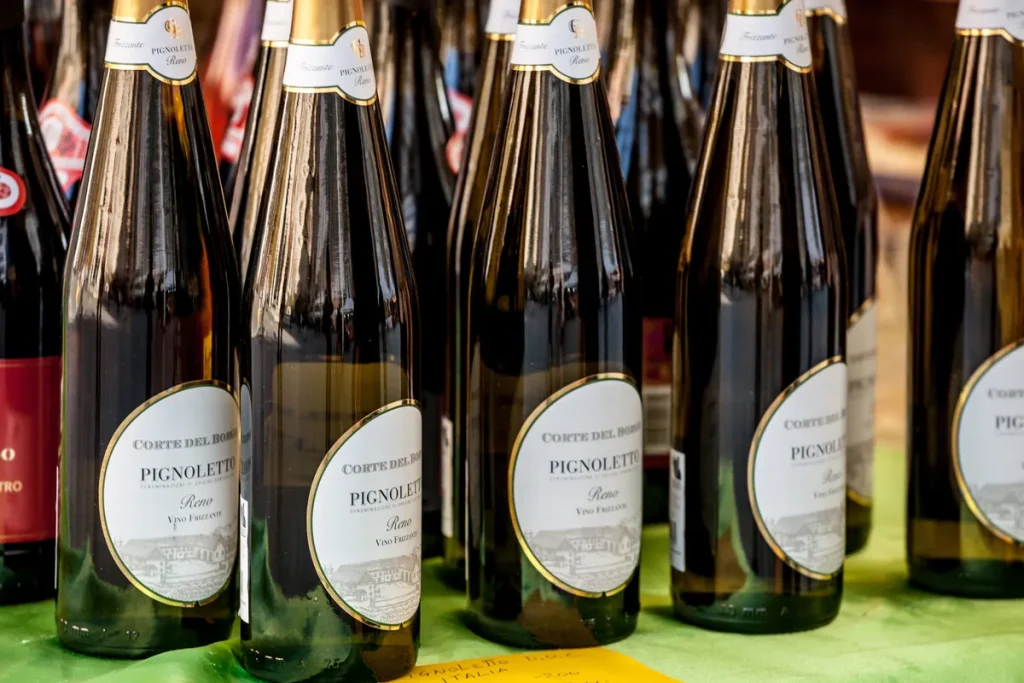
A lightly sparkling (frizzante) white wine from the hills immediately south of Bologna, made from the Grechetto Gentile grape. Crisp, with a slight bitter-almond finish that makes it the natural companion for Parmigiano cubes and light pasta dishes. Less well-known than Lambrusco outside the region and frequently better value.
Sangiovese di Romagna
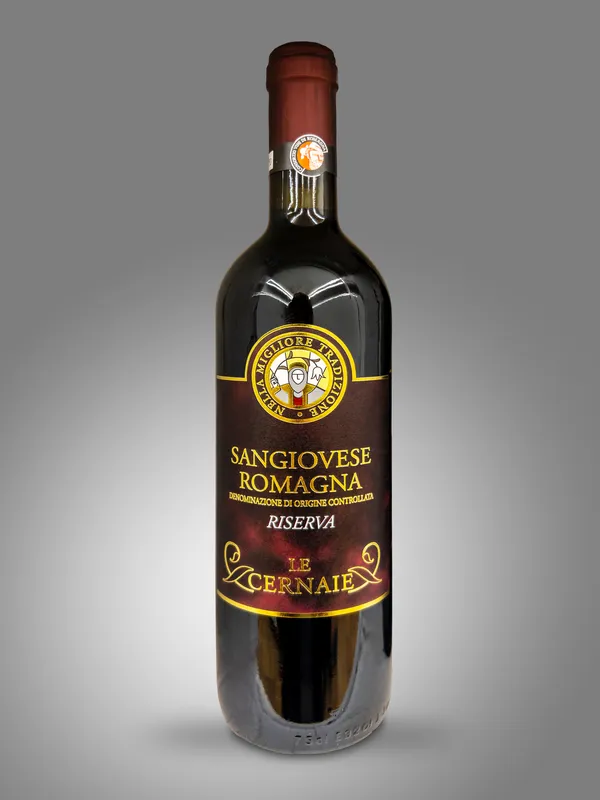
The red wine of the eastern part of the region. Lighter than Tuscan Sangiovese (Chianti), higher acid, and appropriate for the braised meat dishes like Ossobuco and Cassoeula-adjacent preparations that appear on winter menus.
What to Skip
Any restaurant with “Spaghetti Bolognese” on the sign outside. Covered above; the rule holds without exception.
The cafes on Piazza Maggiore for a full meal. The position is excellent for an espresso or a Campari while watching the square. For lunch, walk two streets into the Quadrilatero.
Tourist menu boards in five languages with photographs. Bologna has fewer of these than Rome or Florence but they exist around the Piazza Maggiore perimeter. The food is industrial; the prices are not.
Bottled sparkling water at sit-down restaurants. Ask for acqua del rubinetto (tap water) – Bologna’s tap water is clean and good. Saves €4-6 per table.
Day Trip from Florence: Logistics
The Frecciarossa from Florence Santa Maria Novella to Bologna Centrale takes 37 minutes. Trains run multiple times per hour throughout the day. Advance fares: €15-20 each way; full-flexibility tickets around €35. The last fast trains back to Florence run into the evening.
The Quadrilatero market is a 15-minute walk from Bologna Centrale. Arriving at 10:00 AM gives you time for the market, an Osteria del Sole lunch, and a proper afternoon trattoria dinner before the return train. A day trip to eat in Bologna is one of the most efficient decisions on any Tuscany itinerary.
What is the difference between tagliatelle and spaghetti for the ragù?
Tagliatelle is a fresh egg pasta, wide (8mm) and slightly rough in texture from the hand-rolling process. Spaghetti is a dry pasta made without eggs, smooth and round. The ragù is an oil-based, fat-heavy sauce that clings to rough, porous surfaces and slides off smooth ones. The pairing of ragù with spaghetti is not a stylistic choice – it’s a technical failure that produces a plate where the sauce sits at the bottom and the pasta is on top. Bologna restaurants that serve it that way are optimizing for tourist recognition, not for the dish.
Is Bologna good for vegetarians?
More difficult than most Italian cities. The culinary heritage is built on pork and beef in almost every form. The clearest vegetarian options are tortelloni with butter and sage, tagliatelle with butter and Parmigiano (pasta in bianco), and the produce market’s vegetable-forward dishes. Vegetarians who eat cheese and eggs will find more options than strict vegans, who will find Bologna genuinely challenging.
How is Mortadella different from processed bologna meat?
IGP Mortadella Bologna must be made from a specific quality of pork, seasoned according to traditional recipes, and cooked at controlled temperatures. The commercial “bologna” sold in North America and northern Europe uses inferior cuts, fillers, artificial colorings, and emulsifiers. The flavor and texture are not comparable. The fat cubes (lardelli) in real Mortadella are solid at cold temperature and melt on the tongue at body temperature – this behavior is specific to high-quality pork fat and is absent in the processed version.
What is the best time of year to visit Bologna for food?
Autumn and winter (October through February) for the full seasonal menu: tortellini in brodo, Cassoeula-adjacent braised dishes, fresh truffles from the Apennines, and the full Mortadella and cured meat culture at its most active. Spring and summer are fine but the heavy braised dishes disappear from menus and the heat makes the covered porticoes more relevant than usual.
Can you do Bologna as a day trip from Venice?
es – high-speed train from Venice Santa Lucia to Bologna Centrale takes approximately 1 hour 30 minutes, around €20-30 each way. Slower than from Florence but manageable for a food-focused day. The day trips from Venice guide covers Bologna alongside Padua, Verona, and the Prosecco Hills for planning purposes.
What to Eat in Bologna — Food Map 2026
La Grassa: butter, egg pasta, pork in every form the pig permits. Quadrilatero markets, Osteria del Sole maneuver, serious trattorias, and the tourist traps to walk past. Click any pin.