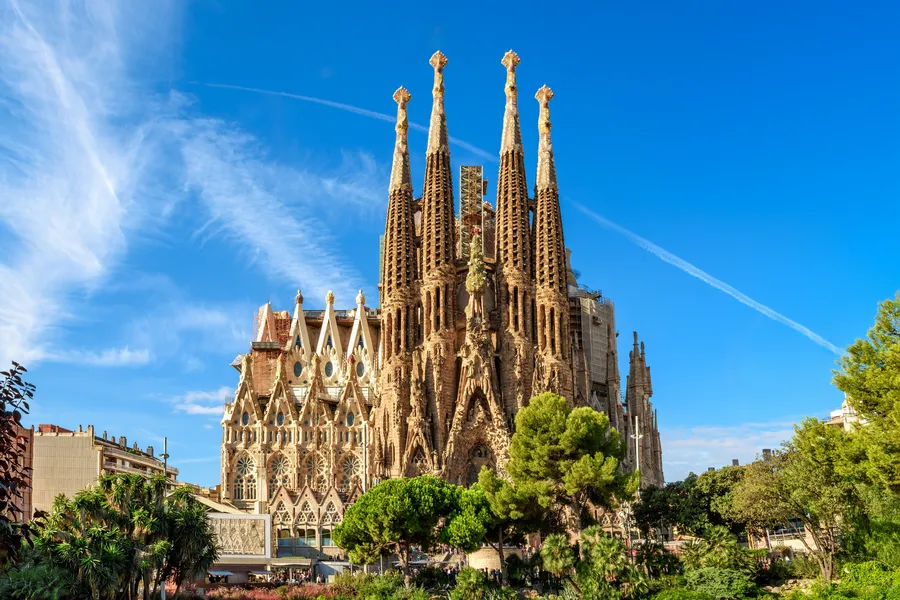
Barcelona requires more planning than most cities its size. Finding the best things to do in Barcelona requires navigating a mix of world-class architecture and logistical hurdles like timed entry slots. The Sagrada Família sells out weeks ahead. Park Güell has timed entry. The Gothic Quarter’s narrow streets make GPS unreliable. Get the logistics right and Barcelona is one of the most rewarding cities in Europe – architecture unlike anywhere else, a food culture built around standing at bars and moving between them, and beaches within walking distance of medieval streets.
These are the 25 things worth your time, filtered to cut the tourist traps and the overpriced versions of things you can do better for less.
For the full planning framework before you arrive, see First Time in Barcelona. For a day-by-day structure, see 3 Days in Barcelona. Before building your sightseeing plan, read this guide on where to stay in Barcelona so you’re based in the right neighborhood.
The Gaudí Circuit
1. Sagrada Família – interior, late afternoon
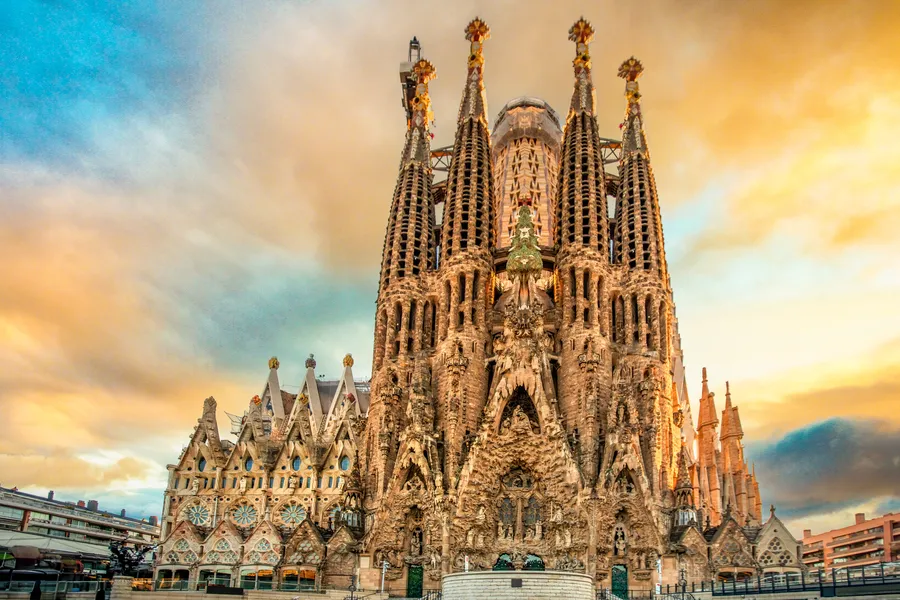
The most visited monument in Spain and the one that most justifies the crowds. The exterior gives you a sense of scale. The interior – columns that branch like trees 45 meters above the floor, stained glass that shifts from cool blues and greens on the east side to warm ambers and reds on the west – is an entirely different experience that photographs cannot adequately represent.
Visit in the late afternoon specifically. The western Passion facade stained glass catches the declining sun and throws color across the nave floor in a way that changes minute by minute between 4:00 PM and 7:00 PM.
Basic entry: €26. Tower access (Nativity or Passion tower, lift included): €36. Book timed entry online at the official Sagrada Família website weeks ahead in summer – walk-up availability is essentially zero in peak season. Allow 90 minutes to two hours inside.
The building is still under construction. The central tower of Jesus Christ – at 172.5 meters the tallest planned church tower in the world – is projected for completion in 2026, meaning the full silhouette may be visible for the first time during your visit.
2. Park Güell – Monumental Zone

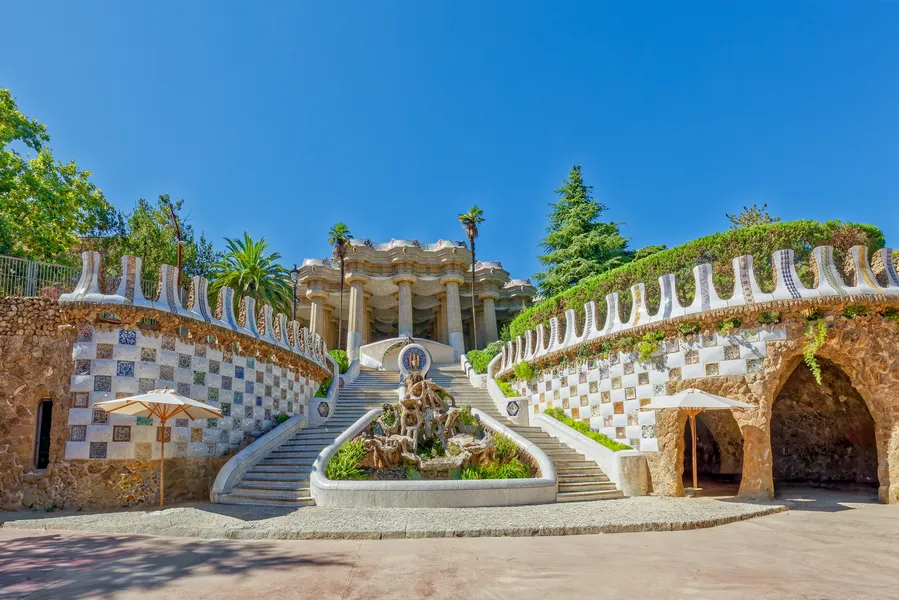
A failed luxury housing estate that Gaudí designed for Eusebi Güell in 1900, converted into a public park when only two houses sold. The ticketed Monumental Zone contains the mosaic terrace with its S-curve bench, the Hypostyle Room (86 tilted stone columns supporting the terrace above), and the dragon staircase at the main entrance.
Timed entry: €10. Books out weeks ahead in July and August – book online. The surrounding park is free public green space and worth walking through regardless.
Practical note: Do not walk uphill from the Metro. Take Bus 24 from Plaça de Catalunya directly to the gate. In summer heat the uphill approach from Lesseps or Vallcarca Metro is steep and unpleasant by mid-morning. Book the earliest available slot (8:00 AM in peak season) before the heat peaks.
3. Casa Batlló – the dragon house

Gaudí’s 1904 renovation of a conventional apartment building on Passeig de Gràcia. The facade – scaled like a dragon’s back, the bone-column ground floor windows, the iridescent blue ceramic roof – is the most visually arresting building on the boulevard. The interior renovation of the apartments includes an augmented reality experience that overlays Gaudí’s design references (the sea, Sant Jordi’s dragon) over the empty rooms.
Entry: around €35. Book in advance. Evening visits after 7:00 PM are less crowded than daytime and the facade lighting is different. If budget is the constraint, the exterior from the Passeig de Gràcia pavement at dusk is the stronger visual experience anyway.
4. La Pedrera (Casa Milà) – the rooftop
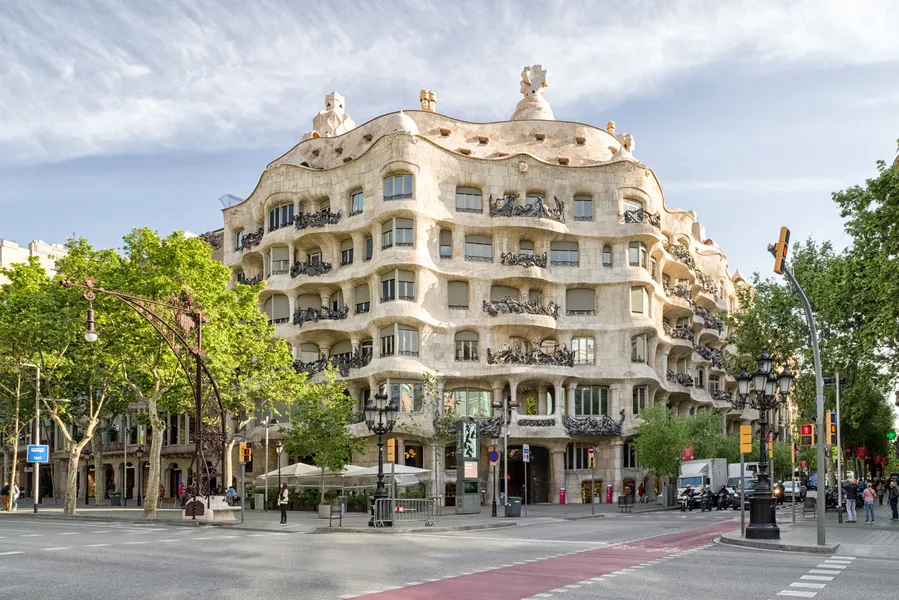
Gaudí’s 1912 apartment building, two blocks north of Casa Batlló on Passeig de Gràcia. The rooftop is the reason to visit – warrior-helmet chimneys, twisted ventilation towers, and a view over the Eixample grid that makes the mathematical logic of the neighborhood visible. Entry: around €25, rooftop included. Evening visits run until 9:00 PM in summer.
The exterior from the pavement, like Casa Batlló, is impressive without paying. If you are choosing one Gaudí interior on a budget, the Sagrada Família is the correct answer – the others are supplementary.
5. Palau Güell – the undervisited one
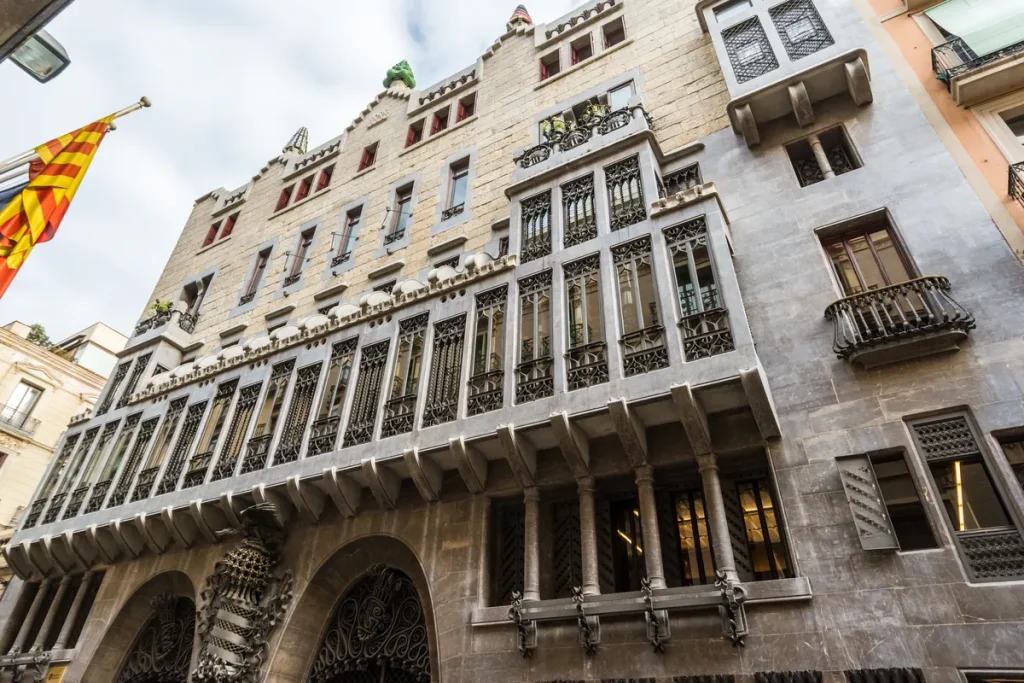
Gaudí’s earlier commission for Eusebi Güell, built 1886 to 1890 on a narrow street off La Rambla. Less visited than anything on Passeig de Gràcia, which means manageable queues and a more contemplative experience. The rooftop ceramic chimneys are the visual centerpiece – the precursor to Park Güell’s mosaic work. Entry: around €12. Book online.
The Old City
6. Gothic Quarter – before 10:00 AM
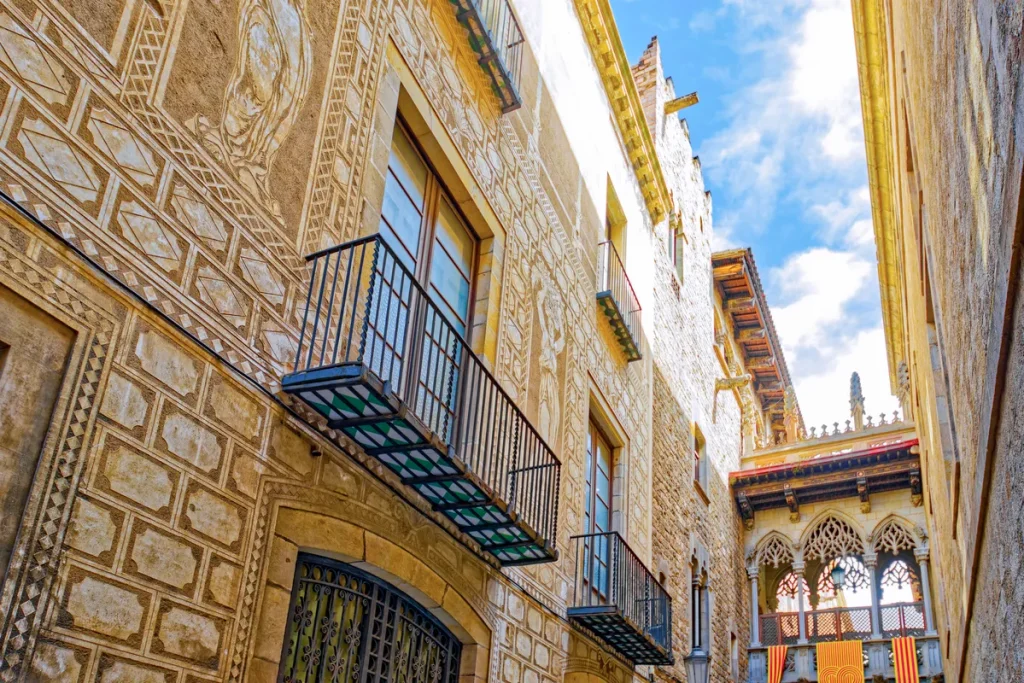
The Gothic Quarter is most navigable before the tour groups arrive. Walk it at 9:00 AM and the narrow streets are cool, quiet, and yours.
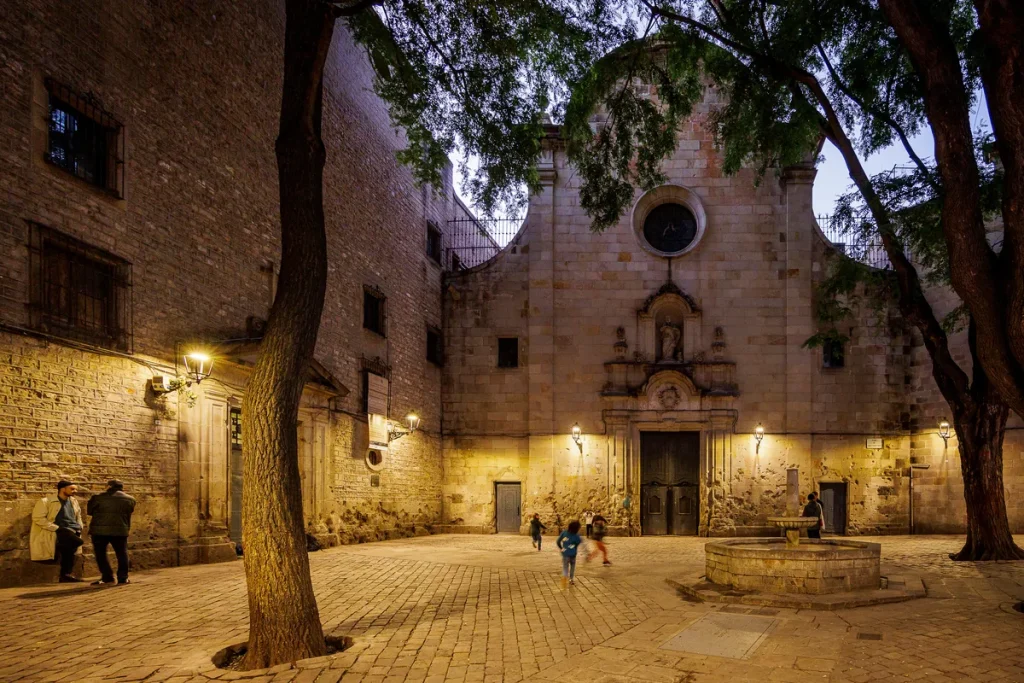
Plaça de Sant Felip Neri: A small square two minutes from the Cathedral with Civil War bullet holes still visible in the church facade walls. Almost nobody stops to look at them. Temple d’August (Carrer del Paradís, 10): Free entry through an unmarked door in a medieval courtyard. Four intact Roman columns from the 1st century BC, 9 meters tall, built as part of the temple to Emperor Augustus. The columns have stood continuously since 10 BC and most visitors to the Gothic Quarter walk straight past the door.
7. Barcelona Cathedral and the geese
Free entry before 12:30 PM, €7 after. The Gothic cloister behind the main altar contains 13 white geese – a tradition maintained since the 4th century when geese were kept as sacred animals representing the age of Santa Eulàlia, the city’s patron saint, at the time of her martyrdom. Most visitors miss the cloister entirely and leave without seeing the best part of the building.
8. Santa Maria del Mar – El Born
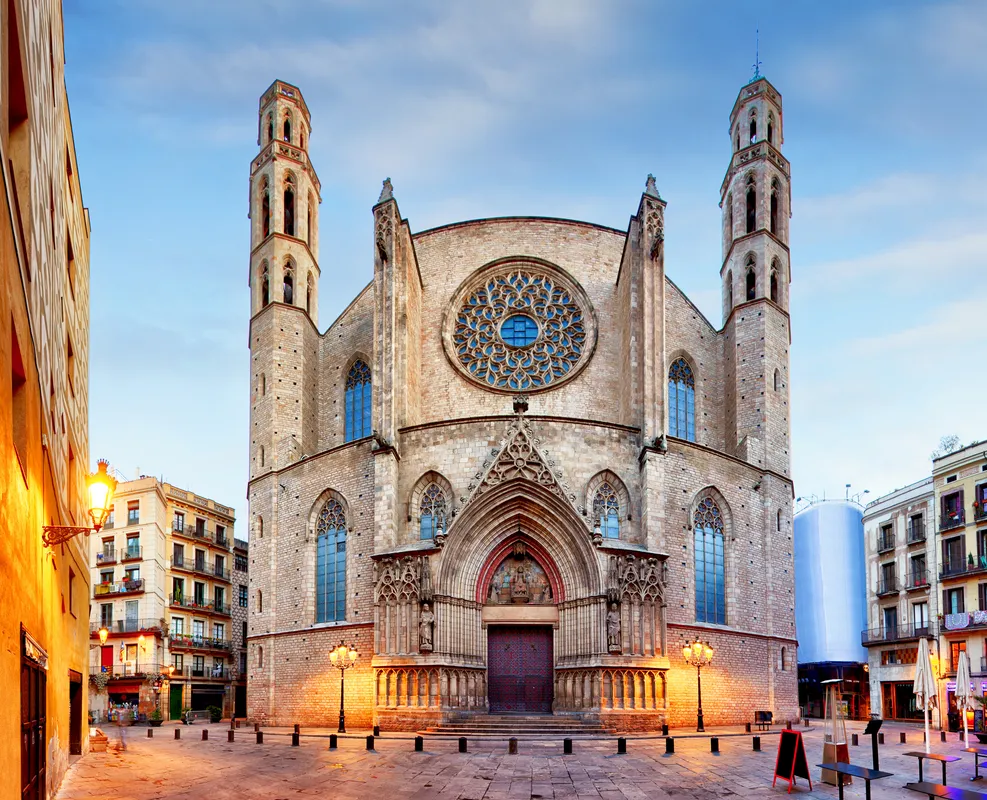
A 14th-century Gothic church in El Born built and funded entirely by the merchants, stevedores, and workers of the Ribera neighborhood – not by the church or the crown. Construction took 54 years. The interior is the purest Gothic space in Barcelona – three naves of equal height, octagonal columns 16 meters tall, no side chapels cluttering the walls. Free entry, donation appreciated. Ten minutes walk from the Gothic Quarter.
9. Picasso Museum
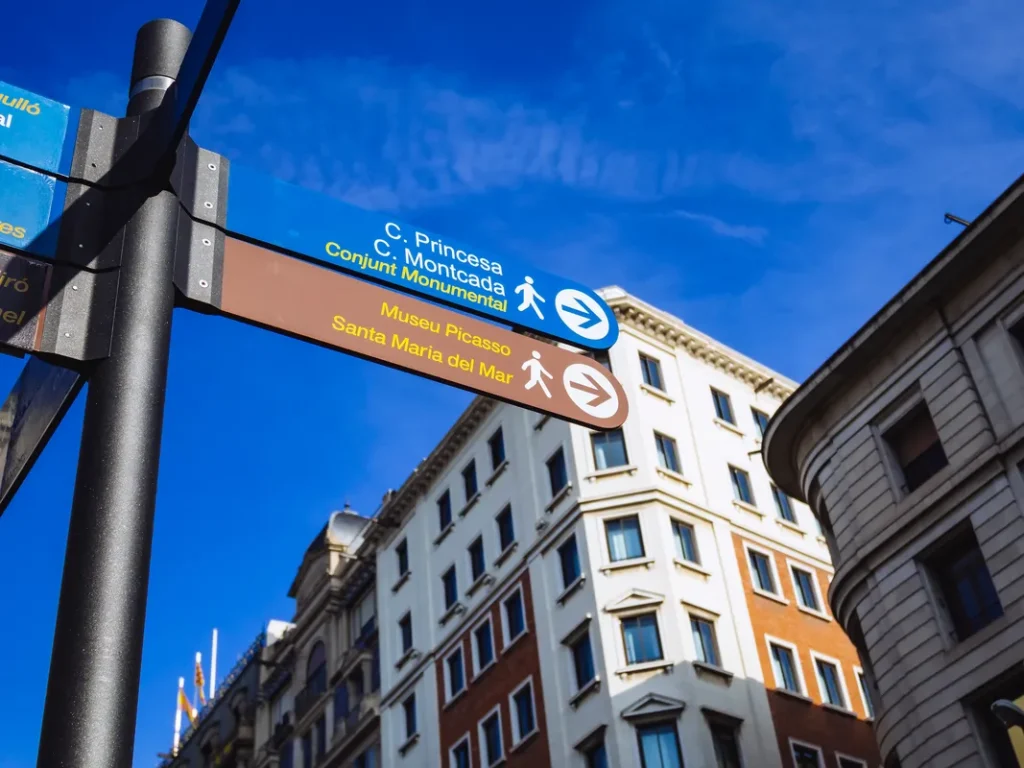
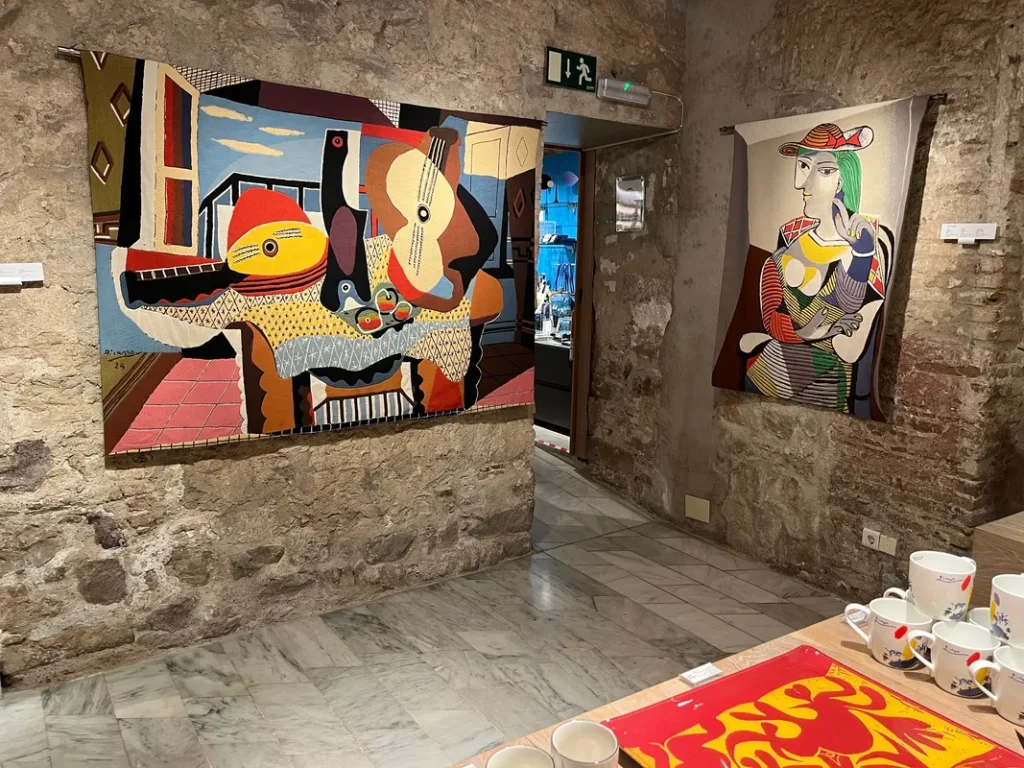
Carrer de Montcada, 15-23. The most important collection of Picasso’s early work anywhere, covering his Barcelona years from 1890 to 1917 – the period when he was developing the foundations of what became Cubism. The 58-canvas series reworking Velázquez’s Las Meninas on the top floor is the centerpiece and genuinely unlike anything in the Barcelona or Paris Picasso collections.
Entry: around €14. Book timed entry online. Free on the first Sunday of the month and every Sunday from 3:00 PM. Allow 90 minutes. See Foodies Guide to Barcelona for where to eat in El Born after the museum.
10. Mercat de Santa Caterina
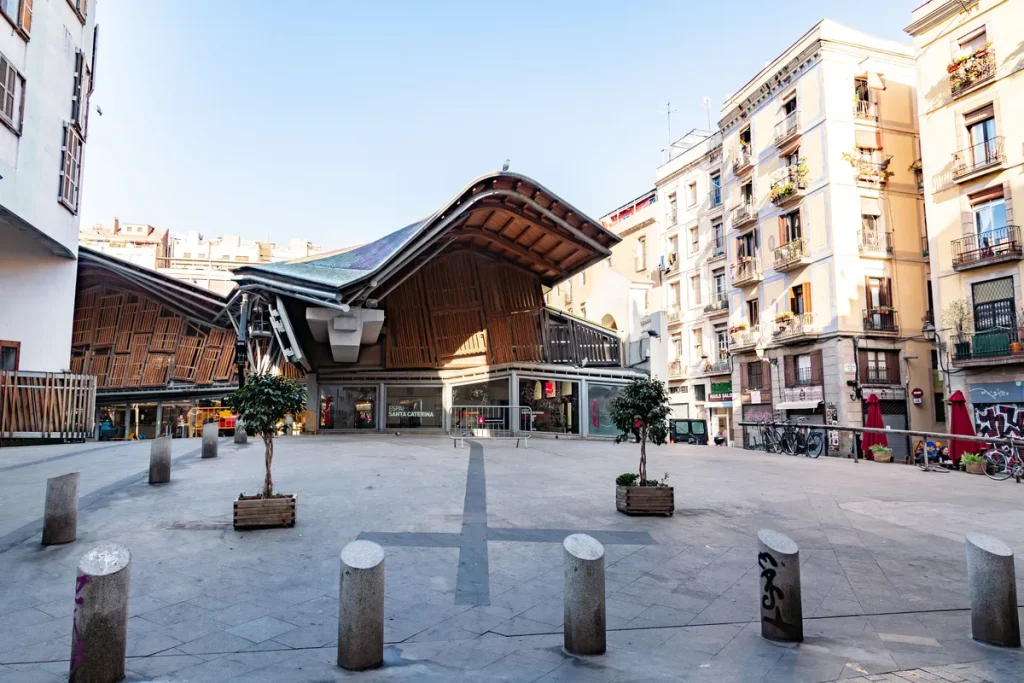
The working alternative to the Boqueria. The mosaic roof by Enric Miralles – 325,000 hexagonal ceramic tiles in 67 colors – is the architectural statement. The interior is a functioning market aimed at people who live in El Born rather than people visiting it. Open weekday mornings. Free to enter.
Montjuïc
11. Fundació Joan Miró
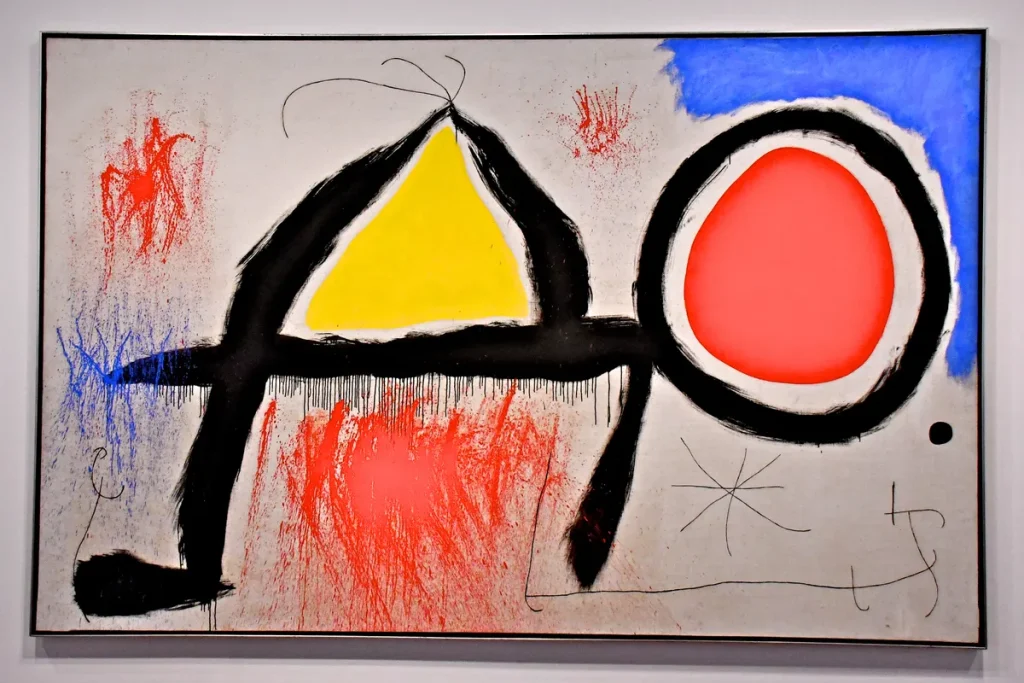
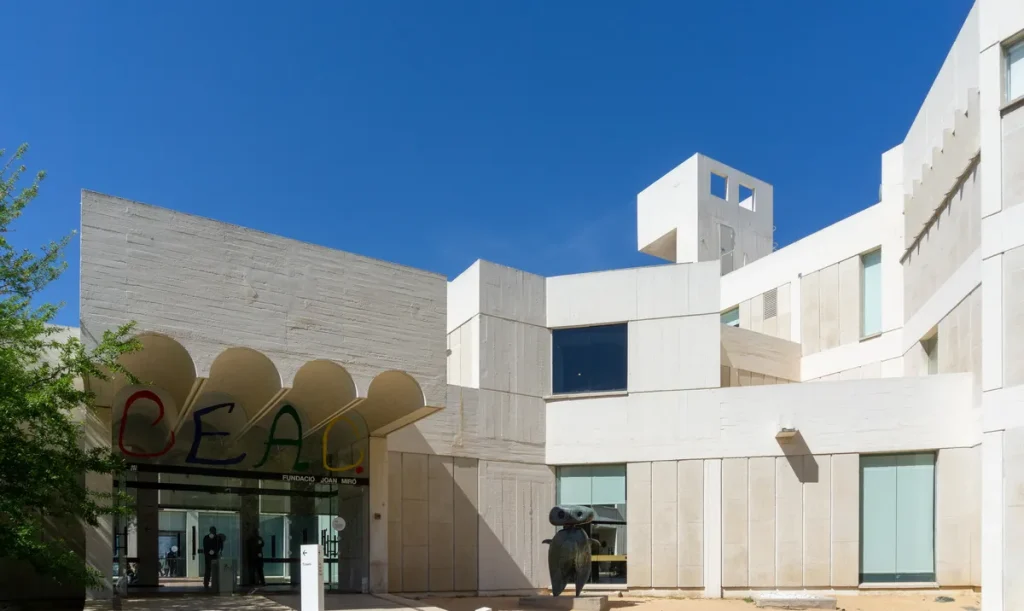
The most comprehensive Miró collection in the world, in a building Miró commissioned from his friend Josep Lluís Sert specifically to house it. The work is colorful, bold, and far more accessible than most modern art – children engage with it as readily as adults. Entry: around €14. Free on the first Sunday of the month. Allow 90 minutes.
12. MNAC – the Romanesque collection
The Museu Nacional d’Art de Catalunya houses the best Romanesque art collection in the world – 11th and 12th-century apse paintings removed from remote Pyrenean churches in the early 20th century and reassembled in full-scale reproductions of their original architectural settings. The effect of walking into a reconstructed Romanesque apse with the original frescoes intact is genuinely unusual. Entry: around €12. Free first Sunday of each month and every Sunday from 3:00 PM.
13. Montjuïc Castle
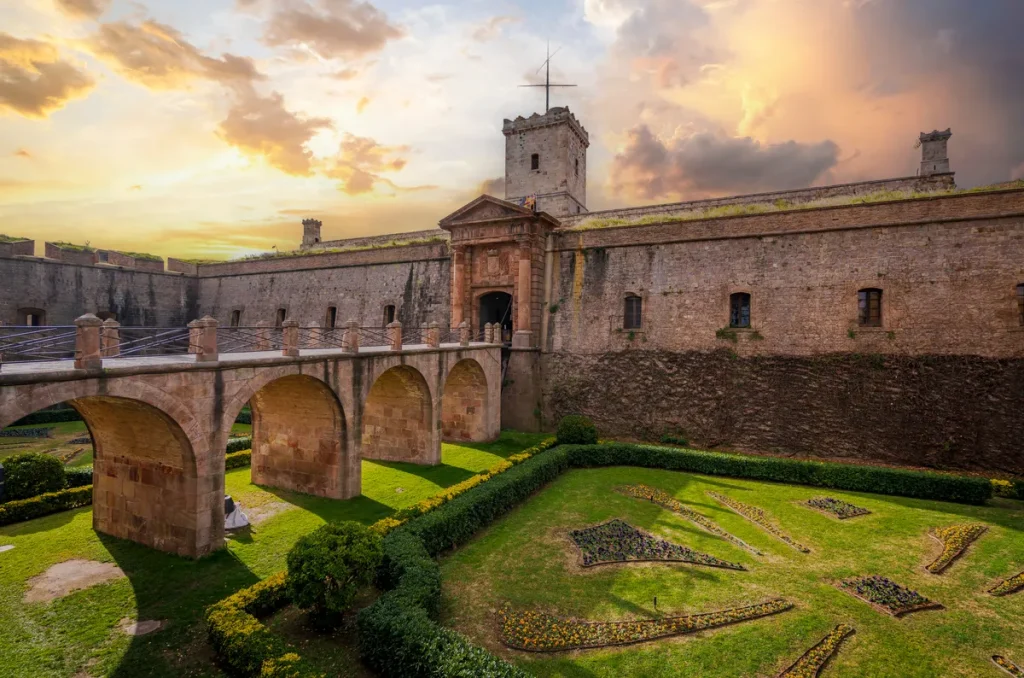
Take the Metro to Paral·lel, the Montjuïc Funicular (covered by T-Casual), and the cable car to the castle. Entry: around €9. The view from the ramparts covers the full port, the city coastline, and on clear days extends to the Pyrenees. Less crowded than any central viewpoint.
14. MNAC steps at sunset
The steps leading up to the MNAC face directly down the Avinguda de la Reina Maria Cristina toward Plaça Espanya – the full avenue with the twin towers of the 1929 Exposition framing the view. Free to stand on. The Magic Fountain (Font Màgica) at the base runs Thursday to Sunday in summer with light shows – check the schedule.
Neighborhoods
15. Gràcia – the local neighborhood
The village that was absorbed into Barcelona in 1897 and never stopped feeling like a separate place. The squares – Plaça de la Vila de Gràcia, Plaça de la Virreina, Plaça del Sol – function as outdoor living rooms for the people who live around them. Restaurants priced for residents, local bars, and a market (Mercat de l’Abaceria) that is genuinely for the neighborhood rather than visitors. Walk here from Park Güell downhill after the morning visit.
16. El Born cocktail and pintxos circuit
El Born has the best concentration of pintxos bars in the city. El Xampanyet (Carrer de Montcada, 22) has been serving house cava and anchovies since 1929. Bar del Pla (Carrer de la Montcada, 2) is the modern version of the same tradition. Order three or four pintxos (€1.50 to €2.50 each) and a glass of cava per stop, move on after 30 minutes. Total cost for a full evening across three bars: €25 to €35 per person.
17. Poble Sec and Carrer de Blai
The neighborhood directly below Montjuïc. Carrer de Blai is a pedestrian pintxos street – stalls and bars selling small bites from €1 each, best between 7:00 PM and 9:00 PM when the food is freshest. A full dinner costs €10 to €14 including a beer. The neighborhood has the most honest restaurant prices in central Barcelona. For the full budget breakdown, see Barcelona on a Budget.
18. Bunkers del Carmel – the best free view
A ruined Civil War anti-aircraft battery on a hill above Gràcia giving a 360-degree panorama of the city, the Sagrada Família, Montjuïc, and the Mediterranean. Completely free. Take the Metro to El Carmel or Bus V17, then a 15-minute uphill walk. Go at sunset. Bring a drink – there is no bar at the top and nobody cares if you bring your own.
The Seafront
19. Barceloneta and the northern beaches

Barceloneta is the main city beach – functional, crowded in summer, full facilities. For more space and quieter water, walk or cycle 15 minutes north along the coastal path to Platja de Bogatell or Platja de la Nova Mar Bella. Both have better playgrounds, less crowding, and the same water quality. The coastal path between them is flat and good for cycling – rental stations throughout.
20. Parc de la Ciutadella
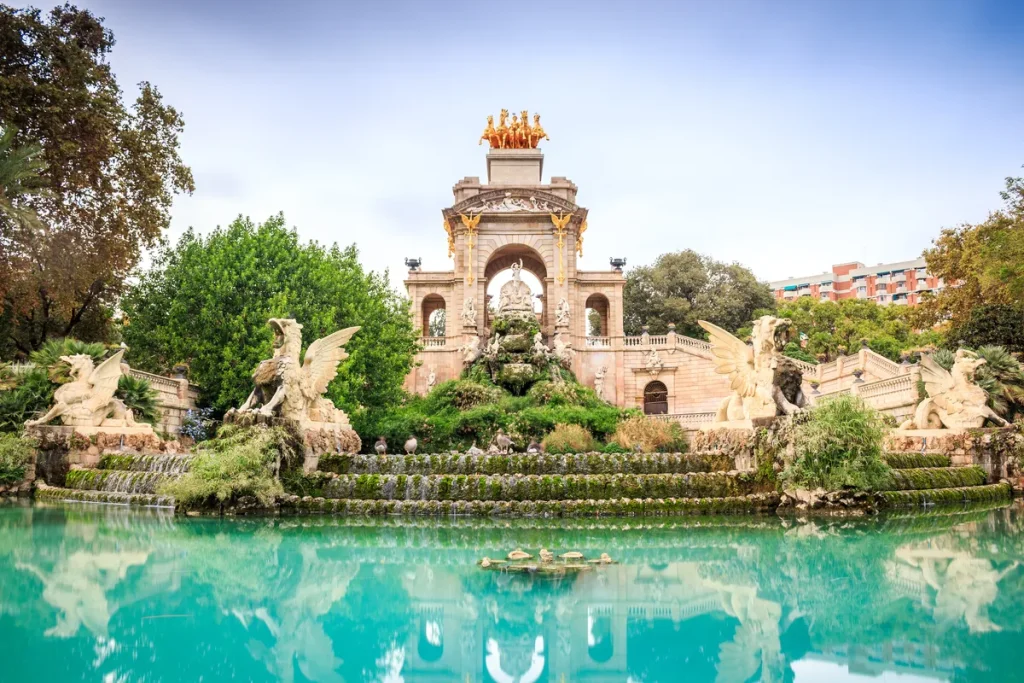
Barcelona’s central park, free to enter, containing the large ornamental cascade fountain that a young Gaudí helped design in 1875 – his first documented work in the city. Rowboat rental on the lake: around €6 for 45 minutes. The park borders El Born and is a natural end to a morning in the neighborhood.
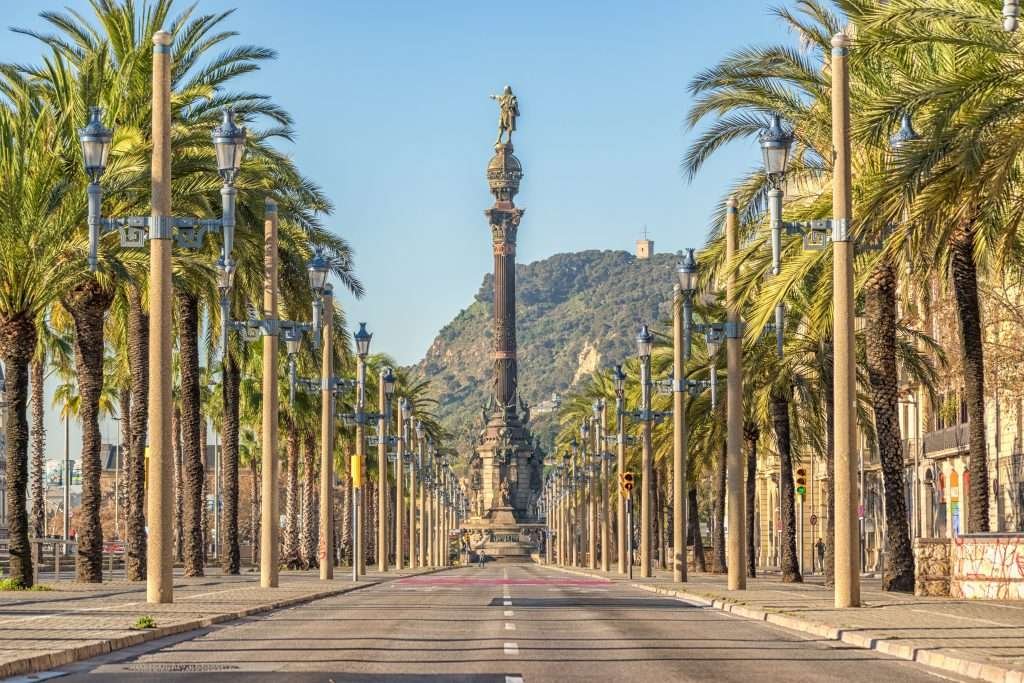
21. Moll de la Fusta and the port
The renovated waterfront between Barceloneta and the Columbus Monument. The Columbus Monument (elevator to the top: €6.80, view is inferior to Bunkers del Carmel) is the landmark. The promenade at 6:00 PM to 7:00 PM – after the beach crowds thin and before dinner – is the best time to be on the waterfront.
Art and Architecture Beyond Gaudí
22. Museu d’Art Contemporani (MACBA)
Richard Meier’s white building in the Raval neighborhood, opened 1995. The permanent collection covers Catalan and Spanish art from the 1950s onward – strong on conceptual art and less visited than any comparable institution in Madrid. Entry: around €12. The plaza in front of the building is one of the most active skateboarding spots in Europe.
23. Passeig de Gràcia – the block of discord
The 200-meter stretch of Passeig de Gràcia between Carrer d’Aragó and Carrer del Consell de Cent contains three major Modernista buildings by three different architects: Casa Batlló (Gaudí), Casa Amatller (Puig i Cadafalch), and Casa Lleó Morera (Domènech i Montaner). Viewing the exteriors costs nothing. The architectural contrast between three contemporaries working in the same style on the same block is the most concentrated Modernisme lesson in the city.
24. Palau de la Música Catalana
Lluís Domènech i Montaner’s 1908 concert hall in El Born – a UNESCO World Heritage Site and the only concert hall in Europe lit entirely by natural light during daytime performances. The stained glass ceiling inverted above the stage is the centerpiece. Entry for a guided tour: around €22. The better option is booking a concert – the cheapest tickets start around €15 and give you the building in its intended context.
25. Recinte Modernista de Sant Pau
Two blocks north of the Sagrada Família, the former Hospital de Sant Pau designed by Domènech i Montaner between 1902 and 1930. The complex – 12 pavilions connected by underground galleries, each decorated with mosaics, stained glass, and sculpture – was the working hospital until 2009. Now a museum and cultural center. Entry: around €16. Consistently undervisited relative to its quality – on a Sagrada Família day, this is the natural complement ten minutes walk away.
Plan Your Trip
- First Time in Barcelona
- One Day in Barcelona
- 3 Days in Barcelona
- 5 Days in Barcelona
- Where to Stay in Barcelona
- Barcelona on a Budget
- Foodies Guide to Barcelona
- Barcelona with Kids
- Day Trip to Sitges from Barcelona
- 25 Best Things to Do in Sitges
- Day Trip to Tarragona from Barcelona
How far in advance do you need to book attractions in Barcelona?
Sagrada Família timed entry sells out weeks ahead in July and August – book as soon as your dates are confirmed at the official Sagrada Família website. Park Güell Monumental Zone books out similarly fast in peak season. Casa Batlló and La Pedrera are easier to book last minute but benefit from advance booking for specific time slots. The Picasso Museum, MNAC, and Fundació Joan Miró can usually be booked a few days ahead outside peak summer. Everything else on this list is walk-in.
What is the best free thing to do in Barcelona?
Bunkers del Carmel – the ruined Civil War anti-aircraft battery on a hill above Gràcia with a 360-degree view of the city, the Sagrada Família, Montjuïc, and the sea. Take the Metro to El Carmel or Bus V17 and walk 15 minutes uphill. Go at sunset, bring your own drink, and spend an hour watching the light change over the city. It costs nothing and the view is better than anything you pay for. The MNAC steps on Montjuïc and the Passeig de Gràcia exterior walk past the three Modernista buildings are the two other strong free options.
Is Park Güell worth visiting in Barcelona?
Yes, but only if you book the Monumental Zone timed entry in advance. The ticketed section (€10) contains the mosaic terrace, the Hypostyle Room, and the dragon staircase – the three elements that define the park visually. The surrounding free parkland is pleasant but not the reason to go. Do not walk uphill from the Metro in summer – take Bus 24 from Plaça de Catalunya directly to the gate. Book the earliest available slot before the heat peaks and the crowds arrive.
What is the best neighborhood to explore in Barcelona beyond the Gothic Quarter?
El Born, directly east of the Gothic Quarter, is the strongest alternative – Santa Maria del Mar church, the Picasso Museum, the Mercat de Santa Caterina, and the best pintxos bar circuit in the city are all within a ten-minute walk of each other. Gràcia is the best neighborhood for understanding how Barcelona actually functions as a city rather than a tourist destination – local squares, restaurants priced for residents, and a genuinely village-like atmosphere. Poble Sec below Montjuïc has Carrer de Blai for cheap pintxos dinners and access to the Fundació Joan Miró and MNAC.
Which Gaudí building should you visit if you can only choose one?
The Sagrada Família interior. The exterior of Casa Batlló and La Pedrera on Passeig de Gràcia are both worth seeing for free from the pavement, and Park Güell’s Monumental Zone is a separate category. But the Sagrada Família interior – the branching columns, the stained glass, the scale – is the experience that most photographs fail to convey and that the exterior does not substitute for. Visit in the late afternoon when the western stained glass catches the sun and the light moves across the nave floor.
25 Best Things to Do in Barcelona — 2026
All 25 from the article. Color-coded by section. Click any pin for what to book, when to go, and what the article says it costs.