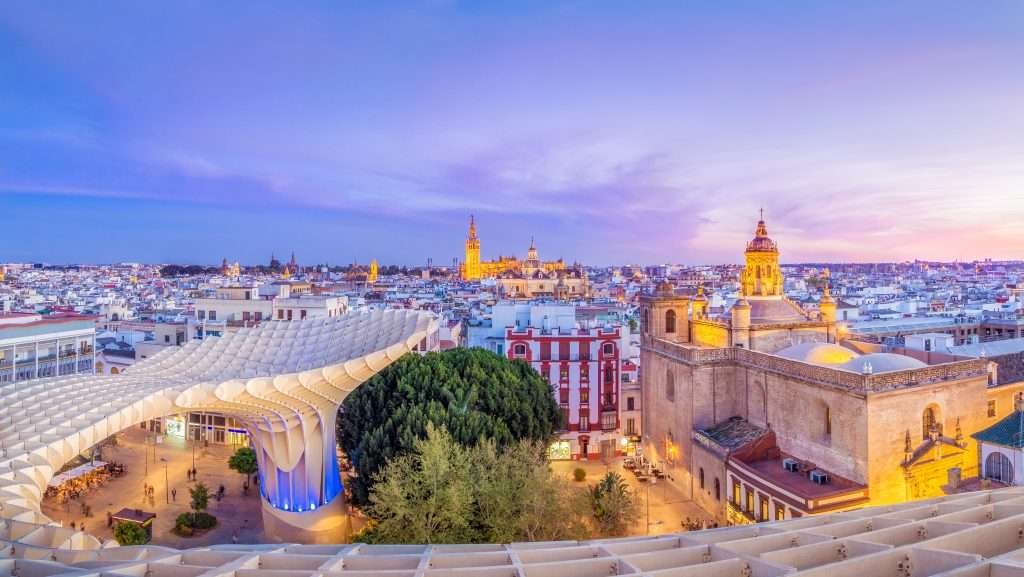
Seville on a budget is one of the best value cities in Europe if you understand one rule: the price of everything is tied to where you stand and when you eat. A tapa at the bar costs €2. The same tapa at a terrace table facing the Cathedral costs €7. A flamenco dinner show costs €80. A seat at a local cultural club costs €12 and the dancing is better.
The city is dense, walkable, and almost entirely free at surface level. The Plaza de España, the Triana neighborhood, the Parque de María Luisa, and the full perimeter of the largest Gothic cathedral in the world cost nothing to experience. The budget mistakes in Seville are almost always about sitting down in the wrong place or visiting in the wrong month.
This guide covers how to eat well for under €20 a day, which free sights are genuinely worth your time, and how to see real flamenco without paying tourist prices. If you are building a wider Andalusia itinerary, check Best Day Trips from Seville for Granada, Córdoba, and Cádiz logistics.
The Seville Schedule
Seville runs on a different clock to northern Europe and it will break your budget if you ignore it.
Lunch happens at 2:00 PM. Dinner does not start until 9:00 PM and most local restaurants do not open their kitchens before 8:30 PM. The city shuts down between 2:30 PM and 5:30 PM – not metaphorically, but literally. Shops close, bars empty, and the streets quiet.
The budget implication: if you try to eat at 12:30 PM or 6:00 PM, you will end up in a tourist trap that stays open specifically for visitors who cannot adapt to local hours. Eat lunch at 2:00 PM at a taberna, use the siesta hours for the parks or your room, and push dinner to 9:00 PM. Your food costs will drop immediately.
The heat problem: July and August in Seville regularly hit 40°C. At that temperature you are taking taxis instead of walking, buying bottled water every hour, and sitting in air-conditioned cafes to survive. Visit in March, April, or October and the walking is free, comfortable, and genuinely pleasant.
Festival warning: Avoid Seville during Semana Santa (Holy Week) and the Feria de Abril on a budget. Accommodation prices triple, restaurants add surcharges, and availability collapses weeks in advance. If you are not specifically there for the festivals, these are the worst weeks of the year to visit financially.
The Tapas Economy
The core budget mechanism in Seville is the taberna system. You do not eat meals at tables – you eat tapas at bars.
Standing vs. sitting: Every bar in Seville has two prices. Standing at la barra (the bar counter) gets you the local price. Sitting at a table, especially on a terrace, adds a surcharge that can double the cost of the same food. This is not a hidden fee – it is standard and accepted. Stand up.
What to order:
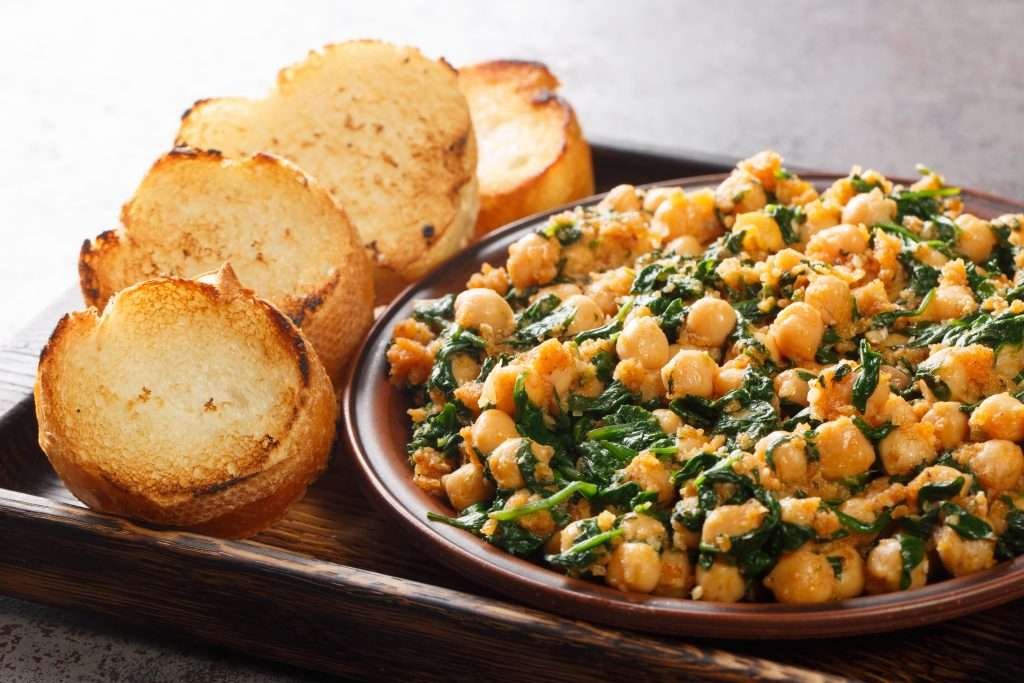
Espinacas con Garbanzos – spinach and chickpeas slow-cooked with cumin and garlic – is the definitive Seville budget dish. Around €3, genuinely filling, and specifically Andalusian in a way that most tapas are not. Order this everywhere and compare versions.
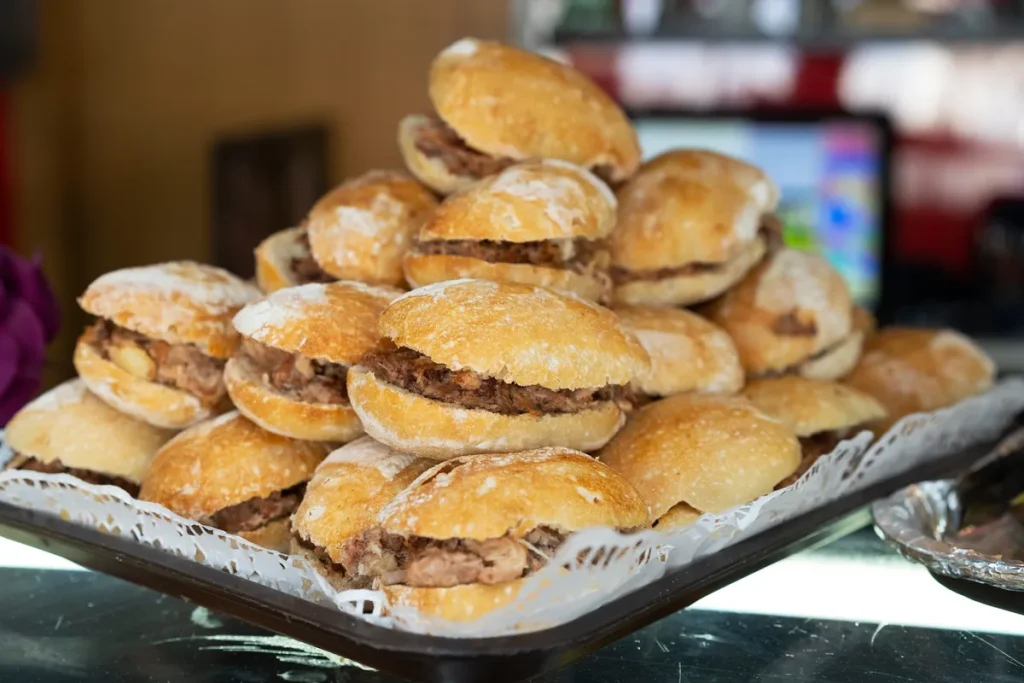
Montaditos are small toasted sandwiches filled with pringá (slow-cooked pork), tortilla de patatas, or cured meat. €1.50 to €2.50 each. Two montaditos and a drink is a complete lunch if you are moving fast.
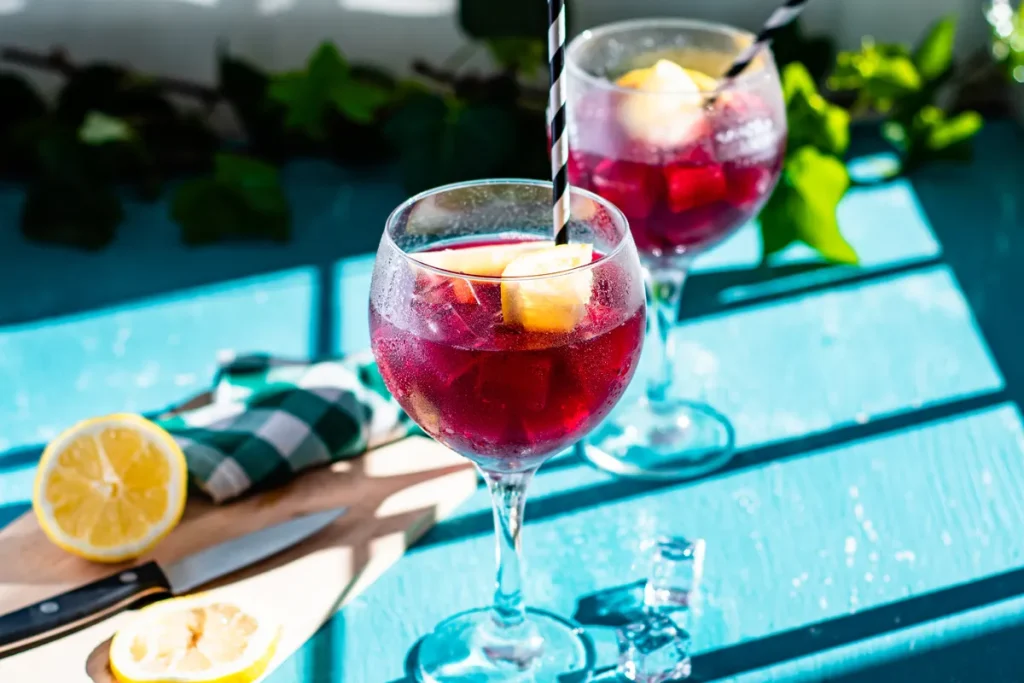
Tinto de Verano is red wine mixed with lemon soda. It is what locals drink. It costs €1.50 to €2.50 at a bar and is significantly cheaper than the Sangria jugs aimed at tourists. Order this, not Sangria.
Where to go:
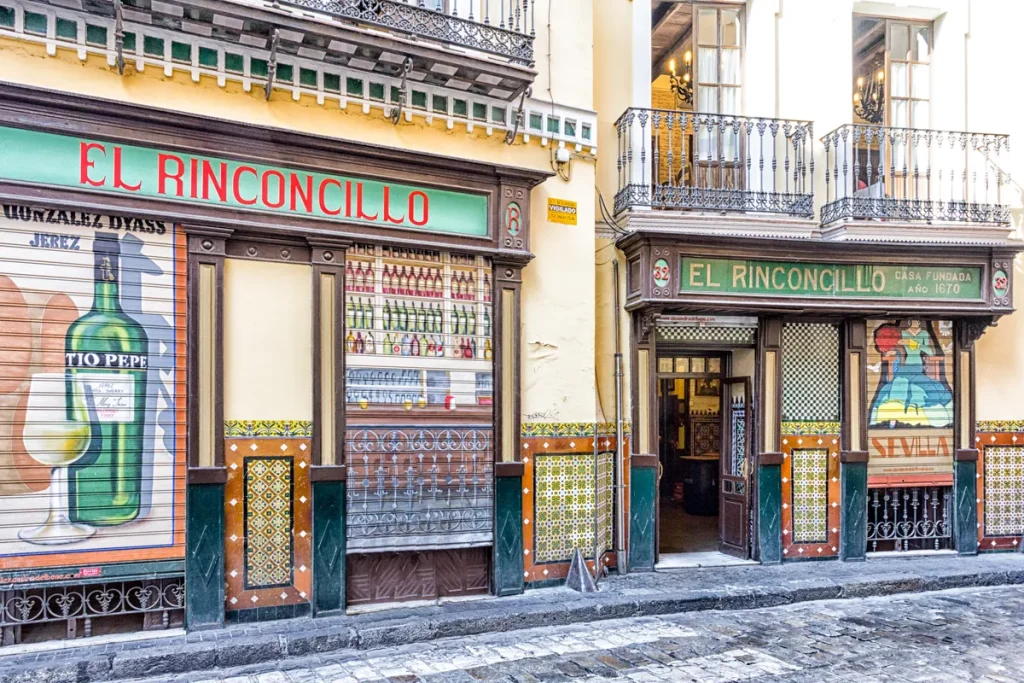
El Rinconcillo (Calle Gerona, 40) is the oldest bar in Seville, operating since 1670. It looks like it should be expensive. If you stand at the bar and order a caña (small beer) and a tapa, it is not. The bartenders write your tab in chalk on the wooden counter.
Casa Morales (Calle García de Vinuesa, 11) has been selling sherry from massive terracotta vats since 1850. Order montaditos and a glass of local manzanilla. Standing at the bar surrounded by those vats is genuinely one of the better free experiences in the city.
For a full neighborhood-by-neighborhood breakdown of where to eat, see Seville Food Guide.
Free Seville
Plaza de España

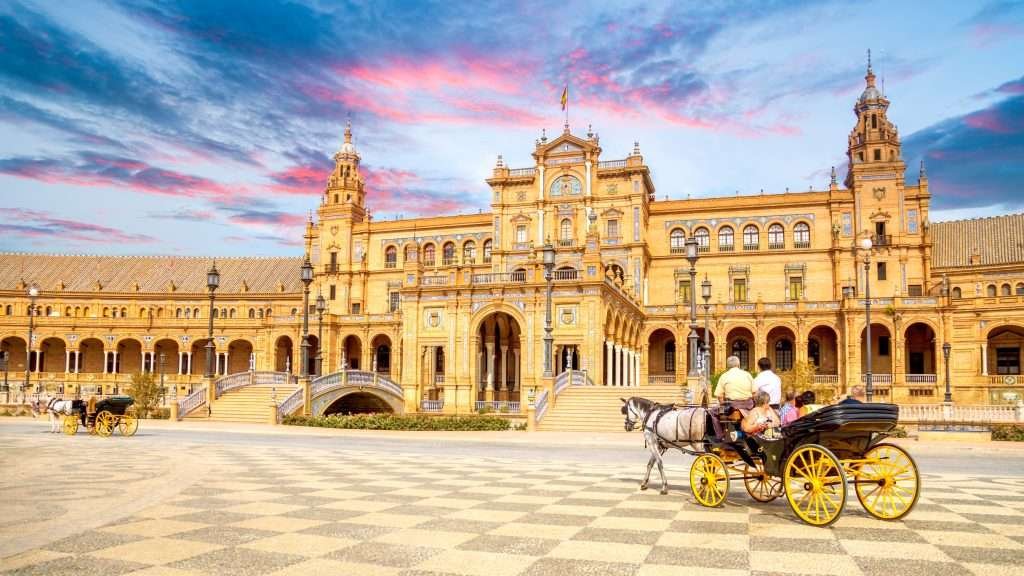
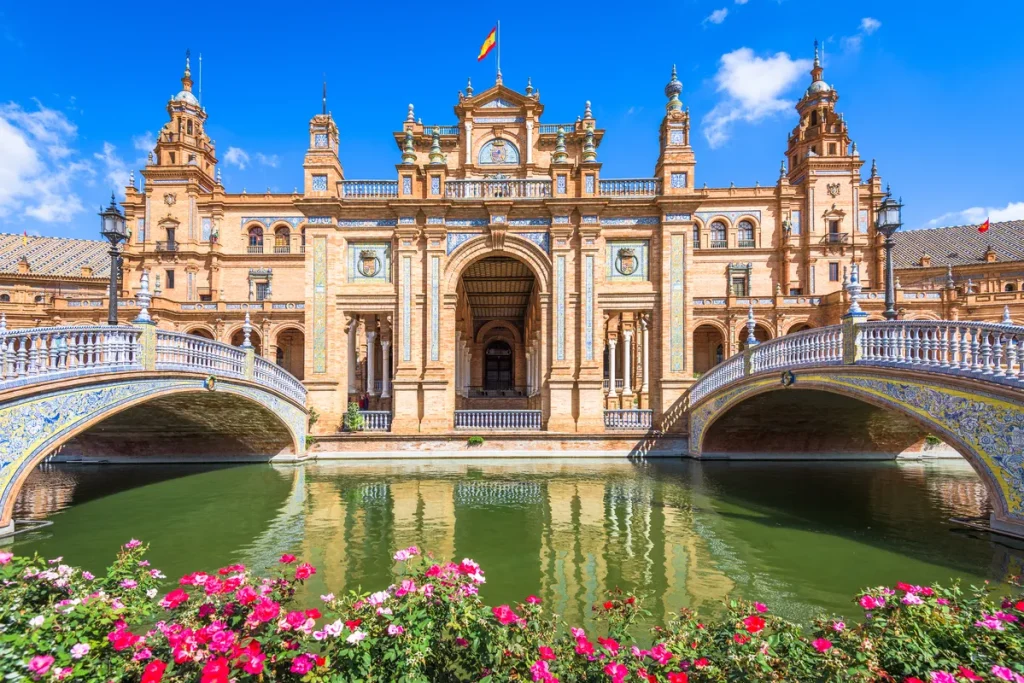
Built for the 1929 Ibero-American Exposition, the Plaza de España is a semicircular complex of towers, tiled bridges, and ceramic benches representing every province in Spain. It is completely free to enter and takes 45 minutes to walk properly.
The rowing boats on the canal cost €6 to €8 for 30 minutes. Skip them – the view from the bridges is the same and the canal is narrow enough that you see everything on foot. Street musicians set up here in the late afternoon; the quality is consistently high.
Go at sunset. The late light on the tiled facades is the best version of the plaza and the crowds from the midday tour buses are gone.
Parque de María Luisa
Directly adjacent to the Plaza de España. A large, heavily shaded park that functions as the essential escape during Seville’s hot afternoons. Free entry, good benches, orange trees, and enough walking paths to fill an hour without retracing steps.
The Cathedral Perimeter
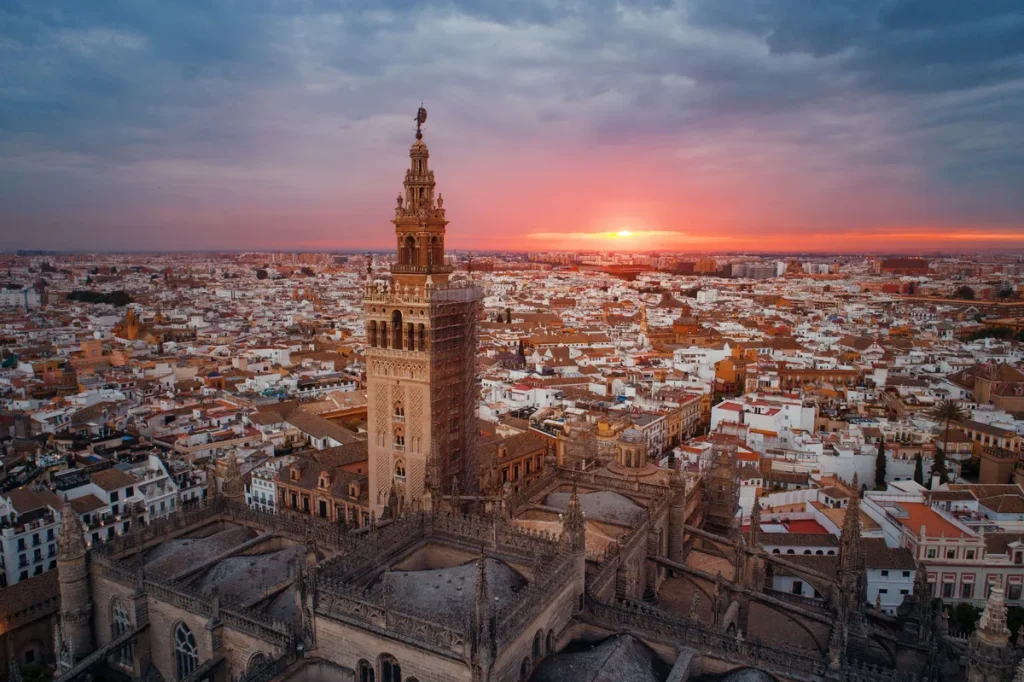
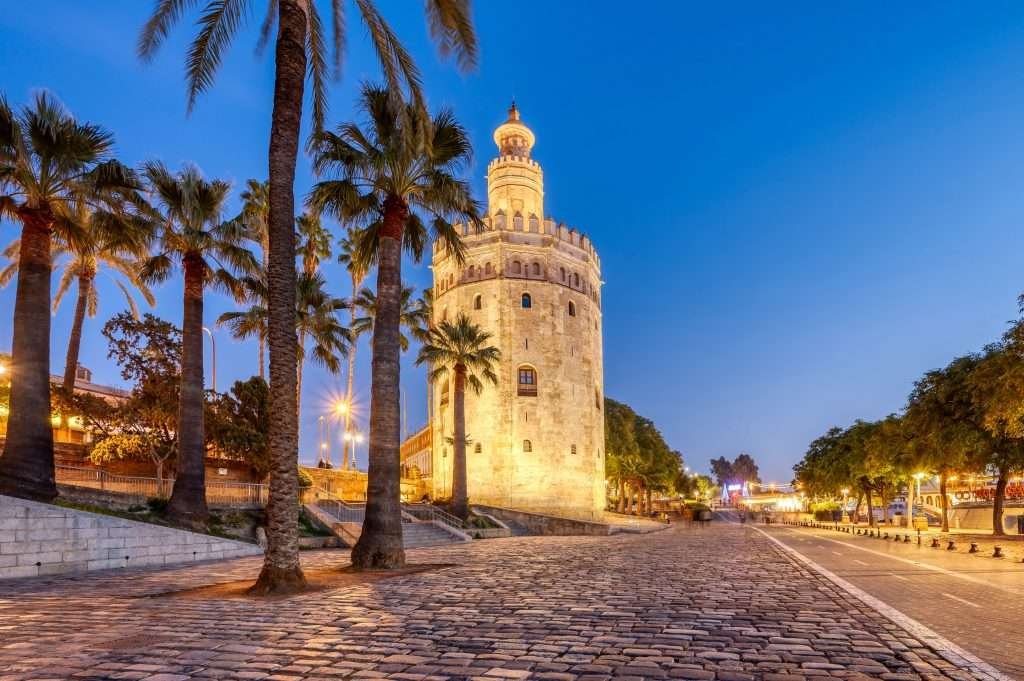
The Cathedral of Seville is the largest Gothic cathedral in the world. Entry with the Giralda tower climb costs around €12. If that is outside your budget, the full perimeter walk at dusk when the bells are ringing and the exterior is illuminated is a legitimate alternative. The architecture reads clearly from outside and the Santa Cruz alleys immediately surrounding it are worth exploring regardless.
If you do pay for entry, book the first morning slot online to avoid midday heat on the Giralda climb.
Triana
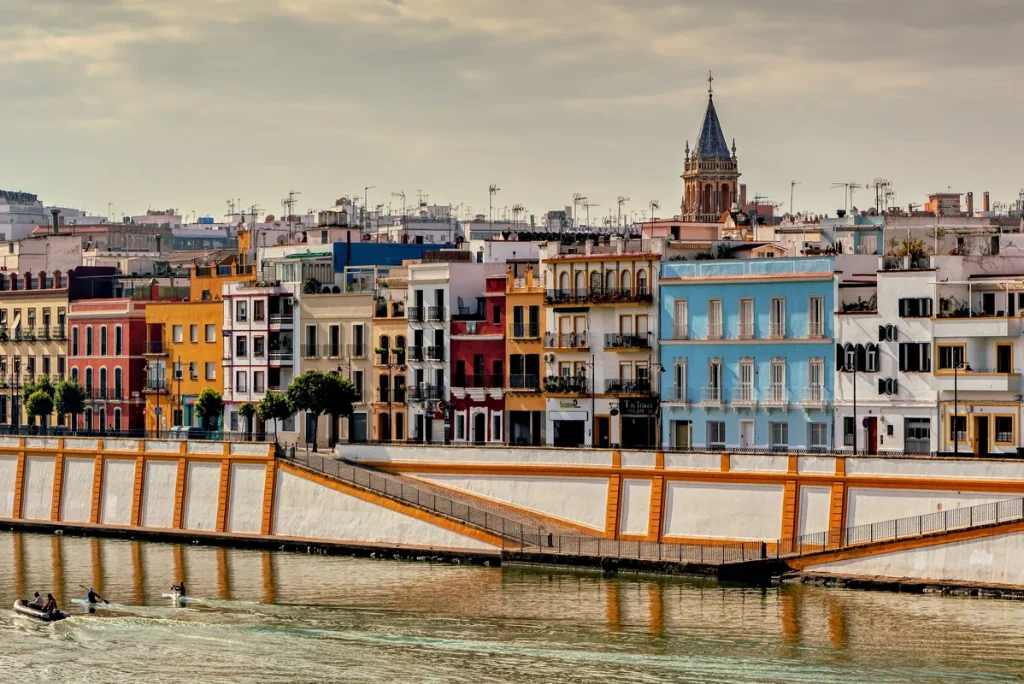
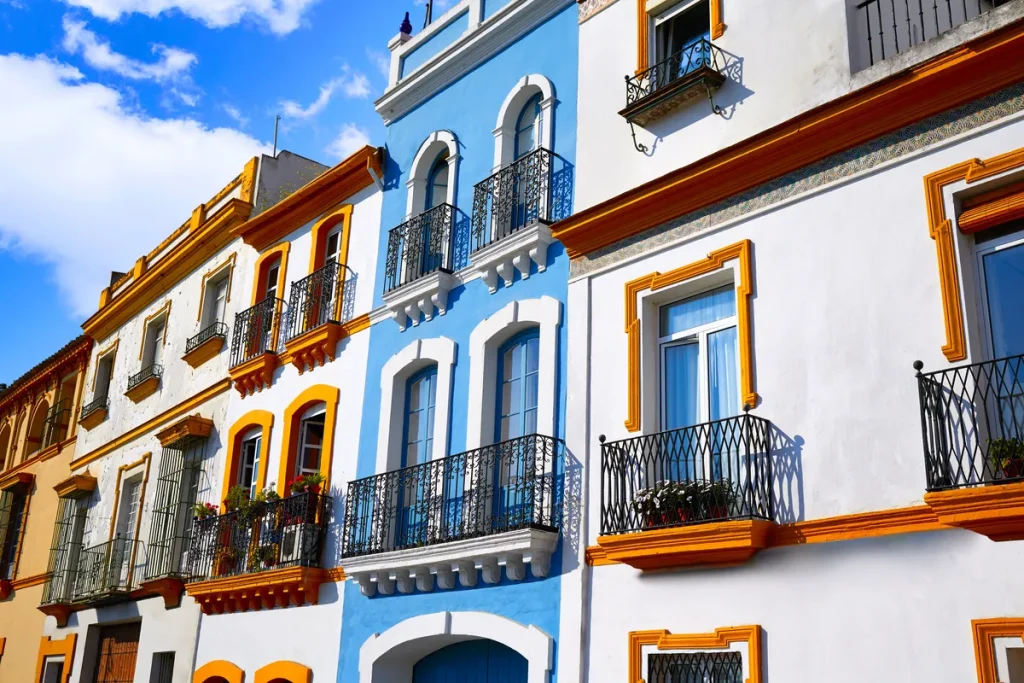
Cross the Isabel II Bridge west of the Cathedral into Triana – the historic neighborhood of potters, sailors, and flamenco culture. Less visited than Santa Cruz, genuinely local, and free to walk.
The Mercado de Triana inside the old market building sells fresh produce at local prices. The ceramic shops here produce work made on-site – the prices are higher than the souvenir shops near the Cathedral but the quality is entirely different. Walk the streets along the river for the best views back toward the historic center.
Real Flamenco Without the Dinner Show Price
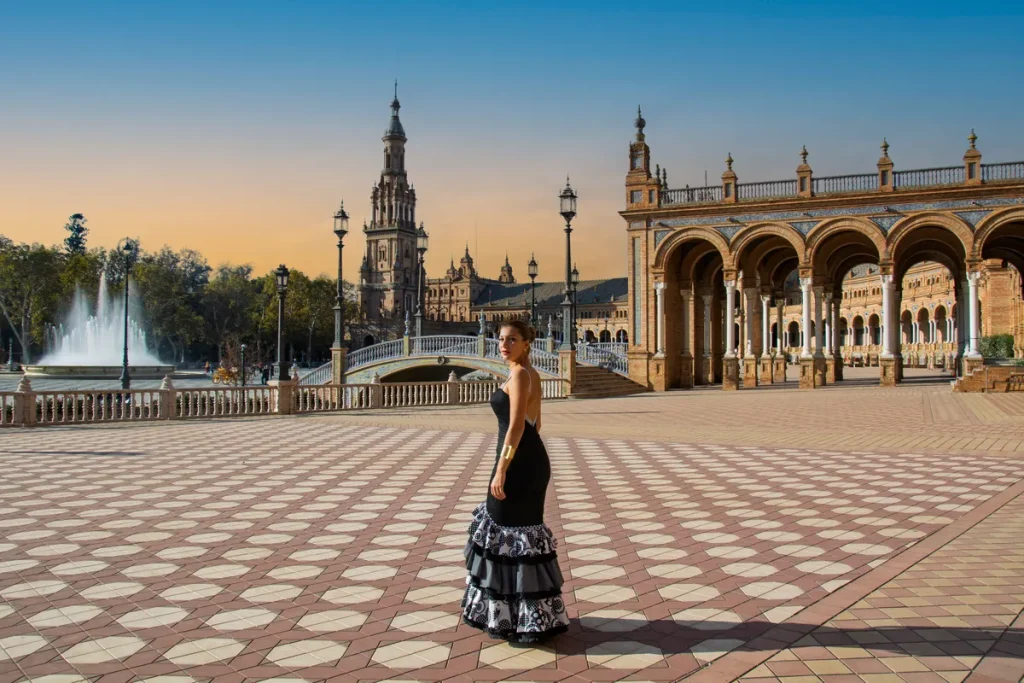
A professional tourist flamenco dinner package costs €60 to €100. The dancing is choreographed for the format and the food is secondary.
The alternative is a Peña Flamenca – a non-profit cultural club dedicated to preserving the art form for its own sake. These are not designed for tourists, which is exactly what makes them worth attending.
Entry to a Peña typically costs €10 to €15 and includes a drink. The performances are by artists who are there because flamenco is their culture, not their tourist product. Check listings for Peña Flamenca Torres Macarena and similar clubs – they publish monthly schedules and most welcome visitors who book in advance.
The experience is loud, close, and nothing like the dinner show format. It is also the honest version of what you came to Seville to see.
Getting Around
Seville is flat and compact. If you are based in or near the historic center, walking covers 90% of what is in this guide.
Bikes: Seville has one of the best urban cycling networks in Spain. The Sevici bike share scheme costs around €1.35 for a day pass with the first 30 minutes of each journey free. It is the fastest way to get between the historic center, Triana, and the Plaza de España without taking transport.
Bus: The local TUSSAM network covers the full city at standard transit prices. A single ride costs around €1.40. Use this for the Macarena neighborhood or anywhere the bike is less practical.
Avoid: The Hop-On-Hop-Off tourist buses. They are expensive, slow, and cover the same ground you can walk or cycle for a fraction of the cost.
Where to Stay
The best budget options in Seville are pensiones and hostales – Spanish budget hotels offering private rooms, not necessarily dormitories.
Alfalfa is the strongest base: central, well-connected, and with local bars that price for residents rather than tourists. Five minutes from the Cathedral, noticeably cheaper than Santa Cruz.
Macarena is further from the main sights but has the most genuine neighborhood feel in the city. Prices for accommodation and food are lower than anywhere in the center. Good Metro and bus connections.
Avoid Santa Cruz for budget accommodation. The neighborhood is beautiful but the proximity to the Cathedral and the Alcázar pushes prices up significantly. Moving three blocks north gives you the same old-city character for 30 to 40 percent less.
For a full breakdown of neighborhoods and specific hotel recommendations, see Where to Stay in Seville.
What to Avoid
Tourist menus with photos: If the menu is printed in six languages and has photographs of the dishes, the food is industrial and the prices are tourist rates. Walk away.
Hotel breakfasts: A hotel buffet in Seville costs €12 to €18. A tostada con tomate (toasted bread with crushed tomato and olive oil) and a café con leche at a neighborhood bar costs €3 to €4 and is a better breakfast by every measure.
Souvenir ceramics near the Cathedral: Mass-produced, often imported, and priced for visitors who don’t know better. If you want Sevillano ceramics, buy from a workshop in Triana.
Sangria: Overpriced, sugary, and aimed at tourists. Order Tinto de Verano.
A Realistic Day for €22
- 8:30 AM – Tostada con tomate and café con leche at a neighborhood bar: €3.50
- 10:00 AM – Walk Santa Cruz, Cathedral perimeter, Alcázar exterior: €0
- 1:30 PM – Espinacas con garbanzos and Tinto de Verano at a taberna in Alfalfa: €7
- 3:30 PM – Parque de María Luisa during siesta hours: €0
- 5:00 PM – Coffee and a pestiño (honey-glazed pastry) in Triana: €3
- 7:30 PM – Sunset at Plaza de España: €0
- 9:30 PM – Two montaditos and a glass of house wine at a stand-up bar: €8
Total: €21.50. The main plaza in Spain, the best neighborhood in the city, and five separate food and drink stops.
Plan Your Trip
- Things to Do in Seville
- First Time in Seville
- Where to Stay in Seville
- Seville Food Guide
- 3 Days in Seville
- 7 days in Andalusia itinerary
Is Seville expensive for tourists?
Seville is one of the cheapest major cities in Spain if you eat and drink where locals do. A tapa and a small beer at a bar counter costs €3 to €4. The same order at a terrace table facing the Cathedral costs €9 to €12. The price gap between standing and sitting, and between tourist-facing and local-facing bars, is larger in Seville than in Madrid or Barcelona. Geography and posture are your main budget levers.
What is the best time to visit Seville on a budget?
March, April, and October. The weather is comfortable for walking, hotel prices are 30 to 40 percent lower than peak season, and the city is not operating at full tourist capacity. Avoid July and August – temperatures regularly hit 40°C which forces you into taxis and air-conditioned cafes, adding costs you cannot plan around. Avoid Semana Santa and the Feria de Abril entirely if budget is a priority – accommodation prices triple and availability disappears weeks in advance.
What is the cheapest way to see flamenco in Seville?
A Peña Flamenca – a non-profit cultural club that runs flamenco nights for €10 to €15 including a drink. The performances are by artists committed to the art form rather than the tourist format, and the experience is closer to what flamenco actually is than any dinner show. Check listings for Peña Flamenca Torres Macarena and similar clubs. Tourist dinner packages covering the same duration cost €60 to €100 and the dancing is choreographed for the format.
Is the Plaza de España free to visit?
Yes, completely. The Plaza de España is free to enter at any hour. The rowing boats on the canal cost €6 to €8 for 30 minutes but the view from the bridges is identical – skip them. Go at sunset when the tour buses are gone and the light on the tiled facades is at its best. It is the most impressive free sight in Seville and takes 45 minutes to walk properly.
Which neighborhood should you stay in for the best value in Seville?
Alfalfa for the best combination of location and price – central, five minutes from the Cathedral, and with local bars priced for residents rather than tourists. Macarena is cheaper still and has the most genuine neighborhood feel in the city, though it requires a bus or bike to reach the main sights. Avoid Santa Cruz for budget accommodation – the proximity to the Alcázar and Cathedral pushes prices 30 to 40 percent above equivalent rooms three blocks north.
Seville on a Budget — Money Map
Where the city is free, where to eat for €3, and what to walk straight past. Click any pin.