
Naples on a budget is one of the most underrated in Europe. A Margherita pizza at a legendary pizzeria costs €5. An espresso costs €1. The historic center is a UNESCO World Heritage site you can walk for free all day. Most tourists pass through on the way to Pompeii or the Amalfi Coast and miss the point entirely.
The city is dense, loud, and requires more situational awareness than Rome or Florence. It is also where you eat the best food of your Italy trip for the least money, walk through 2,500 years of layered history without a museum pass, and take a €1.20 funicular to one of the best views in the Mediterranean. This guide covers how to do all of it without overpaying.
If you are planning a broader southern Italy trip, Naples works well as a base – Pompeii, Vesuvius, and the Amalfi Coast are all under 90 minutes away.
Why Naples Is Actually Cheap
Naples has not been fully converted into a tourist economy. The Centro Storico is still a functioning residential neighborhood where families have lived for generations. You shop where they shop, eat where they eat, and pay prices calibrated to local incomes rather than tourist expectations.
The financial reality: accommodation in the historic center costs significantly less than equivalent rooms in Rome or Florence. Sit-down meals at non-tourist restaurants run €10 to €15 per person including wine. Street food covers lunch for €3. The main budget drain is day trips – manage those correctly and Naples is one of the most affordable cities in Europe.

The Pizza Economy
You cannot approach Naples on a budget without a pizza strategy. In Naples, pizza is priced as everyday food, not as a dining experience.
The standard: A Margherita at an authentic pizzeria – including the legendary L’Antica Pizzeria da Michele on Via Cesare Sersale – costs €5 to €6. That is not a promotional price. That is what it costs.
What to order: Stick to Margherita (tomato, mozzarella, basil) or Marinara (tomato, garlic, oregano, oil). Neapolitan pizza culture is built around these two variants. Extra toppings exist but are beside the point.
Lunch vs. dinner: Eat pizza at lunch. Dinner queues at the famous pizzerias run 45 to 90 minutes in peak season, and some add a coperto (cover charge) of €2 to €3 per person when you sit down in the evening.
Pizza a Portafoglio: The street-food version – a smaller pizza folded into quarters and sold in paper from sidewalk stalls. Cost: €2 to €3. Eat it walking. This is the correct lunch format when you are moving through the Spaccanapoli on foot.


The Centro Storico: Free by Default
The historic center of Naples is a UNESCO World Heritage site. Its main artery – Spaccanapoli – follows the exact path of the ancient Greek and Roman road grid and costs nothing to walk.
Spaccanapoli cuts the entire historic center in two. A full day on this street takes you past Baroque churches, working artisan workshops producing nativity figures (presepi), market stalls, and street food vendors. No entry fee, no tour required.

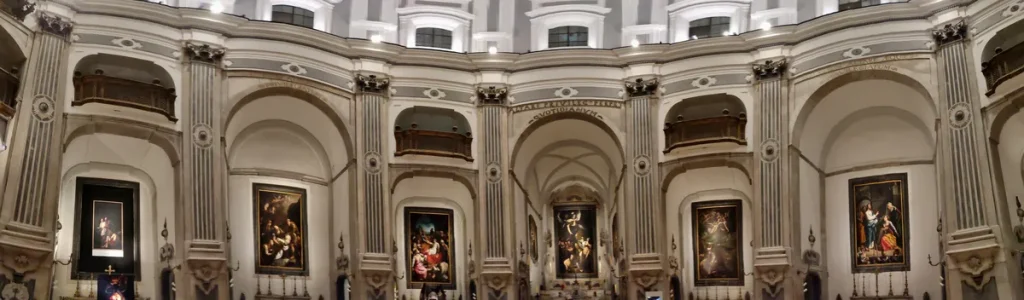
The churches: Naples has over 400 churches, many functioning as free museums with significant art inside.
- San Domenico Maggiore: Usually free to enter. Renaissance art and the tombs of Aragonese kings.
- Pio Monte della Misericordia: Small entry fee but contains Caravaggio’s The Seven Works of Mercy – one of the most important paintings in Italy. Worth the cost.
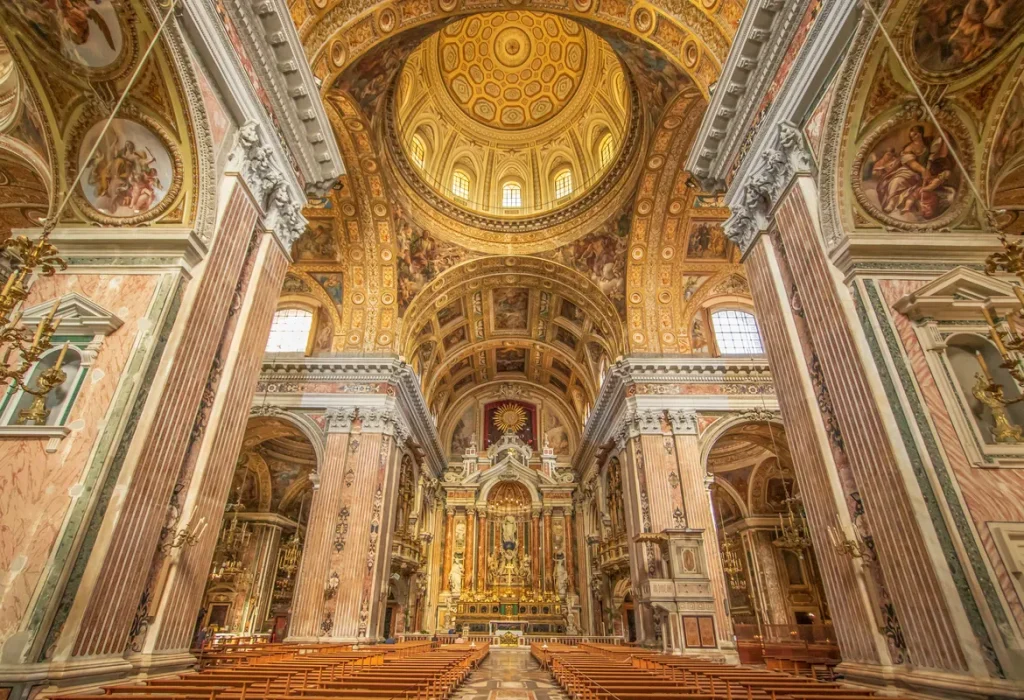
- Gesù Nuovo: Free entry. The facade is covered in distinctive diamond-point stone that looks unlike any other church exterior in Italy.

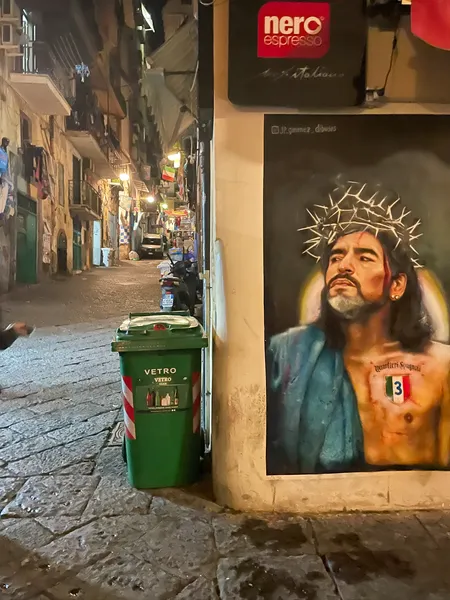
The Spanish Quarters: The Quartieri Spagnoli – a grid of narrow alleys west of Via Toledo – are dense, loud, and covered in street art including the large Maradona murals that have made this area famous. Walking through costs nothing and takes about an hour if you move slowly.
The Two Paid Exceptions Worth It
Napoli Sotterranea
Naples is literally built on top of an older version of itself. The underground tour takes you through a Greek-Roman aqueduct network, ancient cisterns, and sections of a Roman theater buried beneath a working apartment building. The contrast between the modern street above and the 2,400-year-old tunnels below is genuinely disorienting.
- Book online in advance – walk-up queues are long and the tour group sizes are capped
- Duration: around 80 minutes
- Entry: approximately €13
The Funicular to Vomero
For €1.20 – the standard transit fare – the funicular takes you from the city center up to the Vomero district with a view over the Bay of Naples that tour operators charge €40 to see.
At the top, Castel Sant’Elmo has a paid entry but the ramparts offer the best elevated view of the city. The Certosa di San Martino next door is a former monastery turned museum with exceptional panoramic terraces – entry around €6.
Street Food Beyond Pizza
Cuoppo: A paper cone of deep-fried seafood – calamari, shrimp, small fish – or fried vegetables. The seafood version costs €4 to €6 depending on size and location. Buy near the port rather than near the tourist sites and the price drops.
Sfogliatella: A shell-shaped pastry filled with sweetened ricotta. Go to Sfogliatella Attanasio near Garibaldi station – a local institution. One pastry and an espresso: around €3. This is breakfast.

Frittatine di Pasta: A deep-fried pasta cake with béchamel, ham, and peas. Found in most tavola calda (deli-style food shops) throughout the historic center for €2 to €3. High-calorie, genuinely filling, and specifically Neapolitan.
Espresso: At a bar, standing, espresso costs €1 to €1.20 across the city. Naples takes coffee seriously – the standard here is higher than anywhere else in Italy. Do not sit down for coffee unless you want to pay three times the price.
Day Trip to Pompeii: Under €15
Most visitors spend €50 or more on a guided Pompeii tour. The independent version costs under €15 and gives you more time inside the ruins.
- The train: Take the Circumvesuviana from Napoli Porta Nolana or Garibaldi station to Pompeii Scavi. Cost: under €4 each way. Journey time: 35 minutes.
- The ticket: Buy entry directly from the official government website (
pompeiisites.org). Entry is €18. Skip the vendors outside the gate – they add margin without adding value. - Lunch: Do not eat at the cafes inside the ruins. Buy bread, cheese, and fruit from a market in Naples before you board the train. Picnic inside the designated areas. You save €15 and eat better.
- The Circumvesuviana warning: Keep your phone and wallet in a front-facing bag on this train. It is the one route in the Naples area with a consistent pickpocketing problem.
For Vesuvius access, Amalfi Coast logistics, and the Herculaneum alternative (smaller, less crowded, arguably better preserved), see Best Day Trips from Naples.
Transit
Do not use taxis as your default. Naples taxis are metered but drivers frequently claim the meter is broken or add surcharges. Agree on the price before getting in or use a rideshare app.
The UnicoCampania pass covers Metro, buses, funiculars, and some regional trains on a single day ticket. If you are using the funicular and the Metro on the same day, it pays for itself immediately.
The Toledo Metro station: If you are using the Metro anyway, Toledo station is worth the detour even if you have nowhere specific to go. The mosaic installation on the descent – a blue gradient representing the sea – is one of the most striking pieces of public art in Italy. It costs nothing beyond your transit fare.
Where to Stay
The best budget accommodation in Naples is in guesthouses and family-run B&Bs in the Centro Storico – renovated apartments with local owners, central location, and prices well below equivalent options in Rome or Florence.
Best areas:
- Near Via Toledo or Piazza Dante: Safe, central, excellent Metro access, surrounded by affordable food
- Centro Storico proper: Puts you directly on Spaccanapoli and within walking distance of everything in this guide
Avoid the blocks immediately surrounding Napoli Centrale (Piazza Garibaldi) for overnight stays. It is the most convenient arrival point but the most chaotic area of the city, especially at night. Moving five minutes into the historic center gets you noticeably better value.
Safety: The Accurate Version
Naples has a persistent reputation that does not match the reality for most visitors.
Pickpocketing exists, primarily in crowded spots and on the Circumvesuviana train. Standard precautions – front-facing bag, phone in a pocket, not pulling out your wallet in crowds – are sufficient.
Traffic is the genuine danger. Scooters drive on pavements, go the wrong way on one-way streets, and do not stop for pedestrians. Treat every road crossing as if the lights are advisory. Look both ways regardless of what the signal says.
Confidence is the most effective budget protection. Looking lost in any Italian city invites overcharging. Know the rough layout of the Centro Storico before you arrive, walk with purpose, and you will not have problems.
A Realistic Day for €25
- 8:00 AM – Espresso and sfogliatella at a bar near your guesthouse: €3
- 9:00 AM – Walk Spaccanapoli, free churches: €0
- 1:00 PM – Pizza Margherita at a neighborhood pizzeria: €6
- 3:00 PM – Funicular to Vomero: €1.20
- 5:00 PM – Cuoppo from a port-area stall: €5
- 8:00 PM – Glass of local wine and frittatine at an osteria: €8
- 9:00 PM – Walk the Lungomare waterfront to Castel dell’Ovo: €0
Total: €23.20. Major art, best views in the city, the founding dish of Western street food, and 2,500 years of history.
Plan Your Trip
- First Time in Naples
- 3 Days in Naples
- Where to Stay in Naples
- 5 Best Day Trips from Naples
- Naples Food Guide
- Amalfi Coast Travel Guide
- 10 Days in Southern Italy
Is Naples safe for tourists?
Naples is safe for tourists who apply standard precautions. Pickpocketing exists in crowded areas and on the Circumvesuviana train to Pompeii – keep your phone and wallet in front-facing pockets or a bag worn across your chest. The bigger practical danger is traffic: scooters drive on pavements and the wrong way down one-way streets. Cross every road carefully regardless of what the signal says.
How much does a day trip to Pompeii from Naples cost?
Under €25 if you do it independently. The Circumvesuviana train from Naples to Pompeii Scavi station costs under €4 each way, and the official entry ticket at pompeiisites.org is €18. Skip the vendors outside the gate – they sell the same ticket at a markup. Bring lunch from Naples; the cafes inside the ruins are overpriced and poor quality.
What is the best area to stay in Naples on a budget?
The Centro Storico or the area around Via Toledo and Piazza Dante. Both are safe, central, and surrounded by affordable food options. Avoid the blocks immediately around Napoli Centrale for overnight stays – it is the most convenient arrival point but the most chaotic part of the city, especially at night. Five minutes into the historic center gets you noticeably better value and a quieter sleep.
What should you eat in Naples on a budget?
Start with pizza – a Margherita at an authentic pizzeria costs €5 to €6, which is the standard local price. For lunch on the move, pizza a portafoglio (a folded pizza in paper) costs €2 to €3 from street stalls on Spaccanapoli. A sfogliatella pastry and espresso make a full breakfast for €3. Cuoppo – a paper cone of fried seafood – costs €4 to €6 near the port. Frittatine di pasta (a fried pasta cake with béchamel) in any tavola calda runs €2 to €3.
When is the best time to visit Naples?
April to June or September to October. Temperatures are comfortable for walking the Centro Storico and visiting Pompeii without the summer heat, which regularly hits 35°C in July and August. Winter is quiet and significantly cheaper for accommodation, but shorter days limit outdoor time. Avoid August if you are combining Naples with the Amalfi Coast – peak tourist season and extreme heat make the logistics considerably harder.
Naples on a Budget — Money Map
Where the money goes, where it doesn’t have to. Click any pin for prices and the exact move.