If you are going first time in Milan, you should know it is not Rome. It is not Florence. It does not exist to charm you with peeling facades and slow piazza afternoons.
It is the financial and fashion engine of Italy – a fast-moving, well-dressed, unapologetically modern city. The people walk fast and the skyline mixes Gothic spires with glass towers. If you arrive expecting rustic Tuscany or the sun-drenched chaos of Naples, you will spend the first day recalibrating.
Approach it on its own terms and it delivers: the most technically astonishing cathedral in Italy, one of the most famous paintings in the world, a food culture built on butter and saffron, and a lake an hour away by train that costs less than €8 to reach. Before booking anything, read this guide on where to stay in Milan to choose the area that best matches your trip style.
The Last Supper: How to Actually Get a Ticket
Leonardo da Vinci’s The Last Supper (Il Cenacolo Vinciano) is inside the refectory of Santa Maria delle Grazie. You cannot walk up and buy a ticket on the day. The process is genuinely one of the most stressful in European travel.
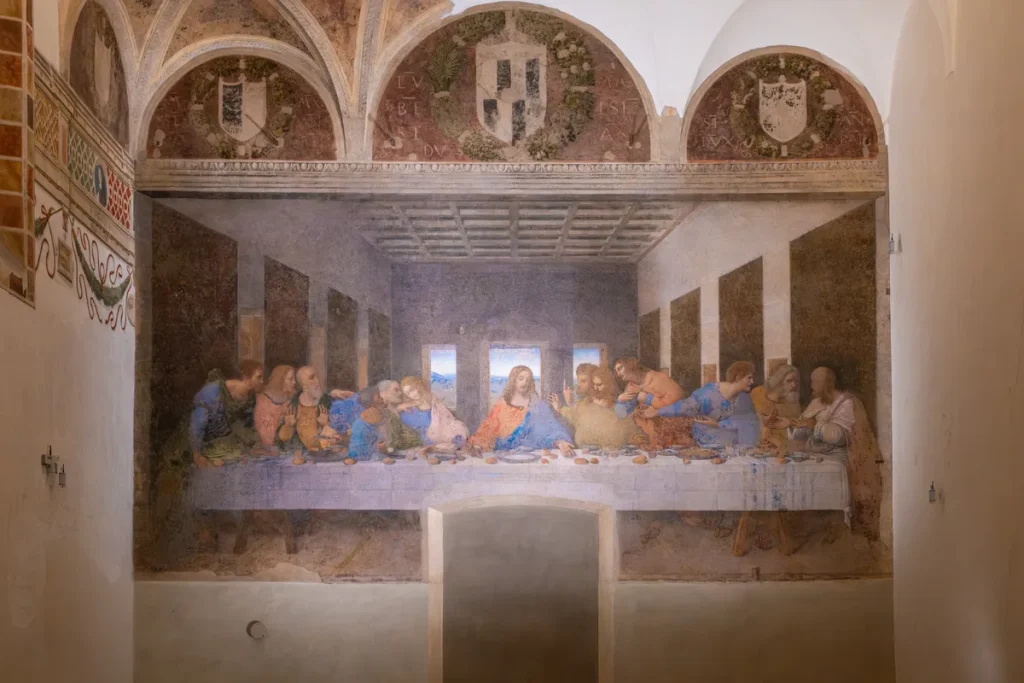
Why it is so restricted: Da Vinci painted it using dry tempera directly on the wall rather than traditional wet fresco. The technique started failing almost immediately. The painting is now kept in a climate-controlled, hermetically sealed room. Only 30 people enter at a time, through a series of dehumidifying airlocks, for exactly 15 minutes. When the time is up, the lights flash and you are ushered out the back.
The official route: Tickets are €15 and sold exclusively through Vivaticket. They are released in blocks roughly three months in advance, at specific times (often 12:00 PM Central European Time). They sell out in under three minutes, partly because tour operators buy up large blocks automatically.
If the official site is sold out: Third-party operators – GetYourGuide, Walks of Italy – sell bundled tours for €70-€90. It is a steep markup for the same 15 minutes, but it is a reliable guarantee when the direct route is gone. Book well before your trip either way.
The Duomo and the Galleria
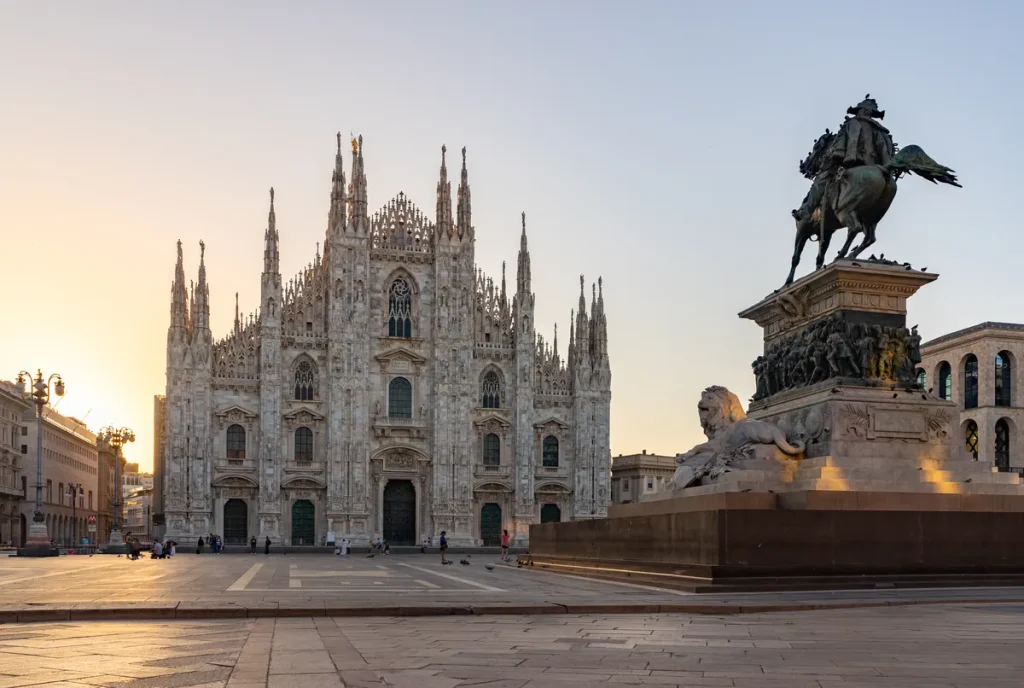
The Piazza del Duomo is where Milan concentrates its heaviest architecture. Unlike Rome, where the monuments are spread across the city, almost everything monumental here is within a few minutes of each other.
Il Duomo di Milano: Six centuries to build, constructed from pink-hued Candoglia marble, 135 stone pinnacles, over 3,400 individual statues. Buy timed-entry tickets online – the physical ticket office line is not worth it.

The roof is non-negotiable. The combined ticket includes access to the Duomo Terraces, where you walk across the sloped marble roof between the flying buttresses and gargoyles. Stairs are cheaper; the elevator has a longer queue. Either way, this is the single best architectural experience in the city.
Dress code is strictly enforced regardless of the weather – no bare shoulders, nothing above the knee. Guards turn people away at the door.
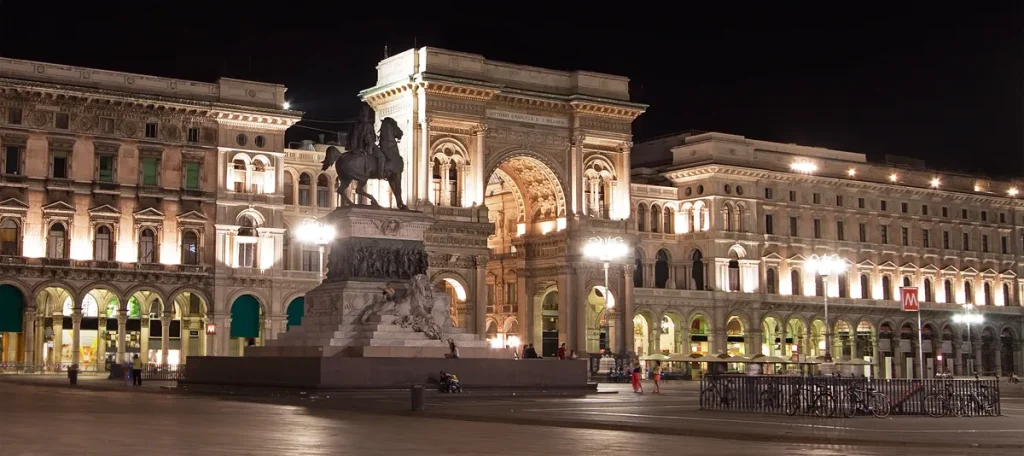
Galleria Vittorio Emanuele II: Built in the 1860s, the oldest active shopping mall in Italy. A vaulted glass-and-iron arcade housing flagship stores for Prada, Versace, and Louis Vuitton. Worth walking through for the architecture alone.
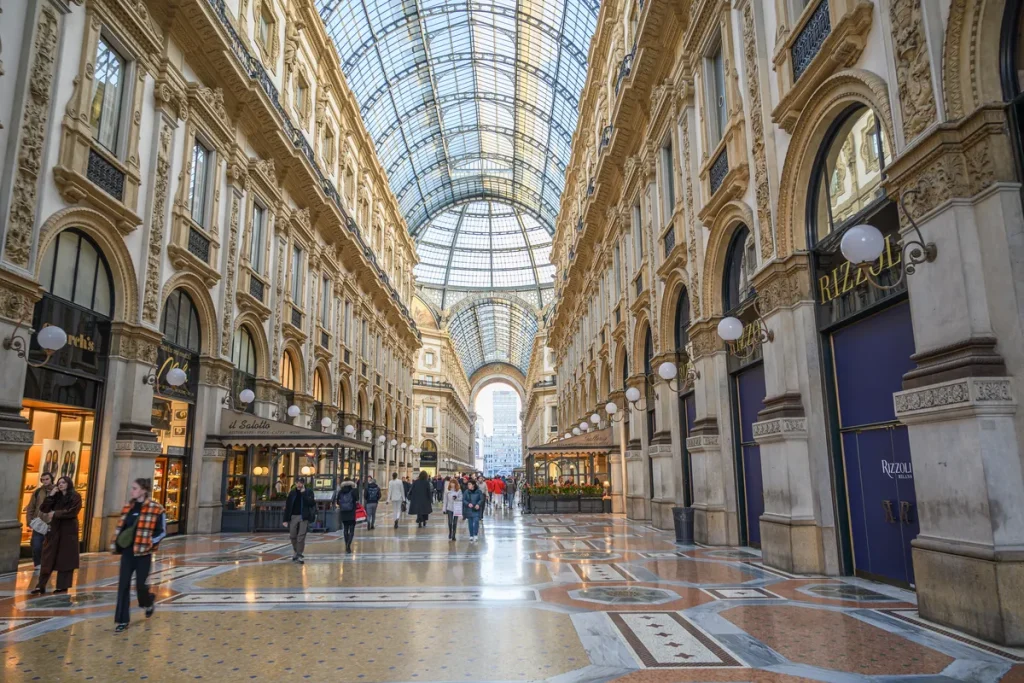
In the center, under the dome, find the mosaic of a bull on the floor. Local tradition is to plant your right heel on the bull’s worn-out testicles and spin backward three times for good luck. The hole in the mosaic from decades of heels is visible from several meters away.
Do not sit at the cafes inside the Galleria. A cappuccino runs €15 and there is sometimes a “music supplement” added if the string quartet is playing. Walk two streets in any direction for €1.50.
What to Eat in Milan
Erase the standard Italian menu. You are in Lombardy, where the climate is colder, the French and Austrian influences are real, and butter replaces olive oil. Pasta largely gives way to rice.
Three dishes to order:
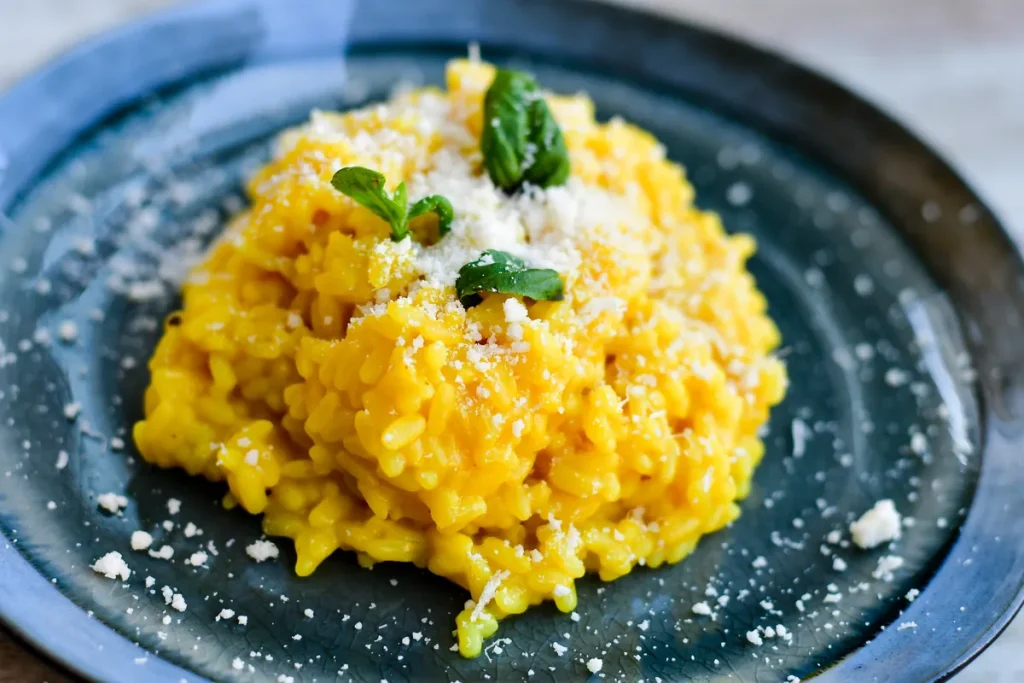
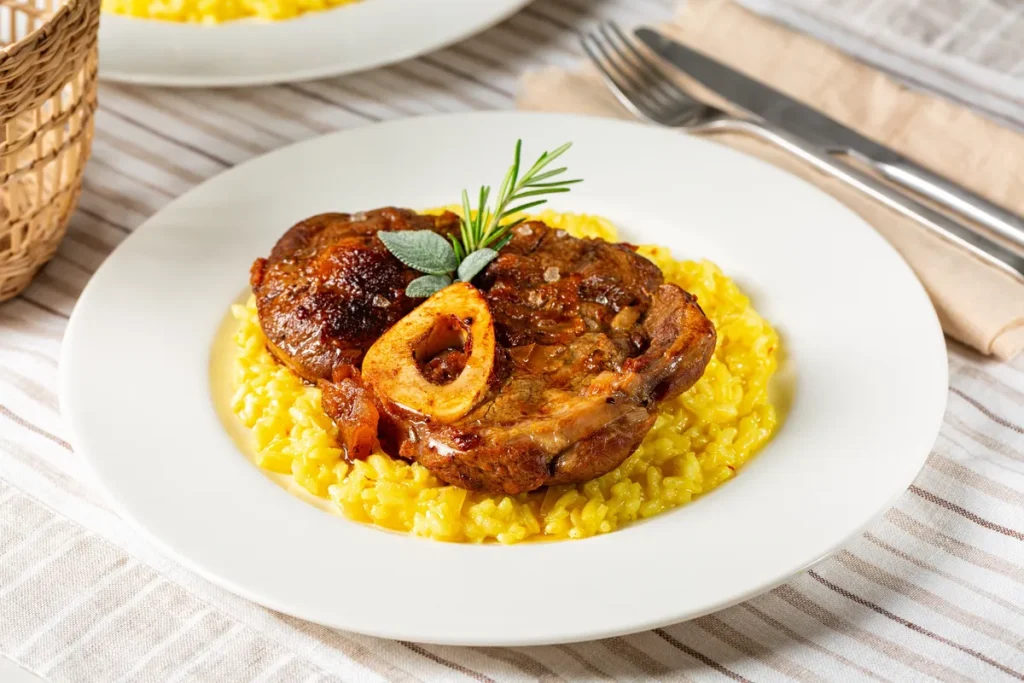
- Risotto alla Milanese – Creamy risotto colored and flavored with saffron, often served with bone marrow. The defining dish of the city.
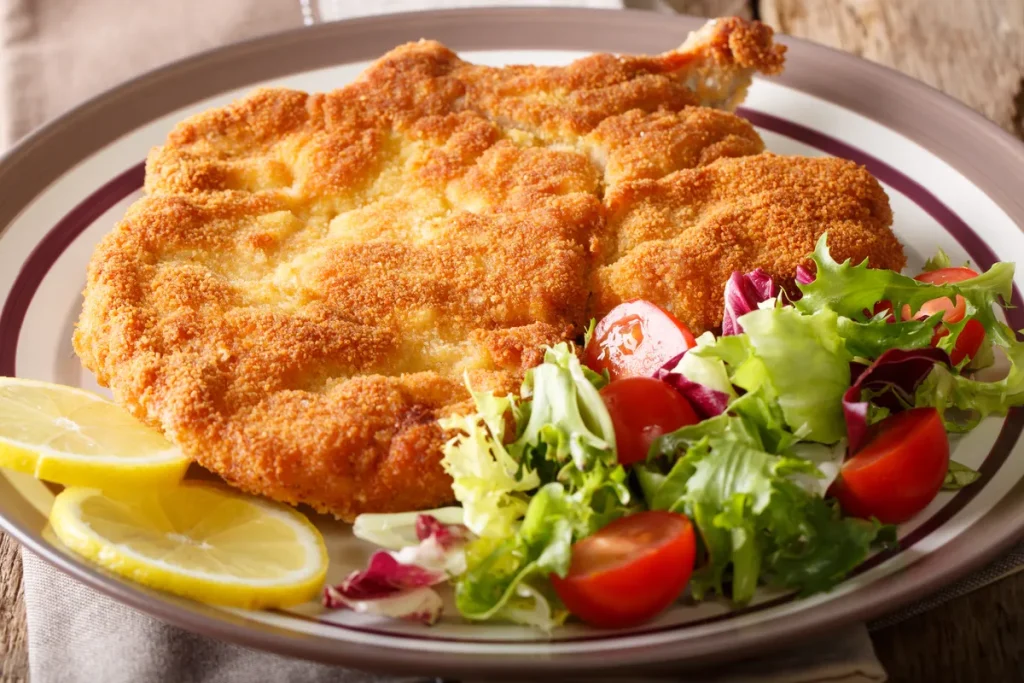
- Cotoletta alla Milanese – A bone-in veal cutlet, breaded and shallow-fried in clarified butter. A proper one is at least an inch thick.
- Ossobuco – Cross-cut veal shank braised in white wine until the meat falls apart, traditionally served over saffron risotto. Built for cold weather.
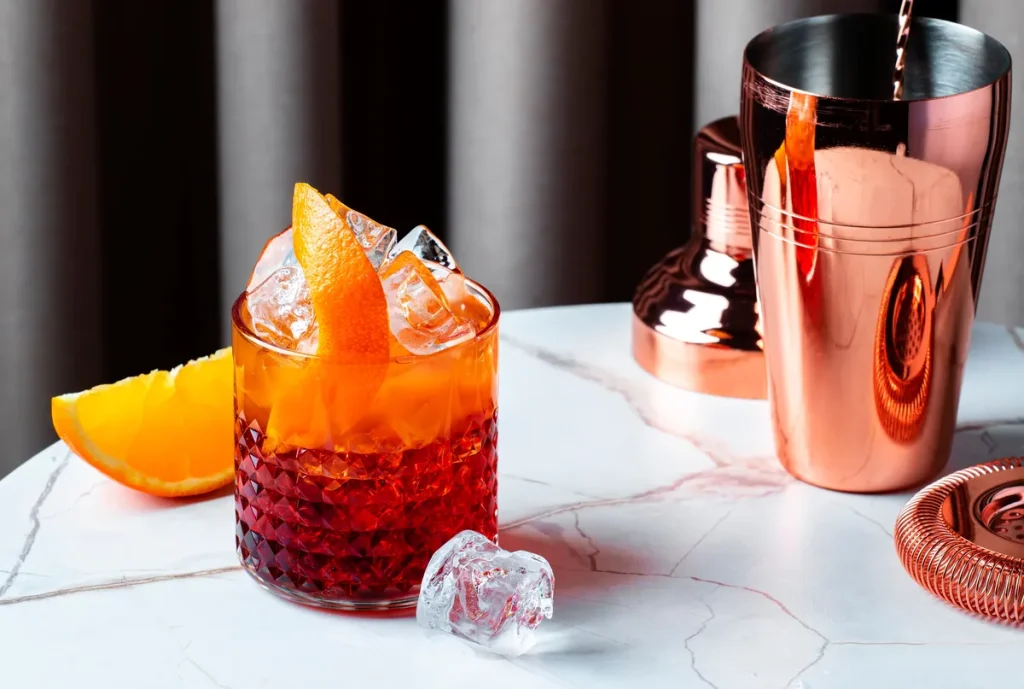
Aperitivo: Milan invented this ritual. Campari was born here. Between 6:30 PM and 9:00 PM, you go to a bar, order a bitter cocktail – a Negroni, a Campari Spritz, or the local favorite, the Negroni Sbagliato (gin replaced by Prosecco) – and gain access to a free buffet. Cold pasta, cured meats, focaccia, grilled vegetables, cheese. You pay €12-€15 for the drink. The food is unlimited.
On a tighter budget, a heavy aperitivo replaces dinner entirely.
Where: The Navigli canal district is the main aperitivo hub. The bars line both sides of the canals from 6:00 PM onward.
The Neighbourhoods
Centro Storico: The area around the Duomo and La Scala Opera House. Manicured, expensive, and quiet at night. Convenient for the monuments, overpriced for restaurants, and not where the city actually lives after dark.
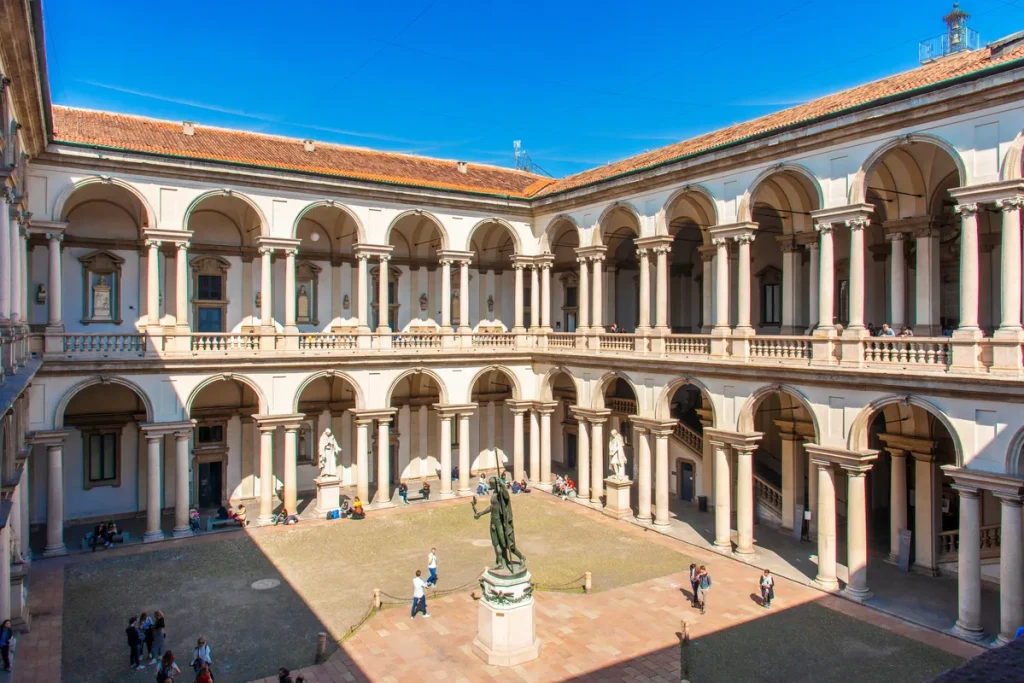
Brera: Just north of the Duomo – the most atmospheric neighbourhood in the city. Narrow pedestrian streets, art galleries, perfume boutiques. Visit the Pinacoteca di Brera (one of the strongest Italian Renaissance collections in the country) and the Orto Botanico di Brera, a free 18th-century botanical garden tucked behind the academy that most visitors walk straight past.
Navigli: The canal district in the southwest. Quiet during the day, then it switches at 6:00 PM. Hundreds of bars and restaurants line the Naviglio Grande and Naviglio Pavese. The best nightlife in the city, heaviest on university students and young professionals. Leonardo da Vinci helped design the lock system here.

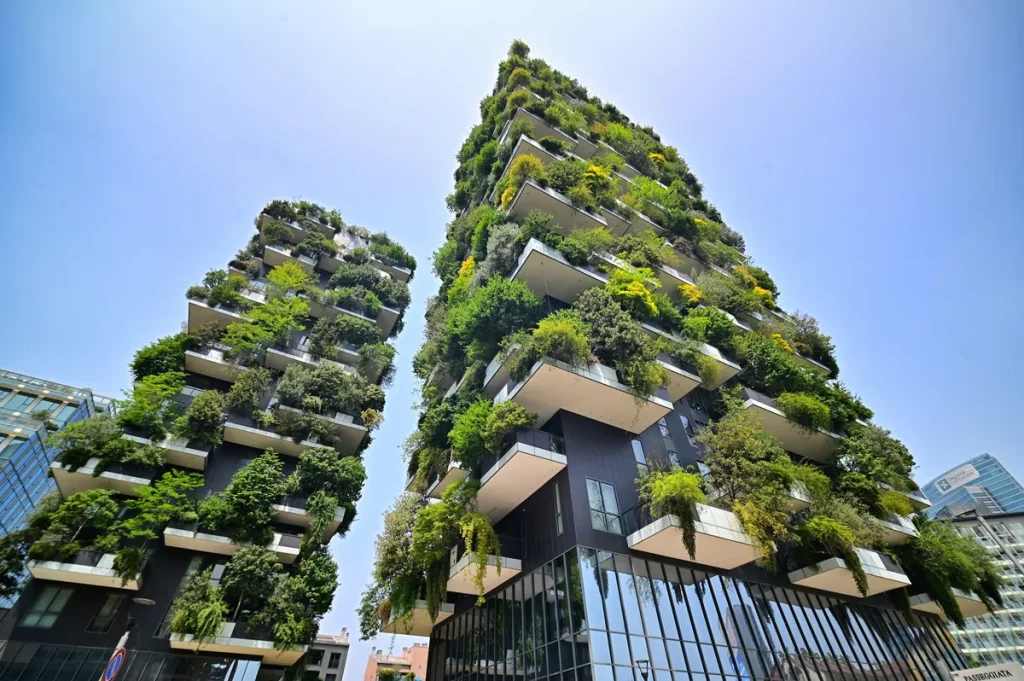
Porta Nuova and Isola: Take the metro to Garibaldi to see what the money actually built. The Bosco Verticale – two residential towers covered in thousands of live trees – is here. The adjacent Isola neighbourhood has underground jazz clubs and street art alongside it.
Getting In and Getting Around
Airports: Milan has three. International flights from outside Europe land at Malpensa (MXP), 50 km from the city. A fixed-rate taxi runs €105-€110. Instead, follow signs to the basement train station and take the Malpensa Express – €13, departs every 30 minutes, direct to Milano Centrale or Cadorna in under an hour.
Linate (LIN) handles European routes and is much closer. Bergamo/Orio al Serio (BGY) serves budget carriers and is farther out than Malpensa.
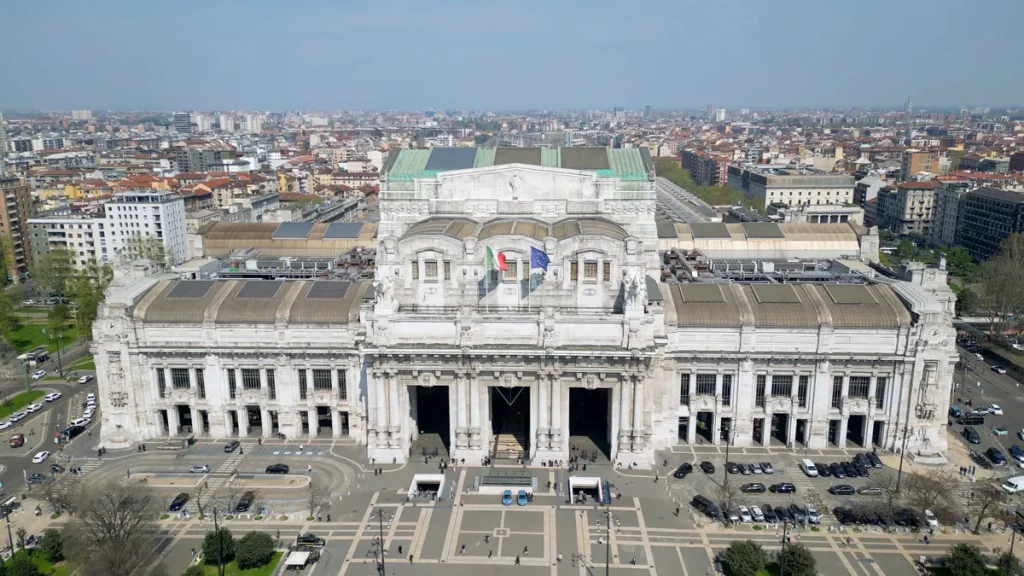
Milano Centrale: The main train station is architecturally extraordinary – enormous Fascist-era stonework that takes a moment to process. The area directly in front of it (Piazza Duca d’Aosta) is best moved through quickly at night. The platforms and escalators attract professional pickpockets; bag across your chest, ignore anyone offering to help you at the ticket kiosks.
The metro: Fast, clean, and better than anything else in Italy. No need to queue for tickets – tap your contactless card or phone directly on the turnstile. The system calculates the fare automatically.
How to Dress
This matters more in Milan than anywhere else in Italy. The unofficial local uniform is monochromatic – blacks, greys, navy – with an emphasis on fit. Italian casual is not American casual.
Tailored trousers, crisp shirts, clean leather sneakers or loafers. Leave cargo shorts and running shoes for somewhere else. Dressing sharply gets you noticeably better service in restaurants and bars.
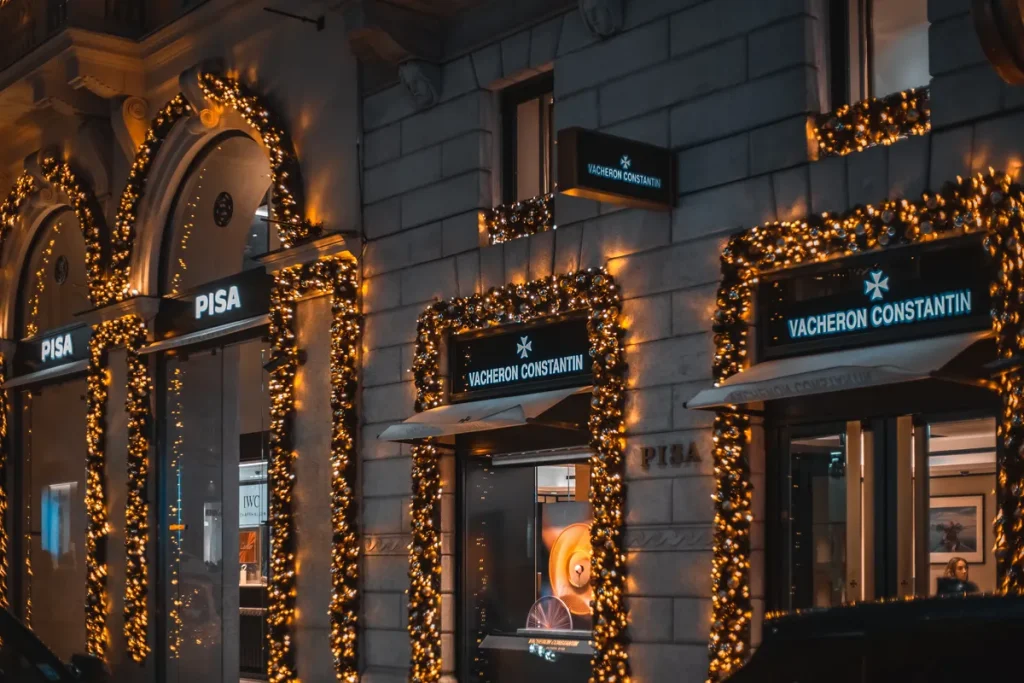
The Quadrilatero della Moda (the fashion district, centred on Via Montenapoleone) is worth walking through regardless of your budget. Private security at boutique doors, blacked-out vehicles, window displays treated as exhibitions. The people-watching is its own attraction.
Lake Como as a Day Trip
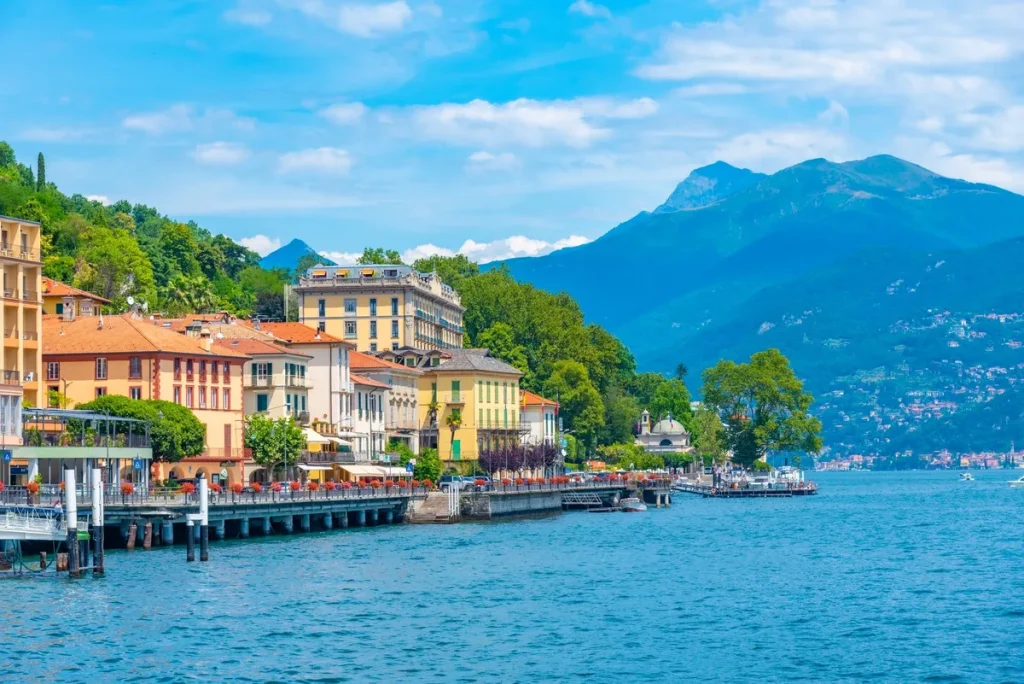
Milan’s geographical position – at the base of the Alps, with a fast rail network – means you can be in the mountains in under 90 minutes. If you have three or more days in the city, one day at Lake Como is worth it.
Do not buy a ticket to Como town. The city of Como sits at the bottom of the lake and lacks the dramatic scenery most people are looking for.
Buy a regional train ticket to Varenna-Esino instead. The journey from Milano Centrale takes 1 hour 4 minutes and costs under €8. Varenna is a small fishing village built directly into a steep mountainside above the lake. Walk the Passeggiata degli Innamorati (the Walk of Lovers), a path suspended over the water between the village’s two harbours.
From Varenna’s ferry dock, buy a day pass for the mid-lake ferries. Spend the afternoon crossing to Bellagio and the botanical gardens of Villa Carlotta in Tremezzo. Eat grilled lake fish for lunch. Take the early evening train back to Milan in time for aperitivo.
Plan Your Trip
- Where to Stay in Milan
- Things to Do in Milan
- Milan on a Budget
- Milan Food Guide
- Best Day Trips from Milan
- 3 Days in Venice
- Venice vs Florence
- Milan vs Rome
- Day Trip to Cinque Terre from Milan
How many days do I need in Milan?
Two full days covers the Duomo, the Last Supper, the Galleria, Brera, and the Navigli. Three days lets you add Lake Como without cutting anything short. One day is doable only if your sole priority is the Last Supper and the cathedral roof.
Is the Last Supper worth the effort?
Yes, but manage expectations. It is a 15-minute standing visit in a controlled room to see a painting that has been deteriorating for 500 years. The colours are muted, the damage is visible, and the experience is tightly managed. It is still one of the most significant works of art in the world and worth seeing once.
When is the best time to visit Milan?
April, May, September, and October offer the best weather. July and August are humid and hot, and many locals leave the city entirely. January and February are grey and cold but significantly cheaper, and the fashion weeks (February and September) mean the city is at its most stylish – and most expensive.
Is Milan expensive?
Do I need to speak Italian?
Less so than in Naples or smaller cities. English is widely spoken in hotels, restaurants, and tourist-facing businesses. Making the effort with basic Italian phrases still gets a warmer response.
First Time in Milan — Orientation Map
Every stop from the article — monuments, neighbourhoods, aperitivo, the hidden garden, and the correct Lake Como train. Click any pin.