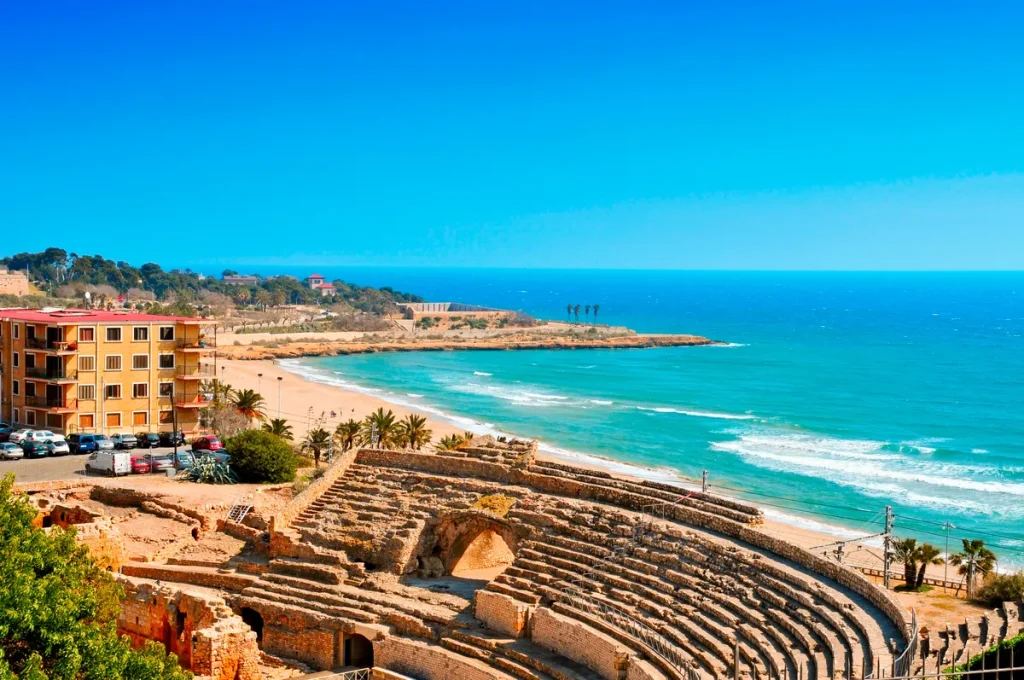
A day trip to Tarragona from Barcelona takes 1 hour 15 minutes by regional train and costs €8.10 each way – making it the most historically dense half-day escape from the city. Tarragona was Tarraco, Augustus’s base of operations for the Iberian peninsula, and what’s left is substantial: a sea-cliff amphitheatre, a chariot racing circuit that forms the literal basement of the medieval city, Roman walls with Iberian stonework underneath them, and a two-tier aqueduct 4 kilometers outside town that you can walk across. The ruins are not in a museum. They are in the streets, under the bars, and below the apartment buildings. Don’t go on a Monday – most of the Roman sites are closed.
If you’ve done three days in Barcelona and want something with more grit and less polish, Tarragona is the correct answer. Here’s exactly how to do it.
Getting from Barcelona to Tarragona: Train Logistics
Which train to take
From Barcelona Sants or Passeig de Gràcia, you want the R16 regional train or the Media Distancia (MD) service to Tarragona Centre. Journey time is 1 hour 10 minutes to 1 hour 20 minutes depending on stops. Fare: €8.10 each way.
The MD is the better option when available – fewer stops, more comfortable seating, same price range. Check Renfe’s website or the Cercanías app for the day’s schedule.
Critical warning: Do not book an AVE or Ouigo high-speed train to “Tarragona.” Those services stop at Camp de Tarragona, a station in an industrial zone 10 kilometers outside the city. Getting from Camp de Tarragona to the Roman ruins requires a taxi or a bus connection – add 30 minutes and €15-20 to your journey for no reason.
Always book to Tarragona (not Camp de Tarragona). The station name on the Renfe website is simply “Tarragona.”
Left side of the train
When boarding in Barcelona, sit on the left side facing the direction of travel. Once the train clears the Llobregat industrial belt south of the city, the line hugs the coast. The final 30-40 minutes pass directly above the Mediterranean, through the limestone cliffs of Garraf and past the beaches of Sitges and Calafell. It’s a genuinely good train ride.
Getting from the station to the ruins
Tarragona station is at sea level; the old town (Part Alta) is 60 meters above it. Walk straight up the Rambla Nova – it’s a 15-minute climb. The Balcó del Mediterrani viewpoint is at the top of the Rambla, and the amphitheatre is immediately below it. Everything else fans out from there.
Taxis are available at the station if you have mobility issues or heavy bags. The fare to the Part Alta is around €5-7.
The Roman Sites: What’s Worth Your Time
Amphitheatre (Amfiteatre Romà)
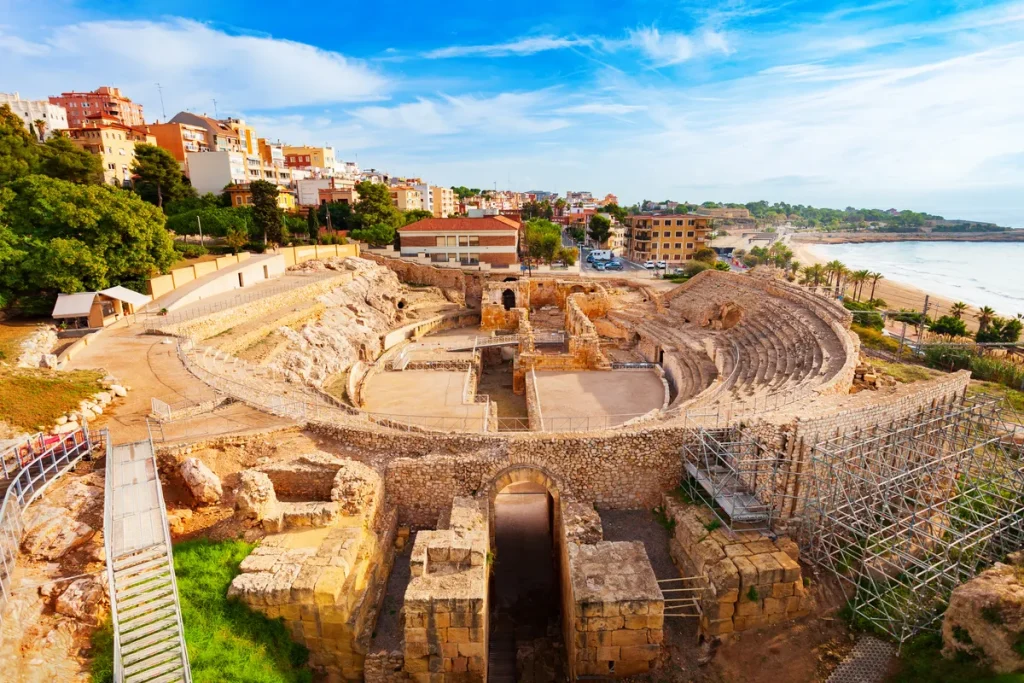
The amphitheatre is built into the cliff face directly above a beach – the only Roman arena in the world in this position. From the upper tiers you look out over the Mediterranean while the arena floor drops away below you. It was used for gladiatorial combat until the 3rd century AD, then as the site of Christian martyrdoms, then as a Visigothic church, then as a medieval church, both of which were built using the arena stones. The layers are still visible.
Entry: €3.50 standalone; better value on the combined ticket (see below). Open Tuesday-Sunday. Closed Monday.
In 2026, some upper seating sections are under structural conservation and access is restricted. The interior floor and lower areas are fully accessible.
The best photograph of the amphitheatre is not from the entrance. Walk up to the Balcó del Mediterrani at the top of the Rambla Nova and look down – you get the full arc of the arena with the sea behind it. Take this shot before you go in.
Roman Circus and Pretoria Tower
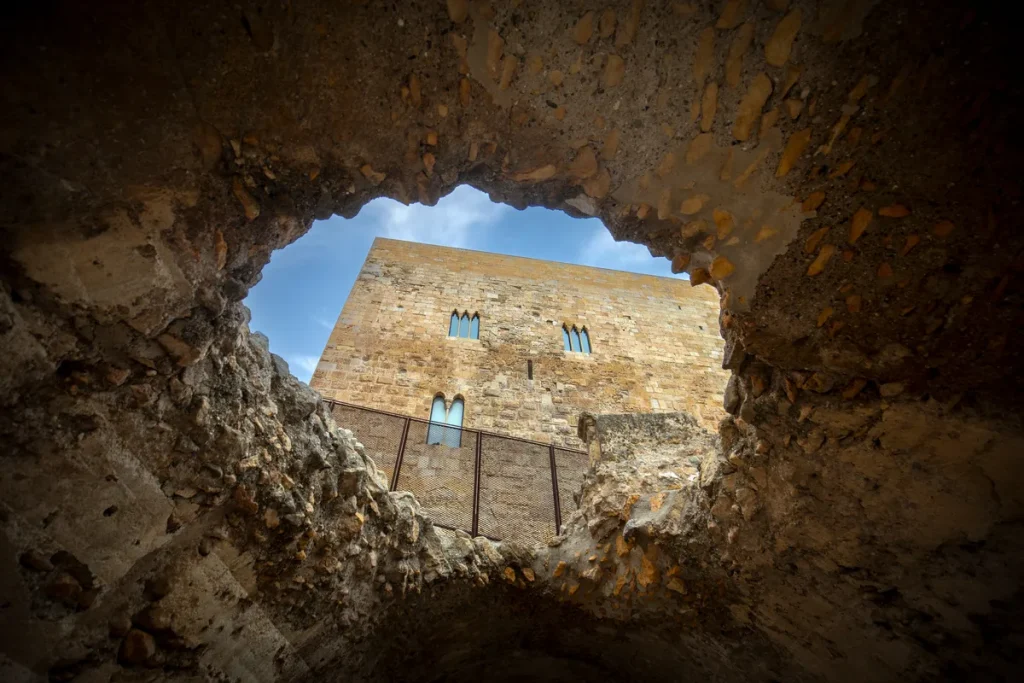
The circus was a chariot-racing track, 325 meters long, built in the 1st century AD and capable of holding 30,000 spectators. The medieval city was constructed directly on top of and inside its vaulted foundations, which is why those vaults still exist and why you can walk through them. The temperature drops noticeably underground; in August this is the coolest you’ll feel all day.
The Pretoria Tower at one end of the circus was the starting gate complex, later converted into a medieval castle. Climb to the roof for a 360-degree view over the terracotta rooftops of the Part Alta and the cathedral.
Entry: included in the combined Tarragona Museums ticket (€12.60), which covers the circus, amphitheatre, forum, and walls. This is the right ticket to buy unless you’re only doing one site.
Passeig Arqueològic (The Walls)
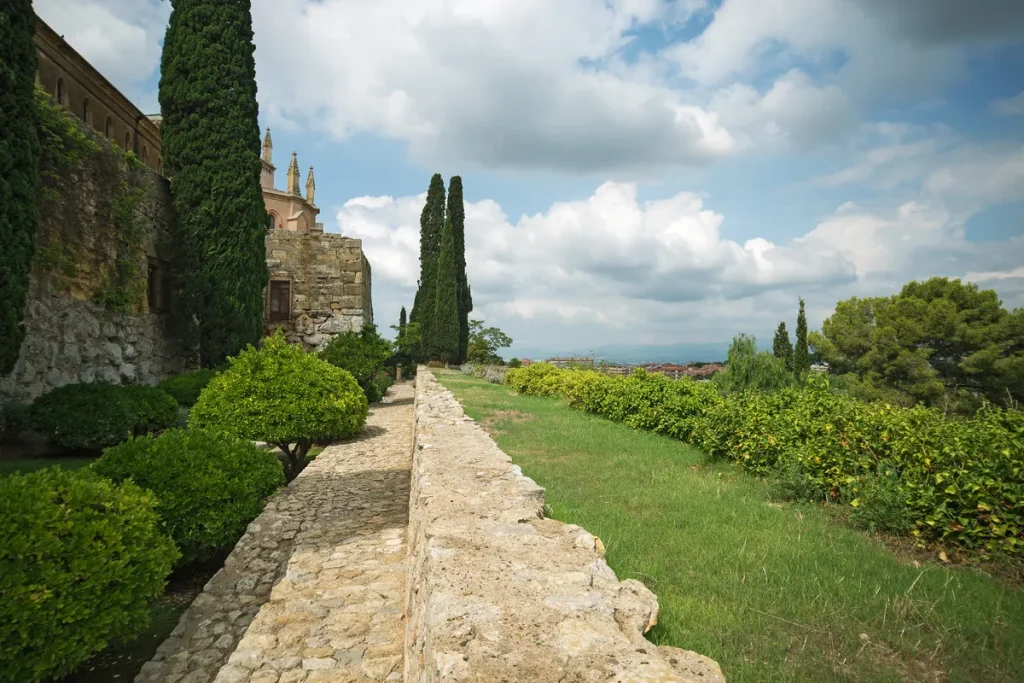
You can walk the full perimeter of Tarragona’s ancient walls on a raised path between the inner Roman wall and an outer 18th-century wall built by the British during the War of Spanish Succession. The base of the Roman wall uses pre-Roman Iberian masonry – massive irregular stones, some weighing several tonnes, placed without mortar by a civilization that predates Rome’s arrival in Hispania by centuries. The Romans built their coursed stone directly on top of this earlier work. Both layers are visible from the path.
Entry from the portal near the Town Hall (Plaça del Pallol). The walk takes 40-50 minutes at a relaxed pace. There are bronze statues of Romulus and Remus in the garden sections and benches with shade – useful in summer. Entry: €3.50 standalone or included in the combined ticket.
Provincial Forum (Plaça del Fòrum)
The forum was the administrative center of Roman Hispania – the place where provincial governance, courts, and taxation were organized. The archaeological remains are partially excavated beneath what is now a working plaza surrounded by cafes and apartments. Some of the bar walls incorporate Roman stones and Latin inscriptions used as building material by medieval builders who needed rock and didn’t care where it came from.
This is included in the combined ticket. The site itself takes 20-30 minutes. More useful as context before or after the circus than as a standalone visit.
The Part Alta (Old Town)
Cathedral of Tarragona
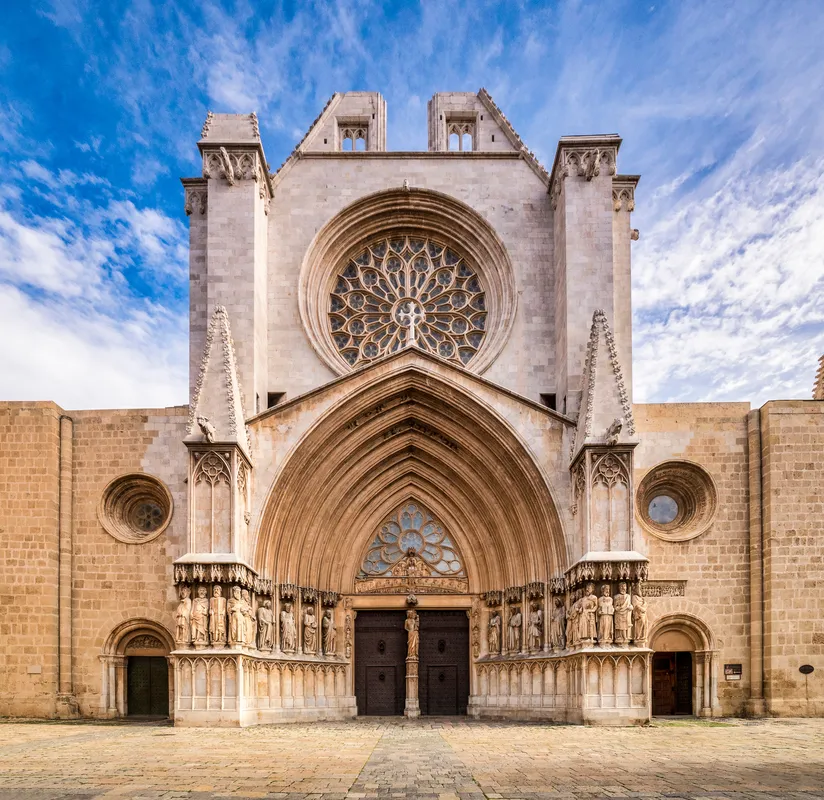
Built on the site of a Roman temple of Jupiter (which was itself built on an Iberian sacred site), Tarragona’s cathedral is a Romanesque-Gothic hybrid started in the 12th century and not completed until the 14th. It is very large and not particularly well-known outside Spain, which means it’s rarely crowded.
The cloister is the specific reason to go in. It’s one of the best preserved Romanesque cloisters in Catalonia – a garden surrounded by carved stone capitals. One capital on the north gallery depicts rats carrying a cat to burial in a funeral procession while other cats look on weeping. It’s a medieval satirical carving – the “Procession of the Rats” – and it’s been there since the 13th century. It’s easy to walk past without noticing; look at the capitals on the north side specifically.
Entry: €5. Open Monday-Saturday. Closed Sunday mornings during services.
Carrer del Comte (Carrer dels Pilons)
A narrow alley in the Part Alta where the bollards have been painted by local artists over several decades. It’s a 2-minute detour from any route through the old town. The contrast between the ancient stone walls and the painted ironwork is the image that ends up on people’s cameras when they can’t articulate why.
Plaça de la Font
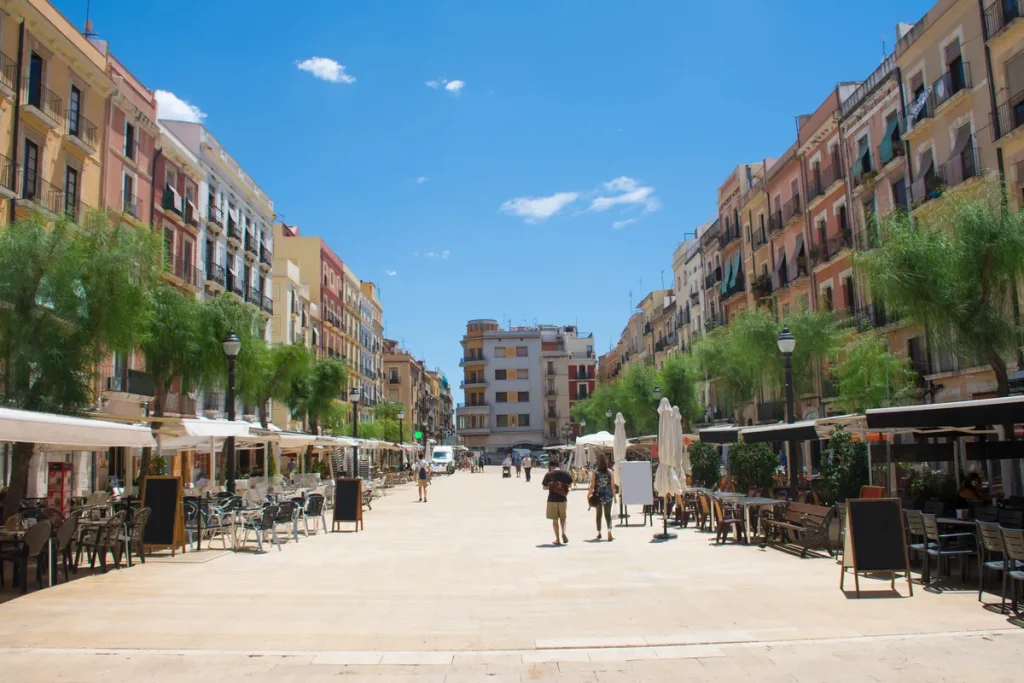
The main square of the Part Alta, elongated and lined with cafes. This is where the local vermouth ritual takes place before lunch and where the castellers (human tower groups) sometimes practice on summer evenings. Less touristy than Plaça del Fòrum, better cafes, same access to the surrounding streets.
The Balcó del Mediterrani and Rambla Nova
The Rambla Nova is Tarragona’s main promenade and nothing like Barcelona’s. It’s wide, tree-lined, local, and ends at the Balcó del Mediterrani – a terrace over the cliff with views south along the coast and down into the amphitheatre below.
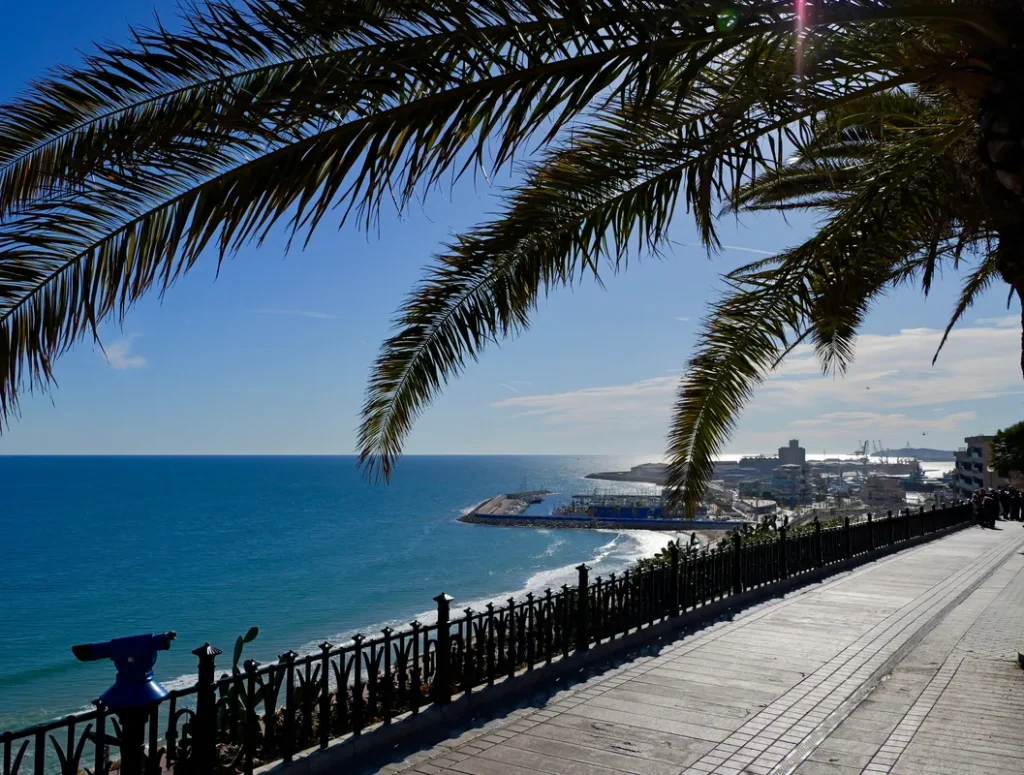
At the railing there’s a local tradition called tocar ferro (touch iron) – you grab the wrought-iron railing for good luck before looking out. Tourists do this because someone told them to; locals do it because their grandparents did.
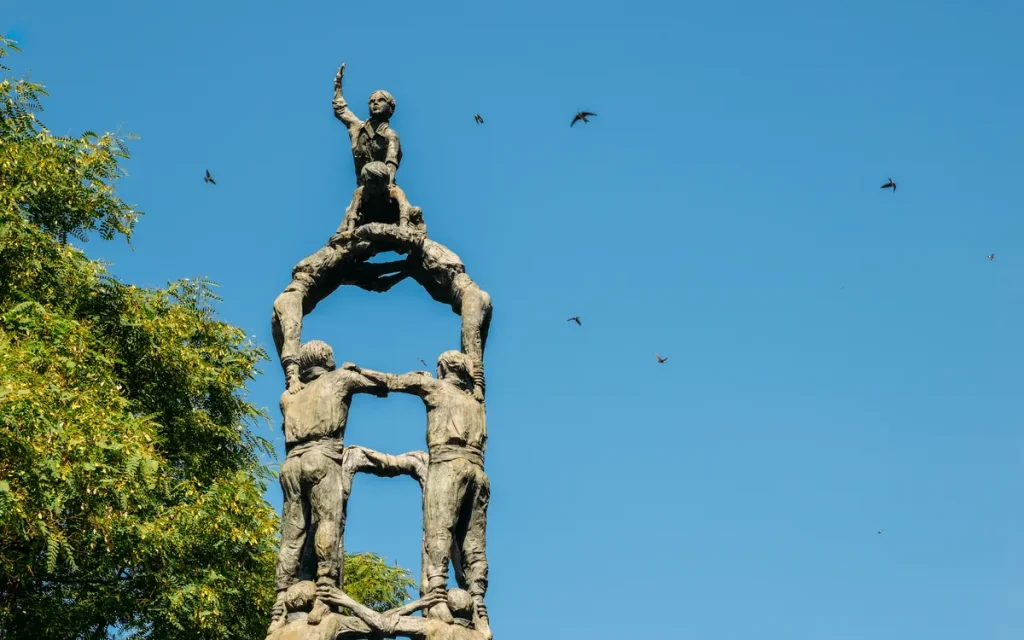
The Monument als Castellers bronze sculpture on the Rambla depicts a human tower in mid-construction – eight or nine levels of people climbing each other, with a child (enxaneta) at the top. It’s large and well-executed and worth stopping for even if you have no context for what castellers are.
The Ferreres Aqueduct (Pont del Diable)
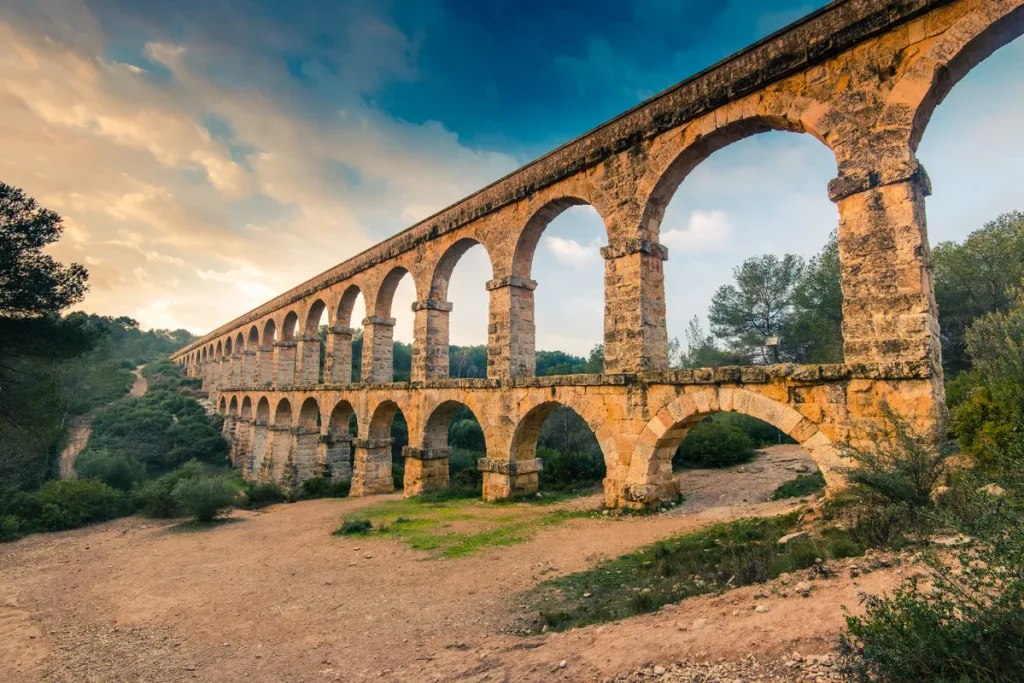
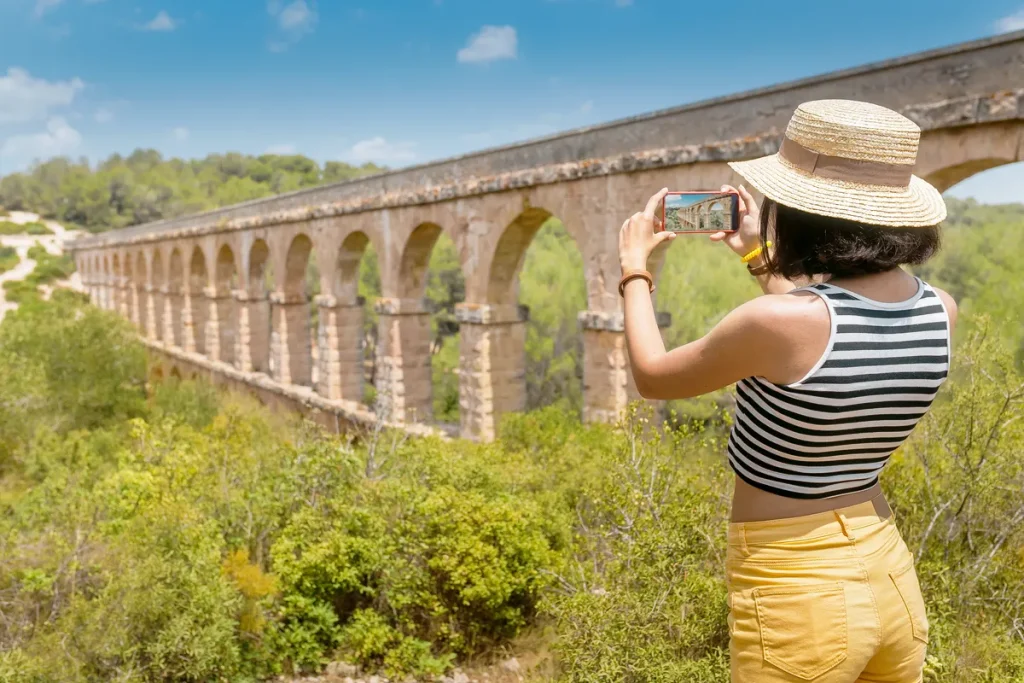
Four kilometers outside the city center, the Ferreres Aqueduct is the most impressive single Roman structure in Tarragona and the one most day-trippers miss because it requires a bus. Don’t skip it.
It’s a two-tier aqueduct standing 27 meters high at its tallest point, built in the 1st century AD to carry water from the Francolí river to the city. The stone is the original Roman construction with minimal restoration – what you’re looking at is substantially what the Romans built.
You can walk across the top of the aqueduct on the original water channel. It’s approximately 60cm wide, there is no railing, and the drop on each side is significant. If you have vertigo, stay at ground level and look up. If you don’t, it’s 10 minutes of walking that feels more Roman than anything else you’ll do in Spain.
How to get there: Bus 5 or Bus 85 from the city center (Avinguda de Prat de la Riba). Journey time approximately 10 minutes. Fare: €1.55. Alternatively, the walk from the Part Alta takes about 45 minutes through suburban streets – not unpleasant but not scenic.
Entry to the aqueduct site: free. Open year-round.
Where to Eat in Tarragona
El Serrallo (Fisherman’s Quarter)
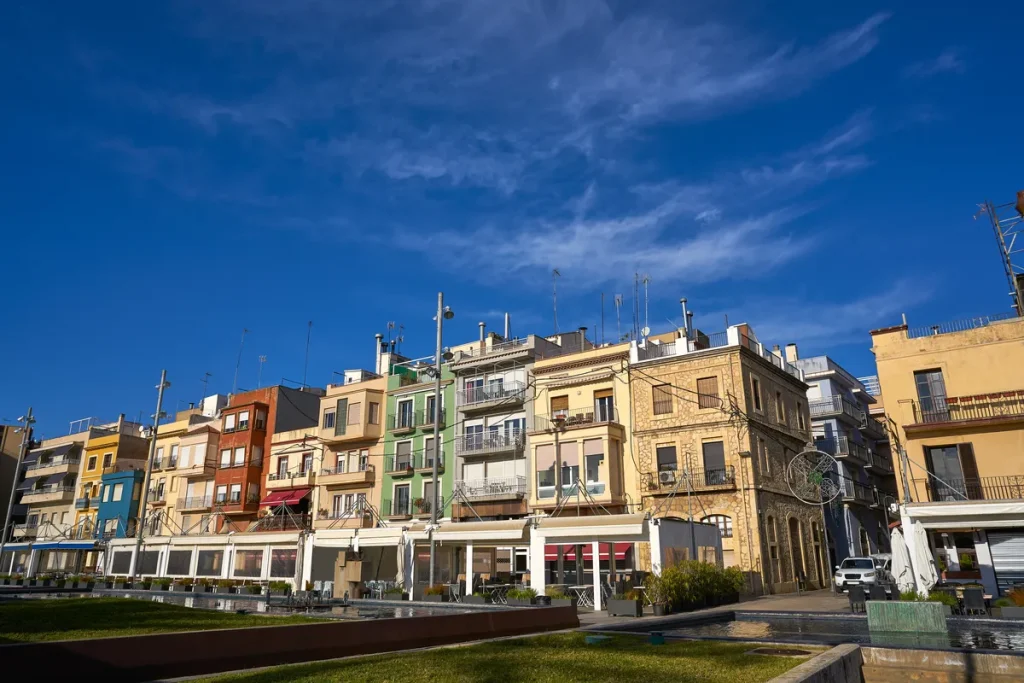
A 15-minute walk south from the amphitheatre, El Serrallo is the working port district where the fishing fleet unloads and where the fish restaurants are actually good. The area looks slightly rough and is entirely fine.
Romesco is the local sauce – ground toasted almonds, hazelnuts, dried nyora peppers, garlic, and olive oil. It originated in Tarragona and is served here with everything from bread to grilled fish to the local fish stew (sarsuela). What you get in Barcelona as “romesco” is a pale version of what they serve in Serrallo.

Most restaurants in El Serrallo offer a menú del día for €15-20 including a seafood first course, main, bread, and wine or water. For the equivalent meal in Barcelona’s tourist areas you’d pay double. Get the arròs negre (black rice with squid ink) if it’s on the board.
Part Alta Vermouth
Before lunch, the ritual is vermouth. Tarragona has a strong vermouth culture built around two local producers: Yzaguirre (based in El Morell, just outside Tarragona) and Padró (from nearby Brafim). Order a vermut with a small plate of olives and chips at any bar around Plaça del Fòrum or Plaça de la Font. It costs €3-4 and it’s how the city works before a 2:00 PM lunch.
Castellers (Human Towers)
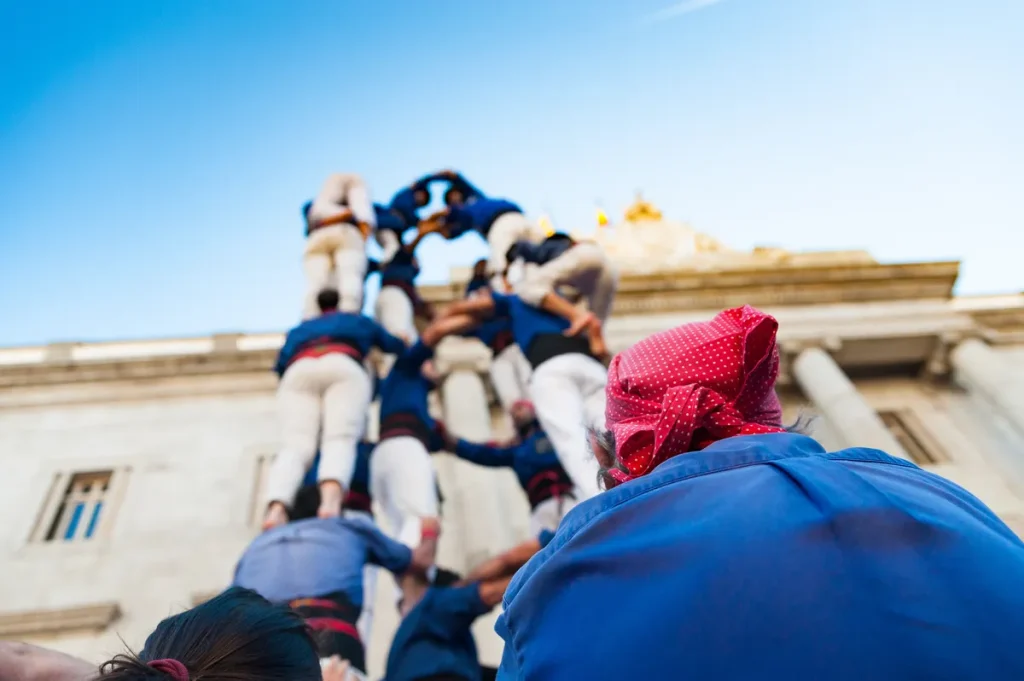
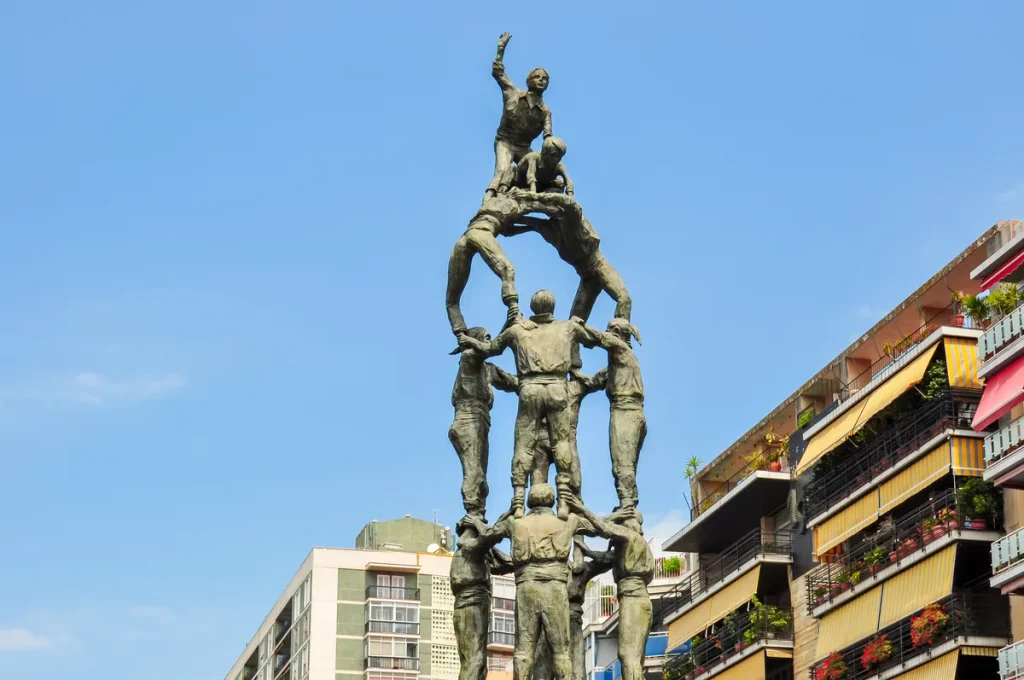
Tarragona is one of the two main centers of castells in Catalonia alongside Vilafranca del Penedès. Human towers are an organized competitive sport with clubs (colles), training sessions, and championships. The towers can reach 10 levels of people – the top position (enxaneta, always a child of 7-10) climbs to the peak and raises four fingers to signal completion.
If you’re in Tarragona in October of an even-numbered year: The Concurs de Castells – the world championship of human tower building – takes place at the Tarraco Arena Pla, the city’s bullring-turned-events-venue. Every two years, 40+ colles compete over two days in front of 10,000 people. It is one of the most physically intense and emotionally strange sporting events in Europe – grown men and women in regional dress crying when a tower succeeds or collapses.
If you’re here on a Tuesday or Friday evening between April and September: Several colles hold open training sessions at their local headquarters in the Part Alta. These are free to watch and give a clearer picture of the technical complexity involved than a competition does. Ask at the tourist office for the current schedule.
Practical Itinerary for One Day
09:00 – Board the MD or R16 train at Barcelona Sants or Passeig de Gràcia (left side of the train).
10:15 – Arrive Tarragona Centre. Walk up the Rambla Nova to the Balcó del Mediterrani. Photograph the amphitheatre from above before going in.
10:45 – Amphitheatre. Allow 45 minutes.
11:30 – Roman Circus and the underground vaults. Pretoria Tower rooftop. Allow 45-60 minutes.
12:45 – Vermouth at Plaça del Fòrum or Plaça de la Font.
13:30 – Lunch in El Serrallo (menú del día). Allow 1.5 hours.
15:00 – Cathedral and cloister. Find the Procession of the Rats. Allow 45 minutes.
16:00 – Passeig Arqueològic (the walls). Allow 45-50 minutes.
17:00 – Bus 5 or 85 to the Ferreres Aqueduct. Walk across the top. Return bus. Allow 1 hour total.
18:30 – Final drink at Plaça de la Font.
19:30 – Walk down to the station.
20:00 – Train back to Barcelona (arrives approximately 21:15).
This is a full day. The aqueduct is the element most people drop when time is tight – if you need to cut something, cut it last. The underground circus vaults are the other thing worth protecting.
Plan Your Trip
- First Time in Barcelona
- 1 Day in Barcelona
- 3 Days in Barcelona
- 5 Days in Barcelona
- 25 Things to Do in Barcelona
- Food Guide Barcelona
- Barcelona on a Budget
- Barcelona with Kids
- Barcelona vs Madrid
Is one day enough to see Tarragona?
One day covers the city center ruins, the cathedral, the walls, and the aqueduct if you manage time efficiently. The nearby beaches (Platja Llarga is the best) and the medieval monastery of Poblet an hour inland both require a separate trip or an overnight stay.
Are the Roman sites closed on Mondays?
Yes. Most state-run archaeological sites in Tarragona – amphitheatre, circus, forum, walls – are closed on Mondays. This is a trip-ending mistake if you don’t check. Plan your visit for Tuesday through Sunday.
Can I combine Tarragona and Sitges in one day?
They’re on the same train line, so technically yes. In practice, doing both means seeing neither properly. Sitges needs a minimum of 4-5 hours for the old town and a beach; Tarragona needs 6-7 hours for the main sites. Pick one per day.
What is the best time of year to visit Tarragona?
April through June and September through October. Summer (July-August) is hot – the sites are largely unshaded and the walls walk in particular becomes unpleasant by midday. The ruins don’t have crowds to the same degree as Barcelona’s main sights, so avoiding peak season is less critical here than in the city.
Do I need to book the Roman sites in advance?
No. Unlike Barcelona’s main attractions (Sagrada Família, Park Güell), Tarragona’s sites don’t require advance booking and rarely have queues. Buy the combined ticket at the first site you visit.
Day Trip to Tarragona from Barcelona — 2026
R16 / MD train from Barcelona Sants or Passeig de Gracia, 1h15, EUR 8.10 each way. Do NOT take the AVE — it stops at Camp de Tarragona, 10km outside the city. Click any pin.