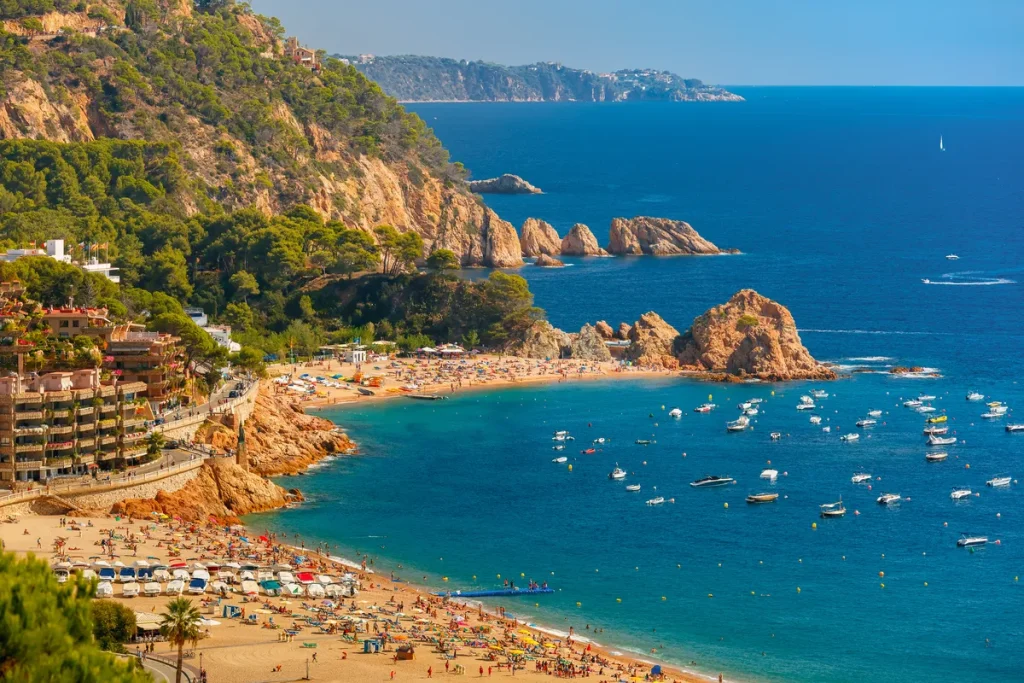
A day trip to Sitges from Barcelona is the most efficient way to escape the city for a mix of Mediterranean culture and clean beaches. Sitges sits 35 kilometers south of Barcelona on a rocky headland where the Garraf massif meets the sea. While the train takes just 40 minutes and costs under €5, the atmosphere is a significant shift from the Catalan capital – replacing the urban density of Barcelona with a well-preserved old town and 17 distinct beaches
Most Barcelona visitors spend one afternoon there and leave satisfied. The smarter approach is to arrive early, eat lunch properly, and take a late afternoon train back – which gives you six to seven hours and covers everything worth seeing without rushing.
This guide covers the logistics, what to do, where to eat, and how to structure the day to avoid the mistakes most visitors make. If Barcelona is your base for several excursions, this guide on where to stay in Barcelona will help you choose the most convenient area.
Getting from Barcelona to Sitges
By Train
The R2 Sud Rodalies train from Barcelona Sants or Passeig de Gràcia runs directly to Sitges. Journey time: 38 to 42 minutes depending on the service. Trains run every 15 to 30 minutes throughout the day.
Ticket cost: Zone 4 fare, around €4.60 each way with a single ticket. If you have a T-Casual card (10-trip card covering zones 1 to 4), the journey is covered. Buy the T-Casual at any Rodalies station for around €12 – it covers 10 journeys and is the correct option if you are using Barcelona’s public transit during your stay.
Trains from Barcelona Sants take around 38 minutes. Trains from Passeig de Gràcia take around 42 minutes. Both drop you at Sitges station, which is a seven-minute walk from the old town and the main beach.
Departure timing: The first trains leave Barcelona Sants from around 6:00 AM. For a full day trip, aim to board between 8:30 AM and 9:30 AM – you arrive before the day-tripper wave from Barcelona, which peaks around 11:00 AM, and you have the old town largely to yourself for the first hour.
Return: Last trains back to Barcelona run until around midnight. The last convenient train for a standard day trip is around 9:00 PM, which gives you time for dinner before heading back.
By Car
Driving is possible but pointless for a day trip. Parking in Sitges in summer is expensive and scarce near the center. The train is faster door-to-door when you factor in parking time.
What to Do in Sitges
Walk the Old Town Before 11:00 AM
The old town of Sitges sits on a small promontory between two beaches. The streets are narrow, whitewashed, and genuinely well-preserved – less a tourist reconstruction and more a functioning Catalan town that happens to be photogenic. The Church of Sant Bartomeu i Santa Tecla sits on the headland above the sea, its terrace giving the best view of the coastline in both directions.
Walk through the Calle del Pecado (Street of Sin) – the historic alley that was the center of Sitges’s bohemian art scene in the late 19th and early 20th centuries when the painter Santiago Rusiñol brought writers, artists, and intellectuals here from Barcelona. The connection to Modernisme runs deep – Rusiñol’s house is now the Cau Ferrat museum.
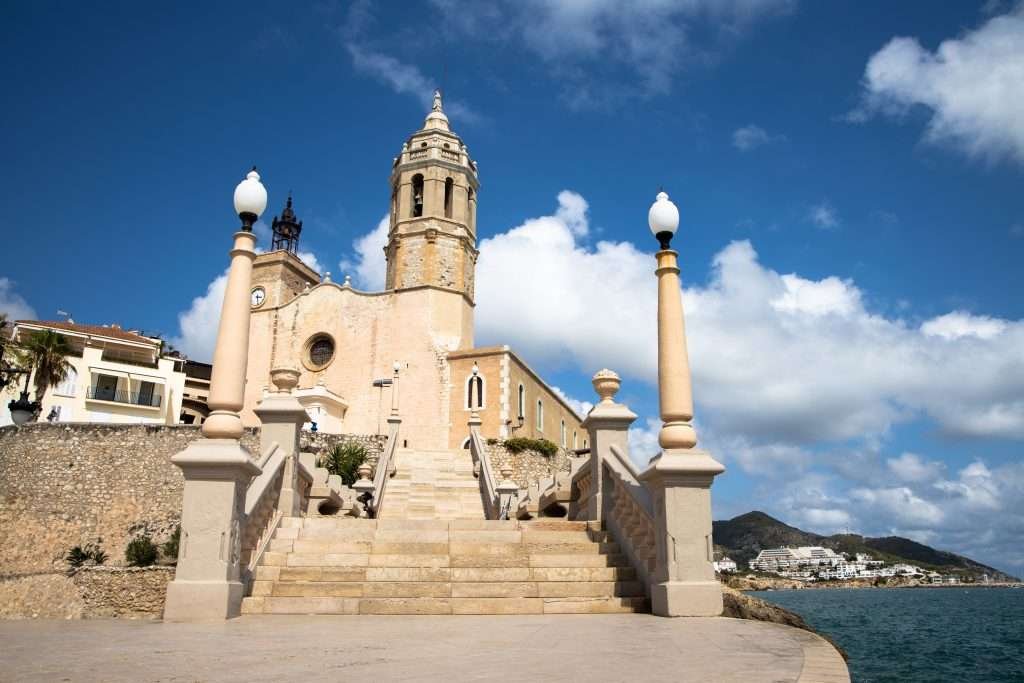

The old town takes about 45 minutes to walk properly, less if you are moving fast. Do it before the late morning crowds arrive from Barcelona.
The Three Museums on the Headland

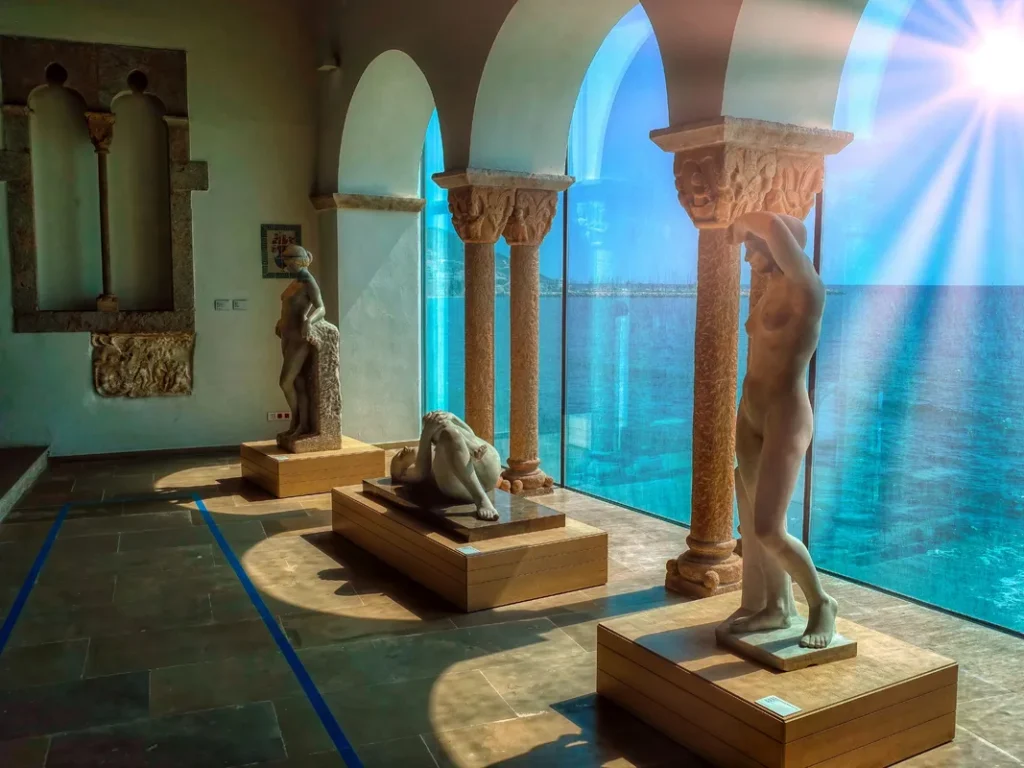
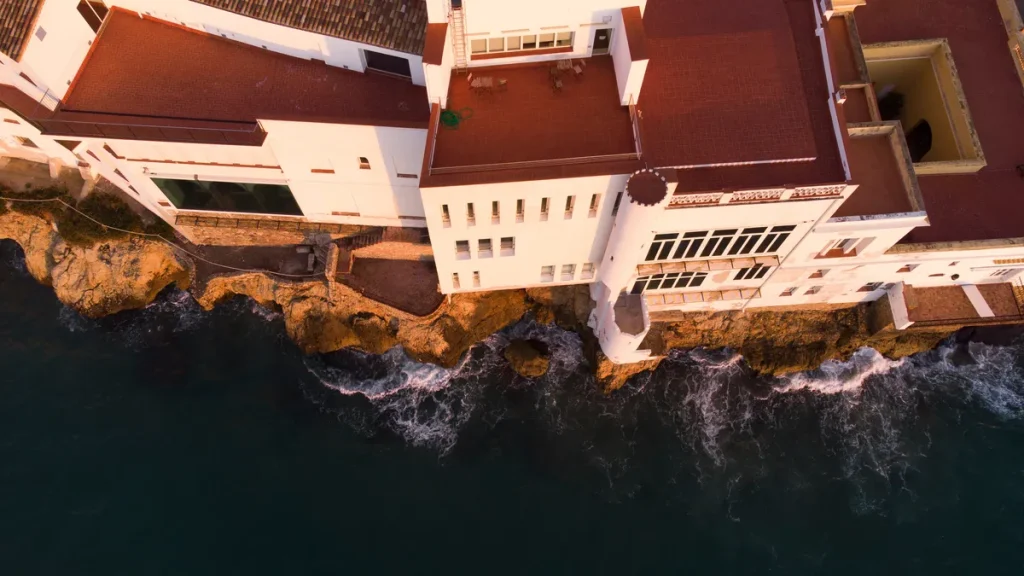
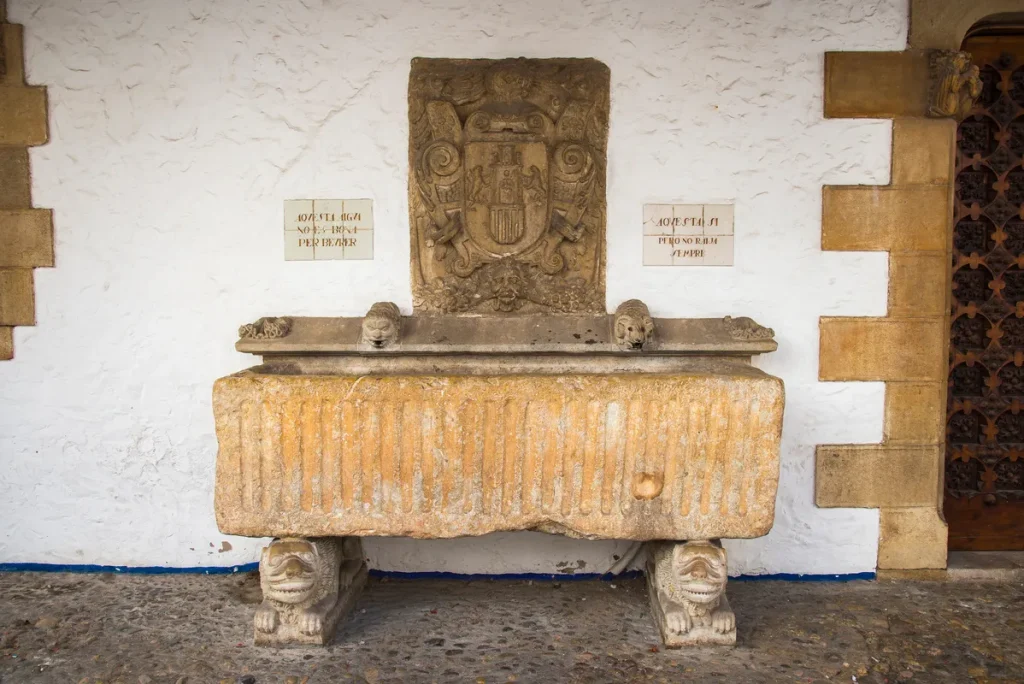
Sitges has three museums clustered together on the seafront headland, all managed under the same institution and covered by a combined ticket of around €10.
Cau Ferrat is the most important. Santiago Rusiñol bought and renovated a pair of fishermen’s houses here in the 1890s and filled them with his art collection, his iron work, and works by El Greco, Picasso, and Ramon Casas. The building itself – tiled floors, Gothic windows overlooking the sea, walls covered floor to ceiling with ceramics and paintings – is as interesting as the collection. Allow 60 to 75 minutes.
Museu Maricel is directly adjacent to Cau Ferrat and houses medieval sculpture, Gothic altarpieces, and Baroque ceramics in a purpose-built palace. The terrace view over the Mediterranean is the best elevated vantage point in Sitges.
Museu Romàntic (Can Llopis) is a 19th-century bourgeois house preserved in its original state – furniture, objects, and a collection of antique dolls that children either love or find deeply unsettling. Ten minutes walk from the headland, slightly apart from the other two.
Go to the museums in the morning before lunch. By early afternoon the combination of heat and post-lunch fatigue makes sustained museum attention difficult.
The Beaches
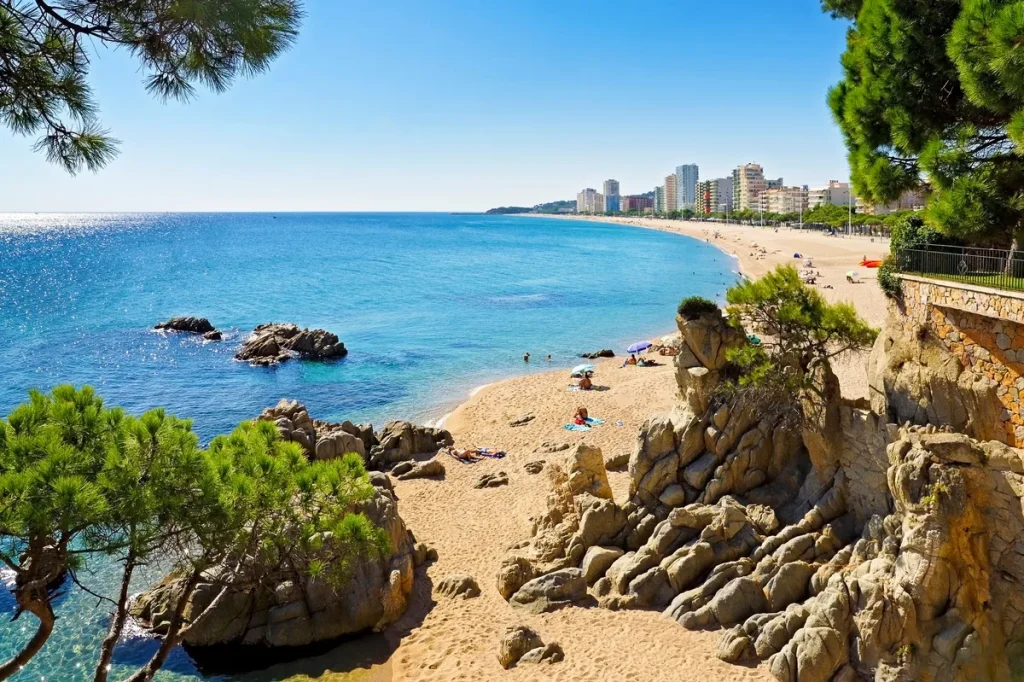

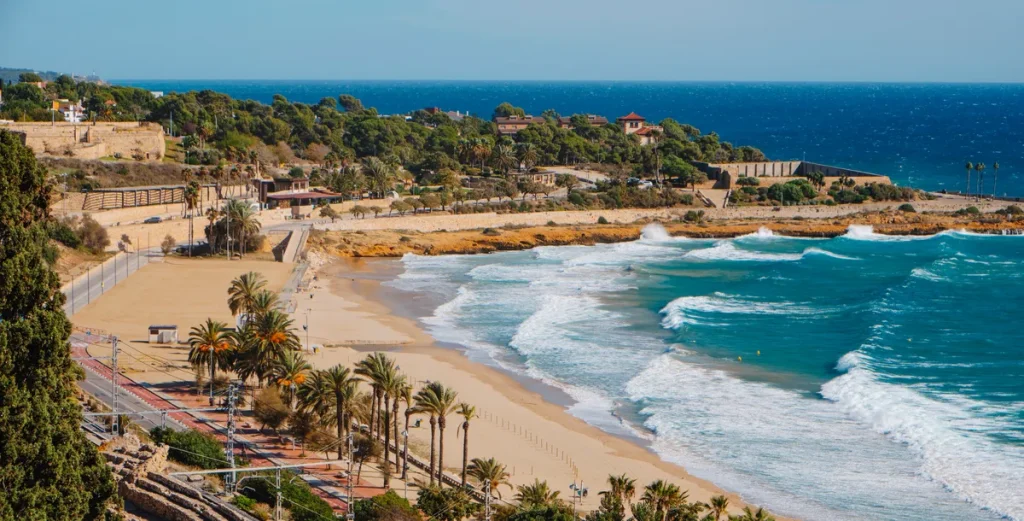
Sitges has 17 beaches spread across 4.5 kilometers of coastline. The main beaches closest to the old town are Platja de la Ribera (directly below the church headland) and Platja d’Aiguadolç to the north. Both are clean, well-serviced, and busy in July and August.
For more space, walk 15 minutes south of the town center to Platja de la Bassa Rodona or continue to Platja de Sant Sebastià – both have fewer people and the same water quality.
Platja del Mort and Platja de l’Home Mort further south toward Garraf are naturist beaches with significantly more space than anything near the town center. Reachable by a 30-minute walk along the coastal path or a short taxi ride.
The sea water in Sitges is clean and the beaches are Blue Flag certified. Water temperature in June reaches around 22°C, July and August around 25°C.
The Garraf Coastal Path
A 40-minute walking trail connects Sitges to the small village of Garraf to the south along a coastal path that passes through the Garraf massif – dry limestone cliffs dropping to the sea, cacti growing out of the rock, and almost no other people if you go on a weekday.
Garraf itself is tiny – a former fishing village with a handful of restaurants serving fresh fish directly on a small shingle beach. The Celler de Garraf (a Gaudí-designed wine cellar, now privately owned but visible from the road) is the architectural curiosity of the walk. Take the train back from Garraf station to Sitges or Barcelona rather than walking back – the train runs on the same R2 Sud line.
Carnival and the International Film Festival
Two events make Sitges specifically worth timing a visit around.
Sitges Carnival runs in February or March (date varies with Easter) and is the most elaborate carnival celebration in Catalonia – five days of parades, costumes, and street parties that transform the town completely. The gay community has played a central role in Sitges Carnival since the 1970s and the event has a specific character distinct from other Spanish carnivals.


Sitges International Fantastic Film Festival runs in October for ten days and focuses on horror, fantasy, and science fiction. The combination of the festival atmosphere and the October light on the sea makes this one of the better times to visit outside summer.

Where to Eat in Sitges
Lunch: The Seafood Rule
Sitges is a fishing port. The correct lunch is seafood. The incorrect lunch is anything on a laminated menu within 50 meters of the main promenade that has photographs of paella.
El Xalet (Carrer Isla de Cuba, 35) is a Modernista villa turned restaurant with a garden terrace. The rice dishes here – arròs a la marinera (seafood rice), fideuà – are the best in Sitges. Around €18 to €24 for a rice dish as a main. Book ahead in summer.

La Salseta (Carrer Sant Pau, 35) is a smaller, more local option focusing on Catalan cooking rather than tourist-facing seafood. The escudella (a traditional Catalan stew) and the grilled fish change with the market. Around €15 to €20 for a main course.

Chiringuito Platjeta directly on the Ribera beach is the casual option – grilled fish, cold beer, plastic chairs, and sand. A grilled sea bass with salad and bread runs around €16 to €20. Not the most refined eating in Sitges but the location is hard to argue with.
The Menú del Día
Most restaurants in Sitges offer a menú del día (set lunch menu) between 1:00 PM and 3:30 PM: two courses, bread, wine or water, and occasionally dessert for €13 to €18. This is the best value eating format in Spain and Sitges is no exception. Walk the streets one block back from the promenade and look for handwritten boards outside – these are the local-facing restaurants rather than the tourist operations on the seafront.
Coffee and Pastry
The best coffee in Sitges is at the small bars in the old town streets rather than the promenade cafes. A cortado (small coffee with a splash of milk) costs €1.50 to €2 standing at the bar. The promenade version of the same coffee costs €3.50 to €4 sitting down. Same rule as everywhere in Spain – stand at the bar, pay half the price.
Pastisseria Ruscalleda (Carrer Major, 18) is the reference point for local pastry – coca de recapte (savory flatbread with vegetables and salt fish), creme catalana, and the full range of Catalan breakfast pastry. Open from 8:00 AM.
What to Avoid
The promenade restaurants at lunch. The seafront strip between the Ribera beach and the old town is lined with tourist-facing restaurants with photo menus and surcharges for the view. The food is not better than one block inland and the prices are 30 to 40 percent higher.
Arriving without a beach towel in July. Sitges beach rentals exist but are expensive relative to bringing your own. The beaches fill up by 11:00 AM on summer weekends – if beach space is the priority, arrive early or go to the further beaches south of the town.
The tourist train. A small road train circles the town for around €6 per person. It covers the same ground you walk in 45 minutes on foot and cuts the experience down to a passive one. Skip it.
Practical Notes
When to go: May, June, September, and October give you warm water, manageable crowds, and the best light for photography. July and August are the peak months – Sitges’s population increases dramatically with Barcelona day-trippers and European summer tourists. The beaches are crowded and restaurants fill without reservations by 1:30 PM.
What to bring: Reusable water bottle – public drinking fountains are available in the main squares. Sun protection if visiting June through September – the reflection off the white buildings intensifies the heat. A light layer for the train journey back in the evening.
Money: Most restaurants and bars in Sitges accept cards. A few of the smaller beach bars and market stalls are cash-only. Bring €20 to €30 in cash as backup.
Accommodation: Sitges works well as a day trip but also as a base for two or three nights if you want beach access without Barcelona prices. Hotel rates in Sitges are lower than comparable options in the city, and the train connection makes Barcelona day trips in reverse straightforward. See Where to Stay in Barcelona for context on how Sitges compares as an alternative base.
Combining Sitges with Other Barcelona Day Trips
Sitges is the easiest and most rewarding of the standard Barcelona day trips for a beach and culture combination. For other options from Barcelona:
Montserrat – the mountain monastery 60 kilometers northwest of Barcelona. Reachable by train and cable car in around 90 minutes total. The rack railway and hiking trails above the monastery are the main draws. Very different from Sitges – no beach, significant altitude, good for hiking and the monastery itself.
Tarragona – Roman provincial capital 100 kilometers south of Barcelona, 55 minutes by regional train. The Roman amphitheatre on the sea, the aqueduct, and the medieval cathedral make it the strongest historical day trip from Barcelona. Worth combining with a half-day in Sitges if you take an early train.
Penedès wine region – the wine-producing area between Barcelona and Sitges produces Cava (Catalan sparkling wine) and still wines. The town of Vilafranca del Penedès is 30 minutes from Barcelona by train. Several cavas offer tastings. A good option if you want to combine the Sitges day with a morning winery visit – Vilafranca is on the same train line, 20 minutes before Sitges.
For the full context of planning your Barcelona trip, see First Time in Barcelona, 3 Days in Barcelona, and Barcelona on a Budget.
A Suggested Day Structure
- 8:45 AM – Board R2 Sud from Barcelona Sants or Passeig de Gràcia
- 9:30 AM – Arrive Sitges, walk to old town
- 9:45 AM – Coffee and pastry at Pastisseria Ruscalleda
- 10:15 AM – Old town walk, Church of Sant Bartomeu terrace
- 11:00 AM – Cau Ferrat and Museu Maricel (combined ticket €10)
- 1:00 PM – Menú del día at a restaurant one block from the promenade
- 2:30 PM – Beach time, Platja de la Ribera or walk south for more space
- 5:00 PM – Coastal walk toward Garraf or explore the further beaches
- 7:30 PM – Evening drink in the old town
- 8:30 PM – Dinner at El Xalet or La Salseta (book ahead)
- 9:45 PM – Train back to Barcelona
Total estimated cost for the day: €60 to €80 per person including transport, museum entry, lunch menu, beach afternoon, and dinner.
How much does the train from Barcelona to Sitges cost?
A single ticket for the R2 Sud line (Zone 4) costs €4.60. If you are staying in Barcelona for several days, use a T-Casual card (Zone 4) to bring the per-journey cost down. Tickets can be bought at the orange Rodalies machines at Sants or Passeig de Gràcia stations.
Which Barcelona station goes to Sitges?
The R2 Sud train departs from Estació de França, Passeig de Gràcia, and Barcelona Sants. Sants is the most reliable hub with the highest frequency of departures, while Passeig de Gràcia is more convenient if you are staying near Eixample.
Is Sitges worth a day trip?
Yes, particularly if you want a beach experience that is cleaner and less chaotic than Barceloneta. Beyond the sand, Sitges offers genuine cultural depth via the Cau Ferrat Museum and a restaurant scene that focuses on fresh, local seafood rather than frozen tourist menus.
How long do you need in Sitges?
Six to seven hours is the ideal duration. This allows enough time for an early morning walk through the old town, a visit to the museums on the headland, a proper two-course menú del día, and two hours of beach time before the late afternoon trains get crowded.
Is Sitges a walkable city?
Completely. The distance from the Sitges train station to the main beach (Platja de la Ribera) is only a seven-minute walk. The old town is compact and pedestrian-only, meaning you will not need any local transport or taxis once you arrive.
Plan Your Trip
- First Time in Barcelona
- 3 Days in Barcelona
- 5 Days in Barcelona
- Where to Stay in Barcelona
- Barcelona on a Budget
- Barcelona with Kids
- Foodies Guide to Barcelona
- One Day in Barcelona
- 25 Best Things to Do in Barcelona
- 25 Best Things to Do in Sitges
Day Trip: Barcelona → Sitges
R2 Sud train, 38-42 min, under €5. Click any stop for timing, cost, and what not to miss.