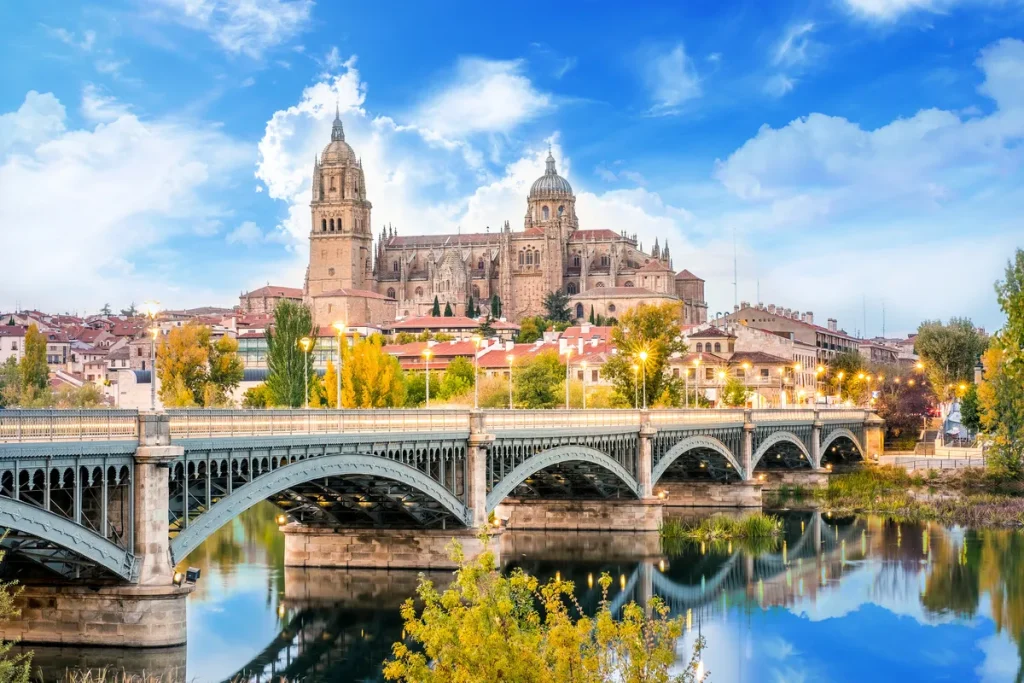
A Madrid to Salamanca day trip is the strongest excursion from the Spanish capital that most visitors overlook, offering a deep dive into Europe’s academic history just 90 minutes away by high-speed train., and rewards the extra distance with a university city of genuine depth: two cathedrals sharing a wall, a Plaza Mayor that most Spanish cities would kill for, and a sandstone color that turns the entire historic center amber in the late afternoon light.
Planning a day trip to Salamanca from Madrid is the best move for travelers who want to escape the crowded tourist trails of Toledo and Segovia
The city has been a university town since 1218 – one of the oldest universities in Europe – and it still feels like one. There are around 30,000 students in a city of 140,000 permanent residents. The bars are good, the food is unpretentious, and the monuments are walkable from the train station in 20 minutes.
This guide covers the logistics, what to prioritize, where to eat, and how to structure the day to get the most out of the trip without rushing.
Getting from Madrid to Salamanca
By Train
The Avant high-speed train from Madrid Chamartín station to Salamanca runs in around 1 hour 30 minutes. This is the correct option for a day trip – fast, central, and predictable.
Ticket cost: Around €20 to €35 each way depending on how far in advance you book. Book on renfe.com at least one to two weeks ahead for the best fares. Walk-up prices on the day run significantly higher.
Departures: Multiple services run daily. For a full day trip, target the 7:30 AM to 9:00 AM departure window from Madrid Chamartín. This puts you in Salamanca between 9:00 and 10:30 AM, giving you a full day before the last convenient return train in the evening.
Salamanca station is around 1.5 kilometers from the Plaza Mayor – a 20-minute walk or a short taxi ride (€6 to €8). The walk is flat and straightforward; take it if you are not carrying luggage.
Return trains: The last Avant service back to Madrid runs around 9:00 PM to 10:00 PM depending on the day. Check the specific schedule when you book your outbound ticket.
By Bus
ALSA buses run from Madrid Estación Sur to Salamanca in around 2 hours 30 minutes to 3 hours depending on stops. Cost around €10 to €20 each way. The bus is cheaper but significantly slower and drops you further from the center. The train is the correct choice for a day trip where time is the constraint.
By Car
The A-50 motorway connects Madrid to Salamanca in around 2 hours without traffic. Parking in the historic center is limited – use the car parks near the bus station or the Ronda de Sancti-Spíritus ring road. Driving is viable but offers no advantage over the train for a single day trip.
What to Do in Salamanca
Plaza Mayor: Start Here
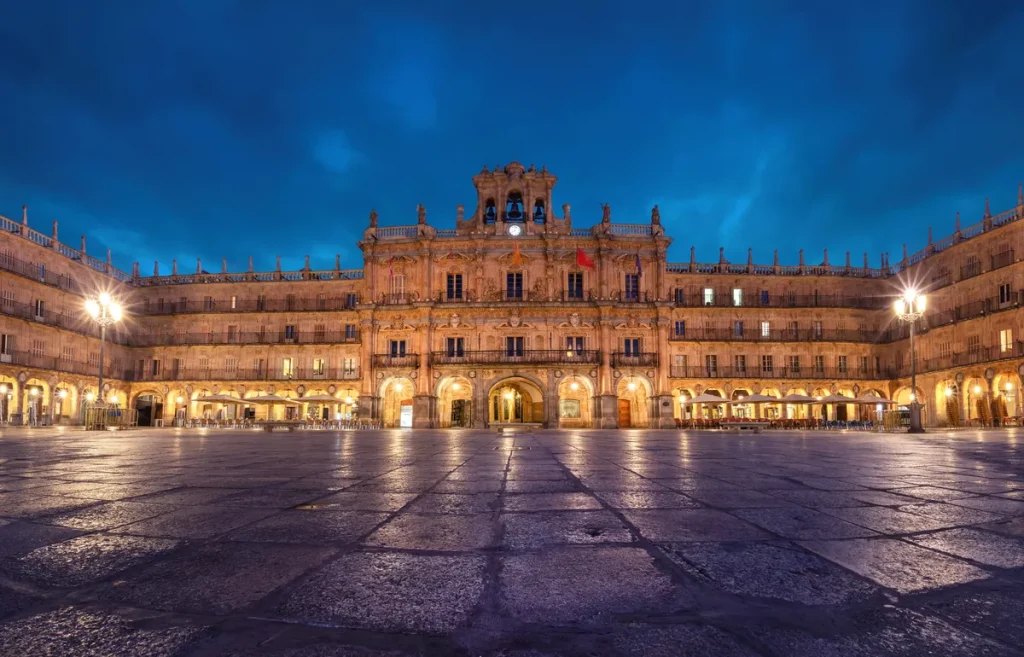
Every visit to Salamanca begins at the Plaza Mayor. Built between 1729 and 1756 by the architect Alberto Churriguera, it is consistently ranked among the most beautiful squares in Spain – a fully enclosed baroque rectangle of warm sandstone arcades on all four sides, with medallion portraits of Spanish monarchs and historical figures set into the arches.
Arrive early and walk the full perimeter before the café terraces fill up. The square functions as the social center of the city throughout the day – university students, pensioners, tourists, and pigeons all occupying it simultaneously without apparent conflict.
Do not have coffee on the terrace. The cafes inside the arcades charge €4 to €6 for a coffee with a terrace surcharge. Walk one block in any direction and pay €1.50. The square is free to look at from any angle.
The Ayuntamiento (Town Hall) occupies the north side of the square. The Pabellón Real on the south side leads through to the Calle Mayor and the rest of the historic center.
The Two Cathedrals
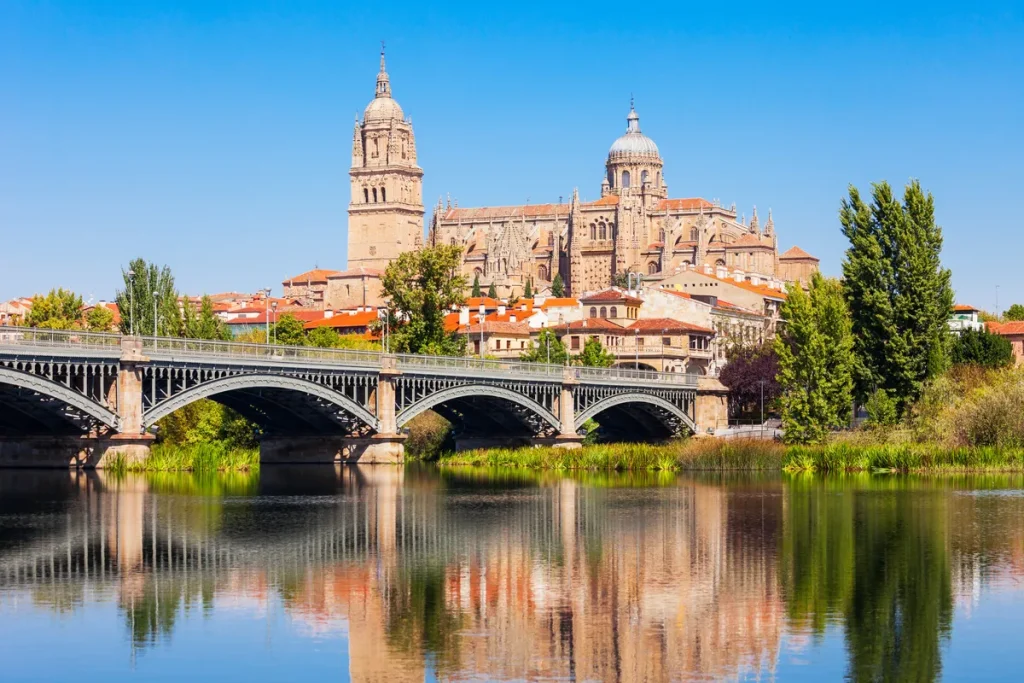
Salamanca has two cathedrals sharing a wall and a partial floor plan – the Old Cathedral (Catedral Vieja, 12th century Romanesque) and the New Cathedral (Catedral Nueva, 16th to 18th century Gothic and Baroque). They are the most important architectural monuments in the city and should take 90 minutes combined.
New Cathedral (entry free for the nave, €6 for the tower climb – Ieronimus experience): The Gothic facade is the first thing you see approaching from the Plaza Mayor – an elaborate stone carving covering the entire west front. Inside, the scale is significant: 105 meters long, 33 meters high at the nave. The Ieronimus tower climb accesses the roof terraces and bell towers with views over the city and the Tormes river valley. Book the Ieronimus timed entry online – it sells out on peak days.
Hidden detail: On the New Cathedral’s Puerta de Ramos facade, a carved astronaut and a dragon eating an ice cream cone were added during a 1992 restoration. Finding them without a guide takes about five minutes of careful looking at the lower right section of the doorway – a genuinely unexpected thing to find on a 16th-century cathedral facade.
Old Cathedral (entry €6, or included in combined ticket with Ieronimus for around €10): Entered through the New Cathedral’s interior. The Romanesque nave is lower, darker, and more intimate than its neighbor. The altarpiece of 53 painted panels depicting the life of Christ and the Virgin, painted by Nicolás Florentino in 1445, covers the entire apse wall. The Torre del Gallo (Cock Tower) – a Byzantine-influenced dome above the crossing – is the architectural signature of the building and visible from across the city.
The cloister of the Old Cathedral contains the Chapel of Santa Bárbara where university students historically sat with their feet touching the tomb of a bishop the night before their doctoral examinations, hoping for good luck. The custom gave rise to the Spanish expression vítor – the red painted letters still visible on university building facades around the city, painted in bull’s blood to celebrate doctoral graduates.
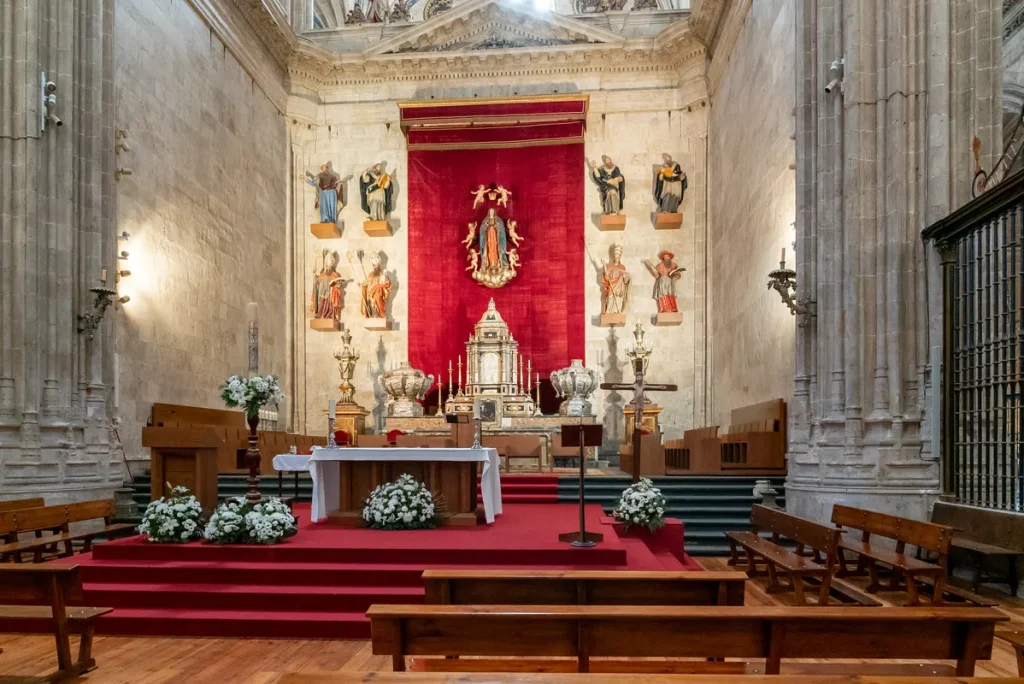
The University of Salamanca
The University of Salamanca facade (Patio de las Escuelas, free to enter the courtyard, €10 for the interior including the lecture halls) is the most important example of Plateresque architecture in Spain – a style named for its resemblance to silversmith’s work, covering an entire facade in intricate carved medallions, coats of arms, and decorative motifs.
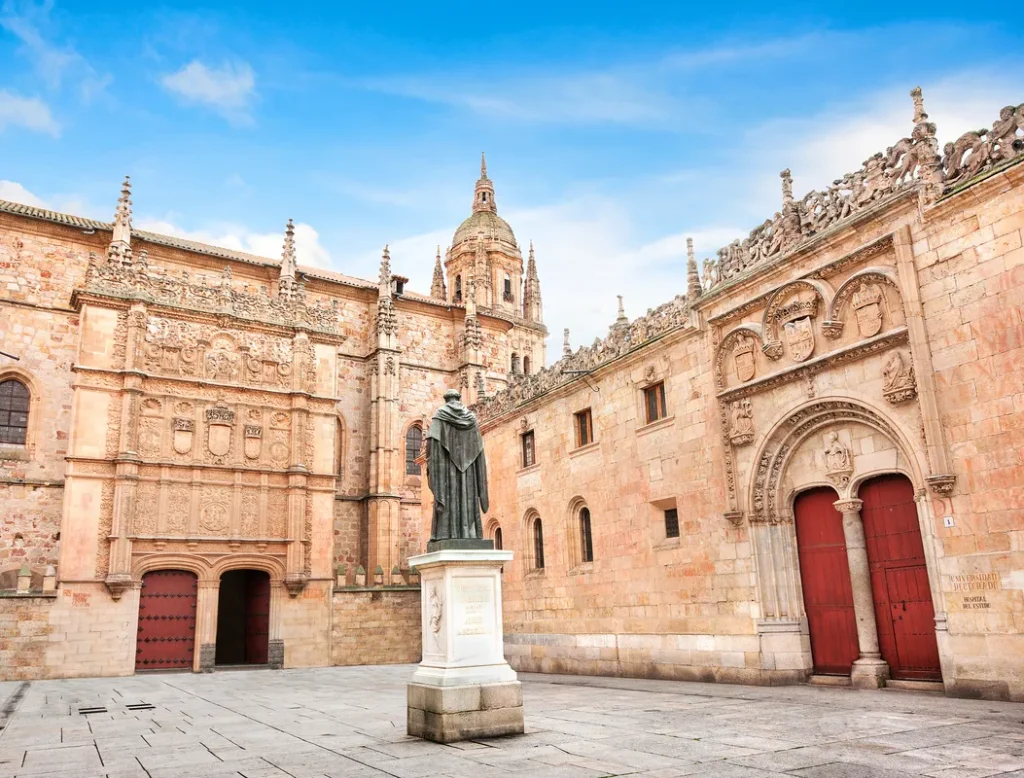
The famous challenge: find the carved frog sitting on a skull somewhere on the facade without help. Most people locate it in under five minutes once they know it is there – it sits on one of the skulls atop a pillar on the right side. Legend says students who find it will pass their exams. The university has been issuing this legend since at least the 18th century.
The university library (included in the interior ticket) contains manuscripts, early printed books, and a ceiling fresco worth seeing. The lecture hall of Fray Luis de León – where the theologian and poet returned to his chair after five years of imprisonment by the Inquisition and reportedly began his lecture with “As we were saying yesterday…” (Decíamos ayer…) – is the most historically resonant room in the building.
Casa de las Conchas
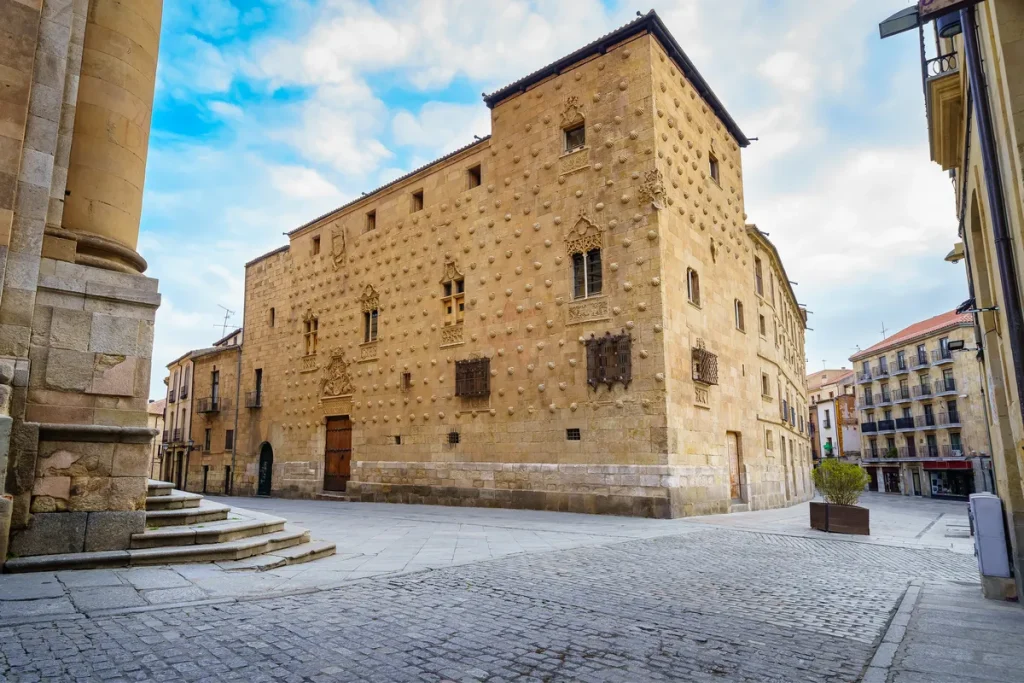
A 15th-century palace covered in 300 carved stone shells (the symbol of the pilgrimage route to Santiago de Compostela) on its exterior walls. Now a public library. Free to enter the courtyard and ground floor reading rooms. The Gothic windows on the upper floor, seen from the street through the shell-studded walls, are worth two minutes of looking up.
A block from the university, easy to combine with the same morning walk.
The Huerto de Calixto y Melibea
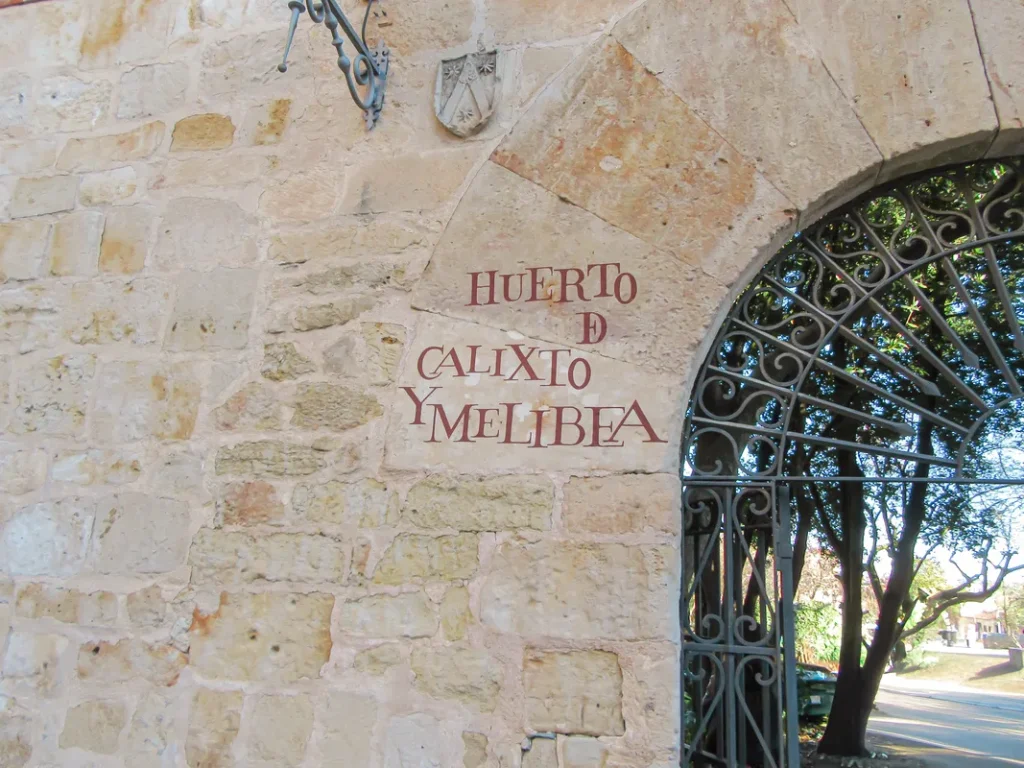
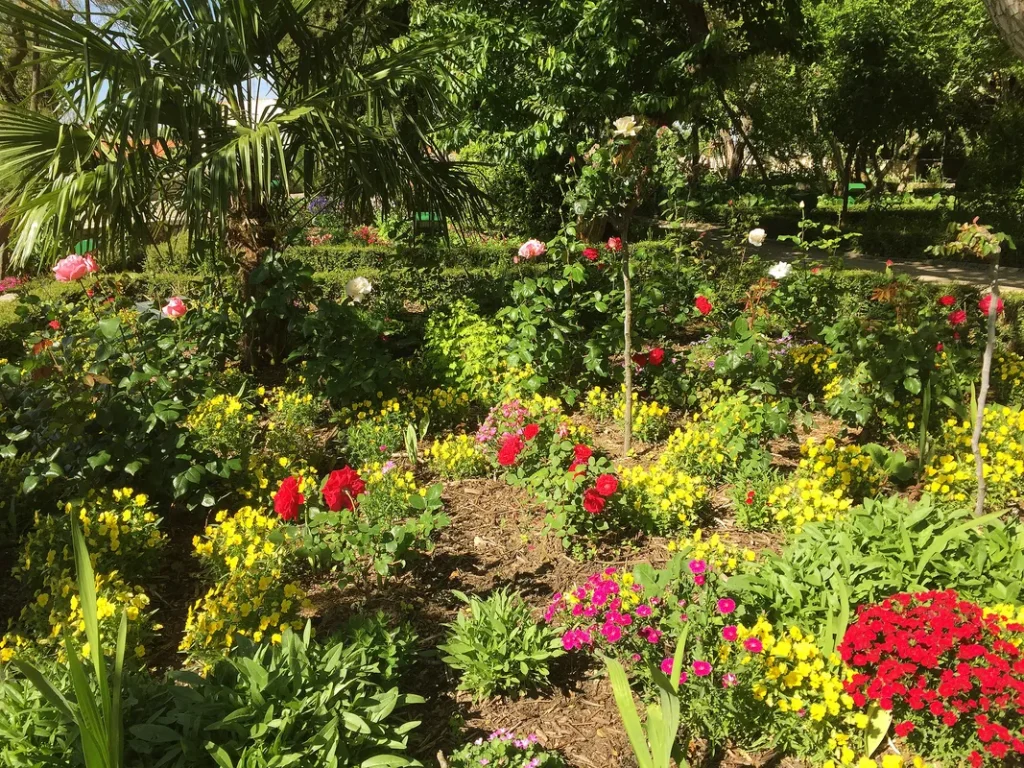
A small walled garden built on the site of the fictional garden from La Celestina – the 15th-century Spanish novel that predates Don Quixote as the first great work of Spanish secular literature. Free entry. The garden has views over the Tormes river and the Roman bridge below.
Not a major sight, but a useful quiet pause between the cathedrals and lunch – 20 minutes maximum and genuinely pleasant.
The Roman Bridge
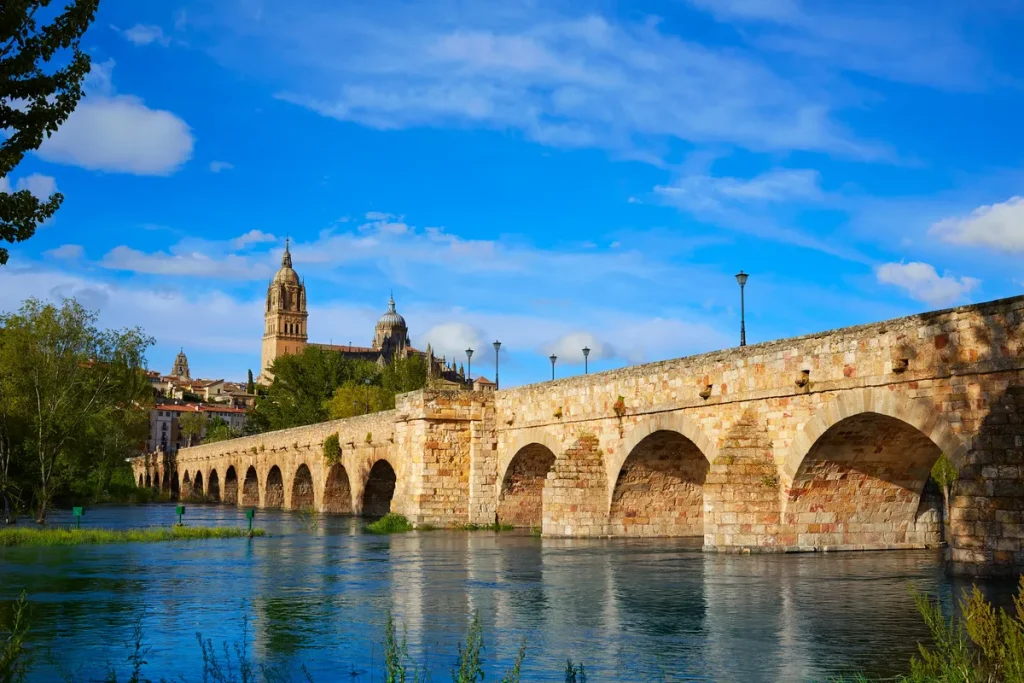
The Puente Romano spanning the Tormes river at the south edge of the historic center is partly original Roman construction (the downstream side) and partly medieval reconstruction. It is 15 minutes on foot from the cathedrals and gives the best exterior view of the Old Cathedral’s Torre del Gallo from a distance.
Walk across it, turn around, and look back at the city. The combination of the sandstone buildings, the cathedral towers, and the river in the foreground is the photograph most people associate with Salamanca. Best in the late afternoon when the stone turns from pale yellow to deep amber in the low light.
Where to Eat in Salamanca
The Hornazo
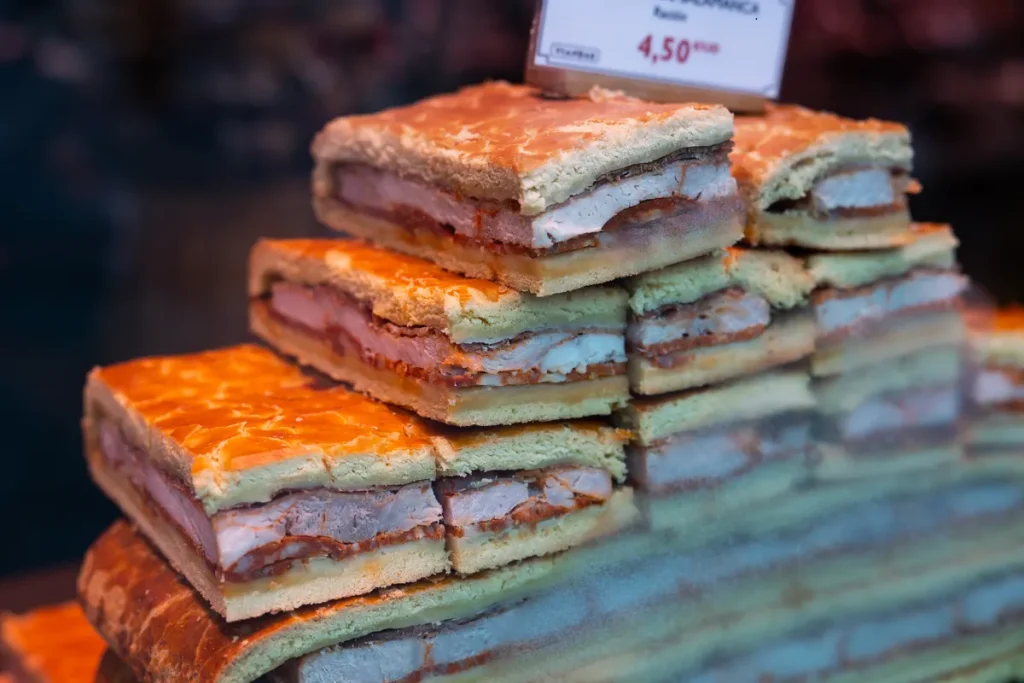
The specific food of Salamanca province is hornazo – a stuffed bread filled with chorizo, loin of pork, and hard-boiled eggs, baked in a pastry crust. It is dense, filling, and specifically Salamantine in a way that most Spanish regional food is not.
Buy hornazo from a panadería (bakery) or a charcutería in the market rather than from a tourist-facing restaurant. A portion costs €3 to €5 and is a complete lunch if you are eating between sightseeing.
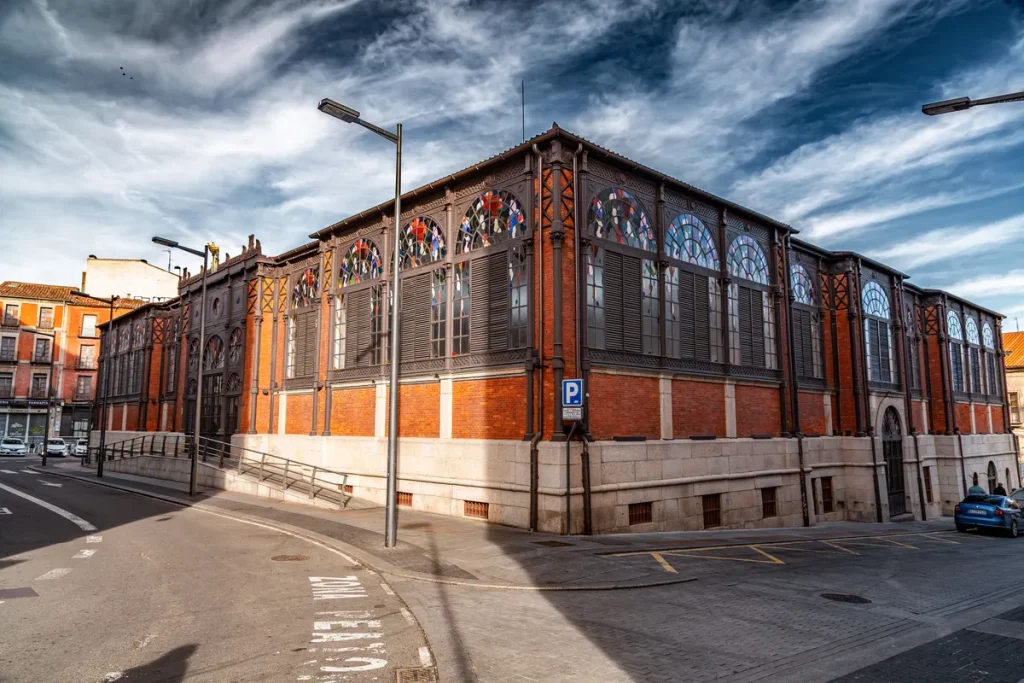
Mercado Central de Abastos (Plaza del Mercado, five minutes from the Plaza Mayor) is the main city market – open weekday mornings. Prepared food stalls, fresh produce, and the full range of Salamantine charcuterie including hornazo, morcilla, and local cheese.
Sit-Down Lunch
Restaurante Bambú (Calle Compañía, 6, near the university) is consistently well-regarded for Castilian cooking at reasonable prices. The menú del día runs €13 to €16 for two courses with wine or water – the roast lamb and the suckling pig (cochinillo) appear regularly and represent the regional cooking well.
Mesón Las Conchas (Rúa Mayor, 16, directly facing the Casa de las Conchas) has a more tourist-facing location but a genuine kitchen. The Castilian roast dishes and the stuffed peppers are the better choices over the generic pasta options that appear for visitors who do not know what to order.
El Pecado (Plaza del Poeta Iglesias, 12) is the more serious option if you want a full lunch rather than a set menu – creative Castilian cooking, around €20 to €30 per person for two courses and wine. Book ahead even for a weekday lunch.
Coffee and the Student Bar Culture
Salamanca’s bar culture is shaped by 30,000 university students. The bars around Calle Varillas, Calle Melendez, and the streets between the Plaza Mayor and the university serve cheap drinks, pinchos (small bread-topped snacks, €1.50 to €2 each), and function as the social infrastructure of the city.
A café con leche at any bar in the university quarter costs €1.50. Order it standing at the bar. The same coffee on a Plaza Mayor terrace costs €4 to €6.
What to Avoid
The Plaza Mayor tourist cafes: Already covered above. The price premium for sitting in the square is real and the coffee is not better.
Rushing the cathedrals: The combination of the Old and New Cathedral with the Ieronimus tower takes 90 minutes minimum if you are moving at a reasonable pace. Most day-trippers give it 30 minutes and miss the Old Cathedral entirely – which is the more historically interesting of the two.
Going only for the plaza and leaving: Some visitors do the Plaza Mayor, one photo of the university facade, and take the next train back. Salamanca at that pace does not justify the journey. Give it six to seven hours minimum.
Best Time to Visit
October to May is the strongest window. The university is in session, the city has its working population rather than just tourists, and the temperatures are comfortable for walking – Salamanca sits at 800 meters altitude and can be significantly cooler than Madrid in winter, which is not a problem but worth knowing for layering.
July and August: The university empties and the city loses some of its character. Still worth visiting for the monuments, but the student energy that defines the place is absent. Temperatures can exceed 38°C.
Late afternoon light in any season: The Salamanca sandstone – piedra franca quarried locally – has an unusually warm color that intensifies dramatically in the hour before sunset. If you can time the Roman bridge walk and the Plaza Mayor for 6:00 PM to 8:00 PM, the city looks completely different from the midday version.
Combining Salamanca with Other Madrid Day Trips
Salamanca is not easily combined with other day trips in a single day – the 90-minute train journey each way means it works best as a standalone. For Madrid day trips that are closer and faster, see Day Trips from Madrid for the full options including Toledo and Segovia.
If you are building a longer Spain itinerary, Salamanca also works as an overnight stop on the way to or from the Portuguese border – the city is 80 kilometers from Portugal and on the natural route between Madrid and Porto.
A Suggested Day Structure
- 8:00 AM – Avant train from Madrid Chamartín
- 9:30 AM – Arrive Salamanca, walk to Plaza Mayor
- 9:45 AM – Coffee at a bar one block from the plaza (€1.50)
- 10:00 AM – Walk the Plaza Mayor perimeter, photograph the facades
- 10:30 AM – University of Salamanca facade and courtyard (free), find the frog
- 11:00 AM – University interior including library and lecture halls (€10)
- 12:00 PM – New Cathedral facade and nave (free), Ieronimus tower if booked (€6)
- 1:00 PM – Old Cathedral (€6), altarpiece, Chapel of Santa Bárbara
- 2:00 PM – Menú del día lunch at Restaurante Bambú (€14)
- 3:30 PM – Casa de las Conchas (free), Huerto de Calixto y Melibea (free)
- 4:30 PM – Walk to the Roman bridge, view back to the city
- 5:30 PM – Return to Plaza Mayor area, pintxos and a drink in the university quarter (€8)
- 7:00 PM – Late afternoon light walk, cathedral exterior photography
- 8:30 PM – Train back to Madrid Chamartín
Total estimated cost: €60 to €80 per person including return train tickets, museum entries, lunch, and afternoon drinks.
Plan Your Trip
- First Time in Madrid
- 3 Days in Madrid
- 5 Days in Madrid
- Day Trips from Madrid
- Madrid on a Budget
- What to Eat in Madrid
- Madrid with Kids
- 1 Day in Madrid
How long is the train from Madrid to Salamanca?
The high-speed Renfe Avant train takes approximately 1 hour and 30 minutes from Madrid Chamartín station. There are slower regional trains that can take up to 3 hours, so always ensure you are booking the Avant service for a day trip to maximize your time in the city.
Is one day enough to see Salamanca?
Yes, one day is sufficient to see the major historic sites because the center is compact and walkable. You can easily visit the Plaza Mayor, both Cathedrals, and the University within a 6 to 7-hour window. However, to see the sandstone buildings turn amber at sunset, you should plan to take a return train after 8:00 PM.
Where is the hidden astronaut on the Salamanca Cathedral?
The astronaut is located on the Puerta de Ramos (the north entrance) of the New Cathedral, facing the Palacio de Anaya. Look at the right-hand side of the ornate stone carvings on the lower level; it was added by stonecutters during a 1992 restoration as a modern signature.
How much does a day trip to Salamanca from Madrid cost?
A pragmatic budget for a day trip to Salamanca from Madrid is between €75 and €90. This includes a return high-speed train ticket (€40-€50), a mid-range menú del día lunch (€15-€20), and entrance fees for the University and Cathedral towers (€15-€20).
What is the “Frog on the Skull” at the University of Salamanca?
The “frog” is a small stone carving on the Plateresque facade of the University of Salamanca. Located on the right-hand pillar on top of one of three skulls, local legend states that students who find the frog without help will pass their exams and have good luck. It has become the unofficial symbol of the city.
Day Trip: Madrid → Salamanca
1 hr 30 min by Avant train. Click any stop for timing, price, and what not to miss.