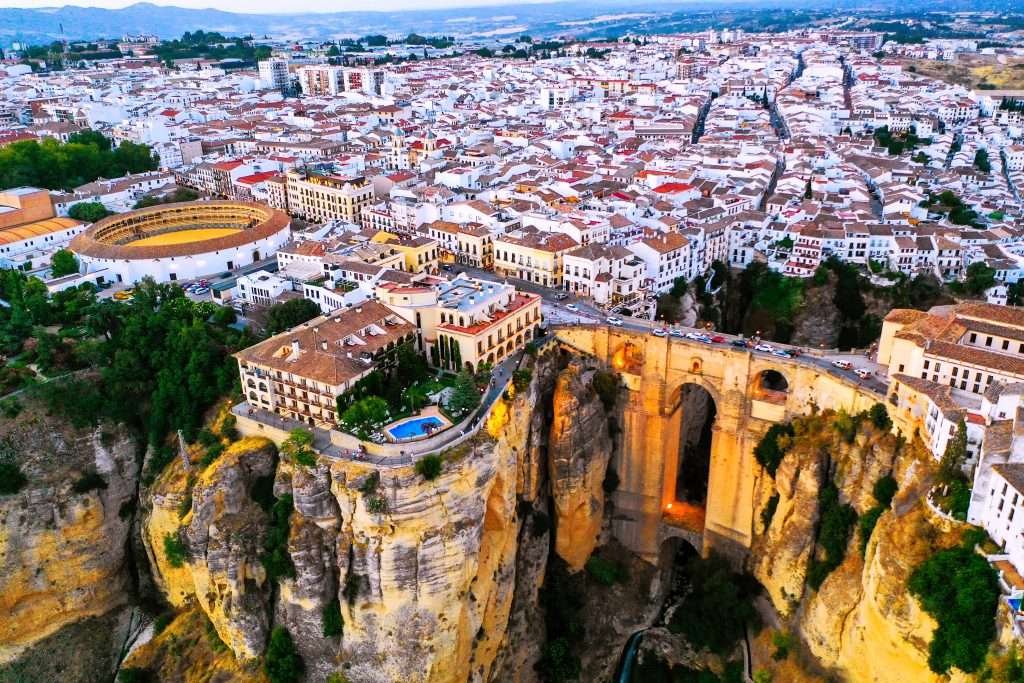
A day trip to Ronda from Malaga covers 100 km inland into the Serranía de Ronda mountains, taking 1h20m by car or 1h45m to 2h by bus, with a return cost of €25 to €30 by bus or €35 to €45 in fuel and tolls by car. The town sits 750 m above sea level and is split by the El Tajo gorge, a 100 m chasm crossed by the Puente Nuevo, an 18th-century stone bridge that took 34 years to build. Budget €40 to €60 per person for food, the Bullring entry (€9), and the Mine of the Moorish King (€8). Leave Malaga by 8:30 AM. The Costa del Sol tour buses hit Ronda around 11:00 AM and the Puente Nuevo viewpoints become unusable for photos until 4 PM.
Drive the A-357 west out of Malaga past Cártama. The road tracks the Guadalhorce river through olive groves for the first 40 km, then climbs hard once you hit the A-367 at Ardales. From there it’s 50 minutes of switchbacks through limestone ridges and white villages. By the time you crest the final pass and see Ronda’s white houses balanced on the cliff edge, you’ve gained 750 m of elevation and left the coast’s climate behind. Temperatures in the mountains run 5 to 8°C cooler than Malaga year-round.
How to get from Malaga to Ronda
Three transit options, ranked by what most travelers actually want.
Driving (the best option)
- Route: A-357 west from Malaga, then A-367 north past Ardales into Ronda
- Time: 1h20m, 100 km
- Cost: Car rental from €25 to €40 per day in Malaga, plus roughly €12 to €15 in fuel for the return trip
- Parking: Use Parking Plaza del Socorro or Parking Martinez Astein in the new town (€1.50 to €2 per hour, around €18 for a full day). Do not drive into the old town. The ZTL cameras issue automatic fines of €100+ to non-resident vehicles
(The most scenic stop on the route is the Caminito del Rey turnoff near Ardales. If you want to combine, leave Malaga by 6:45 AM and book the Caminito for the 9:30 AM slot, then continue to Ronda for lunch.)
Bus (the budget option)
The Damas/Avanza bus runs from Malaga’s Estación de Autobuses (next to Maria Zambrano train station) directly to Ronda.
- Time: 1h45m on direct services, 2h to 2h15m on routes stopping in Cártama and Coín
- Cost: €13 to €15 one way, €25 to €28 round trip
- First departure: Around 7:00 AM weekdays, 9:00 AM weekends
- Last return: Typically 19:00. Check schedules at avanzabus.com before you go
- Booking: Buy in advance during peak season (April to June, September to October). Walk-up tickets exist but seats fill up
(The Ronda bus station is in El Mercadillo, an 8-minute flat walk to the Puente Nuevo via Plaza del Socorro.)
Train (the slow option)
There’s no direct train. You’d take the Avant from Malaga Maria Zambrano to Antequera-Santa Ana, then transfer to the regional Media Distancia line down to Ronda. Total time runs 2h to 2h30m with the transfer wait, and the cost (€20 to €30 round trip) isn’t cheaper than the bus. Skip the train unless you’re already routing through Antequera.
What to do in Ronda in one day
Ronda is split into two halves by the gorge. El Mercadillo (north side) holds the bus station, the Bullring, the main shopping street, and most hotels and restaurants. La Ciudad (south side) is the Moorish old town: quieter, whitewashed, with the palaces and cliff-edge gardens. You’ll cross between them three or four times during the day.
9:30 AM: Start at the Puente Nuevo
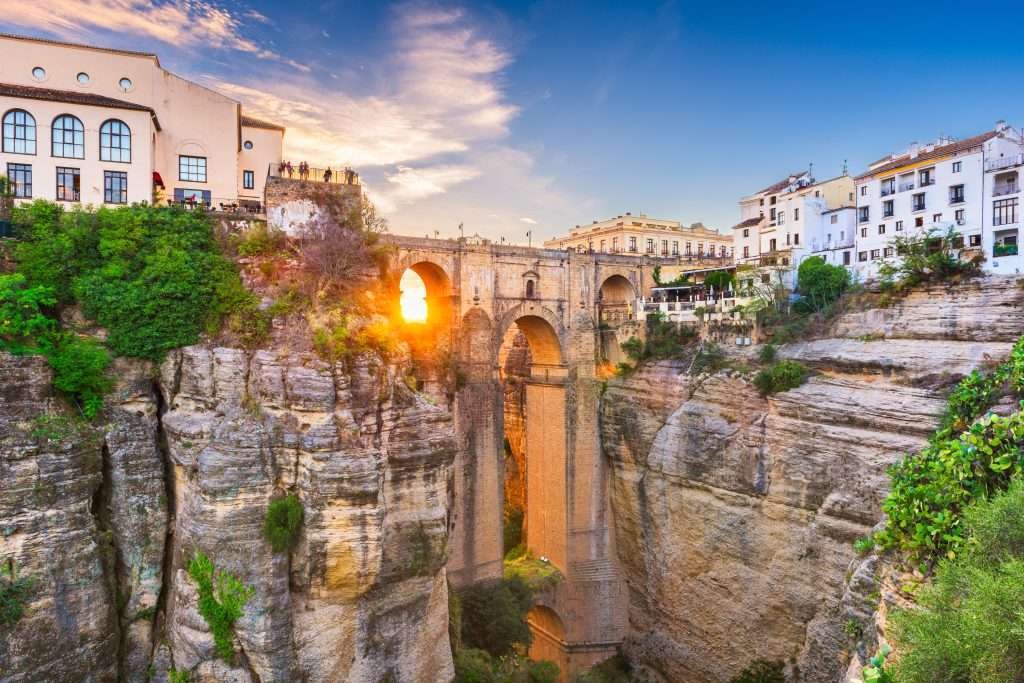
The Puente Nuevo was completed in 1793 after 34 years of construction. The chamber above the central arch served as a prison during the Spanish Civil War, and prisoners were thrown from its windows into the gorge below. Today the chamber holds a small museum (€2.50, opens at 10:00 AM) detailing the construction.
The bridge itself is free to walk across. The best photos are from the western side. Stand on the small terrace outside Parador de Ronda for the angle most people miss. By 11:00 AM this spot is full of tour groups, so hit it before 10:30.
10:15 AM: Plaza de Toros (the Bullring)

Two minutes from the bridge in El Mercadillo. The Real Maestranza de Caballería de Ronda, built in 1785, is one of the oldest bullrings in Spain.
- Entry: €9, includes audio guide and access to the small museum
- Hours: 10:00 AM to 8:00 PM April to September, 10:00 AM to 6:00 PM October to March
- What you actually see: The golden sandstone arena (the sand on the ring is local and specific to bullfights), the royal box, the chapel where matadors prayed before fights, plus a museum of historic firearms, royal saddlery from the Andalusian school of horsemanship, and bullfighting costumes from the 18th century onwards
- Time needed: 45 to 60 minutes
(If bullfighting bothers you ethically, the museum sections on Spanish royal cavalry traditions and historic firearms are worth the entry on their own. The bullring is a working monument, not an active fighting venue except for one fight a year during the Feria de Pedro Romero in September.)
11:30 AM: Cross into La Ciudad
Walk back across the Puente Nuevo into the old town. The streets here, with Calle Armiñán as the main artery, are narrow, cobblestoned, and 70% emptier than the new town side. This is where you slow down.
Palacio de Mondragón sits 6 minutes’ walk south. €4 entry, open 10:00 AM to 6:00 PM. The building was the Moorish kings’ residence and now houses the municipal museum. The real reason to enter: the two inner courtyards with Mudéjar tilework, and the Renaissance gardens built on the cliff edge with a 750 m drop view across the valley. Time needed: 30 to 40 minutes.
1:00 PM: Casa del Rey Moro and the Mine
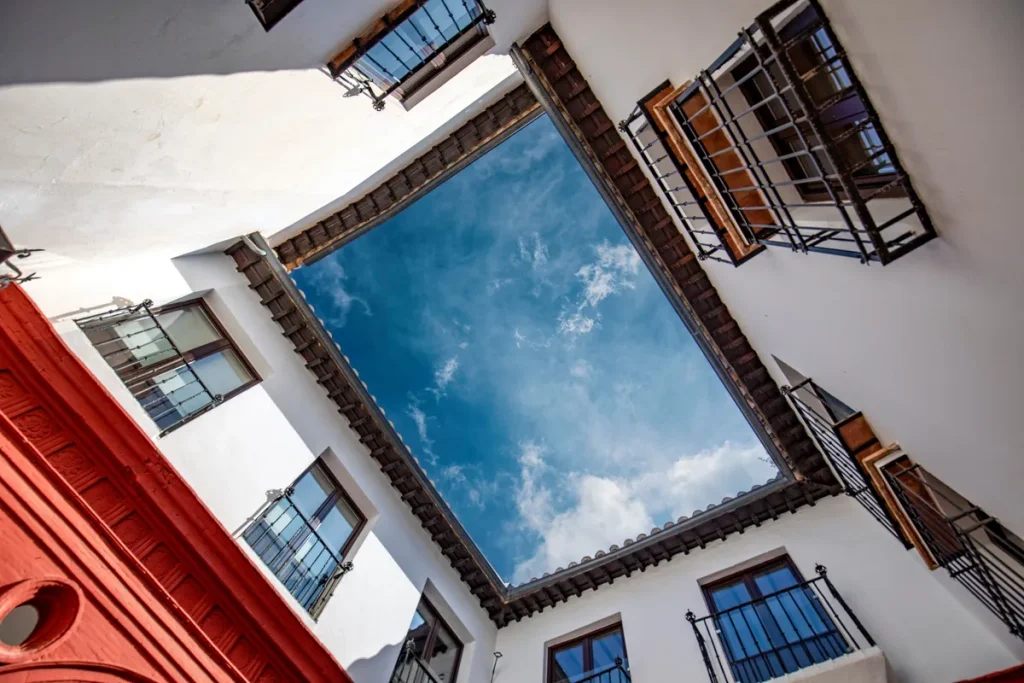
The Casa del Rey Moro (“House of the Moorish King”) is 4 minutes’ walk further into La Ciudad. The palace itself has been under restoration for years and is partially closed. The reason to come is La Mina, a 14th-century water mine carved into the cliff face.
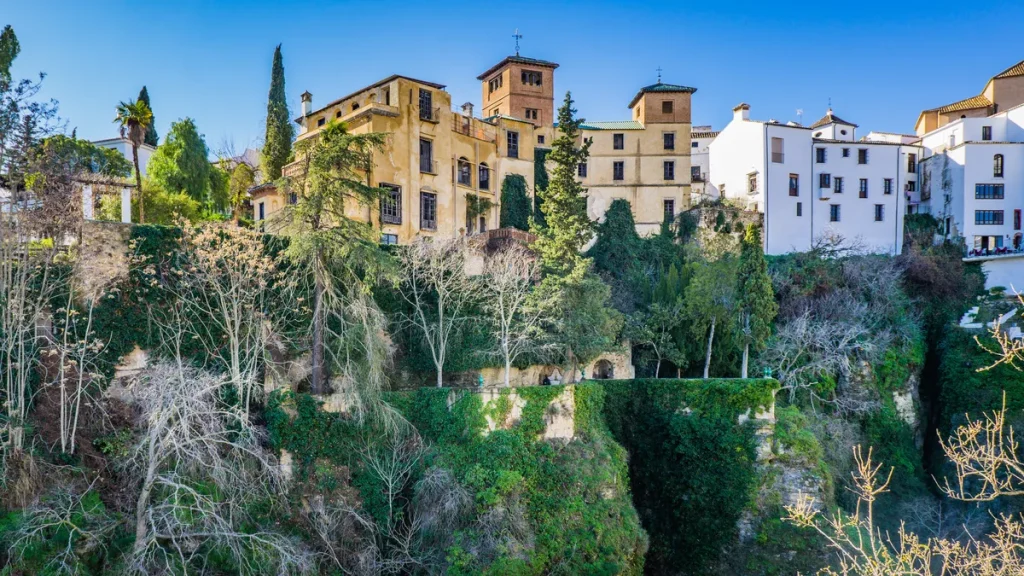
- Entry: €8 (includes the gardens designed by Forestier in 1912)
- Hours: 10:00 AM to 7:00 PM (last entry 6:00 PM)
- What you do: Descend 231 steps cut into solid limestone, all the way down to the riverbed at the bottom of the gorge. During the Christian-Muslim wars of the 14th century, Christian slaves were chained to these steps and forced to pass waterskins up from the river to the fortress above during sieges.
- The reality check: The steps are damp, uneven, and slick. The climb back up is genuinely hard. Expect 15 to 20 minutes of steady vertical effort. Skip this if you have knee issues, vertigo, or asthma. Wear actual shoes with grip.
(The temperature inside the mine drops to about 14 to 16°C year-round, which is a relief in August and a shock in January. Bring a layer.)
Where to eat in Ronda
Ronda’s food is mountain food, not coastal food. The kitchen here works with Iberian pork, wild game, mountain mushrooms, and sheep and goat cheeses from the surrounding white villages.
What to order
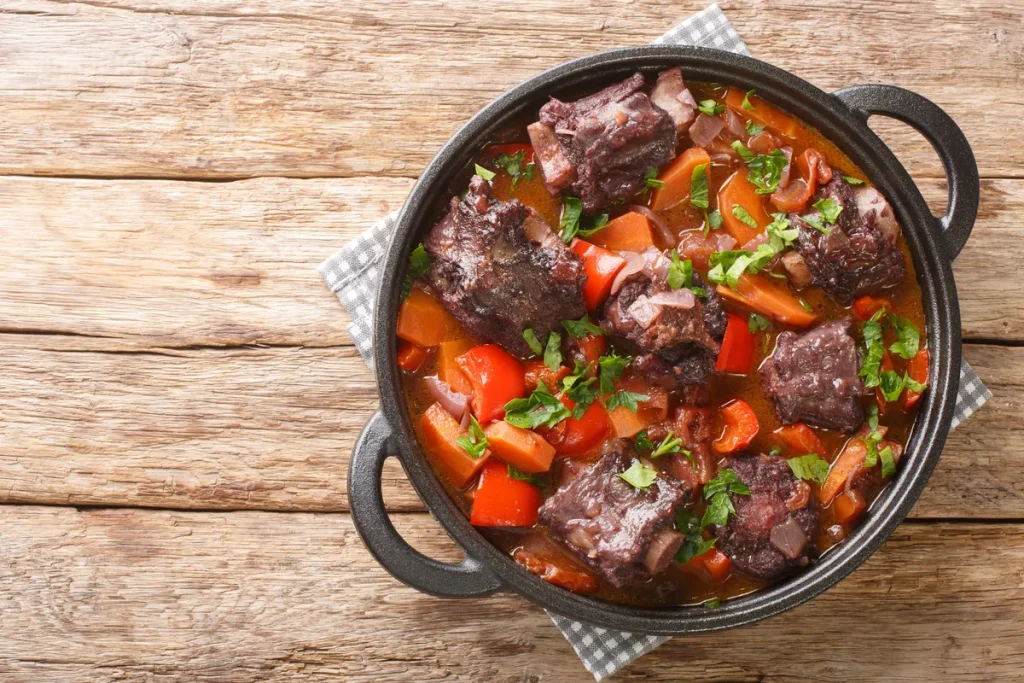
- Rabo de toro: oxtail braised in local red wine for 4 to 6 hours until the meat falls off the bone. The signature dish of the region, tied to the bullfighting tradition. Expect €16 to €22 for a proper portion
- Payoyo cheese: a sharp, nutty cheese made from indigenous Payoya goats and Merina Grazalema sheep in the white villages around Ronda. Order a tabla (board) with cured meats for €12 to €18
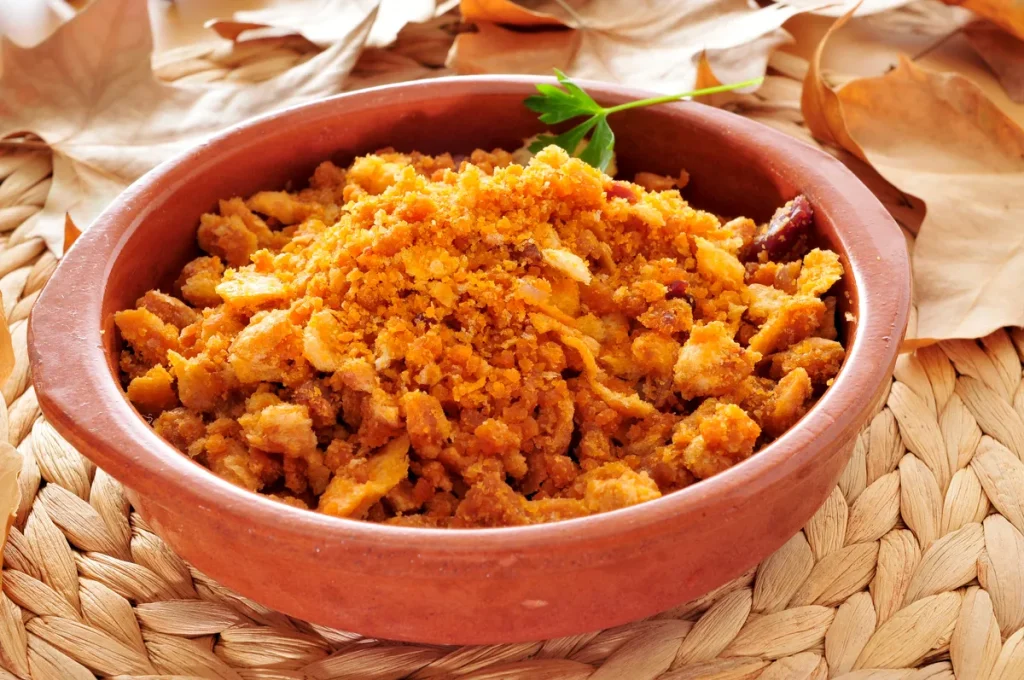
- Migas: a peasant dish of fried breadcrumbs with chorizo, pork belly, and grapes. Heavy. Order it once and split it
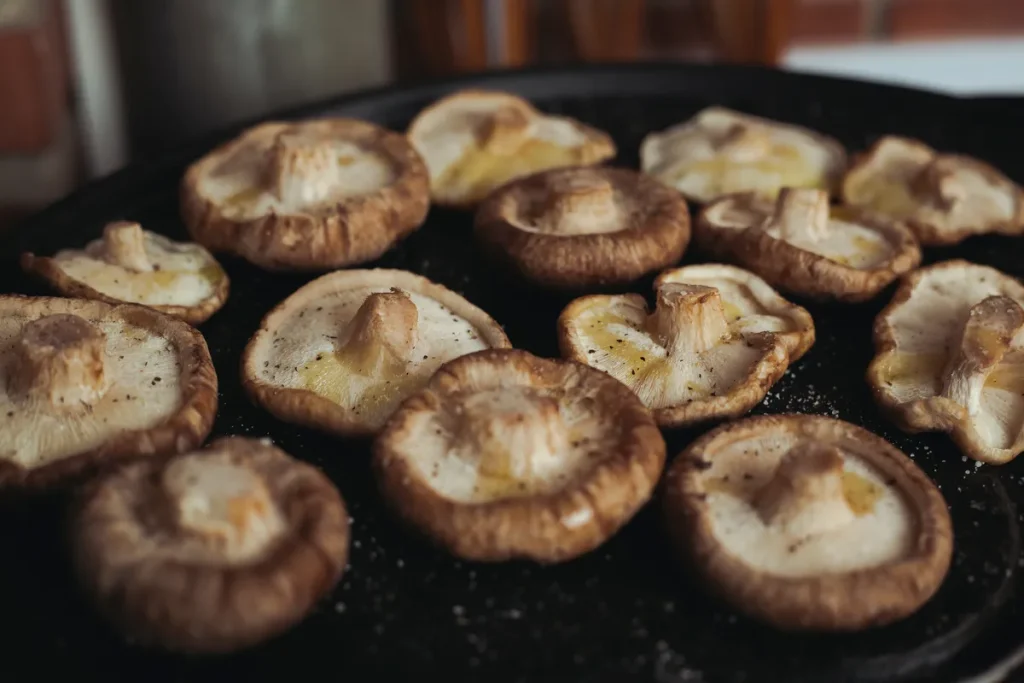
- Setas a la plancha: grilled wild mushrooms in autumn (October to November is peak season)
- Local wine: Ronda’s D.O. produces some of Spain’s most interesting cool-climate reds. Ask for a Petit Verdot or a Syrah from Descalzos Viejos or Cortijo Los Aguilares
Where to actually eat
Skip: Any restaurant on Paseo de Blas Infante or directly facing the bridge with menus in 6+ languages. These do microwave food and charge €4 for bread you didn’t order.
Go to:
- Bodega San Francisco: just outside the old Almocábar gate, southern edge of La Ciudad. Loud, local, packed at 2 PM. Tapas €3 to €5, plates €9 to €15. Order the secreto ibérico and the goat cheese with tomato jam
- Tragatá: run by chef Benito Gómez (his Bardal restaurant has 2 Michelin stars; Tragatá is his accessible tapas concept). On Calle Nueva in El Mercadillo. Lunch tapas €4 to €9
- Casa María: in La Ciudad, behind the Mondragón palace. Family-run, no English menu, oxtail done properly. €25 to €35 per person
(Reservations matter for Tragatá and Casa María on weekends. Walk in at 1:45 PM at Bodega San Francisco and you’ll usually get a stool at the bar.)
The view most day-trippers miss
Almost everyone photographs the Puente Nuevo from the top. The iconic shot, the one that sells the postcards, with the full bridge spanning the canyon and the houses balancing on the cliffs above, is taken from the bottom of the gorge, looking up.
How to get the bottom-up view
- Trailhead: Start at Plaza de María Auxiliadora on the southern (La Ciudad) edge of town
- Trail name: Camino de los Molinos
- Walking time: 12 to 15 minutes down to the main viewpoint
- Difficulty: Easy on the descent, moderate on the way up (roughly 80 m of elevation gain on the return)
- Best light: Late afternoon, 5:00 to 6:30 PM in summer, 3:30 to 5:00 PM in winter. The sun hits the bridge facade directly
The trail is a packed-dirt path with some rocky sections. You’ll pass abandoned mill ruins from the 17th and 18th centuries that gave the trail its name (molinos means mills, powered by the Guadalevín river). Most tour groups never come down here because their schedule doesn’t allow 90 minutes off the main route. That’s why this is where you get your one good photo.
(For an even quieter angle, continue past the main viewpoint for another 8 minutes along the trail to a wooden railing where almost nobody goes.)
Combining Ronda with another stop
If you have a rental car, you can pair Ronda with one of these. Without a car, the public bus connections don’t work in a single day.
Setenil de las Bodegas
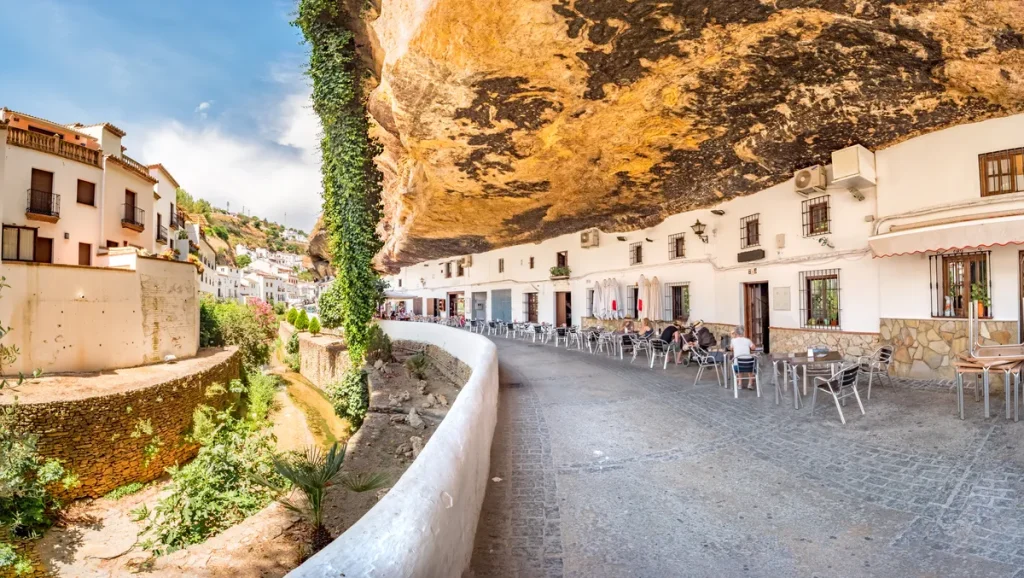
15 km north of Ronda, 25-minute drive. A white village famous for houses built directly under massive limestone overhangs. The rock forms the ceiling of the bar terraces along Calle Cuevas del Sol. Spend 90 minutes here, eat one tapa with a beer (€2.50 to €3.50), take photos, leave. Best as a morning stop on the way to Ronda.
Caminito del Rey
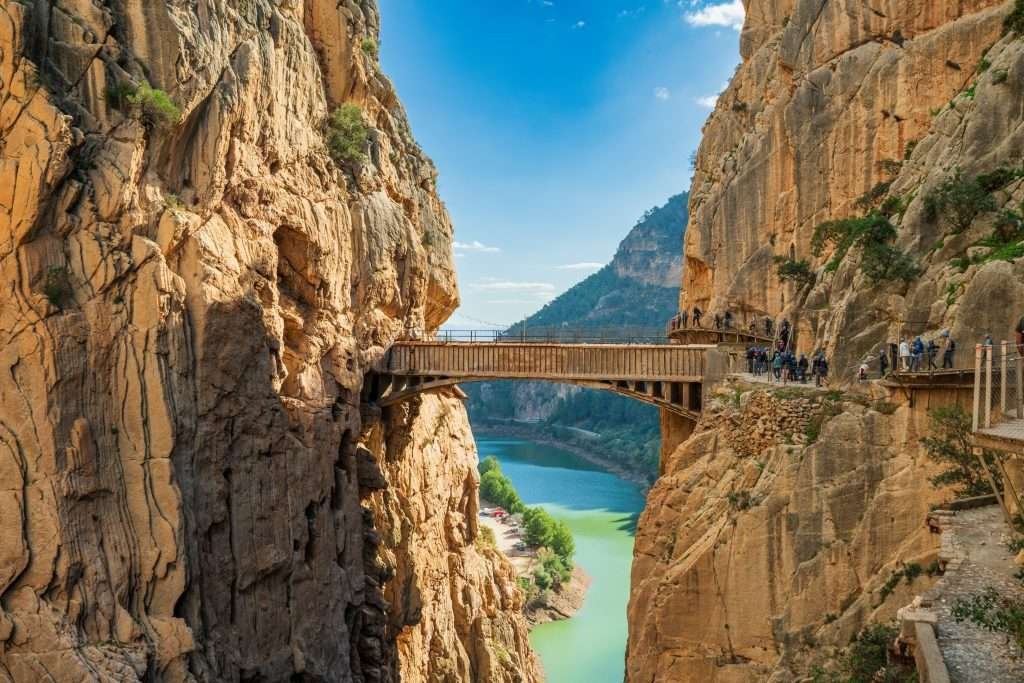
Already mentioned above. The walkway pinned to the cliff face above the Gaitanes gorge. €10 entry, requires advance booking (caminitodelrey.es), one-way 7.7 km hike taking 3 to 4 hours. Combine only if you start at 6:45 AM from Malaga, book the 9:30 AM slot at Caminito, and reach Ronda by 1:30 PM for late lunch. Tight but doable.
Pueblos Blancos route
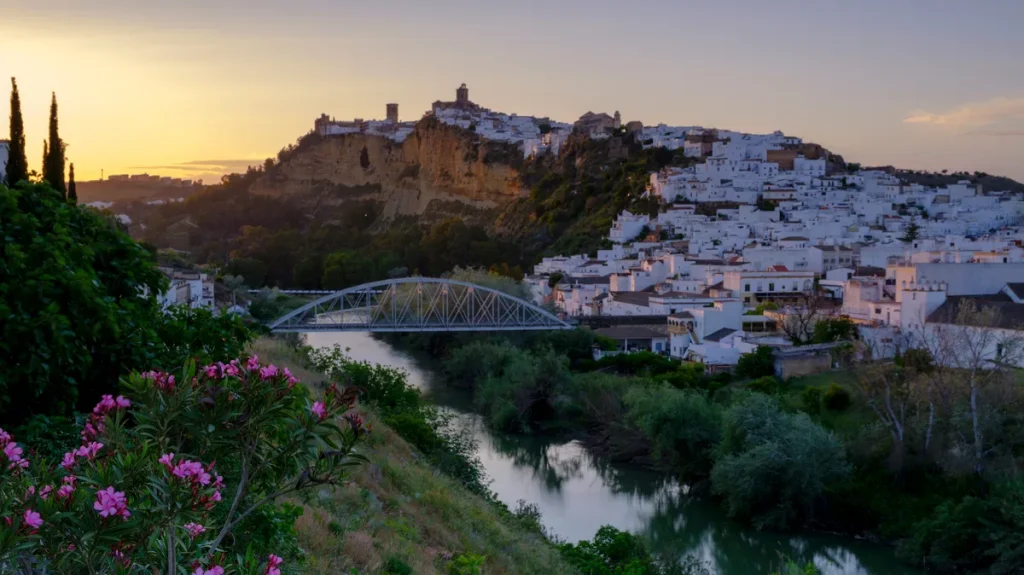
Ronda sits at the heart of the white villages region. Grazalema, Zahara de la Sierra, and Olvera are all within 35 to 45 minutes. Pick one. Grazalema is the prettiest, Zahara has the dramatic reservoir view, Olvera has the hilltop castle. You can’t do all three plus Ronda in a day without rushing every stop.
Practical scams and traps to know about
- The bird trick: Around the Puente Nuevo, people will try to put a hawk, owl, or parrot on your shoulder and then demand €10 to €20 for the “photo.” Walk past. Don’t make eye contact, don’t reach out, don’t engage. They lose interest fast
- Menu del día near the bridge: Restaurants on Paseo Blas Infante advertise €12 to €15 menus. The food is pre-frozen, the bread costs €3 extra, the water is €4, and the terraza surcharge adds 15 to 20%. Walk 4 streets away and pay €15 total for better food
- The shoe problem: Limestone polished by centuries of foot traffic plus damp mine steps equals slippery. Wear sneakers or hiking shoes with grip. Smooth-soled flats, polished leather, and flip-flops are a recipe for a twisted ankle on the Mine of the Moorish King steps
When to go
- April to June: Best overall. Wildflowers on the surrounding hills, temperatures 18 to 25°C, manageable crowds
- July to August: Hot (32 to 36°C midday) and packed with cruise excursions. Go only if you’re already in the region and can start at 8 AM
- September to October: Excellent. Harvest season, mushroom season, fewer tour groups after mid-September
- November to March: Quietest, coldest. Mountain nights drop to 2 to 5°C and occasional snow at higher elevations. The gorge views are dramatic with morning mist. Pack a proper jacket.
Plan Your Trip
- Seville on a Budget
- What to Eat in Seville
- Things to Do in Seville
- Where to Stay in Seville
- 3 Days in Seville
- First Time in Granada
- Granada on a Budget
- What to Eat in Granada
- Where to Stay in Granada
- Best Things to Do in Granada
- 5 Best Day Trips from Granada
- First Time in Malaga
- Things to Do in Malaga
- Malaga on a Budget
- Granada on a Budget
- What to Eat in Malaga
- Where to Stay in Malaga
- 3 Days in Malaga
- 5 Best Day Trips from Malaga
- The Alhambra Survival Guide
How long does a day trip to Ronda from Malaga take?
A full day trip takes 11-13 hours door-to-door. Leave Malaga by 8:30 AM and you’ll be back by 7:30-9:00 PM depending on transit choice. Driving gives you the most flexibility — expect 1h20m each way plus 6-7 hours in Ronda. The bus adds 30-50 minutes of total transit time but eliminates parking logistics.
Is Ronda worth visiting from Malaga as a day trip?
Ronda is worth the day trip if you want to see the most dramatic single landscape in Andalusia and you don’t have time to overnight. The Puente Nuevo, the Mine of the Moorish King, and the bottom-of-the-gorge view are unique to Ronda and not replicable elsewhere in the region. Skip the day trip if it’s July-August and you’re not willing to leave Malaga before 8:00 AM — the heat and crowds will eat your day.
Can you visit Ronda from Malaga without a car?
Yes, the direct bus from Malaga’s Estación de Autobuses to Ronda takes 1h45m and runs multiple times daily for €13-15 one way. The bus station in Ronda is an 8-minute walk to the Puente Nuevo. The only thing you lose without a car is the option to combine Ronda with Setenil de las Bodegas or the Caminito del Rey in the same day.
What is the best time to arrive in Ronda to avoid crowds?
Arrive at the Puente Nuevo by 10:00 AM at the latest. Cruise-ship excursion buses from Marbella, Torremolinos, and Fuengirola dump passengers between 11:00 AM and 12:30 PM, and the bridge viewpoints become unusable for photos until those groups leave around 3:30 PM. Visiting in the late afternoon (4:30 PM onwards) is the other quiet window — particularly good if you’re staying overnight.
Do I need to book the Mine of the Moorish King in advance?
No advance booking is needed for the Mine of the Moorish King — tickets are sold at the entrance for €8 and the site rarely runs out of capacity. The only exception is during Semana Santa (Holy Week) and the Feria de Pedro Romero in early September, when arriving before 11 AM or after 4 PM avoids the queue.
Day Trip to Ronda from Malaga — 2026 Guide
100km inland, 750m up, split by a 100m gorge. Leave Malaga by 8:30 AM. The tour buses hit Ronda at 11:00 AM. Click any pin.