
A day trip to Cinque Terre from Milan takes approximately 3 hours each way by Intercity train from Milano Centrale, with direct services to Monterosso al Mare running roughly every 2 hours. The return ticket costs €40-60. Add the Cinque Terre Treno MS Card (€18-32 depending on season), lunch, and a cone of fried fish, and you’re looking at €100-120 per person for the day. The trip is worth it – the five villages on the Ligurian cliff coast are unlike anywhere else in Italy – but it requires more planning than a typical Italian day trip. In 2026, the Blue Trail has partial one-way restrictions on peak weekends, flip-flops on hiking trails carry a fine, and the Via dell’Amore between Riomaggiore and Manarola requires a reservation slot as part of the Cinque Terre Card. This guide covers the train logistics, which villages to prioritize, what to eat, and how to structure the day to make it back to Milan without a midnight connection.
If Milan is your base, the best things to do in Milan covers what’s worth a full city day before you do the coast. For keeping the overall trip cost manageable, Milan on a budget has the city cost breakdown so you can plan the Cinque Terre day accordingly.
Getting from Milan to Cinque Terre
The direct Intercity (the right train)
From Milano Centrale, the Trenitalia Intercity (IC) runs direct to Monterosso al Mare – the northernmost of the five villages – in approximately 3 hours. This is the train to book. You arrive in a village, not at a transfer station, and you avoid the Genova Santa Margherita change that adds 30-45 minutes.
The 07:10 IC from Milano Centrale arrives Monterosso around 10:15 AM – early enough to hike the Monterosso-Vernazza section before the midday heat and cruise ship crowds peak. Check the Trenitalia app or website for the current schedule; IC trains on this route run several times daily but the early morning slot is the one to secure.
Book in advance, particularly for weekends between May and September. IC trains on this route sell out, and the price increases closer to departure.
Return: The last IC back to Milan departs Monterosso around 6:30-7:00 PM depending on the day; regional trains with a Levanto or Genoa connection run later. Check the return schedule before you leave Milan so you have a fixed deadline.
If you miss the direct train
Take any fast train toward Genova or La Spezia and transfer to the Cinque Terre Express – a regional shuttle running between Levanto (north of Monterosso) and La Spezia (south of Riomaggiore), stopping at all five villages every 15-20 minutes. Levanto to Riomaggiore end-to-end takes about 20 minutes by train. The Cinque Terre Express is also what you use to move between villages during the day.
The 2026 Cinque Terre Card
Download the Trenitalia app and buy the Cinque Terre Treno MS Card before you travel. This covers:
- Unlimited Cinque Terre Express train travel between Levanto and La Spezia
- Access to all hiking trails including the Blue Trail sections
- Via dell’Amore entry (reservation slot required – book this within the card system)
- Public toilets (otherwise €1 each, relevant after a long hike)
Cost: €18 in low season, up to €32 in peak July-August. There are also train-only versions (€16-29) if you’re not hiking.
Validate your digital ticket before boarding your first Cinque Terre Express train. Ligurian rail inspectors are consistent and the fine for an unvalidated ticket is significant.
The Five Villages: What Each One Is Actually For
Monterosso al Mare
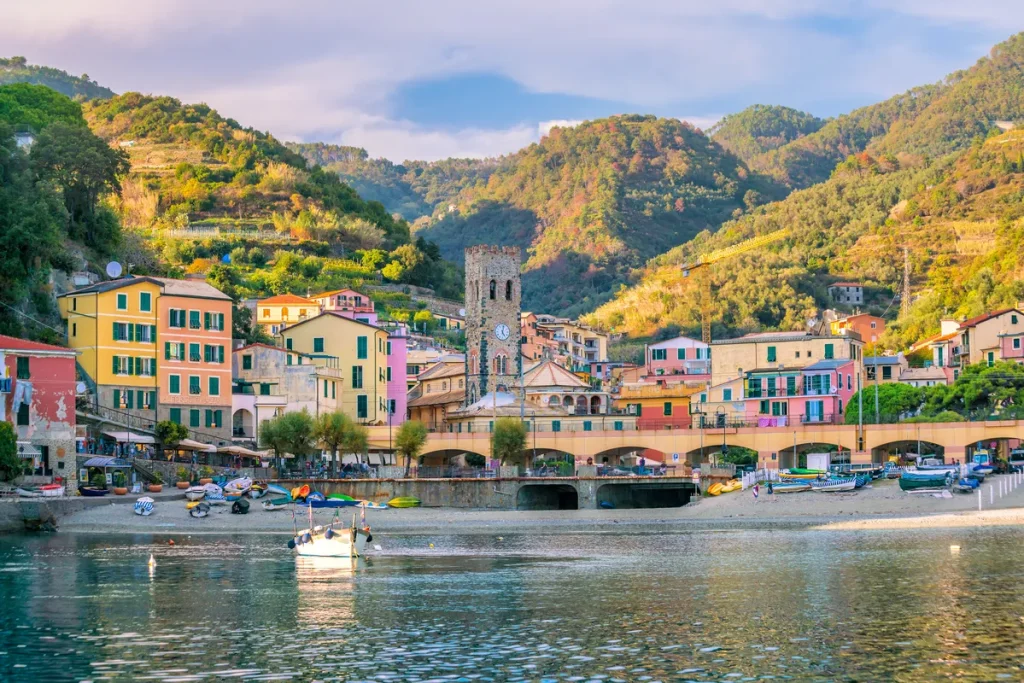
Monterosso is the only village with a proper beach – about 300 meters of sand in the new town (Fegina) and a smaller strip in the old town. The beach has sun lounger and umbrella rentals (€15-20) and is where swimmers and families tend to spend the day. The old town and new town are separated by a short pedestrian tunnel through the headland.
As the northernmost village and the most direct arrival from Milan, Monterosso is the natural starting point. It’s larger and more resort-oriented than the other four – more hotels, more restaurants, a proper supermarket. Use it to fuel up before hiking south.
Best use: Breakfast, first espresso, start of the Monterosso-Vernazza hike, or an afternoon swim if you’re not hiking.
Vernazza
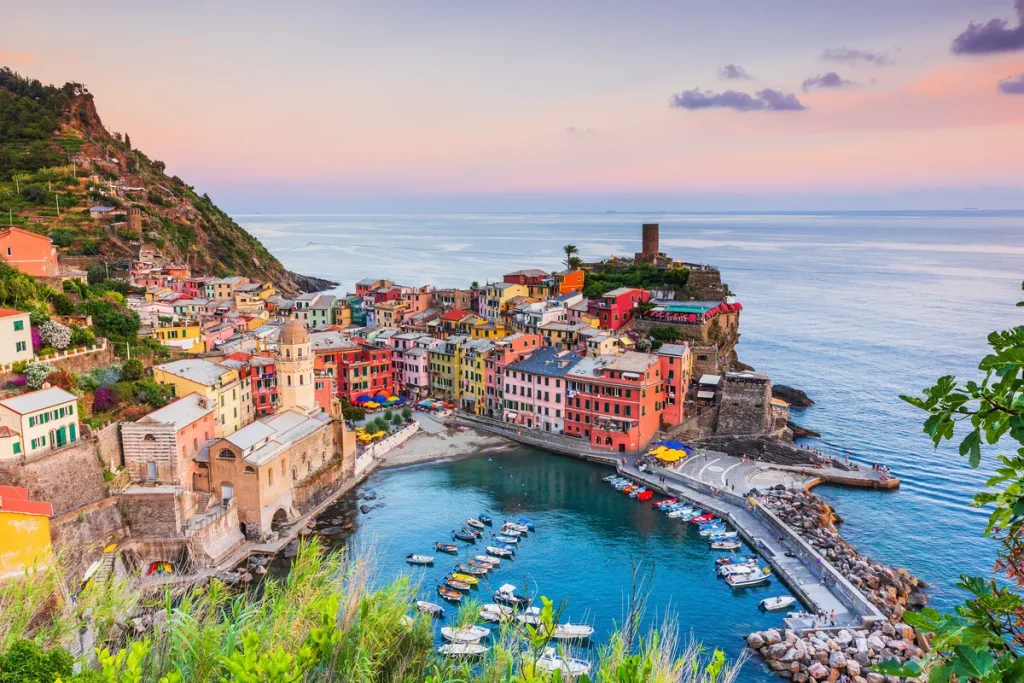
The most photographed village. Built around a natural harbor with a small beach, a 15th-century defensive tower (Doria Castle), and the church of Santa Margherita d’Antiochia whose apse is built directly onto the harbor rocks. The main caruggio (alley) runs from the train station to the harbor piazza – 200 meters of restaurants and shops that become a solid column of tourists by midday.
The view photograph most people associate with Cinque Terre – looking down onto the harbor from above – is taken from the Blue Trail just above the village on the Monterosso side. Walk 5 minutes up the trail from the harbor end for that angle; it’s free and doesn’t require completing the full hike.
Best use: Lunch, harbor view, one of the best concentrations of serious restaurants on the coast.
Corniglia
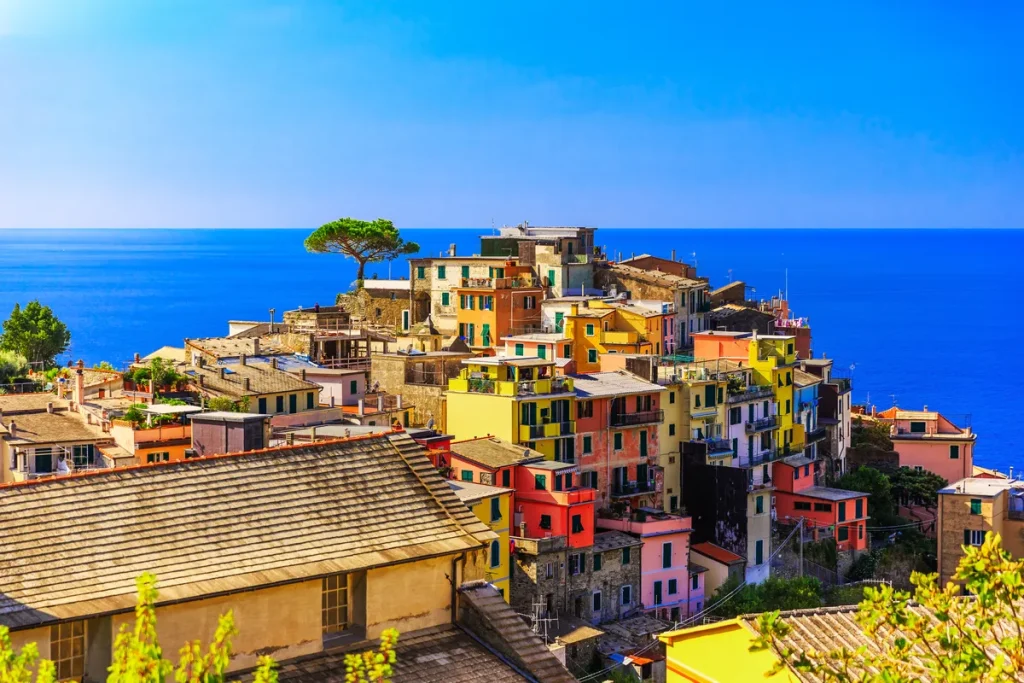
The middle village and the only one not on the water – it sits on a promontory 100 meters above the sea, surrounded by terraced vineyards. Reaching it from the train station requires climbing 382 steps (the Lardarina staircase) or taking a shuttle bus that runs on limited hours. Because of the stairs, it’s the quietest village on the circuit.
The views from Corniglia’s belvedere look back toward Vernazza and forward toward Manarola. There’s a small wine bar on the main square that does Sciacchetrà by the glass. If you want 20 minutes of relative quiet at any point in the day, get off the train here.
Best use: A quiet break between the hiking sections, Sciacchetrà wine, escape from the Vernazza crowds.
Manarola
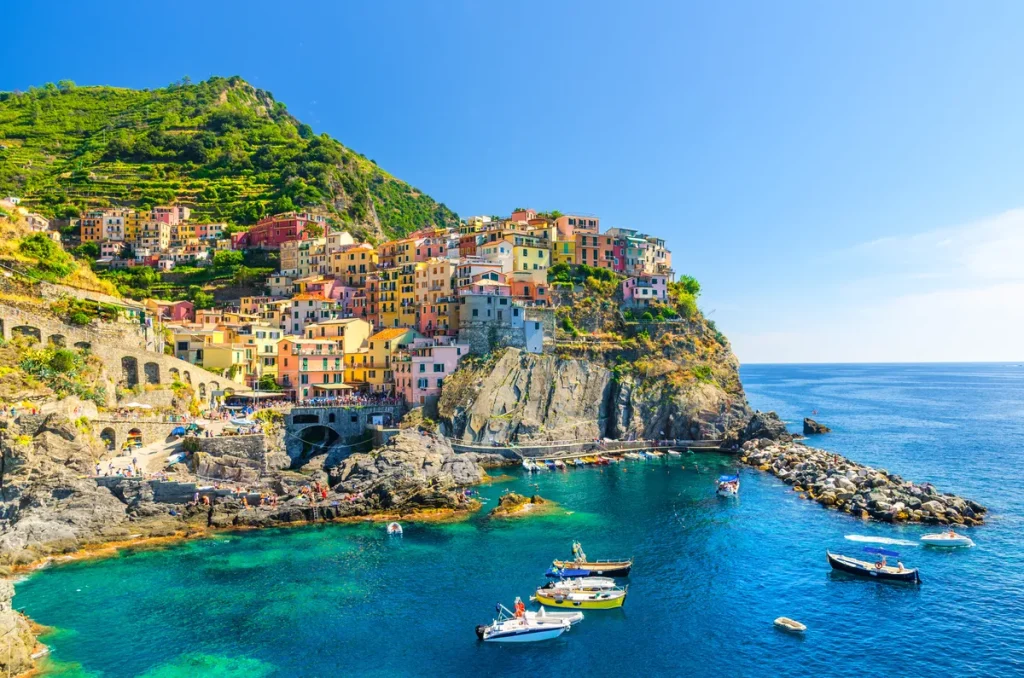
The village with the most distinctive visual – tall, narrow houses in rust red, ochre, and dark green built directly on black volcanic rock, with the harbor below and terraced vineyards above. The specific photograph is taken from the footpath along the cliff to the east (toward Corniglia), looking back at the village with the sea below.
Punta Bonfiglio is a viewpoint and park on the headland west of the harbor. It has benches and a bar (Nessun Dorma) positioned specifically for the view back across the village. At sunset this is the most-visited single spot in Cinque Terre – arrive by 6:00 PM in summer to get a position without fighting for space.
Manarola is the center of Sciacchetrà production – the sweet dessert wine made from dried Bosco, Albarola, and Vermentino grapes. A small glass costs €5-8.
Best use: The village photograph, sunset at Punta Bonfiglio, wine.
Riomaggiore
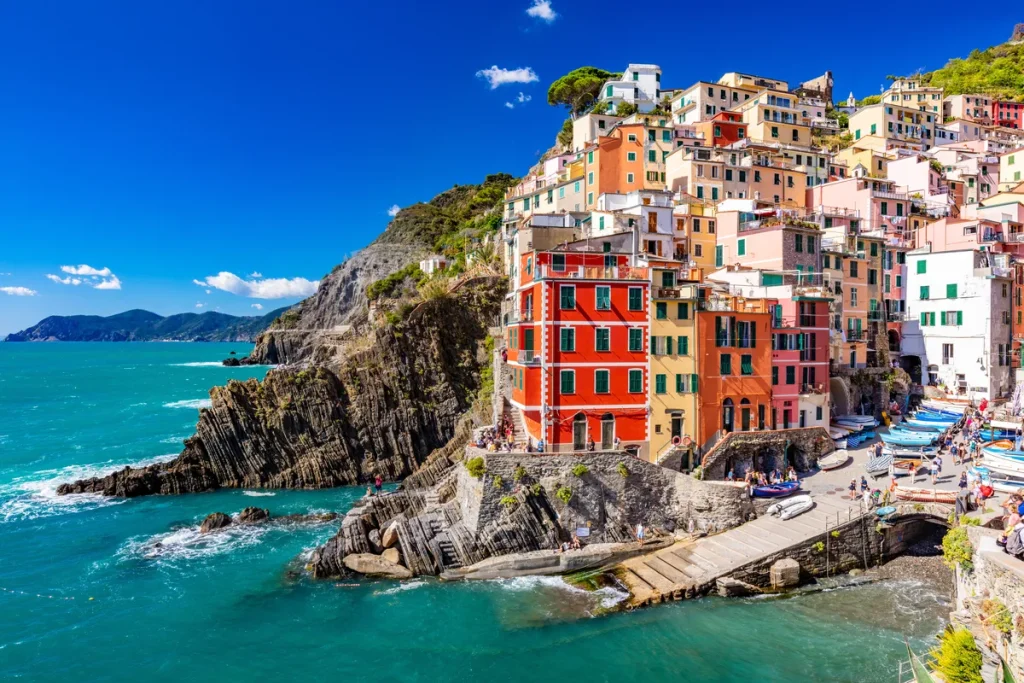
The southernmost village is steeper and more compressed than the others – the main street (Via Colombo) runs steeply down to a small harbor where fishing boats are winched out of the water rather than left floating (there’s no protected bay). The architecture is tall and narrow, stacked up the cliff, with the train tunnel running beneath the main street.
The harbor is where the fried fish (friggitoria) culture is strongest. Paper cones of mixed fried seafood – anchovies, calamari, shrimp – cost €5-8 and are the correct thing to eat here. The rocks at the harbor entrance are where locals swim; the water is clear.
Best use: Fried fish, final stop before the train south to La Spezia or north back to Monterosso.
Hiking: Which Trails Are Open and What They Involve
Blue Trail (Sentiero Azzurro) – Trail 2
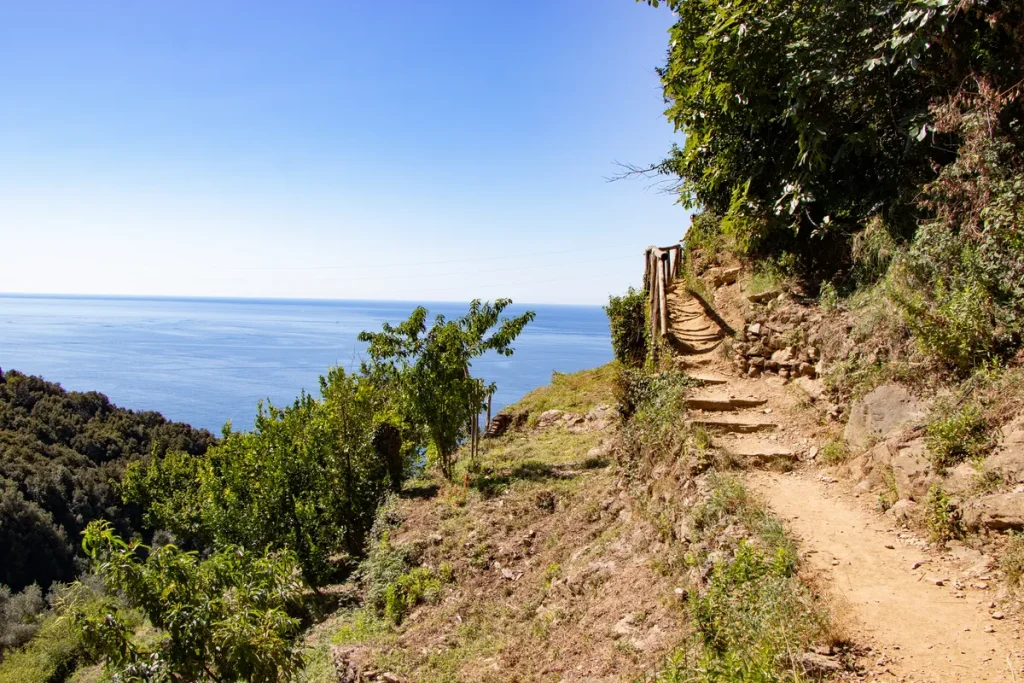
The main cliff path connecting all five villages. In practice, not all sections are open at any given time – the coast is subject to landslides and sections are periodically closed for months or years. Check the current status at parconazionale5terre.it before your visit.
The sections between villages vary in difficulty and time:
- Monterosso to Vernazza: 3.8km, approximately 1.5-2 hours, the hardest section – significant elevation gain and hundreds of stone steps. This is the one worth doing if you only hike one section.
- Vernazza to Corniglia: 4km, approximately 1.5-2 hours, similarly demanding.
- Corniglia to Manarola: 3.5km, approximately 1 hour, easier terrain.
- Manarola to Riomaggiore: 1km – this is the Via dell’Amore section (see below).
2026 restrictions: On peak summer weekends, Monterosso-Vernazza may be enforced one-way only (Monterosso to Vernazza direction). Check the park website or ask at the Monterosso tourist office on arrival.
Footwear: Hiking shoes or proper sneakers with grip. Rangers patrol the trailheads and can turn you back or fine you for flip-flops or open sandals. This is enforced, not just recommended.
Via dell’Amore (Manarola to Riomaggiore)
The famous flat cliff path between the two southernmost villages reopened after years of closure following a landslide. In 2026, it requires a timed entry reservation made through the Cinque Terre Card system (included with specific card tiers or as an add-on). The path is paved and accessible for strollers and limited mobility – the only section of the coast with this characteristic.
Reserve your slot when you buy the Cinque Terre Card, not on the day. Popular time slots fill ahead.
Higher trails (2 and 6-7-8 network)
If the Blue Trail sections are closed or crowded, the ridge trails above the villages are an alternative. They require more elevation gain from the villages but are almost always open and significantly less crowded. The trail running along the ridge above all five villages connects them at altitude with views over both the sea and the valley inland. Ask at the park visitor center in Monterosso or Riomaggiore for current conditions.
What to Eat
Trofie al pesto
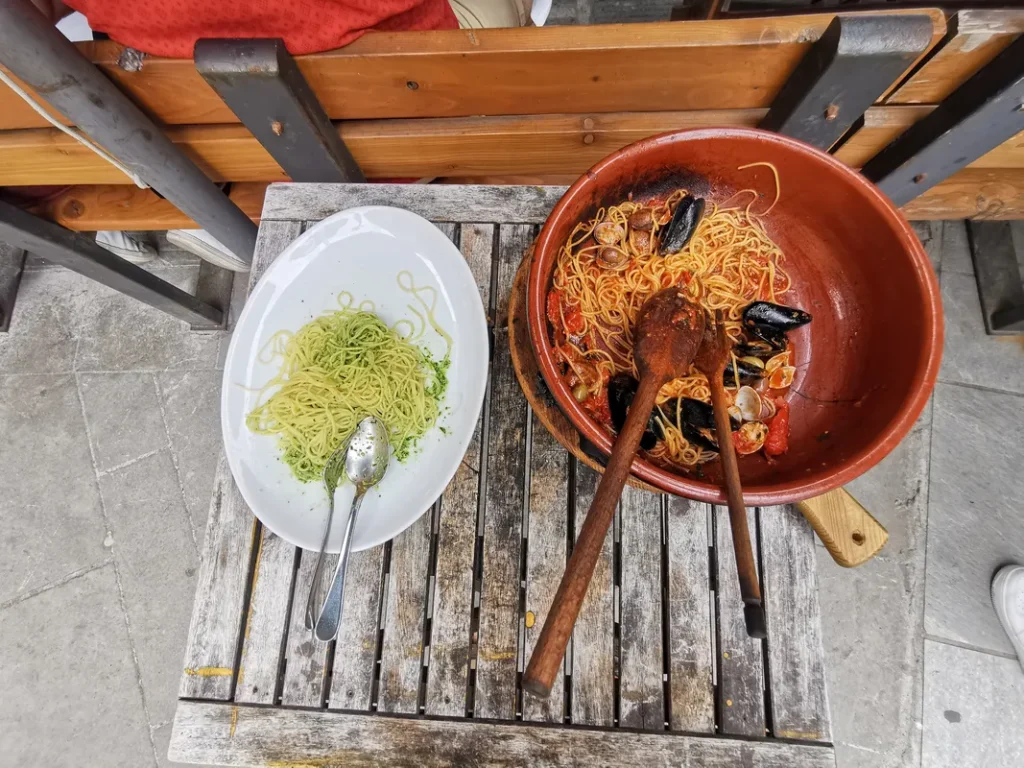
Liguria is the origin of pesto – the version here is made with DOP Genovese basil (a specific variety with smaller, more delicate leaves than supermarket basil), pine nuts, Parmigiano, Pecorino, garlic, and olive oil, ground in a mortar. The pasta that belongs with it is trofie – short, twisted strands that trap the sauce in their spirals. A portion costs €12-16 at a trattoria. This is not a dish to order at a restaurant with a terrace over the harbor; you’re paying for the view. Get it one street back.
Fried fish cones
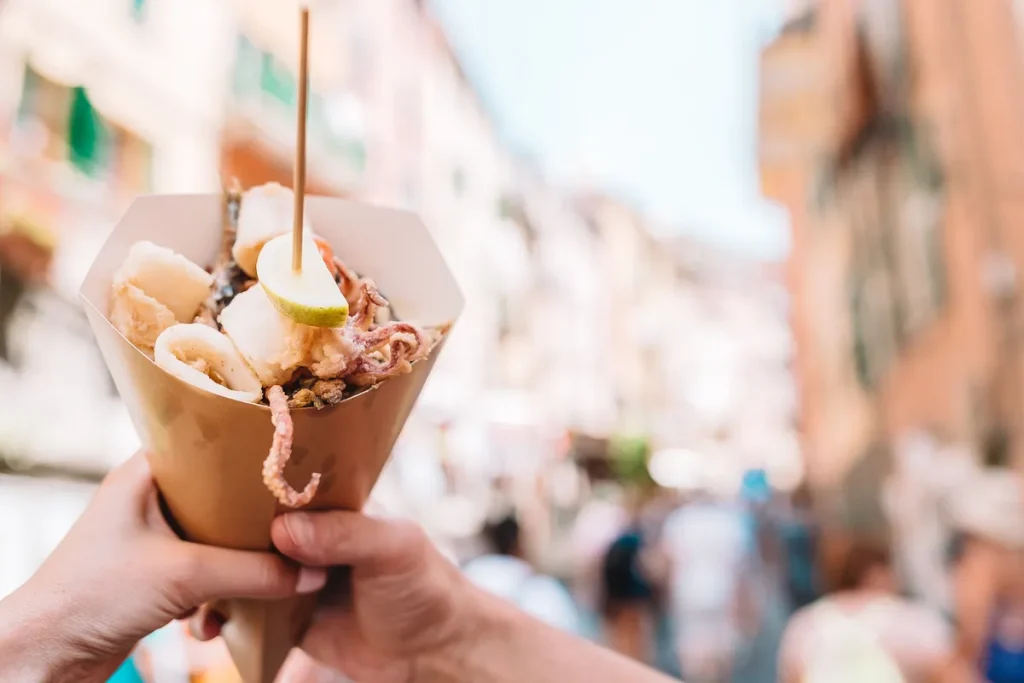
Every village has a friggitoria – a takeaway counter selling paper cones of mixed fried seafood (anchovies, calamari, small shrimp, occasionally octopus). The cone costs €5-8 and is lunch for a hiker. Eat it standing outside or on the harbor rocks. The version in Riomaggiore is the one most people reference but all five villages have them.
Focaccia
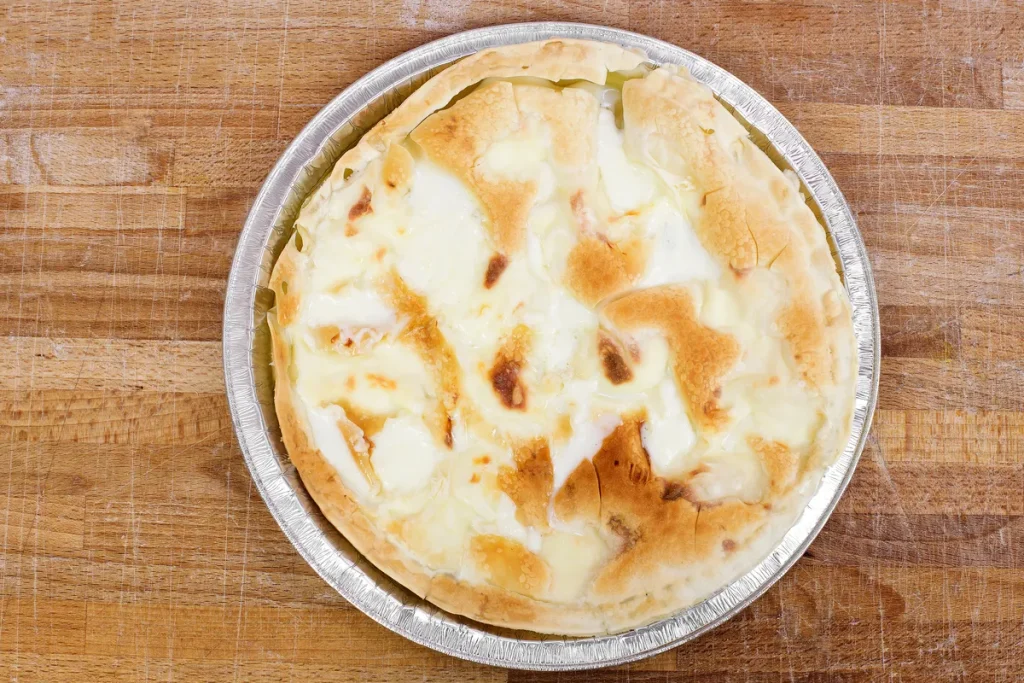
Ligurian focaccia is different from the thick Bari version – it’s thinner, olive-oil heavy, slightly chewy, and dimpled. Plain with sea salt is the standard; with onion or rosemary are the common variations. A slab costs €2-4 at a bakery and is the hiker’s breakfast or mid-morning fuel. Buy it in Monterosso when you arrive.
Sciacchetrà
The local dessert wine, made from grapes dried on racks (appassimento) before pressing, which concentrates sugars and produces an amber, sweet wine with 17-18% alcohol. Small production, expensive – a 100ml glass costs €5-8. Worth trying once at Corniglia or at Nessun Dorma on Punta Bonfiglio. Not something you’ll find with the same quality outside the immediate region.
Where not to eat
The restaurants with the best harbor views in Vernazza and Manarola run tourist-facing menus with photographs and prices that reflect their positioning. The food is usually adequate; you’re paying substantially for the table. Walk 2-3 minutes from the main piazza in any direction and the prices and quality both improve.
Tactical Itinerary for a Day from Milan
07:10 – Intercity from Milano Centrale. Book the seat in advance.
10:15 – Arrive Monterosso. Grab focaccia and espresso from a bakery near the station. Do not go to the beach yet.
11:00 – Start the Blue Trail hike from Monterosso toward Vernazza. This section is the most demanding and is better done in the morning before the heat peaks and before the trail’s one-way restriction kicks in on weekends. Allow 1.5-2 hours.
12:45 – Arrive Vernazza. Lunch here – trofie al pesto at a trattoria off the main caruggio. Allow 1 hour.
14:00 – Train from Vernazza to Corniglia (5 minutes). Climb the Lardarina steps if energy allows. 15-20 minutes of quiet at the belvedere before catching the next train.
14:45 – Train to Manarola. Walk to Punta Bonfiglio for the village photograph. If the Via dell’Amore slot is booked, walk to Riomaggiore from here (1km, flat, 20 minutes).
16:30 – Riomaggiore. Fried fish cone at the harbor. Walk down to the harbor rocks for a swim if the trail legs allow it.
17:45 – Train from Riomaggiore back to Monterosso (15 minutes on the Cinque Terre Express, stopping at all villages).
18:30 – Return Intercity from Monterosso toward Milano Centrale (check exact time when booking outward journey; confirm return train in the Trenitalia app).
21:30 – Back in Milan.
Practical Notes
Cost summary:
- Intercity train Milan-Monterosso return: €40-60
- Cinque Terre Treno MS Card: €18-32
- Lunch (trofie + wine): €20-25
- Snacks (focaccia, fried fish cone): €8-12
- Total per person: €90-130
Crowd timing: The worst crowd window on the Blue Trail is 11:00 AM to 3:00 PM. Cruise ships from Genoa and La Spezia discharge passengers into the villages from around 10:30 AM; they tend to stay in Vernazza and Monterosso and move as groups. The 07:10 departure from Milan gets you ahead of most day-trip crowds from Genoa and Turin.
Overnight option: If one day feels rushed, Levanto (one stop north of Monterosso on the Cinque Terre Express) has wider accommodation options at lower prices than the villages, a genuine sandy beach, and direct access to the CT Express network. Staying overnight in Levanto means you have the villages early in the morning before the day-trippers arrive from the cities.
Cinque Terre works naturally as a contrast day within a Milan-based trip. For what to do on the Milan days around it, the best things to do in Milan covers the Duomo, Last Supper, and Brera in the right sequence. If you’re structuring your visit around a 3-day window, the 3 days in Milan itinerary sequences the sights so the Cinque Terre day fits cleanly into the schedule. First-time visitors should read the first time in Milan guide before committing to day trips – it covers what in the city genuinely needs a full day versus what can be done quickly. For keeping the overall trip cost manageable, Milan on a budget covers transport passes, free museum days, and the pranzo di lavoro lunch system that offsets the cost of a day like this one. For choosing where to stay, where to stay in Milan notes that Isola and Porta Garibaldi give the best access to Milano Centrale for early departures. If you’re deciding between Milan and Rome as your Italy base, Milan vs Rome compares both cities across logistics, cost, and sights.
Can you do Cinque Terre from Milan in one day?
Yes, with the 07:10 IC from Milano Centrale. You arrive by 10:15 and can realistically see three or four villages, complete one hiking section, and make a return train by 7:00 PM. It’s a long day – expect 20,000+ steps – but it works. If you want two days, base yourself in Levanto and use the Cinque Terre Express to move through the villages more slowly.
Which is the best village to spend most time in?
Vernazza for the harbor and the best lunch options. Manarola for the village photograph and Punta Bonfiglio at sunset. Monterosso if swimming is your priority. On a one-day trip from Milan, focus on Monterosso (arrival and hike start), Vernazza (lunch), and Manarola (afternoon and sunset).
Is the Blue Trail open in 2026?
Sections of it are open; check parconazionale5terre.it before your trip. The Monterosso-Vernazza section is typically the most reliably open and the most worthwhile. The Manarola-Riomaggiore section (Via dell’Amore) is open with timed entry. The Vernazza-Corniglia section has historically been the most landslide-prone; verify current status.
What’s the difference between the Cinque Terre Card options?
The Cinque Terre Treno MS Card covers trains and trails and is what most day visitors need. There’s also a hiking-only card (no train) if you’re staying in a village and don’t need the CT Express. The card with Via dell’Amore access costs slightly more and requires booking a timed entry slot. Buy whichever version matches your plan; the Trenitalia app shows current options and prices.
When is the best time to visit?
May and September are the practical optimal months – warm enough to swim (May: 18-19°C sea temperature, September: 22-23°C), crowds significantly lower than July and August, and trail conditions generally better. July and August are fully operational but the villages can feel overwhelmed by noon. April is possible but some restaurants and smaller hotels are still closed for the season.
Day Trip to Cinque Terre from Milan — 2026 Practical Guide
07:10 IC from Milano Centrale, arrive Monterosso 10:15. Hike west to east, train back to Monterosso 18:30, back in Milan 21:30. Click any pin.