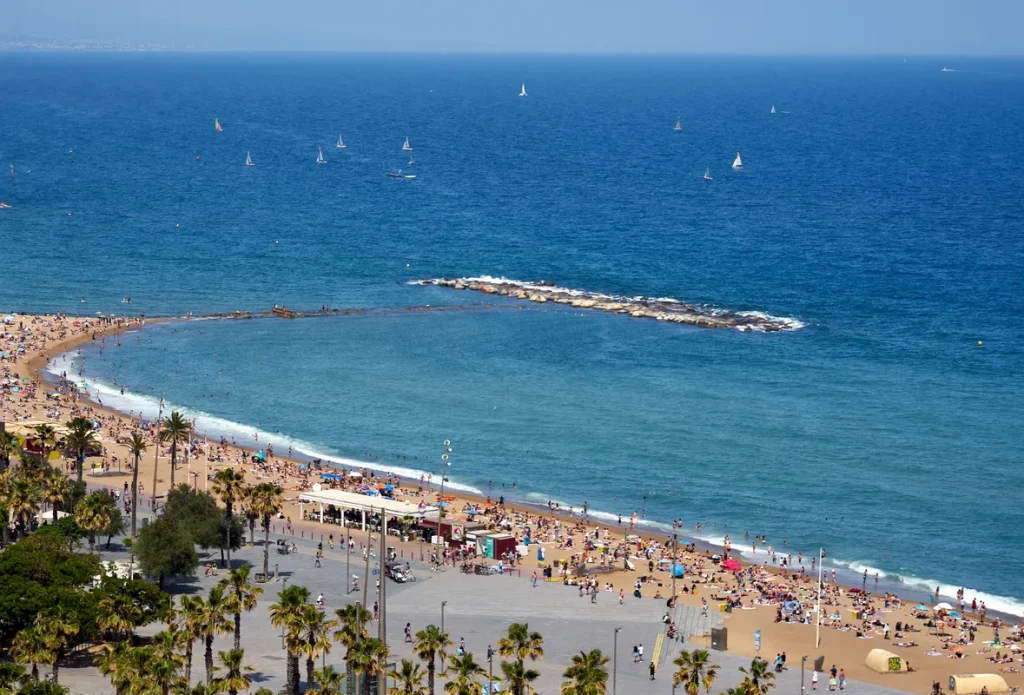
If you are looking for the best things to do in Sitges, you need to look beyond the sand.
Sitges packs more into 5 square kilometers than most cities manage in fifty. Thirty-five kilometers south of Barcelona on the Garraf coast, it has 17 beaches, three world-class museums, a Gothic church on a sea cliff, and a nightlife street that doesn’t close until sunrise. Day-trippers from Barcelona get here in 40 minutes on the R2 Sud line from Passeig de Gràcia for €4.60, which makes it the most accessible quality beach escape from the city. Budget a full day minimum – the old town alone takes two hours if you do it properly, and that’s before you factor in a beach, lunch, and the museums. Here’s everything worth doing, in the order that makes sense to do it.
Art and Museums
1. Cau Ferrat Museum
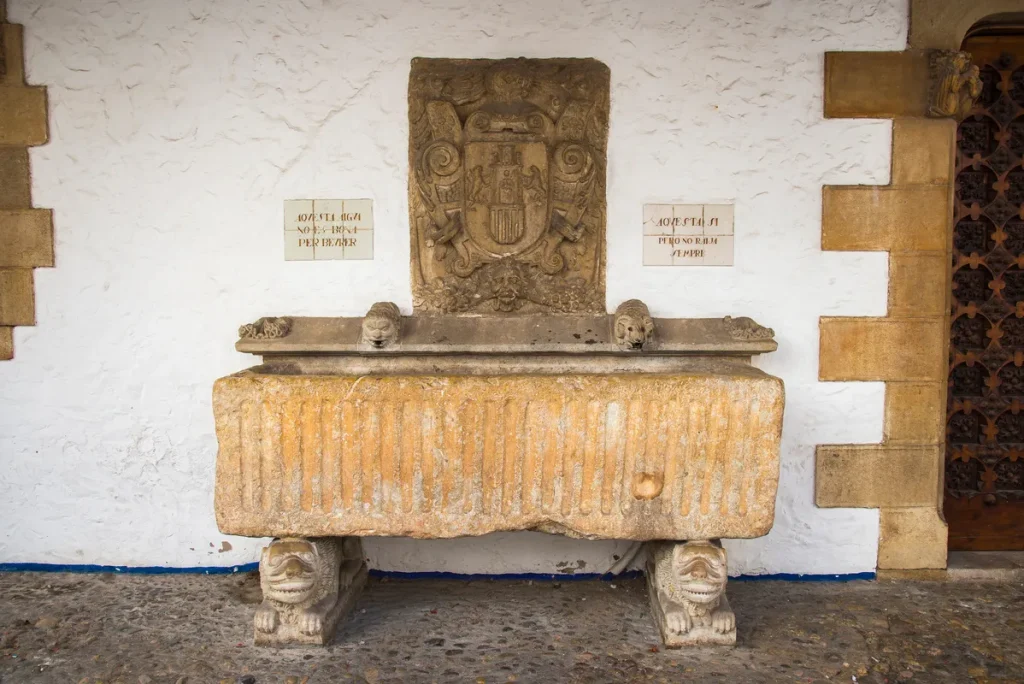
Start here. Cau Ferrat on Carrer de Fonollar was the home and studio of Santiago Rusiñol, the Catalan Modernisme painter who essentially invented Sitges as an artists’ colony in the 1890s. He filled the house with wrought iron pieces, ceramics, and paintings – including two El Grecos he bought in Paris and hauled back to Sitges by train in a procession that the whole town came out to watch. The Grecos are still here. So are early Picasso works and pieces by Ramon Casas. The building itself – two Gothic fishermen’s houses knocked together and extended over the cliffs – is as interesting as the collection.
Entry: €10, free on first Sunday of the month. Opens at 10:00 AM Tuesday-Sunday. Closed Mondays.
2. Maricel Museum
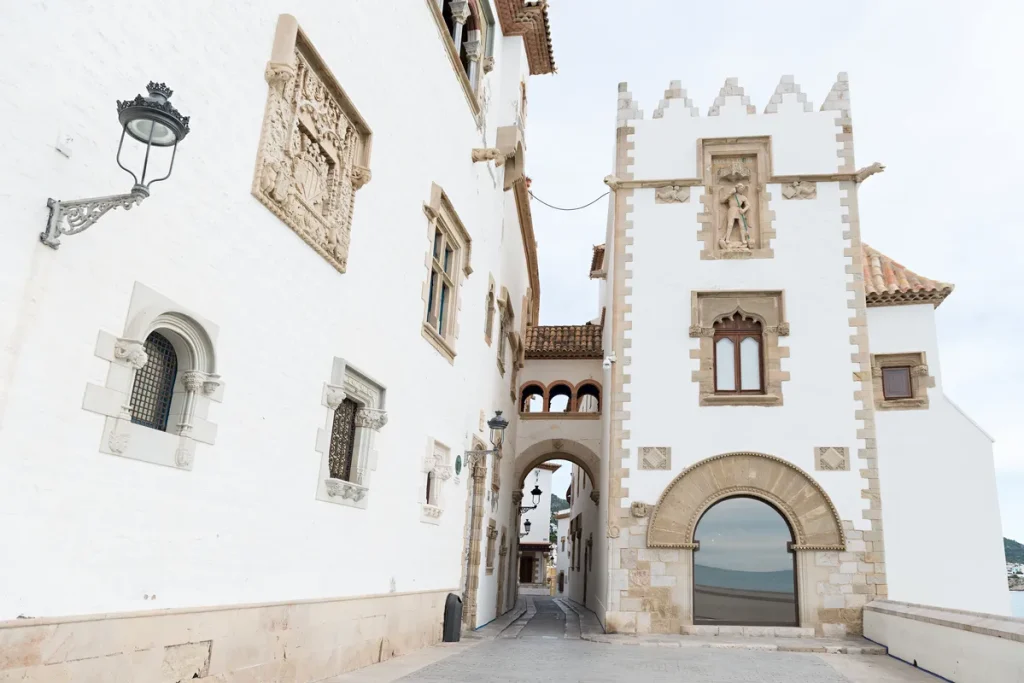
Next door to Cau Ferrat on the same sea-cliff terrace. Palau de Maricel was built in the early 20th century by American tycoon Charles Deering, who wanted an Italianate palazzo on the Catalan coast and got one. The architecture – arcaded galleries, a Gothic cloister, sea views from every room – overshadows the collection of Romanesque art and ceramics inside, but both are worth your time. The “Golden Hall” with its painted ceiling is the specific room people remember.
Entry is typically combined with Cau Ferrat. Check for guided tour times when booking, as access to some areas is restricted.
3. Museum of Romanticism (Casa Llopis)
Casa Llopis on Carrer de Sant Gaudenci preserves a wealthy Sitgetan family’s home exactly as it was in the 19th century – furniture, decorative objects, portraits, and an extraordinary collection of antique dolls and automata on the upper floor. The doll collection is the specific draw: several hundred pieces from the 1800s, some with working mechanical parts. It’s a strange and memorable hour.
Entry: €7. Combined tickets available with the other municipal museums.
The Old Town
4. Church of Sant Bartomeu i Santa Tecla
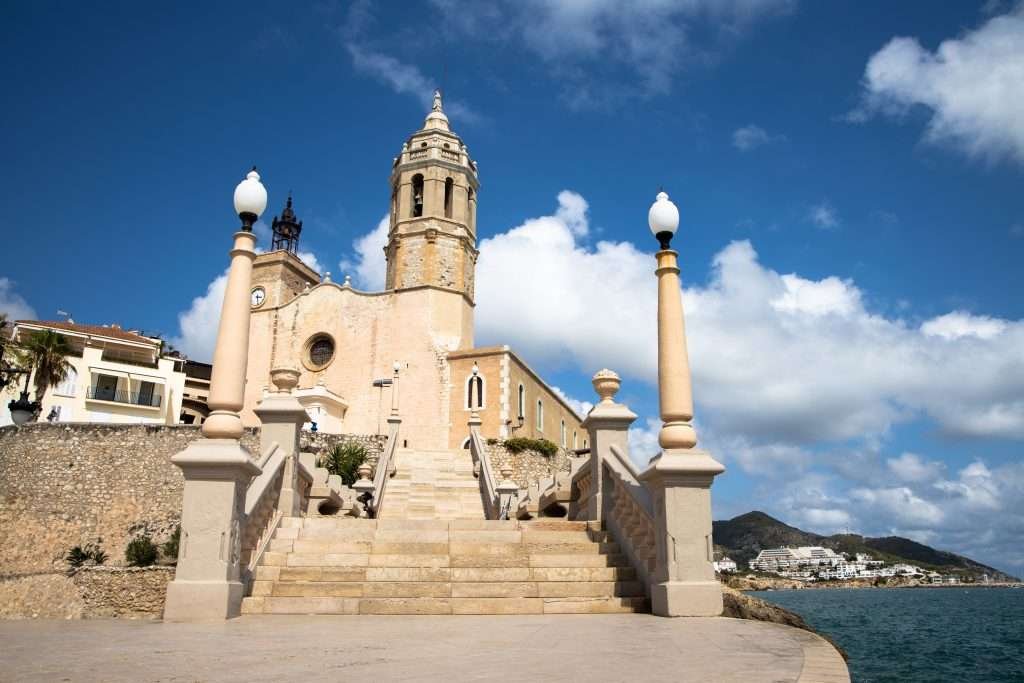
The 17th-century church on the rocky promontory above the sea is the image of Sitges that appears on every photograph taken of the town. Walk up the stone steps from the beach to the church square for the view south along the coast – on a clear day you can see the Garraf cliffs stretching toward Tarragona. The church itself is Baroque and worth 15 minutes inside; the exterior terrace is where everyone eats their lunch-break sandwich.
Free to enter. Interior open during daylight hours outside of services.
5. Racó de la Calma
The “Quiet Corner” is the narrow passage between the Maricel and Cau Ferrat museums. Stone-paved, framed by Gothic windows on one side and open to the sea on the other, it’s the most-photographed 30 meters in Sitges and with good reason. Go before 9:30 AM or after 6:00 PM in summer to have it without a crowd.
6. Walk Carrer d’en Bosc and the Casco Antiguo
The streets immediately behind the church follow the line of the original medieval walls. Carrer d’en Bosc is the best of them – whitewashed houses, potted geraniums, no cars. The wider old town grid extends north from here. Budget an hour to get properly lost in it. The quality drops off quickly once you reach the commercial streets north of the church, so stay south and east.
7. Indianos Mansions on Carrer de l’Illa de Cuba
In the 19th century, Sitges residents emigrated to Cuba and Puerto Rico, made money in sugar and tobacco, and came back to build colonial-style mansions on what became known as the “Street of Cuba.” The houses are still there – ornate facades, wide verandas, iron balconies – and still privately owned, which means you can only see them from the street. Walk the full length of Carrer de l’Illa de Cuba and the surrounding streets in the Ville de Cuba quarter for the best examples.
8. Plaça de la Vila and the Clocktower
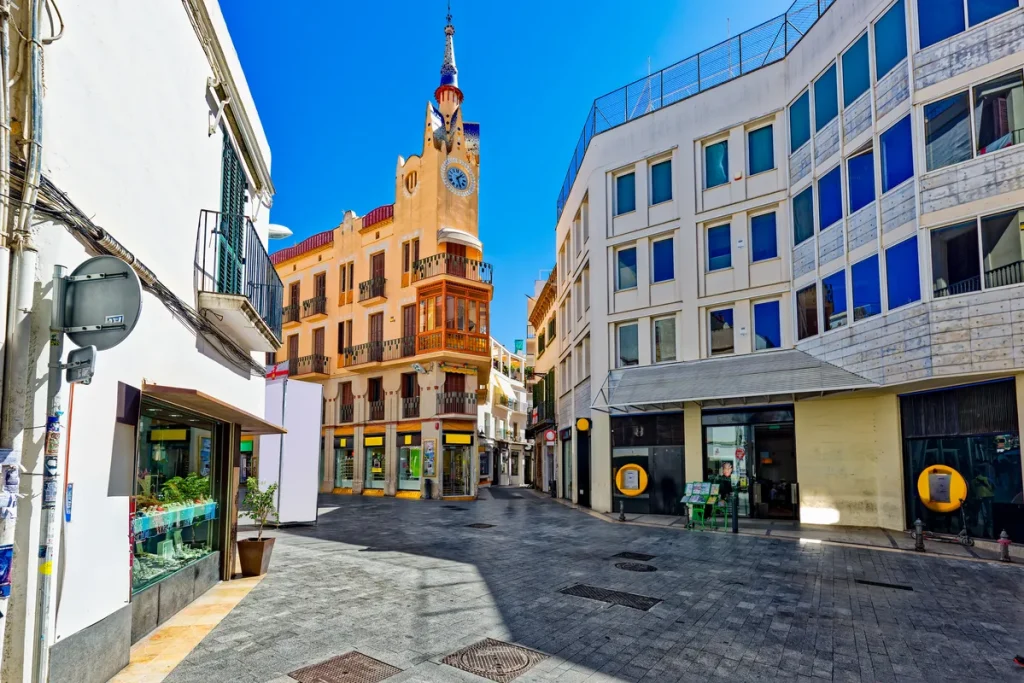
The town’s main square is anchored by the 19th-century clocktower. This is where the traditional pre-lunch vermouth ritual plays out: a table at one of the cafes on the square, a glass of house vermut, a small plate of olives and chips. The square is also the departure point for most of the town’s festivals and processions. Quieter on weekday mornings; lively on weekend afternoons.
Beaches
Sitges has 17 beaches stretching across roughly 3 kilometers of coastline. They vary significantly.
9. Platja de la Fragata
The central beach directly beneath the church. No sun lounger rentals, which keeps it more local than the surrounding beaches. Volleyball nets, football, families. The best location of any beach in Sitges relative to the old town – you’re 60 seconds from the church steps.
10. Platja de Sant Sebastià
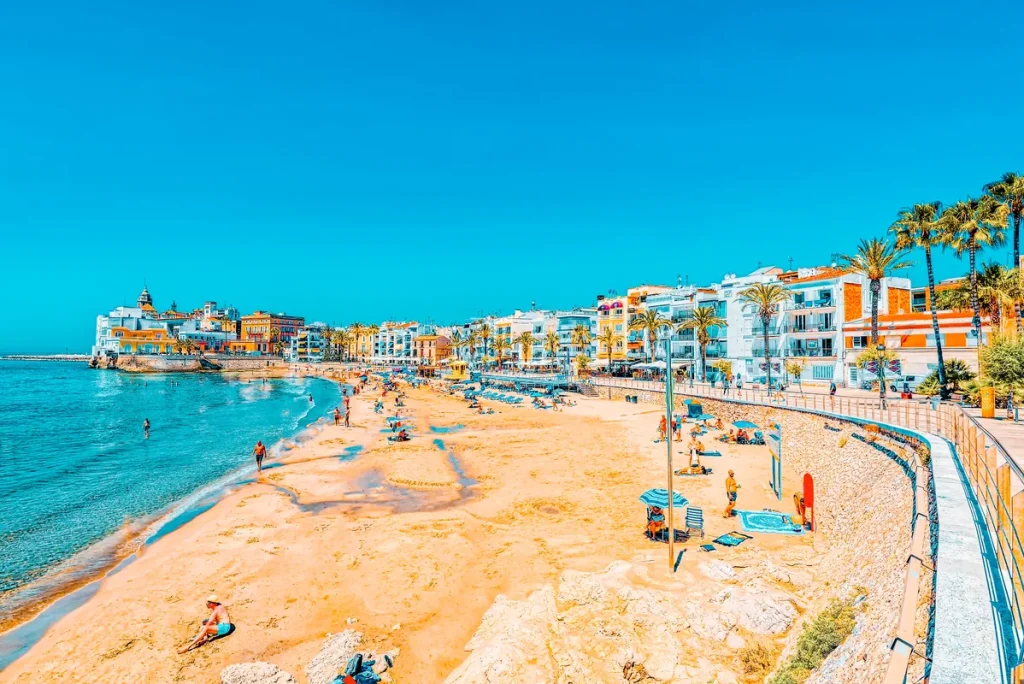
The longest beach in the center, running west from the church toward the Terramar district. Calmer water than Fragata and better-organized facilities. Sun lounger and umbrella rental available. This is the practical choice for families who want a full beach day with shade options.
11. Bassa Rodona
The main LGBTQ+ beach in Sitges, a 10-minute walk east of the church along the Passeig Marítim. Known for its social atmosphere and well-organized beach bar scene. Sitges has been a gay travel destination since the 1960s – longer than most comparable resorts in Europe – and Bassa Rodona is the physical center of that.
12. Platja dels Balmins
A clothing-optional cove tucked into the limestone cliffs east of the harbor, past the Aiguadolç marina. 20-minute walk from the center or a 5-minute taxi. Sheltered from the prevailing southwest wind, which makes it calmer than the central beaches on windier days. The water clarity is noticeably better than the main beaches because it’s outside the zone where the town’s drainage affects the sea.
13. Platja de Terramar
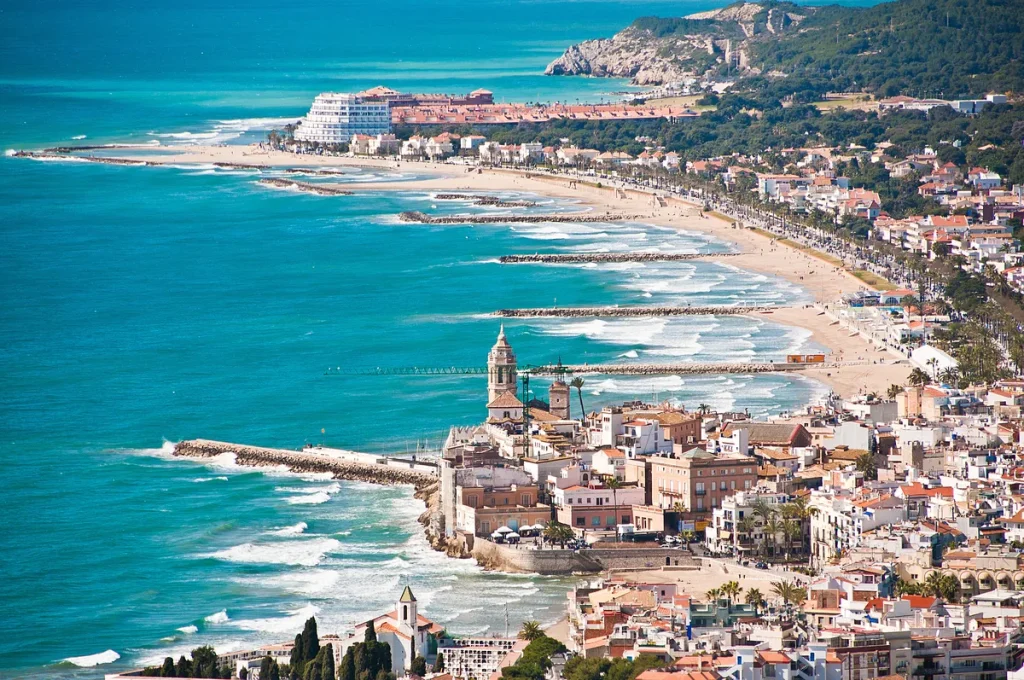
At the far western end of the promenade, adjacent to the Terramar hotel gardens. Quieter than the central beaches and popular with older locals. Less English-language noise, which for some travelers is the point.
Food and Drink
14. Eat Xató
Xató is the dish specific to the Garraf coast – Sitges, Vilanova, El Vendrell. It’s a winter salad of curly endive, salt cod, and tuna dressed with a sauce ground from toasted almonds, hazelnuts, dried nyora peppers, garlic, and vinegar. The sauce is the point – thick, rust-colored, sharp and nutty at the same time. It appears on menus from late November through March. Outside that window, you’ll find it in some restaurants year-round but the quality is more variable.
Look for it at Restaurant El Pou on Carrer de Sant Pau or at any restaurant that lists cuina de mercat (market cooking) rather than tourist menus.
15. Try Arroz a la Sitgetana
Sitges has its own rice dish that predates the paella tourism industry. Arrós a la sitgetana is a “mar i muntanya” (sea and mountain) preparation: pork ribs and botifarra sausage cooked with prawns, cuttlefish, and rice in a dark, dense broth. It’s richer and more complex than coastal paella. The best versions are done in a traditional cassola (earthenware dish) rather than a flat paella pan.
16. Vermouth Hour at Plaça de la Vila or the Port
Catalan vermouth culture is serious and Sitges does it properly. Order a vermut (Yzaguirre or Petroni are the Catalan producers) with a small plate of boquerones or olives between noon and 2:00 PM. The cafes around Plaça de la Vila and the bars along the port at Aiguadolç are the best spots. It’s €3-5 for a glass.
17. Taste Malvasia at Celler de l’Hospital
Malvasia de Sitges is a sweet white wine made from the Malvasia grape, which has been grown in the Garraf since the Middle Ages. The grape nearly disappeared in the 20th century. The Celler de l’Hospital – a functioning urban winery inside an 18th-century hospital building on Carrer de Sant Joan – has led the effort to preserve it. You can taste the wine and buy bottles directly. It’s a genuinely local product that doesn’t exist in most wine shops outside Catalonia.
Active and Outdoor
18. Walk the Passeig Marítim
The palm-lined promenade runs almost 3 kilometers from the church to the Terramar district. It’s the social infrastructure of the town – everyone uses it, at all hours. The best time is early evening, when the beach crowd packs up and the dinner crowd hasn’t arrived yet. The light on the church from the western end of the promenade at 7:00 PM in summer is the best angle you’ll find.
19. Hike the GR-92 Coastal Path to Vilanova i la Geltrú
The GR-92 long-distance trail passes through Sitges heading southwest along the Garraf cliffs toward Vilanova i la Geltrú, the next town down the coast. The section from Sitges to Vilanova takes 2-2.5 hours at a normal pace and follows the cliff edge through limestone terrain with no shade. Bring water and start before 10:00 AM in summer. The path passes through tunnels cut into the rock and above coves inaccessible by road. Vilanova has a train station for the return journey (R2 Sud line, same ticket).
20. Sea Kayaking and Paddleboarding
Several operators near the church beach rent kayaks and paddleboards from April through October. The cliffs east of the port have small caves and coves that are only reachable by water – a kayak is the right way to see that section of coast. Rental for 1 hour is approximately €15-20 for a single kayak.
21. Explore the Garraf Natural Park
The limestone massif directly behind Sitges is the Parc Natural del Garraf – 12,000 hectares of scrubland, gorges, and cliff edges. The landscape is stark in the way Catalan garriga tends to be: grey rock, low herbs, and silence punctuated by crickets. Several marked trails start from the edge of town. The main access point is the Camí de Can Catà, reachable on foot from the town center in 20 minutes.
22. Visit the Sakya Tashi Ling Monastery
Inside the Garraf Park, a 19th-century villa houses an active Tibetan Buddhist monastery. The Sakya Tashi Ling community has been here since 1977, making it one of the oldest Tibetan Buddhist centers in Europe. The building’s original neo-Gothic architecture has been overlaid with Tibetan decorative elements – butter lamps, prayer flags, painted murals – which creates a genuinely strange visual combination. Open for visits on specific days; check the monastery website before going. You need a car or a long hike to reach it – it’s not accessible by public transport.
Nightlife and Events
23. One Drink on Carrer del Primer de Maig
Known locally as the Carrer del Pecat (Street of Sin), this is Sitges’ concentrated nightlife strip – bars opening onto the street, music starting around 11:00 PM, not slowing down until 5:00 AM. It’s loud, it’s crowded in summer, and the drinks are overpriced. Having one drink here is a legitimate Sitges experience. Spending the whole night here is optional and depends entirely on your tolerance for noise and crowds.
24. Sitges Film Festival (October)
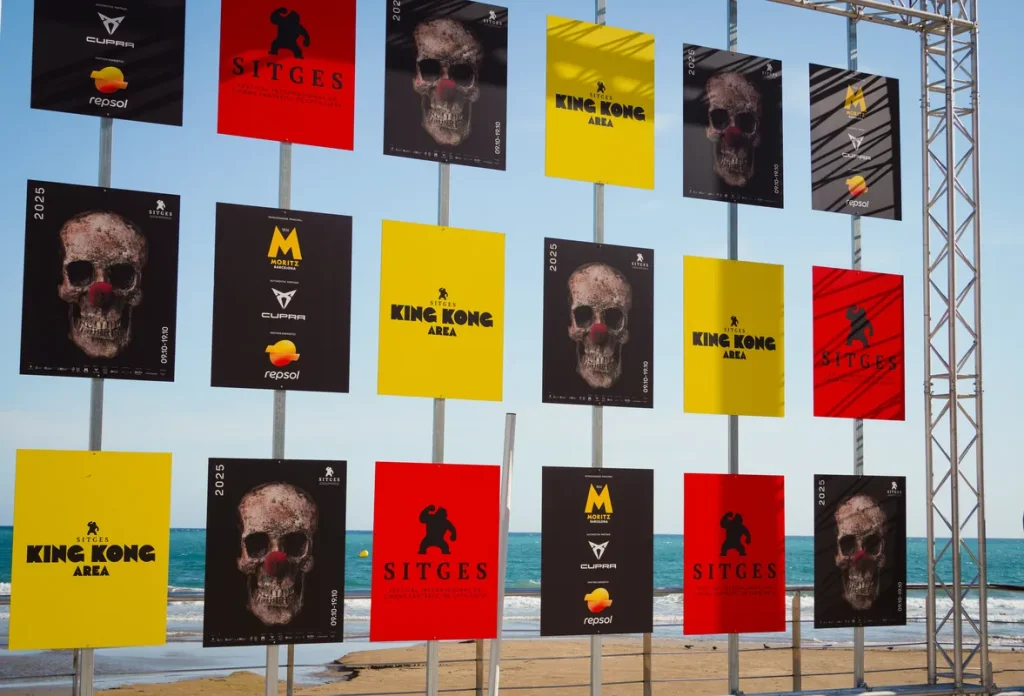
The Festival Internacional de Cinema Fantàstic de Catalunya has been running since 1968, making it one of the world’s oldest fantasy and horror film festivals. For 10 days in October, the town screens films in historic venues, hosts industry events, and stages the Zombie Walk – a procession through the streets in which several thousand people in professional-grade makeup crawl from the church to the beach. The film program includes world premieres alongside retrospectives. It’s also the quietest the hotels get to between July and October, and rates drop.
25. Corpus Christi Flower Carpets (June) and Festa Major (August)
Two festivals worth planning around. Corpus Christi (late May or June, depending on the year) brings the catifes de flors – flower carpets made from millions of carnation petals that neighbors lay in the streets overnight and which last for approximately 24 hours before they’re swept up. The process of making them, through the night, is as worth seeing as the finished carpets.
Festa Major de Sant Bartomeu on August 23-24 is the town’s main summer festival – processions, gegants (giant papier-mache figures), and a fireworks display launched from the church bastion and from boats at sea simultaneously. The church-side fireworks are the ones to position yourself for: they fire at close range over the sea-cliff terrace and the timing is precise enough to feel dangerous.
Getting to Sitges from Barcelona
By train: R2 Sud from Barcelona Passeig de Gràcia or Barcelona Sants to Sitges. Journey time: 38-42 minutes. Frequency: every 20-30 minutes during the day. Single fare: €4.60. The station is a 10-minute walk from the beach. This is the correct way to get here.
By car: 45 minutes from Barcelona via the C-32 motorway (toll: approximately €4 each way). Parking in the center in summer is effectively impossible. Park at the Parc de Ribes Roges on the north side of town and walk 10 minutes.
Day trip or overnight? A day trip is sufficient for the beaches and old town museums. An overnight stay makes sense if you want the evening atmosphere on the promenade, dinner at a proper restaurant, and the town before the day-trip crowd arrives in the morning.
Plan Your Trip
- First Time in Barcelona
- 1 Day in Barcelona
- 3 Days in Barcelona
- 5 Days in Barcelona
- 25 Things to Do in Barcelona
- Food Guide Barcelona
- Barcelona on a Budget
- Barcelona with Kids
- Barcelona vs Madrid
- Day Trip to Tarragona from Barcelona
Is Sitges worth visiting as a day trip from Barcelona?
Yes, for most travelers. The R2 Sud train from Passeig de Gràcia takes 40 minutes and costs €4.60. A full day gives you time for the old town museums (2-3 hours), a beach afternoon, and dinner before the last train back. The last train to Barcelona runs past midnight, so you’re not rushed.
When is the best time to visit Sitges?
May, June, and September are the practical sweet spots – warm enough to swim, fewer people than July and August, and the restaurants aren’t operating on tourist-season pricing. October is worth considering if you’re interested in the film festival. July and August are the peak months: crowded, expensive, and the town is operating at full noise capacity.
What is Sitges famous for?
Three things: its beaches, its LGBTQ+ scene (one of the oldest and most established in Europe), and the Sitges Film Festival. It’s also known within Catalonia for Modernisme – the Cau Ferrat museum and Rusiñol’s role in establishing the movement – and for the Malvasia wine grape, which is cultivated almost exclusively here.
Is Sitges expensive?
More expensive than Barcelona’s outer neighborhoods, less expensive than Barcelona’s tourist center. A proper sit-down lunch with wine runs €20-30 per person. Beach chair and umbrella rental is €12-18 for a day. Museum entry averages €7-10. Hotels in summer run €120-250 for a mid-range double. Day-trippers from Barcelona spend €50-80 all-in for a comfortable day including train, lunch, and museum entry.
Can you walk between Sitges’ main beaches?
Yes – all the central beaches connect along the Passeig Marítim promenade. Fragata to Terramar is about 25 minutes on foot. The eastern beaches (Balmins, Aiguadolç) require a 20-minute walk from the center in the other direction, past the port.
25 Things to Do in Sitges — 2026
Train from Barcelona Passeig de Gracia: R2 Sud, 40 min, EUR 4.60. Budget a full day minimum. Click any pin.