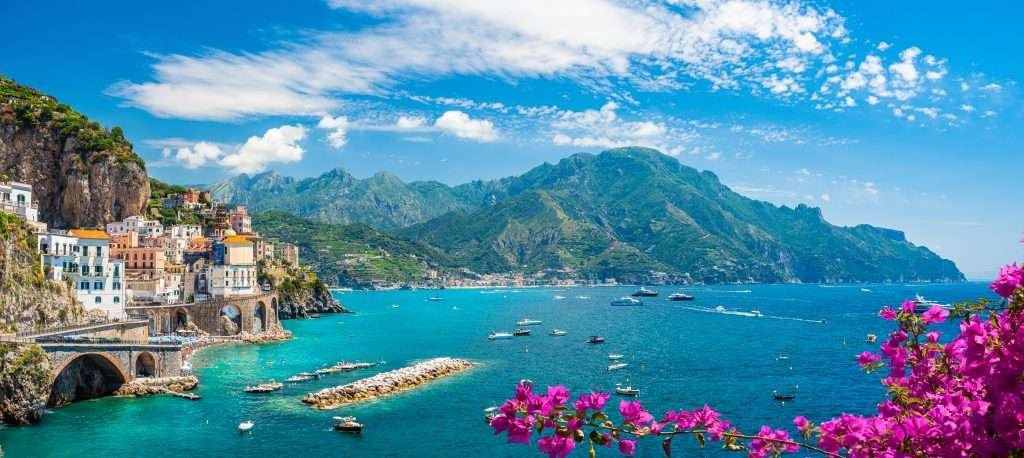
The Amalfi Coast travel guide is 50 kilometers of limestone cliffs dropping directly into the Tyrrhenian Sea, with 13 towns stacked vertically on the rock face between Positano in the west and Vietri sul Mare in the east. In peak summer (July-August), the SS163 coast road becomes a single-lane standoff between tourist buses, delivery trucks, and rental cars whose drivers did not read far enough into any travel guide. The ferry is faster, costs €8-15 per leg, and you see the cliffs from the water. The SITA bus is slower, costs €1.30, and is the correct choice if you’re on a budget and willing to board at the start of the line. Do not drive. The ZTL cameras in Amalfi and Positano send fines months after you return home, and parking costs €40-60 per day in the few lots that exist.
The practical base question is Naples or a coast town. Naples gives you a larger accommodation range at lower prices, with ferries to the coast departing from Molo Beverello port. The where to stay in Naples guide covers which neighborhoods work best for a coast-based trip. If you’re staying on the coast itself, this guide covers which town to choose and why it matters.
Getting There and Around
From Naples
Ferry (recommended): Ferries depart from Molo Beverello port in Naples to Positano, Amalfi, and Sorrento. The main operators are Alilauro and Navigazione Libera del Golfo. Naples to Positano takes approximately 1 hour 15 minutes; Naples to Amalfi approximately 1 hour 30 minutes. In July and August, book online 24-48 hours ahead – the morning departures fill completely. Ferry season runs April through October.
High-speed train + ferry: Frecciarossa or Italo from Rome to Naples Centrale (1 hour 10 minutes, from €19), then ferry from Molo Beverello.
Circumvesuviana train: Naples to Sorrento (70 minutes, €4.20 from Napoli Garibaldi), then SITA bus or ferry along the coast from Sorrento. This is the route if you want to approach from the western end.
On the Coast
Ferry between towns: The most efficient way to move between Positano, Praiano, Amalfi, and Salerno during ferry season. Leg prices run €8-15. Check Travelmar and Alilauro for the day’s schedule – frequency drops significantly outside July and August.
SITA Bus: The public bus network runs year-round along the SS163 and is the only land transport option between most towns. A 24-hour unlimited pass costs €10-12 and makes sense if you’re doing multiple legs in a day. The critical rule: board at the start of the line (Sorrento in the west, Salerno in the east, or Amalfi in the middle). Buses are limited in size and fill completely in summer – if you’re waiting at a mid-route stop like Praiano or Conca dei Marini in July, the bus will drive past you if it’s already full. Single tickets: €1.30, bought at tabacchi or from the driver in coins.
Water taxi: Private boats available at most ports. Expensive (€50-150 per leg depending on distance) but useful for reaching beaches inaccessible by road or bus, or for arriving at a specific time.
Car: Don’t. The SS163 is one lane in each direction on a cliff road designed for mule traffic. Overtaking is standard, the road is interrupted by tunnels with no passing room, and the ZTL cameras in Positano, Amalfi, and Ravello are automatic. Rental car + coast road + summer = a fine arriving in the post two months after you’re home.
Which Town to Base Yourself In
Amalfi Town – Best for First-Timers
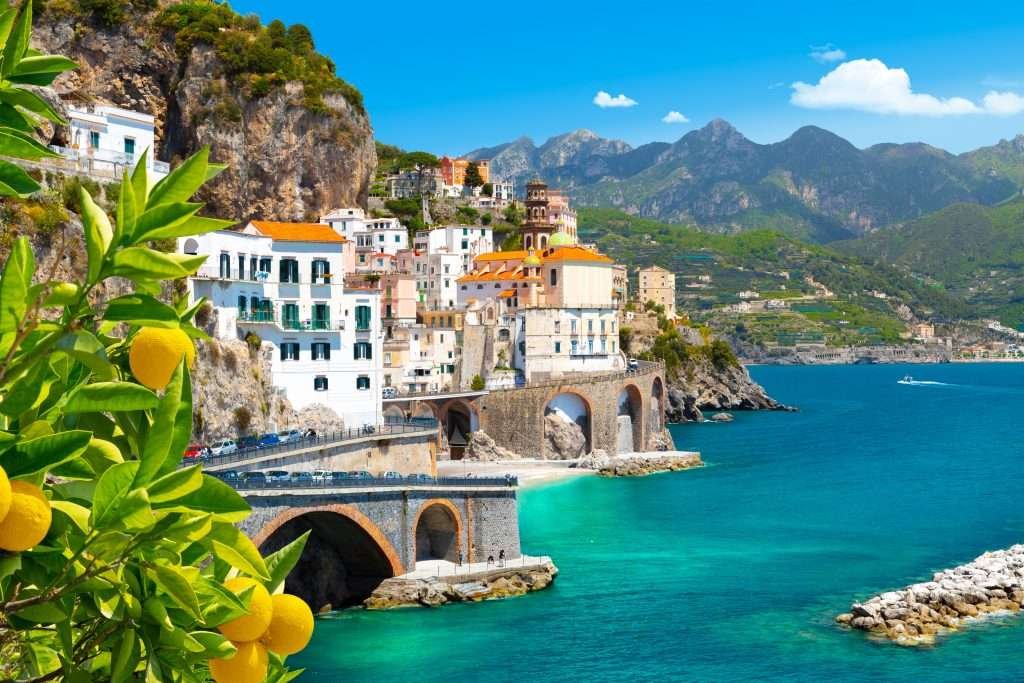
Amalfi is the geographic and transport hub of the coast. Every SITA bus route and most ferry connections pass through here, which means you can reach anywhere on the coast without a connection. The town sits at the mouth of the Valle dei Mulini – a narrow gorge running inland that once powered the paper mills (Amalfi had a thriving paper industry from the 13th century; the Museo della Carta on Via delle Cartiere covers this in 30 minutes for €5).
The Duomo di Sant’Andrea dominates the main piazza with an Arab-Norman facade built in the 9th century and substantially modified through the 12th and 13th. The bronze doors were cast in Constantinople in 1066. The interior has a Baroque overlay applied in the 18th century over the original structure – the cloister (Chiostro del Paradiso, €3) preserves more of the medieval character and is worth seeing. Entry to the cathedral itself is free outside of services.
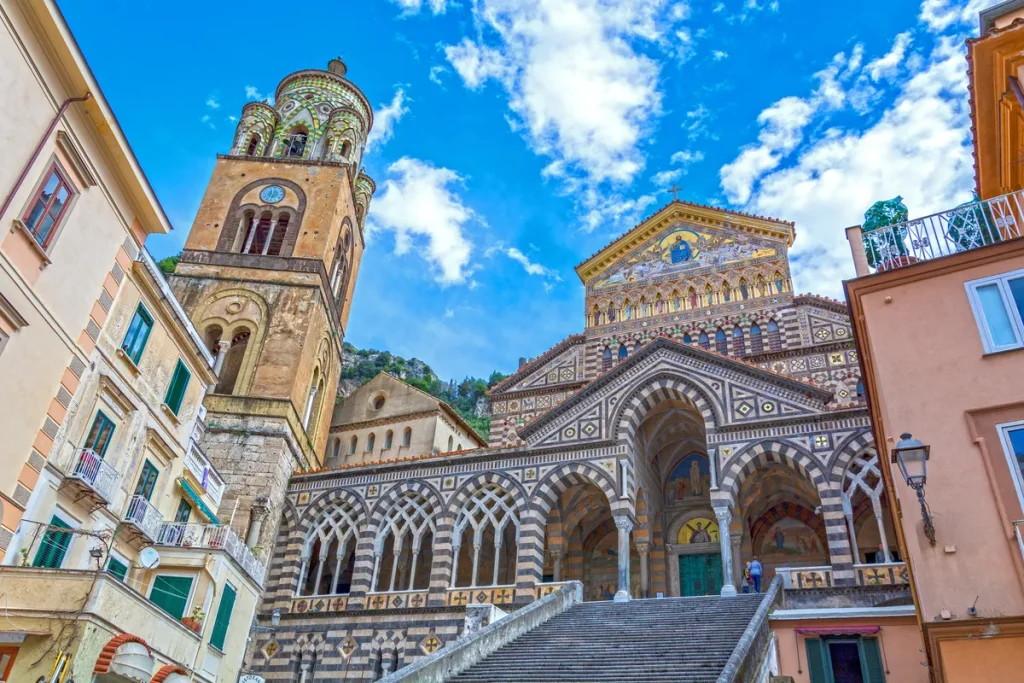
The main piazza (Piazza Flavio Gioia) floods with cruise ship passengers from about 10:30 AM to 3:30 PM in summer. Before and after those windows, the town is manageable. If you arrive on a cruise connection and have only the midday hours, this is the period you’re stuck with.
Who should base here: First-time coast visitors; anyone doing multiple day trips and needing transport flexibility; travelers who want a flat(ish) town – Amalfi has less vertical climbing than Positano.
Who should skip it: Travelers seeking quiet evenings – the main piazza stays busy until late in summer.
Accommodation range: €120-200/night mid-range; budget options in the side streets from €80.
Positano – Best for Aesthetics, Worst for Budgets
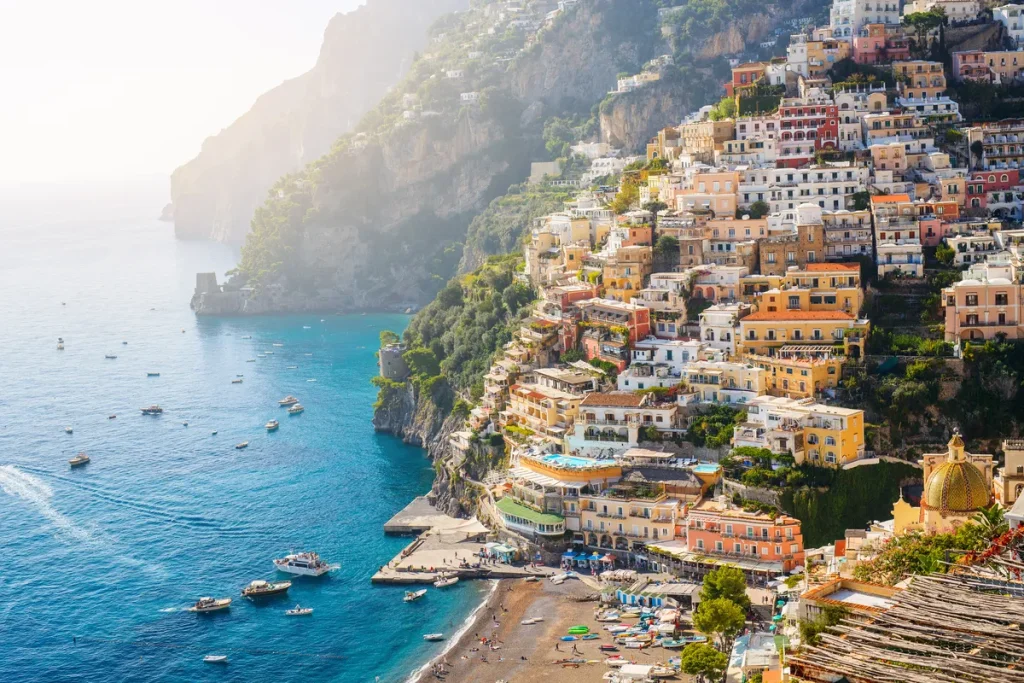
Positano is the town in the photographs. The houses stacked in tiers of pink, white, and terracotta from the cliff to the small beach at the bottom; the dome of Santa Maria Assunta visible through the buildings; the beach umbrellas in two narrow rows on Spiaggia Grande. The photographs are accurate. The town is genuinely as striking in person as it looks in images, which is both its main virtue and the explanation for its prices.
The geography is the immediate practical fact: Positano drops approximately 200 meters from the road (where the SITA bus stops) to the beach at the bottom. Getting from bus stop to beach involves either a long staircase descent or shuttle bus connections. Getting back up involves the same. Everything in Positano is either up or down – there is no flat. A full day here involves more elevation change than most people expect.
Spiaggia Grande (the main beach) charges €20-35 per person for a sun bed and umbrella. The smaller Fornillo beach, a 10-minute walk west around the headland from Spiaggia Grande, has cheaper rentals and fewer people. Both have clear water; Fornillo’s is marginally cleaner because it’s outside the main port area.
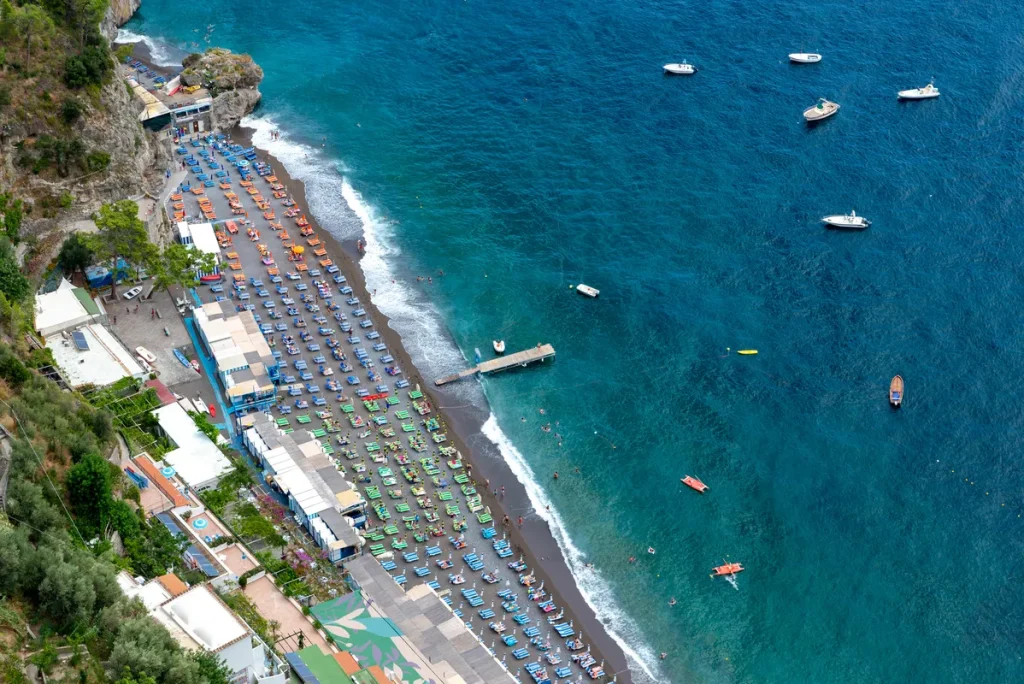
Who should base here: Honeymooners; travelers for whom visual experience is the point; anyone who has budgeted properly for the cost (sit-down dinners average €40-60 per person; cocktails at beach bars run €15-18).
Who should skip it: Budget travelers; anyone with knee or mobility issues; anyone whose trip is structured around covering multiple coast towns efficiently.
Accommodation range: €200-400/night mid-range; luxury cliff hotels from €600. The budget option does not meaningfully exist in Positano.
Praiano – Best Value on the Western Coast
Praiano sits between Amalfi and Positano, built across a headland rather than down a single cliff face, which means it’s more spread out and slightly less vertical than its neighbors. It has a small public beach (Marina di Praia, down a staircase from the main road), a handful of good restaurants, and accommodation prices roughly 40-50% below Positano for equivalent quality.
The specific advantage is sunset timing: Positano faces south-southwest and is in shadow from its own cliffs by mid-afternoon. Praiano faces southwest across open water and gets the last direct light of the day. The view from the San Gennaro church steps at sunset is one of the better free experiences on the coast.
The transport catch: Praiano has no ferry port. You’re dependent on the SITA bus, which means the mid-route boarding problem applies in peak season.
Who should base here: Travelers who want the coast at lower prices; anyone who prioritizes evenings over day logistics; couples.
Accommodation range: €100-180/night mid-range; some excellent agriturismi outside town from €90.
Ravello – Best for Views and Quiet
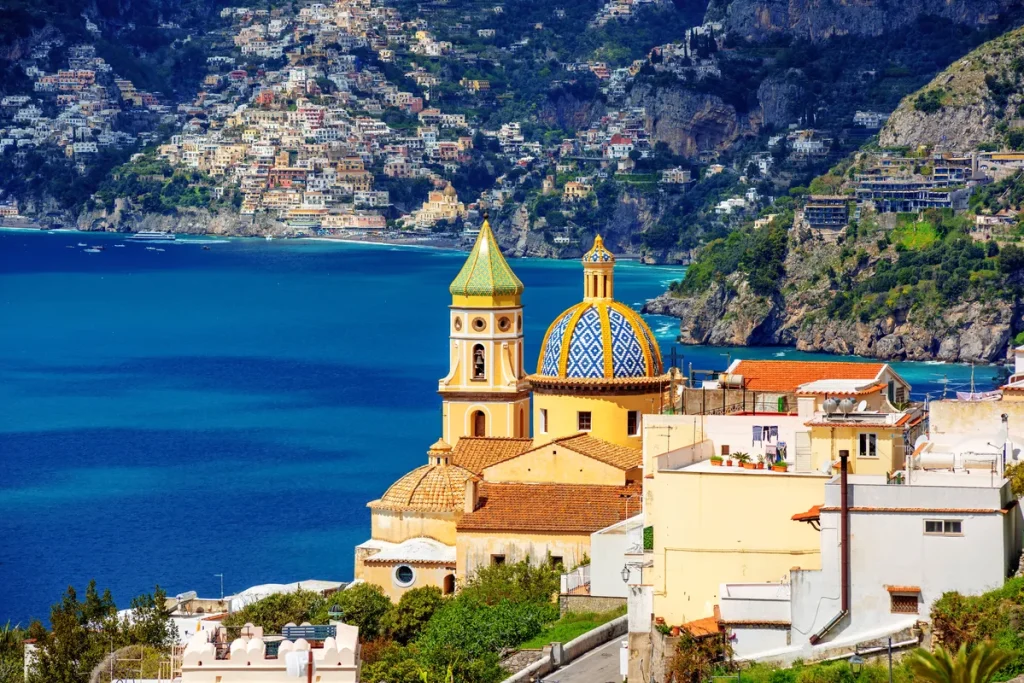
Ravello sits 350 meters above sea level on a ridge between two valleys, connected to Amalfi by a road and a bus (roughly 30 minutes). It has no beach and no ferry connection. What it has is the best panoramic position on the coast and two historic villa gardens.
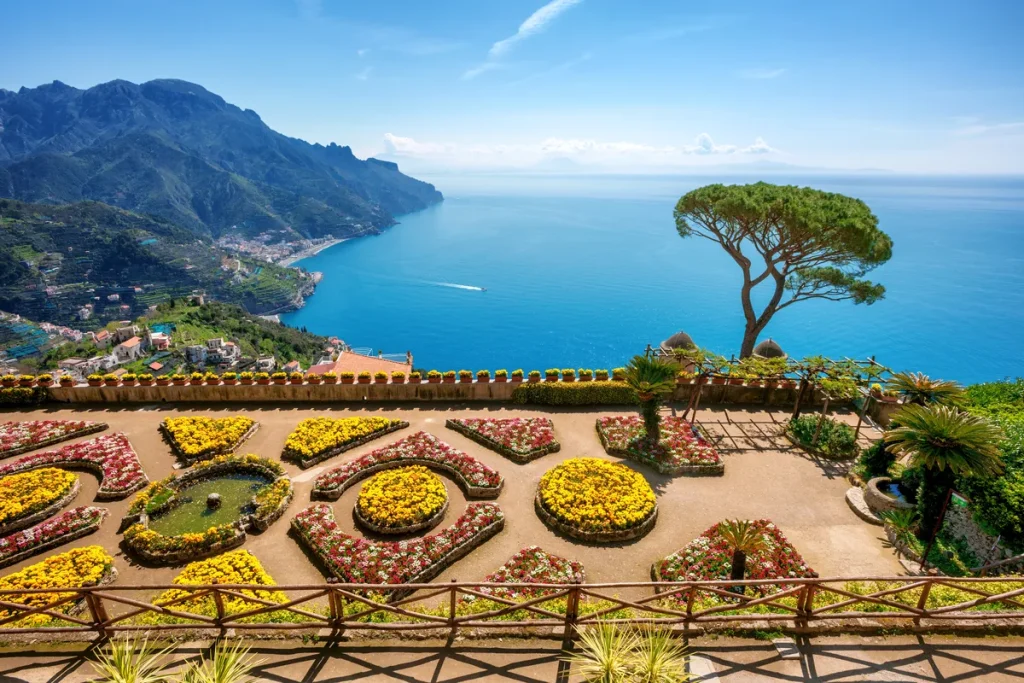
Villa Cimbrone was restored by an English aristocrat in the early 20th century and opened to visitors. The Terrazza dell’Infinito at the end of the garden is a marble-balustraded belvedere with a 180-degree view over the coast and sea – the view Gore Vidal described as the most beautiful in the world, though he was living in a house below it at the time. Entry: €8. The garden is at its best in May-June when the roses are in flower.
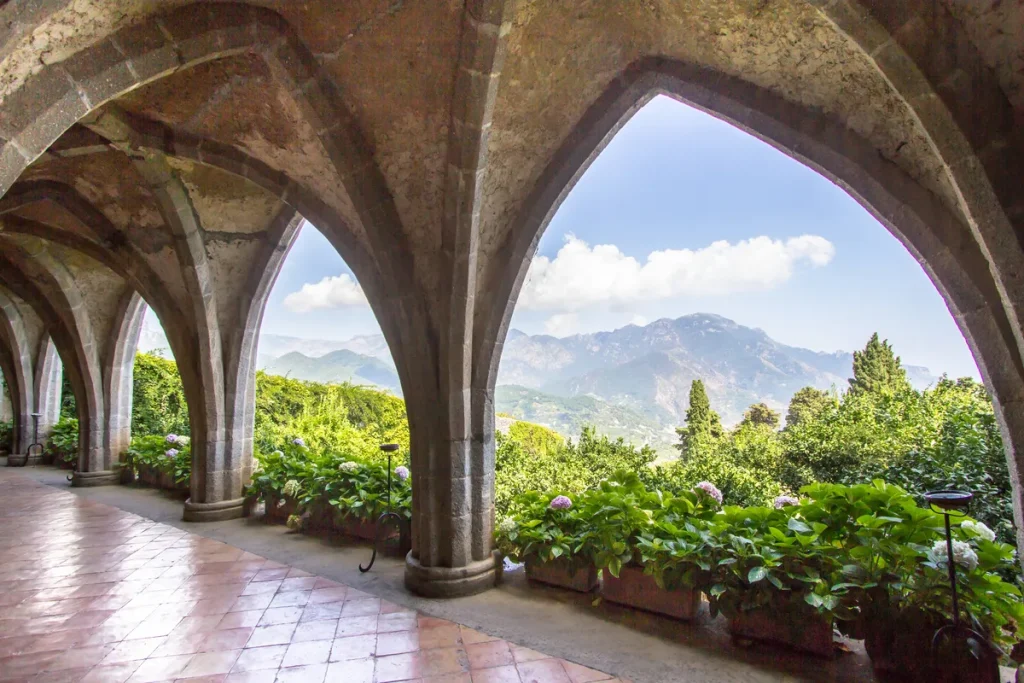
Villa Rufolo was built in the 13th century by a wealthy Ravello merchant family and has been in various states of ruin and restoration since. Wagner visited in 1880 and said the garden inspired the flower garden in Parsifal. The Ravello Festival uses the villa’s garden terrace as an open-air concert venue from June through September; tickets for specific performances run €30-80. Entry to the villa: €7.
Ravello at night, after the day-trippers descend to Amalfi, has a different character from anywhere else on the coast. The main piazza, the Duomo, and the streets are quiet. Accommodation here books far ahead for summer.
Who should base here: Garden and music travelers; anyone who actively wants to be away from beach culture; longer-stay visitors who want quiet evenings.
Who should skip it: Beach-focused travelers; anyone who will resent being dependent on a bus to reach the water every day.
Accommodation range: €130-250/night mid-range.
Maiori and Minori – Best for Families and Budgets
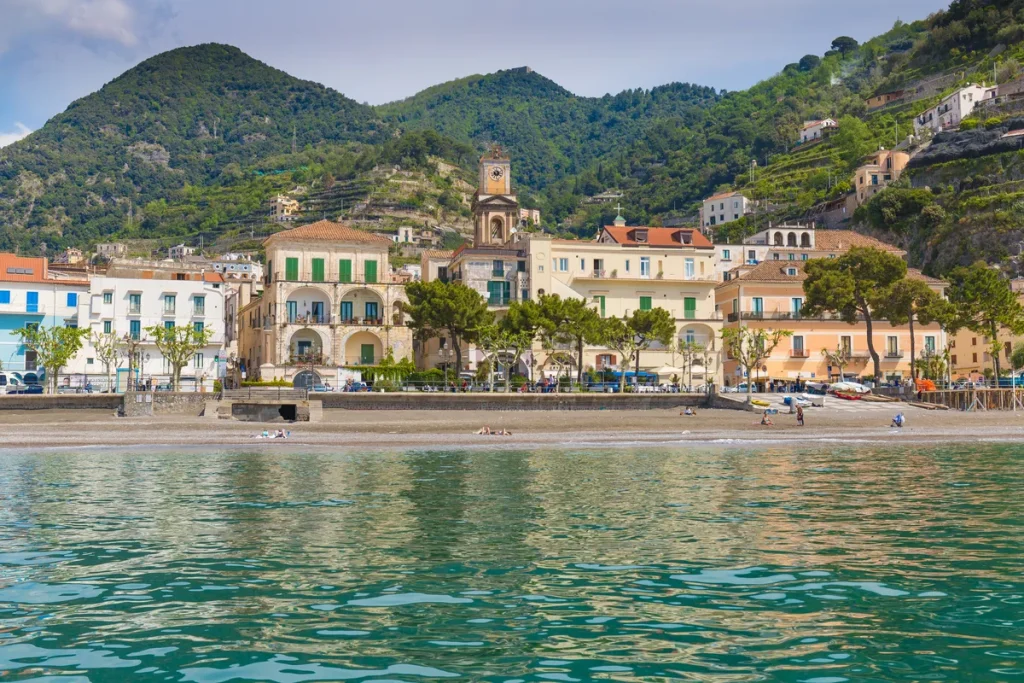
The only towns on the coast with genuinely flat, wide sandy beaches. Both are east of Amalfi on the SITA bus route toward Salerno, which makes them less convenient for Positano day trips but well-positioned for Amalfi and Ravello. Accommodation runs 30-50% cheaper than Amalfi town.
Minori specifically is worth knowing for Sal De Riso on Corso Vittorio Emanuele, the pastry shop that produces the delizia al limone (lemon cream cake dome) that has become the coast’s signature dessert. The shop also sells colatura di alici (anchovy extract) and other local products.
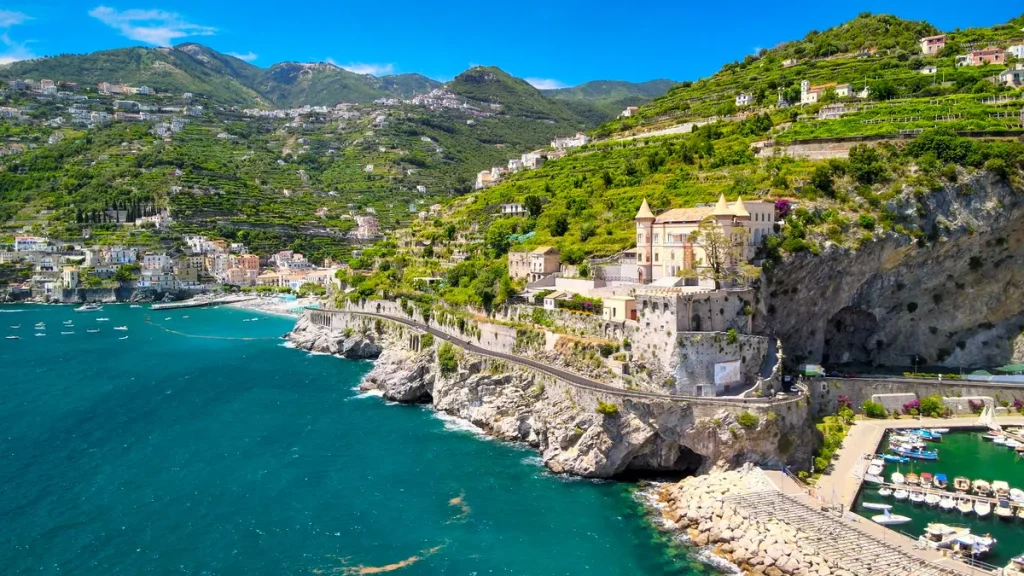
Who should base here: Families with young children (flat beach, no vertical city); budget travelers; anyone whose priorities are beach time over sightseeing logistics.
Accommodation range: €70-140/night mid-range; budget from €55.
The Main Experiences
Path of the Gods (Sentiero degli Dei)
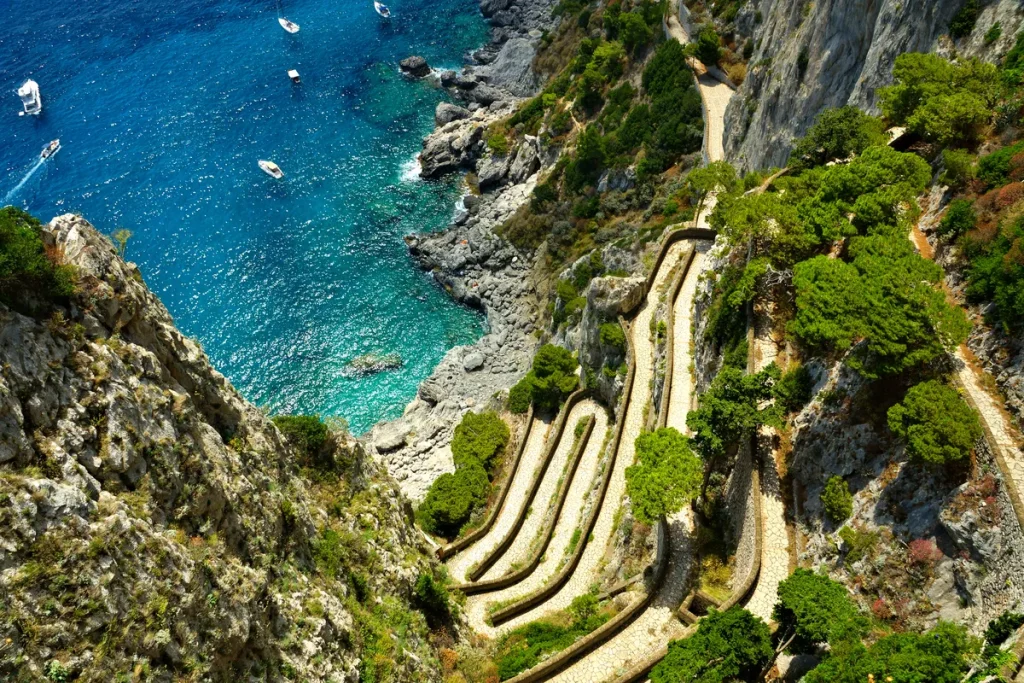
The most significant hike on the coast runs approximately 7.5 kilometers from Bomerano (in the municipality of Agerola, inland above Praiano) to Nocelle (above Positano). The path follows the cliff edge at roughly 600 meters altitude, with continuous views down to the sea and back along the coast.
Direction: Walk from Bomerano toward Nocelle – this is predominantly downhill (losing around 200 meters) rather than the reverse. Allow 3-4 hours at a normal pace.
Getting to Bomerano: Bus from Amalfi or Positano to Agerola, then local bus to Bomerano. The connection from Amalfi takes about 1 hour total. Start early – the path has no shade and the exposed sections are brutal in midday heat. Aim to be at the trailhead by 8:00 AM in July and August.
From Nocelle: 1,700 stone steps descend to Arienzo beach on the edge of Positano. The steps are steep and require careful footing, but the beach at the bottom has a bar and clear water – a reasonable reward. From Arienzo, a water taxi to Positano’s main beach costs around €10.
Conditions: The path is rocky and requires proper footwear with grip. It is not a casual walk. It can be closed after heavy rain due to rockfall risk – check with the local tourist office before setting out.
Capri Day Trip
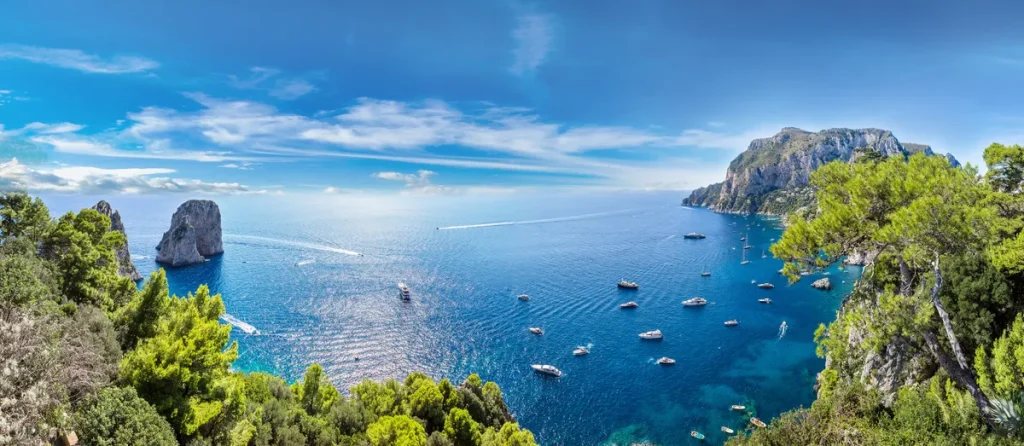
Ferries to Capri depart from Positano, Amalfi, and Sorrento. From Amalfi: approximately 1 hour 10 minutes, €20-25 each way. From Sorrento: 25 minutes, €20.
Take the earliest ferry available – in summer this means 8:00 AM or earlier from wherever you’re departing. Day-trippers from Naples arrive in large numbers from mid-morning and the island’s main paths, the funicular, and the Blue Grotto queue become overwhelmed.
Blue Grotto logistics: A boat to the entrance costs around €15 from Marina Grande; the small rowboat entry into the grotto costs an additional €15-18. Inside, you have approximately 2 minutes in the blue light before the rowboat exits to admit the next group. The cave is genuinely beautiful. The queue for the rowboat in summer is 45-90 minutes. Whether the wait is worth the experience is a personal decision; many visitors feel it isn’t.
Monte Solaro: Take the chairlift from Anacapri to the summit (608 meters, €11 each way) for a 360-degree view including the Faraglioni rocks below, the Bay of Naples, and on clear days the Apennine peaks inland. The top is uncrowded compared to the Blue Grotto queue and the view is superior.
Anacapri vs Capri town: Capri town (connected from Marina Grande by funicular, €2) is the luxury shopping and restaurant center. Anacapri (bus from Marina Grande or Capri town, €2) is quieter, cheaper, and has most of the serious walking routes. If you’re spending a full day, use both.
Villa Cimbrone, Ravello
Covered above under Ravello as a base. Worth noting as a standalone day trip from Amalfi: bus from Amalfi to Ravello (30 minutes, €1.30), gardens in the morning, lunch in Ravello, bus back. A manageable half-day that doesn’t require basing yourself there.
Cetara and Colatura di Alici

Cetara is a small fishing village east of Maiori on the bus route toward Salerno. It produces colatura di alici – a fermented anchovy extract descended directly from the Roman garum, made by packing anchovies in salt in wooden barrels for 12 months and collecting the amber liquid that drains off. The flavor is intensely saline and umami, used in small quantities as a seasoning rather than eaten directly.
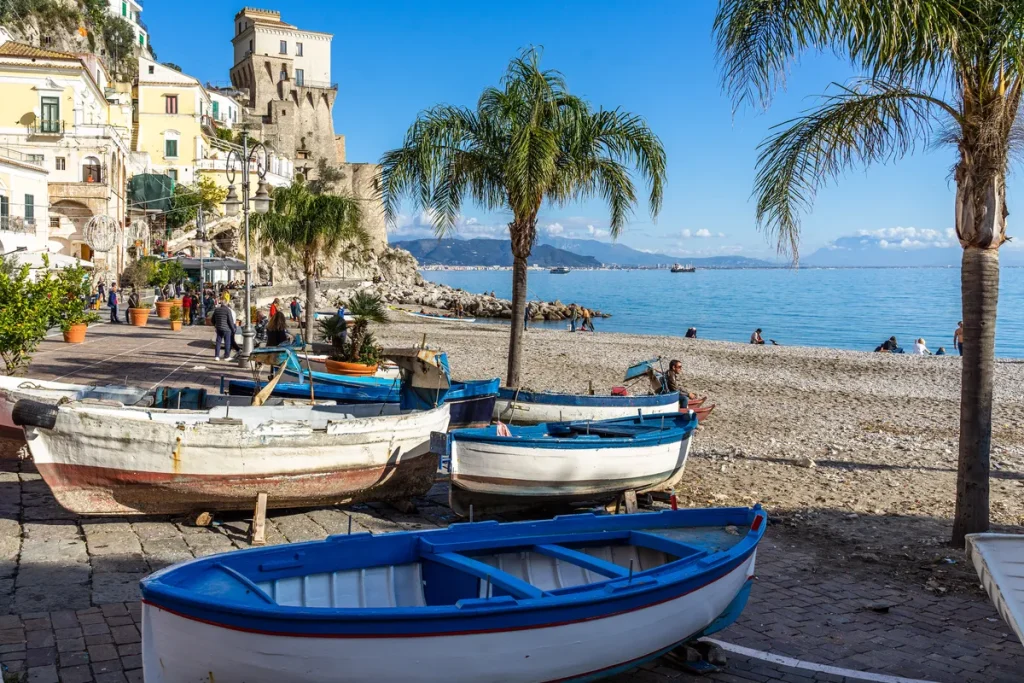
The signature dish here is spaghetti con colatura di alici: pasta cooked and dressed with colatura, garlic, parsley, and olive oil off the heat. No cheese, no cream – the colatura is the sauce. Eat it at any of the restaurants along the harbor. It costs €12-16 for a portion.
You can buy bottled colatura to take home from the local shops; look for Delfino Battista brand. A 100ml bottle costs €8-12 and is worth buying if you cook.
Atrani
Five minutes’ walk from Amalfi town through a pedestrian tunnel and under a bridge, Atrani is technically a separate municipality (one of Italy’s smallest by area) with a small beach, a main piazza, and almost none of the tourist infrastructure of its neighbor. The architecture is the same Amalfi vernacular – white plaster, arched passageways, buildings stacked up the cliff walls – but the scale is intimate and the pace is different. Worth the 10-minute detour from Amalfi for lunch or an evening drink.
Food: What’s Specific to the Coast
Sfusato Amalfitano lemons
The coast’s lemons (sfusato amalfitano) are cultivated on terraced gardens (giardini) cut into the cliff faces, typically protected by reed canopies (pagliarelle) to moderate the temperature. They’re larger, less acidic, and more aromatic than standard lemons, with a thick pith that is eaten alongside the flesh in some preparations.
Delizia al limone is the local pastry: a dome of sponge soaked in lemon syrup, filled with lemon cream, coated in more lemon cream. Sal De Riso in Minori is the benchmark.
Limoncello made on the coast uses the sfusato rind steeped in neutral grain spirit then blended with sugar syrup. It should be served cold from the freezer in small glasses. Bottles sold at roadside stalls vary significantly in quality; buy from a producer or a serious shop rather than a souvenir stand.
Pasta al limone is the simplest preparation: pasta finished in a sauce of butter, lemon juice, lemon zest, and sometimes Parmigiano. It sounds plain and is excellent when the lemon quality is right.
Scialatielli
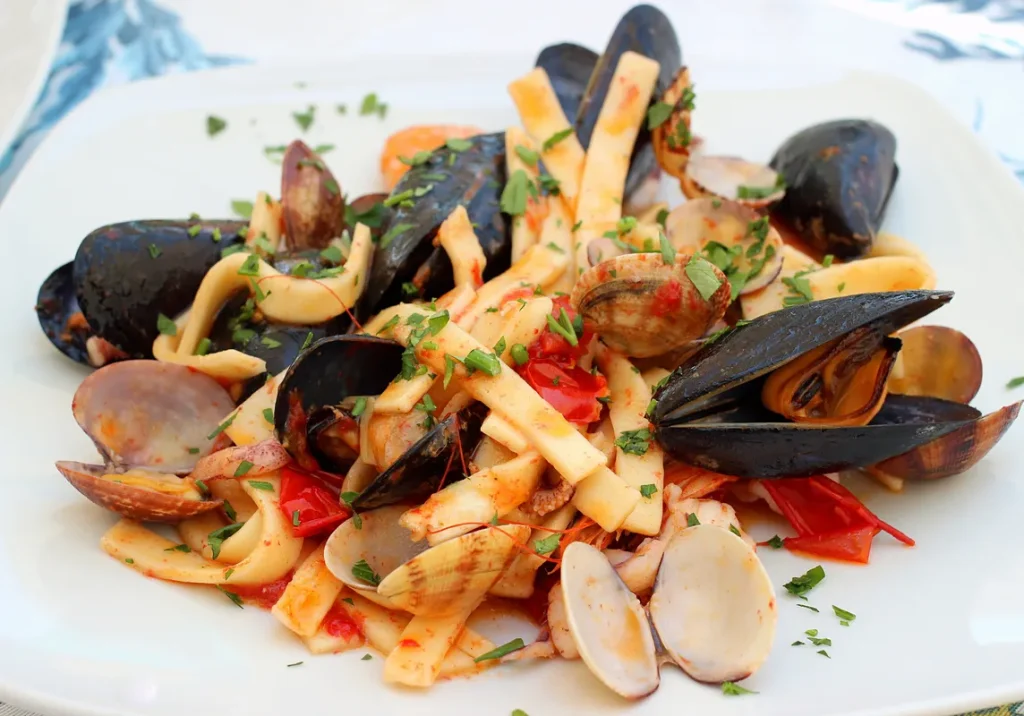
The pasta specific to the Amalfi Coast, invented (or at least formalized) by a Positano chef in the 1970s. Short, thick, slightly flat strands made with flour, milk, basil, and sometimes pecorino in the dough. The texture is chewier than standard dried pasta. Order it with mixed seafood (frutti di mare) – mussels, clams, prawns, and sometimes sea urchin depending on what was landed that morning. Price: €16-22 at a mid-range restaurant.
Avoiding tourist-menu restaurants
The coast has a higher density of tourist-menu restaurants than almost anywhere in Italy – the laminated multi-language menu with photographs outside the door is the tell. These serve adequate food at elevated prices to people who won’t return. The better approach: eat at restaurants without a view of the main beach or piazza (you’re paying for the table position), look for restaurants with a handwritten daily board, and eat your main meal at lunch (menù del giorno is often €15-20 for two courses including wine). In Amalfi and Positano, one street back from the main pedestrian routes drops prices noticeably.
Budget Breakdown
| Category | Budget | Mid-Range | Luxury |
|---|---|---|---|
| Accommodation per night | €60-80 (Maiori/hostel) | €150-200 (Amalfi/Praiano) | €400+ (Positano cliff hotel) |
| Sit-down meal per person | €15 (pizza, inland trattoria) | €35-45 (seafood trattoria) | €100+ (terrace restaurant) |
| Beach sunbed + umbrella | €0 (public beach) | €20-35 | €80-120 (beach club) |
| Ferry (one leg) | €8 | €12-15 | €60+ (private water taxi) |
| SITA bus (per leg) | €1.30 | – | – |
The coast is not cheap by Italian standards. The honest minimum for a comfortable day including lunch and transport is €60-80. July and August add approximately 25-35% to accommodation rates across the board compared to May or September.
When to Visit
May and early June: Best overall. Water is warm enough to swim (18-20°C), accommodation is at shoulder-season rates, the lemon terraces are in flower, and the Path of the Gods is at its most walkable before the summer heat. Ferry services are running but not at maximum July/August frequency.
September: The practical alternative to May. Water is warmest of the year (22-24°C), crowds are slightly lower than August, and prices begin dropping after the first week. The Ravello Festival runs through September.
July and August: The coast is operating at maximum capacity. Ferry queues, bus problems, and accommodation prices at their peak. If these are your only available weeks, book everything – accommodation, ferries, Path of the Gods transfers – well in advance. The experience is still worth it; it’s just more logistically demanding.
October-April: Many hotels close (particularly in Positano, where a significant proportion of properties shut from November through March). The SITA bus continues year-round; ferries are reduced or suspended depending on weather. Ravello, Amalfi, and Atrani remain open and genuinely quiet. Worth considering for travelers who prioritize the landscape over beach swimming.
Plan Your Trip
- First Time in Naples
- 3 Days in Naples
- Where to Stay in Naples
- 5 Best Day Trips from Naples
- Naples Food Guide
- First Time in Rome
- 1 Day in Rome
- 3 Days in Rome
- 5 Days in Rome
- Rome on a Budget
- Foodies Guide to Rome
- Where to Stay in Rome
- Day Trips from Rome
- Rome with Kids
- Rome in Winter
- Rome vs Florence
- Rome vs Venice
- 10 Days in Southern Italy
- Milan vs Rome
- Naples vs Rome
- Day Trip to Tivoli from Rome
- Amalfi Coast Travel Guide
Can you do the Amalfi Coast as a day trip from Rome?
Technically yes via high-speed train to Naples or Salerno and then ferry. The journey is approximately 2.5-3 hours each way, which leaves 4-5 hours on the coast. It’s not recommended – you spend more time in transit than on the coast, and you see one town rather than the coast’s range. Naples is the correct base for this trip. The Naples on a budget guide covers how to use Naples as a southern Italy base without overspending.
What is the difference between Positano and Amalfi for a first visit?
Positano is more photogenic and more expensive; Amalfi is more practical and better connected. For a first coast visit with limited days, base in Amalfi and take a ferry to Positano for a day – you get the visual experience without paying Positano’s accommodation premium every night.
Is the Blue Grotto worth it?
The grotto is genuinely beautiful – bioluminescent blue light fills the cave from an underwater entrance. The problem is the queue in summer (45-90 minutes) and the 2-minute experience inside the rowboat. If you arrive at Capri on the first ferry (before 9:00 AM) you can often do it with a short wait. After 10:00 AM in July and August, the queue makes it a poor use of a day. Monte Solaro is a better use of 2 hours.
How many days do you need on the Amalfi Coast?
A minimum of 3 nights to see Amalfi, Ravello, Positano, and make a Capri day trip without rushing. 5-7 nights allows for the Path of the Gods hike, Cetara, and the slower pace that makes the coast worthwhile. Two nights is doable if your itinerary is fixed, but you’ll be moving quickly.
Are there good beaches away from the main crowds?
Yes. Fornillo in Positano (10-minute walk from Spiaggia Grande), Marina di Praia in Praiano (small and less known), Duoglio near Amalfi (accessible by shuttle boat from the port, fewer sunbeds), and the cove at Fiordo di Furore (a narrow beach under a bridge, reached by stairs, with very limited space – arrive early). All have cleaner water than the main ports.
Amalfi Coast — Towns, Transport & What to Actually Do 2026
50km of limestone cliffs from Positano (west) to Vietri sul Mare (east), plus Capri day trip. Ferry beats the coast road every time. Click any pin.