
If you tell your friends you are traveling to Venice on a budget, they will laugh. The city has a global reputation for being overpriced, predatory, and actively hostile to your wallet.
They are not entirely wrong. Venice is a fragile, 1,500-year-old architectural city with zero road infrastructure. Everything – from the pasta you eat to the trash you throw away – must be transported by hand over hundreds of bridges or by boat through narrow canals. That logistical reality is passed directly to the consumer. Arrive unprepared and you will pay €10 for a coffee in St. Mark’s Square, €90 for a twenty-minute gondola ride, and €30 for a plate of frozen lasagna.
But beneath the cruise-ship veneer, Venice is still a functioning Italian city with a deeply rooted local economy. The students at Ca’ Foscari University and the residents of Cannaregio do not pay €10 for coffee. They use standing-room bars, exploit public ferry passes, and know which cultural institutions are free. This guide shows you exactly how to do the same.
If you are working through a 3 Days in Venice or 1 Day in Venice itinerary, treat this as your financial operating manual.
The Luggage and Logistics Trap
Your budget strategy starts the moment you arrive at Santa Lucia train station or Piazzale Roma.
The Heavy Luggage Tax
Venice has 435 bridges. Almost none have ramps. A 20kg suitcase gives you two options: haul it over ten bridges and destroy your wheels, or pay a porter. Neither is good.
- The move: Use the Deposito Bagagli at the station. Around €8 per bag for the first few hours. If you are staying one night or doing a day trip, leave the bag and carry only a backpack. You avoid the porter cost and remove any temptation to take a water taxi.
Vaporetto vs. Walking
A single 75-minute Vaporetto ticket costs €9.50 in 2026. Four rides and you have spent €38 on transit before lunch.
- Venice is small. Walking from the train station to St. Mark’s Square takes 25 minutes. Do that 90% of the time.
- Exception: Outer islands – Burano, Murano, Torcello – require a boat. For those days, buy a 24-hour pass (€25) or 48-hour pass (€35). Single tickets never work out cheaper on island days.

The Access Fee
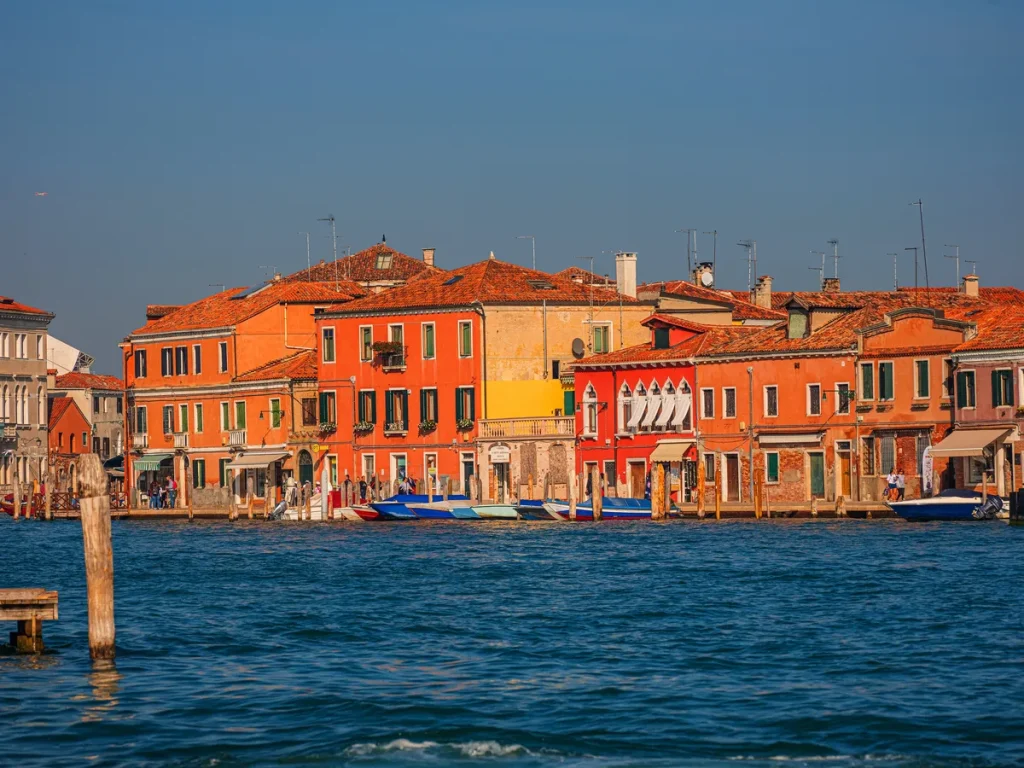
Day-trippers on peak spring and summer weekends pay a €5 entry fee (Contributo di Accesso).
- If you have a hotel booking inside the city, you are exempt – but you still need to register on the official portal for a QR code.
- Skip the QR code and get spot-checked at the station: the fine runs €50 to €300. A €5 admin task is not worth turning into a €300 problem.
The Bacaro Economy – The €15 Dinner
If a restaurant near any major sight has photos of food on a board outside, keep walking. You will pay a coperto (cover charge) of €3-€5 per person, a 12% service charge, and eat industrial-grade pasta.
The alternative is the Bacaro Crawl.
A bacaro is a traditional Venetian wine bar – usually dark, wood-paneled, and standing-room only. They serve Cicchetti, the Venetian equivalent of tapas.
- Each piece of cicchetti: €1.50 to €3.50
- A glass of ombra (small house wine): €1.50 to €2.00
How it works: Walk into Cantina Do Mori or All’Arco near the Rialto. Point at three or four items behind the glass – baguette with whipped salt cod (baccalà mantecato), a fried meatball (polpette), marinated octopus. Add a glass of wine. Total: €10 to €12. You eat standing at the counter or on a bridge outside. No cover charge, no service fee.
The Spritz Rule: An Aperol Spritz in a back-alley bar costs €4 to €5. The identical drink in St. Mark’s Square costs €15. Geography is everything.

Gondolas vs. Traghetti
The official rate for a 30-minute private gondola: €90 daytime, €110 after 7 PM.
The €2 Gondola (Traghetto)
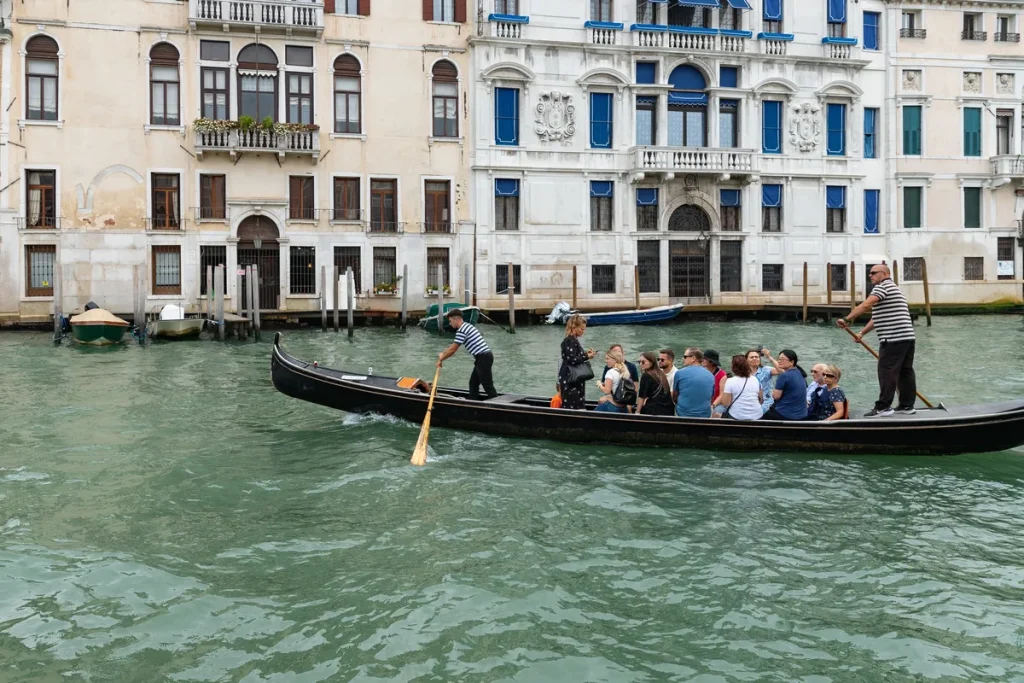
There are only four bridges crossing the full length of the Grand Canal. To move locals across quickly, the city runs Traghetti – large gondolas rowed by two gondoliers.
- Look for the yellow “Traghetto” signs at the water’s edge.
- Hand over €2 cash, get rowed across the Grand Canal. Two minutes. Tradition says you stand up for the crossing.
- It is a legitimate gondola experience for the cost of an espresso.
The Front-Seat Vaporetto
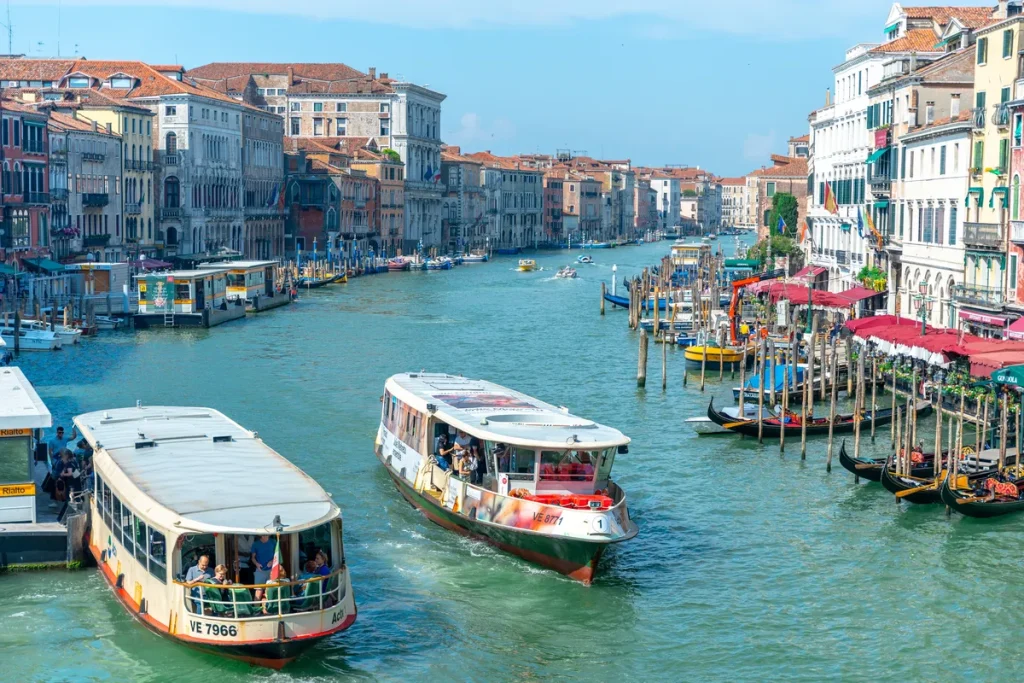
Board the Line 1 Vaporetto at the train station and go to the very front or very back of the boat – the open-air sections. For the price of your transit pass, you get a front-row seat along the Grand Canal for its full length. (Sit inside the cabin and you see nothing but windows.)
Free Art and Cultural Loopholes
Churches as Free Museums
Many of Venice’s smaller churches are free to enter and contain work that would headline any major museum.
- San Zaccaria: Bellini’s Madonna Enthroned with Saints – one of the most important Renaissance paintings in Italy. Free entry.
- Santa Maria della Salute: The massive octagonal Baroque church at the tip of Dorsoduro. Free to enter. Built as a votive offering after the 1630 plague killed a third of the city’s population.


The Rooftop View (Fondaco dei Tedeschi)
Skip the €15 Campanile ticket.
- Directly next to the Rialto Bridge is the Fondaco dei Tedeschi, a luxury department store. The wooden rooftop terrace has the best sightline of the Grand Canal’s full S-curve. Free.
- The catch: Book a time slot on their website exactly 21 days in advance. Slots sell out within minutes of opening. Miss the window, miss the view.

The Geography of Savings
Venice is divided into six sestieri. Where you stand determines what you pay.
- San Marco: Do not buy food here. Do not buy water here.
- San Polo: Good for the Rialto markets, but still heavily touristed.
- Cannaregio and Dorsoduro: Where locals and university students actually live. Find supermarkets like Billa or Coop in Cannaregio – a 1.5L water bottle costs €0.60 versus €3 in San Marco.
- The Ghetto (Cannaregio): Quiet, historic, and home to some of the best-value bakeries in the city. Try the almond cookies (sullo scoglio) – cheap, dense, and keep you going between bacaro stops.
The Fontanelle (Free Drinking Water)
Buying bottled water every hour in summer heat costs €15 a day. Don’t.
Venice has over 100 Fontanelle – cast-iron public fountains dispensing cold, safe drinking water from the mainland. There is at least one in every major campo.
- Bring a reusable bottle and refill it throughout the day.
- The “Venice Tap Water” app maps all fountain locations if you want to plan ahead.
The Standing Coffee Rule
Every bar in Italy has two prices: al banco (standing at the bar) and al tavolo (sitting at a table).
- Sit down in a tourist area and a €1.50 espresso becomes a €6.00 espresso.
- Walk up to the bar, say “Un caffè, per favore,” drink it standing, pay, leave. Cost: €1.20 to €1.50, even in decent neighborhoods.
Timing the Rialto Market
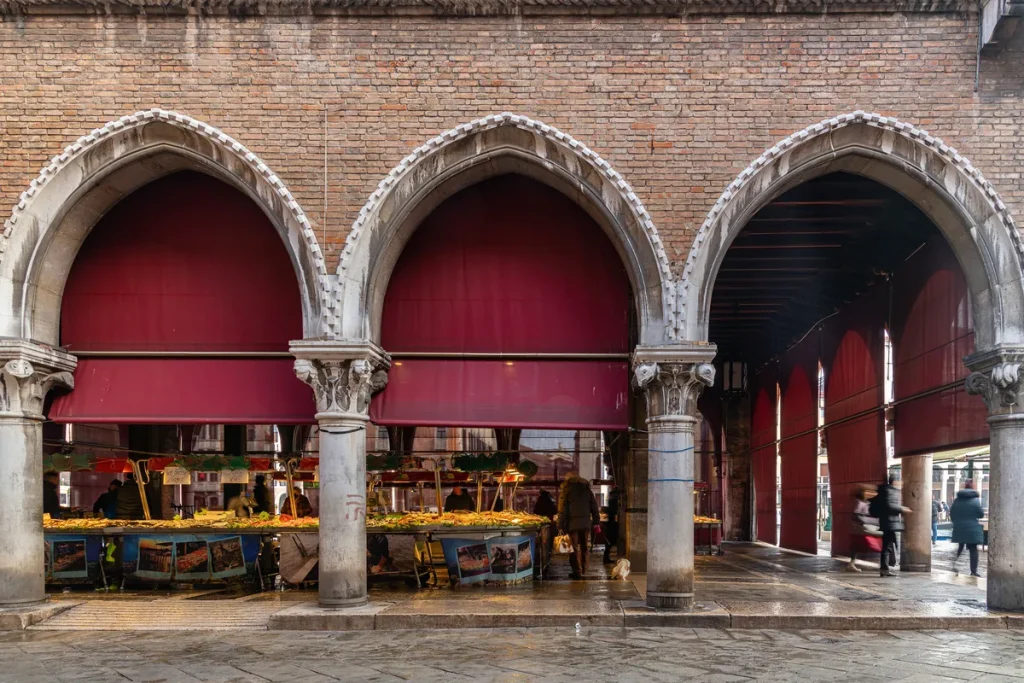
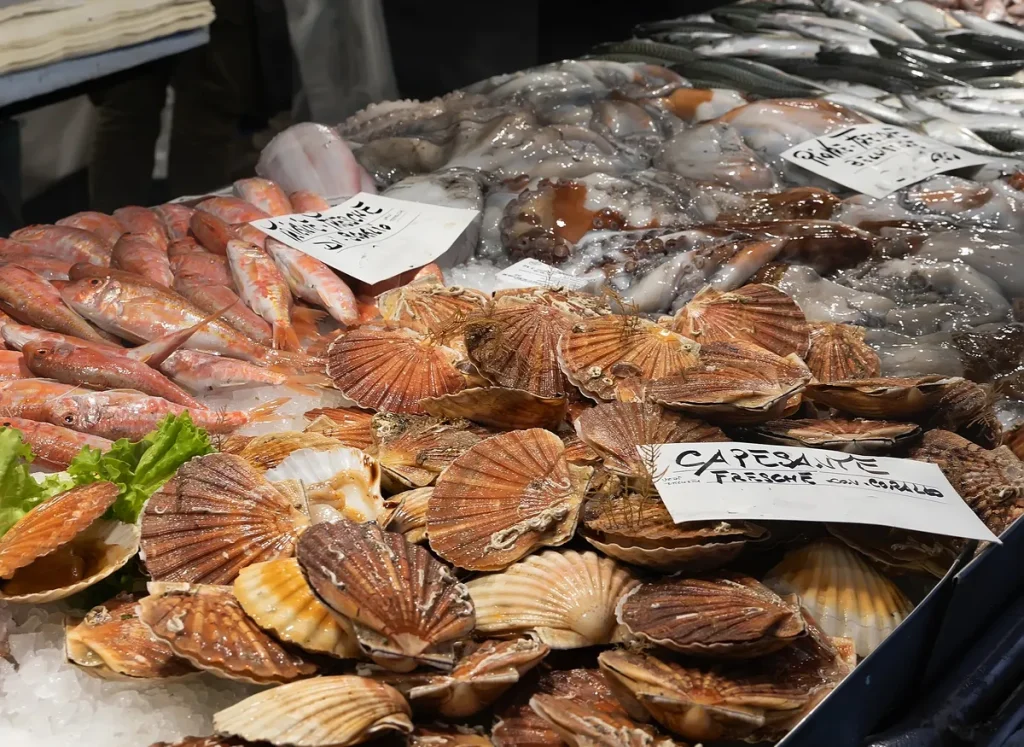
The Mercato di Rialto runs between 7:30 AM and 11:00 AM – fish stalls, produce, and local vendors. Free to wander through and genuinely one of the most photogenic spots in the city.
- Buy fresh cherries or peaches at the market, walk five minutes away from the main drag, find a quiet canal edge, and eat. A five-star setting for €3.
The Bottom Line
The “Venetian Tax” targets people who are in a hurry, lost, or afraid to walk away from the main tourist corridor between the station and St. Mark’s. Step ten minutes into the backstreets of Cannaregio, eat standing at a dark bar with local pensioners, and book your free rooftop slot three weeks out – and Venice becomes one of the most rewarding cities in Italy for the money.
You do not need a gondola to feel the lagoon. You need a €2 traghetti ticket, a glass of house wine, and the willingness to put the map down.
Plan Your Trip
Is Venice really expensive for tourists?
Venice is expensive if you eat and drink near the main sights. A coffee in St. Mark’s Square costs €10; the same coffee standing at a bar in Cannaregio costs €1.50. The price gap between tourist zones and residential neighborhoods is larger in Venice than almost any other Italian city.
What is the cheapest way to get around Venice?
Walking. Venice is small enough that you can cross it on foot in under 30 minutes. When you need a boat, buy a 24-hour Vaporetto pass (€25) rather than single tickets (€9.50 each). For crossing the Grand Canal quickly, use the Traghetto for €2.
Can you do a gondola ride in Venice without paying €90?
Yes. The Traghetti are traditional gondolas that cross the Grand Canal at four points around the city. You pay €2, stand up for the two-minute crossing, and it is rowed by professional gondoliers. It is not a tour, but it is a genuine gondola experience.
What is the best neighborhood to eat cheaply in Venice?
Cannaregio and Dorsoduro. Both are residential districts with working bacaro bars, local supermarkets, and university crowds that keep prices honest. Avoid sitting down anywhere near San Marco or the Rialto Bridge for a full meal.
Do you have to pay to enter Venice in 2026?
Day-trippers visiting on peak spring and summer weekends pay a €5 access fee (Contributo di Accesso). Overnight guests with a hotel booking inside the city are exempt but still need to register online for a QR code. Getting caught without it costs €50 to €300.
Venice on a Budget — Money Map
Where to save, what’s free, and which traps to walk straight past. Click any pin.