
What to eat in Naples is one of the most important questions you’ll ask before visiting this chaotic, food-obsessed city in southern Italy.
For centuries, Naples has been the culinary engine of southern Italy. This is a city that does not view eating as a biological necessity; it views it as a fiercely protected, intensely emotional religion. The soil surrounding the city is heavily enriched by the volcanic ash of Mount Vesuvius, producing tomatoes that taste like pure sunshine and grapes that yield spectacularly complex wines.
However, dining in the capital of Campania can be an intimidating prospect for foreigners. The restaurants are loud, the menus are often written in a thick local dialect, and the unwritten rules of how, when, and what to eat are rigidly enforced. If you walk into a restaurant at 6:30 PM asking for a pepperoni pizza with a side of garlic bread, you will be met with profound confusion and possibly outright hostility.
If you are currently organizing your First Time in Naples: The Ultimate 2026 Survival and Travel Guide, understanding the culinary landscape is the single most critical aspect of your trip. This comprehensive, deep-dive guide will teach you exactly how to order, what to avoid, and how to eat like a true Neapolitan.
Chapter 1: The Cult of Neapolitan Pizza
We must start with the undisputed heavyweight champion of the city. Naples invented pizza, and they treat it with a level of reverence that borders on the fanatical. Authentic Neapolitan pizza is actually protected by a strict European Union certification (STG – Specialità Tradizionale Garantita).
The Texture Shock If you are used to New York-style pizza-a massive, rigid triangle that you can fold and eat with one hand while walking down the street-you are in for a massive shock.
A true Neapolitan pizza is completely soft. The dough is highly hydrated, allowed to ferment for up to 48 hours, and then blasted in a wood-fired oven at a screaming 480°C (900°F) for exactly 60 to 90 seconds. The result is a pizza with a wildly puffed, heavily blistered, and charred outer rim (the cornicione). The center of the pizza, however, is whisper-thin, wet, and soupy from the melted fresh mozzarella and crushed tomatoes.
You cannot pick it up by the slice. The tip will instantly collapse, and the molten toppings will slide into your lap. You must sit down, and you must eat it with a knife and fork.
The Ordering Rules When you sit down at a legendary, old-school institution like L’Antica Pizzeria da Michele or Sorbillo, do not ask for a menu with fifty different topping combinations. The purists believe there are only two acceptable pizzas:
- The Margherita: Crushed San Marzano tomatoes, fresh fior di latte (cow’s milk mozzarella) or mozzarella di bufala (water buffalo mozzarella), fresh basil leaves, and a drizzle of raw extra virgin olive oil.
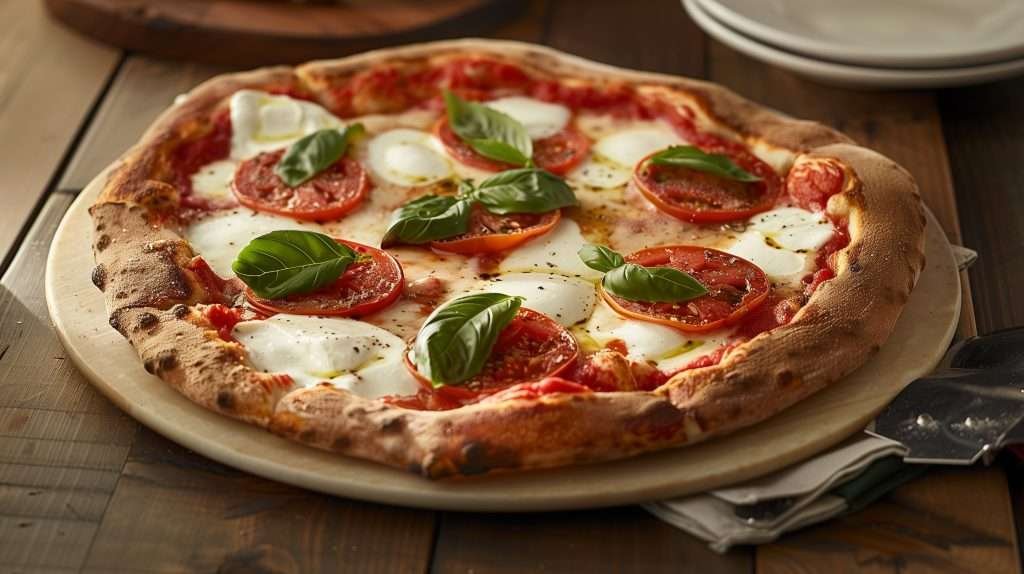
- The Marinara: Crushed tomatoes, heavily sliced raw garlic, oregano, and olive oil. There is absolutely no cheese on a Marinara. You order one entire, uncut pizza per person. You do not share. Even though it looks massive, the dough is so light and digestible that you will easily finish it. And the best part? If you follow the budget strategies laid out in Naples on a Budget: The Ultimate Money-Saving Guide (2026), you will be thrilled to know a world-class Margherita rarely costs more than €6 to €8.

Chapter 2: The Art of Neapolitan Street Food
Naples is a city built to be lived in the streets. Because the ancient alleyways of the historic center are so dense and cramped, the working class historically relied on cheap, portable, calorie-dense foods that could be eaten while walking.
Pizza a Portafoglio (Wallet Pizza) If you do want to eat pizza while walking, you must order a pizza a portafoglio. This is a slightly smaller Margherita pizza that is pulled fresh from the oven, immediately folded in half, and then folded in half again to resemble a wallet. It is wrapped in thick paper to catch the leaking tomato sauce. It costs around €2.50, it is volcanically hot, and it is the perfect fuel while ticking off the sights in your 25 Best Things to Do in Naples: The Ultimate 2026 Guide.

Pizza Fritta (Fried Pizza) This is the ultimate post-war survival food. After World War II, wood-fired ovens were largely destroyed, and standard pizza ingredients like mozzarella were too expensive for the devastated population. Neapolitan women began taking whatever cheap ingredients they had-usually pork cracklings (cicoli), cheap ricotta, and black pepper-sealing them inside a pocket of pizza dough, and deep-frying the entire thing in a massive vat of boiling oil in the street.
Today, a pizza fritta is a glorious, massive golden half-moon. When you bite into the fiercely crisp exterior, a cloud of hot steam and melted cheese erupts from the center. Head to Antica Pizza Fritta da Zia Esterina Sorbillo for the most authentic version in the city.

Il Cuoppo (The Cone of Fried Joy) If you are walking through the loud, chaotic Pignasecca street market, you will notice people carrying what looks like large paper megaphones. This is a cuoppo. It is a thick paper cone stuffed to the absolute brim with deep-fried finger foods.
You can order a Cuoppo di Terra (Earth Cone), which is filled with potato croquettes (crocchè), fried balls of leftover pasta (frittatine di pasta), and fried dough balls (zeppoline). Or, you can order the superior Cuoppo di Mare (Sea Cone), loaded with flash-fried anchovies, baby squid, and shrimp. You squeeze a massive wedge of local lemon over the top, use a long wooden skewer to spear the seafood, and keep walking.
Chapter 3: The Holy Trinity of Neapolitan Pasta
While tourists aggressively hunt for pizza, locals will fiercely argue that the true soul of Neapolitan cooking lies in its complex, labor-intensive pasta dishes. If you are sitting down in a local trattoria for Sunday lunch, these are the three dishes you must order.
1. Ragù Napoletano Do not confuse this with the Bolognese meat sauce you find in northern Italy. Bolognese uses minced, ground meat. Ragù Napoletano is an entirely different beast.
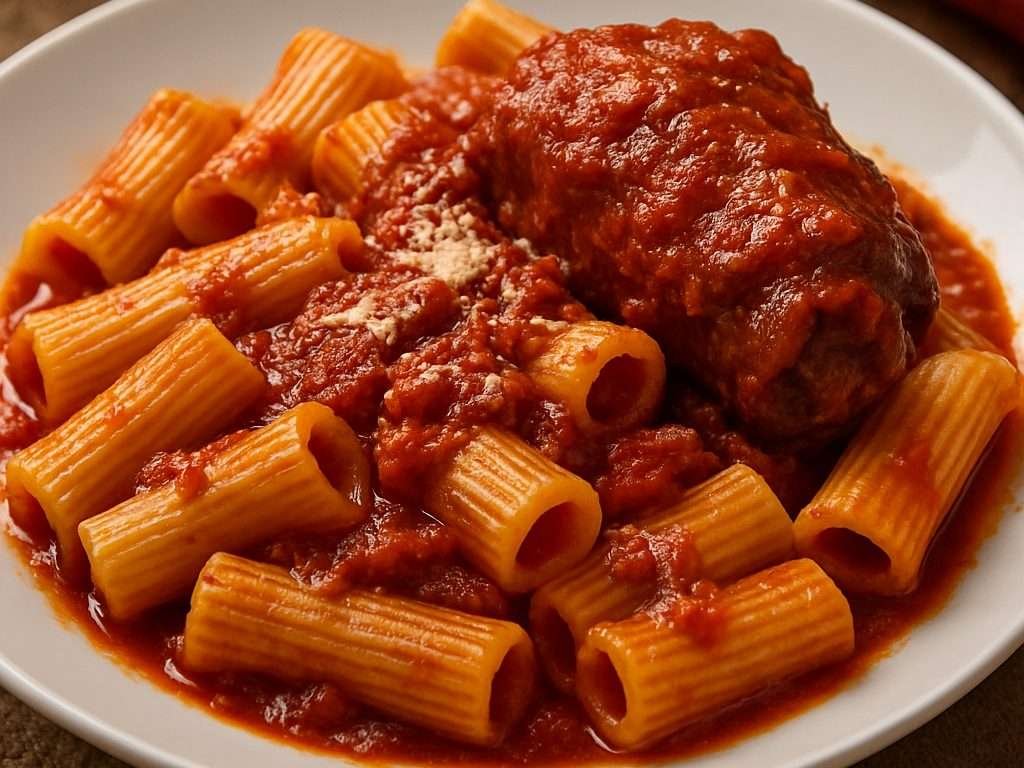
It is made by taking massive, whole cuts of tough beef and pork (often stuffed with garlic and parsley) and dropping them into a massive pot of tomato sauce. The pot is then left to simmer on the absolute lowest possible heat for six to eight hours. The sauce slowly bubbles (a process locals call pippiare) until it turns incredibly dark, rich, and oily, and the meat literally falls apart at the touch of a fork.
Traditionally, this is served as two separate courses. The thick, meat-infused tomato sauce is ladled over ziti (long, hollow pasta tubes that are snapped into smaller pieces by hand before boiling). Then, the chunks of slow-cooked meat are served afterward as the secondo (main course).
2. La Genovese Despite the name, this dish has absolutely nothing to do with the northern city of Genoa. It is a masterpiece of patience and peasant ingenuity.
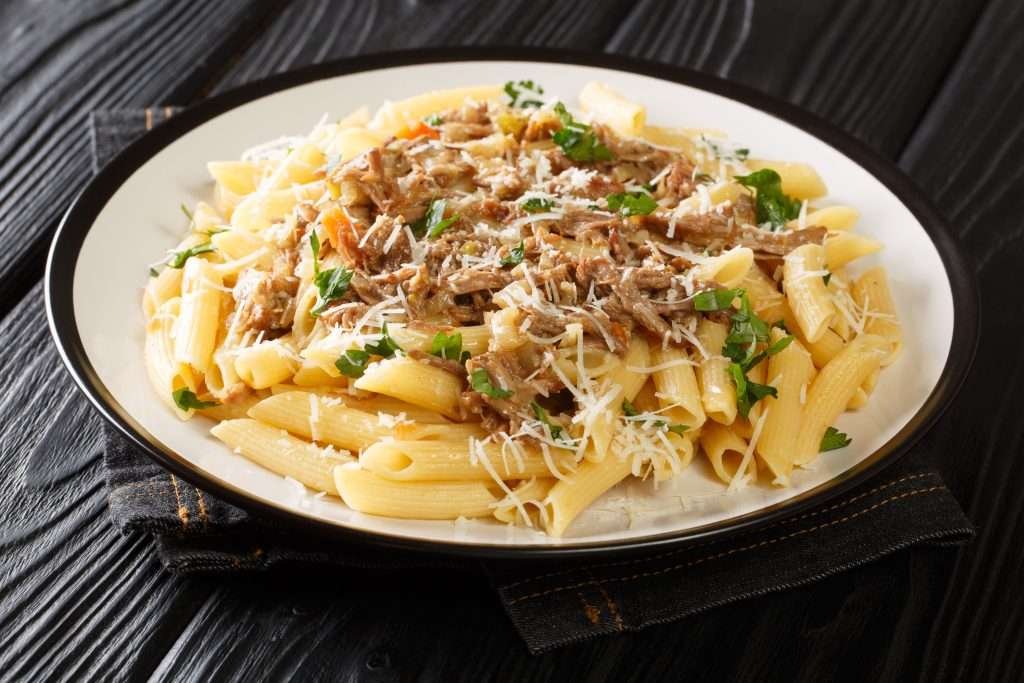
La Genovese is a pasta sauce made entirely of onions and tough cuts of beef. The ratio is staggering: chefs will use roughly two kilos of white onions for every one kilo of meat. The onions and meat are cooked together over painfully low heat for up to ten hours. The onions completely break down, melting into a sweet, savory, caramelized, jam-like gravy that coats the pasta. It is one of the most intensely flavorful, comforting dishes on the planet. Book a table at Tandem in the historic center to try the best version in the city.
3. Spaghetti alle Vongole When you leave the cramped historic center and head down to the waterfront neighborhoods (check your routing in my Where to Stay in Naples: Best Areas & Hotels for First Timers guide), the menu shifts immediately to seafood.
Spaghetti alle Vongole is an aggressively simple dish. Al dente spaghetti is tossed with fresh, briny clams (vongole), copious amounts of garlic, extra virgin olive oil, a splash of white wine, and fresh parsley. In Naples, it is almost always served in bianco (without tomatoes), allowing the pure, salty flavor of the sea and the bite of the garlic to shine through.

Chapter 4: The Sugar and Caffeine Ritual
Naples runs on a constant, vibrating undercurrent of caffeine and sugar. If you are following a fast-paced routing like my One Day in Naples: The Perfect 24-Hour Itinerary, mastering the local cafe etiquette is essential to keeping your energy up.
The Mechanics of Neapolitan Espresso Coffee in northern Italy is often a lighter, slightly acidic Arabica blend. Naples strongly prefers Robusta beans, roasted incredibly dark. The resulting espresso (un caffè) is short, intensely thick, highly caffeinated, and features a dark, hazelnut-colored foam (crema) on top.
Here is the ritual:
- Walk to the cash register first and pay for your coffee (usually €1.20).
- Take the receipt to the bartender and put a 10 or 20-cent coin on top of it.
- The bartender will hand you a small glass of sparkling water. Drink this first to cleanse your palate.
- The espresso will arrive in a cup that has been heated to a scalding temperature. (Naples serves coffee already sweetened by default. If you do not want sugar, you must explicitly order an espresso amaro).
- Drink it in two quick gulps while standing at the bar, and leave immediately. Do not linger.
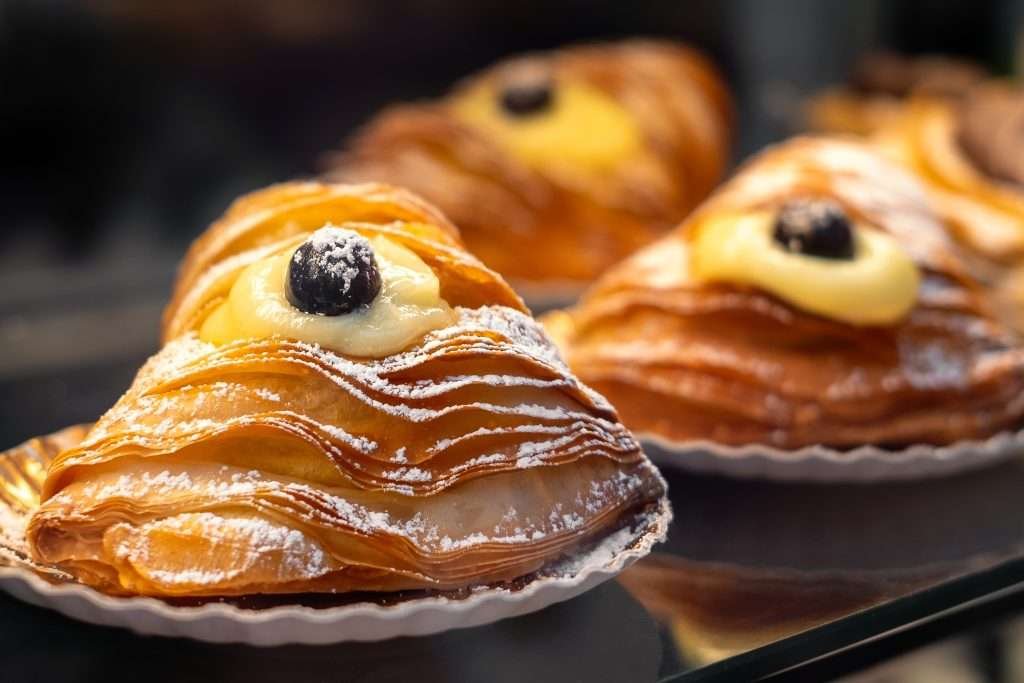
Sfogliatella You cannot drink espresso without ordering a sfogliatella. This is the undisputed king of Neapolitan pastries, and you must choose your allegiance between its two forms:
- Riccia: This version is shaped like a lobster tail. The exterior is made of hundreds of paper-thin, heavily buttered, shatteringly crisp layers of dough.
- Frolla: The exact same filling, but baked inside a soft, crumbly, dome-shaped shortcrust pastry.
Both are filled with a warm, dense, highly fragrant mixture of sweetened ricotta cheese, semolina, and candied citrus peel. Always buy them from a busy bakery (like Pasticceria Scaturchio or Attanasio) where they are kept in a heated glass case.

Babà al Rum If you want something softer, look for the Babà. It is a highly porous, mushroom-shaped sponge cake that is completely submerged and soaked in a sweet, sticky rum syrup. When you bite into it, the liquor literally drips down your chin.

Chapter 5: Dining Logistics and Tourist Traps
If you want to eat well, you must adjust to the local clock and avoid the visual red flags of tourist traps.
The Spanish Clock Naples eats incredibly late. If you are hungry at 6:30 PM, your only option is to find a bar and order an Aperol Spritz with some potato chips. Traditional trattorias will not even unlock their doors for dinner service until 7:30 PM, and if you arrive then, you will be the only person in the room. The true local dinner rush does not begin until 9:00 PM or 9:30 PM. (If you are completely exhausted from your 3 Days in Naples: The Perfect Itinerary for First Timers (2026 Edition), you can usually grab a late afternoon street food snack to bridge the gap).
The Coperto (Cover Charge) When your bill arrives, you will almost certainly notice a line item called Coperto. This is a standard Italian cover charge (usually €1.50 to €3.00 per person). It covers the cost of the bread basket, the linens, and the table service. It is completely legal and standard practice. Because of this, tipping 20% is absolutely not expected. If the service was phenomenal, leaving a few extra euros on the table is a polite gesture, but leaving nothing is also perfectly acceptable.
How to Spot a Tourist Trap Avoid any restaurant that employs a “barker” standing on the sidewalk aggressively trying to wave you inside. Avoid any restaurant with a massive menu translated into six different languages featuring laminated photos of the food. Avoid any place located directly outside the gates of Pompeii or the ferry terminal; you will be served overpriced, microwaved garbage. (If you are taking one of the 5 Best Day Trips from Naples (Worth the Effort), always buy a fresh sandwich from a local bakery before you leave the city limits).
If your next stop on your Italian vacation is heading north, the culinary rules will completely change again, so make sure to review my guide on your First Time in Rome: The Ultimate 2026 Survival and Travel Guide to prepare your stomach for carbonara instead of pizza!
1. Can I order different toppings on a Neapolitan pizza?
In traditional, authentic pizzerias in Naples, custom toppings are heavily frowned upon. Historic spots like Da Michele only offer two variations: the Margherita (tomatoes, fresh mozzarella, basil) and the Marinara (tomatoes, garlic, oregano, absolutely no cheese). Accept the simplicity-it is the best pizza you will ever eat.
2. How do you eat pizza in Naples?
You do not eat sit-down Neapolitan pizza with your hands. Because the dough is blasted in a 900-degree oven for only 60 seconds, the center remains very wet and soupy. You will be served one entire, uncut pizza on a plate, and you must use a knife and fork to eat it.
3. Do I need to tip at restaurants in Naples?
Unlike in America, tipping 15-20% is not expected in Italy. Service workers are paid a standard wage, and a small cover charge (Coperto) is usually added to your bill to cover bread and table service. If you had exceptional service, leaving €2 to €5 in coins on the table is considered polite and generous.
4. What is a “Cuoppo”?
A cuoppo is the ultimate Neapolitan street food. It is a large paper cone rolled up like a megaphone and stuffed full of deep-fried finger foods. A Cuoppo di Terra features fried potatoes and pasta balls, while a Cuoppo di Mare is filled with incredibly fresh, flash-fried calamari, anchovies, and shrimp.
5. How do I order a coffee in Naples?
Walk into a local bar, pay at the cash register first, and take your receipt to the barista. When you order un caffè (an espresso), it will likely be served in a scalding hot cup and pre-sweetened with sugar. The barista will give you a small glass of sparkling water-drink the water first to cleanse your palate, then shoot the espresso in two gulps.